
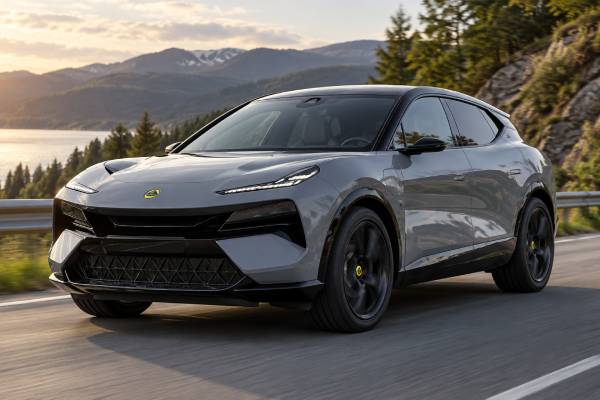
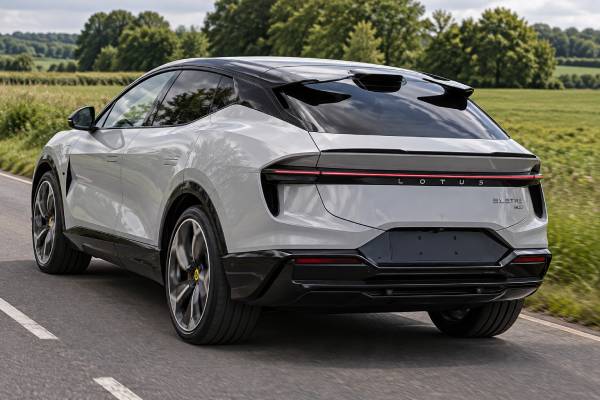
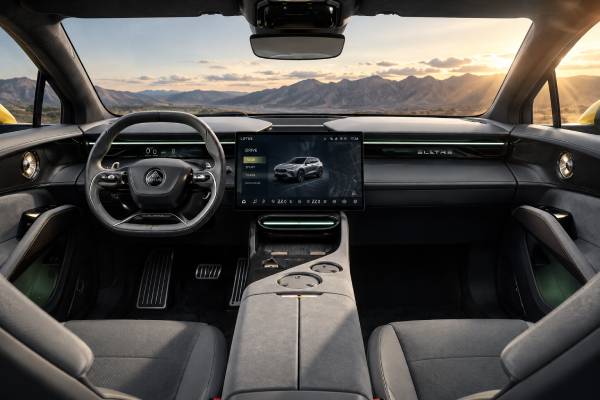
The Eletre 900 is the point where Lotus changes not only the calibration but the mechanical character of the powertrain. It uses the 675 kW dual-motor all-wheel-drive branch of the Type 132 platform, with 985 Nm of combined torque and an 800 V electrical architecture built for very rapid DC charging. This guide concentrates on the 900-series jump in acceleration, torque and transmission complexity. It also separates verified family-wide engineering facts from equipment that can vary by country, wheel package and production date. That distinction matters with the Eletre because Lotus has revised naming and specifications across markets, and even horsepower figures can differ depending on whether a source uses metric horsepower or brake horsepower. The safest approach is to identify the exact car by VIN and factory build data, then judge its battery, charging, software, suspension, tires and options as a complete ownership package rather than relying on the badge alone.
Table of Contents
- The engineering step from 600 to 900
- Eletre 900 powertrain and technical data
- Two-speed rear transmission and 985 Nm explained
- Managing traction, brakes and thermal load
- Charging and range at 900-series performance levels
- Maintenance priorities for the faster drivetrain
- How to buy an Eletre 900
The engineering step from 600 to 900
The 900 is mechanically more interesting than a simple software boost. Its rear drive unit uses a two-speed transmission, allowing Lotus to combine brutal launch performance with a 265 km/h top-speed claim. The 985 Nm torque figure is also materially above the 600-series level, so the difference is obvious well beyond the first few meters of acceleration.
The extra performance changes running priorities. Tires, brake condition, cooling performance and software state deserve more scrutiny, particularly on cars that have been used hard. A buyer should not be impressed by one clean launch; the better test is whether the powertrain delivers repeatedly without warnings, vibration, harsh shifting or unexpected power reduction.
The 900’s two-speed rear transmission deserves specific attention during a used-car drive. Changes in ratio should feel controlled rather than harsh, and repeated full-load acceleration should not produce warnings or obvious power interruption.
Eletre 900 powertrain and technical data
The 900 is the high-output branch: 675 kW, 985 Nm and a two-speed rear transmission combined with a front electric drive unit. Those changes bring both higher performance and additional driveline complexity.
| Specification | Value |
|---|---|
| Powertrain type | Battery-electric vehicle (BEV) |
| Motor layout | One electric drive unit at each axle |
| Electrical architecture | 800 V class high-voltage system |
| Battery | 112 kWh class traction battery (Lotus market literature; verify gross/usable labeling for the exact car) |
| Drivetrain | All-wheel drive |
| Specification | Value |
|---|---|
| Maximum power | 675 kW (905 hp as specified for this assignment) |
| Maximum torque | 985 Nm (727 lb-ft) |
| Drive | Dual-motor all-wheel drive |
| Rear transmission | Two-speed |
| Front drive unit | Single-speed reduction |
| 0–100 km/h | 2.95 s |
| Top speed | 265 km/h (165 mph) |
| Specification | Value |
|---|---|
| DC charging | Up to 350 kW CCS on compatible infrastructure |
| AC onboard charging | Up to 22 kW in markets/configurations that support it |
| DC rapid-charge claim | Lotus has advertised roughly 400 km / 250 miles of added range in about 20 minutes under favorable conditions |
| Regeneration | Adjustable regenerative braking |
| Charge planning | Navigation and app functions can support charging-route planning and battery monitoring |
| Specification | Value |
|---|---|
| Length | 5,103 mm (200.9 in) |
| Wheelbase | 3,019 mm (118.9 in) |
| Height | about 1,630 mm (64.2 in) |
| Width | 2,135 mm with camera mirror system in early published target specification |
| Body | Five-door luxury performance SUV |
| Seating | Four- or five-seat layouts have been offered, depending on market and configuration |
| Specification | Value |
|---|---|
| Front suspension | Multi-link |
| Rear suspension | Five-link / multi-link |
| Springing | Air suspension |
| Damping | Continuous Damping Control adaptive dampers |
| Steering | Electric power steering |
| Torque management | Brake-based torque vectoring; additional active chassis systems depend on trim/options |
| Specification | Value |
|---|---|
| High-voltage battery | Check state-of-health diagnostics, charging history and warning logs |
| Tires | Inspect inner and outer shoulders; large staggered performance tires are costly |
| Brakes | Check disc condition, corrosion and friction-brake operation despite strong regeneration |
| Software | Confirm current vehicle software and completion of applicable campaigns |
| 12 V system | Verify auxiliary-battery health because low-voltage faults can disable high-voltage vehicle functions |
Two-speed rear transmission and 985 Nm explained
At 675 kW, the 900 delivers its biggest advantage beyond the initial launch. The two-speed rear transmission helps sustain acceleration as road speed rises, and 985 Nm gives the control systems a large torque reserve to distribute. The result is a car that can feel brutally immediate even when already traveling quickly.
The 900 needs a warm, repeated test of its rear two-speed drive unit; smooth behavior under load matters more than one fast launch.
Drive modes change response, steering weight and chassis behavior, but they cannot compensate for poor tires. Correct load and speed ratings, matching axle pairs and appropriate pressure are basic safety requirements on a vehicle with this much torque.
Inspect brakes after higher-speed use because the 900 can create kinetic energy faster than a 600-series car.
Managing traction, brakes and thermal load
Active aero should be checked for correct operation because cooling and stability demands rise with 900-series performance.
Test screens and assistance systems after the drivetrain is warm; heat-related faults can appear late in a drive.
Air suspension should remain composed while the drivetrain delivers full torque, without squat-related noises or warning messages.
Seating choice is secondary to drivetrain condition on a 900, but it can still influence resale and practical use.
For this core 900-series high-performance model, the practical point is the 900-series jump in acceleration, torque and transmission complexity. That should guide which options are worth paying for and which are only attractive on a showroom specification sheet.
Charging and range at 900-series performance levels
The 900’s 350 kW fast-charging capability helps compensate for its higher consumption potential. The best strategy is still short, well-preconditioned rapid-charge stops rather than routinely charging to 100% at every stop, because charge power typically tapers as the battery fills.
Rapid charging should remain stable after fast motorway use, when battery temperature may already be elevated.
Home charging reduces dependence on costly public energy and lets the 900 start trips in a predictable state.
Cold-weather planning should include battery and cabin preconditioning where available. In hot climates, parking and charging conditions also matter because the thermal-management system may need to devote energy to keeping the pack within its preferred temperature range.
Maintenance priorities for the faster drivetrain
The 900’s additional rear transmission makes driveline behavior worth logging during service visits. Any repeatable clunk, harsh ratio change or warning under load should be documented while warranty or goodwill support is available.
Preventive care should concentrate on transmission behavior, tires, cooling and software.
Use 900-specific service information for the rear gearbox and performance wheel configurations.
Battery diagnostics should be interpreted with thermal and high-load history, not only age or mileage.
How to buy an Eletre 900
For a 900, insist on a thorough high-load test performed safely and legally. The car should accelerate cleanly, the rear two-speed unit should behave consistently, and there should be no thermal or propulsion warnings. A specialist inspection is justified by the potential cost of drivetrain and chassis hardware.
- Confirm the VIN, original market and advertised Eletre 900 specification before discussing price.
- Review campaign and software history with special attention to driveline health.
- Inspect wheels and tires for damage or wear that could affect two-speed rear transmission and thermal load.
- Cycle the air suspension and test the car on both smooth and broken pavement.
- Verify normal AC charging and complete a DC rapid-charge test when practical.
- Operate every fitted camera, assistance function, seat, climate and infotainment feature.
- Review battery diagnostics, warranty position and repair history before final payment.
The 900’s odometer does not describe drivetrain stress. A higher-mileage car with smooth two-speed operation and strong records may be safer than a little-used example that shows harsh shifting or unexplained propulsion faults.
Why the two-speed rear transmission exists
Most EVs use a single fixed reduction because electric motors deliver a wide usable speed range. The 900-series Eletre adds a second rear ratio to extend the performance envelope. A lower ratio can support brutal initial acceleration, while a taller ratio helps the rear motor continue contributing efficiently at higher road speed. That is one reason the 900 can combine a sub-three-second 0–100 km/h claim with a 265 km/h top speed.
The transmission also creates a unique inspection point. Ratio changes should be controlled and repeatable. Harsh mechanical noises, inconsistent engagement or warning messages under strong acceleration deserve specialist attention, especially on a used car with an unclear history.
Thermal management is part of performance
A high-output EV is limited not only by battery state of charge but also by temperature. Repeated hard acceleration sends heat into the battery, motors and power electronics. The cooling system must manage that heat while also preserving battery life. A car that feels perfect during one short demonstration can behave differently after sustained use, so buyers should ask about any history of power-limitation warnings or cooling-system repairs.
Fast charging also adds heat. The Eletre is designed for high charging power, but the battery-management system will reduce power when conditions require it. A slower session is not automatically a fault; the relevant question is whether charging behavior is consistent with temperature, starting state of charge and charger capability.
The 900 demands a tire budget
Instant torque and vehicle mass make tires a major consumable. Aggressive launches can accelerate rear wear even with AWD, and poor alignment can destroy inner shoulders before the outer tread looks worn. Check the whole tread width and price a complete replacement set before purchase. Saving a few thousand on the purchase price is meaningless if four suitable premium tires are immediately due.
Choosing 900 over 600
The 900 makes sense for a driver who values the specific high-speed performance, two-speed drivetrain and 985 Nm output. The 600 is already extremely fast, so the flagship premium is not necessary for basic overtaking or motorway use. This is one of the rare cases where a test drive should answer an emotional question honestly: does the extra drivetrain character matter enough to justify its cost and complexity?
Using 900-series performance responsibly
The 900 accelerates quickly enough that public-road opportunities to use full output are extremely limited. The sensible ownership goal is not to seek repeated maximum launches, but to appreciate the effortless reserve while preserving tires, brakes and passengers. Smooth accelerator inputs also make it easier to judge whether the drivetrain is healthy because they expose vibration or harshness that a dramatic launch can mask.
On unrestricted or controlled environments where high-speed driving is legal, tire condition becomes critical. Speed rating, pressure and damage inspection are not administrative details; they determine whether the tire is suitable for the loads being asked of it. Track use, where permitted, should be followed by careful inspection and any service procedures recommended by Lotus.
For road trips, remember that the 900’s performance can tempt drivers into inefficient cruising speeds. Aerodynamic drag rises rapidly with speed, so sustained fast travel can turn a nominally shorter drive into a longer journey after additional charging.
The 900 is most satisfying when treated as a high-performance system rather than a number. Condition, temperature, tires and route all shape how much of its capability is actually useful.
Do not confuse software smoothness with mechanical health
Modern control systems can mask developing problems by adapting torque delivery, traction intervention and shift behavior. A 900 that feels smooth during gentle driving may still deserve deeper investigation if service records mention repeated drivetrain warnings or if the rear transmission behaves differently when warm. Diagnostic fault history is therefore valuable even when no warning light is currently present. Ask a qualified technician to review stored codes and relevant software updates, especially before buying an out-of-warranty car. The goal is not to treat every historical code as a defect, but to distinguish a resolved software event from a recurring mechanical or electrical issue. Clear records make that distinction much easier.
Additional ownership perspective
A final pre-purchase step is to compare the 900 with a 600 on the same day if possible. Familiar roads make the differences easier to judge than separate test drives weeks apart. The 900 should feel meaningfully stronger at higher speed and its drivetrain should remain polished in ordinary traffic. If the extra performance is exciting only for a few seconds but the buyer prefers the 600’s price, range or simplicity everywhere else, that is useful information. The correct flagship purchase is one whose advantages remain desirable after the novelty of the first launch has passed.
A professional pre-purchase inspection is particularly easy to justify at this performance level. The cost is small beside the price of tires, active-chassis parts, high-voltage electronics or rear-drive-unit work, and a written inspection gives the buyer a useful baseline for future maintenance.
That baseline also helps future troubleshooting.
One more ownership consideration
For owners who intend to use the 900 hard, service access should be part of route planning just as charging is. Know which Lotus center can diagnose the rear drive unit and high-voltage cooling systems, and keep roadside-support details available. Extreme performance is easier to enjoy when there is a clear plan for specialist help if a warning appears away from home.
How to separate normal EV behavior from a 900-series problem
Some sensations that concern first-time EV buyers are normal. Regenerative braking changes with state of charge and temperature, cooling fans may run after charging, and rapid-charge power naturally tapers as the battery fills. The 900 adds another layer because its rear two-speed transmission can introduce a ratio change that a single-speed EV driver has never felt before.
The important distinction is consistency. A normal behavior should occur predictably under similar conditions. A harsh shift that appears randomly, a vibration that grows with torque, or a propulsion warning that returns after warm-up deserves diagnosis. Record the conditions when a symptom occurs—battery state, road speed, drive mode and temperature—because that information helps a technician reproduce the issue.
Used buyers should also ask whether drivetrain work was software-only or involved hardware replacement. Neither answer is automatically bad, but complete invoices matter. The 900 is worth owning because its powertrain is special; that same uniqueness makes a clear repair history more valuable than vague assurances that every Eletre behaves the same way.
Final practical note
When budgeting for a used 900, include a contingency for performance-specific parts even if the car is still under warranty. Warranty can reduce financial risk, but it does not eliminate downtime, transport or the inconvenience of specialist diagnosis. Owners who live far from a Lotus center should factor that into the purchase decision. The 900 rewards with a drivetrain the 600 cannot replicate, yet that distinction is valuable only if the owner is comfortable supporting it. A slightly more expensive car with a strong local service relationship can be the better buy than a cheaper example that is difficult to maintain.
A clean baseline diagnostic scan after purchase is worth keeping with the records. It gives the owner a reference if a future warning appears and helps distinguish a new problem from an old stored event.
Keep that report permanently.
References
- Lotus Eletre – The Electric Hyper SUV | Lotus Cars 2026
- Lotus Eletre – Explore Models | Lotus Cars 2026
- Lotus Eletre | How it Drives | Lotus Cars 2026
- Lotus Eletre – Specs, Features and More | Lotus Cars Netherlands 2026
- Lotus Eletre Handbook for Drivers | Lotus Cars 2026
- Lotus Charging | Lotus Cars 2026
Disclaimer
This article is for informational purposes only and is not a substitute for professional diagnosis, repair, or vehicle-specific service information. Specifications, torque values, maintenance intervals, charging behavior, software functions, and procedures can vary by VIN, market, production date, wheel package, and equipment. Verify all service work and technical values against official Lotus documentation for the exact vehicle.
If this guide was useful, please share it on Facebook, X/Twitter, or your preferred automotive community to support our work.