
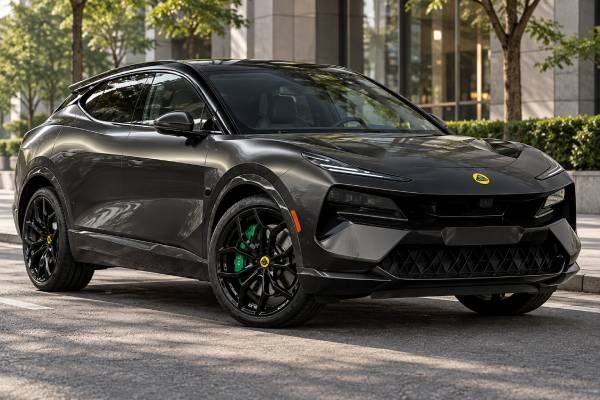
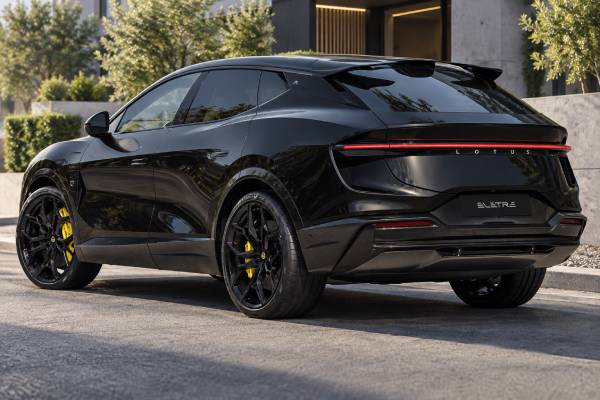
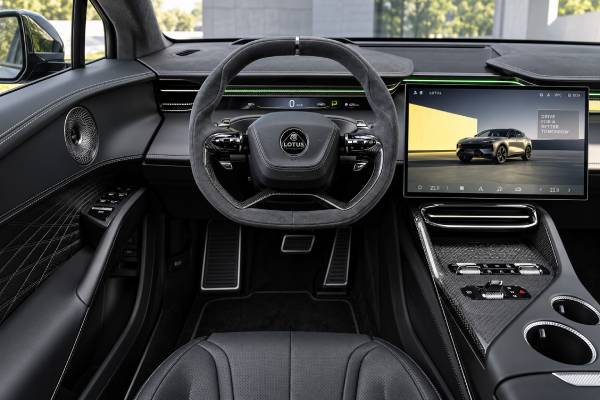
The Eletre Carbon takes Lotus’s most powerful regular-production Eletre hardware and packages it as a luxury flagship rather than a stripped-out performance special. With 675 kW driving all four wheels, 985 Nm available instantly, and a rear two-speed drive unit, it can reach 100 km/h in about 2.95 seconds while still offering the cabin space and technology expected from a full-size premium SUV. That breadth is its strongest argument and also the reason a buyer should look beyond the headline acceleration figure. Battery temperature, wheel and tire choice, charging conditions, suspension calibration, and software state all have a large influence on how this car feels and what it costs to run. The Carbon name also appears in different market strategies, so equipment should be checked against the exact VIN rather than assumed from another country’s brochure. This guide focuses on the verified 900-series mechanical package, practical ownership, and the decisions that matter before purchase.
Table of Contents
- Where the Eletre Carbon sits in the range
- Performance hardware and verified specifications
- Fast-road character without the track-car cliché
- Battery use, fast charging, and efficiency trade-offs
- Luxury, space, technology, and daily usability
- Ownership costs and maintenance realities
- Buying one new or nearly new
Where the Eletre Carbon sits in the range
For the Carbon, where the eletre carbon sits in the range is mainly about breadth. Its flagship status only makes sense if flagship cabin finish works together with the 900-series drivetrain instead of turning the SUV into a one-number acceleration exercise.
Within where the eletre carbon sits in the range, luxury does not remove the need for mechanical discipline. Flagship cabin finish should be checked together with wheel condition, alignment, brake feel, and air-suspension behavior because each can affect refinement. The Eletre also carries cameras, radar, networked displays, active chassis controls, and a large high-voltage system; one fault can create symptoms in another system. That is why a clean diagnostic scan and complete service record matter more here than on a simpler SUV.
For where the eletre carbon sits in the range, the Carbon’s range is especially sensitive to the decisions that make it look and feel like a flagship. Larger wheels, wide performance tires, cold weather, and fast motorway travel can all move consumption away from the homologated figure. The useful comparison is therefore between two otherwise similar cars on the same route, not between one owner’s winter dashboard and an official laboratory number. Battery preconditioning before a rapid-charge stop can also be worth more than hunting for a charger with a slightly higher advertised ceiling.
As a where the eletre carbon sits in the range check, a useful ownership habit is to create a baseline during the first month. Note normal tire pressures, energy use on a familiar route, charging speed at a known station, suspension height after an overnight park, and the software version. If flagship cabin finish later changes, the owner has evidence rather than memory. That makes workshop conversations faster and helps distinguish normal seasonal variation from a developing fault.
Performance hardware and verified specifications
For the Carbon, performance hardware and verified specifications is mainly about breadth. Its flagship status only makes sense if high-speed stability works together with the 900-series drivetrain instead of turning the SUV into a one-number acceleration exercise.
Within performance hardware and verified specifications, luxury does not remove the need for mechanical discipline. High-speed stability should be checked together with wheel condition, alignment, brake feel, and air-suspension behavior because each can affect refinement. The Eletre also carries cameras, radar, networked displays, active chassis controls, and a large high-voltage system; one fault can create symptoms in another system. That is why a clean diagnostic scan and complete service record matter more here than on a simpler SUV.
For performance hardware and verified specifications, the Carbon’s range is especially sensitive to the decisions that make it look and feel like a flagship. Larger wheels, wide performance tires, cold weather, and fast motorway travel can all move consumption away from the homologated figure. The useful comparison is therefore between two otherwise similar cars on the same route, not between one owner’s winter dashboard and an official laboratory number. Battery preconditioning before a rapid-charge stop can also be worth more than hunting for a charger with a slightly higher advertised ceiling.
As a performance hardware and verified specifications check, a useful ownership habit is to create a baseline during the first month. Note normal tire pressures, energy use on a familiar route, charging speed at a known station, suspension height after an overnight park, and the software version. If high-speed stability later changes, the owner has evidence rather than memory. That makes workshop conversations faster and helps distinguish normal seasonal variation from a developing fault.
For Lotus Eletre Carbon (Type 132), the tables below collect only the specifications that can be stated usefully for this exact powertrain scope. Market-specific options can change wheels, tires, equipment, homologated range, and sometimes charging hardware, so they should be read as a technical reference rather than a substitute for the vehicle’s own build data.
| Specification | Value |
|---|---|
| Powertrain type | Battery electric vehicle |
| Maximum output | 675 kW (905 hp) |
| Maximum torque | 985 Nm |
| Battery capacity | 112 kWh |
| Drive | dual-motor all-wheel drive with a two-speed rear drive unit |
| Electrical architecture | High-voltage fast-charging EV platform |
| Regeneration | Multi-level regenerative braking integrated with friction brakes |
| Specification | Value |
|---|---|
| Published range | up to roughly 500 km WLTP, configuration-dependent |
| DC charging | 350 kW DC peak; 10–80% in about 20 minutes under suitable conditions |
| Battery capacity | 112 kWh |
| Home charging | AC charging supported; onboard-charger rating depends on market |
| Preconditioning | Battery and cabin preconditioning through vehicle software where supported |
| Charging strategy | Best repeatability comes from arriving at a rapid charger with a warm battery and low state of charge |
| Specification | Value |
|---|---|
| 0–100 km/h | 2.95 seconds |
| Top speed | 265 km/h (165 mph) |
| Traction | All-wheel drive |
| Torque delivery | 985 Nm |
| Chassis concept | Air suspension with electronically controlled damping |
| Drive modes | Road-focused modes plus configurable dynamic settings; exact set varies by market |
| Specification | Value |
|---|---|
| Length | 5,103 mm (200.9 in) |
| Width | about 2,019 mm body width; mirrors add more |
| Wheelbase | 3,019 mm (118.9 in) |
| Body | Five-door premium performance SUV |
| Cargo area | about 688 L with rear seats in use on common five-seat specifications |
| Suspension | Adaptive air suspension; active chassis functions depend on trim |
| Brakes | High-performance ventilated disc system; specification varies by trim |
| Wheels | Large-diameter staggered performance fitments; exact size depends on configuration |
| Specification | Value |
|---|---|
| Tire priority | Use correct load rating, speed rating, size, and approved fitment |
| Brake check | Inspect rotor condition and pad thickness because regeneration can mask friction-brake wear |
| Battery check | Review charging behavior, warnings, and thermal-management operation |
| Suspension check | Look for warning messages, uneven ride height, noises, and leak-down |
| Software check | Confirm current updates, app pairing, cameras, sensors, and driver-assistance calibration |
| Documentation | Verify VIN-specific equipment, recalls, service actions, and warranty status |
Fast-road character without the track-car cliché
For the Carbon, fast-road character without the track-car cliché is mainly about breadth. Its flagship status only makes sense if wheel-size efficiency penalty works together with the 900-series drivetrain instead of turning the SUV into a one-number acceleration exercise.
Within fast-road character without the track-car cliché, luxury does not remove the need for mechanical discipline. Wheel-size efficiency penalty should be checked together with wheel condition, alignment, brake feel, and air-suspension behavior because each can affect refinement. The Eletre also carries cameras, radar, networked displays, active chassis controls, and a large high-voltage system; one fault can create symptoms in another system. That is why a clean diagnostic scan and complete service record matter more here than on a simpler SUV.
For fast-road character without the track-car cliché, the Carbon’s range is especially sensitive to the decisions that make it look and feel like a flagship. Larger wheels, wide performance tires, cold weather, and fast motorway travel can all move consumption away from the homologated figure. The useful comparison is therefore between two otherwise similar cars on the same route, not between one owner’s winter dashboard and an official laboratory number. Battery preconditioning before a rapid-charge stop can also be worth more than hunting for a charger with a slightly higher advertised ceiling.
As a fast-road character without the track-car cliché check, a useful ownership habit is to create a baseline during the first month. Note normal tire pressures, energy use on a familiar route, charging speed at a known station, suspension height after an overnight park, and the software version. If wheel-size efficiency penalty later changes, the owner has evidence rather than memory. That makes workshop conversations faster and helps distinguish normal seasonal variation from a developing fault.
Battery use, fast charging, and efficiency trade-offs
For the Carbon, battery use, fast charging, and efficiency trade-offs is mainly about breadth. Its flagship status only makes sense if luxury option complexity works together with the 900-series drivetrain instead of turning the SUV into a one-number acceleration exercise.
Within battery use, fast charging, and efficiency trade-offs, luxury does not remove the need for mechanical discipline. Luxury option complexity should be checked together with wheel condition, alignment, brake feel, and air-suspension behavior because each can affect refinement. The Eletre also carries cameras, radar, networked displays, active chassis controls, and a large high-voltage system; one fault can create symptoms in another system. That is why a clean diagnostic scan and complete service record matter more here than on a simpler SUV.
For battery use, fast charging, and efficiency trade-offs, the Carbon’s range is especially sensitive to the decisions that make it look and feel like a flagship. Larger wheels, wide performance tires, cold weather, and fast motorway travel can all move consumption away from the homologated figure. The useful comparison is therefore between two otherwise similar cars on the same route, not between one owner’s winter dashboard and an official laboratory number. Battery preconditioning before a rapid-charge stop can also be worth more than hunting for a charger with a slightly higher advertised ceiling.
As a battery use, fast charging, and efficiency trade-offs check, a useful ownership habit is to create a baseline during the first month. Note normal tire pressures, energy use on a familiar route, charging speed at a known station, suspension height after an overnight park, and the software version. If luxury option complexity later changes, the owner has evidence rather than memory. That makes workshop conversations faster and helps distinguish normal seasonal variation from a developing fault.
Luxury, space, technology, and daily usability
For the Carbon, luxury, space, technology, and daily usability is mainly about breadth. Its flagship status only makes sense if air suspension leak-down works together with the 900-series drivetrain instead of turning the SUV into a one-number acceleration exercise.
Within luxury, space, technology, and daily usability, luxury does not remove the need for mechanical discipline. Air suspension leak-down should be checked together with wheel condition, alignment, brake feel, and air-suspension behavior because each can affect refinement. The Eletre also carries cameras, radar, networked displays, active chassis controls, and a large high-voltage system; one fault can create symptoms in another system. That is why a clean diagnostic scan and complete service record matter more here than on a simpler SUV.
For luxury, space, technology, and daily usability, the Carbon’s range is especially sensitive to the decisions that make it look and feel like a flagship. Larger wheels, wide performance tires, cold weather, and fast motorway travel can all move consumption away from the homologated figure. The useful comparison is therefore between two otherwise similar cars on the same route, not between one owner’s winter dashboard and an official laboratory number. Battery preconditioning before a rapid-charge stop can also be worth more than hunting for a charger with a slightly higher advertised ceiling.
As a luxury, space, technology, and daily usability check, a useful ownership habit is to create a baseline during the first month. Note normal tire pressures, energy use on a familiar route, charging speed at a known station, suspension height after an overnight park, and the software version. If air suspension leak-down later changes, the owner has evidence rather than memory. That makes workshop conversations faster and helps distinguish normal seasonal variation from a developing fault.
Ownership costs and maintenance realities
For the Carbon, ownership costs and maintenance realities is mainly about breadth. Its flagship status only makes sense if depreciation versus rarity works together with the 900-series drivetrain instead of turning the SUV into a one-number acceleration exercise.
Within ownership costs and maintenance realities, luxury does not remove the need for mechanical discipline. Depreciation versus rarity should be checked together with wheel condition, alignment, brake feel, and air-suspension behavior because each can affect refinement. The Eletre also carries cameras, radar, networked displays, active chassis controls, and a large high-voltage system; one fault can create symptoms in another system. That is why a clean diagnostic scan and complete service record matter more here than on a simpler SUV.
For ownership costs and maintenance realities, the Carbon’s range is especially sensitive to the decisions that make it look and feel like a flagship. Larger wheels, wide performance tires, cold weather, and fast motorway travel can all move consumption away from the homologated figure. The useful comparison is therefore between two otherwise similar cars on the same route, not between one owner’s winter dashboard and an official laboratory number. Battery preconditioning before a rapid-charge stop can also be worth more than hunting for a charger with a slightly higher advertised ceiling.
As a ownership costs and maintenance realities check, a useful ownership habit is to create a baseline during the first month. Note normal tire pressures, energy use on a familiar route, charging speed at a known station, suspension height after an overnight park, and the software version. If depreciation versus rarity later changes, the owner has evidence rather than memory. That makes workshop conversations faster and helps distinguish normal seasonal variation from a developing fault.
Buying one new or nearly new
For the Carbon, buying one new or nearly new is mainly about breadth. Its flagship status only makes sense if flagship cabin finish works together with the 900-series drivetrain instead of turning the SUV into a one-number acceleration exercise.
Within buying one new or nearly new, luxury does not remove the need for mechanical discipline. Flagship cabin finish should be checked together with wheel condition, alignment, brake feel, and air-suspension behavior because each can affect refinement. The Eletre also carries cameras, radar, networked displays, active chassis controls, and a large high-voltage system; one fault can create symptoms in another system. That is why a clean diagnostic scan and complete service record matter more here than on a simpler SUV.
For buying one new or nearly new, the Carbon’s range is especially sensitive to the decisions that make it look and feel like a flagship. Larger wheels, wide performance tires, cold weather, and fast motorway travel can all move consumption away from the homologated figure. The useful comparison is therefore between two otherwise similar cars on the same route, not between one owner’s winter dashboard and an official laboratory number. Battery preconditioning before a rapid-charge stop can also be worth more than hunting for a charger with a slightly higher advertised ceiling.
As a buying one new or nearly new check, a useful ownership habit is to create a baseline during the first month. Note normal tire pressures, energy use on a familiar route, charging speed at a known station, suspension height after an overnight park, and the software version. If flagship cabin finish later changes, the owner has evidence rather than memory. That makes workshop conversations faster and helps distinguish normal seasonal variation from a developing fault.
Insurance and replacement parts deserve attention before purchase, not after. Large forged or cast wheels, high-performance tires, panoramic glass, radar and camera modules, carbon-fibre trim, and sophisticated lamps can all be expensive after minor damage. Obtain an insurance quotation using the exact derivative and ask a repairer how quickly common parts are available in your region. That practical homework can change the value equation more than a small difference in purchase price. For Lotus Eletre Carbon (Type 132), this final suitability check should be made against the exact market specification and intended use.
One less obvious consideration is flagship cabin finish. This is not an isolated detail on Lotus Eletre Carbon (Type 132); it connects to the vehicle’s broader balance of performance, mass, software control, and expensive hardware. The safest way to evaluate it is with evidence from the exact car: consistent behavior on a test drive, clean diagnostic status, documented service work, and equipment that matches the build record. Avoid assuming that a feature shown in a launch car, another market, or a different trim is automatically present.
Practical use also changes the answer for Lotus Eletre Carbon (Type 132) when considering flagship cabin finish. A driver who mainly covers short urban trips will notice maneuverability, climate energy use, parking-camera reliability, and low-speed ride more often than maximum output. A high-mileage motorway user will care more about seat comfort, tire noise, rapid-charging or refueling access, thermal consistency, and the ease of cleaning driver-assistance sensors in bad weather. Someone buying for occasional performance use should pay closer attention to tire age, brake condition, wheel damage, alignment, and whether repeated hard acceleration produces warnings or reduced output. Those are different ownership profiles, so there is no single ideal setup.
For Lotus Eletre Carbon (Type 132), a condition-led maintenance approach is especially useful around flagship cabin finish. Record tire tread and pressures, inspect the inner wheel edges that are easy to miss, keep charge-port seals and contacts clean and dry, and respond early to suspension or cooling warnings. On high-voltage vehicles, do not improvise around orange cables, battery enclosures, power electronics, or coolant circuits. Qualified service equipment and the correct isolation procedures are essential. That discipline protects both safety and resale value, especially on a technically complex model whose future buyer will want confidence that repairs were done correctly.
For buyers comparing real cars is high-speed stability. This is not an isolated detail on Lotus Eletre Carbon (Type 132); it connects to the vehicle’s broader balance of performance, mass, software control, and expensive hardware. The safest way to evaluate it is with evidence from the exact car: consistent behavior on a test drive, clean diagnostic status, documented service work, and equipment that matches the build record. Avoid assuming that a feature shown in a launch car, another market, or a different trim is automatically present.
Practical use also changes the answer for Lotus Eletre Carbon (Type 132) when considering high-speed stability. A driver who mainly covers short urban trips will notice maneuverability, climate energy use, parking-camera reliability, and low-speed ride more often than maximum output. A high-mileage motorway user will care more about seat comfort, tire noise, rapid-charging or refueling access, thermal consistency, and the ease of cleaning driver-assistance sensors in bad weather. Someone buying for occasional performance use should pay closer attention to tire age, brake condition, wheel damage, alignment, and whether repeated hard acceleration produces warnings or reduced output. Those are different ownership profiles, so there is no single ideal setup.
For Lotus Eletre Carbon (Type 132), a condition-led maintenance approach is especially useful around high-speed stability. Record tire tread and pressures, inspect the inner wheel edges that are easy to miss, keep charge-port seals and contacts clean and dry, and respond early to suspension or cooling warnings. On high-voltage vehicles, do not improvise around orange cables, battery enclosures, power electronics, or coolant circuits. Qualified service equipment and the correct isolation procedures are essential. That discipline protects both safety and resale value, especially on a technically complex model whose future buyer will want confidence that repairs were done correctly.
References
* Lotus revamps Eletre and Emeya line-up 2025 * Lotus Eletre – The Electric Hyper SUV | Lotus Cars 2026 * Lotus Eletre | How it Drives | Lotus Cars 2026 * Lotus Eletre – Explore Models | Lotus Cars 2026 * Models | Lotus Press | Eletre 2026 * Lotus Eletre | Lotus Electric SUV | Lotus Cars United Kingdom 2026
Disclaimer
This article is for informational purposes only and is not a substitute for professional diagnosis, inspection, or repair. Specifications, torque values, service intervals, charging behavior, and procedures can vary by VIN, market, software version, and equipment; verify all work and technical data against the official Lotus service documentation for the exact vehicle.
If this guide helped you, please consider sharing it on Facebook, X/Twitter, or another automotive community to support our work.