
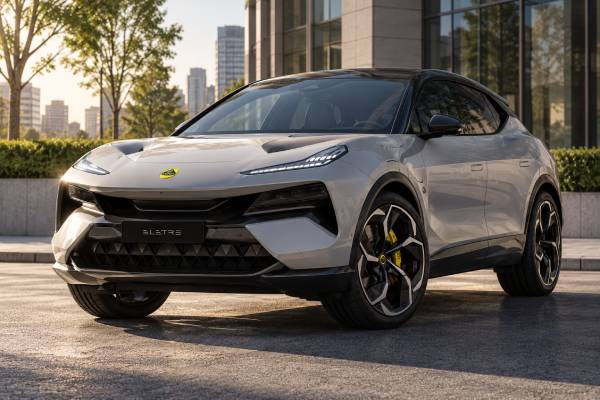
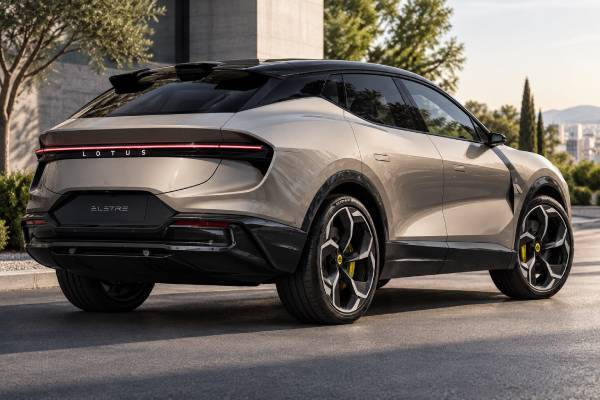
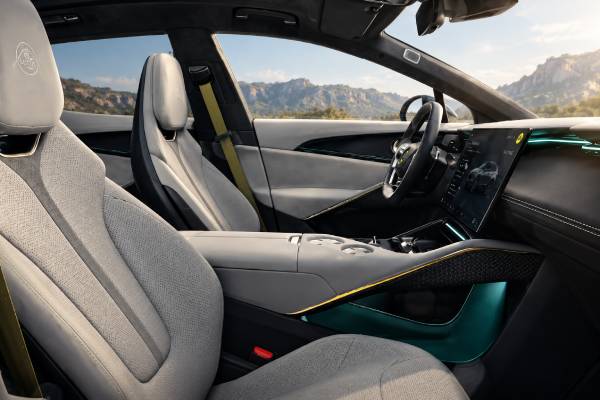
The Lotus Eletre S+ is a China-market 450 kW version of the Type 132 electric SUV, and the plus sign matters more than it first appears. Lotus’s own investor material identified the S+ as a China-only model with a more premium configuration than the Eletre S. Mechanically, it uses the familiar dual-motor all-wheel-drive system rated at 450 kW and 710 Nm, with 612 PS, a 112 kWh battery, and the 800-volt electrical platform. That makes the S+ much closer to the early Eletre S than to the 675 kW R+, but equipment, market software, range certification, and ownership support can differ. In China-market data, the S+ is commonly associated with a CLTC range around 650 km, a figure that should not be compared directly with European WLTP values. For buyers outside China, the technical inspection is only half the job. Charging-port compatibility, connected services, warranty portability, language support, and over-the-air updates can determine whether an imported S+ feels like a bargain or a complicated project.
Table of Contents
- S+ positioning and market identity
- Specifications and technical data
- CLTC range, consumption, and charging
- Premium equipment and technology checks
- How the S+ behaves on the road
- Maintenance, tires, and battery care
- Import and used-buying checklist
S+ positioning and market identity
The Eletre S+ is not simply an S with a different horsepower conversion. Lotus Tech investor documentation explicitly described the S+ as a model offered only in China with a more premium configuration than the Eletre S, so buyers should preserve that market context when comparing cars.
Its 612 PS figure comes from 450 kW of system output. UK publications can express the same nominal power as roughly 603 bhp because brake horsepower and metric horsepower are different units. The drivetrain itself is the key: two motors, AWD, 710 Nm, and a single-speed reduction arrangement rather than the R family’s high-performance two-speed rear unit.
A translated export listing may call the S+, S Plus, or simply “612 hp Eletre.” The VIN, original model certificate, and build specification are more reliable than the seller’s badge description. This is especially important because later Chinese Eletre ranges adopted 600 and 900 naming, creating another layer of terminology around broadly related power outputs.
Specifications and technical data
The S+ combines the long-range 450 kW powertrain with a large battery and sophisticated active chassis. It is a BEV throughout; there is no combustion engine, fuel tank, or conventional multispeed gearbox.
| Parameter | Specification |
|---|---|
| System output | 450 kW / 612 PS |
| System torque | 710 Nm |
| Motors | Two electric motors, one per axle |
| Drive type | All-wheel drive |
| Transmission | Single-speed electric reduction |
| Battery capacity | 112 kWh |
| Battery chemistry | Ternary lithium/NMC in Chinese-market data |
| Architecture | 800 V class |
| Parameter | Specification |
|---|---|
| 0–100 km/h | Approximately 4.5 seconds |
| Maximum speed | Approximately 258 km/h |
| CLTC range | About 650 km on commonly listed S+ specification |
| Tailpipe emissions | 0 g/km |
| Parameter | Specification |
|---|---|
| DC capability | High-power fast charging on the 800 V platform |
| Published Eletre rapid-charge benchmark | About 10–80% in 20 minutes under suitable conditions |
| China-market port | Market-specific charging interface; verify the individual car |
| European Eletre AC reference | Up to 22 kW where fitted |
| Parameter | Specification |
|---|---|
| Length | 5,103 mm |
| Width | 2,019 mm excluding mirrors |
| Height | About 1,636 mm |
| Wheelbase | 3,019 mm |
| Frunk | 46 L on common Eletre specification |
| Rear cargo, five seats | 688 L |
| Rear cargo, rear seats folded | Up to 1,532 L |
| Parameter | Specification |
|---|---|
| Suspension | Air suspension with adaptive damping |
| Common front tire | 275/40 R22 |
| Common rear tire | 315/35 R22 |
| Braked towing reference | Up to 2,250 kg where homologated |
Because Chinese-market equipment can be option-rich, curb weight and certified range can change with seating, wheels, brakes, and comfort packages. Do not borrow a weight or range value from another Eletre trim just because the powertrain matches.
CLTC range, consumption, and charging
The S+ is often advertised with around 650 km of CLTC range, but that number belongs to the Chinese test cycle. It is useful for comparing Chinese-market EVs under the same procedure, not for promising that the car will travel 650 km at European motorway speed.
High-speed range is lower because aerodynamic power demand rises rapidly with speed. The Eletre’s active aero and “porosity” design reduce drag, but they cannot eliminate the effect of a large body and frontal area. Winter operation also costs range through battery warming, cabin heat, denser air, and increased rolling resistance.
Owners can improve repeatability by setting sensible tire pressures, preconditioning while plugged in when practical, and using route planning that prepares the battery for a rapid charger. A warm battery can accept higher DC power; a cold pack may charge slowly even on an excellent charger.
The most important import question is whether the S+ can charge conveniently where it will live. Mainland Chinese hardware and European CCS infrastructure are not automatically interchangeable. A physical adapter does not solve every communication or safety requirement. Before purchase, demonstrate both routine AC charging and the public DC charging method you intend to use.
Charge planning should also take battery taper into account. The last 20% typically takes disproportionately longer than the middle of the pack. On a long journey, arriving low and leaving around 70–80% can be more time-efficient than repeatedly waiting for a full battery.
Premium equipment and technology checks
Because the “+” positioning emphasizes a richer configuration, equipment condition deserves more attention than on a stripped performance car. A missing connected feature, non-functioning powered seat, or unsupported driver-assistance function can materially reduce the value of an S+.
Test the central OLED display, driver display, passenger functions where fitted, audio system, navigation, cameras, parking functions, climate control, seat heating/ventilation/massage if equipped, powered steering column, tailgate, keyless access, and charge scheduling. Do not accept “needs an update” as an explanation without proof that an official update path exists in the destination market.
The Eletre’s sensor suite can include cameras, radar, lidar-related hardware, and ultrasonic parking sensors depending on specification and market. These systems rely on calibration. Windscreen replacement, accident repair, bumper work, or suspension changes can require recalibration, so warning-free operation is essential.
If the vehicle uses digital exterior mirrors rather than conventional mirrors, check local legality as well as image quality. Condensation, camera damage, display latency, or unsupported replacement parts can create a problem that is more serious than a cracked conventional mirror housing.
How the S+ behaves on the road
The 450 kW S+ has enough performance to feel effortlessly fast without the R+ model’s extreme character. Its 710 Nm torque figure provides immediate response, and all-wheel drive helps deploy that torque cleanly on wet or low-grip roads.
The car’s size remains apparent in tight spaces, but rear-wheel steering can reduce the feeling of length if the specific car is equipped with it. Air suspension allows Lotus to balance ride height and body control, while adaptive damping changes the response according to mode and conditions.
On a test drive, do not use only smooth roads. A broken urban surface can expose wheel damage, suspension knocks, loose trim, or harshness from oversized tires. Then use a faster road to check steering stability, lane-centering behavior, wind noise, and whether the car tracks straight under acceleration and braking.
Strong regenerative braking can reduce friction-brake use, but it should feel predictable. If deceleration changes abruptly without a corresponding change in settings or battery state, investigate. At very high state of charge, regenerative capacity may be reduced because the battery has less room to accept recovered energy; that is normal.
Maintenance, tires, and battery care
The S+ has fewer traditional service consumables than a petrol SUV, yet its tires, brakes, suspension, cooling systems, and electronics can be expensive. Preventive inspection is preferable to waiting for warning lights.
Wide tires should be checked monthly for pressure and every few thousand kilometres for wear pattern. Inner-edge wear can develop after alignment changes and is easy to miss. The heavy battery vehicle also places high load on wheel bearings, control arms, bushings, and air-suspension components, so repeated clunks or steering play should be investigated promptly.
Brake fluid still ages even when regenerative braking does much of the work. Friction discs can also rust because they are used lightly. After washing or driving in rain, occasional safe firm braking can help dry the surfaces, subject to the owner’s manual and road conditions.
Battery care is mainly about temperature and charge state. Use the car’s recommended daily charging limit, avoid unnecessary long-term storage at 100%, and keep thermal-management systems healthy. A sudden change in charging speed, repeated cooling-fan operation, or persistent power limitation can indicate a thermal or software issue worth diagnosing.
Import and used-buying checklist
A used S+ should pass both a vehicle inspection and a market-compatibility audit. The second part is what separates a straightforward ownership experience from a frustrating parallel import.
Confirm the VIN, original Chinese trim name, build date, registration date, battery specification, wheel package, seating layout, and charging inlet. Ask for accident and service history and compare the paint and panel gaps around lidar housings, bumpers, and the panoramic roof.
Inspect the underbody for battery-case impacts. Test the air suspension at multiple heights. Check tires for matching specifications and examine all wheels for cracks or weld repairs. Perform a firm brake test and listen for driveline hum that changes with road speed.
Then test the digital ecosystem. Bind the vehicle to an account if possible, verify mobile data, maps, app remote controls, OTA update status, and language availability. Finally, plug the car into the charging equipment that will actually be used after purchase.
The S+ is attractive because it combines the more efficient 450 kW drivetrain with a richer Chinese-market configuration. It can be an excellent ownership proposition when its charging and software environment are supported. Without that support, the same equipment that makes it desirable can become difficult to maintain.
Why equipment verification is unusually important on an S+
The phrase “more premium configuration” can hide a wide range of individual options. Two S+ cars can share power and battery figures while differing in seats, audio, wheels, braking hardware, exterior mirrors, driver-assistance equipment, and interior trim. Export listings often compress those differences into a few translated lines.
Photograph the car’s menus and equipment before purchase, then compare them with the original Chinese build record where possible. If a seller advertises massage seats, rear steering, a premium audio system, or advanced parking functions, demonstrate each one. An option that exists only in the advertisement should not influence price.
Wheel and brake specifications are especially important because they change future running costs. Large carbon-ceramic or high-performance braking components, if fitted, should be inspected for condition and replacement pricing. Likewise, a rare wheel design may be expensive to replace after pothole damage.
What a proper pre-purchase scan should cover
A dashboard without warning lights proves very little on a modern EV. A diagnostic scan should look for current and stored faults across the battery-management system, electric drive units, onboard charger, DC charging controller, thermal system, air suspension, steering, brake control, restraint system, cameras, radar/lidar modules, body controllers, and infotainment network.
Stored intermittent codes can reveal problems that disappear after a restart. A history of isolation faults, repeated charging communication errors, or suspension pressure faults deserves explanation even when the car currently drives normally.
The scan should also record software versions. If several modules are far behind known updates, ask why. An imported vehicle may have missed dealer campaigns or may no longer connect to its original OTA service after export.
Insurance and parts before importing
Contact insurers with the exact VIN or at least the exact China-market model before shipping. Some insurers classify parallel imports differently, and a 450 kW luxury EV may require specialist coverage. An attractive purchase can become impractical if insurance is unavailable or subject to restrictive terms.
Parts availability should be checked at the same time. Mechanical Eletre parts may be shared across markets, but trim pieces, charging components, glass, lighting, and electronics can be region-specific. A local Lotus center may be able to order them, may require special approval, or may decline work on unsupported market variants.
Independent specialist support is valuable, but make sure the workshop has access to suitable high-voltage training and diagnostics. Generic EV experience is not the same as being able to code, calibrate, and update a Lotus module.
Evaluating the 650 km CLTC claim in your own use
A prospective owner can estimate practical range more intelligently by looking at expected energy consumption rather than applying a random percentage discount to CLTC. High-speed winter use with large wheels and cabin heat will consume far more than mild-weather urban driving. Build a range estimate around the actual route profile.
If the car is already in the destination country, perform a controlled test from a known state of charge over a representative route. Record distance and battery percentage used, but remember that percentage is not a laboratory energy meter. The aim is to understand the car’s behavior, not create a new official rating.
The 112 kWh battery provides a large reserve, so even a substantial reduction from the CLTC number can still leave useful touring range. The bigger issue for an import is usually reliable charging access, because a car with modest real range and excellent charging is easier to travel in than a car with a larger displayed range but limited compatible chargers.
Separating S+, L+, and later 600-series identities
The most common classification mistake with a Chinese-market S+ is to identify it only by the 450 kW output. That output appears across several Eletre versions, so drivetrain power cannot establish trim by itself. The S+ belongs to the earlier naming structure and was positioned as a more premium configuration than the S. The later L+ and 600-series cars come from different product phases and can carry different range certifications, seating packages, equipment bundles, and software baselines.
Use original sales documentation, VIN-linked build information, and factory option records where available. Compare those records with physical equipment rather than badges, because exterior emblems can be replaced easily. A seller who cannot explain whether a car is an S+, L+, or later 600 model should not receive a premium price simply because the specification list contains desirable options.
This distinction also matters when ordering parts. A component that looks identical across model years may have a different revision, control module, calibration, or connector. Give the parts supplier the VIN and build date instead of describing the car generically as a “612 hp Eletre.” That habit reduces expensive return orders and prevents software compatibility problems after installation.
Regional software is part of the vehicle specification
In a conventional imported car, regional differences may be limited to navigation maps and radio frequencies. In the S+, connected software reaches much deeper. Account binding, remote climate control, digital keys, traffic services, voice functions, streaming applications, OTA delivery, map-assisted driver functions, and charging-station data can all depend on the market environment.
Before purchase, ask the seller to demonstrate the vehicle after a full power cycle rather than showing screenshots. Create or transfer the intended user account, confirm that the phone application can see the car, and check whether the car can obtain data on the network it will use after export. A function that works while the seller’s Chinese account remains attached is not proof that it will work after ownership changes.
Avoid unofficial software flashing unless the technician can explain the exact firmware family, rollback path, and effect on diagnostic access. Changing a region setting is not necessarily the same as converting a car into a European-market specification. A partial conversion can leave modules on mismatched versions and create faults months later when another update arrives.
Cold-weather planning for an imported S+
Winter exposes weaknesses in an import setup because the car needs more cabin heat, the battery may accept less power when cold, and public charging stops become more consequential. Plan around energy consumption rather than the optimistic distance shown after a mild-weather drive. At motorway speed in freezing conditions, a healthy vehicle can still travel substantially less far than a standardized range number suggests.
Use scheduled departure and preconditioning when the car is plugged in. Begin a long trip with a warm cabin and a sensible battery reserve, and route to chargers with alternatives nearby. If the navigation system’s local charger database is incomplete because of the original market software, use a separate route-planning source rather than relying on the dashboard alone.
Cold weather is also a useful diagnostic condition. Slow DC charging immediately after a cold start can be normal, but a properly warmed battery that never improves deserves investigation. Likewise, temporary limits on regenerative braking near full charge are expected; persistent warning messages are not. Learning those distinctions prevents an owner from treating normal battery protection as a fault while still recognizing behavior that needs service.
Budgeting beyond the purchase price
An S+ should be bought with a reserve for import-specific costs. Registration work, charging hardware, tires, wheel repairs, sensor calibration, glass replacement, software support, and shipping of uncommon trim parts can outweigh a small initial discount. Price the actual tire sizes and ask local specialists whether they can align rear-steer and air-suspension vehicles before committing to the car.
Body damage is another cost multiplier. The Eletre carries cameras, radar, lidar-related hardware, and complex lighting in areas vulnerable to minor impacts. A repaired bumper may look perfect while a sensor bracket sits a few millimeters out of position. After any front or rear collision, obtain evidence that required calibrations were performed and verify the driver-assistance systems on a controlled road test.
A well-documented S+ with proven charging and account access can still be an appealing way to obtain a highly equipped Eletre. Its value comes from the complete, functioning package. If major connected features, warranty support, or charging compatibility remain uncertain, those uncertainties should be treated as costs and reflected in the price.
References
– ELETRE OFFERS THE BEST PRICE-TO-VALUE PROPOSITION AMONG PEERS 2023 – Lotus Eletre | How it Drives | Lotus Cars 2026 – Lotus Charging | Lotus Cars 2026 – Lotus Eletre Handbook for Drivers | Lotus Cars 2026 (Owner’s Manual) – Lotus Eletre: the world’s first electric Hyper-SUV – Lotus Cars Media Site 2022 – Lotus Cars Official Site 2026 (Warranty)
Disclaimer
This article is for informational purposes and does not replace professional diagnosis or repair. Specifications, torque values, service intervals, charging interfaces, software support, and procedures can differ by VIN, market, and equipment. Verify the exact S+ against its official service documentation and destination-country requirements.
Please share this article on Facebook, X/Twitter, or another EV community if it helped your research.