
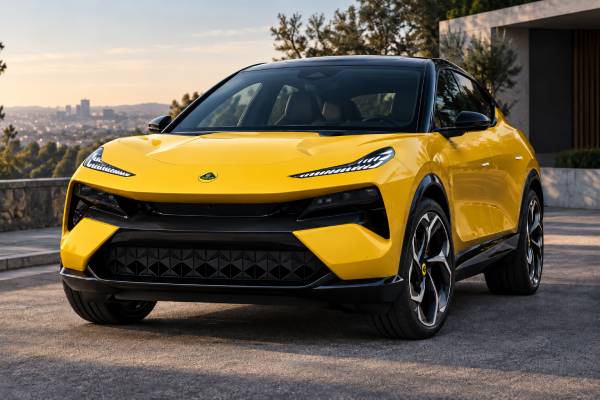
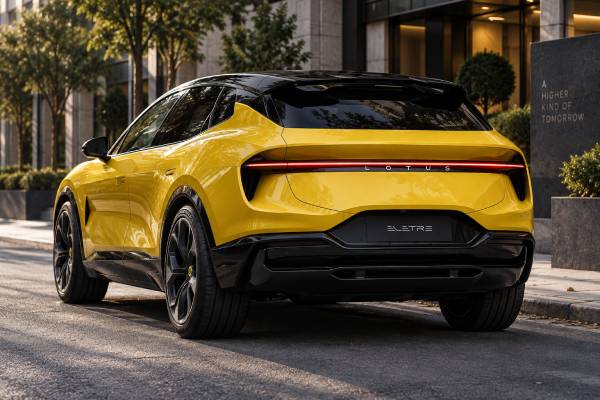
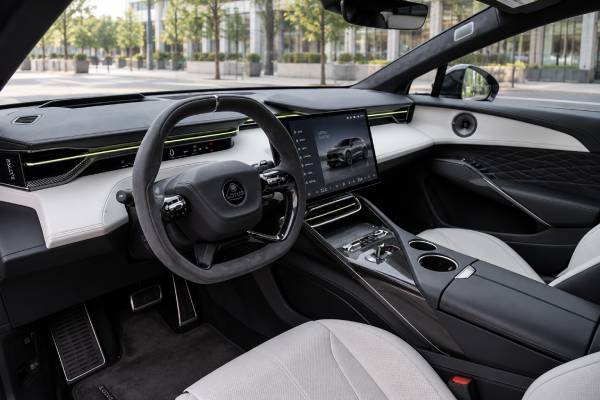
For 2026, the Lotus Eletre Sport is easy to misunderstand because the word “Sport” sounds as though it should mean the 900-plus-horsepower version. In the Canadian lineup it does not: Sport is part of the 450 kW, roughly 603 hp dual-motor family, while Eletre Carbon occupies the much more powerful tier. That distinction matters for shopping, insurance, range expectations, and even which transmission hardware you are buying. The Sport’s job is to make the 600-series Eletre feel more driver-focused without surrendering the long-range usefulness of the 112 kWh battery and rapid 800-volt-class charging system. It remains an enormous, technology-heavy SUV, so its ownership story includes tire wear, air-suspension health, brake condition, software updates, and careful confirmation of market-specific equipment. The result can be a compelling middle ground: genuinely fast, less extreme than Carbon, and better aligned with drivers who will use the car every day.
Table of Contents
- Why the 2026 Sport is a 450 kW model
- Sport specifications and EV architecture
- Acceleration, handling, and the Sport setup
- Range and charging in real use
- Cabin technology, cargo use, and winter driving
- Service, tires, brakes, and software checks
- Sport versus Touring, Carbon, and rivals
Why the 2026 Sport is a 450 kW model
On the 2026 Sport, why the 2026 sport is a 450 kw model should be judged against the 450 kW specification, not against the Carbon. That makes steering and throttle calibration a useful way to decide whether the sharper trim is genuinely better for the roads and trips the owner actually has.
Within why the 2026 sport is a 450 kw model, sport buyers should use an ordinary road, not only a smooth demonstration route, to assess steering and throttle calibration. Broken pavement exposes secondary ride, tramlining, steering kickback, and tire noise that a short urban loop may hide. Repeated moderate acceleration is also more informative than one full launch because it shows whether power delivery remains predictable as temperatures rise. The right Sport should feel alert without becoming tiring when the road is imperfect.
For why the 2026 sport is a 450 kw model, sport keeps the large Eletre battery and high-power charging capability, so its everyday advantage over Carbon is not a dramatically different charging experience but the possibility of lower energy demand when the specification is less extreme. In a Canadian winter, cabin heating, cold-soaked battery temperature, snow tires, and road conditions can reduce range materially. Preconditioning while plugged in helps by warming the cabin and battery using grid energy before departure.
As a why the 2026 sport is a 450 kw model check, for a Sport test drive, use several surfaces and speeds. Confirm that steering and throttle calibration does not introduce vibration, pulling, warning messages, or an abrupt change in response. Then drive slowly with the windows down and listen for suspension or brake noises that road noise can cover at speed. Finish by checking the charging flap, cable lock, cameras, sensors, and infotainment because a modern Lotus can be mechanically sound yet still need expensive attention in its networked equipment.
Sport specifications and EV architecture
On the 2026 Sport, sport specifications and ev architecture should be judged against the 450 kW specification, not against the Carbon. That makes 600-series range advantage a useful way to decide whether the sharper trim is genuinely better for the roads and trips the owner actually has.
Within sport specifications and ev architecture, sport buyers should use an ordinary road, not only a smooth demonstration route, to assess 600-series range advantage. Broken pavement exposes secondary ride, tramlining, steering kickback, and tire noise that a short urban loop may hide. Repeated moderate acceleration is also more informative than one full launch because it shows whether power delivery remains predictable as temperatures rise. The right Sport should feel alert without becoming tiring when the road is imperfect.
For sport specifications and ev architecture, sport keeps the large Eletre battery and high-power charging capability, so its everyday advantage over Carbon is not a dramatically different charging experience but the possibility of lower energy demand when the specification is less extreme. In a Canadian winter, cabin heating, cold-soaked battery temperature, snow tires, and road conditions can reduce range materially. Preconditioning while plugged in helps by warming the cabin and battery using grid energy before departure.
As a sport specifications and ev architecture check, for a Sport test drive, use several surfaces and speeds. Confirm that 600-series range advantage does not introduce vibration, pulling, warning messages, or an abrupt change in response. Then drive slowly with the windows down and listen for suspension or brake noises that road noise can cover at speed. Finish by checking the charging flap, cable lock, cameras, sensors, and infotainment because a modern Lotus can be mechanically sound yet still need expensive attention in its networked equipment.
For Lotus Eletre Sport (Type 132), the tables below collect only the specifications that can be stated usefully for this exact powertrain scope. Market-specific options can change wheels, tires, equipment, homologated range, and sometimes charging hardware, so they should be read as a technical reference rather than a substitute for the vehicle’s own build data.
| Specification | Value |
|---|---|
| Powertrain type | Battery electric vehicle |
| Maximum output | 450 kW (603 hp) |
| Maximum torque | 710 Nm |
| Battery capacity | 112 kWh |
| Drive | dual-motor all-wheel drive |
| Electrical architecture | High-voltage fast-charging EV platform |
| Regeneration | Multi-level regenerative braking integrated with friction brakes |
| Specification | Value |
|---|---|
| Published range | up to about 600 km WLTP in favorable 600-series configurations |
| DC charging | high-power DC charging up to 350 kW on compatible equipment |
| Battery capacity | 112 kWh |
| Home charging | AC charging supported; onboard-charger rating depends on market |
| Preconditioning | Battery and cabin preconditioning through vehicle software where supported |
| Charging strategy | Best repeatability comes from arriving at a rapid charger with a warm battery and low state of charge |
| Specification | Value |
|---|---|
| 0–100 km/h | about 4.5 seconds |
| Top speed | about 258 km/h (160 mph), market-dependent |
| Traction | All-wheel drive |
| Torque delivery | 710 Nm |
| Chassis concept | Air suspension with electronically controlled damping |
| Drive modes | Road-focused modes plus configurable dynamic settings; exact set varies by market |
| Specification | Value |
|---|---|
| Length | 5,103 mm (200.9 in) |
| Width | about 2,019 mm body width; mirrors add more |
| Wheelbase | 3,019 mm (118.9 in) |
| Body | Five-door premium performance SUV |
| Cargo area | about 688 L with rear seats in use on common five-seat specifications |
| Suspension | Adaptive air suspension; active chassis functions depend on trim |
| Brakes | High-performance ventilated disc system; specification varies by trim |
| Wheels | Large-diameter staggered performance fitments; exact size depends on configuration |
| Specification | Value |
|---|---|
| Tire priority | Use correct load rating, speed rating, size, and approved fitment |
| Brake check | Inspect rotor condition and pad thickness because regeneration can mask friction-brake wear |
| Battery check | Review charging behavior, warnings, and thermal-management operation |
| Suspension check | Look for warning messages, uneven ride height, noises, and leak-down |
| Software check | Confirm current updates, app pairing, cameras, sensors, and driver-assistance calibration |
| Documentation | Verify VIN-specific equipment, recalls, service actions, and warranty status |
Acceleration, handling, and the Sport setup
On the 2026 Sport, acceleration, handling, and the sport setup should be judged against the 450 kW specification, not against the Carbon. That makes Canadian winter preconditioning a useful way to decide whether the sharper trim is genuinely better for the roads and trips the owner actually has.
Within acceleration, handling, and the sport setup, sport buyers should use an ordinary road, not only a smooth demonstration route, to assess Canadian winter preconditioning. Broken pavement exposes secondary ride, tramlining, steering kickback, and tire noise that a short urban loop may hide. Repeated moderate acceleration is also more informative than one full launch because it shows whether power delivery remains predictable as temperatures rise. The right Sport should feel alert without becoming tiring when the road is imperfect.
For acceleration, handling, and the sport setup, sport keeps the large Eletre battery and high-power charging capability, so its everyday advantage over Carbon is not a dramatically different charging experience but the possibility of lower energy demand when the specification is less extreme. In a Canadian winter, cabin heating, cold-soaked battery temperature, snow tires, and road conditions can reduce range materially. Preconditioning while plugged in helps by warming the cabin and battery using grid energy before departure.
As a acceleration, handling, and the sport setup check, for a Sport test drive, use several surfaces and speeds. Confirm that Canadian winter preconditioning does not introduce vibration, pulling, warning messages, or an abrupt change in response. Then drive slowly with the windows down and listen for suspension or brake noises that road noise can cover at speed. Finish by checking the charging flap, cable lock, cameras, sensors, and infotainment because a modern Lotus can be mechanically sound yet still need expensive attention in its networked equipment.
Range and charging in real use
On the 2026 Sport, range and charging in real use should be judged against the 450 kW specification, not against the Carbon. That makes sport seat and wheel choices a useful way to decide whether the sharper trim is genuinely better for the roads and trips the owner actually has.
Within range and charging in real use, sport buyers should use an ordinary road, not only a smooth demonstration route, to assess sport seat and wheel choices. Broken pavement exposes secondary ride, tramlining, steering kickback, and tire noise that a short urban loop may hide. Repeated moderate acceleration is also more informative than one full launch because it shows whether power delivery remains predictable as temperatures rise. The right Sport should feel alert without becoming tiring when the road is imperfect.
For range and charging in real use, sport keeps the large Eletre battery and high-power charging capability, so its everyday advantage over Carbon is not a dramatically different charging experience but the possibility of lower energy demand when the specification is less extreme. In a Canadian winter, cabin heating, cold-soaked battery temperature, snow tires, and road conditions can reduce range materially. Preconditioning while plugged in helps by warming the cabin and battery using grid energy before departure.
As a range and charging in real use check, for a Sport test drive, use several surfaces and speeds. Confirm that sport seat and wheel choices does not introduce vibration, pulling, warning messages, or an abrupt change in response. Then drive slowly with the windows down and listen for suspension or brake noises that road noise can cover at speed. Finish by checking the charging flap, cable lock, cameras, sensors, and infotainment because a modern Lotus can be mechanically sound yet still need expensive attention in its networked equipment.
Cabin technology, cargo use, and winter driving
On the 2026 Sport, cabin technology, cargo use, and winter driving should be judged against the 450 kW specification, not against the Carbon. That makes brake corrosion from regeneration a useful way to decide whether the sharper trim is genuinely better for the roads and trips the owner actually has.
Within cabin technology, cargo use, and winter driving, sport buyers should use an ordinary road, not only a smooth demonstration route, to assess brake corrosion from regeneration. Broken pavement exposes secondary ride, tramlining, steering kickback, and tire noise that a short urban loop may hide. Repeated moderate acceleration is also more informative than one full launch because it shows whether power delivery remains predictable as temperatures rise. The right Sport should feel alert without becoming tiring when the road is imperfect.
For cabin technology, cargo use, and winter driving, sport keeps the large Eletre battery and high-power charging capability, so its everyday advantage over Carbon is not a dramatically different charging experience but the possibility of lower energy demand when the specification is less extreme. In a Canadian winter, cabin heating, cold-soaked battery temperature, snow tires, and road conditions can reduce range materially. Preconditioning while plugged in helps by warming the cabin and battery using grid energy before departure.
As a cabin technology, cargo use, and winter driving check, for a Sport test drive, use several surfaces and speeds. Confirm that brake corrosion from regeneration does not introduce vibration, pulling, warning messages, or an abrupt change in response. Then drive slowly with the windows down and listen for suspension or brake noises that road noise can cover at speed. Finish by checking the charging flap, cable lock, cameras, sensors, and infotainment because a modern Lotus can be mechanically sound yet still need expensive attention in its networked equipment.
Service, tires, brakes, and software checks
On the 2026 Sport, service, tires, brakes, and software checks should be judged against the 450 kW specification, not against the Carbon. That makes software and camera calibration a useful way to decide whether the sharper trim is genuinely better for the roads and trips the owner actually has.
Within service, tires, brakes, and software checks, sport buyers should use an ordinary road, not only a smooth demonstration route, to assess software and camera calibration. Broken pavement exposes secondary ride, tramlining, steering kickback, and tire noise that a short urban loop may hide. Repeated moderate acceleration is also more informative than one full launch because it shows whether power delivery remains predictable as temperatures rise. The right Sport should feel alert without becoming tiring when the road is imperfect.
For service, tires, brakes, and software checks, sport keeps the large Eletre battery and high-power charging capability, so its everyday advantage over Carbon is not a dramatically different charging experience but the possibility of lower energy demand when the specification is less extreme. In a Canadian winter, cabin heating, cold-soaked battery temperature, snow tires, and road conditions can reduce range materially. Preconditioning while plugged in helps by warming the cabin and battery using grid energy before departure.
As a service, tires, brakes, and software checks check, for a Sport test drive, use several surfaces and speeds. Confirm that software and camera calibration does not introduce vibration, pulling, warning messages, or an abrupt change in response. Then drive slowly with the windows down and listen for suspension or brake noises that road noise can cover at speed. Finish by checking the charging flap, cable lock, cameras, sensors, and infotainment because a modern Lotus can be mechanically sound yet still need expensive attention in its networked equipment.
Sport versus Touring, Carbon, and rivals
On the 2026 Sport, sport versus touring, carbon, and rivals should be judged against the 450 kW specification, not against the Carbon. That makes steering and throttle calibration a useful way to decide whether the sharper trim is genuinely better for the roads and trips the owner actually has.
Within sport versus touring, carbon, and rivals, sport buyers should use an ordinary road, not only a smooth demonstration route, to assess steering and throttle calibration. Broken pavement exposes secondary ride, tramlining, steering kickback, and tire noise that a short urban loop may hide. Repeated moderate acceleration is also more informative than one full launch because it shows whether power delivery remains predictable as temperatures rise. The right Sport should feel alert without becoming tiring when the road is imperfect.
For sport versus touring, carbon, and rivals, sport keeps the large Eletre battery and high-power charging capability, so its everyday advantage over Carbon is not a dramatically different charging experience but the possibility of lower energy demand when the specification is less extreme. In a Canadian winter, cabin heating, cold-soaked battery temperature, snow tires, and road conditions can reduce range materially. Preconditioning while plugged in helps by warming the cabin and battery using grid energy before departure.
As a sport versus touring, carbon, and rivals check, for a Sport test drive, use several surfaces and speeds. Confirm that steering and throttle calibration does not introduce vibration, pulling, warning messages, or an abrupt change in response. Then drive slowly with the windows down and listen for suspension or brake noises that road noise can cover at speed. Finish by checking the charging flap, cable lock, cameras, sensors, and infotainment because a modern Lotus can be mechanically sound yet still need expensive attention in its networked equipment.
For long-term battery health, follow Lotus guidance rather than folklore. Use scheduled charging when it suits daily life, avoid leaving the vehicle at an extreme state of charge for unnecessarily long periods, and let the car manage pack temperature through its own thermal controls. If charging performance suddenly deteriorates at several known-good chargers, record the conditions and have the vehicle checked rather than assuming every public charger is at fault. For Lotus Eletre Sport (Type 132), this final suitability check should be made against the exact market specification and intended use.
For buyers comparing real cars is steering and throttle calibration. This is not an isolated detail on Lotus Eletre Sport (Type 132); it connects to the vehicle’s broader balance of performance, mass, software control, and expensive hardware. The safest way to evaluate it is with evidence from the exact car: consistent behavior on a test drive, clean diagnostic status, documented service work, and equipment that matches the build record. Avoid assuming that a feature shown in a launch car, another market, or a different trim is automatically present.
Practical use also changes the answer for Lotus Eletre Sport (Type 132) when considering steering and throttle calibration. A driver who mainly covers short urban trips will notice maneuverability, climate energy use, parking-camera reliability, and low-speed ride more often than maximum output. A high-mileage motorway user will care more about seat comfort, tire noise, rapid-charging or refueling access, thermal consistency, and the ease of cleaning driver-assistance sensors in bad weather. Someone buying for occasional performance use should pay closer attention to tire age, brake condition, wheel damage, alignment, and whether repeated hard acceleration produces warnings or reduced output. Those are different ownership profiles, so there is no single ideal setup.
For Lotus Eletre Sport (Type 132), a condition-led maintenance approach is especially useful around steering and throttle calibration. Record tire tread and pressures, inspect the inner wheel edges that are easy to miss, keep charge-port seals and contacts clean and dry, and respond early to suspension or cooling warnings. On high-voltage vehicles, do not improvise around orange cables, battery enclosures, power electronics, or coolant circuits. Qualified service equipment and the correct isolation procedures are essential. That discipline protects both safety and resale value, especially on a technically complex model whose future buyer will want confidence that repairs were done correctly.
From an engineering-use perspective is 600-series range advantage. This is not an isolated detail on Lotus Eletre Sport (Type 132); it connects to the vehicle’s broader balance of performance, mass, software control, and expensive hardware. The safest way to evaluate it is with evidence from the exact car: consistent behavior on a test drive, clean diagnostic status, documented service work, and equipment that matches the build record. Avoid assuming that a feature shown in a launch car, another market, or a different trim is automatically present.
Practical use also changes the answer for Lotus Eletre Sport (Type 132) when considering 600-series range advantage. A driver who mainly covers short urban trips will notice maneuverability, climate energy use, parking-camera reliability, and low-speed ride more often than maximum output. A high-mileage motorway user will care more about seat comfort, tire noise, rapid-charging or refueling access, thermal consistency, and the ease of cleaning driver-assistance sensors in bad weather. Someone buying for occasional performance use should pay closer attention to tire age, brake condition, wheel damage, alignment, and whether repeated hard acceleration produces warnings or reduced output. Those are different ownership profiles, so there is no single ideal setup.
For Lotus Eletre Sport (Type 132), a condition-led maintenance approach is especially useful around 600-series range advantage. Record tire tread and pressures, inspect the inner wheel edges that are easy to miss, keep charge-port seals and contacts clean and dry, and respond early to suspension or cooling warnings. On high-voltage vehicles, do not improvise around orange cables, battery enclosures, power electronics, or coolant circuits. Qualified service equipment and the correct isolation procedures are essential. That discipline protects both safety and resale value, especially on a technically complex model whose future buyer will want confidence that repairs were done correctly.
References
* Lotus Cars Official Site 2026 * Lotus Eletre – The Electric Hyper SUV | Lotus Cars 2026 * Lotus Eletre | How it Drives | Lotus Cars 2026 * Lotus revamps Eletre and Emeya line-up 2025 * Models | Lotus Press | Eletre 2026 * Lotus Eletre | Lotus Electric SUV | Lotus Cars United Kingdom 2026
Disclaimer
This article is for informational purposes only and is not a substitute for professional diagnosis, inspection, or repair. Specifications, torque values, service intervals, charging behavior, and procedures can vary by VIN, market, software version, and equipment; verify all work and technical data against the official Lotus service documentation for the exact vehicle.
If this guide helped you, please consider sharing it on Facebook, X/Twitter, or another automotive community to support our work.