
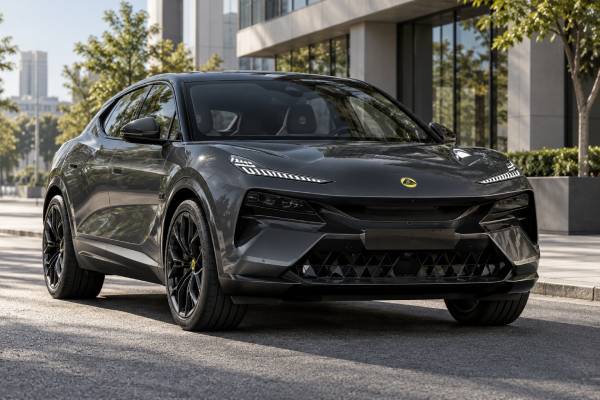
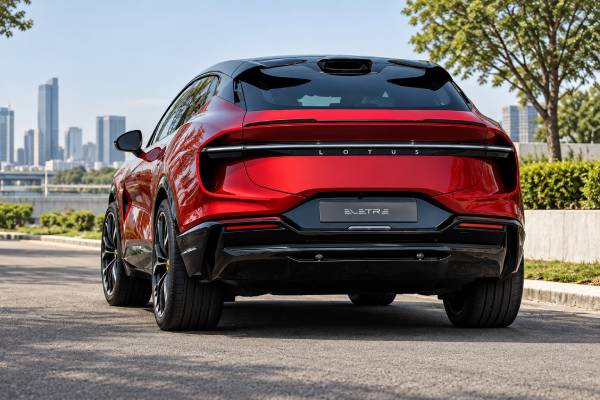
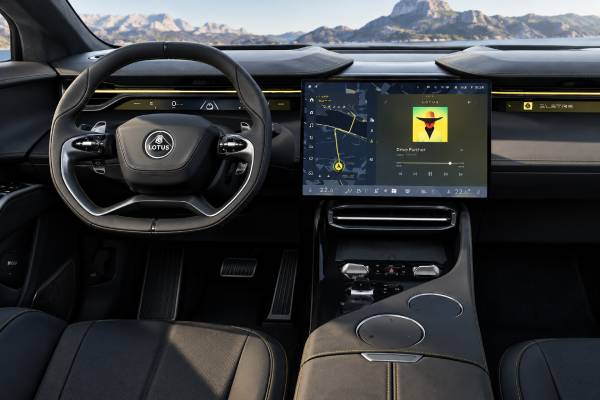
Lotus uses Touring to frame the 2026 Eletre around long-distance comfort rather than maximum theater. The important point is that Touring does not abandon performance: it still belongs to the 450 kW dual-motor, all-wheel-drive family with about 603 hp and 710 Nm. What changes is the emphasis placed on refinement, cabin ambience, and equipment for occupants who spend hours rather than minutes in the car. That makes the Touring especially sensitive to the things brochure horsepower cannot describe—seat comfort, suspension behavior on broken roads, tire noise, usable charging stops, climate-control efficiency, and the way driver-assistance software behaves over a full journey. Because Eletre specifications also differ by market, the exact build sheet matters more than assumptions based on a foreign configurator. This guide treats Touring as its own ownership proposition: a rapid electric grand-tourer in SUV form, with practical advice on range, maintenance, inspection, and whether the comfort premium fits your use.
Table of Contents
- The Touring brief: speed without sacrificing comfort
- Technical data for long-distance use
- Ride quality, air suspension, and cabin refinement
- How to plan charging around a 112 kWh battery
- Passenger comfort, cargo, and family practicality
- Ownership routine and preventive checks
- The buyer profile that makes Touring make sense
The Touring brief: speed without sacrificing comfort
Touring changes the question behind the touring brief: speed without sacrificing comfort: the useful benchmark is not maximum aggression but how well seat comfort after two hours supports long hours in the car. Comfort and control have to coexist for this version to justify its place in the range.
Within the touring brief: speed without sacrificing comfort, for Touring, the practical test lasts longer. Judge seat comfort after two hours after the seat, climate control, suspension, and driver-assistance systems have all been operating for an hour, because small irritations grow on a motorway day. Large wheels can look spectacular yet add noise and reduce efficiency; softer-looking specifications may actually be the better choice for long-distance use. The strongest Touring configuration is the one that preserves calm progress without making the steering or body control feel remote.
For the touring brief: speed without sacrificing comfort, touring owners should plan charging around rest stops rather than around maximum theoretical range. The Eletre can add a large amount of energy quickly on a compatible high-power charger, but the fastest session normally occurs in the lower-to-middle state-of-charge window. For a long journey, stopping before the battery is nearly empty and leaving before charging power has heavily tapered can produce a calmer, more predictable schedule than trying to minimize the number of stops at all costs.
As a the touring brief: speed without sacrificing comfort check, touring buyers should bring the people and luggage the car will actually carry. Seat comfort after two hours may sound abstract until rear passengers have spent time in the seat or the boot is loaded with real cases. Check access, seat controls, climate zones, USB power, visibility, and the space taken by charging cables. A configuration that works beautifully for one or two occupants may be less convincing for four adults on a week-long trip.
Technical data for long-distance use
Touring changes the question behind technical data for long-distance use: the useful benchmark is not maximum aggression but how well secondary ride on large wheels supports long hours in the car. Comfort and control have to coexist for this version to justify its place in the range.
Within technical data for long-distance use, for Touring, the practical test lasts longer. Judge secondary ride on large wheels after the seat, climate control, suspension, and driver-assistance systems have all been operating for an hour, because small irritations grow on a motorway day. Large wheels can look spectacular yet add noise and reduce efficiency; softer-looking specifications may actually be the better choice for long-distance use. The strongest Touring configuration is the one that preserves calm progress without making the steering or body control feel remote.
For technical data for long-distance use, touring owners should plan charging around rest stops rather than around maximum theoretical range. The Eletre can add a large amount of energy quickly on a compatible high-power charger, but the fastest session normally occurs in the lower-to-middle state-of-charge window. For a long journey, stopping before the battery is nearly empty and leaving before charging power has heavily tapered can produce a calmer, more predictable schedule than trying to minimize the number of stops at all costs.
As a technical data for long-distance use check, touring buyers should bring the people and luggage the car will actually carry. Secondary ride on large wheels may sound abstract until rear passengers have spent time in the seat or the boot is loaded with real cases. Check access, seat controls, climate zones, USB power, visibility, and the space taken by charging cables. A configuration that works beautifully for one or two occupants may be less convincing for four adults on a week-long trip.
For Lotus Eletre Touring (Type 132), the tables below collect only the specifications that can be stated usefully for this exact powertrain scope. Market-specific options can change wheels, tires, equipment, homologated range, and sometimes charging hardware, so they should be read as a technical reference rather than a substitute for the vehicle’s own build data.
| Specification | Value |
|---|---|
| Powertrain type | Battery electric vehicle |
| Maximum output | 450 kW (603 hp) |
| Maximum torque | 710 Nm |
| Battery capacity | 112 kWh |
| Drive | dual-motor all-wheel drive |
| Electrical architecture | High-voltage fast-charging EV platform |
| Regeneration | Multi-level regenerative braking integrated with friction brakes |
| Specification | Value |
|---|---|
| Published range | up to about 600 km WLTP in favorable 600-series configurations |
| DC charging | high-power DC charging up to 350 kW on compatible equipment |
| Battery capacity | 112 kWh |
| Home charging | AC charging supported; onboard-charger rating depends on market |
| Preconditioning | Battery and cabin preconditioning through vehicle software where supported |
| Charging strategy | Best repeatability comes from arriving at a rapid charger with a warm battery and low state of charge |
| Specification | Value |
|---|---|
| 0–100 km/h | about 4.5 seconds |
| Top speed | about 258 km/h (160 mph), market-dependent |
| Traction | All-wheel drive |
| Torque delivery | 710 Nm |
| Chassis concept | Air suspension with electronically controlled damping |
| Drive modes | Road-focused modes plus configurable dynamic settings; exact set varies by market |
| Specification | Value |
|---|---|
| Length | 5,103 mm (200.9 in) |
| Width | about 2,019 mm body width; mirrors add more |
| Wheelbase | 3,019 mm (118.9 in) |
| Body | Five-door premium performance SUV |
| Cargo area | about 688 L with rear seats in use on common five-seat specifications |
| Suspension | Adaptive air suspension; active chassis functions depend on trim |
| Brakes | High-performance ventilated disc system; specification varies by trim |
| Wheels | Large-diameter staggered performance fitments; exact size depends on configuration |
| Specification | Value |
|---|---|
| Tire priority | Use correct load rating, speed rating, size, and approved fitment |
| Brake check | Inspect rotor condition and pad thickness because regeneration can mask friction-brake wear |
| Battery check | Review charging behavior, warnings, and thermal-management operation |
| Suspension check | Look for warning messages, uneven ride height, noises, and leak-down |
| Software check | Confirm current updates, app pairing, cameras, sensors, and driver-assistance calibration |
| Documentation | Verify VIN-specific equipment, recalls, service actions, and warranty status |
Ride quality, air suspension, and cabin refinement
Touring changes the question behind ride quality, air suspension, and cabin refinement: the useful benchmark is not maximum aggression but how well highway climate demand supports long hours in the car. Comfort and control have to coexist for this version to justify its place in the range.
Within ride quality, air suspension, and cabin refinement, for Touring, the practical test lasts longer. Judge highway climate demand after the seat, climate control, suspension, and driver-assistance systems have all been operating for an hour, because small irritations grow on a motorway day. Large wheels can look spectacular yet add noise and reduce efficiency; softer-looking specifications may actually be the better choice for long-distance use. The strongest Touring configuration is the one that preserves calm progress without making the steering or body control feel remote.
For ride quality, air suspension, and cabin refinement, touring owners should plan charging around rest stops rather than around maximum theoretical range. The Eletre can add a large amount of energy quickly on a compatible high-power charger, but the fastest session normally occurs in the lower-to-middle state-of-charge window. For a long journey, stopping before the battery is nearly empty and leaving before charging power has heavily tapered can produce a calmer, more predictable schedule than trying to minimize the number of stops at all costs.
As a ride quality, air suspension, and cabin refinement check, touring buyers should bring the people and luggage the car will actually carry. Highway climate demand may sound abstract until rear passengers have spent time in the seat or the boot is loaded with real cases. Check access, seat controls, climate zones, USB power, visibility, and the space taken by charging cables. A configuration that works beautifully for one or two occupants may be less convincing for four adults on a week-long trip.
How to plan charging around a 112 kWh battery
Touring changes the question behind how to plan charging around a 112 kwh battery: the useful benchmark is not maximum aggression but how well luggage and charging-cable packing supports long hours in the car. Comfort and control have to coexist for this version to justify its place in the range.
Within how to plan charging around a 112 kwh battery, for Touring, the practical test lasts longer. Judge luggage and charging-cable packing after the seat, climate control, suspension, and driver-assistance systems have all been operating for an hour, because small irritations grow on a motorway day. Large wheels can look spectacular yet add noise and reduce efficiency; softer-looking specifications may actually be the better choice for long-distance use. The strongest Touring configuration is the one that preserves calm progress without making the steering or body control feel remote.
For how to plan charging around a 112 kwh battery, touring owners should plan charging around rest stops rather than around maximum theoretical range. The Eletre can add a large amount of energy quickly on a compatible high-power charger, but the fastest session normally occurs in the lower-to-middle state-of-charge window. For a long journey, stopping before the battery is nearly empty and leaving before charging power has heavily tapered can produce a calmer, more predictable schedule than trying to minimize the number of stops at all costs.
As a how to plan charging around a 112 kwh battery check, touring buyers should bring the people and luggage the car will actually carry. Luggage and charging-cable packing may sound abstract until rear passengers have spent time in the seat or the boot is loaded with real cases. Check access, seat controls, climate zones, USB power, visibility, and the space taken by charging cables. A configuration that works beautifully for one or two occupants may be less convincing for four adults on a week-long trip.
Passenger comfort, cargo, and family practicality
Touring changes the question behind passenger comfort, cargo, and family practicality: the useful benchmark is not maximum aggression but how well rear passenger comfort supports long hours in the car. Comfort and control have to coexist for this version to justify its place in the range.
Within passenger comfort, cargo, and family practicality, for Touring, the practical test lasts longer. Judge rear passenger comfort after the seat, climate control, suspension, and driver-assistance systems have all been operating for an hour, because small irritations grow on a motorway day. Large wheels can look spectacular yet add noise and reduce efficiency; softer-looking specifications may actually be the better choice for long-distance use. The strongest Touring configuration is the one that preserves calm progress without making the steering or body control feel remote.
For passenger comfort, cargo, and family practicality, touring owners should plan charging around rest stops rather than around maximum theoretical range. The Eletre can add a large amount of energy quickly on a compatible high-power charger, but the fastest session normally occurs in the lower-to-middle state-of-charge window. For a long journey, stopping before the battery is nearly empty and leaving before charging power has heavily tapered can produce a calmer, more predictable schedule than trying to minimize the number of stops at all costs.
As a passenger comfort, cargo, and family practicality check, touring buyers should bring the people and luggage the car will actually carry. Rear passenger comfort may sound abstract until rear passengers have spent time in the seat or the boot is loaded with real cases. Check access, seat controls, climate zones, USB power, visibility, and the space taken by charging cables. A configuration that works beautifully for one or two occupants may be less convincing for four adults on a week-long trip.
Ownership routine and preventive checks
Touring changes the question behind ownership routine and preventive checks: the useful benchmark is not maximum aggression but how well quiet-tire replacement choice supports long hours in the car. Comfort and control have to coexist for this version to justify its place in the range.
Within ownership routine and preventive checks, for Touring, the practical test lasts longer. Judge quiet-tire replacement choice after the seat, climate control, suspension, and driver-assistance systems have all been operating for an hour, because small irritations grow on a motorway day. Large wheels can look spectacular yet add noise and reduce efficiency; softer-looking specifications may actually be the better choice for long-distance use. The strongest Touring configuration is the one that preserves calm progress without making the steering or body control feel remote.
For ownership routine and preventive checks, touring owners should plan charging around rest stops rather than around maximum theoretical range. The Eletre can add a large amount of energy quickly on a compatible high-power charger, but the fastest session normally occurs in the lower-to-middle state-of-charge window. For a long journey, stopping before the battery is nearly empty and leaving before charging power has heavily tapered can produce a calmer, more predictable schedule than trying to minimize the number of stops at all costs.
As a ownership routine and preventive checks check, touring buyers should bring the people and luggage the car will actually carry. Quiet-tire replacement choice may sound abstract until rear passengers have spent time in the seat or the boot is loaded with real cases. Check access, seat controls, climate zones, USB power, visibility, and the space taken by charging cables. A configuration that works beautifully for one or two occupants may be less convincing for four adults on a week-long trip.
The buyer profile that makes Touring make sense
Touring changes the question behind the buyer profile that makes touring make sense: the useful benchmark is not maximum aggression but how well seat comfort after two hours supports long hours in the car. Comfort and control have to coexist for this version to justify its place in the range.
Within the buyer profile that makes touring make sense, for Touring, the practical test lasts longer. Judge seat comfort after two hours after the seat, climate control, suspension, and driver-assistance systems have all been operating for an hour, because small irritations grow on a motorway day. Large wheels can look spectacular yet add noise and reduce efficiency; softer-looking specifications may actually be the better choice for long-distance use. The strongest Touring configuration is the one that preserves calm progress without making the steering or body control feel remote.
For the buyer profile that makes touring make sense, touring owners should plan charging around rest stops rather than around maximum theoretical range. The Eletre can add a large amount of energy quickly on a compatible high-power charger, but the fastest session normally occurs in the lower-to-middle state-of-charge window. For a long journey, stopping before the battery is nearly empty and leaving before charging power has heavily tapered can produce a calmer, more predictable schedule than trying to minimize the number of stops at all costs.
As a the buyer profile that makes touring make sense check, touring buyers should bring the people and luggage the car will actually carry. Seat comfort after two hours may sound abstract until rear passengers have spent time in the seat or the boot is loaded with real cases. Check access, seat controls, climate zones, USB power, visibility, and the space taken by charging cables. A configuration that works beautifully for one or two occupants may be less convincing for four adults on a week-long trip.
A final test drive should include the road surfaces you actually use. Smooth dealership routes can hide low-speed tire thump, suspension noises, steering tramlining, and driver-assistance behavior around imperfect lane markings. If the car will be a family vehicle, load the seats you use most often, test child-seat access if relevant, and check the boot with real luggage dimensions. Performance is easy to demonstrate; suitability requires a more ordinary test. For Lotus Eletre Touring (Type 132), this final suitability check should be made against the exact market specification and intended use.
From an engineering-use perspective is seat comfort after two hours. This is not an isolated detail on Lotus Eletre Touring (Type 132); it connects to the vehicle’s broader balance of performance, mass, software control, and expensive hardware. The safest way to evaluate it is with evidence from the exact car: consistent behavior on a test drive, clean diagnostic status, documented service work, and equipment that matches the build record. Avoid assuming that a feature shown in a launch car, another market, or a different trim is automatically present.
Practical use also changes the answer for Lotus Eletre Touring (Type 132) when considering seat comfort after two hours. A driver who mainly covers short urban trips will notice maneuverability, climate energy use, parking-camera reliability, and low-speed ride more often than maximum output. A high-mileage motorway user will care more about seat comfort, tire noise, rapid-charging or refueling access, thermal consistency, and the ease of cleaning driver-assistance sensors in bad weather. Someone buying for occasional performance use should pay closer attention to tire age, brake condition, wheel damage, alignment, and whether repeated hard acceleration produces warnings or reduced output. Those are different ownership profiles, so there is no single ideal setup.
For Lotus Eletre Touring (Type 132), a condition-led maintenance approach is especially useful around seat comfort after two hours. Record tire tread and pressures, inspect the inner wheel edges that are easy to miss, keep charge-port seals and contacts clean and dry, and respond early to suspension or cooling warnings. On high-voltage vehicles, do not improvise around orange cables, battery enclosures, power electronics, or coolant circuits. Qualified service equipment and the correct isolation procedures are essential. That discipline protects both safety and resale value, especially on a technically complex model whose future buyer will want confidence that repairs were done correctly.
References
* Lotus Cars Official Site 2026 * Lotus Eletre – The Electric Hyper SUV | Lotus Cars 2026 * Lotus Eletre | How it Drives | Lotus Cars 2026 * Lotus revamps Eletre and Emeya line-up 2025 * Models | Lotus Press | Eletre 2026 * Lotus Eletre | Lotus Electric SUV | Lotus Cars United Kingdom 2026
Disclaimer
This article is for informational purposes only and is not a substitute for professional diagnosis, inspection, or repair. Specifications, torque values, service intervals, charging behavior, and procedures can vary by VIN, market, software version, and equipment; verify all work and technical data against the official Lotus service documentation for the exact vehicle.
If this guide helped you, please consider sharing it on Facebook, X/Twitter, or another automotive community to support our work.