
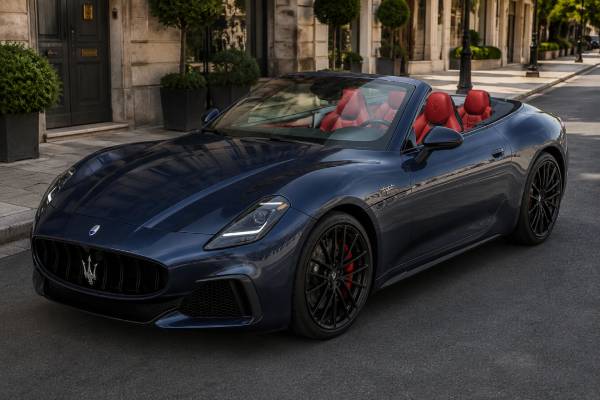
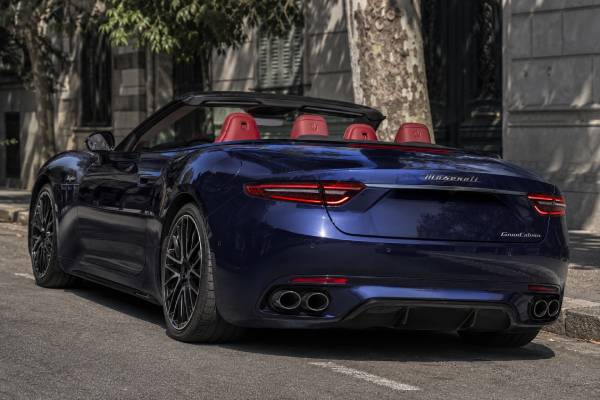
The 490 hp Maserati GranCabrio is the most relaxed combustion-powered version of the M189 convertible, but it is not a basic car. It combines a twin-turbo Nettuno V6, standard all-wheel drive, air suspension, a fast fabric roof, and four usable seats in a package built for long-distance travel. Introduced in 2025 beneath the 550 hp Trofeo and later carried into Maserati’s 2026 range update, it gives up some peak output and aggressive trim in exchange for a quieter, more understated grand-touring character. That difference matters when choosing between versions: the 490 hp model is still extremely quick, yet its appeal rests more on traction, comfort, and everyday flexibility than on maximum numbers. This guide covers the exact 2025 and 2026 version, including its specifications, roof and cabin engineering, model-year changes, driving behavior, maintenance priorities, and a practical inspection plan. Because equipment and published figures can vary by market and production date, buyers should always verify a specific car by VIN, order sheet, and current factory documentation.
Table of Contents
- The 490 hp GranCabrio in Context
- Nettuno, AWD, and Chassis Specifications
- Model Years, Trims, and Factory Choices
- Soft-Top Packaging and Cabin Technology
- How the 490 hp Car Drives
- Service, Software, and Ownership Risks
- Choosing and Inspecting the Right Car
The 490 hp GranCabrio in Context
The 490 hp model is the entry point to the modern petrol GranCabrio range and the version most clearly aimed at traditional grand touring. It offers the core M189 experience—open-air travel for four, high-speed stability, and luxury-car comfort—without the Trofeo’s more overtly sporting specification.
Maserati revealed the new-generation GranCabrio first in Trofeo form during 2024, then completed the combustion range with the 490 CV version in February 2025. The car shares its basic architecture with the GranTurismo coupé, including a front-mounted Nettuno V6, an eight-speed automatic transmission, and electronically controlled all-wheel drive. A fabric roof replaces the coupé’s fixed structure while preserving rear seats large enough for real passengers rather than occasional luggage.
The model also fills a specific place in Maserati history. Earlier GranCabrio generations relied on a naturally aspirated V8 and rear-wheel drive. The M189 changes the formula with a smaller twin-turbo engine, much faster electronics, standard AWD, air springs, and a digital cockpit. It is less mechanically theatrical than the old V8 car, yet far more usable in poor weather and substantially quicker from low speed.
For 2025, the 490 hp car sat below the 550 hp Trofeo and alongside the electric Folgore. Maserati’s June 2026 update retained the 490 hp output while revising the exterior, cabin controls, software, and dynamic calibration. The same update raised the Trofeo to 590 hp, which made the base car’s role even clearer: it is the calmer choice for owners who value long trips and roof-down use more than the fastest possible acceleration.
Today, its reputation depends less on rarity than on specification and condition. A carefully ordered color combination, complete warranty history, current software, clean wheels, and a fault-free roof can matter more than a small mileage difference. Because these cars remain young, long-term reliability patterns are not yet mature; ownership quality is better judged through documentation, diagnostics, and dealer support than internet anecdotes.
Nettuno, AWD, and Chassis Specifications
The 490 hp GranCabrio uses a 3.0-liter twin-turbo Nettuno V6 with 600 Nm of torque, an eight-speed automatic, and standard all-wheel drive. Official launch data quoted 0–100 km/h in 4.0 seconds and a 300 km/h top speed, while some later market pages list 3.9 seconds and 302 km/h; the difference reflects market or model-year documentation rather than a different engine badge.
| Item | Specification |
|---|---|
| Engine | 2,992 cc 90-degree V6, twin turbocharged |
| Fuel system | Direct injection with Maserati pre-chamber combustion technology |
| Maximum output | 490 CV, commonly presented as 490 hp in market material |
| Maximum torque | 600 Nm |
| Transmission | Eight-speed automatic |
| Drivetrain | Electronically controlled all-wheel drive |
| Suspension | Double-wishbone front, multi-link rear, adaptive air springs |
| Wheels | 20-inch front and 21-inch rear, design dependent on trim and market |
| 0–100 km/h | 4.0 seconds at launch; 3.9 seconds in some later specifications |
| Top speed | 300 km/h at launch; up to 302 km/h in some later specifications |
| Seating | Four |
| Roof | Power fabric soft top, operable in about 14 seconds at up to 50 km/h |
| Wheelbase | 2,929 mm for the original M189 body |
| Fuel capacity | 70 liters |
| Luggage capacity | Approximately 172 liters with the roof closed; less when folded |
The Nettuno engine’s pre-chamber system is its defining technical feature. A small combustion chamber above the main chamber uses a second spark plug to ignite jets of flame through small passages. Under suitable conditions, this promotes fast, stable combustion. The engine can also use conventional spark ignition depending on load and operating strategy. The result is high specific output without the peaky delivery associated with an older naturally aspirated engine.
AWD does not turn the GranCabrio into a permanently front-driven car. The control system varies torque distribution according to grip, steering, throttle, drive mode, and stability-control demand. The layout places the front differential in line with the engine to help keep mass low. Rear-biased behavior remains part of the car’s character, while the front axle provides useful traction during hard launches or on wet surfaces.
Air suspension gives the 490 hp model a wider comfort range than fixed-rate springs could provide. Damping and ride height change with the selected mode and speed. On updated 2026 cars, Country mode can raise the body by about 20 mm for rough approaches and poor surfaces, subject to speed limits. It is a clearance aid, not an off-road setting.
Brake hardware, tire brand, curb weight, and detailed dimensions can differ with market equipment. Carbon-ceramic brakes should never be assumed merely because a car has large wheels or colored calipers; inspect the order sheet and the discs themselves. Likewise, published dry, DIN, and curb weights use different measurement standards and should not be compared without context.
Model Years, Trims, and Factory Choices
The key production distinction is simple: 2025 introduced the 490 hp GranCabrio, while 2026 retained its output but brought a visible and technical refresh. Buyers should identify the actual build date and equipment rather than relying only on the registration year.
2025 launch specification
The launch car presented at St. Moritz showed how Maserati positioned the trim. It wore Verde Giada paint, black brake calipers, staggered 20- and 21-inch Crio wheels, ice-colored perforated full-grain leather, 3D carbon trim, dark-finish adaptive LED headlights, and the 19-speaker Sonus faber High Premium audio system. Those details were display-car choices, not universal standard equipment.
The range structure consisted of three distinct powertrains:
- The 490 hp petrol model emphasized luxury, restraint, and long-distance use.
- The 550 hp Trofeo added more output, sportier detailing, and more aggressive dynamic intent.
- The electric Folgore used three motors and an 800-volt architecture for immediate performance and zero tailpipe emissions.
2026 range update
The June 2026 revision changed the front fascia, lighting details, cabin interfaces, colors, and dynamic calibration. The sharper nose adopted reshaped intakes, boundary-layer slots, an external air curtain, and a central splitter intended to improve airflow and front stability. Clear rear lamp lenses made refreshed cars easy to identify. A new steering wheel, redesigned digital clock, revised PRND controls, updated graphics, and a driver distraction and fatigue monitor modernized the cabin.
The 490 hp version kept its output and comfort-led position. Factory descriptions paired it with Crio wheels, satin-chrome exterior details, full-grain leather, and carbon-fiber cabin trim in the GranCabrio. Fuoriserie offered a much wider choice of paints, badges, upholstery, trim, and eventually bespoke soft-top treatment.
Authenticity and specification checks
A premium configuration should be proved, not inferred. Obtain the factory order sheet and compare it with the car’s paint, roof color, wheel design, calipers, upholstery, trim, audio, driver-assistance equipment, and lighting. Confirm that expensive wheels have not been replaced after damage and that any film, wrap, tint, or carbon accessory is documented and reversible.
Production changes may reach different markets at different times. A car titled or advertised as a 2026 may be an earlier specification registered later, while a late build may carry updated components before a local brochure changes. VIN-based parts lookup and a dealer build record are more reliable than an advertisement’s model-year label.
Soft-Top Packaging and Cabin Technology
The GranCabrio’s most important engineering achievement is not its speed; it is packaging a fast power roof and four usable seats without losing the low profile of the GranTurismo. The car works best when evaluated as a complete touring system rather than as a coupé with its roof removed.
The multi-layer fabric top opens or closes in roughly 14 seconds and can operate at speeds up to about 50 km/h. Touch controls allow operation from the central display, and the folded roof occupies part of the luggage area. Before buying, test the mechanism several times from cold and warm conditions. Watch the front latch, side flaps, rear glass, window indexing, and final seal compression. Any hesitation, asymmetry, warning, or repeated need to restart the cycle deserves diagnosis.
A fabric roof saves mass and storage space compared with a folding metal system, but care still matters. Avoid harsh brushes and strong chemicals, remove bird deposits promptly, keep drains clear, and inspect seams for abrasion. Water entering behind trim can damage electronics long before a wet carpet becomes obvious. Check the trunk well, rear side panels, seatbelt areas, and lower door seals for moisture or staining.
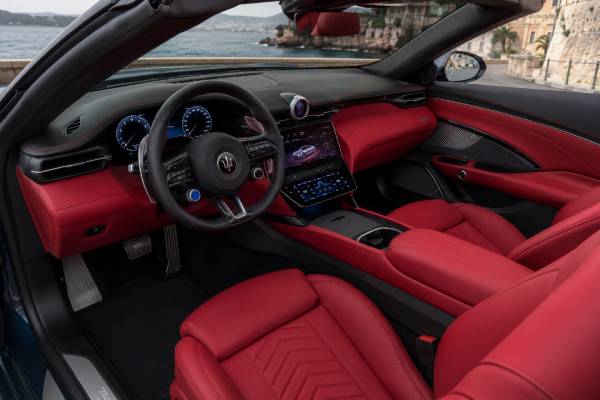
The cabin uses three main digital displays: a 12.3-inch central screen, an 8.8-inch comfort screen, and a 12.2-inch instrument cluster, with a head-up display available or included according to specification. The lower screen handles climate and seat functions, while physical steering-wheel controls and the digital clock provide shortcuts. The system is visually modern, but every screen and control module should be tested because a blank display can disable several unrelated functions at once.
Four-seat usability is genuine by exotic-convertible standards. Rear access still requires moving the front seats, and tall occupants will need compromise, but the rear bench can carry adults for more than a token trip. The neck-warming system, heated seats, wind control, and climate system extend the roof-down season. On 490 hp cars, verify whether the neck warmer is fitted, because standard equipment varies by year and market and the 2026 factory material clearly reserves some items for upper trims.
The aluminum-intensive structure, underbody bracing, and carefully managed airflow help restore stiffness and refinement lost with the fixed roof. Even so, the convertible is heavier and can transmit mild body movement over broken surfaces. Loud rattles, steering-column shake, or visible door-gap changes are not normal character; they can indicate wheel damage, poor accident repair, loose bracing, or roof adjustment issues.
How the 490 hp Car Drives
The 490 hp GranCabrio feels fast, secure, and composed rather than hyperactive. Its strongest qualities are effortless midrange torque, clean all-weather traction, and the ability to switch from quiet touring to serious pace without making every drive feel like a track session.
From rest, AWD removes most traction drama and helps the car reach 100 km/h in about four seconds. The V6 delivers a broad surge rather than the steady crescendo of the old 4.7-liter V8. Turbo response is quick, though a driver may notice a brief pause when requesting full power from low revs in a high gear. The eight-speed transmission usually masks that delay by downshifting early.
In GT mode, shifts are smooth and the air suspension prioritizes control without making the ride brittle. The wide staggered tires still make potholes and sharp ridges noticeable, especially on low-profile 21-inch rear fitments. Tire pressure has a large effect: an overinflated cold set can make the car feel busier and reduce wet grip, while underinflation generates heat and shoulder wear.
Sport mode sharpens throttle, transmission, exhaust, and damping behavior. The engine sounds fuller with the valves open, but the 490 hp version remains less vocal than the Trofeo with its standard sport exhaust on refreshed cars. That restraint suits long-distance roof-down driving, where an exhaust that is exciting for ten minutes can become tiring for two hours.
Steering is quick and accurate, with more information arriving through chassis response than through heavy rim effort. The long wheelbase creates calm high-speed behavior, while rear-biased AWD allows the car to rotate naturally before the front axle adds support. It is best treated as a rapid grand tourer: progressive inputs preserve balance, tire temperature, and passenger comfort.
Updated 2026 cars add Country, GT, and Sport settings to the 490 hp combustion version. Country raises the car for rough access; GT is the default touring choice; Sport lowers resistance to fast inputs and allows launch-control use under the required conditions. Launch control should be demonstrated only after checking tire condition, fluid temperature, road space, and the official procedure. Repeated standing starts add heat to the transmission, driveline, tires, and brakes and are not a sensible pre-purchase test.
The brakes should feel linear during ordinary stops and stable under one firm high-speed application. A pulsing pedal, steering shake, scraping, or long travel needs investigation. Regenerative blending does not apply to this petrol model, so pedal behavior should remain conventional. On a long descent, use a lower gear and avoid riding the brakes continuously.
Visibility is reasonable forward but limited over the rear quarters with the roof raised. Cameras, parking sensors, mirrors, and driver aids are therefore practical necessities, not decorative options. Test them in rain and low light if possible, because a clean showroom image will not reveal a misaligned camera or intermittent radar fault.
Service, Software, and Ownership Risks
The 490 hp GranCabrio is too new for a complete long-term fault record, so the safest ownership strategy is preventive: preserve warranty coverage, keep software current, test the roof and electronics regularly, and document every service. A low-mileage car with missed updates and weak batteries can be a worse purchase than a regularly used example.
Engine, transmission, and cooling
The Nettuno’s twin turbos, direct injection, pre-chamber hardware, multiple cooling circuits, and dense packaging require model-specific diagnostics. Check for oil or coolant residue, cold-start misfires, uneven idle, smoke, warning messages, and abnormal turbo noise. A stored fault can matter even when the dashboard is clear, so request a full scan and freeze-frame data.
Follow the official time and mileage schedule for oil, filters, brake fluid, coolant checks, and other market-specific items. Short trips and long storage can contaminate oil and weaken batteries without adding much mileage. Use the specified oil and filters, record part numbers, and avoid extending intervals merely because the car travels little.
The eight-speed automatic should engage promptly and shift cleanly when cold and hot. Harsh engagement, repeated flare, shudder, or driveline clunk may involve software, mounts, transfer hardware, or internal wear. Do not accept “they all do that” without comparing another car and reviewing diagnostic data.
Electrical systems and software
The 12-volt battery supports many modules before the engine starts. Low voltage can create roof, suspension, driver-assistance, infotainment, key, and communication faults that appear unrelated. Test battery condition, charging output, sleep current, and proper maintainer use. A generic charger connected incorrectly can cause problems; follow the owner documentation.
Confirm completion of software updates, recalls, and service campaigns by VIN. Test both keys, phone pairing, app services, navigation, cameras, sensors, audio, head-up display, climate screens, digital clock, seat memory, heating, neck-air functions, lighting, and every roof control. Intermittent faults are easiest to find by cycling the car several times rather than performing one short test.
Air suspension, wheels, tires, and brakes
Park the car overnight on level ground and check whether one corner drops. Listen for a compressor that runs too often and confirm that ride-height changes complete without warnings. Inspect air lines, dampers, links, and underbody panels for impact damage.
The staggered wheels are vulnerable to potholes and curb strikes. Check the inner barrels as well as the visible faces, measure tread across each tire, and inspect date codes. All four tires should match the approved specification and have similar wear. Large differences in rolling circumference can burden the AWD system and confuse stability controls.
Measure pads and discs rather than judging through the wheel. Steel discs can develop lips, heat spots, or corrosion after storage. If carbon-ceramic brakes are fitted, inspect for chips, surface damage, and remaining-life data using the correct factory method. Replacement costs can overwhelm a seemingly attractive discount.
Roof, body, and accident repair
Cycle the roof, inspect drains, and look for water entry after washing or rain. Check aluminum panels for poor repairs, uneven texture, overspray, disturbed fasteners, and inconsistent gaps. Calibrate cameras and radar after relevant body or glass work. An inexpensive cosmetic repair can become a persistent electronic problem if sensors were not aligned correctly.
Warranty and extended coverage have high value on a young, complex convertible. Confirm the in-service date, mileage limit, exclusions, required servicing, transfer process, and whether modifications affect coverage. Written confirmation is more useful than a salesperson’s general assurance.
Choosing and Inspecting the Right Car
Choose the 490 hp GranCabrio when comfort, subtle styling, and four-season traction matter more than having the highest-output badge. The best example combines a desirable specification with current warranty, complete records, clean diagnostics, and evidence of regular use.
Begin by deciding whether you prefer the original 2025 design or the sharper 2026 refresh. The earlier car preserves the launch styling and may offer stronger value. The refreshed car brings revised aerodynamics, updated cabin controls and graphics, new colors, Country mode, and current production support. Neither is automatically better; condition and purchase price should decide.
Compare it directly with the Trofeo. The 550 hp or 590 hp version adds stronger acceleration, more aggressive hardware and trim, Corsa mode, E-LSD on the refreshed car, and a more prominent exhaust. The 490 hp car is easier to justify when those features would rarely be used. It still reaches speeds that demand restraint and offers nearly all of the roof, seating, infotainment, and touring benefits.
A proper pre-purchase inspection should include:
- VIN, build sheet, market specification, service history, warranty, recalls, and campaign status.
- Cold start, hot restart, full module scan, misfire and fault history, and road-test data.
- Engine, turbo, cooling, transmission, AWD, and underbody inspection on an appropriate lift.
- Air-suspension height test, compressor behavior, alignment, wheel runout, and tire measurements.
- Brake measurement and identification of steel or carbon-ceramic equipment.
- Repeated roof cycles, drain and seal inspection, window indexing, and moisture search.
- Test of every screen, camera, sensor, key, seat, climate, lighting, audio, and connectivity function.
- Paint-depth and structural inspection by a technician familiar with aluminum-bodied luxury cars.
Do not skip an extended road test. Drive in GT and Sport modes, over smooth and broken roads, at parking speed, and at motorway speed. Listen for roof flutter, wind leaks, wheel-bearing noise, differential whine, trim rattles, and suspension knocks. Confirm straight tracking and vibration-free braking.
Budget beyond the monthly payment. Insurance, 20- and 21-inch tires, premium fuel, dealer diagnostics, software support, paint protection, roof care, and secure storage all cost more than they do on an ordinary convertible. Obtain insurance and tire quotations before agreeing to the car. A wheel-and-tire protection plan may be worthwhile in areas with poor roads, but read exclusions carefully.
Color and equipment influence resale. Classic combinations are easier to move, while a distinctive Fuoriserie car can command attention only when documentation proves the specification and the next buyer shares the taste. Avoid paying a large premium for aftermarket carbon, wraps, exhaust changes, or wheel substitutions unless the original parts are included.
The 490 hp GranCabrio succeeds because it does not chase the Trofeo’s identity. It is fast enough for any public road, secure in difficult weather, comfortable over distance, and unusually accommodating for an exotic convertible. Buy one for that broad ability, inspect it as a complex modern luxury car, and preserve its software, warranty, roof, and documentation with the same care given to its engine.
References
- Maserati completes GranCabrio range at The I.C.E. St. Moritz 2025
- Maserati GranCabrio – Specifications and Official Technical Data 2026
- New Maserati GranTurismo, GranCabrio and Grecale 2026
- Debut of the New Maserati GranCabrio – The Trident’s New Spyder: Iconic Design and Open-Top Elegance 2024
- Maserati Guides & Documentation for your vehicle 2026
Disclaimer
This article is for informational purposes and is not a substitute for professional diagnosis, inspection, or repair. Specifications, torque values, service intervals, software, and procedures vary by VIN, market, and equipment. Verify all details against official service documentation for the specific vehicle. Please share this guide on Facebook, X/Twitter, or another enthusiast community if it was useful; sharing supports our work.