
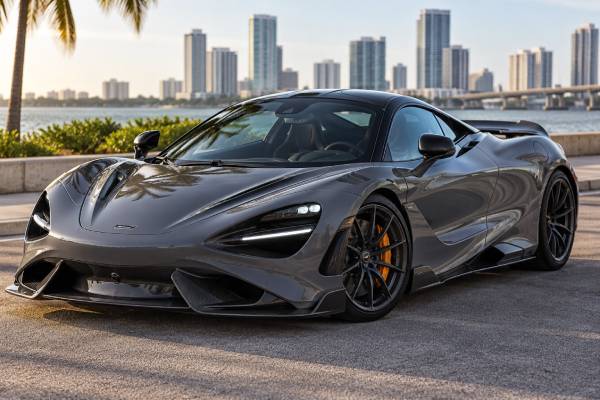
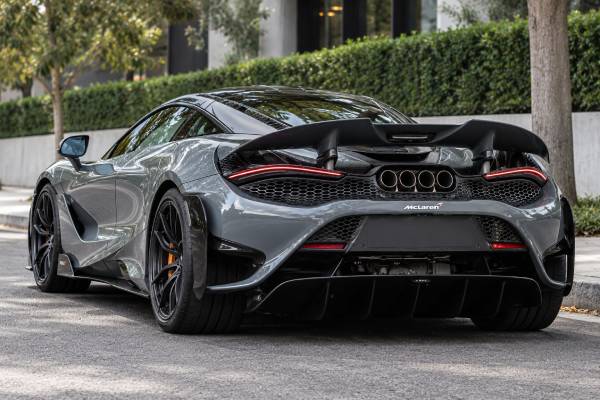
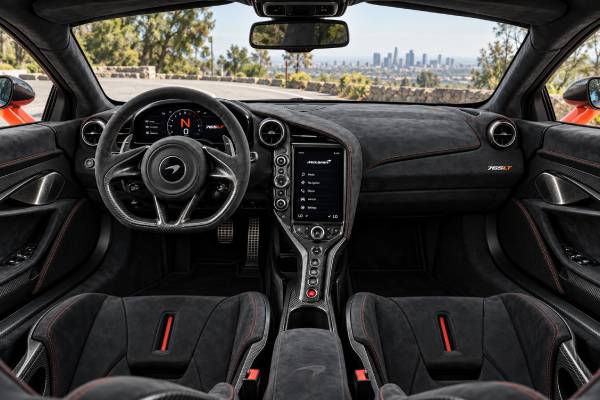
The McLaren 765LT is the sharper, lighter, more track-focused evolution of the 720S, but its appeal is not limited to headline acceleration. The P14R coupe combines a 755 hp version of McLaren’s M840T 4.0-liter twin-turbo V8 with shorter gearing, aggressive aerodynamics, a stripped-back cabin, carbon-ceramic brakes, and a chassis recalibrated around lower mass and faster responses. McLaren built only 765 coupes, with production beginning in 2020 and the limited run completed in 2021, so condition, specification, and documented history matter as much as mileage when shopping today. The car is brutally fast, yet it is also unusually communicative for a modern supercar because it retains electro-hydraulic steering and McLaren’s linked-hydraulic suspension philosophy. Ownership, however, rewards careful maintenance: the track-oriented tires, complex cooling hardware, lightweight glazing, carbon structure, and low ride height all deserve close inspection. The sections below explain what makes the 765LT different, how its specifications translate on the road, and what to verify before buying one.
Table of Contents
- What Makes the 765LT Different
- Engine, Gearing, and Performance
- 765LT Technical Specifications
- Chassis, Aerodynamics, and Brakes
- Road and Track Use
- Maintenance, Tires, and Storage
- Used-Buying Inspection Guide
What Makes the 765LT Different
The 765LT is not simply a 720S with more boost. McLaren reworked weight, gearing, aerodynamics, suspension calibration, braking hardware, cockpit equipment, and materials so the car responds faster and feels more intense at the same road speed.
“LT” stands for Longtail, a name tied to the McLaren F1 GTR Longtail racing cars and later used for limited-production road cars with a consistent theme: less weight, more aerodynamic focus, greater power, and a stronger connection between driver and chassis. In the 765LT, that theme is easy to see. The lightest dry weight is 1,229 kg (2,709 lb), while DIN kerb weight is 1,339 kg (2,952 lb). That is roughly 80 kg lighter than a comparable 720S specification.
The savings did not come from one dramatic change. McLaren attacked mass across the entire car. The titanium exhaust is substantially lighter than a steel equivalent. Thin glass and polycarbonate glazing reduce mass high in the body. Lightweight forged wheels cut unsprung and rotating weight. Carbon-fiber panels, a simplified interior, racing-style seats, reduced sound insulation, and deletion of air conditioning and audio in the most weight-focused specification all contribute. Air conditioning and audio were available, so two apparently similar cars can differ in both equipment and weight.
The limited run is equally important for buyers. McLaren offered 765 individually numbered coupes worldwide. Production started in the third quarter of 2020, and the run concluded in 2021. That finite supply means original configuration matters. A car with desirable factory carbon options, an MSO color, the optional roof scoop, upgraded seats, or a documented track-oriented package may attract a different audience from a more road-biased example.
The P14R designation helps distinguish the fixed-roof 765LT from the later 765LT Spider. The coupe uses McLaren’s carbon-fiber MonoCage II structure. Its fixed-roof layout also allows rear storage behind the cabin that the Spider does not match. More importantly for current owners, the coupe uses a polycarbonate rear cabin panel that became the subject of a safety recall on affected cars without a factory roof scoop. That issue belongs on every pre-purchase checklist, even though it does not define the model as a whole.
What makes the 765LT special, then, is the way many small engineering decisions stack together. The car accelerates harder, turns in more urgently, reacts more transparently through the steering, and places fewer layers between the driver and the road than the already rapid 720S.
Engine, Gearing, and Performance
The 765LT’s 4.0-liter twin-turbo V8 makes 765 PS, equivalent to 755 bhp, and 800 Nm (590 lb-ft) of torque. The engine is paired with a seven-speed Seamless Shift Gearbox and a shorter final drive, so the performance gain comes from both higher output and more aggressive gearing.
The M840T is a 3,994 cc, 90-degree V8 mounted longitudinally behind the passenger compartment. It uses twin electrically actuated twin-scroll turbochargers and dry-sump lubrication, an arrangement well suited to sustained cornering because the oil supply is managed independently of a conventional deep sump. Peak power arrives at 7,500 rpm, while peak torque is quoted at 5,500 rpm.
McLaren did not chase top speed at the expense of everything else. The 765LT tops out at 330 km/h (205 mph), but its defining numbers are lower down the speed range. The final production specification lists 0–100 km/h (0–62 mph) in 2.8 seconds, 0–200 km/h (124 mph) in 7.0 seconds, and the quarter mile in 9.9 seconds. That 0–200 figure is especially revealing because it shows how hard the car continues to accelerate once traction is less of a limitation.
The transmission calibration is part of the character. Comfort, Sport, and Track settings alter how aggressively the car shifts and responds. The shorter gearing raises engine speed more quickly for a given road speed than in the 720S, making the car feel busier and more immediate when the throttle opens. McLaren also used “Limit Downshift,” a function that can queue a lower gear when the driver requests a downshift that would otherwise over-rev the engine; the shift occurs when engine speed falls into the allowable range. It is useful on track because it lets the driver focus on braking and turn-in without repeatedly checking whether a requested gear is available.
The 765LT is rear-wheel drive, and the rear axle does not use a conventional mechanical limited-slip differential. McLaren instead combines an open differential with Brake Steer, selectively applying braking force to help control inside-wheel behavior and influence yaw. The result is less hardware mass and a particular corner-entry feel that differs from cars built around a heavy active differential.
Straight-line speed is only half the story. The carbon-ceramic brakes are strong enough for McLaren to quote 100–0 km/h in 29.5 m (96.8 ft) and 200–0 km/h in 108 m (354 ft). Those are ideal-condition figures, not promises for every road or tire state, but they underline why tire temperature, tire age, pad condition, and brake surface condition matter so much on a used example.
Owners should also distinguish factory numbers from instrumented magazine testing. Different surfaces, launch methods, fuel loads, temperatures, tires, and timing standards can move acceleration results by tenths. For buying and maintenance purposes, the more useful question is whether the car delivers consistent power cleanly, shifts without warnings, holds temperature, and shows no evidence of deferred cooling-system or driveline work.
765LT Technical Specifications
The 765LT is a mid-engined, rear-wheel-drive gasoline supercar built around a carbon-fiber MonoCage II. Its core hardware is the 3,994 cc M840T twin-turbo V8, seven-speed dual-clutch SSG transmission, linked-hydraulic Proactive Chassis Control II suspension, and carbon-ceramic braking system.
| Specification | Value |
|---|---|
| Engine | M840T 90-degree twin-turbocharged V8 |
| Displacement | 3,994 cc (4.0 L) |
| Installation | Longitudinal mid-engine |
| Lubrication | Dry sump |
| Turbocharging | Twin electrically actuated twin-scroll turbochargers |
| Maximum power | 765 PS (755 bhp / 563 kW) at 7,500 rpm |
| Maximum torque | 800 Nm (590 lb-ft) at 5,500 rpm |
| Fuel tank capacity | 72 L (15.8 UK gal / about 19 US gal) |
| Specification | Value |
|---|---|
| 0–60 mph | 2.7 s |
| 0–100 km/h (0–62 mph) | 2.8 s |
| 0–200 km/h (0–124 mph) | 7.0 s |
| 0–300 km/h (0–186 mph) | 18.0 s |
| Quarter mile / 400 m | 9.9 s |
| Maximum speed | 330 km/h (205 mph) |
| 100–0 km/h braking distance | 29.5 m (96.8 ft) |
| 200–0 km/h braking distance | 108 m (354 ft) |
| Specification | Value |
|---|---|
| Transmission | 7-speed Seamless Shift Gearbox (SSG) |
| Drive type | Rear-wheel drive |
| Transmission modes | Comfort, Sport, Track |
| Differential | Open differential with Brake Steer |
| Steering | Electro-hydraulic power assistance |
| Front suspension | Double wishbones with adaptive damping |
| Rear suspension | Double wishbones with adaptive damping |
| Chassis control | Proactive Chassis Control II |
| Front brakes | 390 mm carbon-ceramic discs, 6-piston forged monobloc aluminum calipers |
| Rear brakes | 380 mm carbon-ceramic discs, 4-piston forged aluminum calipers |
| Specification | Value |
|---|---|
| Length | 4,600 mm (181 in) |
| Width without mirrors | 1,930 mm (76 in) |
| Width with mirrors | 2,161 mm (85 in) |
| Height | 1,193 mm (47 in) |
| Wheelbase | 2,670 mm (105 in) |
| Front / rear track | 1,656 / 1,617 mm (65 / 64 in) |
| Lightest dry weight | 1,229 kg (2,709 lb) |
| DIN kerb weight | 1,339 kg (2,952 lb), fluids plus 90% fuel |
| Front luggage capacity | 150 L |
| Rear luggage capacity | 210 L |
| Specification | Value |
|---|---|
| Front wheels | 9J x 19 in |
| Rear wheels | 11J x 20 in |
| Front tires | 245/35 R19 93Y XL Pirelli P Zero Trofeo R |
| Rear tires | 305/30 R20 103Y XL Pirelli P Zero Trofeo R |
| Official EU combined fuel use | 12.3 L/100 km (WLTP) |
| US fuel economy | 14 mpg city / 18 mpg highway / 15 mpg combined |
| CO2 emissions | 280 g/km |
Weight deserves a short note because McLaren publishes more than one figure. “Lightest dry weight” removes operating fluids and assumes the most weight-focused configuration, while DIN kerb weight includes fluids and 90 percent fuel. A real customer car with air conditioning, audio, cameras, lift system, and additional trim can weigh more. Compare like with like rather than treating 1,229 kg as the ready-to-drive weight of every 765LT.
Chassis, Aerodynamics, and Brakes
The 765LT’s chassis changes are designed to increase precision rather than make the car merely stiffer. Wider front geometry, a lower front ride height, revised spring and damper behavior, faster steering response, and increased aerodynamic load work together to make the front axle react more decisively.
McLaren’s Proactive Chassis Control II is unusual because it links dampers hydraulically across the car rather than relying on conventional anti-roll bars to do all the work of controlling body roll. The system can therefore separate some ride and roll functions. For the 765LT, McLaren revised both hardware and software, using knowledge from other high-performance models to sharpen control without abandoning the fluidity that gives McLarens their recognizable road feel.
The steering remains electro-hydraulic. That matters because many competitors moved to fully electric assistance. The 765LT’s system still filters some kickback, but it gives the driver a clearer sense of front-tire loading than many modern supercars. When shopping, steering should feel consistent around center and through lock, without warning messages, irregular assistance, or evidence of impact damage around the front suspension.
Aerodynamics are active and functional. Compared with a 720S, the 765LT uses a longer front splitter, reshaped front bumper, front-wheel-arch louvres, revised side elements, a larger rear diffuser, and a prominent Longtail active rear wing. McLaren stated that the package produces about 25 percent more downforce than the 720S. The rear wing also acts as an airbrake under hard deceleration.
The brake package is equally serious. Standard carbon-ceramic discs measure 390 mm at the front and 380 mm at the rear, with six-piston front and four-piston rear forged aluminum calipers. Carbon-ceramic rotors can last a long time in road use, but they are expensive and should not be judged only by mileage. Track heat cycles, pad choice, gravel damage, edge chipping, surface oxidation, and previous cleaning methods all matter. A specialist inspection is more useful than a casual visual glance.
The standard LT-specific Pirelli P Zero Trofeo R is a road-legal track tire, not an all-weather touring tire. It gives enormous dry grip when warm, but cold temperatures, heavy rain, standing water, and aged rubber can transform the car’s behavior. A buyer should record each tire’s date code, tread condition, shoulder wear, and evidence of heat cycling. Uneven wear can also reveal alignment problems or sustained circuit use.
Finally, inspect the underside. The 765LT sits low and depends on carefully shaped aerodynamic surfaces. Scraped splitters, cracked diffuser edges, damaged undertrays, or repeated contact around the front lift area can be costly even when the carbon tub itself is sound. Cosmetic damage and structural damage are not the same thing, so suspicious areas deserve an experienced McLaren technician or carbon-composite specialist.
Road and Track Use
The 765LT is usable on the road, but it makes the most sense when the owner accepts that much of its engineering is optimized for fast, dry, smooth conditions. Its low mass and feedback make ordinary speeds interesting, while its tires, clearance, and thermal capability clearly point toward circuit use.
On a good road, the most memorable quality is not the 205 mph maximum speed. It is the immediacy of the car’s controls. The throttle has little apparent slack, the shorter gearing keeps the V8 alert, the steering communicates small changes in load, and the chassis changes direction with very little delay. A 720S is already extremely quick; the 765LT feels more keyed-up and less insulated.
Track use is where the car’s braking system, aero balance, cooling capacity, and transmission programming become easiest to appreciate. It is also where wear accelerates. A car can have low odometer mileage yet have significant consumable wear if those miles include repeated high-speed sessions. Ask for track-day history rather than treating circuit use as automatically negative. Well-maintained track cars can be excellent; the problem is undocumented or deferred maintenance.
The coupe has one specific safety point that must not be ignored. Affected 2021 765LT coupes without the factory roof scoop were recalled because the polycarbonate rear cabin window could de-bond from its support frame and potentially detach. McLaren’s interim guidance included avoiding racetrack use and avoiding speeds above 96 mph (154 km/h) with the windows open while waiting for the permanent remedy. The final remedy uses mechanical fasteners at the corners of the panel. A buyer should verify recall status by VIN and confirm the permanent repair rather than relying on appearance alone.
That recall also illustrates why factory specification matters. Cars with a factory roof scoop were excluded from that particular recall population because the panel is secured differently. It does not mean a roof-scoop car is automatically superior, only that its configuration changes the applicability of this one campaign.
For road-focused owners, the best setup is not necessarily the lightest possible. Air conditioning, audio, parking aids, and vehicle lift can make a large difference in day-to-day enjoyment while barely changing the essential character. The right car is the one whose specification matches how it will actually be used.
Maintenance, Tires, and Storage
A 765LT should be maintained as a highly stressed, low-volume performance car, not as an ordinary low-mileage collectible. Time, heat cycles, battery state, rubber age, fluid condition, and campaign completion can matter as much as the odometer.
Start with service history. The ideal record shows scheduled maintenance completed by a McLaren retailer or a specialist who can document the correct procedures, diagnostic checks, fluid standards, and software status for the VIN and market. Do not fill gaps with assumptions about oil grade, capacities, torque settings, or intervals from a 720S or another M840T model; confirm service data against current McLaren documentation.
Battery care deserves unusual attention because lightly used supercars spend long periods parked. The 765LT uses a lightweight electrical system, and McLaren issued a campaign concerning an incorrect “remaining parking days” display on certain cars. The fix involved reconfiguring the relevant system with McLaren diagnostic equipment. A buyer should confirm that the instrument display behaves normally, the supplied or approved charger is present when expected, and the vehicle starts cleanly after sitting without a cluster full of low-voltage faults.
Cooling-system history is another useful line of inquiry. McLaren issued a service campaign for some 720S and 765LT coupes where the clutch cooler hose could have insufficient clearance from the turbocharger wastegate. A later campaign covering certain 720S, 765LT, and GT vehicles addressed clearance around a water-charge-air-cooler inlet pipe. These campaigns do not mean every 765LT suffers the problem. They do mean the VIN should be checked for outstanding work and the engine bay should show tidy, undamaged routing.
Tires should be treated by age and use, not tread depth alone. Trofeo R rubber can look acceptable yet have lost much of its original performance after years of storage or repeated heat cycles. Replacing four tires is cheap compared with repairing a carbon-bodied supercar after a cold-tire slide. Owners who drive in cool or wet conditions may choose a more versatile approved tire setup where permitted, but any change should preserve correct size, load rating, speed rating, clearance, and electronic-system compatibility.
Carbon-ceramic brakes need similarly informed care. Ask whether rotors or pads have been replaced, whether the car has run aggressive track pads, and whether the braking system has received track-related fluid service when appropriate. Do not polish or chemically attack the rotors in an attempt to make them look new.
Finally, keep records. In a 765-unit model, invoices for tires, brakes, campaigns, alignment, body repairs, battery replacement, and annual servicing protect both the car and its future value because they let the next owner distinguish careful use from neglect.
Used-Buying Inspection Guide
The best 765LT to buy is the one with the clearest history, correct factory specification, completed safety work, healthy consumables, and no hidden crash or carbon damage. Mileage should be part of the evaluation, but it is a poor substitute for condition.
Begin by matching the VIN, build sheet, and physical car. Confirm that major options and MSO details are original rather than later additions. The car’s numbered plaque, paint specification, seat type, exterior carbon, roof treatment, roof scoop if fitted, wheels, and practical options should align with the documentation. Originality is especially important when asking price is being justified by rarity.
Then inspect the high-cost areas in a deliberate order:
- Verify open recalls and service campaigns by VIN, with special attention to the coupe’s polycarbonate rear-panel recall and any documented retailer actions.
- Inspect the rear polycarbonate panel, seals, surrounding carbon frame, and permanent recall fasteners where applicable. Ask for the repair invoice rather than assuming a visible modification is the official remedy.
- Check the clutch-cooler and charge-air-cooler pipe areas for completed campaign work, correct clips or protectors where applicable, and no abrasion or heat damage.
- Scan the car with appropriate McLaren diagnostic equipment. Stored low-voltage, suspension, transmission, active-aero, lift-system, and powertrain faults can reveal issues that a short test drive misses.
- Inspect every carbon aerodynamic part, the floor, splitter, diffuser, undertrays, wheel-arch areas, and jacking or lift points. Look for repairs, resin cracks, mismatched weave, overspray, or non-factory fasteners.
- Measure tire age and condition, and examine the wheels for bends, cracks, refinishing, or impact evidence. Lightweight forged wheels are performance components, not merely cosmetic items.
- Assess carbon-ceramic rotors and pads with a specialist. Surface appearance alone does not establish remaining life.
- Test the hydraulic suspension modes, front lift if fitted, active rear wing, air conditioning if fitted, infotainment if fitted, cameras, parking sensors, windows, door operation, and all steering-wheel controls.
- On a cold start, listen for abnormal mechanical noise, confirm stable idle, watch for warning messages, and allow the car to reach temperature before requesting meaningful load.
- During the road test, check steering centering, shift quality, brake behavior, driveline vibration, boost delivery, cooling stability, and suspension response on both smooth and imperfect surfaces.
Crash history deserves more nuance than a simple “clean report” label. A bumper or splitter can be replaced without threatening the MonoCage II, while a poorly repaired structural impact can make a low-mileage car a bad purchase. Request repair invoices and pre-repair photographs where available. Paint-depth measurements can help on metal panels, but carbon components require visual and specialist inspection techniques.
Track history also needs context. Repeated circuit use should prompt closer examination of rotors, pads, tires, wheel bearings, alignment, underbody, cooling systems, and fluids. Yet a meticulously serviced track-used car can be healthier than a museum piece that spent years on an unsupported battery with old tires and stale fluids.
Specification affects usability. The roof scoop is desirable to some collectors and changes applicability of the rear-panel recall, but it also alters cabin sound and personal preference. Air conditioning and vehicle lift are valuable for road use. Camera and parking equipment reduce risk around a wide, low car. Lightweight seats can be superb on track but should be tried before purchase because fit is personal.
A pre-purchase inspection should therefore be performed by someone who knows modern McLaren construction, diagnostics, and campaign history. The goal is not to find a completely blemish-free 765LT. It is to understand exactly what you are buying, price future work accurately, and avoid confusing rarity with mechanical condition. When the history is transparent and the car is maintained properly, the 765LT remains one of McLaren’s most concentrated combinations of low mass, hydraulic steering feel, explosive acceleration, and road-legal track engineering.
References
- McLaren 765LT – Powerful, Light & Track Focused LT Supercar 2026 (Manufacturer Model Page)
- Part 573 Safety Recall Report 24V-901 2025 (Recall Report)
- McLaren 720S and 765LT – Clutch Cooler Hose Clash Rework 2021 (Service Campaign Bulletin)
- McLAREN 765LT – REMAINING PARKING DAYS DISPLAY INCORRECT 2022 (Service Campaign)
- McLaren 765LT Coupe – Polycarbonate Tailgate Panel – North America, Canada 2024 (Aftersales Communication)
- Pipe Protector and Clip Installation 2025 (Service Campaign)
Disclaimer
This article is for informational purposes only and is not a substitute for professional diagnosis, inspection, or repair. Specifications, torque values, service intervals, campaign applicability, and procedures can vary by VIN, market, equipment, and later manufacturer updates. Verify all technical work against current official McLaren service documentation for the exact vehicle.
If this guide helped you, please consider sharing it on Facebook, X/Twitter, or another platform to support our work.