
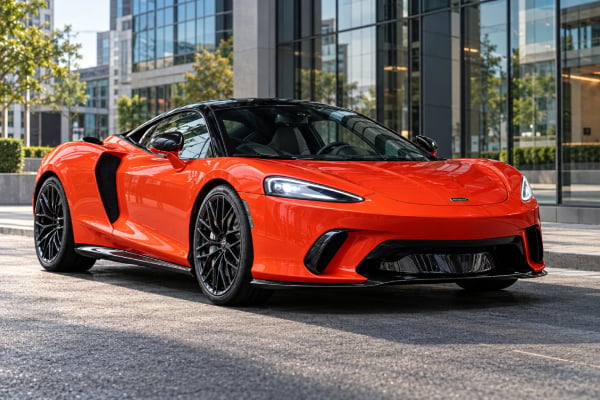

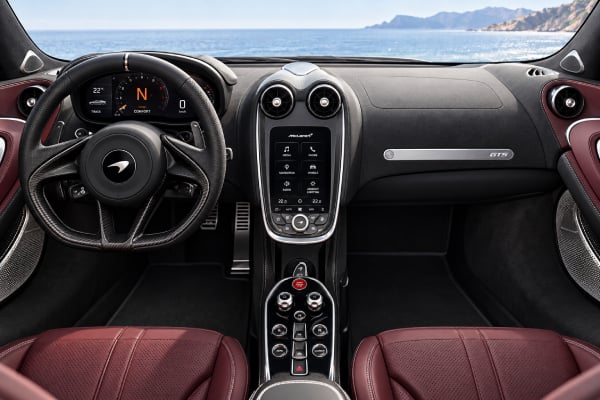
McLaren’s GTS Signature Collection is a 22-car Japan-only interpretation of the 626 bhp GTS, created around the architecture and design philosophy of the McLaren Technology Centre in Woking. Announced in late 2025, the collection uses four coordinated themes—Howthorn, Paragon, Rotunda, and Reflection—rather than a single paint-and-badge treatment. Each combines MSO bespoke paint, a specific wheel finish and interior palette, while every car receives shared details such as MTC-inspired mirror graphics, embroidered cabin motifs, a commemorative console plate, a bespoke key, a sports exhaust, and a panoramic privacy-glass roof. Mechanically, the Signature Collection remains a GTS: a rear-wheel-drive, mid-engined car using McLaren’s M840TE 4.0-litre twin-turbo V8, seven-speed SSG, carbon-fibre MonoCell II-T structure, and Proactive Damping Control. The result is a limited model whose appeal depends equally on its usable grand-touring hardware and its unusually detailed design story. Owners and buyers should therefore treat specification records, special trim, paint condition, and service documentation as core parts of the car’s identity.
Table of Contents
- Why Japan Got the Signature Collection
- Four MTC Themes Explained
- Bespoke Details That Define the Collection
- GTS Signature Collection Technical Data
- Using the Car Without Losing Its Story
- Maintenance and Documentation in Japan
- Buying or Collecting One of the 22
Why Japan Got the Signature Collection
The Signature Collection was created specifically for Japan and limited to 22 GTS cars. McLaren’s Japanese launch material tied the project to the importance of the local market and, more unusually, used the company’s own headquarters as the creative brief rather than a racing livery or anniversary color.
The source of the design is the McLaren Technology Centre, or MTC, in Woking, England. Designed by Norman Foster, the building and its adjoining lake form a circular composition that McLaren describes through the ideas of balance and harmony. The lake is not merely decorative: its water contributes to heat management for the building and wind-tunnel operation through heat exchangers. That combination of visual form and practical function is central to the story McLaren chose for the GTS edition.
It is a fitting subject for the GTS because the base car is itself built around two apparently opposing goals. It must deliver supercar acceleration and steering response, yet it also offers 570 litres of total published luggage space, adaptive suspension, a front lift system when specified, and a cabin intended for longer trips. McLaren’s launch explanation explicitly connects that balance of performance and everyday usability with the MTC theme.
The collection was announced in Japan in late October 2025, with a McLaren Automotive Asia press release dated November 4 and authorized-retailer material appearing at the same time. The assignment’s 2025–2026 scope therefore describes the launch and sales period of the collection rather than a redesign between those two years. For an individual car, the build date, registration date, and warranty start should be read from its own records.
McLaren announced 22 cars across four themes but did not frame them as an equal two-, five-, or six-car split in the launch material. That matters because rarity claims should be specific. “One of 22 Signature Collection cars for Japan” is supported by the programme information; a claim such as “one of five in this theme” should be accepted only when backed by factory or retailer documentation for that car.
The collection is also more than an ordinary GTS with bespoke paint. Its cabin carries architectural references taken from plans and elevations of the MTC, and the shared equipment specification is unusually rich. That gives owners a clear standard against which to judge originality years later.
Four MTC Themes Explained
The four themes translate different parts of the MTC into color, material, and finish. They are deliberately restrained compared with many graphic-heavy special editions, so the differences are easiest to understand by looking at paint, wheel finish, and cabin color together.
| Theme | Exterior concept | Wheel finish | Interior palette |
|---|---|---|---|
| Howthorn | Deep green metallic inspired by the natural surroundings of the MTC | Satin GT Silver 10-spoke Turbine forged alloy | Almond White semi-aniline leather with tonal contrast stitching |
| Paragon | Paragon Black with silver metallic flake, referencing the MTC project name and boulevard | Satin GT Silver 10-spoke Turbine forged alloy | Almond White semi-aniline leather |
| Rotunda | Solid off-white inspired by the circular entrance and white underground corridor | Dark Palladium 10-spoke Turbine forged alloy | Scoria Grey semi-aniline leather with tonal stitching |
| Reflection | Green with silver metallic flake evoking light reflected from the MTC lake and glass façade | Dark Palladium 10-spoke Turbine forged alloy | Scoria Grey semi-aniline leather with tonal stitching |
McLaren’s English transliteration in the Japanese launch material spells the first theme Howthorn. Its inspiration is the hawthorn trees around the MTC campus, but an owner documenting the edition should preserve McLaren’s published theme name rather than silently “correcting” it on records. The paint uses a deep black base with a vivid green effect layered over it, paired with Satin GT Silver Turbine wheels and Graphite Grey brake calipers.
Paragon is more architectural. The name was used for the MTC construction project, and the theme also refers to the tiles along the MTC boulevard. The black paint contains silver metallic flake, so its character depends strongly on light. The same Satin GT Silver wheel finish used on Howthorn provides contrast, while the Almond White interior keeps the overall scheme light inside.
Rotunda draws on the circular entrance and a long white corridor in the lower level of the building. Its solid off-white exterior is paired with Dark Palladium wheels and Graphite Grey brake calipers. The Scoria Grey interior is deliberately cooler and more monochrome than the white cabins of Howthorn and Paragon.
Reflection turns the lake into the main reference. The green paint incorporates silver metallic flake in a base intended to suggest sunlight on water and glass. Dark Palladium wheels keep the exterior from becoming overly bright, and Scoria Grey semi-aniline leather continues the darker theme inside.
All four themes use Graphite Grey brake calipers, which is useful when checking originality. Wheel finish varies by theme, while the underlying 10-spoke Turbine forged wheel design remains common. Because the body colors were developed for the limited collection, paint repairs deserve precise documentation. A close visual match is not enough if a future owner cannot determine what product, formula, or repair method was used.
Bespoke Details That Define the Collection
A genuine Signature Collection car should show the MTC story in many small places, not just on its paintwork. The shared specification covers exterior, interior, and convenience equipment, giving buyers several independent details to compare with factory records.
| Feature | Collection specification |
|---|---|
| Exterior paint | MSO bespoke finish specific to one of the four themes |
| Brake calipers | Graphite Grey |
| Mirror housings | Bespoke MTC-motif design |
| Badging | Stealth Badge Pack and GTS side badge |
| Exhaust | Sports exhaust with Natural Titanium tailpipes |
| Roof | Panoramic privacy tinted glass roof |
| Wheels | 10-spoke Turbine forged alloys with theme-specific special finish |
| Glass | Privacy glass |
The mirror housing detail is especially useful because it introduces the architectural motif before the door is opened. In the cabin, the theme becomes more literal. The headrests carry an embroidered MTC logo based on the circular symbol also used in McLaren infotainment. The door panels use stitched artwork derived from an overhead architectural plan, while the passenger-side fascia presents a backlit side silhouette of the building.
| Area | Special content |
|---|---|
| Shift paddles | Visual carbon-fibre paddles with McLaren Orange pinstripe |
| Stitching | Tonal contrast treatment matched to the interior theme |
| Headrests | Embroidered MTC logo |
| Door panels | Embroidery based on MTC plan-view architecture |
| Passenger fascia | Backlit MTC side-profile design |
| Centre console | MTC edition commemorative plate |
| Key | Bespoke-design vehicle key |
| Comfort equipment | Practicality Pack, Premium Pack, and vehicle lift |
The commemorative plate is a particularly important ownership item. It anchors the interior to the special programme and should be photographed at purchase, after any interior repair, and before the car is sold. The bespoke key deserves similar care. Keys are easy to replace for functional reasons but difficult to recreate as historical artifacts if a special casing or finish disappears.
This level of detailing changes how restoration should be approached. Standard GTS components may physically fit, but replacing a damaged panel with a normal-production part can remove edition-specific embroidery or illumination. Before ordering a replacement, an owner should ask an authorized retailer whether the original component can be repaired, whether a Signature Collection replacement remains orderable, and what documentation can be retained if substitution is unavoidable.
GTS Signature Collection Technical Data
The Signature Collection does not introduce a separate powertrain tune; it uses the GTS’s gasoline-only mid-engined V8 layout. The M840TE 4.0-litre twin-turbo engine makes 635 PS (626 bhp) and 630 Nm, with a seven-speed Seamless Shift Gearbox sending power to the rear wheels.
| Specification | Value |
|---|---|
| Engine code | M840TE |
| Engine | 4.0 L V8, mid-mounted |
| Induction | Twin electrically actuated twin-scroll turbochargers |
| Lubrication | Dry sump |
| Maximum power | 635 PS (626 bhp) |
| Maximum torque | 630 Nm (465 lb-ft) |
| Transmission | 7-speed + reverse Seamless Shift Gearbox (SSG) |
| Drive | Rear-wheel drive |
| Measure | Figure |
|---|---|
| 0–100 km/h (0–62 mph) | 3.2 seconds |
| 0–200 km/h (0–124 mph) | 8.9 seconds |
| Quarter mile (0–400 m) | 11.0 seconds |
| Top speed | 326 km/h (203 mph) |
| 100–0 km/h (62–0 mph) | 32 m (105 ft) |
| 200–0 km/h (124–0 mph) | 127 m (417 ft) |
| Specification | Value |
|---|---|
| Body structure | Carbon-fibre MonoCell II-T monocoque with carbon-fibre rear upper structure and aluminium crash structures |
| Suspension | Double aluminium wishbones |
| Damping | Independent adaptive dampers with Proactive Damping Control; Comfort, Sport, and Track modes |
| Differential | Open differential |
| Brakes | Carbon-ceramic brakes with 6-piston calipers |
| Lightest dry weight | 1,466 kg (3,232 lb) |
| DIN kerb weight | 1,520 kg (3,351 lb) |
| Fuel-tank capacity | 72 L |
| Front luggage capacity | 150 L |
| Rear luggage capacity | 420 L |
| EU WLTP combined fuel use | 11.9 L/100 km |
| EU WLTP combined CO2 | 270 g/km |
McLaren also advertises a three-year unlimited-mileage vehicle warranty for the GTS. Coverage on a specific Signature Collection car depends on its market, in-service date, terms, and current status, so the warranty should be confirmed by VIN rather than inferred from the year in an advertisement.
The mechanical numbers explain why this edition can remain subtle visually. Its 626 bhp output and 8.9-second 0–200 km/h time already give it performance beyond what the design package needs to advertise. The special collection adds narrative and material detail without turning the GTS into a track-focused derivative.
Using the Car Without Losing Its Story
The Signature Collection was built from a GTS precisely because it can be used as a road car, and careful mileage need not conflict with preservation. The practical approach is to protect the edition-specific pieces while allowing the mechanical systems to operate regularly and reach full temperature.
The 150-litre front compartment is useful for items that benefit from a conventional enclosed space. The 420-litre rear luggage area is larger but sits above the powertrain, so heat-sensitive belongings and rigid cases need more thought. Flexible luggage usually makes better use of the shape. The panoramic privacy roof and Premium Pack equipment reinforce the long-distance character, while the standard vehicle lift is valuable around steep ramps and Japanese urban parking facilities.
Paint protection is more complicated than simply applying film to every panel. Before installing or replacing paint-protection film, photograph the paint in daylight, record any existing chips or corrections, and keep the installer’s invoice and film map. When film ages, yellowing or edge contamination can make an otherwise healthy bespoke finish look tired. Removal should be handled by someone experienced with high-value paint systems.
The Howthorn and Reflection greens use visual effects that can shift dramatically with light. Paragon Black contains metallic flake, and Rotunda White relies on a clean, solid off-white appearance. A local repair that appears acceptable under workshop lighting may stand out outdoors. For any paintwork, require a documented color match and preserve the repair record with the car.
Interior care should be similarly conservative. Almond White semi-aniline leather will show dye transfer and dark clothing marks quickly, while Scoria Grey hides some discoloration more effectively. Cleaning products should be tested in an inconspicuous area, especially near embroidery. The MTC stitching, illuminated fascia, special paddle finish, and console plate are not places for aggressive polishing or general-purpose chemicals.
Use the lift system rather than relying on memory at difficult entrances, and periodically exercise it even if the car is rarely driven. The same applies to climate control, seat functions, cameras, parking sensors, powered closures, infotainment, and the backlit MTC fascia. A collection car that sits motionless can develop faults that are more frustrating than the mileage it was preserved to avoid.
Tires and carbon-ceramic brakes also age independently of the odometer. Inspect tire date codes, inner shoulders, sidewalls, and pressure; do not assume deep tread means a tire is suitable for high-speed use. Have ceramic brake condition assessed by a technician familiar with McLaren hardware, particularly before a long trip or spirited driving after extended storage.
The collection’s appearance also rewards restraint when accessorizing. A removable phone mount, luggage solution, or protective mat can improve daily use without changing the car, whereas permanent drilling, non-factory badges, colored film over the special paint, or replacement wheels can obscure the original design. If an owner wants a different look for regular driving, the least damaging path is to use reversible parts and store the factory items correctly. Wheels should be labeled by position, wrapped to prevent finish damage, and kept with the car’s records.
Long trips are a good opportunity to verify the practical systems that distinguish a GTS from a more track-focused McLaren. Test the lift before reaching a difficult ramp, confirm the luggage bay closes without pressure from bags, and check the panoramic roof and privacy glass for chips before departure. When the car returns, inspect the nose, lower sills, wheel faces, and mirror housings for fresh damage. Those small checks protect the very details that make the Signature Collection different while allowing the drivetrain to be used as intended.
Maintenance and Documentation in Japan
The maintenance goal is continuity: service the GTS on schedule, keep a VIN-specific record of every technical action, and add a parallel record for the special MSO surfaces and parts. A rare appearance package cannot compensate for missing mechanical history.
McLaren service-plan documentation uses a 12-month or 15,000 km (9,000-mile) interval, whichever comes first, as the general service rhythm. For a Japanese Signature Collection car, the owner should confirm the exact schedule and included operations through the current owner documentation and an authorized McLaren retailer. Time will usually matter more than distance because a 22-car edition is likely to accumulate modest annual mileage.
Annual attention should not become a box-ticking exercise. Ask for the invoice to identify the work performed, fluids changed, diagnostic findings, software updates, campaign checks, and wear items measured. Keep tire invoices with manufacture dates and fitment details. Record battery replacement and charger use. If the car is transported or stored professionally, retain condition reports that show mileage and body condition at handover.
Special-edition documentation should include clear photographs of the theme-specific wheel finish, brake calipers, mirror motif, embroidered headrests and doors, passenger fascia, console plate, key, and paint. If any of those parts are removed, repaired, or refinished, record the reason and keep the original component when practical. A future owner should be able to distinguish factory specification from later work without guessing.
Storage in Japan adds environmental considerations. High summer humidity and heat can be hard on leather, adhesives, electronics, batteries, and brake surfaces. A dry, ventilated storage space is preferable to a sealed environment that traps moisture. Avoid covering a dirty car, and make sure a cover is clean enough not to abrade the paint. If the car is not being driven, inspect it periodically for fluid traces, tire pressure loss, battery status, and signs of moisture.
Do not repeatedly start the engine for a few minutes as a substitute for driving. Short running periods may not fully warm the fluids or exhaust system. When conditions allow, a proper drive that brings the drivetrain to operating temperature is more useful. If the car must remain stored for a long period, follow McLaren’s storage guidance for the specific vehicle rather than improvising.
Buying or Collecting One of the 22
A buyer should prove that the car is a genuine Japanese-market GTS Signature Collection before assigning any premium to the name. The most reliable evidence is a chain linking the VIN to McLaren or an authorized retailer, the specific theme, the special equipment, and the car’s original delivery history.
Start with the build record and sales documentation. Confirm the VIN, first registration, original dealer, in-service date, theme name, paint, wheel finish, interior color, and MSO content. Because the collection has four distinct themes, the physical car should tell a consistent story. Howthorn or Paragon should not casually appear with the Dark Palladium/Scoria Grey combination associated with Rotunda and Reflection unless the paperwork explains a later change.
Then inspect the common collection identifiers. The mirror housings should carry the MTC design; the headrests and door panels should show the correct embroidery; the passenger fascia should have the architectural backlighting; the console should retain the commemorative plate; and the bespoke key should be present. Check Stealth badging, GTS side badges, Natural Titanium tailpipes, panoramic privacy roof, Turbine forged wheels, Graphite Grey calipers, and the standard convenience packs.
A pre-purchase inspection should treat the car as a GTS first and a collectible second. Request a diagnostic scan, inspection of the carbon structure and underbody, leak and cooling-system checks, suspension and lift operation, carbon-ceramic brake assessment, tire condition, battery health, air-conditioning performance, and verification that all cameras, sensors, lights, latches, and infotainment functions work. Cosmetic rarity should never be used to explain away mechanical faults.
For paint, use a specialist who understands composite panels and complex bespoke finishes. Paint-depth readings can help but should not be turned into a simplistic pass/fail test. Check color under several light sources, examine panel edges and fasteners, and ask for invoices if any section has been refinished. A documented repair can be perfectly acceptable; unexplained mismatch or hidden damage is the bigger concern.
Finally, value completeness. The collection’s appeal is built from many pieces that are individually easy to overlook: one wheel finish, one key, one illuminated fascia, one set of embroidery, one center-console plaque. When all are present with clean service history and clear provenance, the car represents the full MTC-inspired project McLaren intended. If several are missing, the vehicle may still be one of the 22, but the cost and feasibility of returning it to its original specification should be understood before purchase.
References
- スーパースポーツの性能と日常の実用性が融合したMcLaren GTSに日本市場限定モデルGTS Signature Collectionが登場 | マクラーレン ・オートモーティブリミテッド アジアのプレスリリース 2025
- スーパースポーツの性能と日常の実用性が融合したMcLaren GTSに日本市場限定モデルGTS Signature Collectionが登場|お知らせ|新着情報|マクラーレン広島 2025
- McLAREN OSAKA GTS Signature Collection DEBUT FAIR | 八光自動車工業株式会社 2025
- McLaren GTS – Interior, Specs, Top Speed, HP, 0-60, Engine 2026
- McLaren Special Operations (MSO) – Bespoke McLaren Cars 2026
- McLaren Owners 2026 (Owner’s Manual Portal)
Disclaimer
This article is for informational purposes only and is not a substitute for professional diagnosis or repair. Specifications, torque values, service intervals, and procedures can vary by VIN, market, model year, and equipment; always verify them against the official service documentation for the specific vehicle.
If you found this guide useful, please share it on Facebook, X/Twitter, or with a McLaren enthusiast community to support our work.