
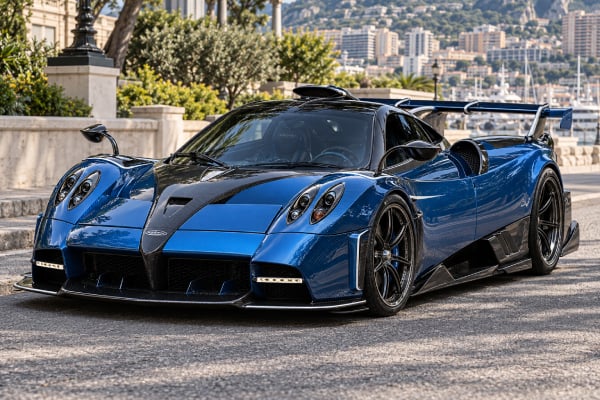
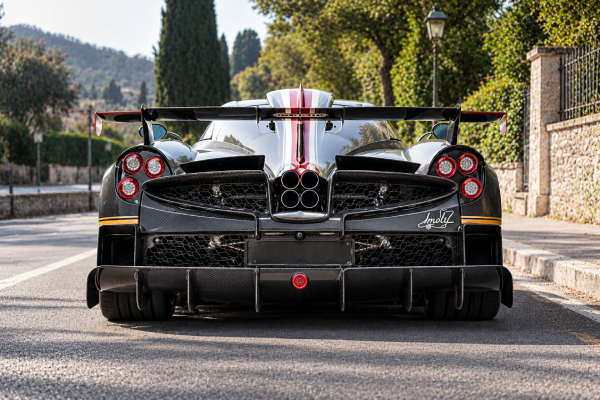
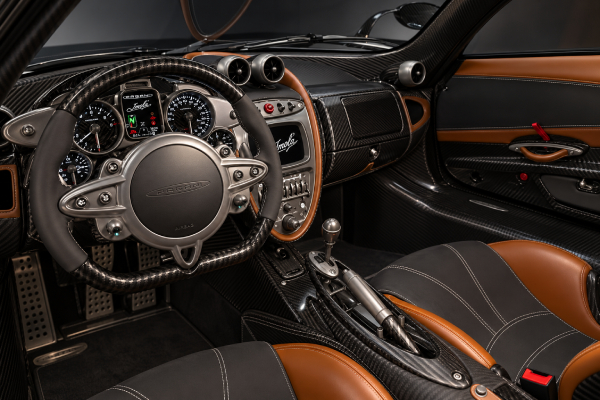
The Pagani Imola is one of the clearest examples of a road-legal hypercar engineered as a development tool rather than a styling exercise. Built in only five examples, it combines a 5,980 cc twin-turbo Mercedes-AMG V12 with 827 hp, 1,100 Nm of torque, a seven-speed Xtrac automated manual gearbox, and an official dry weight of 1,246 kg. Its importance goes further than those numbers. Pagani used the project to develop new composite structures, lighter paint, revised cooling, active suspension logic, and a more tightly integrated version of the Huayra’s four-flap active-aerodynamics concept. That makes the Imola unusually demanding to understand as an owner or buyer: tires, brakes, dampers, aero devices, software, structure, and service history all matter together. This guide focuses on verified technical data, what the engineering means in real use, how to care for the car responsibly, and how to evaluate provenance and condition before a purchase.
Table of Contents
- Why the Imola Matters Beyond Its Five-Car Production Run
- Pagani Imola Technical Data and Core Specifications
- How Active Aero, Suspension, and Driveline Controls Work Together
- What the Hardware Means on Road and Track
- A Maintenance Strategy for a Low-Volume Track-Focused Pagani
- Inspection, Authenticity, and Provenance Checks Before Buying
- Ownership Priorities That Protect Performance and Value
Why the Imola Matters Beyond Its Five-Car Production Run
The Imola matters because Pagani treated it as a rolling research program. The company called it a vehicle-laboratory and said the development fleet accumulated more than 16,000 km at racing speed on track, with Imola circuit becoming a central part of the validation process.
That background explains why the car looks more functional than many earlier Paganis. The project did not begin with a goal of preserving the cleanest possible body shape. Engineers were allowed to add fins, winglets, deflectors, extraction paths, and active devices wherever they improved stability, cooling, feedback, or lap-time consistency. Horacio Pagani also made a point of avoiding a strategy based only on extremely low ground clearance and underbody load. On uneven public roads, a sudden change in ride height can rapidly change the downforce generated beneath a car. The Imola therefore puts substantial emphasis on airflow management over and through the body as well as underneath it.
The engineering program also became a test bed for materials. The central monocoque uses Carbo-Titanium HP62 G2 and Carbo-Triax HP62, formulations Pagani said were developed to improve torsional and bending stiffness while reducing mass. Acquarello Light, a new paint process, cut a claimed 5 kg from the finish while retaining the protective role of paint over advanced composites. Pagani also cited more than 770 forged or CNC-machined components, showing that the weight effort extended into brackets, fittings, controls, and hardware rather than stopping at the body shell.
Production scarcity is important but should not be confused with the reason the car exists. Pagani announced five examples, all already sold, at a launch price of €5 million plus VAT. The stronger historical point is that the Imola carried experimental solutions into a customer road car and allowed those solutions to be exercised in conditions closer to motorsport than normal road-car validation. For an owner, that history changes the maintenance mindset: preserving correct function is not just about keeping a rare object cosmetically original; it is about keeping a tightly connected technical system working as designed.
Pagani Imola Technical Data and Core Specifications
The Imola is a gasoline-powered, rear-wheel-drive mid-engine hypercar. Its 5,980 cc twin-turbo V12, seven-speed transverse Xtrac AMT, electronically managed differential, advanced composite monocoque, active dampers, and active aero were engineered as a package, so the most useful specifications are the ones that describe how those systems meet at the tires and chassis.
| Specification | Value |
|---|---|
| Engine | Mercedes-Benz AMG 60-degree V12, built to Pagani specification |
| Displacement | 5,980 cc (6.0 L) |
| Induction | Twin turbochargers |
| Maximum power | 827 hp |
| Maximum torque | 1,100 Nm (811 lb-ft) |
| Engine position | Longitudinal, behind the cabin |
| Fuel type | Gasoline/petrol |
| Specification | Value |
|---|---|
| Gearbox | Xtrac seven-speed transverse AMT |
| Gearbox type | Single-clutch automated manual with paddle operation |
| Clutch | Electronically controlled triple-disc clutch |
| Drive type | Rear-wheel drive |
| Differential | Electro-mechanical unit with electronic management |
| Driveline detail | Tripod-joint system |
| Specification | Value |
|---|---|
| Central structure | Carbo-Titanium HP62 G2 and Carbo-Triax HP62 monocoque |
| Subframes | Front and rear tubular steel structures |
| Suspension layout | Independent double wishbones with coil springs |
| Dampers | Electronically controlled and interconnected |
| Front ride height | Automatically variable under electronic control |
| Active aerodynamics | Four independently controlled movable flaps |
| Control integration | Active aero, suspension, engine, differential, and gearshift functions communicate through the vehicle control system |
| Specification | Value |
|---|---|
| Front brakes | Brembo ventilated carbon-ceramic discs, 398 x 36 mm, with 6-piston monolithic calipers |
| Rear brakes | Brembo ventilated carbon-ceramic discs, 380 x 34 mm, with 4-piston monolithic calipers |
| Front wheels | 20-inch |
| Rear wheels | 21-inch |
| Front tires | Pirelli P Zero Trofeo R, 265/30 R20 |
| Rear tires | Pirelli P Zero Trofeo R, 355/25 R21 |
| Specification | Value |
|---|---|
| Official dry weight | 1,246 kg (2,747 lb), presentation specification |
| Wheelbase | 2,795 mm (110.0 in) |
| Length | 4,853 mm (191.1 in) |
| Width | 2,035 mm (80.1 in); 2,264 mm (89.1 in) including mirrors |
| Height | 1,269 mm (50.0 in) |
| Production | Five examples |
| Launch price | €5 million plus VAT |
The official data should be read carefully. The 1,246 kg figure is a dry weight and Pagani labels it as applying to the presentation version, so it should not be treated as an as-driven curb mass for every chassis. Likewise, the launch price is useful historical context, not a current valuation. Specifications on a five-car run can include customer-specific details, so a buyer should confirm actual equipment against the individual build record rather than assuming every visible component is identical across all examples.
How Active Aero, Suspension, and Driveline Controls Work Together
The defining technical idea of the Imola is coordination. Its four movable aerodynamic flaps do not operate as isolated showpieces; Pagani linked their behavior with suspension, ride height, engine, differential, and gearshift controls so the car can respond to braking, cornering, acceleration, and surface changes as one system.
At speed, aerodynamic balance matters as much as total downforce. If load builds faster at one axle than the other, the car can become nervous or reluctant to turn. The four-flap layout gives the control system a way to alter aero behavior according to what the chassis is doing. Under braking, the flaps can contribute aerodynamic braking and stability. In a corner, flap position can be adjusted according to the car’s dynamic state. The active dampers and automatic front ride-height function then help keep the platform within a useful operating window rather than allowing pitch and heave to dictate the aero response entirely.
This is especially important because the Imola was designed for real roads as well as circuits. A setup optimized only for a smooth track could run the body extremely close to the ground and rely heavily on floor-generated load. Pagani explicitly highlighted the risk of sudden downforce loss on uneven roads. The Imola’s visible upper-body devices, airflow channels, and active elements are therefore part of a safety and consistency strategy, not simply an attempt to create the largest possible peak number.
The same logic carries into the driveline. A rear-wheel-drive car with 1,100 Nm can overwhelm the rear tires if torque, gear selection, differential locking, suspension movement, and tire load are poorly coordinated. The electro-mechanical differential helps manage how torque reaches the two rear wheels, while the electronically controlled dampers influence the contact patches by controlling body movement. Pagani’s SMART GAS strategy was developed to shorten shift events and sharpen the response of the single-clutch transmission. The result is an architecture in which software calibration is inseparable from the mechanical hardware.
That has a direct ownership consequence: fault diagnosis must be system-based. A warning involving ride height, an aero actuator, wheel-speed information, damper control, or the differential may change how other systems behave even if the car still moves normally. Clearing a code without identifying the cause is not equivalent to restoring intended performance. On a car whose dynamic systems were calibrated together, correct diagnostics and software status are part of mechanical condition.
What the Hardware Means on Road and Track
The Imola’s hardware favors response, repeatability, and communication over easy low-speed smoothness. Owners should expect a car that needs temperature, tire condition, and deliberate inputs before its performance envelope becomes available.
The seven-speed transverse AMT is central to that character. It is not a modern dual-clutch transmission that hides every torque interruption. A single-clutch automated manual physically opens the clutch, changes gear, and re-engages it. At low speed, a driver can improve smoothness by avoiding unnecessary creep, giving the clutch a clean opportunity to engage, and using progressive throttle. On track, the same layout brings low mass and a direct mechanical feel, while the SMART GAS strategy helps reduce shift time. Repeated parking maneuvers on gradients, holding the car on throttle, or forcing the clutch to slip for long periods should be avoided because heat is the enemy of clutch life.
The Trofeo R tires deserve equal respect. They are road-legal, track-focused tires with far less tolerance for cold temperatures, heavy rain, standing water, age, or incorrect pressures than an everyday road tire. The safest routine is to inspect date codes and condition, start sessions with conservative pace, bring temperatures up progressively, then record hot pressures and behavior. After a track session, do not assume a tire is healthy because tread remains; heat cycles, small cuts, shoulder wear, flat spots, and evidence of debris contact matter too.
Braking performance also depends on preparation. Carbon-ceramic discs can deliver exceptional repeated stopping power when the full system is healthy, but inspection is more than looking at surface color. A qualified technician should assess disc condition using the manufacturer-approved method, examine pads and calipers, check cooling paths, and investigate vibration or a change in pedal feel before further high-load use. The Imola’s brake cooling was specifically developed through aerodynamic work, so blocked ducts or damaged bodywork can create a thermal problem even if the caliper itself is intact.
Before serious circuit driving, treat the car as a complete system: check underbody and splitter condition, tire age and pressures, wheel torque according to the correct service data, fluid status, brake condition, ride-height and damper warnings, aero operation, and the security of cabin items. Build speed in stages. A post-session inspection should note curb strikes, gravel excursions, new noises, temperature warnings, tire changes, fluid leaks, and any shift or steering behavior that differed from the start of the day.
A Maintenance Strategy for a Low-Volume Track-Focused Pagani
The right maintenance plan is chassis-specific and time-aware. Public launch material does not provide the detailed service schedule, fluid specifications, fastener torques, software procedures, or wear limits required to maintain an Imola, so those decisions should come from the official documentation and Pagani-trained personnel for the individual VIN.
Low mileage does not make a car maintenance-free. A five-car hypercar may spend long periods stored, transported, displayed, or driven only on special events. Time still affects engine oil, brake fluid, coolant, gearbox lubricant, seals, batteries, tires, fuel quality, and rubber components. A service history that records dates, work performed, software updates, test results, and technician findings is more useful than an odometer reading by itself.
A practical preservation routine should cover four areas:
- Fluids and heat management: Follow the factory schedule and investigate leaks, odor, discoloration, abnormal temperatures, or cooling-fan behavior rather than extending intervals because annual mileage is low.
- Battery and electronics: Use the approved battery-support procedure. Stable voltage matters on a car with networked active-aero, suspension, engine, gearbox, and differential control units.
- Tires, brakes, and suspension: Log tire age and track use, inspect carbon-ceramic hardware with the proper method, and examine suspension joints, dampers, wheels, and alignment after significant curb or pothole impacts.
- Composite and aerodynamic surfaces: Inspect the splitter, floor, diffuser, winglets, flap mechanisms, mounting points, and exposed composite areas after transport, track use, or any underbody contact.
Storage should keep the car dry, clean, supported correctly, and protected from long periods of unsuitable temperature or humidity. Tires should be managed to reduce flat-spot risk using the procedure appropriate to the car, while the battery should remain on the correct maintainer. Fuel strategy should follow Pagani guidance, especially if the car will sit for an extended period. Starting the engine briefly without allowing a proper warm-up cycle is not automatically beneficial; exercise should be planned rather than performed as a ritual.
Recommissioning after a long lay-up should be treated as an inspection, not as a start-and-drive exercise. Before applying meaningful load, confirm battery condition, fluid levels, tire condition and pressures, visible leaks, brake operation, and the absence of fresh warning messages. Let the engine and driveline reach normal operating temperature progressively, then check again for seepage, unusual odors, abnormal noises, or changes in pedal and steering feel. If the car has been inactive long enough for fuel quality, fluid age, tire age, or scheduled service to be in question, resolve those items before a road or circuit event. This approach is especially important with a car that may accumulate very few kilometers between services: elapsed time and storage environment can be more informative than mileage when deciding what needs attention.
Transport is another maintenance event. The Imola has low, vulnerable aerodynamic surfaces and should be moved by a transporter familiar with ultra-low-clearance vehicles. Loading angle, lift or ramp geometry, wheel restraint, tie-down method, alarm and battery procedures, and insurance should be agreed before the car moves. Photograph the splitter, sills, wheels, diffuser, body corners, cabin, and odometer at handover. Do not allow improvised straps around suspension members or carbon structures.
Factory involvement has additional value because Pagani supports older cars through programs such as Puro and Unico. Puro is focused on authenticity and condition, with more than 400 checks and access to factory records. Unico offers factory-led updating and personalization. An approved update can be legitimate and desirable, but it should remain fully documented so future owners can distinguish original build specification, factory changes, later personalization, and replaced parts.
Inspection, Authenticity, and Provenance Checks Before Buying
Buying an Imola is primarily an exercise in identity, history, and condition. With only five cars built, the seller’s legal authority, the factory’s recognition of the chassis, and the documentation behind every change are as important as paint quality or mileage.
Begin with identity. Match the VIN or chassis identity to Pagani records, then compare the build specification with the car in front of you. Record exterior finish, exposed-carbon pattern, interior materials, wheel markings, tire specification, major options, accessories, tools, books, charger, covers, spare items, and any unique pieces delivered with that chassis. A rare car can acquire replacement or personalized components over time; the key is to know what changed, when, why, and under whose authorization.
Next, reconstruct use history. Track driving is not automatically negative on a car developed for circuit work. Undocumented impacts and poor follow-up are the real concern. Ask for service invoices, inspection sheets, transporter records, track-event records where available, diagnostic reports, tire replacement history, brake work, alignment records, and evidence of repairs. A car that has been used hard but inspected methodically may present a clearer risk picture than a low-mileage car with years of gaps.
The physical inspection should be system-led:
- Composite structure and body: Look for repair evidence, distortion, cracks, unusual finish changes, underbody damage, and impact marks. Suspected structural damage requires Pagani-approved composite assessment rather than cosmetic judgment.
- Aerodynamics: Confirm the four active flaps complete their intended checks and respond without faults. Inspect hinges, actuators, wiring, mounting points, upper-body aero pieces, floor edges, splitter, and diffuser.
- Cooling and brakes: Examine radiators, ducts, hoses, heat shielding, brake cooling paths, discs, pads, calipers, and any evidence of overheating or debris damage.
- Suspension and steering: Check wheels, bearings, joints, dampers, ride-height operation, alignment evidence, steering feel, and fault memory. A bent wheel or geometry change can affect aero platform control as well as tire wear.
- Engine, gearbox, and differential: Review cold-start behavior, fluid leaks, clutch operation, shift quality, differential function, warning history, and software status. The inspection should include a controlled test drive when legal, safe, and approved.
- Records and factory support: Confirm servicing organizations, software work, component replacement, upgrades, warranty history, and whether Pagani Puro certification or other factory documentation exists.
Pagani’s 2025 official statement adds a separate commercial warning. The company said unauthorized entities and individuals had represented themselves as able to sell new Paganis or provide aftersales services, and it directed clients to verify the official dealer network. For a high-value, globally traded car, the purchase agreement should therefore address title, seller authority, tax status, export permission, registration or homologation requirements, inspection rights, payment mechanics, transport insurance, and what happens if factory verification does not match the seller’s claims.
Do not build a valuation from an advertised price alone. A five-car market is too thin for ordinary mileage-adjusted comparables. Individual specification, originality, public history, condition, factory documentation, jurisdiction, taxes, transaction structure, and included accessories can materially change the economics. Separate the vehicle price from inspection, brokerage, tax, transport, insurance, recommissioning, registration, and any immediate factory work so the true acquisition cost is visible.
Ownership Priorities That Protect Performance and Value
The best way to preserve an Imola is to preserve evidence as carefully as hardware. A complete record allows future technicians and owners to understand what the car has experienced and whether each change was maintenance, repair, factory development, personalization, or accident recovery.
Keep a chronological file containing service invoices, diagnostic reports, software versions, tire dates, brake measurements, alignment sheets, transport records, track notes, photographs, factory correspondence, Puro documentation, Unico work, and replaced components. When the car is used on track, record the event, weather, tire set, pressures, any curb or debris contact, warning messages, and post-event inspection. When it is stored, record battery care and the date of the next scheduled service rather than relying on memory.
Use is not the enemy of preservation when it is prepared and documented. The Imola was developed through intense track running, and its engineering makes most sense when the car is operated correctly. The larger risk is careless use, deferred inspection, unsuitable tires, voltage problems, undocumented repair, or long inactivity followed by immediate high load. Owners who keep the factory relationship active, maintain the car on time, warm it fully, inspect it after demanding use, and document every intervention give the mechanical systems and the car’s provenance the best chance of remaining coherent over decades.
References
- Pagani Imola, a powerhouse of technology for the racetrack and road. 2020 (Official Press Release)
- Pagani at the 2020 Geneva Motor Show: European preview for the Roadster BC and Pagani Imola.The two hypercars embody Pagani Automobili’s state-of-the-art design and engineering. 2020 (Official Press Release)
- “Pagani Puro”, the program created to certify the authenticity and enhance the value of our exclusive cars over time 2021 (Authenticity Program)
- Pagani Unico 2022 (Factory Update Program)
- OFFICIAL STATEMENT 2025 (Authorized Sales and Aftersales)
Disclaimer
This article is for informational purposes and is not a substitute for professional diagnosis, maintenance, or repair. Specifications, torque values, service intervals, software procedures, and repair methods can vary by VIN, market, and equipment; verify all work against the official service documentation for the individual car and use appropriately qualified Pagani personnel.
If this guide is useful, please consider sharing it on Facebook, X/Twitter, or with a trusted automotive community to support our work.