
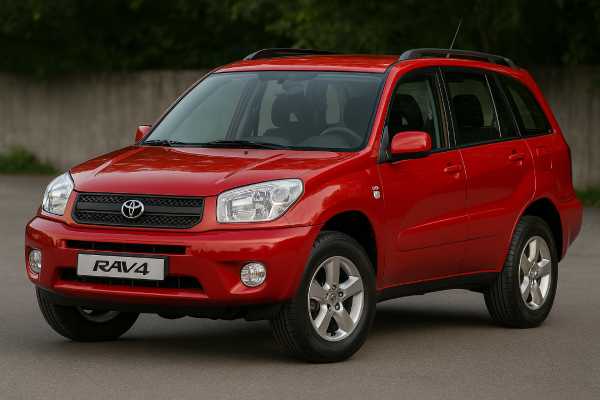
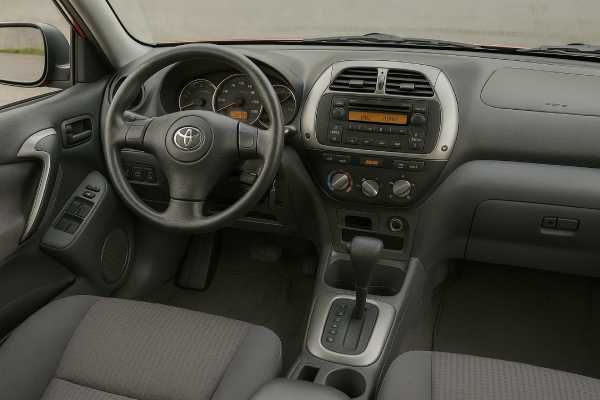
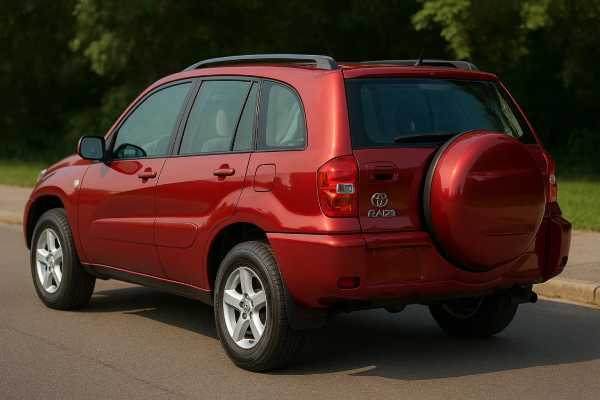
The facelifted 2004–2005 Toyota RAV4 with the 2AZ-FE 2.4-liter engine marked a useful turning point for Toyota’s first compact crossover. The extra displacement lifted torque and drivability without hurting real-world economy, while the AWD system remained a simple, proven full-time setup well-suited to foul weather and gravel roads. The cabin added sliding and reclining rear seats and a versatile cargo area, and the chassis kept its tidy size that makes these late-XA20s easy to maneuver and park today. This guide focuses on the 2.4-liter AWD variant sold during model years 2004 and 2005, translating period specifications and ratings into practical ownership advice. You will find key dimensions, performance and economy figures, reliability watch-outs, service intervals with fluid guidance, and shopping tips. If you want a small SUV that’s straightforward to maintain and confidence-inspiring in winter, this RAV4 generation remains a strong contender—provided you verify basic condition and recall completion.
Essential Insights
- Full-time AWD with a compact footprint delivers confident winter traction and easy city maneuvering.
- Torquey 2.4-liter 2AZ-FE (161 hp, 165 lb-ft) improves mid-range response over earlier 2.0-liter models.
- Cabin flexibility: sliding/reclining rear bench and seats-flat cargo length for bulky items.
- Caveat: aging airbags/recall status and corrosion on underbody hardware deserve close inspection.
- Typical oil service: 5,000 mi / 6 months (8,000 km / 6 months) with 5W-30 meeting current API spec.
Guide contents
- RAV4 2.4 AWD Overview
- RAV4 2.4 AWD Specs
- RAV4 2.4 Trims and Safety
- RAV4 2.4 Reliability and Service Actions
- Maintenance and Buyer’s Guide
- Driving and Performance
- RAV4 vs Rivals
RAV4 2.4 AWD Overview
The facelifted XA20-generation Toyota RAV4 received its notable powertrain update for 2004 with the 2AZ-FE 2.4-liter inline-four. Rated at 161 hp (120 kW) at 5,700 rpm and 165 lb-ft (224 Nm) at 4,000 rpm, it addressed the “just-adequate” passing power of the earlier 2.0-liter, especially in automatic AWD form. The engine retained Toyota’s timing-chain design and VVT-i on the intake cam, favoring durability and low-maintenance operation. In the AWD variant covered here, power feeds a full-time system with a viscous-coupled center differential—transparent in daily use and predictable on slick surfaces.
Chassis hardware remained deliberately simple and robust. Up front you get MacPherson struts; the rear uses a compact double-wishbone arrangement that frees cargo width and helps stability on bumpy corners. Brakes are ventilated discs up front with drums at the rear on most trims, paired with ABS and electronic brake-force distribution on equipped packages. Wheel options ranged from practical 16-inch steel wheels with 215/70 tires to period-sporty 16-inch alloys with 235/60 tires and a stiffer feel.
The cabin is classic early-2000s Toyota: functional, durable plastics, large rotary climate controls, and an unusually configurable second row that slides, reclines, folds, tumbles, or can be removed entirely. With the seats in place, cargo space is useful for a weekly family run; fold or tumble them and you unlock a long, flat load area that handles bikes or a small dresser. Unlike many competitors of the time, the spare tire sits on the side-hinged rear door—handy for keeping grime outside but requiring extra clearance when parallel parked.
On the road, the 2.4-liter RAV4 AWD feels light on its feet around town, and its compact dimensions (about 165 in long) make quick work of tight garages. Highway merging is easier than in the 2.0-liter models, though the 4-speed automatic’s tall gearing and absence of a fifth ratio mean engine speed sits a touch higher at 75 mph (120 km/h). Owners value the straightforward nature: conventional automatic, conventional AWD, a naturally aspirated engine, and widely available parts. The trade-offs are modest towing (about 1,500 lb / 680 kg) and—by modern standards—basic safety tech, since advanced driver assists were not yet mainstream in this class.
RAV4 2.4 AWD Specs
Below are scannable, model-specific tables for the 2004–2005 AWD 2.4-liter RAV4. Baseline units are customary U.S., followed by metric equivalents.
Engine and Performance
| Item | Specification |
|---|---|
| Code | 2AZ-FE (inline-4, aluminum block/head) |
| Valvetrain | DOHC, 16 valves, VVT-i (intake) |
| Displacement | 2.4 L (2,362 cc) |
| Bore × stroke | 88.5 × 96.0 mm (3.48 × 3.78 in) |
| Compression ratio | 9.6:1 |
| Induction | Naturally aspirated |
| Fuel system | Sequential multi-port EFI |
| Max power | 161 hp (120 kW) @ 5,700 rpm |
| Max torque | 165 lb-ft (224 Nm) @ 4,000 rpm |
| Rated economy (EPA, AWD auto) | 22 mpg combined; 20 city / 24 highway (10.7 L/100 km combined approx.) |
| Rated economy (EPA, AWD manual) | 21 mpg combined; 19 city / 25 highway (11.2 L/100 km combined approx.) |
| Real-world highway @ 75 mph | ~27 mpg US (8.7 L/100 km) on stock tires, mild temps; drop 1–2 mpg with roof racks or winter tires |
| Emissions standard (period) | Tier 2 / LEV-II equivalent for gasoline vehicles |
| Aerodynamics | Cd not officially published; compact frontal area aids highway stability |
Transmission and Driveline
| Item | Specification |
|---|---|
| Transmission | 4-speed automatic (ECT) with lock-up; 5-speed manual available |
| Drive type | Full-time AWD with viscous-coupled center differential |
| Differential(s) | Open front/rear; viscous center coupling manages torque split |
| Final drive | Model-year dependent; typical mid-3s to low-4s (verify by VIN build data) |
| Refuel to full | ~5–7 minutes at typical U.S. pumps (56 L / ~14.8 US gal tank) |
Chassis and Dimensions
| Item | Specification |
|---|---|
| Front suspension | MacPherson struts, coil springs, stabilizer bar |
| Rear suspension | Independent double wishbone, coil springs, trailing arms, stabilizer bar |
| Steering | Rack-and-pinion with variable assist |
| Brakes | Front ventilated discs; rear drums; ABS/EBD on equipped packages |
| Wheels/Tires | 215/70R16 all-season (steel or alloy); optional 235/60R16 all-season |
| Ground clearance | ~6.7 in (170 mm) 2005; ~7.1 in (180 mm) 2004 |
| Length × width × height | 165.2 × 68.3 × 66.1 in (4,195 × 1,735 × 1,680 mm) |
| Wheelbase | 98.0 in (2,490 mm) |
| Turning circle (curb-to-curb) | 35.4 ft (10.7 m) |
| Curb weight | ~3,000 lb (1,361 kg, manual) / ~3,066 lb (1,391 kg, auto) |
| GVWR | 4,087 lb (1,854 kg) |
| Fuel tank | 56 L (~14.8 US gal) |
| Cargo volume (seats up/down) | 23.9 / 67.4 ft³ (0.678 / 1.909 m³), seat-tumble/flat floor |
Performance and Capability
| Metric | Typical Result |
|---|---|
| 0–60 mph (0–100 km/h) | ~9.3–9.8 s (automatic), ~8.9–9.4 s (manual) depending on tires and load |
| Top speed | ~110–115 mph (177–185 km/h), electronically and gearing limited |
| 100–0 km/h braking | ~38–41 m on all-season tires in good condition |
| Towing capacity (braked) | 1,500 lb (680 kg) with proper hitch and wiring |
| Payload (approx.) | 900–1,000 lb (410–455 kg) depending on equipment |
| Roof load | Up to 100 lb (45 kg) on factory rails/crossbars; check label on driver door/jamb |
Fluids and Service (quick reference)
| System | Specification (verify by VIN) |
|---|---|
| Engine oil | 5W-30 meeting current API spec; use quality synthetic or blend in cold climates |
| Coolant | Toyota Super Long Life Coolant (pink, pre-mixed) |
| ATF (auto) | Toyota Type T-IV for the 4-speed automatic |
| Manual gearbox | Premium GL-4/GL-5 75W-90 (follow label on trans) |
| Differentials | Gear oil 75W-90; inspect level and condition on schedule |
| A/C refrigerant | R-134a (charge amount varies by system; label under hood) |
| Key torques (examples) | Wheel lugs 76 ft-lb (103 Nm); drain/fill plugs: tighten to spec and fit new washers |
Electrical
| Item | Specification |
|---|---|
| Alternator | Internal-regulated alternator; output varies by trim/equipment |
| 12V battery | Maintenance-free lead-acid; commonly Group 35 (verify fitment) |
| Spark plugs | Iridium long-life; typical 100k-mile service life (gap verify on plug spec) |
Safety and Driver Assistance
| Item | Detail |
|---|---|
| Crash tests (IIHS, 2004–2005) | Moderate overlap frontal: Good. Side impact: Good with side airbags; Poor without. Head restraints/seats: Marginal. |
| Headlight rating | Not rated under later IIHS headlight protocol |
| Airbags | Dual front SRS; side airbags optional by market/trim |
| ABS/traction | ABS standard on key packages; stability control generally not fitted on these years |
| ADAS | No factory AEB/ACC/LKA on 2004–2005 U.S./Canada RAV4 |
Notes: U.S. EPA fuel economy values for AWD variants are 22 mpg combined (auto) and 21 mpg combined (manual). Canadian Transport Canada ratings (L/100 km) differ due to test cycles.
RAV4 2.4 Trims and Safety
Trims and options (North America summary). For 2004–2005, U.S. models were predominantly offered as Base and Sport, both available with AWD and either a 5-speed manual or 4-speed automatic. Sport models typically added alloy wheels/tires, a sport grille or exterior accents, and more convenience content. Package content varied by region and year, but common items included ABS with EBD, a roof rack, fog lamps, and upgraded audio. In Canada, Toyota marketed “Base,” “Plus,” “Package B,” and special appearance bundles (e.g., “Chili”), with a “Limited” package adding features like moonroof, heated seats, and leather—useful to know if you’re cross-shopping Canadian-import vehicles.
Mechanical differences by trim. Powertrain and suspension tune are broadly shared across trims. The most consequential functional changes come from wheel/tire packages: the optional 235/60R16 all-season tires on alloys sharpen initial turn-in and cut braking distances slightly versus the 215/70R16s, at the small cost of a firmer ride and a mild highway economy penalty. ABS/EBD availability is dictated by package—ensure any candidate vehicle actually has ABS if that’s important to you. A tire-pressure monitoring system appears on certain packages late in the run.
VIN/build identifiers and easy tells. The right-hand side-hinged rear door with externally mounted spare and the short 2,490-mm (98-in) wheelbase are core XA20 cues. Inside, look for the sliding and reclining second row and the optionally body-colored fender flares and door handles on upper packages. Canadian “Limited” and optioned “Package B” vehicles often show heated mirrors and seats, privacy glass, and a hard spare-tire cover. For AWD/manual cars, a five-gear shift pattern and a floor-mounted lever are the giveaway; the automatic shows a gated PRND-pattern shifter marked “O/D Off”.
Year-to-year changes worth noting. The 2004 model year introduced the 2.4-liter engine and revised front/rear styling. For 2005, content shuffles included more available ABS/EBD and minor feature bundling; wheel/tire offerings and the 56-L fuel tank carried forward. Turning circle specifications (35.4 ft) and cargo measurements (23.9 / 67.4 ft³) remained consistent.
Safety ratings (summary). Period tests recorded a Good score in IIHS moderate overlap frontal for the 4-door RAV4 of these years. Side impact performance depends heavily on equipment: vehicles with side airbags tested Good, whereas those without side airbags performed Poor—a critical consideration when buying used. Head restraint/seat geometry scored Marginal, typical of early-2000s small SUVs. The RAV4 pre-dates IIHS roof-strength and headlight performance ratings, and it lacks modern crash-avoidance technology. That said, ABS with brake-force distribution was commonly packaged and worth seeking out; stability control was not yet common in this class for these years.
Child-seat and restraints. The rear bench provides three-point belts in all positions, with top tether anchors; ISOFIX/LATCH provisions vary by market and year. As always, verify anchor presence and load path for your specific seat and body style. The tall cargo floor and side-hinged door make rear-facing base installation straightforward, but the door swing requires curbside clearance.
Airbag/recall context. Aging frontal airbags and Takata-related campaigns remain the biggest safety storyline on older vehicles. Many 2004–2005 RAV4s have recall histories (driver or passenger inflator) and advisories. Treat recall verification as mandatory: run the VIN through the official recall portals, and don’t take prior owner assurances at face value. This is not a scare tactic—just smart due diligence on a 20-year-old vehicle.
RAV4 2.4 Reliability and Service Actions
Overall durability outlook. The 2AZ-FE RAV4 AWD is generally robust when serviced on time with correct fluids. Many examples reach well past 200,000 miles (320,000 km) with original long-block and drivetrain. The most common age-related issues are modest, inexpensive wear items and corrosion on exhaust and suspension hardware. However, a handful of specific problems deserve attention.
Common issues (prevalence / cost / notes).
- Front exhaust components and oxygen sensors — Common / Low–Medium. Symptoms: exhaust leak tick, CEL with O2 sensor codes, elevated fuel consumption. Cause: thermal cycling and road salt. Remedy: replace failed sensor(s), inspect flex joints and gaskets; use anti-seize on hardware.
- Rear brake drums and shoes — Common / Low. Symptoms: noise, reduced holding force on grades. Cause: dust ingress and infrequent service. Remedy: clean/adjust or replace shoes/hardware; check wheel cylinders for seepage.
- Suspension bushings and stabilizer links — Common / Low. Symptoms: rattles over sharp bumps, vague on-center steering. Remedy: replace end links and worn control-arm bushings; re-align.
- Wheel-bearing hum — Occasional / Medium. Symptoms: speed-dependent drone. Remedy: press-in hub bearings (rear) or assemblies; confirm with load-shift on gentle S-curves.
- Cooling system aging — Occasional / Low–Medium. Symptoms: pink residue, faint coolant smell, heater output fluctuations. Remedy: pressure-test; replace old clamps/hoses; refresh Toyota SLLC on schedule.
- 2AZ-FE oil consumption — Occasional / Medium. Symptoms: low oil between changes, especially at higher miles. Causes: ring coking or valve-stem-seal wear depending on usage history. Remedy: shorter OCI with detergent-rich oils, piston soak/cleaning; engine work only if consumption is severe. Regular level checks are your friend.
- AWD viscous coupling stress from mismatched tires — Occasional / Potentially high. Symptoms: driveline bind, hopping at full lock. Cause: running different tire diameters or wildly uneven tread depths. Remedy: keep tire sizes/pressures matched and rotate on schedule; replace in sets when wear is uneven.
Rare but important watch-outs.
- Head-bolt thread pullout/head gasket seep (select 2AZ-FE engines as they age). Rare on well-maintained RAV4s, but possible at high mileage or after overheating. Symptoms: gradual coolant loss, sweet smell, misfire on cold start. Remedy: specialized insert repair or cylinder-head work; prevention is vigilant cooling-system maintenance and avoiding overheating events.
- Engine mounts and driveline lash. Age-related rubber collapse can cause clunks on throttle tip-in. Replace mounts and inspect inner CVs.
Software and calibrations. These years are relatively simple electronically. No major widespread powertrain reflashes are typical for the 2.4-liter XA20 AWD beyond emission-related calibrations; confirm outstanding campaigns during pre-purchase inspection. If you see shift-quality complaints on earlier 2.0-liter XA20s (2001–2003), those involve different ECM/AT concerns and do not generally apply to the 2.4-liter facelift models.
Recalls and service actions (headline view).
- Airbag inflator recalls (Takata and related campaigns). Some 2004–2005 vehicles were subject to airbag-inflator recalls and, in certain cases, a “Do Not Drive” advisory until repaired. Always check the VIN on the official portals and with a Toyota dealer; only a completed, documented repair resolves this risk.
- Miscellaneous component recalls. Over a 20-year lifespan, vehicles may accumulate small campaigns (e.g., labels, electrical switches). Don’t assume completion: verify in records and by VIN check.
Pre-purchase checklist to request.
- Full service history (oil changes by mileage/time, coolant, brake fluid).
- Recall/TSB printout by VIN.
- Tire set age and even tread depths (for AWD health).
- Proof of recent brake service and inspection of rear drums/wheel cylinders.
- Cooling-system pressure test results.
- Evidence of differential/transfer-case/gear-oil services (or at least inspections).
- Underbody photos showing subframe, exhaust, brake lines, and rear trailing arms for corrosion.
- For high-milers: compression/leak-down or at least misfire-free warm idle and clean plugs.
Maintenance and Buyer’s Guide
Practical service schedule (distance/time, whichever comes first).
- Engine oil & filter: Every 5,000 mi / 6 months (8,000 km / 6 months). Shorten if mostly short-trip or dusty use. Use 5W-30 that meets current API spec; synthetic helps cold starts.
- Engine air filter: Inspect every 10,000 mi / 12 months (16,000 km / 12 months); replace 30,000 mi / 3 years or sooner if dirty.
- Cabin air filter: 15,000–20,000 mi / 18–24 months (24,000–32,000 km / 2 years).
- Coolant (Toyota SLLC): Service at 100,000 mi / 10 years first time, then every 50,000 mi / 5 years (160,000 / 10 then 80,000 / 5 km/years).
- Spark plugs (iridium): Inspect at 60,000 mi (96,000 km); typically replace at ~100,000 mi (160,000 km).
- Fuel filter: In-tank strainer typically not routine-serviceable; replace only when pressure/flow diagnostics indicate.
- Drive belts & hoses: Inspect each oil change; replace by 6–8 years or if cracked/noisy.
- Automatic transmission (ECT 4-speed): Drain-and-fill with Toyota Type T-IV every 60,000–90,000 mi (96,000–145,000 km) under mixed use; more often with towing or mountainous driving.
- Manual transmission & differentials: Check level annually; replace gear oil every 60,000–90,000 mi (96,000–145,000 km).
- Transfer case (AWD): Inspect for leaks and service with gear oil on the same interval as the differentials.
- Brake fluid: Replace every 2–3 years regardless of mileage.
- Brake pads/rotors/drums: Inspect at each tire rotation; typical front pad life 30,000–60,000 mi (48,000–96,000 km).
- Tire rotation & alignment: Rotate every 5,000–7,500 mi (8,000–12,000 km); align annually or when replacing tires—crucial on AWD.
- Valve clearances: Hydraulic lash is not applicable; listen for abnormal ticking—investigate if present.
- 12V battery: Load-test annually after 4–5 years; replace proactively before winter if marginal.
Fluid specs and capacities (decision helpers).
- Oil grade: 5W-30; choose viscosity appropriate to climate if outside normal range (consult owner documentation).
- ATF: Toyota Type T-IV; avoid universal fluids unless explicitly certified compatible.
- Coolant: Toyota SLLC (pink); do not mix with conventional green coolant.
- Gear oils: Quality 75W-90 GL-5 is broadly applicable for diffs/transfer case; confirm by tag or manual.
- A/C: R-134a—recovery and charge by weight only; avoid DIY top-offs if you lack manifold gauges and a scale.
Buyer’s inspection checklist (fast).
- Underbody: Brake lines, rear subframe, trailing arms, and exhaust for corrosion.
- AWD health: Equal tires, similar wear (≤2/32 in difference); no binding on tight circles in a parking lot.
- Cooling-system: Look for pink crust near hoses/radiator; verify heater output at idle.
- Engine: Cold-start, listen for rattles; verify idle smoothness when warm; check for oil seepage at valve cover and timing-chain cover.
- Brakes: Pedal feel, straight stops, parking-brake hold; confirm recent fluid service.
- Interior: Rear seat mechanisms glide and latch; cargo cover present; spare tire carrier solid.
- Electrical: All lights and HVAC fan speeds; rear wiper/washer and rear defroster.
- Recalls: Print VIN status; insist on completed airbag-inflator work.
Best years/options to target. The 2004–2005 2.4-liter AWD is the sweet spot of the XA20—more torque with essentially the same maintainability as earlier models. Seek examples with ABS/EBD and the seat-side airbags where available. The 4-speed automatic is easier to find, but the 5-speed manual appeals to drivers in hilly areas and can slightly cut highway revs in some conditions. Canadian “Limited” package cars add cold-climate niceties (heated seats/mirrors) that are welcome in northern states and provinces.
Driving and Performance
Ride and handling. Compact dimensions and a short wheelbase give the XA20 RAV4 a nimble, almost hatchback-like feel in the city. The suspension is tuned for compliance over sharp imperfections with enough roll control to keep the body settled in a fast on-ramp. With the base 215/70R16 tires, the steering is light and consistent; the wider 235/60R16 option sharpens steering response at the expense of a bit more road texture. Straight-line stability at 70–75 mph (113–120 km/h) is good for the class, aided by the tidy frontal area and conservative alignment.
Powertrain character. The 2AZ-FE’s strength is usable mid-range torque. Throttle response is clean off idle, and the engine pulls smoothly past 4,000 rpm without strain. In the 4-speed automatic, gear spacing is wide by modern standards; you’ll feel downshifts on long grades, and the absence of a fifth gear means revs are a touch high at U.S. freeway speeds. The manual brings better control on mountain routes and a small efficiency edge in mixed driving when geared appropriately by the driver. Neither setup is sporty; both are honest and low-stress.
Noise, vibration, and harshness (NVH). Cabin noise is modest in city use and rises with coarse-chip asphalt or aggressive winter tires. Wind rustle around the A-pillars is moderate at 75 mph (120 km/h), and the side-hinged rear door can transmit a faint squeak if the latch or spare-tire carrier needs adjustment. Fresh door seals and correctly torqued tire-carrier bolts make a noticeable difference.
Real-world efficiency. On stock tires in mild weather, expect roughly 27 mpg US (8.7 L/100 km) at a steady 75 mph (120 km/h) in the automatic AWD. City figures vary more with traffic patterns—low-20s mpg are normal. Winter blends, remote starts, roof racks, and snow tires can each trim 1–2 mpg. The manual AWD tends to post similar highway results but slightly lower city numbers if driven briskly.
Key performance metrics.
- 0–60 mph: ~9–10 seconds in AWD automatic with two occupants; a touch quicker with the manual.
- Passing (50–80 mph / 80–129 km/h): Adequate when the automatic kicks down promptly; plan a bit more distance uphill.
- 100–0 km/h braking: Around 38–41 meters on fresh all-seasons; winter tires will lengthen distances.
- Turning circle: 35.4 ft (10.7 m), making tight parking lot maneuvers simple.
Load and towing. The XA20 is tow-rated for about 1,500 lb (680 kg). With a small utility trailer or a pair of dirt bikes, stability is acceptable if tongue weight is set correctly and the load is modest. Expect a noticeable fuel economy penalty (10–20%) at highway speeds and plan earlier braking. Long grades in hot weather call for manual selection of a lower gear in the automatic to sustain coolant and ATF temperatures.
RAV4 vs Rivals
Honda CR-V (2004–2005). The CR-V offers a roomier cabin and a more wagon-like cargo area, plus four-wheel discs and a reputation for low operating costs. Its “Real Time” AWD is on-demand rather than full-time, engaging the rear only when slip occurs. On dry pavement the Honda feels a bit more planted at speed; in steady snow, the RAV4’s full-time system provides more consistent traction with no lag. The CR-V’s spare tire is also rear-door-mounted; both require swing-out clearance when parallel parked.
Subaru Forester (2004–2005). Subaru’s full-time symmetric AWD and low center of gravity give it a slightly sportier, more car-like feel. Manual Foresters of the era use a 50:50 torque split with a viscous center diff, somewhat similar in concept to the RAV4’s coupling. Forester’s boxer engine smoothness is pleasant, but oil leaks and head-gasket seepage are more common than on the RAV4. Cargo height is comparable; the Subaru’s roof rails sit a bit lower for loading.
Ford Escape / Mazda Tribute (2004–2005). These domestic/Japanese twins have a larger footprint and a more traditional SUV stance. They bring available V6 torque and a stronger tow rating but are heavier and thirstier, and interior durability trails Toyota and Honda. Their on-demand AWD systems work well for occasional snow, but the RAV4’s full-time arrangement gives more transparent behavior in changing grip conditions.
Why choose the RAV4 2.4 AWD. If you value durable simplicity, year-round traction without driver intervention, and compact size, this RAV4 hits the mark. It is not the roomiest or the most refined, but it’s easy to own, easy to park, and—if bought carefully—easy to keep on the road for years. Find one with ABS/EBD and side airbags where available, verify recall completion, and you have a trustworthy daily partner.
References
- 2004 RAV4 Features and Specifications 2004 (Specifications)
- 05 RAV4_Bro_E_V3 2004 (Specifications)
- 2004 Toyota RAV4 4-door SUV 2004 (Safety Rating)
- Gas Mileage of 2005 Toyota RAV4 2005 (EPA Fuel Economy)
- Toyota Issues DO NOT DRIVE Advisory for Certain 2003–2005 Model Year Vehicles with Recalled Takata Airbag Inflators 2024 (Recall Advisory)
Disclaimer
This article is for informational purposes only and is not a substitute for professional diagnosis or repair. Specifications, capacities, torque values, and service intervals can vary by VIN, production date, market, and equipment. Always verify procedures and numbers against your official service documentation and the vehicle’s under-hood labels before performing maintenance. If you found this guide useful, consider sharing it on Facebook or X/Twitter to support xcar’s work. Thank you!