
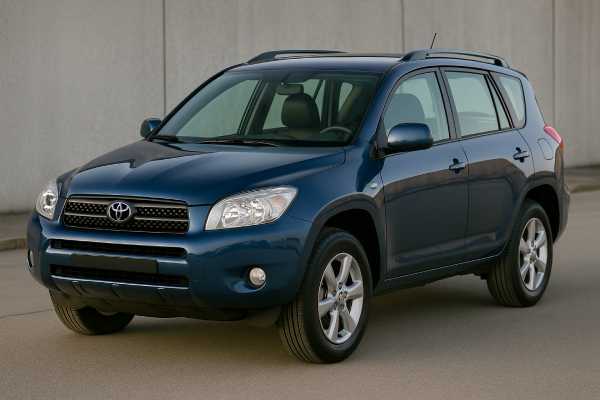
Toyota’s third-generation RAV4 took a decisive step toward calm long-distance comfort without losing the tidy, car-like manners that made the original a hit. In 2007–2008, the all-wheel-drive 2.2-litre diesel—engine code 2AD-FTV rated at 150 hp—became the sweet spot for many European buyers. It pairs a relaxed, torque-rich power delivery with a six-speed manual and Toyota’s Active Torque Control 4WD, which shuffles drive rearward seamlessly and includes a low-speed Lock function for slippery starts. The cabin is spacious for the class, courtesy of the XA30’s wider body, and the clever Easy Flat rear bench folds to a genuinely flat load floor. Running costs hinge on smart diesel upkeep: clean intake/EGR paths, correct low-SAPs oil where DPF-equipped, and a strict fuel-filter routine. This guide distills the specs, performance, safety, reliability patterns, and maintenance strategy that matter when buying and owning a 2007–2008 RAV4 2.2 D-4D AWD.
Top Highlights
- Strong mid-range torque and relaxed gearing; AWD Lock aids traction on snow or wet grass.
- Roomy cabin with Easy-Flat seats; competitive cargo space and sensible ergonomics.
- Chain-driven 2AD-FTV (no timing belt) keeps scheduled service straightforward.
- Watch for EGR/DPF soot and early signs of head-gasket distress on neglected cars.
- Typical oil service: 15,000 km / 12 months (or sooner for heavy city/short-trip use).
Navigate this guide
- RAV4 2.2 D-4D AWD essentials
- RAV4 2.2 D-4D specifications
- RAV4 grades, equipment, safety
- Reliability, faults, and service actions
- Maintenance plan and buyer tips
- Driving impressions and performance
- RAV4 versus key rivals
RAV4 2.2 D-4D AWD essentials
The XA30 RAV4’s mission is simple: deliver the space and manners of a family hatchback in a body that still shrugs off winter. The 2AD-FTV diesel’s strengths live in everyday torque and long-legged cruising. You seldom need high revs—there is usable pull from around 1,500 rpm and a broad plateau through typical passing speeds. For this generation, Toyota’s Active Torque Control 4WD runs mostly as efficient front-drive when you are cruising, then sends drive rearward in proportion to steering angle, throttle, and wheel-speed deltas. A Lock button fixes a near-even split at low speed for confident pull-aways on slick surfaces; it disengages automatically beyond modest urban speeds to preserve stability and fuel economy.
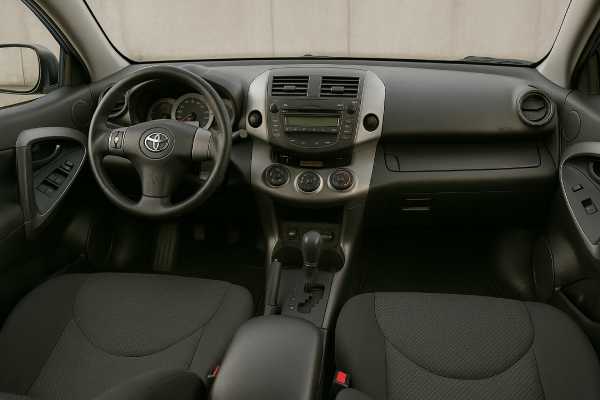
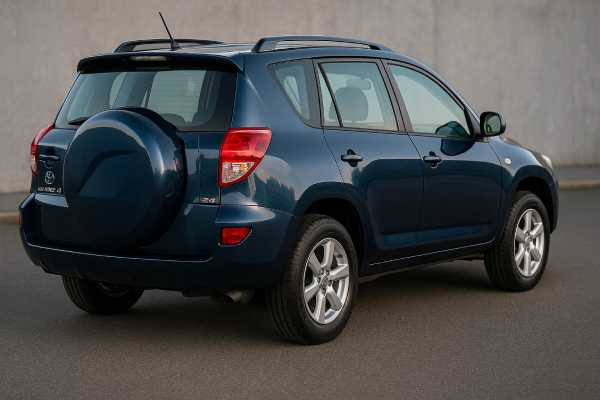
Packaging is a highlight. The Easy-Flat rear bench folds into the floor in one fluid motion, avoiding the awkward, multi-step routines found in some rivals of the period. The side-hinged tailgate splits opinion in tight city bays, yet it makes loading tall items straightforward. Up front, controls are clear and robust, with a driver’s seat that supports long stints. Noise suppression took a sizable leap versus the prior XA20: at 120 km/h the cabin is calmer than many same-era compacts, helped by the diesel’s low cruising rpm in sixth.
Where this model differs from earlier Toyota diesels is the AD-series engine architecture. The 2AD-FTV uses an all-aluminium block, common-rail injection, a variable-nozzle turbo, and a timing chain (not a belt). In some markets, specific calibrations add a diesel particulate filter (DPF); others rely on oxidation catalysts only. Either way, the maintenance approach is the same: keep oil quality high, the intake and EGR paths clean, and plan staged fuel-filter changes on schedule. Do that, and the AD diesel can cover high mileages with stable consumption, while the AWD system looks after traction in poor conditions without driver micromanagement.
RAV4 2.2 D-4D specifications
Below are scannable technical tables for 2007–2008 RAV4 2.2 D-4D AWD (European baseline). Figures can vary slightly by market, VIN, emissions package, and equipment.
Engine and performance (ICE-only)
| Item | Detail |
|---|---|
| Code | 2AD-FTV |
| Layout & cylinders | Inline-4, DOHC, 16-valve, common-rail DI |
| Displacement | 2.2 L (2,231 cc) |
| Induction | Turbocharged (variable-nozzle) with intercooler |
| Fuel system | DENSO common-rail direct injection |
| Compression ratio | ~15.7:1–16.8:1 (by calibration) |
| Max power | 150 hp (110 kW) @ ~3,600–4,000 rpm |
| Max torque | 340 Nm (251 lb-ft) @ ~2,000 rpm (typical) |
| Timing drive | Chain (hydraulic tensioner) |
| Emissions class | Euro 4 (most markets) |
| Rated economy (combined) | ~6.6–7.3 L/100 km (36–32 mpg US / 43–39 mpg UK) |
| Real-world highway @ 120 km/h | ~6.8–7.8 L/100 km (35–30 mpg US / 42–36 mpg UK) |
| Aerodynamics | Cd ≈ 0.31–0.33 (wheel/trim dependent) |
Transmission and driveline
| Item | 6-speed manual |
|---|---|
| Type & code | 6-MT (typical EA60 family) |
| 1st | ~3.538 |
| 2nd | ~2.045 |
| 3rd | ~1.333 |
| 4th | ~1.028 |
| 5th | ~0.820 |
| 6th | ~0.675 |
| Final drive | ~3.95 (varies by VIN) |
| Drive type | Active Torque Control AWD with electronically controlled rear coupling |
| Differential(s) | Open diffs; brake-based traction aids |
| Lock function | AWD Lock (low-speed fixed split; auto-cancel with speed) |
| Replenishment | Refuel to full ≈ 3–5 min |
(Automatic availability varied by market and year; the 6-MT is the common pairing with 2AD-FTV.)
Chassis and dimensions
| Item | Detail |
|---|---|
| Suspension (front/rear) | MacPherson strut / Double-wishbone independent |
| Steering | Electric power steering; overall ratio ~14–15:1 |
| Brakes (front/rear) | 296 × 28 mm ventilated disc / 281 × 12 mm solid disc |
| Wheels/tyres (common) | 225/65 R17 (alloys); 215/70 R16 on lower trims |
| Ground clearance | ~200 mm (7.9 in) |
| Angles (approach/departure/ramp) | ~25° / ~20° / ~20° |
| Length / Width / Height | ~4,395 / 1,815 / 1,685 mm (173.0 / 71.5 / 66.3 in) |
| Wheelbase | ~2,560 mm (100.8 in) |
| Turning circle (kerb-to-kerb) | ~10.4–10.8 m (34.1–35.4 ft) |
| Kerb weight | ~1,600–1,675 kg (3,527–3,693 lb) |
| GVWR | ~2,120–2,150 kg (4,674–4,740 lb) |
| Fuel tank | 60 L (15.9 US gal / 13.2 UK gal) |
| Cargo volume (VDA) | ~586 L seats up / ~1,469 L seats folded |
Performance and capability
| Metric | 2.2 D-4D AWD 6-MT |
|---|---|
| 0–100 km/h (0–62 mph) | ~10.2–10.6 s |
| Top speed | ~185–190 km/h (115–118 mph) |
| 100–0 km/h braking | ~38–40 m (125–131 ft), tyre-dependent |
| Towing (braked / unbraked) | 1,800–2,000 kg (3,968–4,409 lb) / 750 kg (1,653 lb) |
| Payload | ~480–560 kg (1,058–1,235 lb) |
| Roof load | ~100 kg (220 lb) with approved crossbars |
Fluids and service capacities
| System | Specification | Capacity (approx.) |
|---|---|---|
| Engine oil | ACEA C2 5W-30 (DPF markets) or ACEA B4 5W-30/5W-40 (non-DPF); low-SAPS where required | ~5.9 L (6.2 US qt) incl. filter |
| Coolant | Toyota Super Long Life Coolant (premix) 50:50 | ~6.5–7.5 L (6.9–7.9 US qt) |
| Manual gearbox | API GL-4 75W-90 (Toyota MTF spec) | ~2.2–2.5 L (2.3–2.6 US qt) |
| Rear differential | 75W-90 GL-5 | ~0.8–1.0 L (0.8–1.1 US qt) |
| Transfer case | 75W-90 GL-5 | ~0.8–1.0 L (0.8–1.1 US qt) |
| Brake fluid | DOT 4 | Fill to MAX; replace bi-annually |
| A/C refrigerant | R134a | ~500–550 g (17.6–19.4 oz) |
| A/C compressor oil | ND-Oil 8 / PAG 46 | ~120 mL (4.1 fl oz) |
| Key torque specs | Wheel nuts 103 Nm (76 lb-ft); Oil drain plug ~39 Nm (29 lb-ft); Caliper carrier bolts ~100 Nm (74 lb-ft) |
Electrical
| Item | Detail |
|---|---|
| Alternator | ~110–120 A |
| 12 V battery | ~70 Ah (≈ 620 CCA), common DIN H5/H6 sizes |
| Glow plugs | 11 V ceramic; ECU-controlled pre/post-heat |
Safety and driver assistance
- Crash performance: The 2006-tested XA30 achieved strong occupant protection for its era with multiple airbags and a robust passenger cell.
- Airbags and restraints: Dual front, side thorax (front), full-length curtains, and driver’s knee (market dependent); front pretensioners/limiters.
- Child-seat: ISOFIX/lower anchors with top tethers on rear outboard seats.
- ESC/TC: Stability control (VSC) and traction control standard or widely fitted; ABS with EBD and Brake Assist.
- ADAS: Pre-AEB era; no ACC or lane-keeping. Halogen headlamps predominant.
RAV4 grades, equipment, safety
Trims and equipment (typical European lineup). Naming varies by country (e.g., Active/Sol/Executive or UK XT3/XT4/XT5, plus the high-spec T180 for the 177-hp D-CAT). The 2.2 D-4D 150 AWD sits across mainstream trims:
- Core equipment: 16- or 17-inch wheels, roof rails, manual or dual-zone climate control, Easy-Flat rear seats, remote locking, heated/power mirrors, steering-wheel audio controls.
- Comfort/convenience upgrades by grade: Cruise control, auto lights/wipers, rear privacy glass, leather/heat front seats, power driver’s seat, Smart Entry/Start, sunroof, and factory navigation on upper trims.
- Infotainment tiers: CD with MP3/WMA and AUX as baseline; integrated navigation and Bluetooth hands-free on higher grades (or option packs).
- Seating and cargo: Five-seat configuration for the diesel AWD; the occasional-use third row was typically tied to petrol specs and is rare here.
Mechanical differences by trim. Core braking and suspension hardware are shared. Upper trims may adopt larger wheel/tyre packages and, on the 177-hp diesel, 18-inch wheels and run-flats (T180) with TPMS—note this differs from the 150-hp car discussed here. Tow ratings may step with cooling packages; verify on the VIN plate.
Year-to-year changes (2007 → 2008). Running changes brought minor feature shuffles (Bluetooth availability, audio interfaces) and small NVH tweaks. Emissions hardware differences (DPF presence) depend on country/legal cutovers in this period; check the build sheet if urban-low-emission compliance matters.
Safety ratings and systems. The XA30 platform’s structure, restraint logic, and ESC fitment underpin solid real-world safety. The side-hinged tailgate includes a high-mount brake light, and head-restraint geometry benefited from Toyota’s WIL (Whiplash Injury Lessening) philosophy. If a vehicle has had front-end/core sensor work (airbags, yaw/steering angle), ensure the zero-point calibration procedure is performed after alignment—this keeps ESC interventions smooth.
Quick identifiers and tells.
- AWD Lock button near the shifter confirms torque-split functionality.
- Badge/engine plate shows 2.2 D-4D; the 177-hp D-CAT cars typically wear distinct badging and equipment (not covered here).
- VIN build labels indicate month/year; emissions labels show catalyst/DPF fitment.
Reliability, faults, and service actions
The 2AD-FTV is capable of high mileages with stable consumption when maintained correctly. The notable problems are well understood; most are preventable or catchable early.
Engine and emissions (prevalence → remedy).
- EGR/Intake soot accumulation — common / low–medium cost
Symptoms: Hesitation, uneven idle, rising consumption, smoke under load.
Cause: EGR + oil mist deposit carbon through the intake.
Fix: Remove/clean EGR valve and intake runners; refresh gaskets; reset adaptations. Use correct low-SAPS oil where DPF-equipped. - DPF loading (where fitted) — occasional / usage-dependent
Symptoms: Frequent regens, limp under sustained town use.
Cause: Short-trip duty prevents complete regenerations.
Fix: Verify sensors/pressure lines; perform forced regen only after diagnosing root cause; adopt periodic 20–30-minute highway runs. - Turbo VNT sticking — occasional / medium cost
Symptoms: Over- or under-boost codes, flat mid-range.
Cause: Soot on vane ring + limited hot cycles.
Fix: Mechanical clean or CHRA service; confirm vacuum hoses and actuator integrity. - Head-gasket distress — occasional / high cost if ignored
Symptoms: Coolant loss with no leak, pressurised hoses cold, sweet exhaust smell, emulsified overflow.
Cause: Early-life head-gasket and head-bolt clamping concerns on some AD engines, exacerbated by overheating or poor coolant care.
Fix: Confirm with block-test/combustion-gas analysis; repair with updated gasket/fasteners and machine-checked head; renew water pump/thermostat. Many markets offered goodwill/extended coverage historically—verify records. - Injector sealing/combustion leak — occasional / medium cost
Symptoms: Diesel smell in cabin, black tar around injector seats, chuffing noise.
Fix: Replace copper washers and clamp bolts; clean seat bores; re-torque to spec; check learned pilot quantities.
Fuel and controls.
- Suction Control Valve (SCV) drift — occasional / medium cost
Symptoms: Hot-start difficulty, rail-pressure deviations.
Fix: Replace SCV(s), fit fresh fuel filter, check injector return rates; clear codes and verify rail control.
Cooling and ancillaries.
- Water pump seep or bearing noise — common with age / low–medium cost
Replace pump proactively with coolant service; inspect idlers/tensioner; bleed SLLC correctly.
Driveline and chassis.
- Rear suspension arm campaign — model-family notable
Certain XA30 vehicles had rear arm concerns (torque/corrosion). Ensure updated components and four-wheel alignment were completed. - Front lower arm rear bush wear — common / low cost
Vague steering or brake shimmy; replace bushes/arms; align to spec. - Wheel bearings (rear) — occasional / medium cost
Listen for speed-related humming that changes with load/steer.
Electrical and HVAC.
- Blower resistor or motor wear — occasional
Intermittent fan speeds; replace resistor pack and inspect connector. - Alternator diodes — occasional
Whine or dim battery light; test for AC ripple; rebuild/replace as needed.
Service actions and how to verify.
Use official recall portals/VIN checks and keep dealer printouts. For used cars, insist on evidence of completed campaigns (rear suspension arms, pedal/floor-mat measures where applicable) and post-repair alignment data.
Pre-purchase checks (must-do).
- Cold start after an overnight rest; look for clean start, minimal smoke, no coolant pressurisation.
- Cooling system: correct pink SLLC, no oil sheen, stable heater output.
- Road test: smooth torque, no limp, no oscillating boost; highway pass in 4th/5th should be linear.
- AWD: confirm Lock button engagement/disengagement and silence from the propshaft support bearing.
- Underbody: inspect rear subframe, alignment eccentrics, brake lines for corrosion.
- Records: oil ≤15,000 km intervals, fuel-filter changes, EGR cleaning, coolant service, and any gasket/turbo/injector work.
Maintenance plan and buyer tips
Practical service schedule (distance/time). Verify against VIN; adjust for severe use (short trips, towing, dusty climates).
- Engine oil & filter: 15,000 km / 12 months (or 10,000–12,000 km for heavy city/short-trip use). Use ACEA C2 5W-30 where DPF-equipped; ACEA B4 otherwise. Capacity ~5.9 L.
- Fuel filter: 30,000–45,000 km / 2–3 years; sooner after contaminated fuel events.
- Engine air filter: Inspect each service; replace 30,000–45,000 km.
- Cabin filter: 12–24 months (pollen season and city dust skew earlier).
- Coolant (SLLC): First major service around 160,000 km / 10 years, then every 80,000 km / 5 years.
- Timing chain system: No fixed replacement interval; listen for rattle on cold start, check cam/crank correlation if timing codes appear; renew guides/tensioner if out of spec.
- Accessory belt & idlers: Inspect annually; replace 90,000–120,000 km or at noise/crack.
- Manual gearbox oil (75W-90 GL-4): 90,000–120,000 km; earlier if towing.
- Transfer & rear diff (75W-90 GL-5): 60,000–90,000 km.
- Brake fluid (DOT 4): 24 months regardless of mileage.
- Brakes: Inspect every service; clean and lubricate slider pins annually.
- Tyres: Rotate 10,000–12,000 km; maintain matched circumferences (AWD); align annually or after pothole strikes.
- 12 V battery: Load-test annually after year 4; typical replacement 5–7 years.
- A/C check: Performance test every 24 months; keep condenser fins clean.
Fluid picks and quick rules.
- Use low-SAPS oil on any DPF-equipped car to protect the aftertreatment.
- Stick with Toyota SLLC coolant; avoid mixing chemistries.
- For the manual gearbox, prefer GL-4 synchroniser-friendly fluid; use GL-5 only where specified (diffs/transfer).
Essential torques (decision-making).
- Wheel nuts 103 Nm (76 lb-ft); Oil drain plug ~39 Nm (29 lb-ft); Front caliper carrier ~100 Nm (74 lb-ft); Guide pins typically 25–35 Nm (check variant). Always verify by VIN.
Buyer’s guide (what to inspect).
- Head-gasket health: Cold hoses should be soft; no bubbles in header tank at idle; no unexplained coolant loss.
- EGR/DPF state: Ask for invoices or logs; a car that has had periodic cleaning and sensor checks will drive cleaner and regenerate less often.
- Turbo control: Confirm smooth boost rise; vacuum lines and VNT actuator should hold vacuum.
- AWD hardware: Look for leaks at the transfer case and rear diff; check propshaft support bearing for play.
- Corrosion: Rear subframe mounts and alignment cams seize on salty roads; budget for hardware replacement at the first alignment.
- Tyres and alignment: Even wear across the tread; a recent alignment printout is a good sign.
- Records: The best examples carry proof of regular oil, fuel-filter, and coolant services, plus any gasket/turbo preventative work.
Durability outlook. With clean EGR/intake paths, correct oil, timely fuel-filter changes, and cooling system discipline, the 2AD-FTV AWD typically delivers long, drama-free service. The AWD system itself is low-maintenance; tyres and alignment have more influence on day-to-day feel and economy than the coupling ever will.
Driving impressions and performance
Ride, handling, NVH. The XA30’s stiffer shell and independent rear suspension produce a settled, cohesive ride. On 17-inch wheels, impacts are heard more than felt, and the body takes a clean set in medium-speed corners. Electric power steering is light for parking yet gains reassuring weight on the motorway. Crosswinds are managed well for a tall body; cabin boom is low, and tyre roar remains modest on quality all-season or touring tyres.
Powertrain character. The 2.2 diesel is tuned for torque, not theatrics. In traffic, short-shifting at 2,000–2,500 rpm keeps progress smooth and fuel use low. On two-lane roads, passing is easy if you pre-select the right gear: the engine’s best punch is from ~2,000 to 3,500 rpm. Throttle response is crisp once the VNT is on song. If the car feels flat or surges at steady throttle, suspect EGR or boost-control housekeeping before assuming a failing turbo.
AWD traction behaviour. In steady cruise, the system behaves like a front-driver to reduce drag. Add throttle or steering lock on a slick surface and rear-axle torque arrives seamlessly. The Lock button can be a day-saver when pulling away on compact snow or wet grass, reducing traction-control power cuts; it disengages with speed so you do not forget it on.
Real-world economy and range. Mixed driving typically returns 6.8–7.8 L/100 km (35–30 mpg US / 42–36 mpg UK) for a healthy car on 17-inch tyres. Motorway runs at 120 km/h with light load sit near the lower half of that band. Winter diesel, HVAC loads, roof boxes, and short-trip usage can add 0.5–1.0 L/100 km. With a 60-litre tank, most owners see 650–850 km between fills.
Selective performance metrics.
- 0–100 km/h: around 10.2–10.6 s (6-MT).
- 80–120 km/h: expect ~8–10 s in 4th/5th with a clean intake and healthy VNT control.
- 100–0 km/h: ~38–40 m on quality tyres and fresh pads; annual slider-pin service keeps results consistent.
Load and towing. With up to 1,800–2,000 kg braked capacity (market-dependent), the diesel AWD tows confidently when kept within limits. Stability is good with a friction-type hitch and correct nose weight. Plan for a 20–35% consumption penalty while towing at 90–100 km/h, and service the brakes and gearbox oils more frequently if you tow often or traverse mountain passes.
RAV4 versus key rivals
- Honda CR-V 2.2 i-CTDi (Mk3): Honda’s diesel is smooth and willing, and the manual shift is a benchmark. The CR-V’s interior packaging is superb, but some cars in harsh climates show rear-subframe corrosion. The RAV4 counters with calmer high-speed NVH and the useful AWD Lock for slick pull-aways.
- Nissan X-Trail 2.0 dCi (T31): A more utilitarian feel with a capable on-demand 4×4 system. Cabin quality and ride isolation trail the Toyota; maintenance demands for EGR/turbo hardware are similar.
- Subaru Forester 2.0D (early): Symmetrical AWD and confident handling, but the first-generation boxer diesel introduced its own reliability considerations. The RAV4’s parts pricing and service familiarity are advantages in many regions.
- Volkswagen Tiguan 2.0 TDI (launch era): Strong chassis and modern cabin tech; ownership costs can be more variable once emissions hardware ages. The RAV4’s simpler spec and consistent reliability appeal to long-term keepers.
Bottom line: If you want a compact SUV that is quiet at a cruise, composed in winter, and easy to keep healthy with disciplined diesel care, the RAV4 2.2 D-4D AWD (2007–2008) remains a smart, low-drama choice.
References
- THE NEW TOYOTA RAV4 2006 (Press Pack / Technical Data)
- Toyota RAV4 2006 2006 (Safety Rating)
- Recalls | Owners 2025 (Recall Checker)
- Check if a vehicle, part or accessory has been recalled 2025 (Recall Database)
Disclaimer
This article is for informational purposes only and does not replace professional diagnosis or repair. Specifications, torque values, capacities, and maintenance intervals can vary by VIN, market, emissions package, and production changes. Always confirm details against your vehicle’s official owner’s manual, workshop information, and manufacturer bulletins before performing service.
If this guide helped, please consider sharing it with fellow owners on Facebook or X/Twitter to support xcar’s work.