
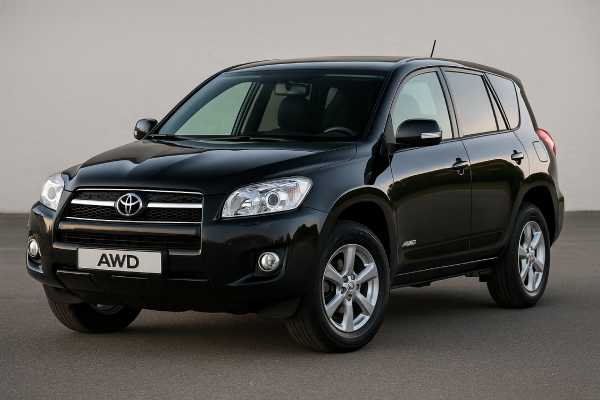
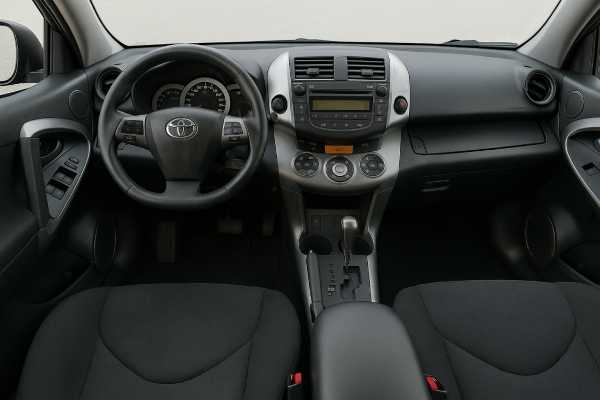
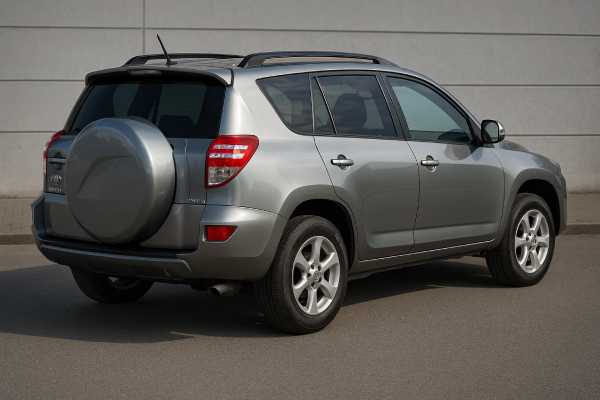
The facelift Toyota RAV4 (XA30) with the 2AD-FHV 2.2-litre D-CAT diesel is the “long-legged” choice in this generation: strong overtaking shove, relaxed motorway revs, and a capable AWD system that simply gets on with the job in rain, sleet, or light snow. Rated at 177 hp, this engine pairs a variable-geometry turbo with a sophisticated emissions package and a tall sixth gear, so it cruises calmly while still towing confidently when needed. The cabin majors on space and durability rather than flash, and the square cargo bay handles family life without drama. Compared with the 150-hp diesel, the 177 brings more mid-range punch and slightly shorter real-world passes, at the cost of a touch more complexity in its aftertreatment. If your week mixes commuting, weekend trips, and the occasional trailer or mountain run, this specification delivers dependable, fuss-free miles when you respect diesel housekeeping and keep fluids and filters on schedule.
Core Points
- 177 hp diesel with a wide, usable torque band for quick, safe overtakes and confident towing.
- Active Torque Control AWD adds secure traction without the weight or drag of full-time 4×4.
- Practical, durable interior; square load bay and split-fold rear seats simplify family duties.
- Watch EGR/DPF cleanliness on urban-only cars; short trips increase soot load and oil dilution risk.
- Engine oil and filter every 15,000 km or 12 months; shorten to 10,000 km for mostly city use.
Guide contents
- RAV4 2.2 D-CAT AWD brief
- RAV4 177 diesel specs
- Grades, safety and assistance
- Reliability, issues and actions
- Service schedule and buying tips
- Driving feel and performance
- RAV4 versus rivals
RAV4 2.2 D-CAT AWD brief
The facelifted XA30 RAV4 addressed day-to-day owner needs: quieter cruising, tidier aerodynamics, and simplified grade packs. The 2AD-FHV engine—often branded “D-CAT 177”—sits at the top of the diesel tree. It combines a variable-nozzle turbo and common-rail injection with a close-coupled NOx storage catalyst and DPF system. In practice, that means brisk, low-rpm thrust with clean tailpipe emissions when the car is used as intended: steady weekly mileage including some sustained running to keep the aftertreatment healthy. If your routines are short hops and cold starts, petrol makes more sense; but for regular commuters, the 177 is the RAV4 that feels effortless at real-world speeds.
All-wheel drive uses Toyota’s Active Torque Control with an electronically controlled coupling ahead of the rear differential. In normal cruising it runs front-biased for efficiency, then feeds torque rearward proactively on slick patches or when you launch from a standstill. A low-speed “lock” mode can hold a fixed split to help on icy driveways or muddy ramps. Stability control and brake-based torque vectoring trim slip before it becomes drama. The system is transparent on dry tarmac—no binding, no parking-lot judder—and quietly capable on loose or wet surfaces.
Inside, the RAV4 keeps things usable and tough. The short-body shell makes parking easy, yet the cargo area is broad and low, and the split-fold bench drops to create a near-flat floor. The side-hinged tailgate divides opinion—you need lateral space to open it—but the externally mounted spare remains handy for rural drivers and winter travellers. Seat comfort is solid for long stints, with a naturally upright driving position and clear sightlines for city traffic. Road and wind noise are well-contained for a compact SUV of this era, and the diesel’s hum is subdued once warm.
Where this model earns its keep is mixed-duty life: school runs and errands during the week; a calm 300-km motorway hop at the weekend; maybe a small caravan or boat in summer. The extra mid-range of the 177 turns overtakes into short, predictable windows, especially if you plan gears and keep the engine in its sweet band. Ownership is straightforward when you apply diesel housekeeping: low-SAPs oil, timely fuel and air filtration, regular brake-fluid changes, and the occasional “Italian tune-up”—a 20–30-minute steady run—to support passive regeneration.
RAV4 177 diesel specs
Engine and Performance (ICE)
| Item | Value |
|---|---|
| Code | 2AD-FHV (D-CAT 177) |
| Layout & valvetrain | Inline-4, DOHC, 16-valve; timing chain |
| Bore × stroke | 86.0 × 96.0 mm (3.39 × 3.78 in) |
| Displacement | 2.2 L (2,231 cc) |
| Induction | Variable-geometry turbo with intercooler |
| Fuel system | Denso common-rail direct injection |
| Compression ratio | ≈15.8 : 1 |
| Max power | 177 hp (130 kW) @ ~3,600 rpm |
| Max torque | ≈400 Nm (295 lb-ft) @ ~2,000–2,800 rpm |
| Emissions class | Euro 4 → Euro 5 (by year/emissions pack) |
| Rated economy (mixed) | ≈6.6–7.0 L/100 km (36–34 mpg US / 43–40 mpg UK) |
| Real highway @120 km/h | ≈7.0–7.6 L/100 km (34–31 mpg US / 41–37 mpg UK) |
| Aerodynamics | Cd ≈0.31; frontal area ≈2.25 m² (24.2 ft²) |
What the numbers mean. The 2AD-FHV’s extra 27 hp and ~60 Nm over the 150-hp diesel translate into punchier 80–120 km/h passes and easier hill climbs with passengers and luggage. Because gearing is tall, cruising revs stay low, which helps refinement and economy. Real-world highway figures land close to the official combined number if you stick to 100–120 km/h and keep roof bars off when not needed.
Transmission and Driveline
| Item | Value |
|---|---|
| Transmission | 6-speed manual (most common); 6-speed automatic available in select markets with D-CAT package |
| Final drive | ≈3.9 (varies marginally by build) |
| Drive type | AWD (Active Torque Control) |
| AWD behaviour | 100:0 default → on-demand rear torque; 4WD Lock at low speeds |
| Differentials | Open front and rear; electro-magnetic coupling before rear diff |
| Refuel to full | ≈5 min at diesel pump |
Gearing notes. The manual’s ratios place second and third where you need them for urban ramps and country-road overtakes, with a long sixth for economy. The optional automatic is smooth and well-matched to the diesel’s torque; use manual mode on long descents or when towing to keep temperatures in line.
Chassis and Dimensions
| Item | Value |
|---|---|
| Front / rear suspension | MacPherson strut / Double wishbone |
| Steering | Electric power steering; ratio ≈15–16:1 |
| Brakes (front/rear) | Ventilated disc / solid disc |
| Wheels and tyres | 225/65 R17 (common); some grades 215/65 R16 |
| Ground clearance | ≈180 mm (7.1 in) |
| Length / width / height | 4,365 / 1,815 / 1,685 mm (171.9 / 71.5 / 66.3 in) |
| Wheelbase | 2,560 mm (100.8 in) |
| Turning circle | ≈10.6–11.6 m (35–38 ft) curb-to-curb |
| Kerb (curb) weight | ≈1,600–1,680 kg (3,527–3,704 lb) |
| GVWR | ≈2,170–2,230 kg (4,784–4,916 lb) |
| Fuel tank | 60 L (15.9 US gal / 13.2 UK gal) |
| Cargo volume | ≈410 / ≈1,470 L (14.5 / 51.9 ft³) VDA, seats up/down |
Packaging takeaways. Despite compact external length, the square bay and low lift-over make weekly chores easy. The side-hinged tailgate clears low ceilings but needs lateral space; factor that into tight garages.
Performance and Capability
| Item | Value |
|---|---|
| 0–100 km/h (0–62 mph) | ≈9.3–9.8 s (tyres/gearbox dependent) |
| Top speed | ≈200 km/h (124 mph) |
| 100–0 km/h braking | ≈38–39 m (125–128 ft) on quality tyres |
| Towing capacity | up to ≈2,000 / 750 kg (4,409 / 1,653 lb) braked/unbraked |
| Payload | ≈520–600 kg (1,146–1,323 lb) |
| Roof load | 75 kg (165 lb) |
Why it matters. The extra headroom on towing and passing times is the 177’s calling card. If you regularly travel with family and luggage or live in hilly regions, this engine’s mid-range makes everyday driving calmer and safer.
Fluids and Service Capacities
| System | Spec / Capacity |
|---|---|
| Engine oil | ACEA C2/C3 low-SAPs 5W-30 (DPF-safe); ≈6.3 L (6.7 US qt) incl. filter |
| Coolant | Toyota Super Long Life (pink) ~50/50; ≈6.5–7.0 L (6.9–7.4 US qt) |
| Manual transaxle | API GL-4 75W–90; ≈2.2 L (2.3 US qt) |
| Automatic (if fitted) | Toyota WS ATF; drain/refill ≈3.5–4.0 L (procedure dependent) |
| Transfer (AWD) | API GL-5 75W–90; ≈0.45 L (0.48 US qt) |
| Rear differential | API GL-5 75W–90; ≈0.6 L (0.63 US qt) |
| A/C refrigerant | R-134a; ≈430 g (15.2 oz) |
| A/C compressor oil | ND-Oil 8; ≈120 mL (4.1 fl oz) |
| Key torque specs | Wheel nuts 103 Nm (76 lb-ft); sump plug ≈39 Nm (29 lb-ft); diff/transfer drains ≈39 Nm (29 lb-ft) |
Electrical
| Item | Value |
|---|---|
| Alternator | ≈120 A |
| 12V battery | ≈70 Ah (≈620 CCA), H5/H6 case |
| Glow plugs | 11 V ceramics (Denso) |
Safety and Driver Assistance
| Area | Details |
|---|---|
| Crash ratings | Euro NCAP 4-star for this generation under 2006 protocol |
| Restraints | Front, side, curtain, driver’s knee airbags; ISOFIX/LATCH rear outboard |
| Stability & braking | ABS with EBD and Brake Assist; VSC/ESC and TRC standard |
| Hill aids | HAC; DAC on auto/selected grades |
| Headlights | Halogen reflectors common; projector low-beam on later/higher grades |
| ADAS | Pre-AEB era; parking sensors and reversing camera available by grade |
Grades, safety and assistance
Grade structure (Europe, 2008–2012). Names vary by country, but the pattern is familiar: a core grade with cloth trim and 16–17-inch wheels; a comfort/Active/XT-R-type grade with dual-zone climate, steering-wheel controls and often a camera; and an SR/Executive-type grade with leather/Alcantara, larger alloys, and navigation. The 2.2 D-CAT 177 AWD appears mainly in mid and upper grades with the six-speed manual; in select markets it could be paired with a six-speed automatic as part of the emissions package. Visual tells include smoke-finish headlamps, privacy glass, and 17-inch alloys on higher trims.
Functional differences. Suspension hardware is shared across diesels—MacPherson/double-wishbone with discs all around—but spring and damper rates vary slightly by axle load and wheel package. AWD cars add the transfer unit and rear coupling; there are no mechanical lockers. Some tow packs include heavier-duty cooling and wiring; always confirm the type-approved rating on the VIN plate rather than assuming a flat 2,000 kg across all builds.
Infotainment and convenience. Early facelift cars use a straightforward CD/MP3 head unit with AUX. Late cars add Touch / Touch & Go with Bluetooth and USB, and reversing camera support on many higher grades. Factory parking sensors are common; after bumper work, sensors may require angle checks in the mountings to prevent false triggers. Cruise control appears widely; adaptive systems were not yet offered.
Safety context. Under the 2006 Euro NCAP protocol, the XA30 RAV4 returned four stars with strong side-impact protection and stable cabin integrity for the period. Modern tests are tougher, so avoid direct star-to-star comparisons with current models. Curtain and knee airbags are a strength, as are accessible ISOFIX points for quick, secure child-seat installation. Brake Assist intervenes decisively in panic stops, and the stability-control tune is calm and progressive.
Driver assistance. This generation predates forward AEB, lane keep, and blind-spot monitoring. That means fewer sensors to re-calibrate after glass or body repair, but places a premium on tyre quality and headlamp alignment for night driving. The AWD calibration works hand-in-glove with stability control to nip wheelspin early; winter tyres remain the single biggest performance upgrade for snowbelt owners.
Year-to-year notes. The 2010 refresh brought the bolder grille, projector low-beams on many trims, updated wheel designs, and better phone/audio integration. Late-run cars are more likely to include camera wiring from factory and improved Bluetooth stacks that handle modern handsets with fewer dropouts. Where available, the automatic with D-CAT broadened appeal for urban drivers who still wanted AWD security.
Reliability, issues and actions
The headline. The 2AD-FHV AWD RAV4 is durable when serviced on time and driven as intended. Most issues cluster around soot management (EGR/DPF/NOx-trap), clutch and dual-mass flywheel wear in urban or tow duty, and age-related cooling or induction components. The AWD hardware itself is low-drama if fluids are refreshed and tyres stay matched.
Common (low–medium cost):
- EGR valve and cooler fouling. Short-trip use accelerates soot build-up, causing rough idle, limp-home, or increased smoke. Symptoms: hesitant throttle, MIL, high EGR error. Remedy: remove and clean EGR/cooler and throttle plate; clear adaptations; adopt weekly 20–30-minute steady runs.
- DPF and NOx-trap saturation. Urban cycles and low-speed short hops prevent passive regeneration. Symptoms: frequent regens, rising oil level (fuel dilution), reduced power. Remedy: verify differential-pressure sensor plausibility, inspect hoses, initiate a controlled service regen, and change oil if fuel-diluted.
- Intercooler and boost hoses. Age and oil mist soften elbows; splits produce a whistle and low boost. Remedy: replace hoses/clamps, clean mating surfaces, verify MAP and MAF readings.
Occasional (medium cost):
- Dual-mass flywheel/clutch wear. High-mileage city cars or frequent towers develop shudder, rattle at idle, or flare on throttle. Remedy: replace clutch and DMF; check rear main seal and engine/trans mounts.
- Suction Control Valve (SCV) wear on the high-pressure pump. Symptoms: erratic idle, hot-restart stumble, hunting. Remedy: replace SCV, relearn idle; maintain timely fuel-filter changes.
- Water pump seepage. Symptoms: pink crust around pump, coolant smell, slow level loss. Remedy: pump replacement and coolant refresh; bleed carefully.
Rare but important:
- Early AD-series head gasket/short-block concerns. Well-publicised on some earlier 2.2 diesels; post-2009 updates significantly reduced incidence, but due diligence matters. Checks: cold-start pressure test, hydrocarbon sniff, and a thorough coolant inspection on any car with vague history.
- Fifth-injector coking (D-CAT). Excessive short-trip use can foul the exhaust-mounted injector used for active regeneration. Symptoms: failed regens, smoke during attempts. Remedy: diagnose injector function, wiring and spray pattern; replace if out of spec; ensure correct software and drive cycle.
Chassis/body/electrics:
- Rear arm fasteners and alignment. After bushing or arm service, confirm torque and a repeat alignment check; under-torqued hardware can loosen over time.
- Tailgate harness flex. Repeated side-hinge cycles can break conductors, causing intermittent plate-lamp or rear-wiper operation; fit the repair section when needed.
- Underbody corrosion points. Rear subframe bolts, exhaust hangers, and the spare-wheel carrier collect salt; inspect and treat early.
Safety service actions to verify:
- Rear outboard seatbelt webbing protection (2006–2012 builds). Dealers fit resin guards to the rear seat frame to prevent belt damage in a severe frontal crash. Confirm completion by VIN.
- Market-specific airbag/ECU campaigns may apply; always run an official VIN check and keep proof with the car’s records.
Pre-purchase requests. Ask for invoice-backed service history, proof of low-SAPs oil since DPF fitment, any EGR/DPF cleaning or replacement, brake-fluid dates, clutch/DMF work, coolant age, and tyre dates. Bring a scan tool to read DPF soot/ash load and regen counts; avoid cars with repeated forced regens or oil dilution events.
Service schedule and buying tips
Practical maintenance schedule (typical European diesel):
- Engine oil and filter: 15,000 km or 12 months; shorten to 10,000 km for urban/short-trip use. Use ACEA C2/C3 5W-30 low-SAPs.
- Fuel filter: inspect 30,000 km; replace 60,000 km or 4 years (earlier if water contamination suspected).
- Engine air filter: inspect 15,000 km; replace 30–45,000 km depending on environment.
- Cabin filter: 12 months; more often in dusty/pollen seasons.
- Coolant (SLLC pink): first change 10 years/160,000 km, then 5 years/100,000 km—confirm with the handbook.
- Manual transaxle oil: check 90,000 km; refresh 120–150,000 km if shift feel degrades (GL-4 75W-90).
- Automatic (if fitted): temperature-controlled drain/fill with Toyota WS; reset adaptations as required.
- Transfer and rear diff oils: 120,000 km typical; earlier if towing or frequent mountain work (GL-5 75W-90).
- Brake fluid: 24 months; bleed with ABS-module awareness.
- Pads/rotors: inspect every service; pads commonly last 30–60,000 km with mixed use.
- Serpentine/aux belt and tensioner: inspect annually; replace 90–120,000 km if cracked/noisy.
- Timing drive: chain—inspect correlation and noise; renew chain/guides/tensioner if out of spec.
- EGR/intake cleaning: plan 60–90,000 km on urban-heavy cars; extend intervals for motorway commuters.
- DPF health: check differential pressure and ash at service; support passive regens with weekly 20–30-minute steady drives.
- 12V battery: test yearly from year 4; typical replacement 5–7 years.
Fluid snapshot (for planning): oil ≈6.3 L, coolant ≈6.5–7.0 L, manual trans ≈2.2 L, transfer ≈0.45 L, rear diff ≈0.6 L, R-134a ≈430 g. Essential torque: wheel nuts 103 Nm, sump ≈39 Nm, diff/transfer drains ≈39 Nm.
Workshop tips that save money:
- After any DPF service regen, change the oil if the level rose—fuel dilution thins viscosity.
- When replacing the SCV, clean fuel lines and reset idle/learning values to avoid comeback.
- On clutch/DMF jobs, inspect rear main seal and engine/trans mounts; small parts now save labour later.
- Keep tyres matched by brand, model, and tread depth; AWD systems are happiest with even rolling diameters.
Buyer’s inspection checklist:
- Cold start: brief diesel clatter is normal; sustained chain rattle or DMF clunk is not.
- DPF status: read soot/ash load and regen count; avoid cars with repeated forced regens.
- Boost system: check for oil mist at intercooler elbows and listen for a steady turbo whistle without siren tones.
- Cooling system: look for pink residue at the pump; pressure-test if coolant history is unknown.
- AWD health: inspect transfer and rear diff for seepage; verify all four tyres match.
- Brakes/steering: consistent pedal feel, no pull under braking, and no steering knock over speed cushions.
- Underbody: rear subframe hardware, exhaust hangers, and spare-wheel carrier for corrosion.
- Paper trail: VIN printout of recalls; invoices for oil, brake-fluid, coolant, and any EGR/DPF work.
Which cars to shortlist? Late-cycle (2010–2012) examples with proof of low-SAPs oil, periodic EGR/DPF attention, and recent brake-fluid/coolant dates. Mid-grade cars on 17-inch wheels ride best and are cheaper to tyre than 18s. Avoid neglected city cars with DPF warnings, mismatched tyres, or vague service stamps without invoices.
Durability outlook. With sensible driving and routine care, the 2AD-FHV AWD commonly covers 250,000+ km without internal engine work. Keep aftertreatment healthy and fluids fresh, and ownership remains predictable and calm.
Driving feel and performance
Ride and handling. The XA30’s chassis is tuned for real-world comfort. Over broken tarmac it remains composed, rounding off sharp inputs while keeping the body settled on undulations. The double-wishbone rear helps the back axle track cleanly when mid-corner bumps appear, and the car’s short overall length aids placement in narrow streets. Steering effort is light for parking and reassuring on the motorway; it is not chatty, but accuracy is good and on-centre stability is calm at 120–130 km/h (75–81 mph). Brake feel is progressive with a clear bite point; good-quality pads and fresh fluid deliver repeatable stops without early fade.
Powertrain character. The 177’s sweet spot is 1,600–3,000 rpm. Off-boost lag is minimal once you are rolling, and the engine responds briskly to mid-throttle inputs. In daily use that translates into short, confident overtakes and easy climbs with passengers and luggage. The six-speed manual suits drivers who like to choose gears; fifth is the flexible overtaking gear, while sixth is long for economy. The six-speed auto (where fitted) prioritises smoothness; use manual mode for descents, alpine towing, or when you want to hold a gear for long passes.
Economy in practice. Expect roughly:
- City: 7.8–8.8 L/100 km (30–27 mpg US / 36–32 mpg UK) depending on trip length and temperature.
- Highway (100–120 km/h / 60–75 mph): 6.2–7.2 L/100 km (38–33 mpg US / 46–40 mpg UK).
- Mixed: 6.7–7.4 L/100 km (35–32 mpg US / 42–39 mpg UK).
Cold weather, winter diesel, roof boxes, and aggressive tyres add consumption; a clear roof and modest speeds pay off quickly.
Key metrics that matter. In healthy tune, the AWD 177 stops from 100 km/h in ~38–39 m on good tyres, runs 0–100 km/h in ~9.3–9.8 s, and passes 80–120 km/h in a short, predictable window in fourth or fifth. The turning circle—≈10.6–11.6 m—keeps multistorey ramps and tight streets manageable.
Traction and stability. The AWD calibration is confidence-inspiring and unobtrusive. It feeds torque rearward before wheelspin becomes a slide, and the 4WD Lock button helps when starting on snow or climbing a greasy track at low speed. As ever, tyre choice defines winter behaviour: fit a quality winter set and the RAV4 becomes a calm, predictable companion on packed snow and ice.
Load and towing. With up to ~2,000 kg braked rating (check your VIN plate), the 177 handles small caravans, boats, or trailers capably. Plan for a 15–25% fuel-use penalty when towing or fully loaded. Keep cooling and brakes in top order and use manual gears (or manual mode) to manage temperatures on long grades. A fresh cabin filter before a big summer tow helps HVAC performance in heat.
RAV4 versus rivals
Volkswagen Tiguan 2.0 TDI 4Motion. The Tiguan feels more premium inside and can be a shade quieter at speed. Its later emissions hardware is complex, and DSG-equipped cars add a layer of maintenance. The RAV4 counters with a calmer secondary ride on poor tarmac, simpler driveline service, and often lower out-of-warranty costs.
Honda CR-V 2.2 i-DTEC AWD. Spacious, refined, and efficient when healthy. Injector and DPF issues crop up on badly maintained cars, and some suspension consumables wear sooner. The RAV4’s robust suspension and straightforward AWD coupling age well; parts pricing is owner-friendly.
Ford Kuga 2.0 TDCi AWD. Great steering and front-end bite, with a sporty stance. Rear brake wear and occasional electrical niggles appear with age. The RAV4 rides softer, isolates noise better on coarse surfaces, and tends to hold residual value more strongly in many markets.
Nissan X-Trail T31 2.0/2.2 dCi AWD. Honest, roomy, and functional. Cabin plastics and paint can look tired sooner, and subframe rust may need attention in salt belts. The RAV4’s interior ages more gracefully and its diesel feels livelier in everyday use.
Bottom line. Choose the RAV4 2.2 D-CAT 177 AWD if your priorities are long-distance ease, all-weather traction, and predictable ownership backed by a reputation for robust mechanicals. Keep the aftertreatment system happy with sensible driving and timely service, and it delivers exactly what most families need: calm progress, space, and low drama.
References
- More Choice, More Equipment and New Styling for Toyota’s 2010 RAV4 2010 (Press Release)
- 2009 RAV4 With Toyota Optimal Drive 2009 (Press Release)
- Official Toyota RAV4 2006 safety rating 2006 (Safety Rating)
- Part 573 Safety Recall Report 16V-096 2016 (Recall Report)
Disclaimer
This guide is for informational purposes and is not a substitute for professional diagnosis or repair. Specifications, torque values, intervals, and procedures vary by VIN, market, year, and equipment. Always verify details against your vehicle’s official service documentation and follow current manufacturer guidance.
If this article helped, please consider sharing it with fellow owners on Facebook or X/Twitter to support xcar’s work. Thank you!