
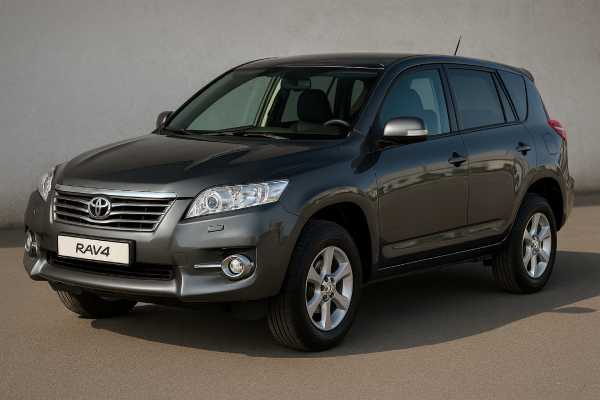
The facelifted third-generation Toyota RAV4 (XA30) in front-wheel drive with the 2.0-litre D-4D diesel fills a very specific brief: compact SUV space and running costs that feel closer to a family hatchback. Owners value its simple, hard-wearing cabin, balanced ride quality, and strong low-rpm torque that keeps the car relaxed in everyday traffic. This update also brought quiet refinements to noise suppression, interior fit, and corrosion protection. A point of clarification for engine nerds: while many parts catalogues and classifieds use the earlier “1CD-FTV” tag loosely for Toyota’s 2.0 D-4D, European facelift RAV4s typically use the later square-bore 2.0 D-4D architecture (commonly catalogued as 1AD) with chain-driven cams and a close-coupled DPF. What matters to shoppers is output—about 126 hp and 310 Nm—and the way it delivers: smooth, linear pull from 1,500 rpm and long, quiet gearing in sixth for efficient motorway cruising.
Fast Facts
- Torquey 2.0 D-4D pulls cleanly from low revs; relaxed motorway gearing keeps cabin noise down.
- Practical short-body dimensions with easy loading height and split-fold rear bench.
- Simple, durable interior and robust suspension components suit mixed city/rural use.
- Watch for EGR/DPF soot build-up on short-trip cars; sustained highway runs help regeneration.
- Oil and filter every 15,000 km or 12 months (whichever comes first).
What’s inside
- RAV4 2.0 D-4D FWD Overview
- RAV4 2.0 D-4D Specs and Data
- RAV4 Trims, Safety and Driver Aids
- Reliability and Service Actions
- Maintenance and Buyer’s Guide
- Driving Feel and Performance
- RAV4 Compared to Rivals
RAV4 2.0 D-4D FWD Overview
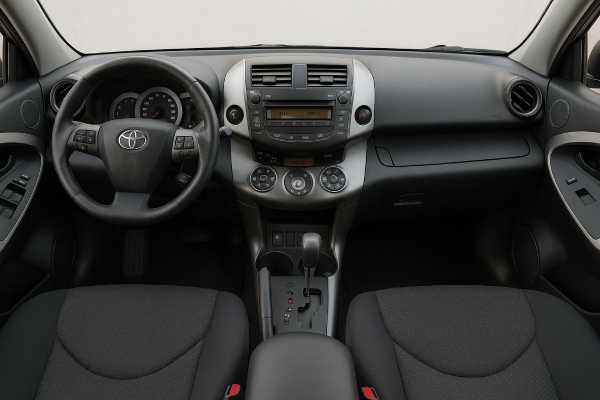
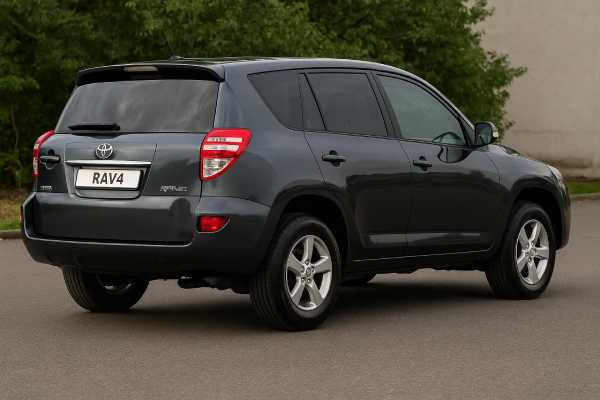
Toyota’s facelifted XA30 RAV4 (model years roughly 2009–2012) sharpened the styling, refined sound insulation, and broadened the powertrain mix. The front-wheel-drive diesel you’re reading about targets buyers who want the running economy of a mid-size hatchback with the seating position and cargo utility of an SUV. The short-body RAV4 is easy to park, with a relatively tight turning circle and a squared-off tail that simplifies reverse maneuvers. Inside, the layout is simple and durable rather than flashy; the materials stand up well to family life and dogs, and switchgear is still crisp a decade on when maintained.
The 2.0-litre D-4D (commonly shown around 126 hp / 93 kW, ~310 Nm / 229 lb-ft) is paired almost exclusively with a six-speed manual gearbox in European markets. There’s no center differential to service on this FWD configuration, and the driveline is simpler (and lighter) than the AWD variants. The diesel’s character suits everyday use: flexible torque from 1,500 rpm, easy roll-on acceleration in third and fourth, and relaxed 6th-gear cruise at 120 km/h (75 mph). Real-world economy is strongest when your weekly routine includes some continuous highway miles to keep the diesel particulate filter (DPF) healthy.
Cabin practicality is a strong point. The rear bench splits and folds nearly flat; the cargo floor is low for the class; and Toyota’s seat fabrics and plastics resist scuffs. The side-hinged tailgate can be a love-or-hate item (it clears low ceilings but needs lateral room to open), and the externally mounted spare wheel is handy for rural users. Ride quality lands on the comfortable side of firm, and the RAV4’s body control over rough patches is tidy at sensible speeds. Steering is light for parking yet predictable on the motorway.
If you’re deciding between petrol and diesel, the diesel’s case is best for drivers who: (1) exceed ~15,000 km per year, (2) include regular 20–30-minute continuous runs, and (3) plan to tow or load the car often. For mostly short, urban trips, the petrol may be lower-stress ownership even if it drinks more. But as a long-legged commuter, the FWD 2.0 D-4D remains a smart, frugal buy—provided you stay on top of EGR/DPF cleanliness and the routine maintenance outlined below.
RAV4 2.0 D-4D Specs and Data
Engine and Performance (ICE)
| Item | Value |
|---|---|
| Code | 2.0 D-4D (catalogued widely as 1CD-FTV/1AD family) |
| Layout & valvetrain | Inline-4, DOHC, 16-valve; chain-driven cams on later EU units |
| Bore × stroke | 86.0 × 86.0 mm (3.39 × 3.39 in) |
| Displacement | 2.0 L (1,998 cc) |
| Induction | Turbocharged with intercooler (variable-geometry) |
| Fuel system | Common-rail direct injection (Denso) |
| Compression ratio | ~16.0:1 |
| Max power | 126 hp (93 kW) @ 3,600 rpm |
| Max torque | 310 Nm (229 lb-ft) @ 1,800–2,400 rpm |
| Emissions / efficiency class | Euro 4 → Euro 5 (by year and DPF fitment) |
| Rated economy (mixed) | ~5.8–6.0 L/100 km (40.6–39.2 mpg US / 48.8–47.0 mpg UK) |
| Real highway @120 km/h | ~6.5–7.0 L/100 km (36–34 mpg US / 43–41 mpg UK) |
| Aerodynamics | Cd ≈ 0.31; frontal area ~2.25 m² (24.2 ft²) |
Transmission and Driveline
| Item | Value |
|---|---|
| Transmission | 6-speed manual |
| Final drive | ~3.7–3.9 (varies slightly by build) |
| Drive type | Front-wheel drive (FWD) |
| Differential | Open (front); no center/rear differential on FWD |
| Refuel to full | ~5 min (typical diesel pump) |
Chassis and Dimensions
| Item | Value |
|---|---|
| Front / rear suspension | MacPherson strut / Double wishbone |
| Steering | Electric power steering; ratio approx. 15–16:1 |
| Brakes (front/rear) | Ventilated disc / solid disc |
| Wheels / tyres | Common: 225/65 R17 (17-in); Base: 215/65 R16 |
| Ground clearance | ~180 mm (7.1 in) |
| Length / width / height | 4,365 / 1,815 / 1,685 mm (171.9 / 71.5 / 66.3 in) |
| Wheelbase | 2,560 mm (100.8 in) |
| Turning circle (kerb-to-kerb) | ~10.4–11.6 m (34–38 ft) |
| Kerb (curb) weight | ~1,455–1,510 kg (3,208–3,329 lb) |
| GVWR | ~2,050–2,100 kg (4,519–4,630 lb) |
| Fuel tank | 60 L (15.9 US gal / 13.2 UK gal) |
| Cargo volume (seats up/down) | ~410 / ~1,470 L (14.5 / 51.9 ft³) VDA |
Performance and Capability
| Item | Value |
|---|---|
| 0–100 km/h (0–62 mph) | ~10.5–11.0 s |
| Top speed | ~185 km/h (115 mph) |
| Braking 100–0 km/h | ~38 m (125 ft) on quality tyres |
| Towing capacity (braked/unbraked) | ~1,800 / 750 kg (3,968 / 1,653 lb) |
| Payload | ~530–600 kg (1,168–1,323 lb) |
| Roof load | 75 kg (165 lb) |
Fluids and Service Capacities
| System | Spec / Capacity |
|---|---|
| Engine oil | ACEA C2 low-SAPs 5W-30 (DPF-safe); ~5.9 L (6.2 US qt) incl. filter |
| Coolant | Toyota Super Long Life (pink), ~50/50; ~6.5 L (6.9 US qt) |
| Manual transaxle | API GL-4 75W–90; ~2.2 L (2.3 US qt) |
| Power steering | Electric (no fluid service) |
| A/C refrigerant | R-134a; ~430 g (15.2 oz) |
| A/C compressor oil | ND-Oil 8; ~120 mL (4.1 fl oz) |
| Key torque specs | Wheel nuts 103 Nm (76 lb-ft); sump plug ~39 Nm (29 lb-ft); glow plug ~15 Nm (11 lb-ft) |
Electrical
| Item | Value |
|---|---|
| Alternator output | ~100–120 A |
| 12V battery | ~70 Ah (≈620 CCA), H5/H6 form factor |
| Glow plugs | 11V ceramics (Denso); no spark plugs on diesel |
Safety and Driver Assistance
| Area | Details |
|---|---|
| Crash ratings | Euro NCAP (2006 protocol): 4-star overall for the RAV4 generation relevant to XA30. |
| Structure and airbags | Front, side, curtain, and driver’s knee airbags; ISOFIX/LATCH child-seat points; strong passenger cell with defined load paths. |
| Brakes and stability | ABS with EBD, Brake Assist; Vehicle Stability Control (ESC/VSC); Traction Control. |
| Headlights | Halogen reflectors common; projector low-beam on higher trims/late years. |
| ADAS | Pre-AEB era for this class—no factory autonomous emergency braking; rear parking sensors/camera available; basic cruise control on many trims. |
Notes on data: figures vary by market year, wheel/tyre package, and options; always verify against the specific VIN build sheet.
RAV4 Trims, Safety and Driver Aids
Trims and equipment (Europe, 2009–2012). Naming varies by country, but the pattern is consistent: a base grade with cloth seats and 16-inch wheels; a mid grade (often “Active/Comfort/XT-R”) with 17-inch alloys, dual-zone climate, steering-wheel controls, and sometimes rear camera; and an upper grade (“Sol/Executive/SR”) with part-leather or Alcantara, privacy glass, and additional audio/navigation. The 2.0 D-4D FWD typically appears in base to mid trims; upper grades are more common with higher-output 2.2 diesels or AWD. A spare wheel on the tailgate is frequent; some late cars carry a space-saver and revised rear garnish.
Mechanical differences by trim. FWD 2.0 D-4D uses the same suspension hardware as equivalent petrol FWD cars—MacPherson/double-wishbone—with slightly different spring and damper rates for diesel mass. Brakes are discs all around; 17-inch packages can pair with a larger front disc depending on country spec. There’s no limited-slip differential in FWD; traction relies on the stability/traction control system and tyre choice. Tow ratings on diesel FWD cars are generally strong for the class when properly equipped.
Infotainment and options. Early facelift cars offer a simple CD/MP3 head unit with AUX; later cars add “Touch” or “Touch & Go” navigation with Bluetooth and USB. Rear camera availability depends on grade and market package. Factory parking sensors are common. Audio upgrades bring more speakers and better amplification but keep the same basic interface logic.
Safety ratings and context. The relevant Euro NCAP assessment for this generation returned four stars under the 2006 protocol, respectable at the time. IIHS testing and U.S. ratings apply to North American petrol models and differ in detail and protocol; they are not a clean proxy for European spec diesels. Side and curtain airbags became widely standard; a driver’s knee airbag is also fitted on many European builds. Child-seat fit is straightforward with ISOFIX anchors visible at the outboard rear positions.
Driver assistance. This pre-AEB era RAV4 does not include forward auto-braking or adaptive cruise. Lane support systems were not offered from factory. Stability control tuning prioritises gentle interventions; winter traction improves markedly with quality all-season or dedicated winter tyres. Headlamp performance is adequate with aligned reflectors; projector low-beams on higher trims offer a tidier cutoff.
Year-to-year notes. The 2010 refresh brought the most visible styling change (grille, bumper, lamps), minor aero tweaks, and an updated options list. Late cars are more likely to have USB/Bluetooth integration and camera support from factory.
Reliability and Service Actions
At a glance: the FWD 2.0-litre D-4D RAV4 is generally robust when serviced properly. Most issues involve soot management (EGR/DPF), wear-and-tear items in the clutch/DMF and ancillaries, and age-related sensors or hoses. Below is a field-based map of what to expect.
Common (low–medium severity/cost):
- EGR valve and cooler soot build-up → rough idle, hesitation, warning lights. Cause: short-trip use and high-soot operation. Fix: remove and clean EGR and throttle body; update ECU calibration if available; adopt regular 20–30-minute steady runs to promote passive DPF regeneration.
- DPF saturation under urban duty → frequent regens, rising oil level (fuel dilution), limp mode. Cause: repeated short trips. Fix: diagnostic regen and root-cause correction; check pressure sensors/hoses; change oil if diluted; educate driving profile (occasional motorway run).
- Intercooler/turbo hoses and clamps → split hoses/oily mist, whistle, reduced boost. Fix: inspect for softening cracks at bends; replace and clean mating surfaces; verify MAP readings.
- Glow plugs and relay aging → hard cold starts, codes. Fix: replace glow plugs in sets; torque correctly; test relay and feed circuit.
Occasional (medium severity/cost):
- Dual-mass flywheel (DMF) rattle or clutch slip (high-mileage, urban or tow use) → shudder, difficult engagement. Fix: clutch and DMF replacement; inspect rear main seal; consider OE-quality parts.
- Suction Control Valve (SCV) on high-pressure pump (older Denso setups) → intermittent stalling/hunting idle. Fix: replace SCV; re-learn idle; check fuel filter service history and tank contamination.
- Water pump seep/leak → coolant smell/traces on undertray. Fix: pump and belt service; refill with SLLC; bleed carefully.
Rare but notable:
- Head gasket/short block concerns were well-publicised on some 2.2-litre AD-series engines; they are far less common on the 2.0 D-4D in the facelift RAV4. Still, do a cold-start check and coolant pressure test on any car with vague history.
- Turbo vane sticking after long gentle use → sluggish response. Fix: careful cleaning and adaptation routines; verify actuator function.
Electrical and body:
- Window regulator/switch wear on high-use driver’s door.
- Tailgate harness stress at the hinge on cars with frequent door cycles—intermittent number-plate lamp or rear wiper.
- Corrosion hotspots: rear subframe hardware, exhaust hangers, and the steel spare-wheel carrier; body shell itself is well-protected but inspect seams around wheel arches on coastal cars.
Recalls and service actions (high-priority):
- Rear outboard seatbelt webbing risk in severe frontal crashes (2006–2012 builds) → dealer installs resin protectors on rear seat cushion frame. Confirm completion by VIN and inspection.
- Airbag and pedal-related campaigns vary by market/year—run an official VIN check and verify remedy letters/invoices.
Pre-purchase requests: full service history with invoices (not just stamps), proof of correct low-SAPs oil with DPF, EGR/DPF cleaning or replacement history if any, brake fluid dates, clutch/DMF work, coolant age, and tyre dates. Bring a scan tool for stored codes and DPF load.
Maintenance and Buyer’s Guide
Practical service schedule (typical European diesel):
- Engine oil & filter: every 15,000 km or 12 months; use ACEA C2 low-SAPs 5W-30; shorten to 10,000 km for city/short-trip use.
- Fuel filter: inspect at 30,000 km; replace at 60,000 km or 4 years (earlier if water contamination suspected).
- Engine air filter: inspect 15,000 km; replace 30,000–45,000 km depending on environment.
- Cabin filter: 12 months; more often in urban/pollen seasons.
- Coolant (SLLC pink): first at 10 years/160,000 km, then 5 years/100,000 km—verify with your manual.
- Manual transaxle oil: check at 90,000 km; replace 120,000–150,000 km if shift feel degrades (GL-4 75W–90).
- Brake fluid: 24 months; bleed with attention to ABS module.
- Brake pads/rotors: inspect at each service; typical pad life 30–60,000 km depending on use.
- Serpentine/aux belt & tensioner: inspect annually; replace 90,000–120,000 km if noisy or cracked.
- Timing set: facelift EU 2.0 D-4D commonly uses a chain—inspect for stretch/noise and correlation faults; replace components if out of spec. If your VIN shows a belt-driven 2.0 D-4D, replace the belt at ~90,000 km or 6 years with tensioner/idlers and water pump.
- EGR/Intake cleaning: 60,000–90,000 km (earlier for city cars).
- DPF health check: measure soot/ash loading at service; encourage weekly 20–30-minute steady runs to support passive regeneration.
- 12V battery test: annually after year 4; replace at 5–7 years typical life.
Fluid/capacity quick list (decision-makers): engine oil ~5.9 L, coolant ~6.5 L, manual trans ~2.2 L, R-134a ~430 g; wheel-nut torque 103 Nm.
Buyer’s inspection checklist:
- Warm and cold start: listen for chain rattle (cold), DMF clunk on shutdown, and uneven idle.
- DPF/EGR status: scan tool for differential pressure and ash estimate; look for excessive forced regens in history.
- Clutch/DMF: hill-start and 1,500–2,000 rpm lug test in 3rd; any slip or shudder points to near-term spend.
- Cooling system: expansion-tank staining, dried pink residue around the pump.
- Boost system: smoke and a whistle under load can point to intercooler hose leaks or VNT sticking.
- Underside: subframe bolts, rear trailing arm mounts, spare-wheel carrier corrosion.
- Recalls & TSBs: ask for VIN printout showing seatbelt campaign completion and any ECU software updates.
Which years/trims to seek: late-cycle cars with updated infotainment and documented EGR/DPF care are safest. Mid trims with 17-inch wheels and dual-zone climate hit a sweet spot for value. Avoid neglected short-trip city cars showing repeated DPF warnings or evidence of oil dilution.
Long-term outlook: with routine oil changes, clean EGR pathways, and a healthy charging system, these engines commonly exceed 250,000+ km without internal work. Ownership “lives or dies” on driving profile and maintenance diligence.
Driving Feel and Performance
Ride, handling, NVH. The FWD RAV4’s spring and damper tuning favors compliance over sharpness. Around town it glides over speed cushions without crashing; at motorway speed it settles into a calm lope with modest wind noise and a subdued diesel thrum. Body roll is present but progressive; the car communicates grip honestly, and the rear double-wishbone layout helps the back axle track neatly over broken surfaces. Steering is light and accurate if not brimming with feedback—perfectly serviceable for commuting and school runs. Brake feel is consistent, with strong initial bite on quality pads.
Powertrain character. The 2.0 D-4D’s best work is done between 1,600 and 3,000 rpm. Throttle response is tidy for a turbo-diesel; there’s minimal lag once rolling, and the engine pulls confidently from low rpm in higher gears. The six-speed manual keeps the engine in its sweet band; 6th is long, dropping revs for quiet cruising at 120 km/h (75 mph). A light judder on rushed 1–2 shifts can indicate mount wear rather than gearbox issues; fresh mounts restore the factory smoothness.
Real-world economy. Expect roughly:
- City: ~7.0–7.8 L/100 km (34–30 mpg US / 41–47 mpg UK) depending on traffic and trip length.
- Highway (100–120 km/h / 60–75 mph): ~5.6–6.8 L/100 km (42–35 mpg US / 50–42 mpg UK).
- Mixed: ~6.2–6.6 L/100 km (38–36 mpg US / 46–43 mpg UK).
Cold weather and short hops raise consumption and DPF workload; winter diesel and preheating mitigate some hit.
Key metrics that matter. Independent instrumented times vary, but a healthy FWD 2.0 D-4D will do 0–100 km/h in ~10.5–11.0 s and pull 80–120 km/h (50–75 mph) in ~8–9 s in 4th. Stopping from 100 km/h in ~38 m is repeatable with good tyres and fresh fluid. The turning circle is compact enough for tight multistorey car parks.
Traction and control. Without AWD, tyre choice defines winter performance. Fit proper winter tyres in snowbelt regions and you’ll be surprised how composed the car feels; the stability control intervenes gently and predictably. On gravel lanes, the FWD car is happiest at moderate speeds; wheelspin is easily tempered with a delicate throttle and letting the torque do the work.
Load and towing. The diesel’s torque makes it a confident light-towing partner within its ~1,800 kg braked rating; stick to sensible speeds, leave extra braking room, and service the cooling and brakes before regular tow duty. Expect a ~15–25% fuel-consumption penalty under moderate trailers and a little more with roof boxes or bikes.
RAV4 Compared to Rivals
Honda CR-V 2.2 i-CTDi / i-DTEC: the Honda is roomier in the back row and often a touch quieter on the motorway. Its diesel can be a gem when healthy, but injector and DPF issues on hard-used cars are not rare. The RAV4’s simpler FWD driveline and Toyota parts pricing frequently tip long-term costs in its favor.
Volkswagen Tiguan 2.0 TDI: polished cabin and excellent highway composure. Later TDI engines are strong, but EGR coolers and emissions system hardware can add complexity. The Toyota rides a little softer and tends to be cheaper to keep on the road beyond 150,000 km, provided you maintain the EGR/DPF.
Nissan Qashqai 1.5/2.0 dCi: easy urban manners and plentiful supply. Lower-output versions can feel strained with a full load, and suspension wear shows earlier. The RAV4’s cargo area is more square, and the Toyota’s interior plastics age more gracefully.
Ford Kuga 2.0 TDCi: sharp steering and chassis balance, good driving position. Check for rear brake and handbrake issues and DPF health on town-use cars. The RAV4 counters with a calmer secondary ride and stronger residuals in many markets.
Why pick the RAV4 FWD 2.0 D-4D? It blends low-stressed diesel torque with a simple FWD layout, mature ride quality, and a reputation for durability. If you drive enough steady miles to keep the DPF happy and prefer a straightforward mechanical package to keep costs down, it remains a highly rational choice.
References
- 2009 RAV4 With Toyota Optimal Drive – Toyota Media Site 2009 (Press Release)
- Toyota Introduces the 2010 RAV4 – Toyota Media Site 2010 (Press Release)
- Official Toyota RAV4 2006 safety rating 2006 (Safety Rating)
- Part 573 Safety Recall Report 16V-096 2016 (Recall Report)
Disclaimer
This guide is for informational purposes only and is not a substitute for professional diagnosis or repair. Specifications, torque values, service intervals, and procedures vary by VIN, market, year, and equipment. Always verify details against your vehicle’s official service documentation and follow the latest manufacturer procedures and safety guidance.
If you found this helpful, please share it with fellow owners on Facebook or X/Twitter to support xcar’s work. Thank you!