
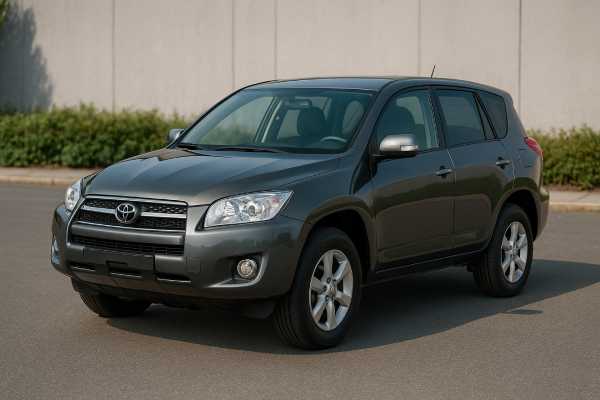


The facelifted third-generation Toyota RAV4 with the 2.0-liter 3ZR-FAE “Valvematic” engine targets buyers who want a simple, efficient, and roomy crossover without the complexity of turbocharging or hybrid systems. In this front-wheel-drive configuration, it pairs a light body with linear throttle response, a choice of six-speed manual or CVT, and a practical cabin that is easy to load and clean. The 2009 refresh brought quieter road manners, updated front and rear styling, and improved materials, while Valvematic variable lift and timing optimized fuel economy for everyday use. Owners praise its upright driving position, predictable handling, and low routine running costs. This guide focuses on the European-market FWD Valvematic facelift (model years 2009–2012), summarizing the specs, performance, maintenance, safety equipment, common issues, and how it stacks up against rivals. If you are considering a late XA30, this is the version to shortlist for its balance of simplicity and day-to-day value.
Fast Facts
- Strong everyday efficiency from the 2.0 Valvematic (real-world 6.8–8.0 L/100 km mixed; ~35–29 mpg US).
- Spacious cabin and flat load floor; seats fold quickly and carry bulky items with ease.
- Proven naturally aspirated drivetrain with robust manual or CVT options; minimal turbo-related costs.
- Watch for age-related suspension bushes and tailgate wiring; inspect door seals for wind noise.
- Oil and filter every 15,000 km / 12 months; brake fluid every 2 years.
Jump to sections
- RAV4 2.0 FWD overview
- Specs and technical data — RAV4 2.0
- Trims, options and safety — RAV4
- Reliability and known issues
- Maintenance and buyer’s guide
- Driving and performance
- How RAV4 compares to rivals
RAV4 2.0 FWD overview
The 2009–2012 facelift of the XA30 RAV4 refined a formula that had already won many European families: upright seating, easy maneuverability, and robust, low-stress engines. The 3ZR-FAE 2.0 Valvematic—an evolution of Toyota’s all-aluminum ZR family—uses continuously variable valve lift and timing to reduce pumping losses at part load and deliver consistent torque without resorting to a turbocharger. You feel that in town driving: a smooth, elastic pull from low revs with no surge, then a clean, quiet climb to motorway speeds.
This FWD version keeps weight down and maintenance simple. It rides on MacPherson struts up front and a compact double-wishbone rear that gives secure, predictable behavior on rough B-roads while preserving boot space. The facelift sharpened the front fascia, updated lighting, and added better sound insulation, while small cabin touches—clearer gauges, more storage, and improved seat fabrics—brought it in line with contemporary expectations.
Practicality remains the headline. The square cargo opening, low load lip, and one-motion folding rear bench make it easy to live with; the tall roof helps with child seats and large boxes. Servicing is straightforward, access to common items (filters, plugs, belts) is good, and parts are widely available. The trade-offs are modest outright speed and dated infotainment compared with newer crossovers. Still, the core ownership experience—low hassle, reasonable economy, and a cabin that stands up to family life—makes the FWD 2.0 Valvematic one of the most sensible late-XA30 choices.
Specs and technical data — RAV4 2.0
Engine and Performance (ICE)
| Item | Value |
|---|---|
| Code | 3ZR-FAE (Valvematic) |
| Layout & cylinders | Inline-4, DOHC, 16-valve (4 valves/cyl) |
| Bore × stroke | 80.5 × 97.6 mm (3.17 × 3.84 in) |
| Displacement | 2.0 L (1,987 cc) |
| Induction | Naturally aspirated |
| Fuel system | Port fuel injection (sequential PFI) |
| Compression ratio | ~10.0–10.7:1 (market calibration) |
| Max power | 152 hp (113 kW) @ ~6,200 rpm |
| Max torque | 196 Nm (145 lb-ft) @ ~4,000–4,400 rpm |
| Timing drive | Chain |
| Emissions / test cycle | Euro 4/5 (NEDC period) |
| Rated economy (combined, NEDC) | ~7.2–8.0 L/100 km (32.7–29.4 mpg US / 39.3–35.3 mpg UK), trim/transmission dependent |
| Real-world highway @ 120 km/h | ~7.4–8.2 L/100 km (31.8–28.7 mpg US / 38.2–34.5 mpg UK) |
| Aerodynamics | Cd ~0.33–0.35 (est., wheel/roof rail dependent) |
Notes: Figures vary by equipment (wheels/tyres, roof rails), gearbox (6-MT vs CVT), and local certification. Always verify against the vehicle’s Certificate of Conformity.
Transmission and Driveline
| Item | Value |
|---|---|
| Transmission | 6-speed manual or CVT (Multidrive S) |
| Final drive ratio | ~4.24–4.35 (variant dependent) |
| Drive type | Front-wheel drive |
| Differential | Open (front) with electronic brake-based traction control |
| Refuel to full (typical) | ~3–5 min at pump |
About the CVT: Multidrive S simulates stepped ratios in “S/M” mode for hill control and passing; in “D” it holds efficient revs using Valvematic’s broad torque spread.
Chassis and Dimensions
| Item | Value |
|---|---|
| Front / rear suspension | MacPherson strut / Double wishbone |
| Steering | Electric rack-and-pinion (EPS) |
| Front / rear brakes | Ventilated disc / Solid disc |
| Wheels / Tyres (typical) | 215/70 R16 or 225/65 R17 (16–17 in rims) |
| Ground clearance | ~180–200 mm (7.1–7.9 in), market dependent |
| Length × width × height | ~4,395 × 1,815 × 1,720 mm (173.0 × 71.5 × 67.7 in) |
| Wheelbase | 2,560 mm (100.8 in) |
| Turning circle | ~10.6 m (34.8 ft) |
| Kerb (curb) weight | ~1,475–1,560 kg (3,252–3,439 lb) |
| GVWR | ~2,025–2,085 kg (4,465–4,596 lb) |
| Fuel tank | ~60 L (15.9 US gal / 13.2 UK gal) |
| Cargo volume (VDA) | ~586 L seats up / ~1,469 L seats folded (20.7 / 51.9 ft³) |
Performance and Capability
| Metric | Value |
|---|---|
| 0–100 km/h (0–62 mph) | ~10.5–11.0 s (6-MT quicker; CVT slightly slower) |
| Top speed | ~185–190 km/h (115–118 mph) |
| 100–0 km/h braking | ~38–41 m (125–135 ft), tyre-condition dependent |
| Towing capacity | 1,500 kg (3,307 lb) braked / 750 kg (1,653 lb) unbraked (typical EU ratings) |
| Payload | ~475–560 kg (1,047–1,235 lb), trim dependent |
| Roof load | ~100 kg (220 lb) with approved bars |
Fluids and Service Capacities
| System | Specification | Capacity |
|---|---|---|
| Engine oil | 0W-20 or 5W-30 (ACEA A5/B5 or A3/B4, per climate) | ~4.2 L (4.4 US qt) incl. filter |
| Coolant | Toyota Super Long Life Coolant (premix) | ~6–7 L (6.3–7.4 US qt) total fill |
| Manual transmission | API GL-4 75W-90 (consult VIN) | ~2.0–2.2 L (2.1–2.3 US qt) |
| CVT (Multidrive S) | Toyota CVT Fluid FE | Fill by procedure (level check at temp) |
| A/C refrigerant | R-134a | ~500–550 g (17.6–19.4 oz) |
| A/C compressor oil | ND-OIL 8 (PAG) | ~120 mL (4.1 fl oz) |
| Key torque values | Wheel nuts ~103 Nm (76 lb-ft); drain plug ~39 Nm (29 lb-ft) |
Always confirm viscosity, capacity, and torque values by VIN in the official service literature for your market.
Electrical
| Item | Value |
|---|---|
| Alternator | ~100–120 A (equipment dependent) |
| 12V battery | ~60 Ah (≈ 540 A CCA), DIN/JIS form factor |
| Spark plugs | Iridium (long-life); gap ~1.0 mm (0.039 in) |
Safety and Driver Assistance
| Feature | Status |
|---|---|
| Crash ratings (Euro NCAP) | Not assessed under the 2009+ protocol for this facelift; earlier XA30 received legacy-scheme star ratings. |
| Airbags | Front, side, curtain; driver knee (market dependent) |
| ABS / EBD / Brake Assist | Standard |
| Stability / Traction | VSC + TRC standard |
| Child-seat mounts | ISOFIX outboard, top tether |
| ADAS (AEB/ACC/LKA/BSD/RCTA) | Not available on XA30; calibration not applicable |
| Headlights | Halogen reflector; auto-on (trim dependent) |
Trims, options and safety — RAV4
Trim landscape (Europe, 2009–2012): Naming varies by country, but expect an entry model with 16-inch wheels and cloth seats, a mid-grade with 17-inch alloys, fog lamps, leather-wrapped wheel, and dual-zone climate, and an upper model adding heated seats, partial leather, privacy glass, and upgraded audio/navigation. Some markets offered “Life/Style/Sol/Luna”-type names; the UK commonly used XT-R/SR-style labels earlier in the generation, with later cars aligning to simplified “Trim 1/2/3” naming.
Key option packages and identifiers
- Transmissions: 6-MT standard; Multidrive S CVT optional (badged accordingly on some markets). CVT cars often include steering-wheel shift “steps.”
- Wheels and tyres: Base 16-inch with 215/70 tyres; mid/upper 17-inch with 225/65; winter wheel packages common in Northern Europe.
- Audio/infotainment: Early facelift cars used a 6-speaker CD/MP3 head unit; later cars gained Touch-type interfaces with Bluetooth and optional navigation; reverse camera availability varies by trim.
- Seats and interior: Heated front seats and partial leather on upper trims; power driver seat and leather packages on some markets.
- Exterior cues: Body-color mirrors/handles and fog lamps on mid/upper trims; privacy glass and roof rails often bundled; some markets deleted the external spare to reduce length—check the tailgate.
- VIN/build clues: Market codes in the VIN (positions 1–3 and 7–11) identify engine (3ZR-FAE), transmission, and build plant; option content is encoded—request a full build sheet from a dealer.
Mechanical/functional differences by trim
- Brakes and suspension are common across FWD 2.0 variants; sport packages may add 17-inch wheels and slightly firmer damper valving.
- Towing: A factory tow prep or dealer-fitted kit includes harnesses and coding for rear fog/reverse lamps; braked tow capacity typically 1,500 kg for 2.0 FWD—verify on the VIN plate.
- Spare wheel: Some cars retain the rear door-mounted full-size spare; others use a space-saver or repair kit depending on market and trim.
Safety ratings (summary)
- Under modern Euro NCAP categories (AEB pedestrian/cyclist, lane support), the XA30 predates active systems and is not directly comparable to later RAV4s. Structural safety is supported by multiple airbags, load-path design, and stability control. Use ISOFIX and top tether for child seats; check your owner’s manual for approved positions.
Calibration after service
- EPS/stability control: After alignment or steering-angle sensor work, perform a steering angle zero-point calibration.
- ABS/VSC: Wheel-speed sensor replacement requires a clear of DTCs and a short road test.
- Infotainment: Retrofits (camera/navigation) may require dealer coding on late facelift head units.
Reliability and known issues
Toyota’s ZR-series engines are known for longevity when serviced on time with the correct oil. The RAV4’s simple FWD layout helps control maintenance costs. Age and mileage introduce wear points worth checking:
Common (low to medium cost)
- Front lower control arm bushes / anti-roll bar links: Symptoms include clunks over speed bumps and vague straight-ahead feel. Remedy: replace bushes/links; consider quality aftermarket rubber if OE cost is high.
- Tailgate harness and rear door check-strap: Repeated opening/closing can fatigue wiring (number plate lamps/rear camera/fog lamp issues) and loosen the check-strap. Remedy: inspect harness for broken conductors; replace or repair with heat-shrink; retorque hinge/check-strap bolts.
- Door and window seals: Wind noise at motorway speeds; seals harden with age. Remedy: lubricate or replace seals; verify correct door alignment.
Occasional (medium cost)
- Water pump seep / idler bearings noise: Listen for a light chirp at idle; look for pink coolant residue. Remedy: renew pump and belt; inspect idlers.
- CVT service neglect (if equipped): Harshness, flare, or droning. Remedy: drain/fill with Toyota CVT Fluid FE, check for software updates, and reset adaptation; repeat gentle adaptation drive cycle.
- Air-con performance drop: Often low R-134a charge or condenser corrosion in salted climates. Remedy: leak test, replace condenser if needed, recharge with correct mass and oil balance.
Rare (higher cost or safety relevance)
- EPS torque sensor plausibility faults: Heavier steering, warning lamp. Remedy: diagnose wiring and sensor; recalibrate zero point; replace EPS column if out of spec.
- Rear subframe corrosion (coastal/salt regions): Check weld seams and mounting points. Remedy: clean, treat, and protect; replace severely corroded components.
- Catalyst efficiency codes (P0420-type): High mileage and short-trip use. Remedy: confirm with upstream/downstream O2 sensor traces; avoid unnecessary replacement—fix rich/lean root causes first.
Software and calibrations
- Late facelift cars may have ECM updates improving cold-start idle quality and CVT shift logic. Check at service for outstanding updates by VIN.
Recalls / service actions (Europe, period context)
- The XA30 line had selective recall campaigns (e.g., switchgear, seatbelt components, or pedal sensor logic) depending on VIN and market. Always run the official VIN recall check with a Toyota dealer to confirm completion.
Pre-purchase checks
- Full service history with proof of annual oil changes (or 15,000 km) and bi-annual brake fluid.
- Suspension noise road test; inspect front bushes, rear links, and struts for leaks.
- Climate system function and condenser condition.
- Tailgate harness operation (all lamps and camera if fitted).
- CVT cars: smooth take-off, no flare; ask for any CVT drain/fill history.
- Check for uniform tyre wear and a recent four-wheel alignment report.
Maintenance and buyer’s guide
Practical maintenance schedule (Europe baseline)
- Engine oil & filter: Every 15,000 km or 12 months (severe service: 10,000 km). Use the specified grade and change the crush washer; reset maintenance reminder.
- Engine air filter: Inspect at 15,000 km; replace 30,000–45,000 km (dusty areas sooner).
- Cabin (pollen) filter: 12 months or when airflow drops; consider activated carbon in urban use.
- Coolant: Toyota Super Long Life Coolant; replace at 10 years/160,000 km first interval, then 5 years/100,000 km (verify by VIN).
- Spark plugs (iridium): 90,000–120,000 km; check gap and torque.
- Fuel filter: In-tank strainer; inspect when fuel pump service is performed; replace only if pressure drop/contamination confirmed.
- Aux/serpentine belt: Inspect each service; typical replacement 90,000–120,000 km or with pulley noise.
- Manual transmission oil: 90,000–120,000 km (sooner for heavy city or towing).
- CVT fluid: No fixed interval in some guides; 60,000–90,000 km drain/fill is prudent in mixed European use.
- Brake fluid: Every 2 years regardless of mileage.
- Brake pads/rotors: Inspect every service; rear sliders need cleaning and lubrication in salted climates.
- Steering/suspension: Bushes, links, and ball joints inspection annually; align after tyre changes or impact.
- Tyres: Rotate 10,000–15,000 km; alignment check annually; set pressures cold.
- 12V battery: Test yearly after year four; typical lifespan 5–7 years.
- Body and underframe: Wash and protect at least once per winter; check rear subframe and seams.
Fluid specifics and capacities (decision-grade recap)
- Oil: 0W-20 or 5W-30 to ACEA spec; capacity ~4.2 L with filter.
- Coolant: Toyota SLLC premix; total system ~6–7 L.
- Manual gearbox: GL-4 75W-90; ~2.0–2.2 L.
- CVT: Toyota CVT FE; service by temperature-controlled level procedure.
- A/C: R-134a ~500–550 g; ND-OIL 8 ~120 mL.
Essential torques
- Wheel nuts: 103 Nm (76 lb-ft), then recheck after 50–100 km.
- Engine drain plug: ~39 Nm (29 lb-ft) with new gasket.
- Spark plugs: ~18–22 Nm (13–16 lb-ft) on aluminum head (light oil on threads if specified).
Buyer’s checklist
- Cold start and idle: Look for smooth idle; no belt chirp or water pump residue.
- Clutch/CVT: Manual cars should engage cleanly without chatter; CVT should slip minimally on take-off and hold steady revs under light throttle.
- Straight-line tracking: On a flat road, car should track straight with hands off for a few seconds; drifting suggests alignment/tyres.
- Brakes: No pulsing; even rotor wear.
- Body and seals: Check for water ingress in the boot, especially around tailgate seals and lamp clusters.
- VIN check: Confirm recall/TSB completion and build spec; compare tyre/wheel sizes to CoC.
Durability outlook
With annual oil changes and timely coolant and brake fluid service, the 3ZR-FAE routinely exceeds 200,000 km without internal work. Most high-mileage costs arise from suspension wear and ancillaries (pump, condenser). CVT life depends on fluid hygiene and urban duty cycle; manuals are durable if not abused. Overall, the FWD 2.0 Valvematic scores high for predictable, modest ownership costs.
Driving and performance
Ride, handling, NVH
The facelifted XA30 settles more quickly over patchy tarmac than early cars; secondary ride is controlled, and the cabin stays composed over potholes if tyre pressures are correct. Straight-line stability is good at motorway speeds, helped by an aerodynamically tidy body and EPS that adds weight with speed. Road roar is present on coarse-chip surfaces, especially on 17-inch tyres, but wind rustle is modest if the door seals are healthy. Braking feel is linear with a firm pedal; the car resists early ABS activation on dry roads thanks to its conservative tyre sizes.
Powertrain character
Valvematic gives the 2.0 a broad, usable torque band. In town, you rarely need more than 3,000 rpm; passing maneuvers are best done with a downshift (manual) or by briefly flooring (CVT “kick-down”). The manual’s gearing favors economy in top, so sixth is for cruise; the CVT is quietest if you drive with a light, steady foot. There is no turbo lag to manage, and throttle mapping is progressive, making it easy to modulate in traffic or on slippery surfaces.
Real-world economy
Owners typically see around 7.0–8.0 L/100 km mixed (34–29 mpg US / 41–35 mpg UK) with the manual; CVTs do slightly better in city and slightly worse at 120–130 km/h due to steady-state revs. Winter short trips can add +0.5–1.0 L/100 km, especially with roof rails/boxes or soft compound winter tyres. Keeping tyres at spec pressure and using 0W-20/5W-30 oils helps.
Key performance metrics (representative)
- 0–100 km/h: ~10.5–11.0 s depending on gearbox and load.
- 80–120 km/h (5th, manual): ~9–10 s—plan an early downshift for tighter gaps.
- 100–0 km/h: ~38–41 m on healthy tyres; braking remains stable over repeated stops if pads/rotors are within spec.
- Turning circle: ~10.6 m, easy for city parking.
Traction and control
FWD traction is fine with quality all-seasons; stability control intervenes gently and predictably. For snow, a good winter tyre transforms confidence; the electronic brake-based traction control “nibbles” at spinning inside wheels to get you moving.
Load and towing
With 1,500 kg braked capacity (typical), the 2.0 can tow small campers and trailers. Expect a +20–30% fuel consumption penalty at motorway speeds and longer stopping distances; use the manual’s lower gears or CVT’s S-mode to keep coolant temps stable on extended grades.
How RAV4 compares to rivals
Against Honda CR-V (Mk3, 2.0 i-VTEC, FWD): The CR-V’s cabin feels a touch wider and ride quality is plush, but the Toyota’s Valvematic is more elastic at low revs and often returns better urban economy. CR-V infotainment is similarly dated; both emphasize reliability and practicality.
Against Volkswagen Tiguan (1.4 TSI/2.0 TDI, FWD): The Tiguan offers stronger torque in TDI form and a nicer driving position for some, but the Toyota avoids timing-chain/turbo/DPF complexity of certain VW engines. RAV4’s boot is roomier and the ownership experience is typically less fussy.
Against Nissan Qashqai (1st gen facelift, 2.0 petrol): Qashqai is smaller and nimbler, with lower running costs in base trims; however, the RAV4’s interior space, payload, and long-trip comfort outclass it. The Toyota generally holds value better beyond 150,000 km.
Against Ford Kuga (1st gen, 2.0 petrol): The Kuga steers with more verve and has stronger mid-range in turbo variants, but the naturally aspirated Toyota delivers simpler, proven hardware. Cabin noise is lower in the RAV4 at a cruise, and seats are friendlier for long legs.
Verdict: If you prioritize space, predictable costs, and uncomplicated engineering, the FWD 2.0 Valvematic facelift is a smart, low-drama choice. It won’t thrill enthusiasts, but it will quietly handle years of school runs, commutes, and motorways with minimal fuss.
References
- Multidrive S – how Toyota’s continuously variable transmission works 2014 (Technical explainer)
- Toyota warranty – how it works 2022 (Service timing context)
- RAV4 | Heritage 2023 (Model history overview)
- Toyota RAV4 2009 2009 (Safety Ratings)
Disclaimer
This article is for informational purposes and is not a substitute for professional diagnosis or repair. Specifications, torque values, service intervals, and procedures vary by VIN, market, model year, and equipment. Always confirm details in your official Toyota service documentation and follow all safety procedures.
If you found this guide useful, please share it with fellow owners and enthusiasts on Facebook or X/Twitter to support xcar’s work.