
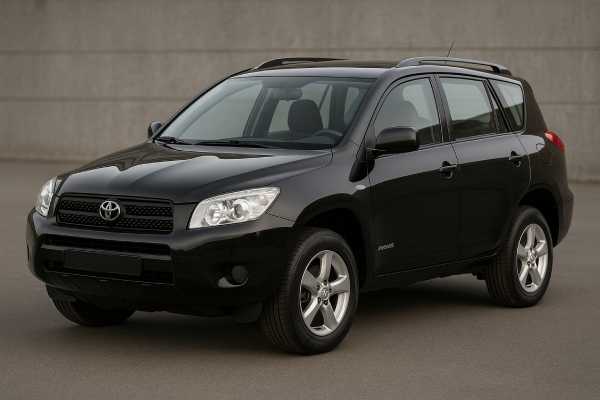
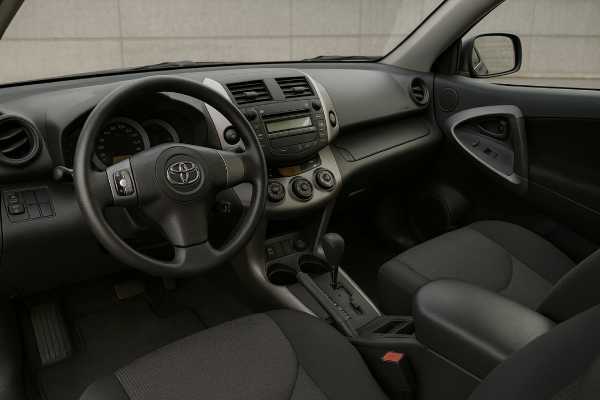

The third-generation Toyota RAV4 (XA30) with the 1AZ-FE 2.0-liter petrol engine is the sweet spot for buyers who want compact exterior size, family-ready space, and low-drama ownership. In front-wheel-drive form it drops weight and complexity versus AWD, yet keeps the stable chassis and straightforward running costs that built the RAV4’s reputation. The all-aluminium 1AZ-FE uses chain-driven dual VVT-i for good mid-range pull and simple servicing. Inside, this era brings a big jump in safety structure, cabin room, and everyday refinement compared with the XA20. While the power figure looks modest by today’s standards, the gearing and torque spread make it easy to live with in mixed driving. This guide distills the essentials—specs, performance, safety, known issues, fluids, and a practical maintenance and buying checklist—so you can judge value quickly and look after the car confidently if you already own one.
Fast Facts
- Roomy cabin and flat cargo floor; rear seats slide and fold for 586–1,752 L (VDA) of space.
- Durable 1AZ-FE with timing chain and simple access; typical real-world 7.8–9.2 L/100 km mixed (30–25 mpg US).
- Predictable, car-like handling; lighter FWD setup reduces wear and fuel use versus AWD.
- Watch for early valve-cover and water-pump seepage; address promptly to avoid secondary damage.
- Engine oil and filter every 15,000 km / 12 months (or 10,000 km / 6 months under severe use).
Quick navigation
- Detailed Overview
- Specifications and Technical Data
- Trims and Options, Safety and Driver Assistance
- Reliability, Common Issues and Service Actions
- Maintenance and Buyer’s Guide
- Driving and Performance
- How RAV4 FWD (XA30) Compares to Rivals
Detailed Overview
The XA30-generation RAV4 moved the model into a more mature compact-SUV role. The platform brought a stiffer body-in-white, longer wheelbase, and a quieter cabin, while keeping a footprint that still fits older garages and tight city streets. The 1AZ-FE 2.0-liter inline-four is a naturally aspirated, chain-driven dual VVT-i unit with an aluminium block and head. It’s tuned for 150 hp (110 kW) and 194 Nm (143 lb-ft), delivered with a broad, usable mid-range. Most European-market FWD cars came with a 5-speed manual; a 4-speed automatic was also offered in many markets and suits relaxed, suburban use.
Compared with prior XA20 models, the XA30’s steering and suspension tuning trade a little early RAV4 playfulness for better high-speed stability and ride control. Brakes are discs all around, with standard ABS and stability control, and crash performance took a clear step forward thanks to improved load paths and restraint systems. Practicality is a highlight: sliding, split-fold rear seats, a low liftover, and a nearly flat load bay make the car feel bigger than it looks. Service access is clean—belt-driven auxiliaries are easy to reach, and common wear items are inexpensive.
The front-wheel-drive layout reduces mass and parasitic losses relative to AWD, which helps in city economy and keeps front suspension and tyres under less stress. For light snow regions, a good winter-tyre set is more than half the battle; traction control calibration on this generation is conservative but effective. Overall, the FWD 2.0-liter RAV4 hits a rational balance: honest performance, strong safety for its age, and ownership costs that rarely surprise.
Specifications and Technical Data
Engine and Performance (1AZ-FE 2.0)
| Item | Specification |
|---|---|
| Code | 1AZ-FE (dual VVT-i) |
| Layout & cylinders | Inline-4, DOHC, aluminium block/head, 4 valves/cyl |
| Displacement | 2.0 L (1,998 cc) |
| Bore × stroke | 86.0 × 86.0 mm (3.39 × 3.39 in) |
| Compression ratio | ~10.0:1 |
| Induction | Naturally aspirated |
| Fuel system | Multi-point fuel injection |
| Max power | 150 hp (110 kW) @ ~6,000 rpm |
| Max torque | 194 Nm (143 lb-ft) @ ~4,000 rpm |
| Timing drive | Chain (no scheduled replacement) |
| Emissions / cycle | Euro 4; official combined fuel 8.6–8.9 L/100 km (27–26 mpg US / 32–31 mpg UK), market-dependent |
| Real-world highway @ 120 km/h (75 mph) | ~7.8–8.6 L/100 km (30–27 mpg US / 36–32 mpg UK) |
| Aerodynamics (Cd) | ~0.32–0.33 (typical for body style and trim) |
Transmission and Driveline
| Item | Specification |
|---|---|
| Transmission | 5-speed manual; 4-speed automatic (selected markets) |
| Final drive | ~3.94–4.24 (varies by gearbox/market) |
| Drive type | Front-wheel drive (FWD) |
| Differential | Open front (no transfer case or rear diff on FWD) |
| Refuel to full (typical) | ~5 min at station (petrol) |
Chassis and Dimensions
| Item | Specification |
|---|---|
| Front suspension | MacPherson strut, coil spring, anti-roll bar |
| Rear suspension | Double-wishbone, coil spring, anti-roll bar |
| Steering | Rack-and-pinion, hydraulic assist |
| Brakes (front/rear) | Ventilated disc / solid disc |
| Wheels/Tyres | 16–18 in rims; typical 215/70 R16 or 225/65 R17 |
| Ground clearance | ~195–200 mm (7.7–7.9 in) |
| Length / Width / Height | 4,395 mm × 1,815 mm × ~1,685 mm (173.0 × 71.5 × 66.3 in) |
| Wheelbase | 2,560 mm (100.8 in) |
| Turning circle (kerb-to-kerb) | ~10.6 m (34.8 ft) |
| Kerb (curb) weight | ~1,465–1,540 kg (3,230–3,395 lb) |
| GVWR | ~1,980–2,055 kg (4,365–4,530 lb) |
| Fuel tank | 60 L (15.9 US gal / 13.2 UK gal) |
| Cargo volume (VDA) | 586 L seats up / up to ~1,752 L seats folded (20.7 / 61.8 ft³) |
Performance and Capability
| Metric | Value |
|---|---|
| 0–100 km/h (0–62 mph) | ~10.6 s (5-MT); ~11.0–11.5 s (4-AT) |
| Top speed | ~185 km/h (115 mph) |
| Braking 100–0 km/h | ~38–40 m (125–131 ft) on quality tyres |
| Towing capacity | Up to ~1,500 kg (3,307 lb) braked (market-dependent); 750 kg (1,653 lb) unbraked |
| Payload | ~450–520 kg (992–1,146 lb) |
| Roof load | ~75 kg (165 lb) with OEM bars |
Fluids and Service Capacities
| System | Specification / Capacity |
|---|---|
| Engine oil | ACEA A3/B4 or API SL/SM 5W-30 (cold climates 0W-30 acceptable); ~4.2–4.3 L (4.4–4.5 US qt) incl. filter |
| Coolant | Toyota Super Long Life Coolant (premixed 50/50); ~6.5–7.0 L (6.9–7.4 US qt) total system |
| Manual transmission oil | API GL-4/GL-5 75W-90; ~2.0–2.3 L (2.1–2.4 US qt) |
| Automatic transmission | Toyota ATF Type T-IV; service refill ~3.0–3.5 L (3.2–3.7 US qt), dry fill ~6–7 L (6.3–7.4 US qt) |
| Power steering | ATF Type T-IV (if service required) |
| A/C refrigerant | R-134a; ~500–550 g (17.6–19.4 oz) |
| A/C compressor oil | ND-OIL8 (PAG46 class); ~120–150 mL (4.1–5.1 fl oz) |
| Key torque specs | Wheel nuts: ~103 Nm (76 lb-ft); Spark plugs: ~18–20 Nm (13–15 lb-ft) |
Electrical
| Item | Specification |
|---|---|
| Alternator | ~100–120 A (model/trim dependent) |
| 12 V battery | ~60 Ah, DIN L2/L3 form factor (varies by equipment) |
| Spark plug | Long-life iridium, heat range per 1AZ-FE spec; gap ~1.0–1.1 mm (0.039–0.043 in) |
Safety and Driver Assistance
| Area | Details |
|---|---|
| Crash ratings | Strong performance for its era in European testing for adult and child protection; structure designed for offset deformable barrier and side impacts |
| Head restraints | Active front headrests (selected trims/years) |
| Airbags | Front, side, and full-length curtain airbags (availability by trim) |
| Child seat | ISOFIX/LATCH anchorages on outboard rear seats |
| Stability systems | ABS with EBD and Brake Assist; VSC (stability control) and TRC (traction control) widely available/standard |
| Lighting | Halogen reflectors; headlight performance varies by bulb and aim; manual-leveling common |
| ADAS | No AEB/ACC/LKA on this generation; parking sensors and simple cruise control available |
Trims and Options, Safety and Driver Assistance
Trims and key equipment (typical European structure 2005–2008):
- Entry / mid trims (e.g., Base/XT3/Active): 16-inch wheels, cloth seats, manual A/C, CD audio with steering controls, remote locking, electric windows/mirrors, ABS/EBD/BA, front and side airbags, ISOFIX. Some markets bundled stability control as standard; others made VSC/TRC optional early on.
- Upper trims (e.g., XT4/Sol/Style): Dual-zone climate, alloy wheels (17 in), fog lamps, leather-wrapped wheel, roof rails, privacy glass, upgraded audio, VSC/TRC standard, side/curtain airbags standard, power-fold mirrors.
- Top trims or option packs (e.g., XT5/Luxury): Leather upholstery, heated seats, power sunroof, 18-inch wheels, rear parking sensors, auto lights/wipers. Navigation was optional and varies by country.
Mechanical/functional differences by trim:
- Wheel/tyre packages scale from 16 to 18 inches; bigger wheels sharpen turn-in but add impact harshness and braking distances on budget tyres.
- FWD 2.0-liter models typically share brakes and suspension tune across trims; tow ratings may vary with cooling package and hitch approval.
Year-to-year notes:
- Early production cars sometimes lacked standard VSC/TRC in some markets; later 2007–2008 cars more frequently included it as standard.
- Minor feature reshuffles occurred (audio interface, upholstery options, wheel designs).
Safety ratings summary and child-seat provisions:
- Body structure and restraint design delivered competitive crash performance at launch. Side and curtain airbags greatly improve outcomes—prioritize cars so equipped.
- Rear outboard ISOFIX anchorages are present; check for top-tether points in your market. Booster compatibility is good; the flat bench aids fit.
- Headlights are halogen; aim and bulb quality strongly affect night performance. Fresh bulbs and proper alignment help more than cosmetic upgrades.
ADAS and calibration implications:
- No camera/radar AEB or lane support on this generation, so there are no sensor calibration procedures after windscreen replacement. After repairs, ensure ABS/VSC wheel-speed sensors and steering-angle sensor are recalibrated through a basic zero-point procedure if the battery was disconnected or alignment changed.
Reliability, Common Issues and Service Actions
Overall reliability profile: high. The 1AZ-FE is robust if serviced on time, and the FWD layout eliminates transfer-case and rear-diff wear. Age-related rubber and cooling components now drive the maintenance agenda.
Common → symptoms → likely cause → fix
- Valve-cover gasket seep (common; low severity/cost): Whiff of burnt oil, film on rear of engine. → Hardened gasket. → Replace gasket and grommets; inspect PCV valve and renew if restricted.
- Water pump weep (common; low/medium): Pink residue or intermittent squeak; coolant level drop. → Pump seal wear. → Replace pump and gasket; refill/bleed SLLC.
- Thermostat aging (occasional; low): Slow warm-up, inconsistent heater output. → Sticking thermostat. → Replace thermostat and O-ring; renew coolant.
- Ignition coils intermittent (occasional; low/medium): Misfire under load, stored cylinder-specific code. → Coil-on-plug breakdown. → Replace affected coil(s) and plugs as a set if mileage is high.
- Aux drive belt noise (common; low): Chirp on cold start. → Glazed belt or idler wear. → Fit new belt; check pulleys/tensioner.
- Carbon on throttle body/idle valve (occasional; low): Unstable idle. → Deposits. → Clean throttle body; perform idle relearn.
- Front suspension wear (occasional; medium): Clunks, vague steering. → Lower-arm rear bushing or drop-link wear; strut top mounts with age. → Replace bushings/links/mounts; align.
- Rear brake corrosion/uneven handbrake (common in wet climates; low/medium): Binding after storage. → Caliper slider corrosion. → Free and grease sliders; replace discs/pads if pitted.
Oil consumption and ring design: Most 1AZ-FE units age well with correct oil and intervals. If consumption rises, check for external leaks, PCV function, and deposits before assuming ring wear. Consistent highway use helps.
Cooling system weak points: Radiators can corrode at the lower tank seam after many winters. Watch for pink crust and top-up frequency. Replace proactively if cores are fragile.
Timing system: Chain-driven; no scheduled replacement. Chain rattle on hot restart is rare—verify oil grade/quality first; only then inspect tensioner and guides.
Driveline and gearbox: The 5-MT is generally tough. Stiff second-gear engagement when cold points to old fluid; renew with correct grade. The 4-AT (U241E family) likes clean ATF; harsh downshifts often improve with a measured drain-and-fill and throttle-cable/ECU relearn.
Corrosion hotspots: Rear subframe hardware, brake pipes, and exhaust flanges in salted regions. Front cross-member edges can trap dirt; rinse thoroughly during washes.
Recalls/TSBs: Age-related campaigns on airbags (global supplier issues) applied to many vehicles of this era. Always run an official VIN recall check and ask for dealer paperwork confirming completion.
Pre-purchase checks to request: Proof of regular oil changes (time and distance), coolant and brake-fluid dates, spark plugs age, water pump history, clutch/ATF services, and alignment records. Inspect tyres for even wear (toe-out feathering suggests suspension bush wear). Confirm both keys, and ensure the spare-wheel latch (if tailgate-mounted in your market) operates cleanly without cracking around the hinge area.
Maintenance and Buyer’s Guide
Practical service schedule (baseline; adjust to your use and climate)
- Engine oil and filter: Every 15,000 km / 12 months (severe use: 10,000 km / 6 months). Use a quality 5W-30 meeting ACEA A3/B4 or API SL/SM; 0W-30 acceptable in very cold climates.
- Engine air filter: Inspect every 15,000 km; replace 30,000–45,000 km depending on dust.
- Cabin filter: 15,000–20,000 km or annually.
- Spark plugs (iridium): 90,000–100,000 km or 6–8 years.
- Coolant (SLLC, pink): First at 160,000 km / 10 years from new, then every 80,000 km / 5 years (typical SLLC schedule).
- Manual transmission oil: 60,000–90,000 km or 5–6 years.
- Automatic transmission ATF (T-IV): 60,000–80,000 km drain-and-fill if mostly urban or towing; otherwise inspect and sample by 100,000 km.
- Brake fluid: Every 2 years regardless of mileage.
- Brake pads/rotors: Inspect at every tyre rotation; replace when below spec or if thickness varies >0.02 in (0.5 mm) across a disc.
- Aux/serpentine belt: Inspect annually; replace at 90,000–120,000 km or when cracked/glazed.
- PCV valve and hoses: Inspect/clean every 60,000 km; replace if rattling stops or clogged.
- Tyre rotation and alignment: Rotate every 10,000–12,000 km; align annually or after pothole impacts.
- 12 V battery: Test annually after year 4; typical life 5–7 years.
- A/C service: Replace cabin filter yearly; check condenser fin condition; evacuate/charge only if performance drops or after component replacement.
Essential torque values for decision-making: Wheel nuts ~103 Nm (76 lb-ft); spark plugs ~18–20 Nm (13–15 lb-ft); front caliper guide pins typically ~25–35 Nm (18–26 lb-ft)—verify per VIN before final tightening.
Buyer’s checklist
- Engine bay: Look for oil mist at the valve cover, water-pump weep hole crust, brittle radiator cores, and coolant staining. Warm idle should be steady ~700–750 rpm with A/C off.
- Driveline: Manual—listen for clutch chatter or release-bearing squeal. Automatic—check for smooth 1–2 and 2–3 shifts hot and cold.
- Suspension/steering: Knock over speed bumps suggests lower-arm rear bushings or drop links. Steering should self-center cleanly.
- Brakes: Even response and straight stops; rear calipers should not drag after a short drive. Handbrake holds on a modest slope with 6–8 clicks.
- Body and chassis: Inspect rear subframe, brake pipes, and front cross-member edges for rust. Check tailgate hinges (if spare wheel mounted) for paint cracks.
- Electrical: All windows, mirrors, and locks; heater fan (all speeds), A/C clutch engagement, and rear demister operation.
- Tyres: Even wear; avoid mixed brands/sizes. Budget a full set if more than six years old regardless of tread.
- Papers: Full service history, recall completion, two keys, and recent fluid changes (oil, brake, coolant).
Recommended targets: Well-maintained, later-build cars with stability control standard and curtain airbags are the safest picks. FWD is ideal for city and motorway use with lower running costs; AWD is only necessary for frequent unpaved or snow use.
Driving and Performance
Ride and handling, NVH: The XA30’s longer wheelbase and wider track deliver a calmer, more mature ride than earlier RAV4s. On 16–17-inch wheels, bump absorption is supple and noise is modest at 100–120 km/h (62–75 mph). Steering effort is light to medium with predictable on-center behaviour; feedback is filtered but consistent. On rough secondary roads, the suspension works quietly if the drop links and bushings are healthy. Braking feel is linear; bite improves noticeably with quality pads and fresh fluid.
Powertrain character: The 1AZ-FE’s dual VVT-i keeps torque accessible between 2,000 and 4,500 rpm. There’s no turbo lag to speak of—just steady, naturally aspirated response. The 5-speed manual’s ratios favour everyday flexibility; cruising at 120 km/h puts the engine in a relaxed zone. The 4-speed automatic shifts smoothly when fluid is fresh; kickdown is decisive if you pre-empt it with a little throttle. Noise at high rpm is present but not harsh; sound deadening is adequate for long trips.
Real-world economy: Expect around 7.8–8.6 L/100 km (36–32 mpg UK / 30–27 mpg US) on steady motorway runs at 110–120 km/h, and 9.0–10.5 L/100 km (31–27 mpg UK / 26–22 mpg US) in mixed city-suburban use. Winter short trips and roof accessories raise consumption; a square roof box can add 10–15% at speed. Tyre choice is pivotal—touring tyres at the correct pressures often save 0.3–0.5 L/100 km versus aggressive tread.
Key metrics that shape the verdict: A 0–100 km/h time around 10.6 seconds with the manual is perfectly adequate for modern traffic merges. Passing from 80–120 km/h is confident if you downshift once; the naturally aspirated engine rewards clean throttle timing. Braking from 100–0 km/h in ~38–40 m is competitive provided tyres are in good condition.
Traction and control: On wet or compact snow with good winter tyres, the FWD layout plus stability and traction control systems works well up to moderate inclines. The calibration is conservative—it will trim power early to keep the front tyres hooked up—so smooth inputs beat heavy throttle. For occasional gravel, the ground clearance and approach angles are fine; avoid deep ruts and remember there is no rear differential on FWD cars.
Load and light towing: With a braked rating up to ~1,500 kg where approved, the 2.0-liter can tow small trailers or a lightweight camper. Plan for longer stops and downshift early on grades to manage ATF temperatures in automatics. Fuel use rises 20–40% depending on trailer frontal area.
How RAV4 FWD (XA30) Compares to Rivals
Honda CR-V (2007–2011, 2.0 i-VTEC): Similar space and reliability, quieter at idle, but the CR-V tends to be pricier and its rear cargo floor is higher. The Toyota’s simpler option mixes and the sliding rear bench give it a practicality edge.
Nissan Qashqai (J10 2.0 petrol): More compact outside and easier to park, but rear cabin and cargo space are smaller. Ride is firmer on big wheels, and interior wear can show sooner. The RAV4 ages more gracefully inside.
Volkswagen Tiguan (2008–2011, 1.4 TSI / 2.0 TSI): Strong performance and modern infotainment, but early small-turbo engines can have timing and carbon issues. Running costs and fuel quality sensitivity are higher than the naturally aspirated Toyota.
Hyundai Tucson / Kia Sportage (2005–2010 2.0 petrol): Generally cheaper to buy, honest and durable, but less refined in NVH and crash structure than the RAV4 of the same era. Parts availability is excellent for all, but Toyota’s resale remains strongest.
Bottom line: If you value straightforward maintenance, robust resale, and family-first packaging over outright speed, the FWD XA30 with the 1AZ-FE is one of the least risky choices in its class—especially in later years with stability control and curtain airbags standard.
References
- RAV4 Launch Pack 2006 2006 (Press Pack / Specifications)
- Ratings 2006 (Safety Rating)
- 2023 RAV4 Owner’s Manual 2023 (Owner’s Manual; reference for general torque conventions and maintenance practices)
Disclaimer
This article is for informational purposes and does not replace professional diagnosis or repair. Specifications, torque values, service intervals, and procedures vary by VIN, market, year, and equipment. Always verify against your vehicle’s official service and owner’s documentation, and follow current safety and environmental regulations.
If this guide helped, please share it with fellow owners and enthusiasts on Facebook or X/Twitter to support xcar’s work.