
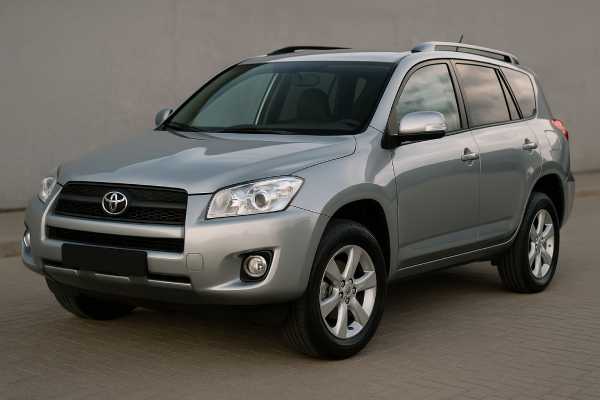
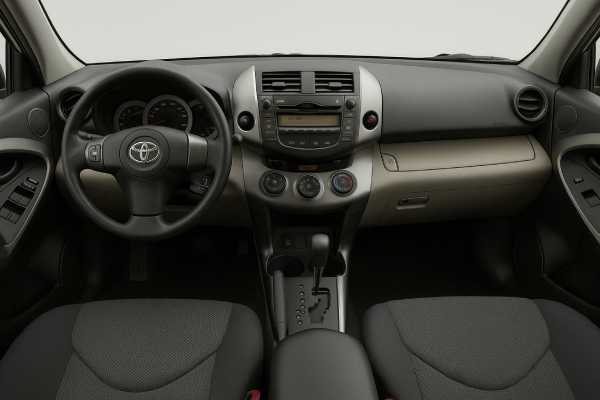
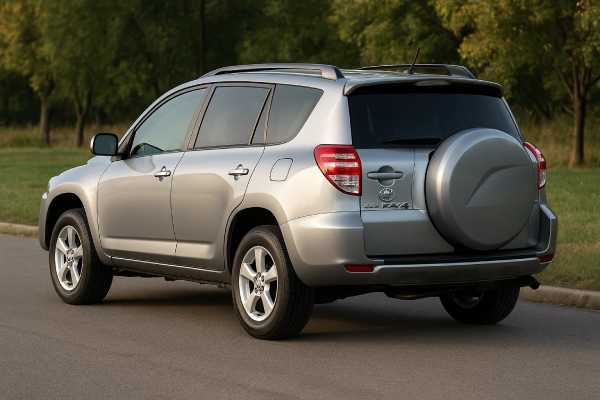
The facelifted third-generation Toyota RAV4 (XA30) with the 2.5-liter 2AR-FE four-cylinder is the sweet spot for many buyers who want space, dependability, and low running costs without the thirst of the V6. Introduced for model year 2009 and sold through 2012, this front-wheel-drive configuration pairs a proven naturally aspirated engine with a simple four-speed automatic. That combo delivers straightforward ownership: routine maintenance is easy, parts are plentiful, and the powertrain has a long track record in multiple Toyota models. Cabin packaging remains a highlight for a compact SUV of its era—good rear legroom, a flat cargo floor, and a clever under-floor storage bin. The big trade-off is dated transmission logic and fewer driver-assist features than modern crossovers. If you are shopping the segment for an honest commuter, kid-hauler, or light-duty road-trip vehicle, the 2009–2012 RAV4 2.5 FWD deserves a close look.
At a Glance
- Strong value: roomy cabin, flat load floor, and low parts/repair costs.
- Proven 2AR-FE engine: chain-driven cams, broad mid-range torque, reliable.
- Comfortable ride and quiet highway manners for its class.
- Watch for rear suspension recall completion on 2009–2011, and water-pump seepage.
- Typical oil service: every 5,000 mi (8,000 km) or 6 months with correct spec oil.
Explore the sections
- RAV4 2.5 FWD Overview
- RAV4 2.5 FWD Specs
- Trims, Options and Safety
- Reliability and Service Actions
- Maintenance and Buyer’s Guide
- Driving and Performance
- How It Compares
RAV4 2.5 FWD Overview
The 2009–2012 RAV4 2.5 FWD sits in the final years of the third-generation platform (XA30), receiving a mild exterior and interior update for 2009 and incremental equipment tweaks through 2012. Under the hood is Toyota’s 2AR-FE 2.5-liter inline-four with dual VVT-i, rated at 179 hp (133 kW) and 172 lb-ft (233 Nm). It’s an all-aluminum design with a timing chain (no belt to replace) and port fuel injection that keeps injector and intake-valve deposits in check compared with direct-injection systems.
Toyota positioned this model for buyers prioritizing fuel economy and running costs over the quicker—but thirstier—3.5-liter V6. The four-speed automatic is simple and durable, if a step behind contemporary six-speeds in both refinement and efficiency. Ride comfort is a strong point: the RAV4 filters rough pavement well, remains composed over expansion joints, and keeps wind noise low for its class. Steering is light and consistent, and the compact turning circle makes parking easy.
Packaging is where the XA30 still shines. The cargo bay is wide and square, and with the second row folded, the floor becomes long and nearly flat. Some trims offered a compact third row; most FWD four-cylinder models are configured for five passengers, which yields the largest cargo volume. Standard stability control and side curtain airbags were part of Toyota’s push to make active and passive safety features common across the lineup. As a used buy today, the keys are condition, evidence of regular fluid services, and (for 2009–2011) proper completion of the rear suspension recall. Get those right, and the 2.5 FWD RAV4 is an easy vehicle to live with for a long time.
RAV4 2.5 FWD Specs
Engine and Performance (ICE-only)
| Item | Specification |
|---|---|
| Code | 2AR-FE |
| Layout & valvetrain | Inline-4, DOHC, 16 valves, dual VVT-i |
| Bore × stroke | 90.0 × 98.0 mm (3.54 × 3.86 in) |
| Displacement | 2.5 L (2,494 cc) |
| Induction | Naturally aspirated |
| Fuel system | Port fuel injection (SFI) |
| Compression ratio | ~10.4:1 |
| Max power | 179 hp (133 kW) @ 6,000 rpm |
| Max torque | 233 Nm (172 lb-ft) @ 4,000 rpm |
| Timing drive | Chain |
| Emissions class | ULEV II (period standard) |
| EPA rating (2WD 2.5 auto) | 24 mpg combined; 21 city / 28 hwy (9.8 / 11.2 / 8.4 L/100 km) |
| Real-world Hwy @ 75 mph (120 km/h) | ~9.0–9.5 L/100 km (26–25 mpg US), temperature/tires dependent |
| Aerodynamics | Cd not officially published for this trim |
Transmission and Driveline
| Item | Specification |
|---|---|
| Transmission | 4-speed automatic (Toyota U-series) |
| Gear ratios | 4 forward + 1 reverse (calibrated for economy and low-speed response) |
| Final drive ratio | ~3.08 (model/fitment dependent) |
| Drive type | Front-wheel drive |
| Differential | Open (front) |
| Refuel to full (typical) | ~5 min at pump |
Chassis and Dimensions
| Item | Specification |
|---|---|
| Front / rear suspension | MacPherson strut / double-wishbone |
| Steering | Rack-and-pinion, hydraulic assist |
| Brakes | 4-wheel discs with ABS, EBD, brake assist |
| Wheels / tires (typical) | 215/70R16 (Base), 225/65R17 (Limited), 235/55R18 (Sport) |
| Ground clearance | ~191 mm (7.5 in) |
| Length × width × height | ~4,620 × 1,815 × 1,685 mm (181.9 × 71.5 × 66.3 in) |
| Wheelbase | 2,660 mm (104.7 in) |
| Turning circle (curb-to-curb) | ~10.4 m (34.2 ft) |
| Curb weight (approx.) | 1,520–1,560 kg (3,350–3,440 lb), equipment dependent |
| GVWR (approx.) | ~2,040 kg (4,500 lb) |
| Fuel tank | 60 L (15.9 US gal / 13.2 UK gal) |
| Cargo volume (SAE) | ~1,032 L seats up / ~2,067 L seats down (36.4 / 73.0 ft³) |
Performance and Capability
| Item | Specification |
|---|---|
| 0–100 km/h (0–62 mph) | ~9.5–10.0 s (street tires, FWD) |
| Top speed | ~180 km/h (112 mph), governed |
| Braking 100–0 km/h | Typical class performance with quality tires; inspect pad/rotor condition |
| Towing capacity (braked) | 680 kg (1,500 lb) with proper equipment |
| Payload | ~385–430 kg (850–950 lb), by trim |
| Roof load | Up to 68 kg (150 lb) with OEM crossbars |
Fluids and Service Capacities
| System | Specification / Capacity |
|---|---|
| Engine oil | 0W-20 (preferred) or 5W-20; ~4.7 US qt (4.4 L) with filter |
| Coolant | Toyota Super Long Life (pink), premixed 50/50; capacity varies by equipment (~6–7 L total fill) |
| Automatic transmission | Toyota WS ATF; drain/refill ~3.5–4.0 L (varies), full dry fill notably higher |
| Power steering | ATF-type fluid per service manual (if equipped; some units are sealed) |
| Brake fluid | DOT 3 (DOT 4 acceptable if compatible); flush on interval |
| A/C refrigerant | R-134a; typical charge ~0.50–0.55 kg (17.6–19.4 oz); ND-OIL8 compressor oil (~120 mL) |
| Key torque specs (essentials) | Wheel lug nuts 103 Nm (76 lb-ft); spark plugs ~18 Nm (13 lb-ft); oil drain plug ~39 Nm (29 lb-ft) |
Electrical
| Item | Specification |
|---|---|
| Alternator output | ~100–130 A depending on equipment |
| 12 V battery | Group 24F/35 (varies), ~550–640 CCA |
| Spark plug | Iridium (e.g., FK20HR-11), gap ~1.0 mm (0.039 in) |
Safety and Driver Assistance
| Area | Summary |
|---|---|
| Crash ratings (IIHS, 2012) | Good in moderate overlap front, side, and head restraints; roof strength Acceptable |
| Headlights (period) | Halogen reflector; performance varies by aim and bulb condition |
| Airbags | Dual front, front-seat side, full-length curtains; active front head restraints |
| Stability features | ABS, EBD, brake assist, traction control, vehicle stability control (standard) |
| ADAS | No factory AEB/ACC/lane centering in these years; rear camera availability by trim/year |
Trims, Options and Safety
Trims and equipment. In this period the 2.5 FWD was offered primarily in three grades: Base, Sport, and Limited. Mechanical hardware is largely the same across trims; differences are in wheels, interior appointments, and convenience features.
- Base: 16-inch steel wheels (215/70R16), cloth seats, manual air conditioning, six-speaker audio, stability control and side/curtain airbags standard. Many Base models include keyless entry, roof rails, and a 60/40 folding second row with reclining and fore-aft adjustment.
- Sport: 18-inch alloys (235/55R18), sport-tuned springs/dampers, color-keyed exterior accents, fog lamps. Steering feel is slightly firmer due to tire sidewall and alignment settings.
- Limited: 17-inch alloys (225/65R17), automatic climate control, upgraded audio options, Smart Key availability, and additional sound insulation. Leather, heated seats, power driver seat, and a JBL audio package were common options.
Functional differences by trim. The key mechanical difference is the wheel/tire package, which alters steering response and ride compliance. Some Sport models ride more firmly over broken pavement; Limited on 17s is the comfort choice. Tow Prep package (auxiliary trans cooler/higher-output alternator in some markets) was more commonly bundled with V6; four-cylinder FWD tows up to 1,500 lb when properly equipped.
Year-to-year notes.
- 2009: 2.5-liter 2AR-FE replaces the prior 2.4; mild exterior refresh; equipment shuffles.
- 2010–2011: Minor audio and interior trim updates; option package bundling changes; rearview camera availability expands with certain displays.
- 2012: Final XA30 year; appearance package options and minor feature adjustments before the next-gen arrives.
Child seats and family use. Two full LATCH positions in the second row, with a third top tether. Rear doors open wide for seat installation. If you find a rare third-row car, be aware that cargo capacity behind row three is limited and belt routing differs.
Safety ratings summary. The 2012 model achieved high marks in IIHS moderate overlap and side tests, with roof strength rated Acceptable. The structure predates small-overlap front testing and modern headlight evaluations. Side-curtain coverage and active front head restraints offer meaningful whiplash protection. ESC and traction control are standard across all trims. Tire choice and proper inflation materially affect wet-braking performance; 17-inch all-season touring tires tend to provide the best balance for daily use.
ADAS and calibration after service. These years lack camera/radar-based AEB or lane-keep. Post-service wheel-alignment calibration is straightforward, but see the rear-suspension recall notes in the next section—on many 2009–2011 vehicles, rear toe is no longer adjustable after recall completion (alignment is set at the front).
Reliability and Service Actions
Overall reliability profile. The 2AR-FE engine and simple four-speed automatic make this RAV4 one of the lower-risk used compact SUVs to own. Most issues that do appear are age- and mileage-related wear items or deferred maintenance, not design defects. Prior use (heavy urban stop-and-go vs. highway), climate (road-salt exposure), and service quality matter.
Common / occasional / rare issues (with remedies):
- Common: water pump seepage (80–140k mi / 130–225k km; warm climates sooner).
Symptoms: sweet coolant smell, pink residue at pump weep hole, slow coolant loss.
Root cause: seal wear.
Remedy: replace water pump, renew coolant and accessory belt as needed. - Common: aging suspension bushings and rear shocks/struts (90–150k mi / 145–240k km).
Symptoms: clunks over bumps, cupped rear tire wear, floaty highway feel.
Remedy: replace worn dampers and control-arm bushings; re-align. - Occasional: idle fluctuations / throttle body deposits (time-based, short-trip use).
Symptoms: rough idle, low-speed stumble.
Root cause: carbon and varnish on throttle plate and bore.
Remedy: clean throttle body; perform idle relearn and verify PCV operation. - Occasional: accessory-belt noise (cold starts).
Root cause: belt glazing or tensioner wear.
Remedy: inspect/replace belt; check tensioner and pulleys. - Rare: transmission harsh downshifts or flare (very high mileage or poor fluid history).
Root cause: aged ATF and solenoid wear.
Remedy: staged drain-and-fills with WS fluid; evaluate line pressure/solenoids if symptoms persist.
Critical service actions and recalls (2009–2011 focus).
- Rear lower suspension arm No.1 (toe link) campaign: Toyota revised the remedy in 2016 to replace both rear arms and seal the lock nuts with epoxy, eliminating rear toe adjustability and preventing corrosion-induced thread wear. It applies to 2006–2011 production; 2012 models are generally outside the affected build window. Verify completion via official VIN lookup and inspect for epoxy and labeling on the arms.
- Oil specification / service guidance: Toyota standardized 0W-20 (or 5W-20 where specified) and 5,000-mile service intervals for these engines during the period. Using the correct low-viscosity oil supports cold-start wear protection and fuel economy.
Pre-purchase checklist (prioritized):
- Recall completion (rear suspension) and evidence of proper rear arm replacement/epoxy.
- Cooling system health: no seepage at water pump, radiator end tanks dry, reservoir level stable.
- Transmission service history: at least periodic drain-and-fills of Toyota WS ATF.
- Suspension/brakes: rear shock leakage, front lower-arm bushings, even pad/rotor wear.
- Tires/alignment: inner-edge wear at the rear indicates toe issues or worn arms (pre-recall).
- Rust inspection if driven in the Rust Belt: rear subframe, brake lines, and fasteners.
- Electrical basics: charging voltage, battery age, clean grounds; HVAC blower speeds and A/C cooling verified.
- Road test: track straight at highway speeds, no shudder under light throttle, firm brake pedal, smooth 2–3 and 3–4 shifts.
Maintenance and Buyer’s Guide
Practical service schedule (time/distance):
- Engine oil & filter: every 5,000 mi / 6 months with 0W-20 (preferred) or 5W-20 meeting Toyota spec.
- Engine air filter / cabin filter: inspect at 15,000 mi (24,000 km); replace 30,000–45,000 mi depending on environment.
- Coolant: Toyota Super Long Life (pink) is long-life; inspect annually; replace ~100,000 mi (160,000 km) or 10 years initially, then every 5 years/50,000 mi.
- Spark plugs: iridium plugs typically at 120,000 mi (190,000 km); check gap and torque on install.
- Accessory (serpentine) belt: inspect at each oil change after 60,000 mi; replace if cracked/noisy.
- Automatic transmission (WS ATF): drain & fill every 60,000–90,000 mi (96,000–145,000 km) under mixed driving. Shorter intervals if towing or hot climate.
- Brake fluid: flush every 3 years regardless of miles.
- Brake pads/rotors: inspect every 10,000–15,000 mi; lubricate slide pins to prevent uneven wear.
- Steering/suspension: annual inspection for play/leaks; alignment check with any tire replacement.
- Tires: rotate every 5,000–7,500 mi; maintain door-jamb pressures; verify even wear.
- 12 V battery: load-test annually after year three; typical life 4–6 years.
- A/C service: cabin filter cleanliness is critical; evacuate/recharge only if performance degrades or after component replacement.
Fluid quick-reference (decision-making):
- Oil: 0W-20 full-synthetic; capacity ~4.7 qt (4.4 L) with filter.
- WS ATF: use Toyota WS only; avoid “universal” blends.
- Coolant: Toyota SLLC pink (premixed 50/50).
- Brake fluid: DOT 3 or DOT 4 (compatible).
- A/C: R-134a only; charge by weight.
Essential torques when servicing:
- Wheel lug nuts 103 Nm (76 lb-ft)—re-check after 50–100 miles following wheel or brake work.
- Spark plugs ~18 Nm (13 lb-ft) on clean, dry threads.
- Oil drain plug ~39 Nm (29 lb-ft) with new gasket.
Buyer’s guide—what to seek/avoid:
- Best value: mid-miles 2011–2012 Limited or Base with 17-inch wheels, full records, recent tires/brakes, and documented transmission drain-and-fills.
- If you want comfort: Limited on 17-inch tires rides quieter than Sport on 18s.
- If you want lowest running cost: basic Base trim with simpler options and 16-inch tires (cheaper to replace).
- Be cautious of: modified suspensions, uneven tire sizes, or unverified alignment after rear-arm recall (2009–2011).
- Longevity outlook: With routine fluids and cooling-system care, 2AR-FE engines commonly exceed 200,000 mi (320,000 km) without major internal work. Bushings, dampers, and mounts are normal age-related replacements.
Driving and Performance
Ride, handling, and noise. The RAV4’s tuning leans toward comfort: it softens sharp impacts and remains composed on patched highways. On 17-inch tires, it strikes the best balance for daily driving. The 18-inch Sport setup adds bite in turn-in but transmits more road texture. Wind noise is low at 65–75 mph (105–120 km/h) for a boxy SUV of this era; tire choice contributes more to cabin noise than the body itself.
Powertrain character. The 2AR-FE builds torque smoothly from 2,000 rpm and pulls best through the mid-range. There’s no turbo lag because there’s no turbo—just linear response and predictable downshifts. The four-speed automatic prioritizes reliability over ratios; it will occasionally hunt on rolling grades if you’re light on the throttle. Using “D” and letting the converter work is usually smoother than forced kick-downs; selecting “3” for long hills can prevent gear cycling and heat.
Real-world economy. Expect 24 mpg US combined (9.8 L/100 km) in mixed driving, with 21–22 mpg city (11.2–10.7 L/100 km) and 27–28 mpg highway (8.7–8.4 L/100 km) when steady at legal speeds. At 75 mph (120 km/h) in cold weather or on winter tires, highway consumption typically rises by 5–10%. A fresh air filter, correct tire pressure, and 0W-20 oil help the RAV4 meet its ratings.
Key metrics that shape the verdict.
- 0–60 mph: roughly 9.5–10.0 s (FWD on all-season tires).
- 50–80 mph passing: adequate but plan ahead on two-lane highways; use a downshift to 3rd for best response.
- 100–0 km/h braking: strong and stable with quality pads/rotors; performance decays if pads glaze or sliders stick.
- Traction: FWD with stability control is predictable; winter tires transform snow confidence.
- Load and light towing: With 2–4 occupants and luggage, the powertrain stays relaxed at 70–75 mph. Towing 1,500 lb (680 kg) is feasible on level ground; expect a 15–25% fuel-economy penalty and more frequent ATF service.
How It Compares
Against Honda CR-V (2009–2011): The CR-V’s five-speed automatic is smoother and slightly thriftier, but Toyota counters with stronger highway passing (thanks to a touch more torque) and more cargo room. Reliability is a near-draw; parts availability and independent-shop familiarity are excellent for both.
Against Ford Escape (2010–2012, 2.5): The Escape offers competitive pricing and, in later years, more tech options. The RAV4’s cabin packaging, ride isolation, and long-term durability generally edge it ahead, especially for buyers who value low-drama ownership.
Against Chevrolet Equinox (2010–2012, 2.4): The Equinox delivers a quieter highway ride when new but can face timing-chain and oil-consumption concerns. The RAV4’s simpler, chain-driven 2.5 and straightforward four-speed usually mean fewer big-ticket surprises over time.
Against RAV4 V6 (same generation): The V6 is genuinely quick and tows more, but real-world economy is 2–4 mpg lower. If your use is mostly commuting with occasional road trips, the 2.5 FWD is the sensible, lower-cost pick; choose the V6 if you routinely tow or climb steep grades with full loads.
References
- 2012 Toyota RAV4 Offers Value With Versatility—Plus Sporty New Appearance Package 2011 (Pressroom)
- 2012 Toyota RAV4 2012 (EPA Fuel Economy)
- 2012 Toyota RAV4 2012 (Safety Rating)
- Part 573 Safety Recall Report 16V-596 2016 (Recall Database)
- TECHNICAL INSTRUCTIONS FOR SAFETY RECALL G0V 2016 (Recall Procedure)
Disclaimer
This article is for informational purposes and is not a substitute for professional diagnosis or repair. Specifications, torque values, capacities, and service intervals can vary by VIN, market, and equipment. Always verify against your vehicle’s official service documentation and follow manufacturer procedures.
If you found this guide useful, please consider sharing it with fellow owners on Facebook, X/Twitter, or your favorite forum—your support helps xcar continue producing detailed, free resources.