
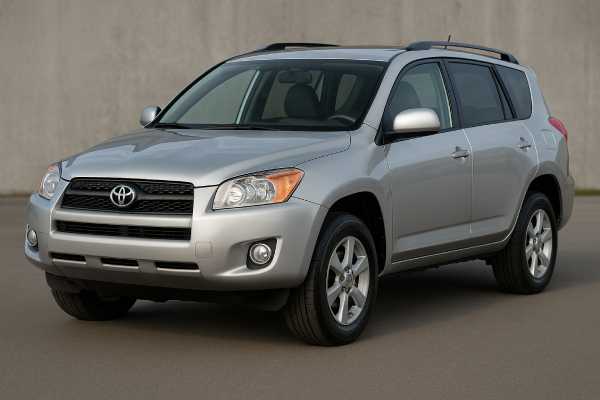
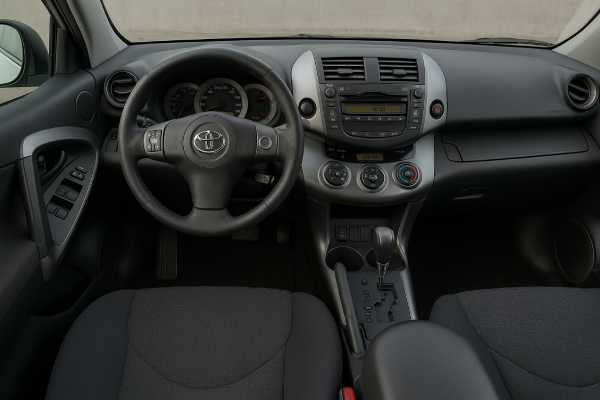
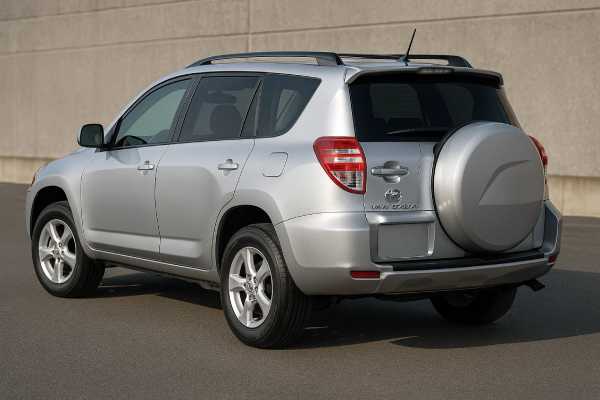
The third-generation Toyota RAV4 with the optional 3.5-liter 2GR-FE V6 is a rare combo in the compact-SUV class: a small crossover that can hustle like a warm hatch, swallow a family’s gear, and survive daily abuse with minimal drama. In front-wheel-drive form, it sheds some all-wheel-drive weight and complexity, returning slightly better fuel economy while retaining the big-power character that made the V6 RAV4 a cult favorite. Owners value its smooth dual-VVT-i V6, crisp 5-speed automatic, and roomy cabin with a flat load floor; technicians appreciate Toyota’s sturdy component choices and straightforward service access. This guide focuses on the 2006–2012 V6 FWD model as sold in North America, summarizing the specs, dimensions, performance, safety outcomes, and the reliability patterns you actually see in the field—plus the maintenance choices that keep it feeling tight past 200,000 miles.
Fast Facts
- Strong V6: 269 hp (201 kW), 246 lb-ft (333 Nm) and sub-7-second 0–60 mph with a broad, usable torque band.
- Space efficiency: ~36 ft³ seats up and ~73 ft³ seats down; simple, low lift-over cargo loading.
- Tow-ready when equipped: up to 3,500 lb (1,588 kg) with Tow Prep Package; stable at highway speeds when loaded correctly.
- Ownership caveat: rear suspension lower arm recall and alignment-recheck requirements—verify completion by VIN.
- Typical service rhythm: engine oil and multipoint inspection every 5,000–8,000 miles (6–12 months), adjust for use and climate.
Navigate this guide
- Detailed look at RAV4 V6 FWD
- RAV4 V6 specs and data
- RAV4 V6 trims and safety
- Reliability, issues, and service actions
- Maintenance and buyer’s guide
- Driving and performance
- RAV4 V6 vs rivals
Detailed look at RAV4 V6 FWD
If you know the four-cylinder XA30 RAV4, the V6 FWD feels like the same pragmatic appliance upgraded with a confident, nearly effortless power source. The all-aluminum 2GR-FE V6 with dual variable valve timing (dual VVT-i) gives the RAV4 unusually brisk real-world pace without the lag or high-rpm drama of a small turbo. In daily use, the 5-speed automatic (ECT-i) upshifts early and unobtrusively; a steady right foot keeps the V6 near its torque plateau, making short highway merges and two-lane passes its party trick.
Front-wheel drive lowers mass and driveline drag relative to AWD, so you’ll see slightly better fuel consumption in mixed commuting and fewer wear items in the long term (no rear differential, prop shaft, or AWD coupler to service). The tradeoff is traction: with aggressive throttle the FWD V6 will chirp the fronts on wet paint or gravel and requires measured inputs when turning out of a junction. Toyota’s stability and traction systems are conservative but predictable; they cut in gently and are easy to drive around with a smooth throttle.
Cabin space is a highlight. Even with the compact exterior footprint, adults sit comfortably fore and aft, and the rear seats recline and slide to balance legroom and cargo. The flat, wide load floor and low lift-over mean big boxes or a stroller go in without theatrics. Two quirks matter for buyers: many V6 examples have the side-hinged rear door with an externally mounted spare (handy for punctures, a nuisance in tight urban parking), and some late-run Sport Appearance Package vehicles delete the outside spare (different rear design and some dimensional changes).
As a used buy, the V6 FWD RAV4 ticks boxes for families who want durable, simple hardware with reserve performance for mountain trips or towing a small utility trailer. It’s also appealing to DIY owners: the engine bay is not cramped, service points are accessible, and parts availability is excellent. The key diligence items are recall/TSB completion (rear suspension arm campaign, accelerator pedal/mat remedies), alignment records after suspension work, evidence of regular coolant and transmission-fluid care, and tires appropriate to its power (good all-seasons with a load rating matched to tow use if you plan to haul).
RAV4 V6 specs and data
Below are the core specifications for the 2006–2012 Toyota RAV4 V6, front-wheel drive, as sold in North America. Figures may vary slightly by model year and package.
Engine and performance (ICE)
| Item | Specification |
|---|---|
| Code | 2GR-FE |
| Configuration | 60° V6, aluminum block/heads, DOHC, 24 valves, dual VVT-i |
| Displacement | 3.5 L (3,456 cc) |
| Induction | Naturally aspirated |
| Fuel system | Multi-port electronic fuel injection (PFI/MPFI) |
| Max power | 269 hp (201 kW) @ 6,200 rpm |
| Max torque | 246 lb-ft (333 Nm) @ 4,700 rpm |
| Timing drive | Chain (no scheduled replacement) |
| Recommended fuel | Regular unleaded (87 AKI) |
| Rated economy (EPA) | 22 mpg combined (19 city / 26 highway) ≈ 10.7 L/100 km combined |
| Real-world highway (75 mph / 120 km/h) | Commonly mid-20s mpg US (≈ 9–10 L/100 km) with stock tires and light load |
Transmission and driveline
| Item | Specification |
|---|---|
| Transmission | 5-speed automatic (ECT-i) |
| Drive type | FWD |
| Differential | Open (front), electronic traction control via ABS |
| Final drive | Tall highway gearing; low first for step-off (ratio varies slightly by year) |
Chassis and dimensions
| Item | Specification |
|---|---|
| Front suspension | MacPherson strut, coil springs, stabilizer bar |
| Rear suspension | Double-wishbone with trailing arms, coil springs, stabilizer bar |
| Steering | Electric rack-and-pinion with variable assist |
| Brakes | Power-assisted discs (vented front, solid rear), ABS with EBD and BA |
| Wheels/tires (typical) | 215/70R16, 225/65R17, or 235/55R18 depending on grade/package |
| Ground clearance | ~190 mm (7.5 in) |
| Length / Width / Height | ~4,620 mm (181.9 in) / ~1,815–1,855 mm (71.5–73.0 in) / ~1,685–1,745 mm (66.3–68.7 in) |
| Wheelbase | 2,660 mm (104.7 in) |
| Turning circle | ~11.4–12.0 m (37.4–39.4 ft) by wheel/tire/grade |
| Curb weight (approx.) | ~1,560–1,680 kg (3,440–3,705 lb) by trim/options |
| Fuel tank | 60 L (13.2 US gal / 11.0 UK gal) |
| Cargo volume | ~1,015 L / 35.9 ft³ (seats up) • ~2,074 L / 73.2 ft³ (seats down) |
Performance and capability
| Item | Specification |
|---|---|
| 0–60 mph | Typically under 7.0 s (model-year and tire dependent) |
| Braking 62–0 mph | Competitive for class with quality tires; plan for fresh fluid/rotors on older examples |
| Towing capacity | 680 kg (1,500 lb) standard; up to 1,588 kg (3,500 lb) with Tow Prep Package |
| Payload (typical) | ~400–500 kg (880–1,100 lb) depending on VIN/equipment |
| Roof load | Check crossbar/roof rating; ~45–75 kg (100–165 lb) common depending on hardware |
Fluids and service capacities (practical owner data)
| System | Spec / Notes |
|---|---|
| Engine oil | 5W-30 (API SN or later); capacity ≈ 6.1–6.4 L (6.4–6.8 US qt) with filter |
| Coolant | Toyota Super Long Life Coolant (pink, pre-mix); long-life interval on first fill |
| Automatic transmission | Toyota ATF WS (sealed unit; no dipstick); proactive drain/fills help longevity |
| A/C refrigerant | R-134a (charge varies; see under-hood label) |
| Spark plugs | Iridium, long-life; typical replacement ~120,000 miles (192,000 km) |
| Key torque (typical) | Wheel lug nuts ≈ 103 Nm (76 lb-ft); oil drain plug ≈ 39 Nm (29 lb-ft) |
Notes: Capacities and some dimensional figures vary slightly by year/grade and wheel/tire package. Always verify against the under-hood labels and the exact owner’s/service manual that matches your VIN.
Electrical and safety systems
| Item | Specification |
|---|---|
| Charging | Compact alternator sized for typical accessory load; healthy 12V battery is critical for EPS/ABS stability |
| Airbags | Front, side, and side-curtain coverage (availability standardized post-2007) |
| Stability/traction | VSC (stability), TRAC (traction), ABS, EBD, BA, and later Smart Stop Technology |
RAV4 V6 trims and safety
Trims and options (North America)
Across 2006–2012, the V6 could be ordered in base, Sport, and Limited grades. Grade content evolved year-to-year, but these guideposts help identify them:
- Base: 16- or 17-in wheels (steel on early base), cloth seats, manual HVAC, and the core Star Safety System. V6 base models are relatively rare in FWD form; many were ordered with AWD.
- Sport: 18-in wheels with lower-profile tires, sport-tuned dampers/springs, often a black headlamp surround and unique trim. Feels tauter but transmits more road texture and tire slap, especially on winter-worn pavement.
- Limited: 17-in alloys, more sound insulation, dual-zone auto climate (varies by year), premium audio options, and leather/heat packages. Many Limiteds carry the outside spare; late “Sport Appearance Package” versions delete it and re-style the tail.
Mechanical and functional deltas
- Sport calibrations are firmer at low speeds and can make the V6 feel more “nervous” on choppy surfaces with 18-inch tires. If you value ride comfort and winter performance, the Limited on 17s is a sweet spot.
- Tow Prep Package adds upgraded cooling and alternator bits and is required for the 3,500-lb rating (check build codes and a proper Class III hitch with a weight-appropriate ball mount).
- Wheel/tire packages change the turning circle and straight-line stability at speed; the 17-in setup is more forgiving on broken asphalt and in snow.
Year-to-year changes that matter
- Airbag and stability-control availability standardized by 2007; small audio and connectivity updates throughout the run.
- Late models gain Smart Stop Technology (brake-override logic) and stability-tuning adjustments.
- Cosmetic updates include grille, lamps, and interior textures; the core powertrain remains the 2GR-FE/5-speed automatic throughout.
Safety ratings (high level)
- IIHS: for 2006–2012 gasoline RAV4s, Good in moderate-overlap frontal and side impact; Acceptable in roof-strength; Good head restraints/seats. Headlight performance was not rated under the later IIHS protocol for these years.
- NHTSA star ratings vary by year due to methodology changes; check the specific model year label for star scores and rollover resistance.
- Child seats: LATCH anchors are accessible; booster fit is generally straightforward in the outboard rear positions. Use recline/slide to fine-tune fit and tether anchorage routing.
ADAS availability
There is no factory AEB, ACC, lane keeping/centering, or camera-based blind-spot on 2006–2012 RAV4s. The safety net is the Star Safety System (VSC/TRAC/ABS/EBD/BA) and driver vigilance. Aftermarket reverse cameras were common dealer installs on Limiteds.
Reliability, issues, and service actions
The V6 FWD XA30 has a strong durability record when serviced on time. Below is a field-oriented map of what owners and shops encounter, by prevalence and cost tier. Mileage figures are typical ranges, not hard limits.
Engine / fuel / cooling (ICE)
- Common — Water pump seep/leak (60k–120k mi) → coolant trace at weep hole, pink crust at housing, occasional chirp → replace pump, gasket, and serpentine belt; bleed SLLC properly. Cost: medium.
- Occasional — VVT-i oil supply hose (early production years) → oil spray/drip at front bank; low-oil warning in severe cases → Toyota issued campaigns/updates replacing a rubber section with a metal line; verify VIN status and repair history. Cost: low–medium if addressed proactively.
- Occasional — Oil cooler/line o-ring seep (age/hardening) → film at the cooler, smell after shutdown → reseal with updated gaskets; clean and re-check. Low.
- Rare — Coil-on-plug misfire (age/heat) → intermittent misfire under load; no-start is rare → swap-test coils; use correct iridium plugs gapped to spec. Low–medium.
Intake/EVAP
- Occasional — EVAP purge/vent faults (P0441/P0456) → loose cap or cracked hoses/valves; charcoal canister saturation on vehicles with dust/overfill histories → smoke test, replace faulty valve/hoses; canister if necessary. Low–medium.
Transmission / driveline
- Common — Fluid aging (WS “lifetime” claim vs. reality) → delayed or harsher shifts in hot stop-and-go after 80k–120k mi → staged drain/fills with ATF WS and relearn can restore smoothness. Low.
- Occasional — Axle seal dampness on FWD → monitor; replace only if wicking grows. Low.
Suspension / steering / brakes
- Service action — Rear lower suspension arm corrosion/adjuster issues → alignment frozen or toe-link corrosion; handling wander, inner tire wear → recall/customer support program replaced arms and mandated alignment checks; confirm completion and any post-service rechecks. Medium if overdue.
- Common wear — Front strut top mounts and end links → clunks over speed bumps; more frequent with 18-in tires → replace in pairs; torque at ride height. Low–medium.
- Common wear — Rear toe alignment drift after curb strikes → needs proper 4-wheel alignment and, if seized, new adjusters. Low–medium.
Body / electrical
- Occasional — Liftgate harness stress (external spare models) → intermittent plate lamp or door ajar sensor → inspect harness and strain relief; repair/replace as needed. Low.
- Common — A/C performance drop (mileage/age) → condenser fin corrosion or micro-leaks; system undercharged → leak-check, replace drier with component service, recharge to label. Medium.
Software / calibrations
- Post-2010 vehicles include brake-override (Smart Stop Technology). If you see drivability quirks after battery disconnects, perform idle relearn and confirm no pending codes before condemning hardware.
Recalls, TSBs, and extended coverage
- Rear suspension lower arm program (toe link corrosion/seizure) — affected 2006–2012 VIN ranges; the remedy replaces arms and mandates alignment with specific procedures. Ask for alignment printouts after any related work.
- Accelerator pedal / floor mat campaigns — ensure all label/clip and pedal-clearance remedies are complete.
- VIN verification — run the VIN through the official recall portal and keep dealer paperwork with your records.
Pre-purchase checklist (what to request/inspect)
- Full maintenance file; coolant service history; any transmission fluid service.
- Recall/TSB printouts; proof of rear suspension program completion and post-repair alignments.
- Tire wear pattern and DOT age; brake pad/rotor measurements; evidence of recent battery and charging-system checks.
- Test drive from cold: listen for water-pump chirp, strut mount knocks, and feel for shift quality after a 20–30 minute heat soak.
- Underbody corrosion check (arms, subframe, brake lines) and exhaust flange condition.
Maintenance and buyer’s guide
Practical maintenance schedule (distance/time = whichever comes first)
- Engine oil & filter: every 5,000–7,500 miles / 6–12 months, adapting to climate, short-trip use, and tow duty. High-quality 5W-30 that meets current API spec; replace the drain-plug gasket each service.
- Engine air filter: inspect 15,000 mi / 24,000 km; replace by 30,000–45,000 mi or sooner in dusty use.
- Cabin filter: 12–24 months based on pollen/dust.
- Coolant (SLLC, pink): first replacement near 100,000 mi / 160,000 km or 10 years, then 50,000 mi / 80,000 km intervals thereafter; bleed properly at the purge points.
- Spark plugs (iridium): about 120,000 mi / 192,000 km; anti-seize not required on plated threads; torque carefully on warm-not-hot heads.
- Serpentine belt & idler: inspect at every service; typically 90,000–120,000 mi replacement window.
- Automatic transmission (ATF WS): inspect condition by drain sample; proactive 60,000–90,000 mi drain/fill cadence (2–4 cycles over several hundred miles) maintains shift quality; no flushing with solvents.
- Brake fluid: 24–36 months; aim for <2% moisture with a meter.
- Brake pads/rotors: measure thickness and runout every tire rotation; lube slide pins; replace as a set per axle with bedding procedure.
- Tires & alignment: rotate 5,000–7,500 mi; alignment annually or after pothole strikes; insist on rear-toe free movement before alignment.
- 12V battery: load-test annually after year three; typical life 4–6 years.
- Valve clearances: hydraulic on 2GR-FE (no scheduled shim service).
- Towing gear: inspect hitch torque, wiring grounds, and transmission cooling airflow before tow season.
Fluid specs and quick capacities (owner-useful)
- Oil: 5W-30; ~6.1–6.4 L (6.4–6.8 qt) incl. filter.
- Coolant: Toyota SLLC (pink, 50/50); capacity varies by model year, refill by service procedure.
- ATF: Toyota WS; drain quantity ~3–4 qt per cycle; sealed fill via level plug at temp.
- A/C: R-134a; charge to label.
- Tire pressures: door-jamb label by size/load; check monthly and before towing.
Buyer’s guide: trims/years to target
- Best all-rounder: 2010–2012 Limited or base on 17-inch wheels with documented tow/alignment history. Later software and safety tweaks plus mature build quality make them easy to live with.
- Sport shoppers: budget for fresh strut mounts and be picky about tire choice; the 18-inch package can tramline on worn highways.
- Must-verify: rear suspension arm campaign completion and alignment paperwork; water-pump age; plug service; transmission fluid care if >100k mi.
Durability outlook
With routine fluids and basic suspension care, the V6 FWD XA30 commonly exceeds 200,000–300,000 miles with original long-block and transmission. Most “end of life” stories are salt-corrosion or neglected fluid service rather than core engine failure.
Driving and performance
Ride, handling, NVH
The V6 up front gives the RAV4 a neutral-to-slightly-nose-heavy balance. On 17-inch wheels, ride quality is composed and quiet for the class, with a touch of body float on long highway undulations that many families prefer. The electric power steering is light at parking speeds, firms modestly on the motorway, and is consistent on-center; it won’t thrill, but it’s easy to place. Wind noise around the large mirrors is audible above 70 mph, though the V6’s low-rpm cruise keeps cabin sound relaxed. The Sport’s stiffer damping reduces roll but can patter on cracked concrete; Limiteds are calmer over expansion joints.
Powertrain character
Throttle mapping is smooth and predictable. In town, the 5-speed likes to slip into 5th early; mild throttle nudges a 4→3 downshift without a flare. On two-lane roads, the V6’s midrange makes passes clean; 50–80 mph (80–130 km/h) happens with one gear drop and little drama. Kickdown is consistent, and the transmission’s grade logic on long descents holds a gear sensibly. The power curve peaks near 6,200 rpm but you rarely need to chase the redline.
Efficiency
Expect ~22 mpg US combined (≈ 10.7 L/100 km) on stock tires in mixed use, with 19–26 mpg US city/highway typical for the V6 FWD. At a steady 70–75 mph in mild weather on 17-inch tires, many owners see mid-20s mpg. Winter fuel and short trips can drag city numbers into the high-teens. Careful tire selection (rolling resistance), a clean MAF, and fresh ATF WS help the highway figure.
Key metrics that matter
- 0–60 mph: often 6.5–7.0 s in street trim on quality all-seasons with moderate fuel and one passenger.
- Braking 60–0 mph: class-typical distances on fresh pads/rotors; plan earlier stops when towing.
- Turning circle: ~37–39 ft depending on tire/wheel package—check if you navigate tight urban garages.
- Towing: with Tow Prep Package and a weight-distributing hitch if near the limit, the V6 maintains highway speed on moderate grades with reasonable ATF temps. Keep tongue weight in the recommended window and inflate tires to the tow label.
RAV4 V6 vs rivals
When new, the V6 RAV4’s closest competitors were compact SUVs that offered a larger engine option. As a used buy today, here’s how it stacks up:
Honda CR-V (2006–2011)
- Powertrain: 2.4-liter I-4 only. Adequate in town, winded when loaded.
- Ride/handling: Calm and cohesive; less straight-line punch for passes.
- Ownership: Very reliable; timing chain; fewer tow options.
- Takeaway: If you never tow and prioritize cabin civility over thrust, the CR-V is a safe pick—but it cannot match the RAV4 V6 on performance.
Ford Escape (2008–2012, 3.0 V6)
- Powertrain: 240-hp V6 with 6-speed auto in later years. Reasonable pace but less torque and more weight than the RAV4; real-world economy similar or slightly worse.
- Chassis: Softer ride tuning; more wind and road noise at speed.
- Ownership: Transmission and rust diligence are important on older Escapes.
- Takeaway: Value can be compelling, but the Toyota’s drivetrain feels more robust long-term.
Subaru Forester (2009–2013, XT turbo)
- Powertrain: Turbo punch rivals the RAV4 V6 in straight-line pace; AWD standard.
- Ride/handling: Compliant ride, good winter capability; more body roll stock-for-stock.
- Ownership: Watch for turbo-related maintenance and oil consumption on some engines.
- Takeaway: Great in snow country; the RAV4 is simpler and often cheaper to keep at 10+ years.
Chevrolet Equinox/GMC Terrain (2010–2012, 3.0 V6)
- Powertrain: 264-hp V6 looks close on paper but works harder; heavier curb weights blunt response.
- Cabin: Quiet, upscale vibe; seats are comfortable but cargo systems are less flexible.
- Ownership: Pay attention to direct-injection carbon and timing-chain-oil quality sensitivity on four-cyl variants; V6 is smoother but thirstier.
- Takeaway: If you want a softer, quieter cruiser, it’s viable; for longevity and simplicity, the Toyota package is stronger.
Bottom line
The V6 FWD RAV4’s superpower is effortless drivability—it accelerates, merges, and tows with minimal fuss yet remains compact, economical enough, and easy to service. If you want compact-SUV practicality without giving up passing power, it still hits a rare sweet spot on the used market.
References
- Gas Mileage of 2012 Toyota RAV4 2012 (EPA/DOE)
- 2012 Toyota RAV4 4-door SUV 2012 (IIHS Safety Rating)
- 2012 Toyota RAV4 Product Information 2012 (Manufacturer Specifications)
- G0V_RAV4_Rear_Susp_Arm10.11.pdf 2011 (Recall/Customer Support Program)
- Check for Recalls: Vehicle, Car Seat, Tire, Equipment 2025 (Recall Database)
Disclaimer
This guide is for informational purposes and is not a substitute for professional diagnosis or repair. Specifications, torque values, fluid capacities, and service intervals can vary by VIN, model year, market, and equipment. Always confirm procedures and values in your vehicle’s official owner’s manual and service documentation, and follow safety precautions when working on any vehicle.
If this article helped, consider sharing it with fellow owners on Facebook or X/Twitter to support xcar’s work. Thank you!