
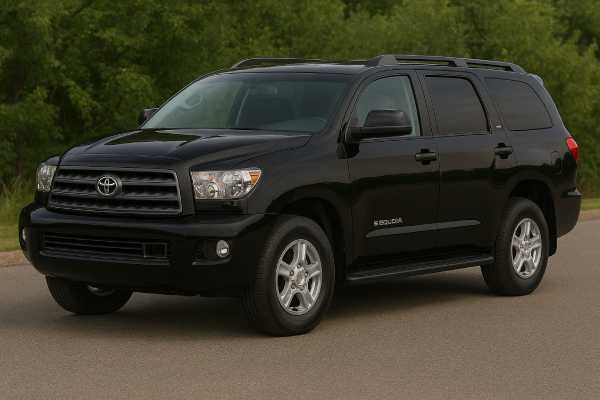
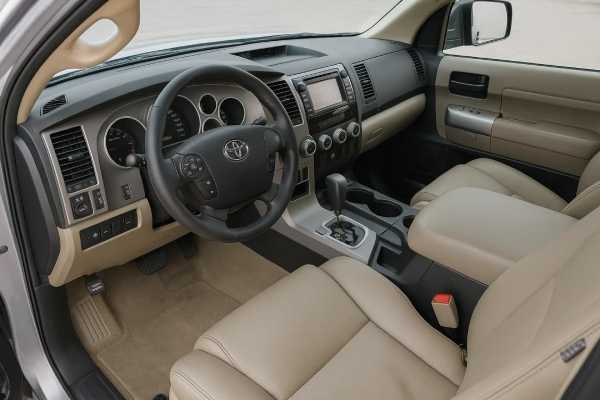
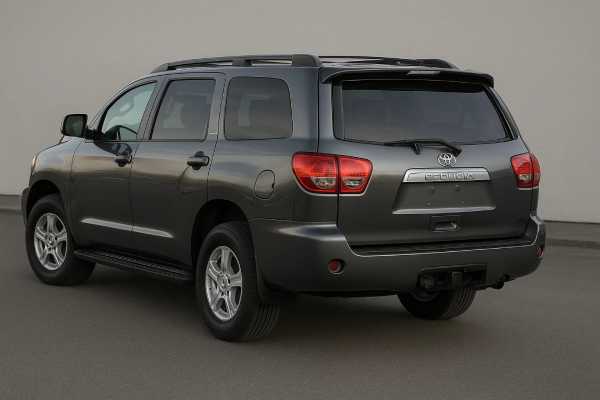
The 2010–2012 Toyota Sequoia RWD with the 1UR-FE 4.6 litre V8 sits in a useful middle ground for full-size SUVs. It keeps the second-generation Sequoia’s huge interior, strong towing hardware, and independent rear suspension, but replaces the older 4.7 litre V8 with a lighter, more efficient all-aluminium UR-series engine. Power rises to 310 hp with a broader torque curve, and the six-speed automatic improves both drivability and fuel economy over earlier five-speed models.
For buyers who do not need four-wheel drive, the UPK60 rear-wheel-drive layout brings slightly better fuel consumption, less weight, and simpler servicing, while still riding on the same robust body-on-frame architecture as the Tundra. Inside, the Sequoia behaves more like a long-distance family minivan than a work truck, with three usable rows and thoughtful storage. This guide walks through the key specifications, real-world performance, reliability patterns of the 1UR-FE, and what to look for when shopping a used example so you can decide if this big SUV fits your budget, roads, and towing needs.
Top Highlights
- Strong 310 hp 1UR-FE V8 with smoother six-speed automatic and better economy than the earlier 4.7 litre V8.
- Huge eight-seat cabin and up to about 3,400 L (120 ft³) of cargo with the rear rows folded, plus a tow-ready frame on most SR5 models.
- Proven body-on-frame construction and long-life UR-series engine when serviced on time, often reaching well over 200,000 miles.
- Watch for water pump leaks, timing chain tensioner noise, and surface or frame rust in salt-belt trucks as mileage climbs.
- Typical oil change interval: up to 10,000 miles / 12 months on quality synthetic oil, but many owners prefer 5,000-mile (8,000 km) intervals for towing or heavy use.
What’s inside
- Toyota Sequoia 4.6 RWD in Detail
- Sequoia 1UR-FE Specifications and Data
- Trims, Features, Safety and Assistance
- Reliability Patterns and Known Issues
- Service Schedule and Buyer Advice
- On-Road Behavior and Performance
- How the Sequoia RWD Compares to Rivals
Toyota Sequoia 4.6 RWD in Detail
The 2010 model year marked a significant update for the second-generation Sequoia. Toyota replaced the heavy cast-iron 2UZ-FE 4.7 litre V8 with the all-aluminium 1UR-FE 4.6 litre V8 and paired it with a six-speed automatic transmission. Power increased to 310 hp and around 327 lb-ft of torque, and highway fuel economy for two-wheel-drive versions improved while still using regular unleaded petrol.
The UPK60 code refers to rear-wheel-drive Sequoias with the 1UR-FE engine. Mechanically, these models share the same fully boxed frame, independent front and rear suspension, and large disc brakes as their 4WD siblings. The main changes are the lack of a front differential and transfer case, a simpler rear prop shaft, and a small weight advantage. In daily use this translates into slightly better fuel economy, a lighter steering feel, and fewer driveline parts to service, at the cost of traction on unploughed winter roads or off-road trails.
From an ownership perspective, the Sequoia RWD behaves like a very large, comfortable family wagon that can also tow. The independent rear suspension improves ride quality and third-row comfort compared with live-axle competitors of the same era. The cabin can seat seven or eight depending on whether second-row captain’s chairs or a bench are fitted, and the third row is genuinely usable for adults on shorter trips, not just children.
On the safety side, 2010–2012 Sequoias gained driver and front-passenger knee airbags on top of the usual front, side, and curtain airbags. Toyota’s Star Safety System, which bundles stability control, traction control, anti-lock brakes, and brake assist, is standard across the range. Although the exact 2010–2012 configuration was not crash-tested separately from earlier years, the crash structure and restraint layout remained essentially the same.
The main reasons to choose the 4.6 RWD over a 5.7 4WD are how and where you drive. If you mostly tow moderate loads on paved roads, live in a milder climate, and value lower fuel and maintenance costs, the UPK60 is often the sensible option. If you regularly tow near maximum capacity through mountains, drive on unsealed roads, or need deep-snow traction, the 5.7 4WD still has clear advantages, but many owners will never use that extra capability.
Sequoia 1UR-FE Specifications and Data
Engine and Performance
| Item | Specification |
|---|---|
| Engine code | 1UR-FE i-Force V8 |
| Layout and cylinders | 90° V8, DOHC, 4 valves per cylinder |
| Displacement | 4.6 l (4,608 cc) |
| Bore × stroke | 94.0 mm × 83.0 mm (3.70 in × 3.27 in) |
| Induction | Naturally aspirated |
| Fuel system | Sequential multi-port fuel injection (SFI) |
| Compression ratio | 10.2:1 |
| Max power | 310 hp (231 kW) @ 5,400 rpm |
| Max torque | 443 Nm (327 lb-ft) @ 3,400 rpm |
| Timing drive | Dual timing chains with hydraulic tensioners |
| Firing order | 1-8-7-3-6-5-4-2 |
| Emissions standard | ULEV / Tier 2 Bin 5 (varies by market) |
In real-world use, owners often report city consumption in the 13–14 mpg US range and highway figures around 18–19 mpg US for the RWD 4.6, with mixed driving landing close to 15–16 mpg (approximately 15–18 l/100 km). At a steady 120 km/h (75 mph) on level highway, 13–14 l/100 km (17–18 mpg US) is typical with stock tyres and no roof box.
Transmission and Driveline
| Item | Specification |
|---|---|
| Transmission | 6-speed automatic, electronically controlled (ECT-i) |
| Gear ratios (1st–6th) | Approx. 3.33 / 1.96 / 1.35 / 1.00 / 0.73 / 0.59 |
| Final drive ratio | Around 3.90:1 depending on trim and tow package |
| Drive type | Rear wheel drive (UPK60) |
| Differential | Open rear differential; tow package includes transmission and steering coolers |
The six-speed automatic uses a lock-up torque converter in higher gears and a dedicated Tow/Haul mode that delays upshifts and holds lower gears on climbs and descents, helping to manage trailer weight and reduce heat.
Chassis and Dimensions
| Item | Specification |
|---|---|
| Platform | Second-generation Sequoia body-on-frame SUV |
| Front suspension | Independent double wishbone with coil springs |
| Rear suspension | Independent double wishbone with coil springs; optional rear air suspension on higher trims |
| Steering | Rack-and-pinion, power assisted |
| Brakes | 4-wheel ventilated discs, approx. 13.9 in front / 13.6 in rear |
| Wheels and tyres | 18 in alloys with 275/65 R18 (SR5); 20 in alloys with 275/55 R20 (Limited/Platinum) |
| Length | ~5,210 mm (205.1 in) |
| Width | ~2,030 mm (79.9 in) |
| Height | ~1,890–1,900 mm (≈74.5 in, suspension and roof rack dependent) |
| Wheelbase | 3,099 mm (122.0 in) |
| Ground clearance | ~251 mm (9.9 in) |
| Turning circle | ≈11.9 m (39 ft) |
| Curb weight (RWD 4.6) | ≈2,575–2,600 kg (5,680–5,730 lb) |
| GVWR | ≈3,300 kg (7,250–7,300 lb) |
| Fuel tank | ~100 l (26.4 US gal) |
| Cargo volume | ~535–3,400 l (18.9–120 ft³), depending on seat configuration |
Performance and Capability
| Metric | Value |
|---|---|
| 0–100 km/h (0–62 mph) | Around 8.0–8.5 s, unladen (RWD 4.6) |
| Top speed | Limited to approximately 180 km/h (112 mph) |
| Braking 100–0 km/h | In the 40 m range, depending on tyres and load |
| Towing capacity | Up to roughly 3,175–3,400 kg (7,000–7,500 lb) when properly equipped |
| Payload | Typically 600–700 kg (1,300–1,500 lb) depending on trim and options |
| Roof load | ~100 kg (220 lb) with suitable crossbars |
Exact tow and payload ratings vary by trim, axle ratio, and whether the factory tow package is fitted, so always confirm against the door-jamb label and owner’s manual for your specific VIN.
Fluids and Service Capacities (Typical)
| System | Specification / Capacity (approximate) |
|---|---|
| Engine oil | 0W-20 or 5W-20/5W-30 meeting Toyota spec; ~7.5 l (7.9 US qt) with filter |
| Coolant | Toyota Super Long Life Coolant; roughly 12–14 l (12.7–14.8 US qt) system fill |
| Automatic transmission | Toyota WS ATF; ~10–12 l for full change, ~3–4 l for pan drain |
| Rear differential | 75W-85 or 75W-90 gear oil (check manual); ~2–3 l |
| Power steering | ATF-type fluid; typically less than 1 l |
| A/C refrigerant | R-134a; charge and oil quantity vary by region and system |
Electrical
| Item | Specification |
|---|---|
| Alternator | Typically around 130–150 A output depending on equipment |
| 12 V battery | Group size often 27/24F, around 70–80 Ah with high CCA rating |
| Spark plugs | Long-life iridium; change interval around 120,000 km (75,000 miles) or as per local schedule |
Safety and Driver Assistance
The 2010–2012 Sequoia includes:
- Front, side, curtain, and knee airbags (front driver and passenger).
- ABS with electronic brake-force distribution and brake assist.
- Stability control and traction control as part of the Star Safety System.
- Tyre pressure monitoring and available rear-view camera on higher trims or when equipped with navigation.
Advanced driver-assistance features such as modern adaptive cruise, lane-keeping assist, and automatic emergency braking were not yet widely fitted on this generation. Some Platinum models offered early radar cruise and parking sonar, but not the full set of systems seen on later Toyota Safety Sense vehicles.
Trims, Features, Safety and Assistance
Trim Levels and Mechanical Differences
Across the 2010–2012 range, the rear-wheel-drive 4.6 litre Sequoia typically appears as an SR5, with the 5.7 litre engine more common in Limited and Platinum trims. However, local market equipment can vary.
SR5 (core 4.6 RWD trim):
- 18-inch alloy wheels, cloth upholstery, manual or power-adjust driver’s seat depending on year.
- Eight-passenger seating with a 40/20/40 second-row bench and 60/40 split third row.
- Tri-zone automatic climate control, cruise control, keyless entry, and audio with CD/MP3; later models add Bluetooth and USB connectivity.
- Roof rack and running boards on most examples.
- Tow package on many RWD trucks, including hitch receiver, wiring, and additional cooling.
Limited:
- Often equipped with the 5.7 V8, but some markets offer 4.6 RWD or 4WD.
- 20-inch wheels, leather upholstery, heated front seats, power tailgate, and upgraded JBL audio.
- Front and rear parking sonar, power-folding mirrors, and optional navigation and rear-seat entertainment.
- Second-row captain’s chairs available in place of the bench.
Platinum:
- Generally paired with the 5.7 V8 rather than the 4.6.
- Adaptive Variable Suspension (AVS) with rear load-levelling air suspension.
- Ventilated front seats, heated second-row seats, power-folding third row, rear DVD entertainment, and navigation.
- Laser or radar cruise control on some versions, plus more extensive parking aids.
Mechanically, 4.6 SR5 RWD models use the same independent suspension but may have springs and dampers tuned more for comfort than for heavy towing compared with 4WD or 5.7-equipped trucks. Most RWD 4.6s also carry the factory tow package, which is a plus for long-term cooling capacity even if you never tow near the maximum.
Quick Identifiers and Build Codes
- VIN characters in positions 5–7 help identify engine and driveline; UPK60 is commonly used in internal documentation for 4.6 RWD.
- Under the bonnet, the 1UR-FE has an alloy intake manifold and timing chain covers, and emissions labels show “4.6L” and “1UR-FE”.
- Inside, SR5 models usually have cloth seats and a simpler centre stack with fewer buttons, while Limited and Platinum trims feature leather, added trim accents, and more steering-wheel controls.
Safety Ratings Overview
- Earlier second-generation Sequoias achieved five-star frontal impact ratings for driver and front passenger in U.S. federal testing, and a four-star rollover rating. The 2010–2012 4.6 models share the same core body shell and restraint strategy.
- Insurance-industry crash testing is more limited for this generation. Buyers should focus on the presence of multiple airbags, stability control, and proper tyre selection rather than expecting modern active safety scores.
Standard safety features on 2010–2012 Sequoias include multiple front and side airbags, full-length curtains, active head restraints, and stability and traction control. Child seat installation is aided by LATCH/ISOFIX anchors on the second row and curtain coverage over all three rows, though tether anchor locations for the third row should be checked against the manual.
Safety Systems and ADAS
Active safety and assistance systems include:
- Anti-lock brakes with brake assist and electronic brake-force distribution.
- Vehicle Stability Control and Traction Control.
- Optional rear-view camera, often integrated into the navigation display or rear-view mirror.
- Optional radar or laser cruise control on Platinum models, which may require dedicated calibration after front-end repairs.
Compared with newer SUVs, the Sequoia lacks lane departure warning, automatic emergency braking, blind-spot monitoring, and cross-traffic alerts. Drivers should treat the Sequoia like a traditional full-size SUV: strong passive protection and predictable handling, but fewer electronic safeguards.
Reliability Patterns and Known Issues
The 1UR-FE engine and second-generation Sequoia platform have a generally strong reputation, but age and mileage now reveal predictable weak spots. Understanding these helps you distinguish between normal wear and potential problem vehicles.
Engine and Ancillaries
Water pump leaks (common, moderate cost):
The 1UR-FE’s water pump is a known wear item. Many owners see seepage between 60,000 and 100,000 miles (100,000–160,000 km). Typical signs are pink or white coolant residue around the pump housing, drips at the front of the engine, or gradual overheating at speed. The fix is to replace the water pump, gasket, and coolant; it’s not technically complex but does require some labour.
Timing chain tensioner noise (occasional, can be expensive if ignored):
Some UR-series engines develop rattling at cold start due to timing chain tensioner or guide wear. Short-trip driving and long oil-change intervals aggravate the issue. Brief noise on very cold mornings can be normal, but persistent rattling warrants inspection. If needed, replacing tensioners and guides prevents chain wear from affecting cam timing.
Valve spring issues (rare, serious when present):
Early UR engines in other models were affected by weaker valve springs. Documented failures are rare in Sequoias, but a sudden misfire, loss of compression in one cylinder, or unusual ticking noise should be treated seriously. Diagnosis involves compression and leak-down tests and, if necessary, valve train inspection.
Oil consumption (occasional):
Higher-mileage engines sometimes consume up to around 0.5 litre per 1,000 miles, especially if maintenance was neglected or if the engine has spent its life idling or towing heavy loads. Regular level checks, quality oil, and sensible change intervals help. Excessive use should trigger a leak-down test and an inspection of valve-stem seals and piston rings.
Overall, with timely oil changes and coolant service, the 1UR-FE commonly reaches well beyond 200,000 miles without major internal work.
Driveline, Suspension and Brakes
Six-speed automatic transmission:
The transmission is generally robust. Most failures relate to overheated fluid from towing beyond ratings or never changing the ATF. Signs to watch for include shudder on light-throttle shifts, delayed engagement when shifting from Park to Drive, or discoloured fluid with metallic particles. Preventive drain-and-fill services every 60,000–80,000 miles are a good policy.
Rear differential and wheel bearings:
Rear differential oil can darken quickly with frequent towing; ignoring it accelerates pinion and carrier bearing wear, creating a humming noise at speed. Wheel bearings typically last well but can develop a low growl after high mileage or heavy use. Replacement is straightforward but important for safety.
Suspension components:
Over time, front lower ball joints, control-arm bushings, and sway bar links can wear and produce clunks over bumps. Rear control-arm bushings and, on Platinum-type air-suspension trucks, air springs and height sensors can also age out. Converting to conventional coils is a popular long-term solution when air-suspension parts become costly.
Body, Frame and Corrosion
Second-generation Sequoias use improved frame coatings compared with some earlier Toyota trucks, but corrosion is still a concern in regions where salt is used on winter roads. Common areas of rust include:
- Rear frame sections around the spare tyre and tow hitch.
- Crossmembers near the fuel tank.
- Brake and fuel lines running along the frame.
- Weld seams around rear suspension mounts.
A proper inspection should be done on a lift, with the spare tyre removed and any plastic shields temporarily dropped to reveal hidden areas.
Electronics and Recalls
This generation of Sequoia was included in broader Toyota campaigns related to floor mats and accelerator pedals, developed in response to unintended-acceleration concerns. Remedial work included revised pedal shapes, potential pedal replacements, and software changes such as brake override. When buying used, confirm that all related recalls and service campaigns are closed on the vehicle.
Other age-related electrical issues can include:
- Door lock actuators failing intermittently.
- Rear-view camera glitches or poor image quality on higher trims.
- Navigation or audio head-unit failures, especially backlight or touch-panel problems.
- Intermittent issues with rear entertainment systems, where fitted.
These are generally repairable, but costs can add up. Aftermarket head units and camera systems are often cheaper upgrades compared with factory replacements.
Pre-Purchase Priority Checks
Before committing to a 2010–2012 Sequoia 4.6 RWD, try to obtain or perform:
- Full service records, especially engine oil intervals and any water pump or cooling-system work.
- Cold-start observation for timing chain noise.
- Transmission test drive that includes low-speed manoeuvres and highway speeds.
- Underside inspection for frame and line corrosion, ideally with photos.
- Evidence that all recalls have been completed (printout from an official VIN-check site or dealer).
A truck that passes these tests and has been maintained according to or better than the factory schedule is a strong candidate for long-term ownership.
Service Schedule and Buyer Advice
Practical Maintenance Schedule (Typical, Non-Severe Use)
Always cross-check with the owner’s manual for your specific market, but the following schedule works well for most Sequoia 4.6 RWD owners:
- Engine oil and filter
- Heavy use or mixed driving: every 5,000 miles / 8,000 km or 6 months.
- Mostly highway, light towing: up to 10,000 miles / 12 months on quality synthetic oil.
- Engine air filter
- Inspect every 15,000 miles (24,000 km); replace every 30,000–45,000 miles depending on dust exposure.
- Cabin air filter
- Replace every 15,000–20,000 miles (24,000–32,000 km) or annually.
- Spark plugs (iridium)
- Replace around 75,000–100,000 miles (120,000–160,000 km), following local guidance.
- Coolant
- First change around 100,000 miles (160,000 km), then every 50,000 miles (80,000 km) or 5 years.
- Automatic transmission fluid (WS)
- Drain-and-fill or gentle exchange every 60,000–80,000 miles (96,000–128,000 km), sooner with heavy towing.
- Rear differential oil
- Replace every 60,000 miles (96,000 km) or 3–4 years.
- Brake fluid
- Flush every 2–3 years regardless of mileage.
- Serpentine belt and coolant hoses
- Inspect from 60,000 miles upward; replace belts by 100,000 miles or if cracking or glazing appears. Replace hoses if swollen, cracked, or oil-soaked.
- Timing chains
- No scheduled replacement; monitor for noise and timing-related fault codes, and address if symptoms appear.
- Alignment and tyre rotation
- Rotate tyres every 5,000–7,500 miles (8,000–12,000 km); perform an alignment when new tyres are installed or if abnormal wear appears.
- 12 V battery
- Load-test annually from the fourth year onwards; plan to replace around every 5–7 years depending on climate.
Key Fluids and Torque Values
Essential specs to know when budgeting or planning DIY work:
- Engine oil: 0W-20 or similar, meeting Toyota specifications, around 7.5 l with filter.
- Transmission fluid: Toyota WS ATF only; avoid mixing with universal fluids.
- Differential oil: 75W-85 or 75W-90 gear oil; exact grade depends on manual and climate.
- Coolant: Toyota Super Long Life Coolant (pink), premixed or 50/50 with distilled water.
Typical torque figures (always verify for your VIN):
- Wheel nuts: roughly 150 ft-lb (around 200 Nm).
- Engine oil drain plug: around 30–35 ft-lb (about 40–47 Nm).
- Spark plugs: roughly 13–18 ft-lb (about 18–25 Nm) on aluminium heads.
Using a torque wrench is highly recommended; over-tightening lug nuts or drain bolts is a common source of avoidable damage.
Buyer’s Guide: What to Look For
When viewing a used 2010–2012 Sequoia 4.6 RWD, work through a structured checklist:
- Rust and structure
- Inspect frame rails, crossmembers, and the area around the spare tyre and tow hitch.
- Check brake and fuel lines for corrosion.
- Look for signs of underbody repairs or fresh undercoating that could hide rust.
- Engine health
- Cold-start the engine and listen for rattles beyond a brief initial moment. Persistent noise warrants investigation.
- Look for coolant staining around the water pump and radiator joints.
- Inspect for oil leaks around cam covers and front seals.
- Transmission and driveline
- Ensure smooth shifts, no harsh clunks, and no hesitation engaging Drive or Reverse.
- Listen for humming or whining from the rear differential that changes with speed.
- Suspension and steering
- Drive over rough surfaces and speed bumps to listen for knocks or looseness.
- Check that the vehicle tracks straight on a flat road without constant steering correction.
- Interior and electronics
- Test all windows, locks, mirrors, seat adjustments, rear climate controls, and the sliding rear glass.
- If fitted, check navigation, rear-view camera, and rear entertainment for proper operation.
Recommended Years and Trims
- Best all-round choice: A 2011–2012 SR5 RWD 4.6 with full service records, minimal rust, and evidence of cooling and transmission maintenance offers a strong mix of value, reliability, and equipment.
- Be cautious: High-mileage Limited or Platinum models from harsh climates, especially those with neglected air suspension or visible frame corrosion. These can still be good vehicles, but you should budget more for reconditioning.
With the right example and a sensible maintenance plan, the Sequoia 4.6 RWD can serve reliably as a family hauler, tow vehicle, or long-distance cruiser for many years.
On-Road Behavior and Performance
Ride, Handling and Refinement
The Sequoia’s independent rear suspension gives it a different character from older, leaf-sprung truck-based SUVs. On most roads, it feels more composed over bumps, especially when the cabin is loaded. The long wheelbase and wide track help it stay settled on the highway, and body motions are generally well controlled for such a large vehicle.
That said, you are still driving a big, tall body-on-frame SUV. There is noticeable body roll in quick lane changes or tighter corners, and you always remain aware of the vehicle’s mass. The stability control system steps in early if you push too hard, which is appropriate for the class. Steering effort is moderate and lightens at low speeds for easier parking.
Noise levels are quite good. Around town, the V8 is muted and road noise is modest. On coarse highways, tyre noise from the large footprint becomes more noticeable, especially with aggressive all-terrain tyres, but wind noise remains well controlled.
Powertrain Character
The 1UR-FE V8 is smoother and more rev-happy than the older 4.7. Peak torque arrives around 3,400 rpm, and the engine feels eager from about 2,500 rpm upward. Throttle response is progressive, helping you pull away cleanly without drama. When you ask for full power, the V8 is willing to rev and sounds refined rather than strained.
The six-speed automatic is a major improvement over the earlier five-speed. In normal driving it upshifts quickly to keep revs low and save fuel, but responds promptly when you request more acceleration. Kickdown to pass slower traffic is decisive, and the gearbox works well with the engine’s torque curve. Tow/Haul mode changes the behaviour noticeably: it holds lower gears longer, improves engine braking, and reduces hunting on hills.
In day-to-day use, the 4.6 RWD feels strong enough for its size without being overpowered. It will not match the 5.7’s punch when towing heavy up steep grades, but for typical highway merges, overtakes, and moderate trailers it feels confident.
Real-World Economy
Fuel economy is not this vehicle’s selling point, but the 4.6 RWD combination is more reasonable than larger engines or 4WD versions. Typical owner-reported figures are:
- City driving: 13–14 mpg US (about 16–18 l/100 km) with gentle driving; lower with heavy traffic and short trips.
- Highway at 60–70 mph (100–115 km/h): 18–19 mpg US (about 12–13 l/100 km) when unloaded and driven smoothly.
- Mixed use: Around 15–16 mpg US (15–17 l/100 km) over longer periods.
Adding a roof box, larger tyres, or a constant heavy load can push consumption into the low teens. If fuel cost is a primary concern, a smaller, more efficient vehicle will make more sense. If your priority is durability and capability, these numbers are acceptable for a body-on-frame eight-seat SUV.
Towing and Load Behaviour
With proper equipment and within its rated limits, the RWD 4.6 Sequoia is a capable tow vehicle. It works well with medium-sized travel trailers, boats, and enclosed trailers up to the 7,000–7,500 lb range. The long wheelbase and integrated hitch provide good stability, and the brakes are sized appropriately for the vehicle’s mass.
Under load:
- The engine will operate at higher revs on long grades, often around 3,500–4,500 rpm, which is normal for this powertrain.
- The transmission’s Tow/Haul mode helps manage temperatures and reduces gear hunting.
- A properly set up trailer brake controller is essential for safe stopping and stability.
With the cabin full and a trailer attached, rear ride height can drop noticeably on older springs. Many owners fit slightly firmer replacement springs or helper air bags to restore level stance and improve control.
In everyday family use, the Sequoia is a relaxed, confidence-inspiring long-distance cruiser. It is happiest on open roads and motorways, less so in tight city streets and small parking garages simply because of its size.
How the Sequoia RWD Compares to Rivals
When buying used, the 2010–2012 Sequoia RWD 4.6 often competes with:
- Chevrolet Tahoe / GMC Yukon (5.3 V8, RWD).
- Ford Expedition (5.4 V8, RWD).
- Nissan Armada and Infiniti QX56.
Space and Practicality
The Sequoia stands out for interior space. Its third row is more adult-friendly than in many Tahoes or Expeditions of similar vintage, and cargo room with the rear rows folded is generous. The independent rear suspension helps create a lower, flatter load floor, and the wide cabin makes it easier to install multiple child seats side by side.
For families who regularly carry seven or eight people plus luggage, the Sequoia’s interior packaging is one of its strongest advantages.
Powertrain and Economy
Against rival engines:
- The GM 5.3 litre V8 is competitive on fuel economy and power, but certain years have known issues such as lifter and oil-consumption problems on cylinder-deactivation versions.
- The Ford 5.4 litre V8 offers decent torque but has its own quirks, including potential spark plug and timing-related issues if maintenance is neglected.
- Nissan’s 5.6 litre V8 in the Armada and QX56 is strong and responsive, but many owners report higher fuel consumption than the Sequoia and, in some markets, more rust concerns.
The Toyota 1UR-FE aims for a balance of smoothness, reliability, and reasonable consumption. It is not the thriftiest option, but it avoids some of the more complex fuel-saving technologies that brought issues in other brands.
Reliability and Ownership Costs
Toyota’s reputation for durability and resale value is a key draw. The Sequoia shares many components with the Tundra, so mechanical parts availability is good and there is a large knowledge base among independent mechanics. Routine items such as brakes, fluids, and filters are straightforward to service.
The trade-offs:
- Genuine Toyota parts can cost more than equivalent domestic-brand parts in some regions.
- Large tyres, big brake components, and a complex HVAC system mean consumables are not “cheap”, although they are predictable.
- Insurance and registration costs can be higher than for smaller crossovers.
On balance, many owners find that a well-maintained Sequoia has fewer unexpected major repairs than some rivals, which partly offsets fuel and tyre costs over the life of the vehicle.
Best Use Case
The 2010–2012 Sequoia RWD 4.6 makes the most sense if you:
- Need true eight-seat capacity and a large cargo area.
- Tow regularly but not at the absolute maximum weight allowed.
- Live in a climate where rear-wheel drive with good tyres is sufficient, or you are comfortable adding chains for occasional winter trips.
- Prioritise long-term mechanical durability over the latest in infotainment and electronic driver aids.
If you need advanced active safety systems, plug-in or diesel-level fuel economy, or compact dimensions for city driving, a newer unibody SUV or crossover will be a better fit. But as a used-buy workhorse that can handle family duties, towing, and road trips for many years, a clean, rust-free Sequoia 4.6 RWD remains a very compelling option.
References
- Toyota Sequoia Adds All-New 4.6-Liter V8, Wider Array of Standard Features for 2010 – Toyota USA Newsroom 2009 (Press Release)
- The 2010 Toyota Sequoia: new 4.6L engine boosts power and saves fuel 2009 (Press Release)
- Vehicle Detail Search – 2010 TOYOTA SEQUOIA 4 DR RWD/AWD 2010 (Safety Rating and Recall Database)
- 2010 Toyota Sequoia Reliability, Consumer Ratings & Reviews 2010 (Reliability and Owner Ratings)
- 2010 Toyota Sequoia Owner’s Manual PDF (638 Pages) 2016 (Owner’s Manual)
Disclaimer
This article is provided for informational purposes only and is not a substitute for professional mechanical diagnosis, inspection, or repair. Specifications, torque values, fluid types, and maintenance intervals can vary by VIN, production date, market, and installed equipment. Always verify procedures and values against the official service information, owner’s manual, and technical bulletins for your specific vehicle.
If you found this guide helpful, consider sharing it with other enthusiasts and owners on Facebook, X/Twitter, forums, or your preferred social platforms to support xcar’s work and help more people make informed decisions about their Toyota Sequoia.