

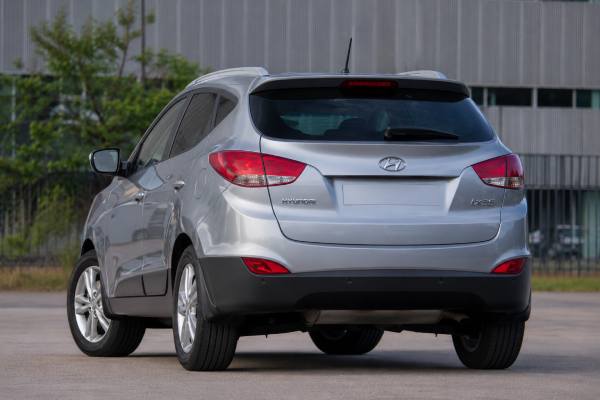
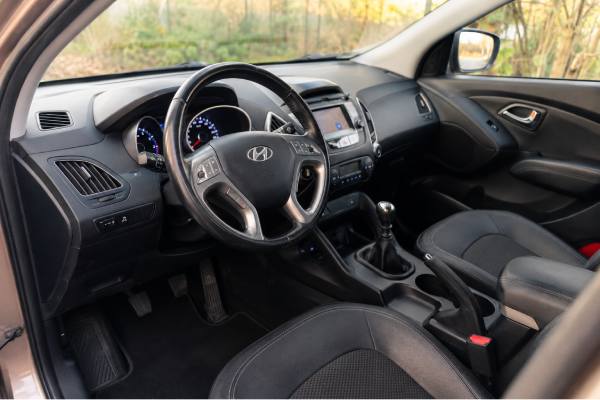
The facelift Hyundai ix35 FWD with the U II 1.7 CRDi diesel is one of the more sensible versions of Hyundai’s first-generation compact SUV. It gives buyers the raised driving position, useful boot, simple front-wheel-drive layout, and lower fuel use that made the ix35 popular across Europe. This specific 2013–2015 facelift model is not quick, luxurious, or especially advanced by modern SUV standards, but it can be a practical and affordable used family car when maintained properly.
The key point is matching the car to the right use. The 1.7 CRDi suits longer commutes, mixed driving, and motorway use better than repeated short urban trips. It uses a diesel particulate filter, a turbocharger, EGR hardware, a dual-mass flywheel, and a six-speed manual gearbox, so condition and service history matter more than trim level alone.
Final Verdict
The Hyundai ix35 FWD 1.7 CRDi facelift is a good used choice for drivers who want a roomy, economical, no-nonsense diesel SUV without the extra cost and complexity of AWD. Its strongest appeal is practical family usability with respectable fuel economy and a durable basic layout. It suits commuters, small families, and rural or suburban drivers doing regular longer journeys. The main tradeoff is modest performance and diesel-system sensitivity if used mainly for short trips. Buy only with clear service history, completed recall checks, clean cold starts, smooth clutch action, and no DPF, EGR, or warning-light issues.
| Pros | Cons |
|---|---|
| Efficient 1.7 CRDi suits commuting and longer mixed use | Short trips can clog DPF and stress EGR hardware |
| FWD layout avoids AWD transfer-case and coupling costs | No automatic or 4WD option on this 1.7 diesel |
| Good cabin space and large boot for family use | Interior materials feel older than newer compact SUVs |
| Six-speed manual keeps engine relaxed on the motorway | Clutch and dual-mass flywheel condition are key checks |
| Strong standard safety basics for its period | No modern AEB, lane support, or adaptive cruise |
| Parts availability is generally good across Europe | Neglected diesels can become expensive quickly |
Table of Contents
- Facelift ix35 1.7 CRDi Overview
- ix35 1.7 CRDi Specifications
- Trims, Safety and Driver Assistance
- Reliability, Common Issues and Service Actions
- Maintenance and Buyer’s Guide
- Driving, Performance and Efficiency
- How the ix35 1.7 CRDi Compares
Facelift ix35 1.7 CRDi Overview
The 2013–2015 facelift ix35 1.7 CRDi is best understood as the economy-focused diesel version of Hyundai’s LM-generation compact SUV. It prioritizes low running costs, cabin room, and straightforward ownership over strong acceleration or off-road ability.
The LM ix35 replaced the earlier Tucson name in many European markets, though the same broad model family continued to be called Tucson elsewhere. The facelift brought updated styling, equipment changes, trim revisions, and cleaner presentation inside, but the basic package remained familiar: a five-door compact SUV with a transverse engine, front-wheel drive in this version, and independent suspension at both ends.
The U II 1.7 CRDi engine is a 1,685 cc four-cylinder common-rail diesel. In this ix35 it produces 116 hp, or 85 kW, and 260 Nm of torque. That output is enough for relaxed everyday use, especially once the turbo is working, but it is not a performance engine. The six-speed manual gearbox is part of the appeal because it helps keep revs down at speed and avoids the extra age-related worries of an automatic transmission.
This exact 1.7 CRDi FWD version is different from the more powerful 2.0 CRDi ix35. The 2.0 diesel could be paired with AWD and, in some markets, an automatic gearbox. The 1.7 diesel was the lighter, simpler, front-drive choice. For many used buyers, that is a positive. It means fewer driveline parts, lower fuel use, and a lower purchase price. The downside is reduced towing ability, weaker traction on slippery surfaces, and slower overtaking when fully loaded.
The facelift ix35 also sits in an interesting used-car position. It is newer and generally better equipped than early 2010–2012 cars, but it is older and simpler than the later Tucson that replaced it. That makes it attractive when value matters more than touchscreen size, active safety technology, or premium cabin feel.
ix35 1.7 CRDi Specifications
This version uses a front-mounted U II 1.7 CRDi diesel engine, a six-speed manual gearbox, and front-wheel drive. The most important ownership facts are the modest 116 hp output, useful 260 Nm torque band, diesel emissions hardware, 1,200 kg braked towing rating in typical UK facelift data, and a large boot for the vehicle’s size.
| Item | Hyundai ix35 FWD 1.7 CRDi facelift |
|---|---|
| Engine family | Hyundai U II / D4FD 1.7 CRDi diesel |
| Displacement | 1,685 cc / 1.7 litres |
| Layout | Inline-four, DOHC, 16 valves |
| Induction | Turbocharged and intercooled diesel |
| Fuel system | Common-rail direct injection |
| Maximum power | 85 kW / 114 bhp / 116 PS at 4,000 rpm |
| Maximum torque | 260 Nm / 192 lb-ft at 1,250–2,750 rpm |
| Bore × stroke | 77.2 × 90 mm |
| Compression ratio | 17.0:1 |
| Timing drive | Timing chain |
| Item | Value |
|---|---|
| Transmission | 6-speed manual |
| Drive type | Front-wheel drive |
| 0–62 mph / 0–100 km/h | 12.4 seconds |
| Top speed | 108 mph / 173 km/h |
| Official combined economy | About 5.3–5.6 L/100 km, trim dependent |
| CO2 emissions | About 135–147 g/km, trim and wheel dependent |
| Emissions standard | Euro 5 in common European facelift data |
| Item | Value |
|---|---|
| Body style | Five-door compact SUV, five seats |
| Length | 4,410 mm / 173.6 in |
| Width | 1,820 mm / 71.7 in, excluding mirrors |
| Height | 1,655–1,665 mm / 65.2–65.6 in |
| Wheelbase | 2,640 mm / 103.9 in |
| Turning circle | 5.3 m radius figure in UK brochure data |
| Front suspension | MacPherson strut with coil spring |
| Rear suspension | Multi-link with anti-roll stabiliser bar |
| Steering | Electronic power-assisted rack and pinion |
| Brakes | Vented front discs, solid rear discs |
| Item | Value |
|---|---|
| Kerb weight | About 1,537 kg in UK 1.7 CRDi 2WD data |
| Gross vehicle weight | 1,940 kg |
| Boot capacity | 591 litres seats up; 1,436 litres seats folded |
| Fuel tank | 58 litres / 15.3 US gal |
| Braked towing capacity | 1,200 kg / 2,646 lb |
| Unbraked towing capacity | 750 kg / 1,653 lb |
| Noseweight | 50 kg |
| Common tyre sizes | 215/70 R16, 225/60 R17, 225/55 R18 |
The figures above can vary slightly by market, trim, wheel package, and registration documents. The most useful buyer takeaway is simple: the 1.7 CRDi is the economical front-drive ix35, not the heavy-duty towing or AWD version.
Trims, Safety and Driver Assistance
The 1.7 CRDi facelift was widely sold as the sensible diesel across mid-level and upper trims. Equipment varies by country, but UK-style facelift grades give a useful guide to what buyers are likely to find.
Trim structure and equipment
Typical UK facelift trims included S, SE, SE Nav, Premium, and Premium Panorama. The 1.7 CRDi manual 2WD was available across much of that range, while the more powerful 2.0 CRDi served buyers wanting AWD or stronger towing ability.
S models were the value choice. They commonly included air conditioning, alloy wheels, electric windows, stability control, downhill brake control, hill-start assist, curtain airbags, ISOFIX points, USB/AUX connectivity, and basic audio. SE added more comfort and convenience equipment, often including 17-inch wheels, cruise control, Bluetooth voice recognition, rear parking sensors, automatic lights, rain-sensing wipers, heated front and rear outer seats, and dual-zone climate control.
SE Nav added the most obvious identifier: the factory satellite navigation touchscreen with rear-view camera and upgraded audio features. Premium brought 18-inch wheels, xenon headlights on many markets, leather seat facings, keyless entry and start, privacy glass, chrome exterior details, and other comfort items. Premium Panorama added the panoramic sunroof, which is desirable but worth checking carefully for smooth operation, leaks, and drain condition.
Mechanical differences are limited on this 1.7 FWD. The important functional points are:
- 1.7 CRDi equals six-speed manual and front-wheel drive.
- There is no torque-on-demand AWD system on this version.
- Larger wheels improve appearance but can make the ride firmer.
- The 18-inch Premium wheels can raise CO2 and fuel consumption figures slightly.
- Towing capacity is lower than 2.0 CRDi 4WD versions.
Quick identifiers include the six-speed manual gear lever, absence of 4WD controls, registration/VIN build data, 1.7 CRDi engine bay labels, and trim-specific wheel and infotainment equipment. Do not rely only on exterior badges, because used cars may have missing or replaced badges.
Safety ratings and structure
The ix35 was a strong safety performer for its original test period. European crash-test results gave the model a five-star Euro NCAP rating, with particularly good adult and child occupant scores for the era. ANCAP also applied its five-star rating to 4×2 and 4×4 petrol and diesel variants built from August 2010 onward in its market, while noting that Australasian specification may differ from European specification.
For a used buyer, the rating should be understood in period context. The ix35 has good crash protection fundamentals, but it does not have the active crash-avoidance systems now common on newer SUVs.
Safety systems and driver assistance
Standard safety equipment on well-documented facelift versions included front airbags, front side airbags, full-length curtain airbags, ABS, electronic brake-force distribution, electronic stability control, traction control, vehicle stability management, hill-start assist, downhill brake control, trailer stability assist, active front head restraints, seatbelt pretensioners, rear ISOFIX child-seat anchor points, and three-point rear seatbelts.
What it generally does not offer is just as important. Autonomous emergency braking, adaptive cruise control, lane-keeping assistance, blind-spot collision avoidance, and modern camera-based driver assistance were not part of the ix35’s mainstream safety package. Parking sensors and a reversing camera are helpful convenience features, not substitutes for modern active safety.
After windscreen replacement, accident repair, steering work, or suspension alignment, the main checks are conventional: steering angle sensor calibration, ESC warning lights, TPMS function, and correct wheel alignment. There is no complex front radar or camera ADAS calibration burden on this specific version.
Reliability, Common Issues and Service Actions
A well-maintained 1.7 CRDi ix35 can be durable, but neglected diesel hardware can turn a cheap SUV into an expensive one. The biggest risks are DPF/EGR problems from short trips, clutch and flywheel wear, aging suspension parts, brake corrosion, and outstanding recall work.
| Issue | Prevalence | Cost tier | Typical signs |
|---|---|---|---|
| DPF loading or failed regeneration | Common on short-trip cars | Medium to high | Warning lights, limp mode, high idle, fan running |
| EGR valve or intake soot buildup | Common with urban use | Medium | Hesitation, rough running, smoke, fault codes |
| Clutch and dual-mass flywheel wear | Occasional to common | High | Rattle, judder, slipping, hard gear engagement |
| Suspension links, bushes and wheel bearings | Occasional | Low to medium | Knocks, uneven tyre wear, droning noise |
| ABS/ESC recall-related faults | VIN-specific | Dealer campaign | Recall notice, ABS warning, fire-risk campaign |
| Timing-chain noise | Rare to occasional at high mileage | High | Cold-start rattle, timing correlation faults |
Diesel emissions and intake issues
The DPF is the main reason this car should not be bought for repeated two-mile city hops. The filter needs heat and time to regenerate. A healthy ix35 used on mixed roads will usually manage this without drama. A car used only in traffic may develop frequent regeneration, rising oil contamination, warning lights, poor fuel economy, or limp mode.
EGR issues often show up as hesitation, uneven idle, smoke, poor throttle response, or diagnostic codes. The root cause is usually soot buildup, a sticking EGR valve, pressure-sensor faults, split hoses, or a DPF that is no longer regenerating properly. The correct remedy is diagnosis first, not deleting emissions equipment. Check live data, differential pressure, boost control, air leaks, fuel-filter condition, and software status before replacing major parts.
Clutch, flywheel and manual gearbox
The 1.7 CRDi’s torque is useful, but the clutch and dual-mass flywheel work hard in city traffic and on hills. Listen for rattling at idle that changes when the clutch pedal is pressed, judder when pulling away, slipping under load in higher gears, and difficulty selecting first or reverse. A full clutch and flywheel job is labour intensive because the gearbox must come out, so this is one of the biggest bargaining points on a used ix35.
The six-speed manual gearbox should shift cleanly. Stiffness when cold can be normal within reason, but grinding, bearing whine, clutch drag, or a pedal that stays low needs attention. Check the clutch hydraulic system and fluid condition as well as the clutch itself.
Engine, cooling and timing chain
The U II 1.7 CRDi uses a timing chain rather than a belt. That is helpful, but it does not make the engine maintenance-free. Poor oil-change history can accelerate chain, guide, or tensioner wear. A short rattle at start-up may be minor, but a persistent metallic rattle, rough running, or timing correlation fault is a serious inspection item.
Look for oil leaks, coolant loss, poor cabin heat, turbo hose oil saturation, boost leaks, and hard starting. Glow plugs, fuel filters, crank/cam sensors, and injector corrections should be checked if starting or running quality is poor. A clean cold start is more valuable than a polished engine bay.
Chassis, brakes and corrosion
The ix35 is not known as a delicate chassis, but age, mileage, salt, and poor tyres make a difference. Check front drop links, control-arm bushes, rear suspension arms, rear subframe areas, brake pipes, wheel bearings, and uneven tyre wear. Brake discs can corrode if the car sits for long periods or does mostly light urban braking. Rear brakes in particular should be checked for uneven wear and sticking calipers.
Corrosion inspection should include the subframes, suspension mounting points, rear arches, brake lines, exhaust, fuel-tank straps, and underbody seams. Surface corrosion is common on older cars; structural corrosion or heavy brake-line rust changes the value of the vehicle.
Recalls and service actions
Recall status must be checked by VIN. A known headline campaign in the UK for 2013 iX35 vehicles concerns the ABS control unit potentially experiencing an electrical short, with the remedy involving replacement of the under-bonnet fuse-box multi-fuse controlling the ABS unit. Some other markets also list ABS/ESC module fire-risk campaigns affecting ix35 vehicles by VIN, including 2012–2013 vehicles in Australia.
Because recall scope changes by market and VIN range, do not assume a car is clear because the dashboard has no warning lights. Ask for dealer records, run the official recall checker for the country where the car is registered, and confirm completion before purchase.
Maintenance and Buyer’s Guide
The best maintenance strategy for an older ix35 1.7 CRDi is to treat it as a used diesel in real-world service, not as a new car on an ideal schedule. Annual oil changes, clean filters, brake-fluid care, fuel-system attention, and regular longer drives protect the expensive parts.
| Item | Practical interval | Why it matters |
|---|---|---|
| Engine oil and filter | 15,000 km / 10,000 miles or 12 months | Protects turbo, timing chain and DPF-equipped diesel |
| Engine air filter | 30,000 km or sooner in dust | Helps turbo response and airflow readings |
| Cabin filter | 30,000 km / 2 years | Improves demisting and HVAC airflow |
| Fuel filter | 30,000 km / 2 years | Important for common-rail diesel injection |
| Brake and clutch fluid | 30,000 km / 2 years | Protects ABS, calipers and clutch hydraulics |
| Coolant | 90,000 km / 5 years, then 30,000 km / 2 years | Controls corrosion and cooling-system health |
| Timing chain | Inspect if noisy or at high mileage | Replace when stretched, noisy or out of spec |
| Serpentine belt and hoses | Inspect yearly; replace around 90,000 km if aged | Prevents roadside failures and overheating |
| Manual gearbox oil | Inspect for leaks; refresh around 100,000–120,000 km | Improves shift quality on older cars |
| Brakes, tyres and alignment | Inspect yearly; rotate tyres every 10,000–15,000 km | Reduces uneven wear and suspension stress |
| 12 V battery | Test yearly after 4 years | Weak batteries cause start-stop and warning issues |
Engine oil capacity is commonly listed around 5.3 litres for a service fill and about 5.7 litres dry-fill for this 1.7 diesel, but always verify against the exact VIN and service data. Use a low-ash oil suitable for a DPF-equipped diesel, commonly in 5W-30 specification where appropriate for the market.
Pre-purchase inspection checklist
Start the car cold. It should fire cleanly, idle evenly, and settle without heavy smoke or persistent chain rattle. A small diesel clatter is normal; a metallic timing noise is not.
During the test drive, check:
- Smooth pull from low rpm without surging or limp mode.
- No DPF, engine, ABS, airbag, or stability-control warning lights.
- Clutch bite point that is not extremely high or juddery.
- No flywheel rattle that changes dramatically with clutch pedal movement.
- Clean gear selection, especially first, second and reverse.
- Stable temperature gauge and strong cabin heat.
- No boost leaks, hissing, black smoke, or sudden power loss.
- Straight braking with no pulsing, grinding, or caliper drag.
- No knocks from the front suspension over broken surfaces.
- Even tyre wear on all four corners.
Ask for invoices, not just service-book stamps. The most valuable records are oil services, fuel-filter changes, brake/clutch fluid changes, coolant service, clutch or flywheel replacement, DPF or EGR diagnostic history, tyres, suspension work, and recall completion.
Best versions to seek
For this exact engine, a well-kept SE or SE Nav is often the sweet spot. It gives enough comfort equipment without the firmer ride and higher replacement tyre cost that may come with 18-inch Premium wheels. Premium and Premium Panorama cars are attractive, but check sunroof operation, drains, xenon headlight condition, keyless-entry function, and tyre matching.
Avoid cars with missing service history, repeated DPF warnings, smoky acceleration, clutch judder, heavy underbody corrosion, or sellers who say “it just needs a sensor” without diagnostic proof. A cheaper ix35 can easily become more expensive than a better one after one clutch, DPF, or ABS-related repair.
Long-term durability is good when the car is used properly and serviced on time. The 1.7 CRDi does not like neglect, poor oil, low-quality fuel, constant short trips, or ignored warning lights. Treated well, it is a practical diesel SUV with reasonable parts support and manageable running costs.
Driving, Performance and Efficiency
The ix35 1.7 CRDi drives like a comfort-biased compact SUV rather than a sharp crossover. Its strengths are relaxed cruising, good visibility, and easy low-speed use; its weak points are modest acceleration, body roll, and limited power when heavily loaded.
Powertrain character
The 260 Nm torque figure is the best part of the engine. It gives useful pull once the turbo wakes up, especially between roughly 1,500 and 2,750 rpm. Below that, response can feel soft, so clean clutch control matters when pulling away on hills. The six-speed manual gearbox helps the engine stay within its useful band, and sixth gear keeps motorway revs sensible.
Acceleration is adequate, not brisk. The official 0–62 mph time of 12.4 seconds tells the story. Around town, the car feels fine if driven smoothly. On fast A-roads or when overtaking with passengers and luggage, you need to plan ahead and use the gearbox.
Turbo lag is mild but noticeable compared with newer diesels and hybrids. A healthy engine should still pull consistently without surging. Flat spots, smoke, limp mode, or a sudden lack of boost are signs to investigate.
Ride, handling and noise
Ride comfort is generally good on 16- and 17-inch wheels. The 18-inch setup looks better but can make potholes and sharp edges more obvious. The suspension is tuned for family comfort, so expect some body lean in corners and a light steering feel. It is easy to place on the road, but not especially communicative.
At motorway speed, wind and tyre noise are present but acceptable for the age and class. Diesel noise is more obvious when cold or under load, then settles at cruising speed. Worn tyres, tired wheel bearings, poor alignment, or budget tyres can make the car much louder than it should be.
Braking feel is straightforward. A well-maintained ix35 should stop confidently, but rusty discs, sticky rear calipers, and old brake fluid are common age-related issues. Any pulsing, vibration, or pulling under braking needs inspection.
Real-world fuel economy
Official NEDC figures put many 1.7 CRDi facelift versions in the low-to-mid 5 L/100 km range, depending on trim and wheels. In real driving, expect more.
A realistic ownership range is:
- Motorway cruising: about 5.3–6.2 L/100 km, or 38–44 mpg US / 46–53 mpg UK.
- Mixed commuting: about 6.0–7.0 L/100 km, or 34–39 mpg US / 40–47 mpg UK.
- Short urban trips: about 7.0–8.5 L/100 km, or 28–34 mpg US / 33–40 mpg UK.
Cold weather, roof bars, low tyre pressure, heavy loads, stop-start traffic, and failed DPF regeneration can worsen economy. A car that cannot get near these figures on steady runs may have thermostat, brake drag, injector, boost, airflow, DPF, or tyre problems.
Towing and load use
The 1.7 CRDi FWD is rated for light-to-moderate towing, commonly 1,200 kg braked in UK data. It is suitable for a small trailer, garden trailer, or lighter leisure load, but it is not the ix35 to buy for regular heavy towing. The 2.0 CRDi 4WD is better for that work.
When loaded, use the torque band rather than labouring the engine at very low rpm. Keep coolant temperature stable on long climbs, leave more braking distance, and remember that the front-drive layout can struggle for traction on wet grass, gravel, mud, or steep boat ramps.
How the ix35 1.7 CRDi Compares
The ix35 1.7 CRDi competes best on value, space, and simple diesel economy. It is not as refined as some rivals, not as sharp to drive as others, and not as modern inside as the later Tucson, but it can make excellent sense at the right price.
| Rival | Compared with ix35 1.7 CRDi | Best for |
|---|---|---|
| Kia Sportage 1.7 CRDi | Very similar engine, platform feel and ownership profile | Buy on condition, price and warranty history |
| Nissan Qashqai 1.5 / 1.6 dCi | Often more car-like and efficient, usually less roomy | Urban-friendly crossover buyers |
| Ford Kuga diesel | Better handling, usually higher running costs | Drivers who value steering and road feel |
| Volkswagen Tiguan 2.0 TDI | More premium feel, often more expensive to buy and repair | Interior quality and stronger diesel performance |
| Honda CR-V diesel | Larger and more practical, usually costs more | Family space and long-distance comfort |
| Mazda CX-5 2.2 diesel | Sharper and more modern, but diesel condition is critical | Drivers wanting stronger performance |
Against the Kia Sportage, the ix35 is almost a twin in spirit. The better car is the one with stronger service history, cleaner underside, smoother clutch, and fewer diesel-system symptoms. Do not overpay for badges or trim when condition differs.
Against the Qashqai, the Hyundai feels roomier and more SUV-like, but the Nissan can feel lighter and easier in town. Against the Tiguan, the ix35 is less polished but usually cheaper. Against the Kuga, it gives up handling sharpness for a calmer, more comfort-oriented personality.
The smartest buyer does not choose the ix35 1.7 CRDi because it wins every category. They choose it because it offers a useful mix of space, economy, equipment, and price. The right example is a clean, serviced, regularly driven diesel with no warning lights, no clutch drama, no DPF history, and proof that all recall work has been completed.
References
- Hyundai Owners manuals | Hyundai Motor UK 2026 (Owner’s Manual Directory)
- 2015-Hyundai-ix35-UK.pdf 2015 (Brochure and Specifications)
- Hyundai ix35 | Safety Rating & Report | ANCAP 2010 (Safety Rating)
- HYUNDAI iX35 2013 – Check if a vehicle, part or accessory has been recalled – GOV.UK 2022 (Recall Database)
- Hyundai Motor Company – HYUNDAI iX35 2012 – 2013 2025 (Recall Database)
Disclaimer
This article is for informational purposes only and is not a substitute for professional diagnosis, repair advice, or official service documentation. Specifications, torque values, service intervals, fluids, procedures, recall applicability, and equipment can vary by VIN, market, model year, trim, and previous repairs. Always verify critical information against the official workshop manual, owner’s manual, parts data, and an authorised Hyundai dealer or qualified technician.
If this guide helped you, please consider sharing it on Facebook, X/Twitter, or your preferred social platform to support our work.