
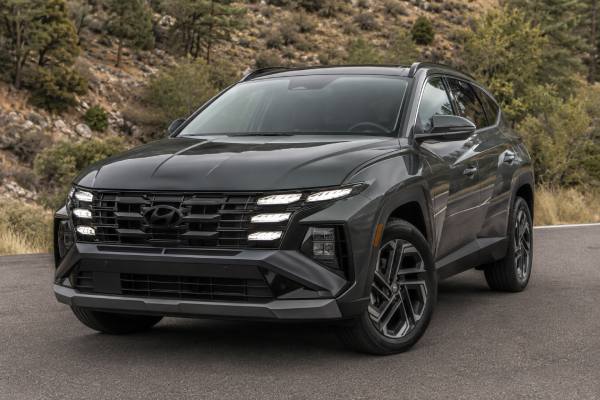
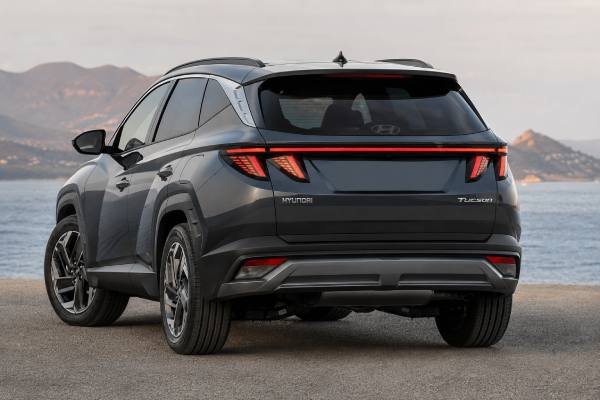
The facelifted Hyundai Tucson Hybrid HTRAC AWD is one of the more interesting compact hybrid SUVs because it does not feel like a slow economy special. In this NX4 facelift form, it combines a turbocharged 1.6-liter gasoline engine, an electric motor, a conventional 6-speed automatic transmission, and Hyundai’s HTRAC all-wheel-drive system. The result is a practical family SUV with strong everyday performance, useful cargo space, and better fuel economy than the regular gasoline Tucson.
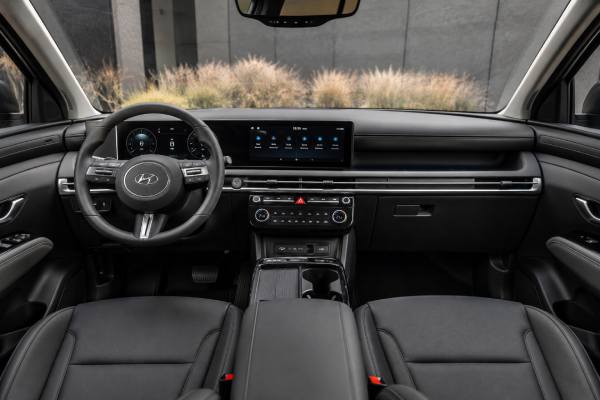
For 2025 onward, the Tucson also received a meaningful cabin and technology update. The revised interior, larger screens, improved controls, broader driver assistance equipment, and stronger hybrid output make this version feel more mature than the early NX4 models. Buyers should still treat it as a modern turbo-hybrid vehicle: service history, software updates, battery-system checks, and recall completion matter more than they would on a simpler older SUV.
Final Verdict
The 2025–present Hyundai Tucson Hybrid HTRAC AWD is a strong choice for drivers who want a roomy compact SUV with standard all-wheel drive, quick hybrid response, and no need to plug in. Its biggest appeal is the balance of 231 hp performance, useful family space, modern safety technology, and real-world efficiency in city and mixed driving. It suits commuters, small families, and all-weather drivers better than owners seeking maximum simplicity or the absolute best long-term hybrid reputation. The main tradeoff is maintenance sensitivity: buy one only with completed recalls, current software, clean oil-service records, and a proper hybrid-system inspection.
| Pros | Cons |
|---|---|
| 231 hp turbo-hybrid feels strong for a compact SUV | Higher trims trail the Blue trim in official fuel economy |
| HTRAC AWD is standard on the hybrid model | No EV-only commuting range; the PHEV is separate |
| Conventional 6-speed automatic feels more natural than many eCVTs | Turbo GDI engine rewards strict oil and cooling care |
| Excellent cargo space for family and road-trip use | No third row, and tyre costs rise on larger-wheel trims |
| Strong crash-test results and broad driver-assistance coverage | Software and recall checks are important buying steps |
Table of Contents
- Tucson Hybrid HTRAC overview
- Specifications and technical data
- Trims, safety and driver assistance
- Reliability, common issues and service actions
- Maintenance and buyer’s guide
- Driving, performance and efficiency
- How it compares with hybrid rivals
Tucson Hybrid HTRAC overview
The facelifted Tucson Hybrid HTRAC AWD is best understood as the quicker, more efficient, all-wheel-drive version of the Tucson range. It is not a plug-in hybrid, so there is no charging routine, but it uses electric assistance heavily at low speeds and during acceleration.
This version sits on Hyundai’s NX4 Tucson platform and uses the Smartstream 1.6 T-GDi engine paired with a hybrid motor and a compact lithium-ion battery. Total system output is 231 hp and 258 lb-ft, sent through a 6-speed automatic transmission rather than the eCVT layout used by many hybrid rivals. That gives the Tucson Hybrid a more conventional driving feel, with real gear changes and stronger step-off than the standard non-hybrid Tucson.
The facelift introduced for 2025 is more than a light visual update. The exterior received revised lighting, bumpers, grille details, and wheel designs, while the cabin moved closer to Hyundai’s newer-generation layout. The available panoramic curved display combines a digital instrument cluster and infotainment screen, and Hyundai also brought back more physical controls for climate and media functions. That matters in daily use because earlier touch-heavy interiors could feel less intuitive.
This article focuses on the 2025–present Tucson Hybrid HTRAC AWD with the 1.6-liter turbo hybrid system rated at 231 hp. Exact trim names, equipment, service intervals, emissions classifications, and warranty terms vary by market. North American specifications are used as the baseline where the 231 hp output, HTRAC AWD, 6-speed automatic, and 2025 facelift equipment are clearly defined.
The Tucson Hybrid’s main strengths are easy to see: it is roomy, comfortable, quick for the class, and more efficient than a similarly equipped gasoline AWD Tucson. It also avoids the charging dependence of a plug-in hybrid. The main ownership consideration is complexity. Compared with a simple naturally aspirated gasoline SUV, it adds a turbocharger, direct injection, high-voltage hybrid components, more software-managed systems, and an AWD driveline. None of that makes it a bad choice, but it does make service records and pre-purchase checks more important.
Specifications and technical data
The 2025–present Tucson Hybrid HTRAC AWD uses a turbocharged 1.6-liter four-cylinder engine, a front-mounted electric motor, a lithium-ion battery, a 6-speed automatic transmission, and standard HTRAC all-wheel drive. The layout is tuned for strong everyday torque and good mixed-use economy rather than maximum electric-only operation. The most useful technical details are grouped below for quick comparison.
| Item | Specification |
|---|---|
| Model and generation | Hyundai Tucson NX4 facelift, 2025–present |
| Engine | Smartstream 1.6 T-GDi, inline-4, DOHC, 16 valves |
| Displacement | 1.6 L / 1,598 cc |
| Induction and fuel system | Turbocharged, gasoline direct injection, CVVD |
| Gasoline engine output | 178 hp at 5,500 rpm |
| Gasoline engine torque | 195 lb-ft from 1,500–4,500 rpm |
| Total system output | 231 hp and 258 lb-ft |
| Electric motor | Permanent-magnet synchronous motor, 47.7 kW |
| Hybrid battery | Lithium-ion polymer, 1.49 kWh, 270 V maximum |
| Fuel | Regular unleaded gasoline |
| Item | Specification |
|---|---|
| Transmission | 6-speed automatic with torque converter and manual shift control |
| Drive system | HTRAC active on-demand all-wheel drive |
| Hybrid final drive | 3.320:1 |
| Drive modes | Normal, Sport, Snow, My Drive, plus hybrid-specific modes where equipped |
| Front suspension | MacPherson strut |
| Rear suspension | Multi-link independent |
| Steering | Motor-driven power steering, rack and pinion |
| Brakes | Ventilated front discs, solid rear discs, regenerative braking |
| Item | Specification |
|---|---|
| Body style | 5-door compact SUV, 5 seats |
| Length | 182.7 in / 4,641 mm |
| Width | 73.4 in / 1,864 mm |
| Height with roof rails | 66.3 in / 1,684 mm |
| Wheelbase | 108.5 in / 2,756 mm |
| Ground clearance | 8.3 in / 211 mm |
| Turning circle | 38.6 ft / 11.8 m |
| Cargo volume | 38.7 cu ft seats up; 74.5 cu ft seats folded |
| Fuel tank | 13.7 US gal / about 52 L |
| Towing capacity | 2,000 lb / 907 kg with trailer brakes |
| Common tyres | 235/65R17, 235/60R18, or 235/55R19 |
| Wheel-nut torque | 107–127 Nm / 79–94 lb-ft |
| Item | Specification |
|---|---|
| EPA economy, Blue Hybrid AWD | 38 mpg US combined / about 6.2 L/100 km |
| EPA economy, other Hybrid AWD trims | 35 mpg US combined / about 6.7 L/100 km |
| Engine oil capacity | 4.8 L / 5.07 US qt |
| Engine oil grade | SAE 0W-20, API SN PLUS/SP or ILSAC GF-6 |
| Brake fluid | DOT-4 LV, ISO 4925 Class 6 |
| Rear differential oil | API GL-5, SAE 75W/85 |
| Transfer case oil | Automatic-transmission type transfer oil, specification by VIN |
| Spark plug interval | 75,000 km / 50,000 mi |
Trims, safety and driver assistance
The Tucson Hybrid HTRAC AWD trim range is easy to understand: all versions use the same basic hybrid AWD powertrain, while comfort, screen, audio, wheel, and driver-assistance equipment increase by trim. The biggest practical choice is between maximum economy, value equipment, sporty styling, and luxury features.
In the U.S. market, the 2025 Tucson Hybrid range is commonly structured around Blue, SEL Convenience, N Line, and Limited trims.
- Blue Hybrid AWD: the efficiency-focused version. It is the one to choose if fuel economy, price, and smaller-wheel ride comfort matter most.
- SEL Convenience Hybrid AWD: often the best value trim. It adds desirable comfort and technology features without moving fully into luxury pricing.
- N Line Hybrid AWD: the sport-styled model. It brings unique exterior trim, interior details, larger wheels, and a more aggressive look, but not a separate high-performance drivetrain.
- Limited Hybrid AWD: the most feature-rich version, with the broadest driver-assistance and convenience equipment, premium interior appointments, and advanced camera-based features.
Mechanically, buyers should not expect major powertrain changes between these hybrid trims. The 231 hp system output, 6-speed automatic, HTRAC AWD layout, and basic towing rating remain the same. Differences that affect ownership are more likely to come from wheel size, tyre cost, ride firmness, lighting, seat materials, camera systems, audio, and driver-assistance content.
Quick identifiers include “Hybrid” and “HTRAC” exterior badging, hybrid-specific instrument displays, regenerative-braking controls, and the trim-specific wheel and bumper designs. The N Line is the easiest to identify from the outside because of its unique styling details and interior trim. Higher trims may also have a column-style gear selector, larger digital displays, surround-view camera functions, and more premium cabin materials.
The 2025 facelift brought important year-to-year changes. The cabin layout became more modern, the screens grew, physical controls became easier to use, and the driver-assistance suite added or improved several functions. Hybrid-specific features such as adjustable regenerative braking and calmer low-speed driving logic also help make the facelift feel more polished in traffic.
On safety ratings, the 2025 Tucson performed strongly overall. In IIHS testing, the 2025 Tucson earned Top Safety Pick+ status, with good crashworthiness ratings in key crash tests. The details still matter: some sub-ratings, including head-restraint and certain front-crash-prevention categories, were less perfect than the headline award suggests. In Europe, the Tucson HEV 4×4 was also associated with a five-star Euro NCAP result under the relevant assessment history, though buyers should always compare the exact market, model year, and safety package.
Standard and available safety systems can include forward collision-avoidance assist, pedestrian and cyclist detection, lane keeping assistance, lane following assistance, blind-spot collision warning, rear cross-traffic collision avoidance, driver attention warning, intelligent speed limit assistance, adaptive cruise control, highway driving assist, surround-view monitoring, blind-spot view monitoring, rear parking collision avoidance, and safe-exit features. Availability depends on trim and market.
For family use, the Tucson includes ISOFIX/LATCH child-seat provisions, a full set of airbags, electronic stability control, anti-lock braking, and rear-seat safety upgrades on later models. The practical advice is simple: do not buy only by trim name. Confirm the exact safety equipment on the car in front of you, especially if shopping across different markets or imported vehicles.
ADAS calibration is also an ownership issue. Windshield replacement, front bumper repair, radar work, wheel alignment, suspension repair, camera replacement, or crash repair can require calibration. A used Tucson with poor lane-centering behavior, false warnings, warning lights, or a history of front-end repair should be scanned and inspected by a shop that understands Hyundai camera and radar systems.
Reliability, common issues and service actions
Long-term data for the 2025–present facelift Tucson Hybrid is still developing, so the fairest view is cautious rather than alarmist. The main risks are software-dependent systems, recall completion, turbo-GDI maintenance sensitivity, and hybrid/AWD component cost if neglected.
| Area | Prevalence and severity | Typical symptoms | Recommended action |
|---|---|---|---|
| Instrument cluster software | Occasional, high safety relevance | Blank display, missing warnings, speed display fault | Verify VIN campaigns and install dealer or OTA software update |
| 12 V battery and electronics | Occasional, low to medium cost | No-start, warning lights, slow infotainment, random faults | Load-test battery, check charging logic, update modules |
| Turbo GDI engine care | Maintenance-sensitive, medium cost | Oil level drop, fuel smell, cold noise, rough idle | Use correct 0W-20 oil and shorten intervals under severe use |
| Direct-injection deposits | Occasional at higher mileage, medium cost | Misfires, uneven idle, hesitation, poor economy | Diagnose before cleaning; use quality fuel and correct spark plugs |
| Hybrid battery and power electronics | Rare, high cost if outside warranty | Hybrid warning, reduced power, charging faults | Scan all modules and request battery-health data before purchase |
| HTRAC transfer and rear differential | Occasional with hard use, medium cost | Leaks, binding, whining, vibration on turns | Inspect seals, tyres, fluids, and driveline operation |
| Regenerative brake corrosion | Common hybrid concern, low to medium cost | Rotor rust, grooves, brake pulsation, scraping noise | Inspect brakes regularly and use friction brakes periodically |
| Trailer wiring harness | Low unless fitted, high safety relevance | Trailer-light faults, stop-lamp issues, heat or electrical smell | Check accessory harness campaigns and wiring condition |
The 1.6 T-GDi engine is not a careless-maintenance engine. It uses a turbocharger and direct fuel injection, so clean oil, correct oil grade, good air filtration, and sensible heat management matter. Short trips, heavy traffic, freezing weather, dusty roads, towing, mountain driving, roof loads, and long idling are all harder on the oil and cooling system. In those conditions, the severe-service schedule is the safer choice.
The timing system is chain-driven rather than a routine timing-belt replacement item. That does not mean it should be ignored. During inspection, listen for cold-start rattle, check for timing-correlation fault codes, and investigate chain, guide, and tensioner wear if symptoms appear. A quiet, well-maintained chain system should not be replaced preventively at normal mileage, but a noisy or faulting system should not be dismissed.
Hybrid components are usually durable when the car is used normally, but they are expensive when diagnosis is poor or warranty coverage is unclear. The high-voltage battery, inverter, electric motor, DC–DC converter, contactors, cooling loops, and wiring should be treated as systems, not guessed-at parts. A proper diagnostic scan is more valuable than a quick visual inspection.
The AWD system also depends on tyre condition. Mismatched tyre brands, sizes, tread depths, or pressures can create unnecessary stress and strange driveline behavior. On a used Tucson Hybrid AWD, all four tyres should be the correct size and close in tread depth. Any whining, binding, clunking, rear-differential leak, or vibration during low-speed turns deserves attention before purchase.
Recalls and service actions are especially important on a modern Hyundai because some remedies are software-based. A cluster-display campaign, trailer-wiring action, infotainment update, hybrid-control update, or ADAS calibration update may not be obvious during a short test drive. Check the VIN through an official recall tool and ask the dealer for written completion records. Do not assume a recall for the regular gasoline 2.5-liter Tucson applies to the hybrid, or that a hybrid-related campaign applies to every VIN. The VIN is the final authority.
Before buying, request:
- complete oil-service records with dates, mileage, oil grade, and filter details;
- proof that recalls, field service actions, and software updates are complete;
- a full diagnostic scan of engine, transmission, hybrid, AWD, brake, and ADAS modules;
- 12 V battery test results, especially on cars older than three years;
- hybrid battery state-of-health information where available;
- evidence of correct tyre size, even tread depth, and no accident-related ADAS issues;
- inspection for leaks at the engine, transmission, transfer case, rear differential, coolant loops, and brake system.
Maintenance and buyer’s guide
The best maintenance approach is to treat the Tucson Hybrid as both a turbocharged gasoline vehicle and an electrified AWD vehicle. It is not difficult to maintain, but it should not be serviced like a low-stress older naturally aspirated SUV.
| Item | Practical interval or check | Notes |
|---|---|---|
| Engine oil and filter | Up to 10,000 km / 6,200 mi or 12 months in normal use | Use the correct 0W-20 full-synthetic specification |
| Severe-service oil changes | Shorter intervals for short trips, towing, cold, dust, or traffic | Many owners choose about 5,000 mi / 8,000 km in hard use |
| Oil level | Check regularly and before long trips | Turbo engines should not be run low on oil |
| Engine air filter | Inspect at service; replace sooner in dusty use | A dirty filter hurts performance and fuel economy |
| Cabin air filter | Usually annually, or sooner in dusty cities | Improves HVAC performance and interior air quality |
| Spark plugs | 75,000 km / 50,000 mi | Use the correct plug type for the turbo engine |
| Fuel system | Inspect if hard starting, surging, or power loss appears | Fuel filter service depends on market and fuel quality |
| Intercooler and intake hoses | Inspect early, then periodically | Look for oil seepage, cracks, loose clamps, and boost leaks |
| Coolant and hybrid cooling loops | Inspect level and condition at service | Use only the correct coolant; do not mix types |
| Brake fluid | Test regularly; replace about every 2–3 years as required | Use DOT-4 LV fluid where specified |
| Brake pads and rotors | Inspect at every service | Hybrids can rust rotors because regen reduces friction braking |
| Transfer case and rear differential | Inspect for leaks; service earlier in towing or mountain use | Use correct Hyundai fluid specifications |
| Tyres and alignment | Rotate regularly; align if wear is uneven | Matched tyres protect AWD operation |
| 12 V battery | Test from year three onward | A weak 12 V battery can create confusing electronic faults |
| Hybrid battery health | Check during major service or used inspection | Scan hybrid modules rather than relying only on warning lights |
Fluid choice is one area where guessing is risky. The 1.6 T-GDi hybrid engine uses 0W-20 full-synthetic oil meeting Hyundai’s required API or ILSAC specification. The brake system uses low-viscosity DOT-4 fluid. The rear differential and transfer case require the correct AWD fluids, and the hybrid cooling loops must use the proper coolant for the VIN and market. A shop that uses “close enough” fluids can create expensive problems.
For buyers, the Blue Hybrid is the practical economy pick. It has the best official fuel economy and usually carries smaller wheels, which can help ride comfort and tyre cost. The SEL Convenience often makes the most sense for families because it adds desirable equipment without going fully premium. The N Line is mainly for buyers who value appearance and cabin style; it is not a separate performance model. The Limited is the right choice if you want the fullest safety, camera, comfort, and luxury package.
Avoid cars with missing oil records, unresolved recalls, accident repairs near the front camera or radar areas, mismatched tyres, unexplained warning lights, poor brake condition, coolant leaks, or evidence of heavy towing without careful maintenance. A low-mileage car can still be a poor buy if it has lived on short trips, sat unused for long periods, or had repeated electronic faults without proper diagnosis.
Common reconditioning items on a used Tucson Hybrid may include tyres, brake rotors, 12 V battery, cabin filter, software updates, wheel alignment, wiper blades, and minor suspension wear. On higher-mileage examples, budget for spark plugs, driveline-fluid inspection, coolant service according to the official schedule, and a more detailed hybrid-system scan.
The long-term durability outlook is positive if the vehicle is maintained properly, but it is not the same ownership bet as a simpler naturally aspirated SUV. The Tucson Hybrid has more performance and more technology, and that usually means more attention to service detail. A well-documented example is worth paying more for than a cheaper one with vague records.
Driving, performance and efficiency
The Tucson Hybrid HTRAC AWD drives with more confidence than the standard gasoline Tucson and feels quicker than many compact hybrid SUVs. It is not a performance SUV, but its 231 hp output gives it strong real-world acceleration for commuting, merging, and passing.
The powertrain’s best trait is low-speed response. The electric motor helps fill in torque before the turbo engine is fully awake, so the Tucson moves away from junctions smoothly and confidently. When more power is needed, the 1.6-liter turbo engine joins in and the 6-speed automatic shifts like a normal automatic. Drivers who dislike the droning feel of some eCVT hybrids may prefer this setup.
The transmission is generally smooth, though it can still hunt or downshift noticeably when climbing grades, merging hard, or switching quickly between electric assistance and gasoline power. Sport mode sharpens response and can send more torque rearward through the AWD system. Snow mode softens the car’s reactions for slippery surfaces. Hybrid-specific low-speed modes are designed to make the car calmer in traffic and smoother with passengers.
Ride comfort depends heavily on wheel size. Blue and mid-grade trims with smaller wheels are usually the most comfortable over broken pavement. N Line and Limited versions with larger wheels look sharper and steer more crisply, but they can transmit more impact harshness and increase tyre replacement cost. The basic suspension tuning is composed rather than sporty, with good straight-line stability and predictable cornering.
Steering feel is light to medium in normal driving. It is easy to place the Tucson in town and relaxed on the highway, but it does not provide the feedback of a sport-focused crossover. Braking feel is typical of a well-tuned hybrid: mostly natural, but with some blending between regenerative and friction braking. Owners should occasionally use the friction brakes firmly and safely to help keep the rotors clean, especially in wet or salty climates.
Official fuel economy depends on trim. The Blue Hybrid AWD is rated at 38 mpg US combined, about 6.2 L/100 km. Other Hybrid AWD trims are rated at 35 mpg US combined, about 6.7 L/100 km. In everyday use, the Tucson Hybrid is strongest in city and suburban driving where the hybrid system can recover energy and assist at low speeds. At sustained 70–75 mph highway speeds, in freezing weather, with winter tyres, or with roof loads, economy can drop into the low-to-mid 30 mpg US range.
Compared with the plug-in hybrid Tucson, this regular hybrid does not offer meaningful EV-only commuting. That is not a flaw if you cannot charge at home. It simply means the car is best for drivers who want hybrid efficiency without charging equipment, charging habits, or battery-range planning.
Towing is possible but should be kept within the rated limit. With trailer brakes, the Tucson Hybrid is rated up to 2,000 lb / 907 kg in the U.S. market. For small utility trailers, lightweight campers, or occasional loads, it can work well if the vehicle is maintained, the tyres are correct, and the trailer wiring is in good condition. Expect slower acceleration, higher fuel use, more brake heat, and more transmission and cooling load on long grades.
Independent performance testing has placed the Tucson Hybrid roughly in the high-6-to-high-7-second range for 0–60 mph, depending on trim, tyres, test method, and conditions. That makes it one of the brisker mainstream compact hybrids. More important than the number is how relaxed it feels in daily traffic: the hybrid torque means the car does not need to be revved hard to keep up.
How it compares with hybrid rivals
The Tucson Hybrid’s strongest rival advantage is its blend of power, cabin technology, space, and standard AWD. Its biggest weakness is that Toyota and Honda still carry stronger reputations for long-term hybrid simplicity and resale confidence.
| Rival | Why buyers consider it | How the Tucson compares |
|---|---|---|
| Toyota RAV4 Hybrid AWD | Excellent reputation, strong resale value, very good economy | Tucson feels more modern and stronger, but Toyota has the proven edge |
| Honda CR-V Hybrid AWD | Smooth drive, roomy cabin, mature hybrid system | Tucson is punchier and more tech-rich; Honda feels calmer and simpler |
| Kia Sportage Hybrid AWD | Mechanical sibling with similar power and value | Tucson choice depends on styling, cabin layout, dealer, and trim pricing |
| Ford Escape Hybrid AWD | Good efficiency and often competitive used pricing | Tucson feels more substantial, roomier, and stronger under acceleration |
| Toyota Corolla Cross Hybrid AWD | Lower price, compact size, strong efficiency | Tucson is much roomier, more refined, and better suited to family use |
Against the RAV4 Hybrid, the Tucson feels newer inside and stronger under acceleration. The Toyota counters with a long record of hybrid durability and strong resale value. Buyers planning to keep a vehicle for 12–15 years with minimum risk may still lean Toyota. Buyers who want more power, a quieter modern cabin, and a more conventional automatic feel may prefer the Hyundai.
Against the CR-V Hybrid, the choice is partly personality. The Honda is smooth, spacious, and easy to recommend. The Tucson is more energetic and often offers a stronger feature set for the money, depending on trim and incentives. The Honda’s hybrid system feels more relaxed; the Hyundai’s turbo-hybrid setup feels more assertive.
The Kia Sportage Hybrid is the closest comparison because it shares much of the same engineering approach. Choose between them based on seating comfort, control layout, visibility, dealer support, warranty handling, styling, and price. Both should be inspected with the same attention to oil history, software updates, hybrid diagnostics, and tyre condition.
The Tucson Hybrid is a particularly good fit for buyers who want one SUV to do commuting, family duty, winter driving, and long trips without moving into a plug-in hybrid or larger three-row vehicle. It is less ideal for buyers who want the simplest possible drivetrain, the cheapest long-term tyre and brake costs, or the strongest resale reputation above all else.
References
- Hyundai Reveals Smarter, More Capable 2025 TUCSON SUV at New York International Auto Show 2024 (Manufacturer Press Release) :contentReference[oaicite:0]{index=0}
- 2025 Tucson Product Guide 2025 (Manufacturer Specifications) :contentReference[oaicite:1]{index=1}
- Recommended lubricants and capacities | 2025 Hyundai Tucson 2025 (Owner’s Manual) :contentReference[oaicite:2]{index=2}
- Gas Mileage of 2025 Hyundai Tucson 2025 (Fuel Economy) :contentReference[oaicite:3]{index=3}
- 2025 Hyundai Tucson 2025 (Safety Rating) :contentReference[oaicite:4]{index=4}
Disclaimer
This article is for informational purposes only and is not a substitute for professional diagnosis, repair, inspection, or official service information. Specifications, torque values, fluid requirements, maintenance intervals, software campaigns, and procedures can vary by VIN, market, trim, model year, production date, and equipment. Always verify important details against the official Hyundai service documentation for the exact vehicle.
If this guide helped you, please consider sharing it on Facebook, X/Twitter, or an owner community to support our work.