

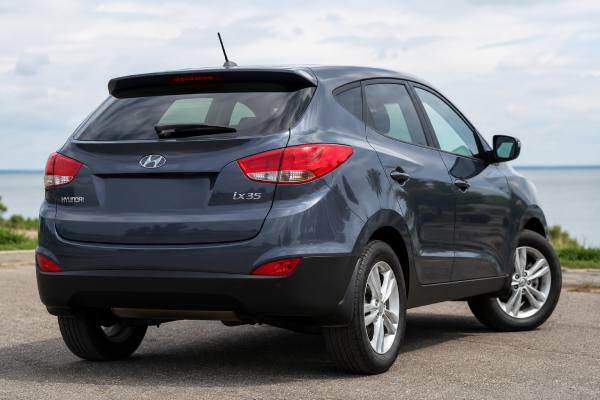
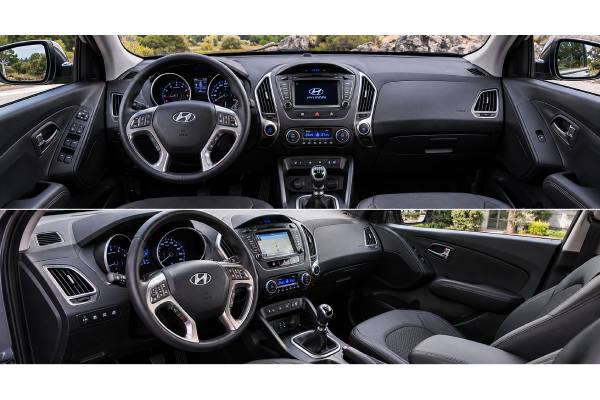
The facelift Hyundai ix35 4WD with the R-series 2.0 CRDi diesel is a practical used compact SUV for drivers who want torque, towing ability, winter traction, and strong equipment without moving into a larger or more expensive vehicle. In 136 hp form, it is not the fastest ix35 diesel, but it has enough low-rpm pull for family use, motorway driving, and light-to-moderate towing.
This guide focuses on the 2013–2015 facelift LM-generation ix35 with the 2.0-litre CRDi diesel, 4WD, and the 100 kW / 136 PS output. It covers the key specifications, dimensions, safety equipment, reliability concerns, maintenance priorities, and used-buying checks that matter most today.
Final Verdict
The Hyundai ix35 4WD 2.0 CRDi 136 hp is a sensible used SUV for buyers who value diesel torque, generous equipment, a roomy boot, and better poor-weather traction than the 2WD versions. It suits family use, rural driving, commuting, and towing better than short urban trips, where the diesel particulate filter can suffer. Its main tradeoff is that the 4WD hardware, diesel emissions system, clutch or automatic transmission, and suspension can become costly if maintenance has been skipped. Buy one only with proof of regular oil services, clean diesel-system behaviour, matched tyres, and completed ABS/ESC recall work.
| Pros | Cons |
|---|---|
| Strong 320 Nm diesel torque suits hills, loads, and towing | Short-trip use can clog the DPF and EGR system |
| Torque-on-demand 4WD gives useful wet-road and winter traction | AWD coupling, propshaft, and rear diff add inspection points |
| Large 591-litre boot is generous for this class | Ride can feel firm on Premium 18-inch wheels |
| Manual 4WD versions have a strong 2,000 kg braked tow rating | Clutch and dual-mass flywheel wear can be expensive |
| SE Nav and Premium trims are well equipped for used prices | No modern AEB, adaptive cruise, or lane-keeping assistance |
Table of Contents
- Hyundai ix35 2.0 CRDi 4WD Overview
- 2.0 CRDi Specifications and Technical Data
- Trims, Safety, and Driver Assistance
- Reliability, Common Issues, and Service Actions
- Maintenance Schedule and Buyer’s Guide
- Driving, Performance, and Real-World Efficiency
- How the ix35 Compares With Rivals
Hyundai ix35 2.0 CRDi 4WD Overview
The facelift ix35 2.0 CRDi 4WD is best understood as a torque-rich family crossover rather than a soft off-roader or performance SUV. Its appeal is practical: a roomy body, useful diesel economy, available automatic transmission, and a 4WD system that adds confidence on slippery roads.
The LM-generation ix35 replaced the earlier Tucson name in many European markets, then the Tucson name returned with the next generation. The 2013 facelift brought updated styling, revised lighting, improved equipment, and a more polished cabin presentation, while the basic platform and engineering remained familiar.
The 2.0 CRDi engine is part of Hyundai’s R-series diesel family. In this version it produces 100 kW and 320 Nm, which gives the ix35 a relaxed character at normal road speeds. It does not need high revs to make progress, and that is why many buyers prefer it over the smaller 1.7 CRDi when the car will carry passengers, luggage, tow, or run in hilly areas.
The 4WD system is a torque-on-demand setup. In ordinary driving it behaves mostly like a front-drive vehicle to save fuel, then sends torque rearward when the front tyres start to lose grip or when the system predicts a need for extra traction. Some versions include a 4WD lock function for low-speed snow, mud, steep gravel, or slippery tracks, but this is still a road-biased crossover system, not a low-range off-road transfer case.
For used buyers, the most desirable examples are usually SE, SE Nav, Premium, or Premium Panorama cars with clear service history. The best choice depends on priorities. SE and SE Nav on 17-inch wheels usually ride better and cost less to tyre. Premium brings more comfort and style features, but its 18-inch tyres slightly reduce economy and add firmness.
The big ownership question is not whether the ix35 2.0 CRDi can last. It can. The question is whether the previous owner used it in a diesel-friendly way and maintained the engine, 4WD system, brakes, and fluids properly. A high-mileage motorway car with regular servicing can be a better buy than a low-mileage city car that has spent years doing short cold trips.
2.0 CRDi Specifications and Technical Data
This ix35 uses a 1,995 cc four-cylinder turbo-diesel engine, a six-speed gearbox, and on-demand 4WD. The manual version is the most efficient and has the higher braked towing figure, while the automatic is easier in traffic but heavier and less economical.
| Item | Hyundai ix35 2.0 CRDi 4WD 136 hp |
|---|---|
| Engine family | Hyundai R-series 2.0 CRDi |
| Common engine code | D4HA |
| Fuel type | Diesel |
| Layout | Inline-4, DOHC, 16 valves |
| Displacement | 1,995 cc / 2.0 litres |
| Bore × stroke | 84 × 90 mm |
| Compression ratio | 16.5:1 |
| Induction | Turbocharged common-rail diesel |
| Maximum power | 100 kW / 136 PS / 134 bhp at 4,000 rpm |
| Maximum torque | 320 Nm / 236 lb-ft at 1,800–2,500 rpm |
| Emissions standard | Euro 5 |
| Item | Manual 4WD | Automatic 4WD |
|---|---|---|
| Transmission | 6-speed manual | 6-speed automatic |
| Drive system | Torque-on-demand 4WD | Torque-on-demand 4WD |
| 0–62 mph / 0–100 km/h | 11.3 seconds | 12.1 seconds |
| Top speed | 112 mph / 180 km/h | 113 mph / 182 km/h |
| Braked towing capacity | 2,000 kg / 4,409 lb | 1,600 kg / 3,527 lb |
| Unbraked towing capacity | 750 kg / 1,653 lb | 750 kg / 1,653 lb |
| Noseweight | 80 kg / 176 lb | 80 kg / 176 lb |
| Item | Value |
|---|---|
| Body style | 5-door compact SUV, 5 seats |
| Length | 4,410 mm / 173.6 in |
| Width | 1,820 mm / 71.7 in, excluding mirrors |
| Height | 1,665 mm / 65.6 in on most 4WD trims |
| Wheelbase | 2,640 mm / 103.9 in |
| Ground clearance | 170 mm / 6.7 in |
| Approach / departure angle | 24.2° / 26.9° |
| Luggage capacity | 591–1,436 litres / 20.9–50.7 cu ft |
| Kerb weight | 1,679 kg manual; 1,712 kg automatic |
| Gross vehicle weight | 2,140 kg / 4,718 lb |
| Fuel tank | 58 litres / 15.3 US gal |
| Maximum roof load | 100 kg / 220 lb |
| Version | Urban | Extra-urban | Combined | CO₂ |
|---|---|---|---|---|
| Manual 4WD on 17-inch wheels | 6.3 L/100 km / 44.8 mpg UK | 4.8 L/100 km / 58.9 mpg UK | 5.3 L/100 km / 53.3 mpg UK | 145 g/km |
| Manual 4WD on 18-inch wheels | 6.6 L/100 km / 42.8 mpg UK | 5.0 L/100 km / 56.5 mpg UK | 5.6 L/100 km / 50.4 mpg UK | 147 g/km |
| Automatic 4WD on 17-inch wheels | 6.9 L/100 km / 40.9 mpg UK | 4.7 L/100 km / 60.1 mpg UK | 5.5 L/100 km / 51.4 mpg UK | 179 g/km |
| Automatic 4WD on 18-inch wheels | 8.7 L/100 km / 32.5 mpg UK | 5.9 L/100 km / 47.9 mpg UK | 7.0 L/100 km / 40.4 mpg UK | 183 g/km |
| Item | Useful value |
|---|---|
| Front suspension | MacPherson strut with coil spring |
| Rear suspension | Multi-link with anti-roll stabiliser bar |
| Steering | Electric power-assisted rack and pinion |
| Front brakes | Ventilated discs, floating calipers |
| Rear brakes | Solid discs, floating calipers |
| Common tyre sizes | 225/60 R17 or 225/55 R18 |
| Normal tyre pressure | 2.3 bar / 33 psi cold |
| Wheel-nut torque | 88–107 Nm / 65–79 lb-ft |
| Coolant capacity, diesel | About 8.5 litres |
| Brake / clutch fluid | FMVSS116 DOT-3 or DOT-4 |
| Automatic transmission fluid | Hyundai genuine ATF SP-IV, about 7.8 litres |
Trims, Safety, and Driver Assistance
The 2.0 CRDi 4WD facelift ix35 was usually sold in the better-equipped part of the range. In the UK-style trim structure, look mainly for SE, SE Nav, Premium, and Premium Panorama rather than the basic S trim.
SE is often the sweet spot for value. It normally brings the 2.0 CRDi 4WD drivetrain, 17-inch alloy wheels, roof rails, dual-zone climate control, heated seats, cruise control, Bluetooth, rear parking sensors, front fog lights, traction and stability systems, and the core safety kit.
SE Nav adds the equipment most used buyers notice straight away: touchscreen navigation, reversing camera, upgraded audio on some versions, and a more modern dashboard feel. It is usually worth having if the price difference is small, although old navigation maps are less important now than condition and service history.
Premium adds more visual and comfort equipment, including 18-inch wheels, leather-trimmed seats, keyless entry and start, privacy glass, xenon headlights with washers, and extra exterior detailing. Premium Panorama adds the panoramic sunroof. The sunroof gives the cabin a brighter feel, but it also adds weight and a possible leak or rattle point, so inspect the drains, seals, blind, and motor operation.
Quick trim and drivetrain identifiers
A genuine 2.0 CRDi 4WD should have more than just a badge. Check for the 4WD switch or lock function in the cabin, rear differential and driveshaft hardware underneath, and the correct rear suspension layout. On UK-type cars, 2.0 CRDi 4WD was available with both manual and automatic gearboxes, while the smaller 1.7 CRDi was normally front-wheel drive.
Wheel size is a quick clue to trim. SE and SE Nav commonly use 225/60 R17 tyres, while Premium and Premium Panorama use 225/55 R18 tyres. The 17-inch setup is usually the better everyday choice because tyres are cheaper, the sidewalls are taller, and the ride is less sharp over broken roads.
Safety ratings and structure
The ix35 generation performed well for its time. The original European crash-test result was a five-star Euro NCAP rating in 2010, with strong adult and child occupant scores for the class. The 2013 facelift did not turn the ix35 into a modern ADAS-heavy SUV, but it kept the same basic strengths: a stable passenger compartment, multiple airbags, standard stability control, and good family-seat practicality.
Official safety equipment on facelift cars commonly includes:
- Front airbags, front side airbags, and full-length curtain airbags.
- Active front head restraints.
- Front seatbelt reminders.
- Front seatbelt pretensioners and anchor pretensioners.
- ABS with Electronic Brake-force Distribution.
- Brake Assist, traction control, ESP, and Vehicle Stability Management.
- Hill-start Assist Control and Downhill Brake Control.
- Trailer Stability Assist on suitable tow-equipped cars.
- Rear ISOFIX points on the outer rear seats.
- Tyre Pressure Monitoring System.
The major limitation is active driver assistance. Do not expect autonomous emergency braking, adaptive cruise control, lane keeping, blind-spot monitoring, or traffic-sign recognition. Parking sensors and a reversing camera are useful, but they are convenience aids, not crash-avoidance systems.
Calibration needs are simpler than on newer SUVs. There is no front radar or windscreen camera system to recalibrate after normal glass replacement, but a steering-angle sensor reset may be needed after steering or alignment work, and TPMS sensors must be handled correctly during tyre changes.
Reliability, Common Issues, and Service Actions
A well-maintained ix35 2.0 CRDi can be durable, but neglected diesel and 4WD examples can become expensive quickly. The most important risks are DPF/EGR trouble from short trips, clutch and flywheel wear on manuals, automatic-fluid neglect, 4WD driveline wear, suspension age, corrosion, and outstanding ABS/ESC recall work.
| System | Prevalence | Cost risk | What to look for |
|---|---|---|---|
| DPF and EGR system | Common on short-trip diesels | Medium to high | Warning lights, limp mode, smoke, frequent regeneration |
| Clutch and dual-mass flywheel | Occasional, mileage-dependent | High | Rattle, vibration, slipping, high biting point |
| Automatic transmission fluid neglect | Occasional | Medium to high | Harsh shifts, delayed engagement, flare between gears |
| 4WD coupling and rear driveline | Occasional | Medium to high | Binding, knocks, rear whine, mismatched tyres |
| Suspension links and bushes | Common with age | Low to medium | Clonks, uneven tyre wear, vague steering |
| ABS/ESC module recall area | VIN-dependent | High if ignored | Recall status, ABS light, burning smell, dealer proof |
Engine and diesel emissions system
The R 2.0 CRDi is generally stronger than many small, highly stressed diesels of the same era, but it needs clean oil, clean fuel, and regular longer runs. The DPF is the first concern on cars used mainly for school runs, town errands, or low-speed commuting. Symptoms include a DPF warning, engine light, limp mode, rising oil level, poor fuel economy, or the cooling fan running after short drives.
The cure is not simply “clean the DPF.” A good technician should check why it overloaded. Common causes include failed regenerations, a tired thermostat, EGR faults, pressure-sensor faults, split boost hoses, injector issues, or repeated interrupted journeys. A forced regeneration without diagnosis can hide the problem temporarily and damage the DPF if soot load is too high.
EGR valves and intake plumbing can collect soot and oil vapour over time. Expect hesitation, rough low-speed running, smoke under throttle, or poor boost response if the system is dirty or sticking. Cleaning may help in mild cases; badly worn or failed valves need replacement.
Turbocharger problems are less common than DPF/EGR issues, but check carefully. A split intercooler hose, sticking actuator, vacuum fault, or boost sensor issue can mimic turbo failure. Warning signs include underboost codes, whistling, limp mode, and oil mist around boost pipes.
Timing chain, fuel system, and cooling
This engine uses a timing chain, not a routine replacement timing belt. That does not mean it should be ignored forever. Chain rattle on cold start, cam/crank correlation faults, rough running, or metal debris in oil are warning signs. High-mileage cars with long oil-change gaps deserve extra caution because chain guides and tensioners depend heavily on oil condition.
The diesel fuel filter is important. Hard starting, hesitation, injector correction faults, or fuel-pressure faults can follow water contamination or overdue filter replacement. Injector and high-pressure pump faults are not everyday failures, but they are expensive enough that a noisy, smoky, hard-starting car should be treated as a serious risk.
Cooling-system checks are simple but important. Look for stable temperature, clean coolant, no heater weakness, no pressure loss, and no dried coolant traces around hoses, radiator, thermostat housing, and water pump area.
Transmission and 4WD system
The six-speed manual is pleasant enough when healthy, but clutch and dual-mass flywheel wear are the big costs. During a test drive, accelerate hard in a high gear from low rpm and watch for slip. Listen for rattling at idle that changes when the clutch is pressed, and feel for judder when pulling away.
The six-speed automatic is usually smooth if serviced and not overheated. Hyundai did not always market automatic fluid as a frequent service item, but on an older used SUV, fresh correct-spec fluid is cheap insurance. Walk away from harsh engagement, delayed reverse, flare on upshifts, or dark burnt-smelling fluid unless the price fully reflects repair risk.
The 4WD system dislikes mismatched tyres. All four tyres should be the same size, similar brand and model, and close in tread depth. Mixed tyres can make the coupling work unnecessarily and may cause binding, vibration, or driveline wear. Check for leaks and noises from the transfer case, propshaft centre bearing, rear differential, and rear driveshafts.
Chassis, brakes, corrosion, and electronics
Common age-related wear includes front drop links, lower-arm bushes, rear suspension bushes, wheel bearings, brake discs, calipers, and parking-brake hardware. A knocking front end or uneven rear tyre wear is not unusual on older examples, but it should be priced in.
Inspect the underside carefully if the car has lived in a wet or salted climate. Pay attention to the rear subframe, suspension arms, brake pipes, fuel lines, sills, jacking points, wheel arches, tailgate seams, and the area around undertrays where mud can stay trapped.
Electrical problems are usually smaller annoyances rather than car-killers. Check parking sensors, reversing camera, navigation screen, Bluetooth, keyless entry, window switches, heated seats, mirror folding, air-conditioning performance, and all warning lights. Air-conditioning condensers and sensors can fail with age.
Recalls and service actions
The most important recall area for 2013–2015 ix35 buyers is the ABS/ESC hydraulic electronic control unit. In the UK, recall R/2022/128 involved an ABS control unit electrical-short risk and a remedy involving the under-bonnet fuse box multi-fuse. Other markets issued similar ABS/ESC-related campaigns, so a VIN check matters more than guessing by year.
Before buying, ask for:
- Official recall completion proof from a Hyundai dealer.
- A printout of outstanding campaigns by VIN.
- Service invoices, not just stamped boxes.
- Evidence of correct oil grade and regular oil-filter changes.
- Fuel-filter, brake-fluid, coolant, gearbox, and 4WD fluid history.
- MOT or inspection history showing corrosion and brake advisories.
A car with open recalls, missing service history, mixed tyres, warning lights, or recent DPF deletion language should be treated as a high-risk purchase.
Maintenance Schedule and Buyer’s Guide
The safest maintenance plan for a used ix35 2.0 CRDi is more conservative than the longest official interval. Use annual oil service as the baseline, shorten it for city use, and service the transmission and 4WD fluids even if the previous owner believed they were “sealed for life.”
| Interval | Recommended work |
|---|---|
| Every 10,000–15,000 km / 6,000–9,000 miles or yearly | Engine oil and filter; inspect brakes, tyres, suspension, leaks, belts, hoses |
| Every 15,000–30,000 km / 9,000–18,000 miles | Engine air filter and cabin filter, sooner in dusty or urban use |
| Every 30,000 km / 18,000 miles | Fuel filter on diesel; inspect intake, boost hoses, DPF data, EGR behaviour |
| Every 2 years | Brake fluid; check clutch fluid circuit on manual cars |
| Every 60,000–80,000 km / 37,000–50,000 miles | Automatic transmission fluid, manual gearbox oil, transfer case and rear diff oil |
| Every 90,000 km / 56,000 miles or 5 years | Coolant replacement if due by market schedule or test condition |
| Every tyre change or yearly | Rotate tyres, check alignment, inspect TPMS valves and tyre matching |
| From about 120,000 km / 75,000 miles | Inspect auxiliary belt, pulleys, glow plugs, suspension bushes, wheel bearings |
| From about 180,000–220,000 km / 112,000–137,000 miles | Listen for timing-chain noise; check for timing correlation faults if symptoms appear |
For engine oil, use a low-SAPS diesel-compatible oil suitable for DPF-equipped Euro 5 CRDi engines, commonly ACEA C3 in the correct viscosity for climate and VIN. Many service references list 5W-30 or 5W-40, with a service fill around 7.6–8.0 litres. Do not guess; the final choice should match the vehicle’s service documentation and market specification.
Brake fluid should meet DOT-3 or DOT-4. Coolant should be suitable for an aluminium radiator and mixed correctly with distilled water. The automatic transmission needs the correct Hyundai SP-IV type fluid, not a generic ATF. Manual gearbox, transfer case, and rear differential oils should be chosen by specification rather than by brand alone.
Pre-purchase inspection checklist
Start the car cold. Listen for timing-chain rattle, uneven idle, belt noise, exhaust leaks, and turbo whistle. A cold start reveals more than a warm seller-prepared engine.
On the test drive, check:
- Smooth pull from 1,500–3,000 rpm without limp mode.
- No clutch slip, judder, or flywheel rattle on manual cars.
- Smooth automatic shifts when cold and hot.
- No binding or knocking on full-lock turns.
- Straight braking without vibration or pedal pulsation.
- Stable temperature and no coolant smell.
- No smoke under normal acceleration once warm.
- No ABS, ESC, DPF, engine, airbag, or TPMS warning lights.
Underneath, inspect the rear differential, transfer case, propshaft, exhaust, fuel lines, brake pipes, rear subframe, front subframe, sills, jacking points, suspension arms, and dampers. Rusty brake pipes, tired bushes, seized calipers, and old tyres can quickly turn a cheap ix35 into an expensive one.
Which versions to seek or avoid
For most buyers, a manual SE Nav on 17-inch wheels is the most balanced choice. It has the useful drivetrain, good equipment, reversing camera, reasonable tyre costs, and the best tow rating. SE is also attractive if condition is excellent and navigation is not important.
Premium is worth considering if you want xenon lights, leather, keyless entry, and the higher-spec look. Check the 18-inch tyres, suspension firmness, wheel damage, and brake condition. Premium Panorama should be bought on condition, not emotion; a panoramic roof is nice, but repairs can be costly if it leaks or binds.
Avoid cars with missing history, DPF warning history, deleted emissions equipment, cheap mismatched tyres, unresolved recalls, harsh automatic shifts, clutch slip, or underside corrosion. A slightly more expensive car with clean records is usually cheaper than a bargain that needs a DPF, clutch, brakes, and tyres.
Long-term durability is good when the ix35 is maintained like a diesel SUV rather than a disposable crossover. The engine can cover high mileage, but the surrounding systems decide ownership cost.
Driving, Performance, and Real-World Efficiency
The ix35 2.0 CRDi 4WD feels strongest in the middle of the rev range, not from sporty acceleration. It is relaxed, torquey, and easy to drive, but its weight and SUV body mean it is more comfortable cruiser than sharp-handling crossover.
Around town, the diesel pulls cleanly once moving, though there can be mild turbo lag below the main torque band. The manual gearbox needs a deliberate shift rather than a quick sporty action. The clutch should not feel excessively heavy or grabby; if it does, budget for clutch and flywheel investigation.
The automatic suits relaxed drivers and traffic better. It is not as responsive as a modern dual-clutch or eight-speed automatic, but a healthy unit shifts smoothly and predictably. Kickdown is adequate for overtaking, but the 136 hp engine needs planning when the car is full.
The ride depends heavily on wheels and tyres. Seventeen-inch wheels give the best balance, with more sidewall to absorb potholes and rough roads. Eighteen-inch Premium wheels sharpen the look but make the ride busier. The ix35 is stable on motorways and feels secure in bad weather, but it can lean if pushed hard through bends.
Steering is light and easy rather than communicative. That suits parking and family driving, but drivers coming from a Ford Kuga or Volkswagen Tiguan may find it less precise. Braking feel is generally consistent if the discs, pads, sliders, and fluid are fresh. Pulsation, scraping, or a weak parking brake usually points to ordinary wear rather than a deep design fault.
Real-world fuel economy
Official NEDC figures look optimistic by modern real-world standards. A healthy manual 4WD usually returns about 6.5–7.5 L/100 km in mixed use, equal to roughly 31–36 mpg US or 38–43 mpg UK. Gentle highway driving can fall closer to 5.8–6.8 L/100 km, while heavy city use, cold starts, winter tyres, roof boxes, or short trips can push consumption beyond 8.0 L/100 km.
The automatic often uses more fuel in town and when loaded. Expect roughly 7.5–9.0 L/100 km in mixed use if driven normally, with better results on steady open roads. If an ix35 diesel is consistently very thirsty, check tyre pressures, brake drag, thermostat temperature, DPF regeneration frequency, EGR faults, boost leaks, and injector data.
Traction, towing, and load behaviour
The 4WD system is useful in rain, snow, wet fields, gravel driveways, and steep rural lanes. It cannot replace proper winter tyres, and it is not designed for deep mud, rock crawling, or repeated heavy off-road abuse. Tyres make the biggest difference: a 4WD ix35 on poor tyres can feel worse than a 2WD car on quality all-season or winter tyres.
For towing, the manual 4WD is the better choice because of its 2,000 kg braked rating. It has enough torque for a caravan, small horse trailer, boat, or work trailer, but tow buyers should check clutch condition, cooling-system health, rear suspension, trailer electrics, brake condition, and evidence of regular driveline fluid changes. The automatic’s lower 1,600 kg braked rating should be respected.
Loaded with passengers and luggage, the ix35 remains stable, but acceleration becomes more modest. Plan overtakes, use the torque band, and keep the engine serviced. Fuel use rises noticeably when towing; a 20–35% increase is normal depending on trailer weight, speed, wind, and terrain.
How the ix35 Compares With Rivals
The ix35 2.0 CRDi 4WD is strongest on value, equipment, towing usefulness, and straightforward family practicality. It is not the sharpest, most premium, or most advanced SUV of its era, but it can be a very sensible buy when condition is good.
Against the Kia Sportage 2.0 CRDi AWD, the ix35 is closely related mechanically. The Kia has different styling, trim mixes, and cabin presentation, but the same basic strengths and weaknesses apply. Choose between them by condition, service history, tyres, recalls, and price rather than badge loyalty.
Against the Volkswagen Tiguan 2.0 TDI 4Motion, the Hyundai usually offers more equipment for the money and lower used prices. The Tiguan feels more polished to drive and has a more premium cabin, but it can cost more to buy and may bring its own diesel, DSG, and 4Motion maintenance concerns.
Against the Ford Kuga 2.0 TDCi AWD, the ix35 feels less sporty. The Kuga has sharper steering and a more engaging chassis, while the Hyundai is easier-going and often better equipped at a similar price. For family buyers, the ix35’s simpler appeal and boot space may matter more than handling.
Against the Toyota RAV4 diesel AWD and Honda CR-V diesel AWD, the Hyundai is usually cheaper and still practical. The Toyota and Honda feel roomier and often have stronger reputations for long-term durability, but good examples can command higher prices. The ix35 is the value play if inspection results are clean.
Against the Nissan Qashqai, the ix35 feels more substantial and is better suited to towing in 2.0 CRDi 4WD form. The Qashqai is easier to park and often more economical in smaller diesel versions, but it cannot match the Hyundai’s stronger engine and load-friendly character in this specification.
The best rival choice depends on use. For towing and winter-road value, the ix35 2.0 CRDi 4WD still makes sense. For city-only use, choose a petrol or hybrid rival instead. For the most refined cabin and handling, look at the Tiguan or Kuga. For maximum long-term simplicity, compare carefully with a well-kept RAV4 or CR-V.
References
- 2015-Hyundai-ix35-UK.pdf 2015 (Brochure)
- HYUNDAI IX35 OWNER’S MANUAL Pdf Download | ManualsLib 2013 (Owner’s Manual) ([ManualsLib][1])
- Hyundai ix35 | Safety Rating & Report | ANCAP 2010 (Safety Rating) ([ANCAP][2])
- HYUNDAI iX35 2013 – Check if a vehicle, part or accessory has been recalled – GOV.UK 2022 (Recall Database) ([Vehicle Recalls Checker][3])
- Euro NCAP’s best performing cars of 2010 2011 (Safety Rating Summary) ([Vi Bilägare][4])
Disclaimer
This article is for informational purposes only and is not a substitute for professional diagnosis, repair, inspection, or official service advice. Specifications, torque values, service intervals, fluids, recalls, and procedures can vary by VIN, market, trim, transmission, production date, and equipment. Always verify critical information against the official Hyundai service documentation for the exact vehicle and consult a qualified technician when needed.
If this guide helped you, please consider sharing it on Facebook, X/Twitter, or your preferred car community to support our work.