
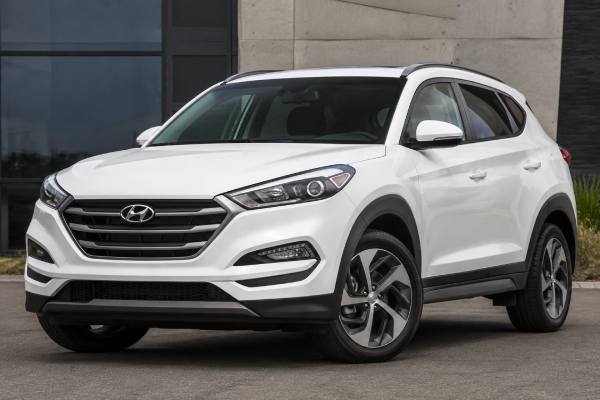
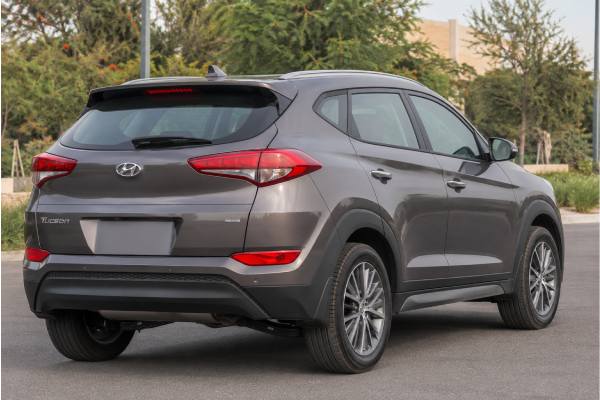
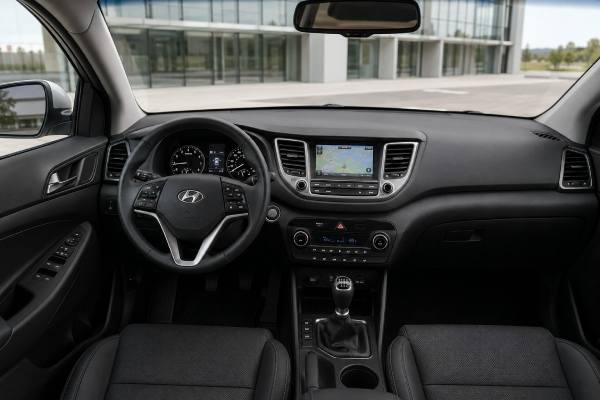
The facelifted 2014–2015 Hyundai Tucson AWD with the Theta II 2.4 GDI engine is a compact SUV from the LM generation, positioned as a practical five-seat crossover with stronger performance than the base 2.0-liter versions. It combines a naturally aspirated gasoline engine, a conventional six-speed automatic transmission, and an electronically controlled on-demand AWD system.
For used buyers, this version is appealing because it is easy to drive, compact enough for city use, and usually better equipped in GLS, SE, or Limited-style trims. The big question is not whether the Tucson 2.4 AWD is useful; it is whether a specific example has been maintained well enough to avoid the more expensive engine, AWD, corrosion, and recall-related problems that can affect this generation.
Final Verdict
The 2014–2015 Hyundai Tucson LM AWD 2.4 GDI is a good choice for buyers who want a compact, easy-to-park SUV with decent winter traction, useful cargo space, and stronger everyday performance than the base 2.0. It suits commuters, small families, and owners who value simple controls and available heated-seat comfort more than the newest driver-assistance technology. Its main tradeoff is maintenance sensitivity: the Theta II GDI engine needs clean oil, frequent level checks, and verified campaign history. Buy one only with documented service records, completed recall work, and no signs of oil consumption, bearing noise, AWD binding, or serious rust.
| Pros | Cons |
|---|---|
| 182 hp 2.4 GDI feels stronger than the base 2.0 | Theta II GDI needs strict oil and campaign checks |
| On-demand AWD with lock helps in snow and loose surfaces | Not a true off-road 4×4 system |
| Compact size and tight turning circle suit city driving | Fuel economy trails several compact SUV rivals |
| GLS, SE, and Limited trims can be well equipped | No modern AEB, adaptive cruise, or lane keeping |
| Good cargo volume for the short LM body | Poor IIHS small-overlap result by modern standards |
Table of Contents
- LM Tucson AWD 2.4 GDI Overview
- Theta II 2.4 GDI Specifications
- Trims, Options and Safety Ratings
- Reliability, Issues and Service Actions
- Maintenance Schedule and Buying Guide
- Driving Performance and Economy
- How the LM Tucson Compares to Rivals
LM Tucson AWD 2.4 GDI Overview
The facelifted LM Tucson 2.4 AWD is best understood as a compact crossover with useful all-weather ability, not as a rugged SUV. Its strongest points are its tidy size, simple controls, available equipment, and stronger 2.4-liter engine compared with entry-level versions.
The LM-generation Tucson was sold in different regions under different naming and trim structures. In North America it was sold as the Hyundai Tucson, while some other markets used closely related ix35 branding. The 2014 facelift brought updated gasoline direct-injection engines, revised equipment, available Blue Link services in some trims, updated lighting details, and suspension refinements.
This article focuses on the AWD version using the Theta II 2.4 GDI gasoline engine rated at 182 hp. In most markets where this exact combination was sold, it came with a six-speed automatic transmission rather than a manual gearbox. The AWD system is an electronically controlled, on-demand setup that normally behaves like a front-drive crossover until slip or driver input asks for more rear-axle help.
The 2.4 GDI is the more desirable engine for many buyers because the Tucson is not especially light. With five passengers, winter tires, or a loaded cargo area, the extra torque makes it feel more relaxed than the 2.0. It does not turn the Tucson into a fast SUV, but it gives it enough response for highway merging, hills, and everyday passing.
The ownership picture is more mixed. A well-kept Tucson 2.4 AWD can be a useful and affordable used crossover, but neglected examples can become expensive. The key concerns are engine oil consumption, bearing-related engine campaigns on eligible vehicles, ABS module recall completion, AWD driveline condition, suspension wear, and corrosion in salt-heavy climates.
The best examples are usually not the cheapest ones. A Tucson with documented oil changes, matched tires, clean underbody condition, working AWD, and completed recall work is far more attractive than a lower-mileage car with missing records and unexplained warning lights.
Theta II 2.4 GDI Specifications
The 2014–2015 Tucson AWD 2.4 uses Hyundai’s Theta II 2.4-liter naturally aspirated GDI inline-four, paired with a six-speed automatic transmission and on-demand AWD. The engine is simple in layout compared with a turbocharged SUV, but gasoline direct injection makes oil quality, intake deposits, and correct servicing more important than on older port-injected engines.
| Item | Specification |
|---|---|
| Engine family | Theta II 2.4 GDI gasoline |
| Layout | Transverse inline-four, DOHC, 16 valves, dual CVVT |
| Displacement | 2,359 cc |
| Induction | Naturally aspirated |
| Fuel system | Gasoline direct injection |
| Power | 182 hp at 6,000 rpm, about 136 kW |
| Torque | 240 Nm at 4,000 rpm, 177 lb-ft |
| Bore x stroke | 88.0 x 97.0 mm |
| Compression ratio | 11.3:1 |
| Fuel type | Regular unleaded gasoline |
| EPA economy, AWD | 11.8 city / 9.4 highway / 10.7 combined L/100 km, 20 / 25 / 22 mpg US |
| Canada 5-cycle economy, AWD | 11.6 city / 9.3 highway / 10.6 combined L/100 km |
| Item | Specification |
|---|---|
| Transmission | Six-speed automatic |
| Manual shift mode | SHIFTRONIC manual gear selection |
| Drive type | Electronically controlled on-demand AWD |
| AWD lock | Driver-selectable lock for up to 50:50 front/rear torque split |
| Economy mode | Active ECO modifies throttle and transmission response |
| Item | Specification |
|---|---|
| Body style | Five-door compact SUV, five seats |
| Length | About 4,400–4,410 mm, 173.2–173.6 in |
| Width | 1,820 mm, 71.7 in |
| Height | 1,655 mm without roof rails, 1,685 mm with roof rails |
| Wheelbase | 2,640 mm, 103.9 in |
| Ground clearance | 170 mm, 6.7 in |
| Turning diameter | 10.6 m, 34.7 ft |
| Suspension | MacPherson strut front, multi-link rear |
| Curb weight, AWD 2.4 automatic | About 1,560 kg, 3,439 lb |
| Passenger volume | 2,885 L, 101.9 cu ft |
| Cargo volume | 728 L seats up, 1,580 L maximum |
| Item | Specification |
|---|---|
| Front brakes | 300 mm ventilated discs |
| Rear brakes, AWD | 284 mm solid discs |
| Common tire sizes | 225/60R17 or 225/55R18 |
| Cold tire pressure | 230 kPa, 33 psi |
| Wheel-nut torque | 88–107 Nm, 65–79 lb-ft |
| Engine oil capacity | About 4.6–4.8 L with filter, depending on market specification |
| Automatic transmission fluid | Hyundai Genuine ATF SP-IV type; total capacity about 7.1 L |
| Coolant capacity | About 7.1–7.4 L with ethylene glycol coolant for aluminum engines |
| Towing capacity | Up to 907 kg, 2,000 lb where rated |
These numbers explain the Tucson’s character. It is compact outside, roomy enough inside, and powered by an engine that is adequate rather than sporty. The 2.4 GDI’s official economy is not class-leading, but it is acceptable for an older AWD gasoline crossover with a conventional automatic.
Trims, Options and Safety Ratings
Trim names vary by market, but the AWD 2.4 GDI was typically found in better-equipped Tucson versions rather than the most basic entry model. For buyers, the most important checks are whether the vehicle is truly AWD, which safety and comfort features it has, and whether the crash-test limitations are acceptable.
Trim identifiers and equipment
In Canada, the 2015 range used GL, GLS, and Limited naming. GL was more basic and centered around the 2.0 engine, while GLS and Limited were the trims most closely associated with the 182 hp 2.4 GDI. In the United States, 2014 naming included GLS, SE, and Limited, with the 2.4 appearing in the higher models.
Useful identifiers include:
- An AWD badge on the tailgate, backed up by an AWD Lock button inside.
- Seventeen-inch alloy wheels on many GLS-style models and 18-inch alloys on many Limited models.
- A rearview camera on better-equipped trims.
- Panoramic sunroof availability on GLS or Limited-style versions, depending on market.
- Leather seating, navigation, dual-zone climate control, upgraded audio, LED taillights, and a supervision-style instrument cluster on many Limited models.
The mechanical differences are not dramatic. The major functional split is FWD versus AWD, plus wheel and tire package differences. AWD adds weight and complexity, but it is the version to buy if winter traction is a priority. Larger 18-inch wheels look better and can sharpen response slightly, but 17-inch tires usually ride more comfortably and cost less to replace.
Safety equipment
The LM Tucson came with the safety equipment expected for its time: six airbags, anti-lock brakes, electronic brake-force distribution, brake assist, electronic stability control, traction control, hill-start assist, downhill brake control, active front head restraints, tire-pressure monitoring, and LATCH child-seat anchors.
The airbag setup includes dual front airbags, front seat-mounted side airbags, and roof-mounted side curtain airbags with rollover sensors. The structure uses a steel unibody with reinforced crash paths and side-impact protection, but it is still an early-2010s compact SUV design rather than a modern small-overlap-optimized platform.
Crash-test picture
The IIHS results are a mixed but important part of the buying decision. The 2015 Tucson received Good ratings in moderate-overlap front, side, roof-strength, and head-restraint tests. However, it received a Poor rating in the small-overlap driver-side test, and front crash prevention was not available.
That means the Tucson can still be a reasonable family car when judged as a used vehicle from its era, but it does not match newer compact SUVs for crash structure or active safety. If modern crash avoidance matters to you, a newer Tucson, RAV4, CR-V, CX-5, or Forester is a better fit.
Driver assistance and calibration
Do not expect modern ADAS. The 2014–2015 Tucson does not offer factory automatic emergency braking, adaptive cruise control, lane centering, blind-spot intervention, or lane-keeping assist in the way newer compact SUVs do.
The rearview camera and navigation system are convenience features, not active safety systems. After suspension, steering, ABS, or alignment work, a proper scan for steering-angle, wheel-speed, ABS, and stability-control faults is still sensible. After windshield replacement, there is no forward camera ADAS calibration burden like on many newer vehicles, which keeps some repair costs simpler.
Reliability, Issues and Service Actions
The Tucson 2.4 AWD can be reliable when serviced carefully, but the engine and AWD system do not tolerate neglect well. The most important used-car checks are oil consumption, bearing noise, recall completion, rust, matched tires, transmission behavior, and AWD driveline smoothness.
| Issue | Prevalence and severity | Typical symptoms | Best response |
|---|---|---|---|
| Theta II GDI oil consumption or bearing wear | Occasional to common with age; high cost | Low oil level, ticking, knocking, flashing MIL, limp mode | Check campaign status, scan codes, perform formal oil-consumption or engine diagnosis |
| GDI intake carbon and fuel-system deposits | Occasional; medium cost | Rough idle, misfire, hesitation, poor cold running | Scan first, inspect plugs and injectors, clean intake valves if confirmed |
| Six-speed automatic fluid age | Occasional; medium cost | Delayed engagement, shift flare, harsh downshifts, shudder | Service with correct ATF, inspect mounts, check for software updates |
| AWD coupler, rear differential, or transfer-case wear | Occasional; medium to high cost | Binding on tight turns, clunks, rear noise, leaks | Check tire matching, inspect fluids and seals, road-test AWD operation |
| ABS module recall condition | VIN-dependent; high safety importance | ABS light, burning smell, smoke, electrical fault warnings | Verify recall completion before purchase |
| Suspension links, bushings, and wheel bearings | Common with age; low to medium cost | Clunks, humming, wandering, uneven tire wear | Replace worn parts and perform alignment |
| Rust in salt climates | Common regionally; medium to high cost | Corroded subframes, brake lines, suspension arms, rocker edges | Inspect underneath on a lift before buying |
Engine issues to take seriously
The 2.4 GDI’s biggest ownership risk is not normal tune-up work; it is engine health. A healthy engine should start cleanly, settle into a steady idle, pull smoothly, and hold its oil level between services. Walk away from a car that knocks on cold start, knocks when warm, has a flashing engine light, smells burnt, or arrives with very low oil.
Oil consumption deserves special attention. Some Hyundai service procedures use a formal oil-consumption test rather than guesswork: the oil is filled correctly, the vehicle is driven for a set distance, and consumption is measured. That matters because a seller may say “it just uses a little oil,” while the engine may actually be on the path toward catalyst damage, bearing damage, or expensive repair.
Gasoline direct injection can also lead to intake-valve deposits because fuel is injected directly into the cylinder rather than washing the back of the intake valves. Symptoms include rough idle, misfires, hesitation, and weaker response. Cleaning is not automatically needed on every Tucson, but it should be considered when diagnosis points to carbon build-up.
Recalls, campaigns and extended coverage
The major recall to verify on 2014–2015 Tucson models is the ABS module fire-risk recall in affected vehicles. The issue involves an internal ABS module malfunction that can cause an electrical short, increasing fire risk while parked or driving. The remedy includes dealer inspection and fuse-related repair or ABS module replacement as needed. Until confirmed complete, affected vehicles should not be treated as ready-to-own.
Hyundai engine-monitoring software campaigns are also important. Eligible vehicles may receive Knock Sensor Detection System logic designed to detect abnormal bearing noise early and place the vehicle into a protective mode. On qualifying vehicles, completion of the required software update can affect engine-related warranty extension eligibility. Coverage depends on VIN, market, engine, campaign history, and dealer records, so do not rely on a seller’s verbal claim.
Ask for proof of:
- ABS recall completion.
- Any Hyundai engine-monitoring software campaign.
- Oil-consumption testing or engine replacement history.
- Dealer service records showing campaign and warranty status.
- Regular oil changes with correct oil and filter.
Driveline and chassis concerns
The six-speed automatic is generally straightforward, but old fluid, heat, towing, and neglected service can produce harsh shifts or delayed engagement. A test drive should include cold start, city driving, gentle acceleration, kickdown, highway cruising, and a few slow parking maneuvers.
The AWD system needs four matching tires with similar tread depth. Mismatched tires can stress the AWD coupling and rear driveline. During a pre-purchase drive, listen for binding, thumping, or groaning on tight low-speed turns. Also inspect the transfer case, rear differential, axle seals, and rear suspension area for leaks or corrosion.
Rust can be the deciding factor in snow-belt cars. Surface rust is normal on an older SUV, but heavy corrosion on subframes, brake lines, fuel lines, suspension mounting points, rocker panels, and rear wheel arches can turn a cheap Tucson into a poor buy.
Maintenance Schedule and Buying Guide
A Tucson 2.4 AWD is worth buying only if the maintenance history supports it. Clean oil, correct fluids, matched tires, completed campaigns, and a rust-free structure matter more than a polished interior or a low advertised price.
| Item | Practical interval | Why it matters |
|---|---|---|
| Engine oil and filter | 8,000–12,000 km, 5,000–7,500 mi, or 6–12 months | Shorter intervals help protect the GDI engine and timing chain |
| Oil level check | Monthly, and more often on high-mileage engines | Low oil is one of the fastest ways to damage this engine |
| Engine air filter | Inspect yearly; replace around 24,000–30,000 km | Dirty filters reduce response and can affect fuel trims |
| Cabin air filter | Yearly, or sooner in dusty areas | Protects HVAC airflow and defrost performance |
| Spark plugs | By VIN schedule; do not stretch beyond high-mileage limits | Worn plugs stress coils and worsen misfire diagnosis |
| Coolant | Replace if history is unknown; then every 4–5 years | Protects aluminum engine parts, heater core, and radiator |
| Brake fluid | Every 2–3 years | Reduces corrosion and preserves pedal feel |
| Brake pads and rotors | Inspect at every tire rotation or service | Rear brakes can corrode on low-use or winter-driven cars |
| Automatic transmission fluid | 60,000–100,000 km, sooner for towing or heavy city use | Helps prevent harsh shifts and heat-related wear |
| Transfer case and rear differential | Inspect for leaks; service around 60,000–80,000 km in severe use | AWD parts are expensive when run low or contaminated |
| Timing chain system | No belt interval; inspect when noisy or fault codes appear | Chain stretch, guides, and tensioners should be repaired when out of spec |
| Serpentine belt, hoses, and mounts | Inspect every service; replace for cracks, swelling, or noise | Age-related rubber failures are common on older SUVs |
| Tire rotation and alignment | 8,000–12,000 km; align when wear appears | AWD needs matched tires and even wear |
| 12 V battery | Test yearly after four years; replace around 4–6 years | Weak batteries can trigger confusing electronic faults |
| Service item | Reference value |
|---|---|
| Engine oil capacity | About 4.6–4.8 L with filter |
| Oil type | Use the owner’s manual viscosity for your market; 5W-20 and 5W-30 are common references |
| Oil-consumption testing oil | Hyundai procedures commonly reference 5W-30 API SN Plus or newer |
| Automatic transmission fluid | Hyundai Genuine ATF SP-IV type |
| Coolant | Ethylene glycol coolant suitable for aluminum engines |
| Tire pressure | 230 kPa, 33 psi cold |
| Wheel-nut torque | 88–107 Nm, 65–79 lb-ft |
| Oil drain plug torque | Typical service range about 35–44 Nm with a fresh washer |
Pre-purchase inspection checklist
Before buying, ask for a cold start. Listen for chain rattle, piston slap, bearing knock, exhaust leaks, and rough idle. Then let the engine warm fully and listen again at idle and light throttle. A quiet cold engine that becomes noisy when hot can be more concerning than a brief start-up noise.
Check these items before making an offer:
- Oil level, oil color, oil-change records, and signs of repeated top-ups.
- Hyundai recall and campaign completion by VIN.
- Scan results for engine, transmission, ABS, AWD, and stability-control modules.
- Evidence of oil-consumption testing, engine replacement, or dealer engine diagnosis.
- Coolant level, radiator condition, thermostat behavior, and heater performance.
- Transmission engagement from Park to Drive and Reverse.
- AWD operation, including smooth low-speed turns and matched tires.
- Rust on subframes, brake lines, rocker seams, rear suspension mounts, and rear wheel arches.
- Wheel-bearing hum, suspension clunks, brake pulsation, and uneven tire wear.
- Panoramic sunroof drains, rearview camera, navigation, seat heaters, power windows, and climate control.
- Trailer hitch wear, especially if the car has been used for towing.
The safest trim choice is usually a well-documented GLS, SE, or Limited AWD with completed recall work, good tires, and no engine warning history. Avoid any Tucson 2.4 GDI that has missing oil records, unresolved ABS recall status, visible coolant/oil leaks, mismatched tires, heavy underbody rust, or a seller who refuses a proper inspection.
Long-term durability is reasonable when the car is serviced properly. It is not the kind of SUV to buy and ignore. Owners who change oil early, keep the AWD fluids and tires in good condition, and address warning lights quickly usually have a much better experience than owners who wait for symptoms to become severe.
Driving Performance and Economy
The Tucson 2.4 AWD drives like a compact, practical crossover: easy in town, stable on the highway, and capable in poor weather, but not especially sporty or refined by newer standards. The 2.4 GDI gives it enough power to feel comfortable in normal traffic, while the AWD system adds confidence on wet, snowy, or loose surfaces.
Ride, steering and braking
The LM Tucson has a relatively short body and a firm compact-SUV feel. The facelifted models benefited from revised dampers, and the suspension is generally composed over normal roads. Sharp potholes and rough winter pavement can still expose its age, especially on 18-inch wheels.
Steering is light and easy around town. Some Limited models include selectable steering modes, but the difference is more about steering weight than true road feel. On the highway, the Tucson tracks acceptably if the tires, alignment, and suspension bushings are healthy.
Braking performance is normal for the class, with four-wheel disc brakes and electronic brake assistance. On older cars, braking feel depends heavily on rotor condition, caliper slide lubrication, brake fluid age, and rear brake corrosion. A pulsing pedal, scraping sound, or weak parking brake should be treated as repair evidence, not as a harmless age trait.
Powertrain character
The 2.4 GDI is the better engine for AWD versions. It has more mid-range strength than the 2.0 and feels less strained with passengers or cargo. Because it is naturally aspirated, there is no turbo lag, but the engine still needs revs when climbing hills or passing at highway speeds.
The six-speed automatic is conventional and easy to live with. It usually shifts smoothly when serviced and warmed up, but it may downshift often on grades or when the vehicle is heavily loaded. Active ECO softens throttle response and can help relaxed driving, but many drivers prefer leaving it off in hilly areas or fast traffic.
AWD traction and winter use
The AWD system normally prioritizes the front wheels and sends torque rearward when needed. The driver-selectable lock can request a 50:50 split for low-traction situations such as snow, gravel, mud, or a slippery driveway. This is useful, but it does not make the Tucson a rock-crawling SUV.
The right tires matter more than the AWD badge. A Tucson AWD on worn all-season tires will not stop or turn as well as a front-drive car on good winter tires. For owners in snowy climates, a matched set of quality winter tires is one of the best upgrades.
Real-world fuel economy
Official EPA economy for the 2.4 AWD is 11.8 L/100 km city, 9.4 L/100 km highway, and 10.7 L/100 km combined, equal to 20 city, 25 highway, and 22 combined mpg US. In UK mpg terms, that is about 24 city, 30 highway, and 26 combined.
Real-world results depend heavily on temperature, tires, traffic, and trip length. A realistic expectation is:
- City driving: about 12–14 L/100 km, 17–20 mpg US, 20–24 mpg UK.
- Relaxed highway driving: about 9–10.5 L/100 km, 22–26 mpg US, 26–31 mpg UK.
- Mixed driving: about 10.5–12 L/100 km, 20–22 mpg US, 24–26 mpg UK.
Cold weather and short trips can add a noticeable penalty because the engine spends more time warming up and the AWD system, tires, and fluids create more drag. Winter use can easily worsen economy by 10–20 percent. Towing or carrying a full load can increase fuel use further, especially on hills.
Load and towing
The rated towing figure, where approved, is up to 907 kg or 2,000 lb. That makes the Tucson suitable for a small utility trailer, light camping trailer, or bikes and gear, not for heavy towing. If you plan to tow, prioritize a car with clean ATF, healthy cooling, good brakes, and no history of overheating.
For regular towing, use shorter transmission-fluid service intervals and inspect rear suspension, tires, and brake condition more often. The Tucson’s compact wheelbase and modest engine output mean it is happiest with light, balanced loads rather than heavy trailers or steep mountain routes.
How the LM Tucson Compares to Rivals
The Tucson 2.4 AWD is strongest when it is priced below the most in-demand Japanese rivals and has better equipment or service history. It is less convincing when priced close to a cleaner Honda CR-V, Toyota RAV4, Mazda CX-5, or Subaru Forester.
| Rival | Where the Tucson can be stronger | Where the rival may be better |
|---|---|---|
| Honda CR-V | Often cheaper with good comfort features | More cargo space, stronger resale, broader reliability appeal |
| Toyota RAV4 | Can offer better value and equipment for the money | Usually better neglect tolerance and long-term demand |
| Mazda CX-5 | 2.4 GDI has useful torque and a simple automatic feel | CX-5 handles better and is often more efficient |
| Subaru Forester | More conventional automatic than some CVT-era rivals | Forester has stronger AWD identity and visibility |
| Nissan Rogue | Conventional six-speed automatic avoids many CVT concerns | Rogue may offer better cargo packaging and economy |
| Ford Escape | Naturally aspirated engine is simpler than turbo versions | Escape 2.0T is quicker and may offer newer tech |
Against a CR-V or RAV4, the Tucson’s main argument is value. You may get AWD, heated seats, a rear camera, leather, navigation, or a panoramic roof for less money. The tradeoff is that the Honda and Toyota usually have stronger used-market trust and better tolerance for imperfect maintenance.
Against the Mazda CX-5, the Tucson is less engaging to drive. The Mazda has sharper steering and often better real-world economy, but the Hyundai can feel more relaxed and better equipped at the same price point.
Against the Subaru Forester, the Tucson’s AWD system is less central to the vehicle’s identity. The Forester is the better choice for buyers who prioritize snow traction, visibility, and rough-weather confidence above all else. The Tucson makes more sense if you want a conventional automatic, compact size, and a lower purchase price.
The best buying rule is simple: do not buy the Tucson just because it is cheap. Buy it because the specific car is clean, serviced, rust-free, and fully sorted. At the right price and in the right condition, the 2014–2015 Tucson AWD 2.4 GDI is a useful compact SUV. At the wrong price or with poor records, the better-known rivals are safer used-car choices.
References
- REFRESHED 2014 HYUNDAI TUCSON UPS FUN AND VALUE QUOTIENTS 2013 (Manufacturer Publication)
- Gas Mileage of 2015 Hyundai Tucson 2015 (Fuel Economy Data)
- 2015 Hyundai Tucson 2015 (Safety Rating)
- Part 573 Safety Recall Report 22V-056 2022 (Recall Database)
- Hyundai 2021 (Service Campaign)
Disclaimer
This article is for informational purposes only and is not a substitute for professional diagnosis, repair, or inspection. Specifications, torque values, service intervals, fluids, recall eligibility, campaign coverage, and procedures can vary by VIN, market, trim, equipment, and production date. Always verify details against the official owner’s manual, service documentation, VIN recall lookup, and a qualified Hyundai technician before buying, repairing, or servicing a vehicle.
If this guide helped you, please share it on Facebook, X/Twitter, or your preferred social platform to support our work and help other used-car buyers make better decisions.