
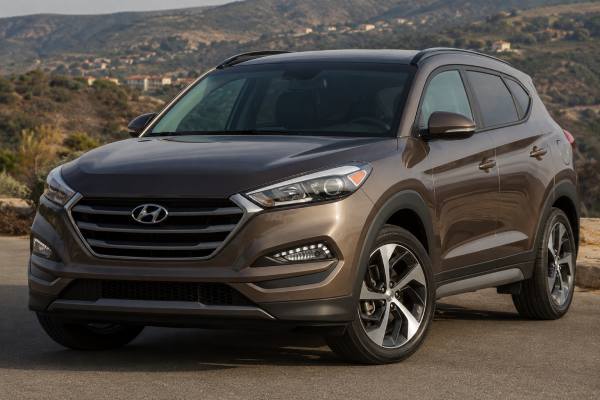
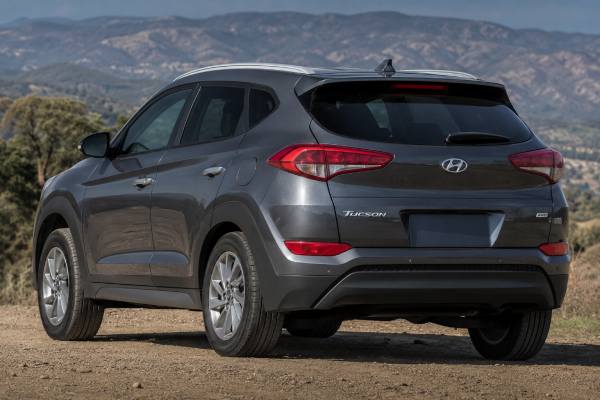
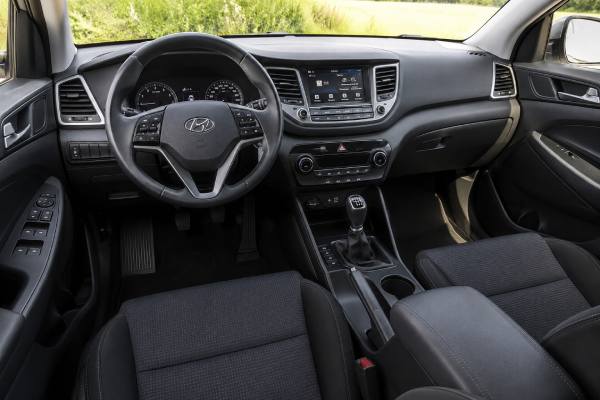
The 2015–2018 Hyundai Tucson FWD with the U II 1.7 CRDi diesel engine is one of the more sensible versions of the third-generation TL Tucson. It combines a roomy family-SUV body with a low-output but torquey diesel, front-wheel drive, and a straightforward 6-speed manual gearbox. It was sold widely in European markets, especially in the UK and Ireland, where buyers valued diesel economy, generous equipment, and Hyundai’s long warranty coverage.
This exact 116 hp 1.7 CRDi version is not the fast Tucson, and it is not the best choice for heavy towing or impatient overtaking. Its appeal is more practical: low fuel use, good cabin space, a comfortable ride, and fewer driveline complications than AWD or dual-clutch versions. Used buyers should focus on service history, diesel emissions health, clutch condition, recall completion, and signs of short-trip use.
Final Verdict
The Hyundai Tucson FWD 1.7 CRDi 116 hp is a good used choice for drivers who want a spacious, economical diesel SUV without the extra complexity of AWD or a dual-clutch automatic. Its strongest appeal is day-to-day practicality: a roomy cabin, useful boot, relaxed motorway economy, and a simple manual drivetrain. The main tradeoff is performance; it feels steady rather than lively, especially when loaded. Buy one only with clear oil-service history, evidence of recall work, and a healthy DPF/EGR system, because neglected short-trip diesel use can turn an otherwise sensible Tucson into an expensive one.
| Pros | Cons |
|---|---|
| Economical 1.7 CRDi suits commuting and motorway use | 116 hp feels slow with passengers or luggage |
| 6-speed manual avoids 7DCT clutch-pack worries | Manual clutch and dual-mass flywheel still need inspection |
| Spacious TL cabin and useful SUV boot | Boot volume varies by trim and spare-wheel setup |
| FWD layout keeps weight and fuel use down | Not ideal for slippery fields, steep tracks, or towing |
| Strong safety rating for its 2015 launch period | Advanced driver aids depend heavily on trim and year |
| Good parts availability across Europe | DPF, EGR, and intake soot issues punish short-trip use |
Table of Contents
- Hyundai Tucson 1.7 CRDi Overview
- Specifications and Technical Data
- Trims, Options, Safety and ADAS
- Reliability, Issues and Service Actions
- Maintenance and Buyer’s Guide
- Driving, Performance and Efficiency
- How the Tucson Compares to Rivals
Hyundai Tucson 1.7 CRDi Overview
The Tucson TL 1.7 CRDi 116 hp is best understood as the economical, low-stress diesel version of Hyundai’s compact family SUV. It gives up acceleration and AWD capability in exchange for lower running costs, simpler driveline hardware, and respectable long-distance economy.
This model belongs to the third-generation Tucson, introduced in Europe for the 2015 model year as the replacement for the ix35 nameplate in many markets. The TL platform brought a more mature cabin, better refinement, improved crash structure, and a more modern equipment list. In this form, the Tucson sits between smaller crossovers such as the Nissan Qashqai and larger family SUVs such as the Hyundai Santa Fe.
The U II 1.7 CRDi is a 1,685 cc four-cylinder turbo diesel, commonly identified by the D4FD engine family. In the 116 hp version, it was paired with front-wheel drive and a 6-speed manual gearbox. Hyundai also offered a stronger 141 PS 1.7 CRDi with a 7-speed dual-clutch transmission in some markets, but that is a different ownership proposition. The 116 hp manual is slower, but mechanically simpler.
In everyday use, this Tucson suits drivers who cover enough mileage to keep a diesel particulate filter healthy. Mixed commuting with regular A-road or motorway trips is ideal. Short urban use, school-run-only driving, and repeated cold starts are much less suitable because the DPF may not complete regeneration often enough.
Its strongest real-world qualities are comfort, space, and economy. Rear-seat room is generous for the class, the driving position is high and easy to use, and the controls are simple. The cabin is not premium in the German sense, but it is durable, clear, and family-friendly. The boot is large enough for weekly shopping, buggies, luggage, and pet use, although the quoted cargo volume depends on trim and spare-wheel arrangement.
The main weakness is performance. With 116 PS and a relatively heavy SUV body, this Tucson accelerates at a relaxed pace. The engine has useful torque at low revs, but it runs out of enthusiasm quickly when asked to overtake uphill or pull a full load. Drivers coming from a small diesel hatchback may find it acceptable; drivers coming from a 2.0 diesel SUV may find it underpowered.
For used buyers, the best examples are privately owned or well-maintained fleet cars with annual servicing, clean MOT history, matching tyres, smooth clutch take-up, and no unresolved emissions warnings. Avoid cars that have done mostly low-speed urban mileage unless there is strong evidence of proper maintenance and recent DPF/EGR attention.
Specifications and Technical Data
The 1.7 CRDi 116 hp Tucson uses a transverse four-cylinder turbo diesel, a 6-speed manual gearbox, and front-wheel drive. The key technical story is simple: modest power, strong low-rpm torque, low official fuel consumption, and a practical SUV body with enough towing capacity for light-to-moderate trailer use.
| Item | Hyundai Tucson FWD 1.7 CRDi 116 hp |
|---|---|
| Engine family | Hyundai U II 1.7 CRDi, commonly D4FD |
| Fuel type | Diesel, Euro 6 market specification |
| Engine layout | Inline 4-cylinder, DOHC, 16 valves |
| Displacement | 1,685 cc, 1.7 litres |
| Induction | Turbocharged diesel |
| Fuel system | CRDi common-rail direct injection |
| Bore × stroke | 77.2 × 90.0 mm |
| Compression ratio | 15.7:1 |
| Maximum power | 85 kW / 116 PS at 4,000 rpm |
| Maximum torque | 280 Nm / 207 lb-ft at 1,250–2,500 rpm |
| Timing drive | Timing chain |
| Official combined economy | 4.6 L/100 km, 61.7 mpg UK, about 51.4 mpg US |
| CO₂ emissions | 119 g/km in the UK 2016 data set |
| Item | Specification |
|---|---|
| Gearbox | 6-speed manual |
| Drive type | Front-wheel drive |
| AWD hardware | Not fitted to this 116 hp 1.7 CRDi variant |
| Clutch type | Single dry clutch with dual-mass flywheel |
| Front differential | Conventional open differential |
| Item | Value |
|---|---|
| Body style | 5-door compact SUV |
| Seats | 5 |
| Length | 4,475 mm (176.2 in) |
| Width | 1,850 mm (72.8 in) |
| Height | 1,645–1,650 mm, depending on trim |
| Wheelbase | 2,670 mm (105.1 in) |
| Turning circle | 10.6 m |
| Curb weight | About 1,425 kg (3,142 lb) |
| Gross vehicle weight | 2,000 kg (4,409 lb) |
| Boot volume | 488–513 L seats up; 1,478–1,503 L seats down |
| Fuel tank | 62 L (16.4 US gal) |
| Braked towing limit | 1,400 kg (3,086 lb) |
| Unbraked towing limit | 750 kg (1,653 lb) |
| Maximum noseweight | 100 kg (220 lb) |
| Maximum roof load | 100 kg (220 lb) |
| Item | Specification |
|---|---|
| Front suspension | MacPherson struts with coil springs |
| Rear suspension | Multi-link |
| Steering | Motor-assisted rack and pinion |
| Steering lock-to-lock | 2.71 turns |
| Brake system | Power-assisted dual diagonal circuit with EBD |
| Front brakes | Ventilated discs, floating calipers |
| Rear brakes | Solid discs, floating calipers |
| S tyre size | 215/70 R16 |
| SE and SE Nav tyre size | 225/60 R17 |
| Premium tyre note | 1.7 CRDi manual commonly retained 17-inch wheels |
| Item | Useful value |
|---|---|
| 0–62 mph / 0–100 km/h | 13.7 seconds |
| Top speed | 109 mph / 176 km/h |
| Engine oil service fill | About 5.3 L with filter |
| Engine oil dry capacity | About 5.7 L |
| Common oil viscosity | 0W-30 or 5W-30 low-SAPS diesel oil |
| Brake fluid | DOT 4 hydraulic brake/clutch fluid |
| Wheel nut torque | 108–127 Nm (79–94 lb-ft) |
Trims, Options, Safety and ADAS
The best trim for most used buyers is SE Nav or Premium, because they add useful comfort and visibility equipment without changing the simple 116 hp manual drivetrain. Safety is strong for the model’s age, but advanced driver assistance varies by trim, so do not assume every Tucson has AEB, blind-spot monitoring, or lane support.
Trims and equipment
In the UK market, the main trim grades for the pre-facelift Tucson were S, SE, SE Nav, Premium, and Premium SE. The 1.7 CRDi 116 PS manual was widely offered through S, SE, SE Nav, and Premium. Premium SE availability was focused more on higher-output engines and automatic/DCT versions.
The S trim is the simple one. It generally has the core safety kit, alloy wheels, air conditioning, basic infotainment, electric windows, TPMS, and stability control. It is fine mechanically, but used buyers may find it less desirable because it lacks some parking and infotainment features that suit a family SUV.
SE is the better everyday baseline. It typically adds larger 17-inch wheels, roof rails, upgraded interior trim, lumbar adjustment, and useful convenience equipment. SE Nav is often the sweet spot because factory navigation, a reversing camera, and better infotainment make the Tucson easier to live with.
Premium brings more comfort features, such as upgraded lighting, heated seats on many market versions, additional interior trim, and more safety or driver-assistance availability. A useful model-specific detail is that the Premium 1.7 CRDi manual often kept 17-inch wheels rather than the 19-inch wheels used on several higher-output Tucson versions. That is good news for ride comfort and tyre cost.
Quick identifiers include:
- “1.7 CRDi” and “Blue Drive” badging on many market cars.
- A 6-speed manual gearlever rather than the 7DCT selector.
- No AWD or 4WD badging on this FWD version.
- 16-inch wheels on many S cars, 17-inch wheels on most SE and SE Nav cars.
- Factory navigation and reversing camera on SE Nav.
- More chrome exterior trim and comfort features on Premium.
The key model-year change is the 2018 facelift, when the older 1.7 CRDi was replaced in many European markets by newer 1.6 CRDi engines, including mild-hybrid versions in some trims. This article covers the pre-facelift 1.7 CRDi 116 hp diesel, not the later 1.6 CRDi.
Safety rating and structure
The third-generation Tucson received a five-star Euro NCAP rating in 2015. The tested car was a 4×2 Tucson with the 1.7 diesel engine, making the rating especially relevant to this version. The headline category scores were 86% adult occupant protection, 85% child occupant protection, 71% pedestrian protection, and 71% safety assist.
Standard passive safety equipment included front airbags, front side airbags, side curtain airbags, seatbelt reminders, ISOFIX child-seat mounting points for the rear outer seats, anti-lock brakes, electronic brake-force distribution, stability control, hill-start assist, and tyre-pressure monitoring. Hyundai also fitted an active bonnet system in some markets to improve pedestrian impact performance.
Driver assistance and calibration
Driver-assistance availability depends on trim, market, and build date. Core stability and braking systems were widely standard, while features such as autonomous emergency braking, blind-spot detection, lane departure warning with lane keeping assistance, rear cross-traffic alert, and speed-limit information were concentrated on higher trims or option packages.
When buying, check the actual car rather than relying on trim names. Look for steering-wheel buttons, camera/sensor housings near the windscreen mirror, blind-spot indicators in the mirror glass, and menu settings in the cluster. After windscreen replacement, front bumper repair, suspension work, or wheel-alignment correction, ADAS sensors may need calibration. A car with warning lights, disabled lane support, or repeated camera errors should be diagnosed before purchase.
Reliability, Issues and Service Actions
The 1.7 CRDi manual Tucson is generally a durable car when serviced properly and used for the right kind of driving. The highest-risk areas are diesel emissions hardware, clutch and flywheel wear, timing-chain noise on neglected engines, suspension wear, and outstanding recall work.
| Issue area | Prevalence | Cost tier | Typical trigger or age band |
|---|---|---|---|
| DPF loading or failed regeneration | Common on short-trip cars | Medium to high | Urban use, cold running, 70,000+ miles |
| EGR valve or intake soot buildup | Occasional to common | Medium | Stop-start diesel use, weak servicing |
| Clutch judder or dual-mass flywheel wear | Occasional | Medium to high | Town driving, towing, high mileage |
| Timing-chain rattle | Occasional | High if ignored | Late oil changes, high mileage |
| Suspension bushes, drop links, wheel bearings | Occasional | Low to medium | Potholes, heavy loads, 60,000+ miles |
| ABS/ESC recall-related work | VIN-dependent | No owner cost if open recall | Recall campaign check required |
Diesel emissions and intake system
The diesel particulate filter is the most important ownership check. A healthy DPF traps soot and periodically burns it off during regeneration. If the car spends most of its time on short trips, the exhaust may not get hot enough for regeneration to complete. Symptoms include a DPF warning, increased fuel use, cooling fans running after shutdown, limp mode, or repeated forced-regeneration history.
The EGR valve and intake tract can also collect soot and oily deposits. Symptoms include rough idle, hesitation, reduced low-rpm response, engine management lights, or fault codes linked to airflow, boost, or EGR position. Cleaning may help if caught early, but sticking valves, split hoses, faulty sensors, or a heavily loaded DPF need proper diagnosis rather than repeated additive use.
A good pre-purchase test drive should include cold start, warm idle, low-speed pulling, a steady cruise, and a firm acceleration through the mid-range. The engine should pull cleanly from low revs without heavy smoke, surging, or warning lights.
Timing chain and lubrication
The U II 1.7 CRDi uses a timing chain rather than a scheduled timing belt. That does not mean it can be ignored. Chains rely heavily on clean oil, correct oil specification, good oil pressure, and healthy tensioners and guides.
Warning signs include rattling at start-up, warm idle chain noise, cam/crank correlation fault codes, rough running, or metallic debris in the oil. A faint diesel clatter is normal; a distinct chain rattle from the timing end is not. Cars with long gaps between oil services are higher risk.
For long-term ownership, annual oil changes are cheap insurance. Even where longer intervals were permitted, many careful owners use 10,000-mile or 15,000-km oil changes, especially for town driving.
Manual gearbox, clutch and flywheel
The 6-speed manual gearbox is less complex than the 7-speed DCT used in the stronger 1.7 CRDi, but it still needs checks. The gearshift should feel clean, with no crunching into second or third, no whining on overrun, and no jumping out of gear.
The clutch should take up smoothly, without judder, slip, or a heavy pedal. A dual-mass flywheel that is wearing may cause knocking at idle, vibration when taking up drive, or a rattling sound when the clutch is pressed and released. Towing, hilly use, and heavy urban stop-start driving shorten clutch and flywheel life.
Chassis, brakes and corrosion
The Tucson TL rides well, but it is not immune to suspension wear. Listen for knocking from front drop links, tired lower-arm bushes, top mounts, or rear suspension links. Uneven tyre wear points to alignment issues, worn suspension parts, or kerb damage.
Brake discs can corrode on low-mileage cars, especially if the vehicle sits outside or does mostly short journeys. Check the inner faces of the rear discs, parking-brake operation, brake-pipe corrosion, and any pulsing under braking.
Body corrosion is not normally a major headline problem, but underbody inspection still matters. Look at rear subframe areas, suspension mounting points, brake pipes, lower door seams, tailgate edges, front subframe mounts, and undertrays that may hide leaks or impact damage.
Recalls, service campaigns and software
Two recall areas deserve particular attention on UK-market 2016 Tucson records. One concerns the secondary bonnet catch, where the catch and bonnet-warning logic required attention on affected vehicles. The second concerns the ABS/ESC control unit, where wiring, fuse ratings, and in some cases software updates were part of the remedy.
Ask for proof of completed recalls, not just a verbal assurance. A Hyundai dealer can check by VIN, and national recall databases can confirm whether a model year had campaigns. Dealer records are especially useful because they may also show cluster software, ECU updates, infotainment updates, navigation-map updates, or prior DPF-related work.
Pre-purchase checks to request:
- Full service history with oil grade and mileage/date intervals.
- Proof of recall and service-campaign completion.
- Diagnostic scan before purchase, including stored and pending codes.
- DPF soot/load data, regeneration history, and differential-pressure readings.
- Clutch and flywheel assessment on a cold and warm test drive.
- Evidence of brake fluid, coolant, filters, and fuel-filter maintenance.
- MOT or inspection history showing tyre, brake, and corrosion trends.
Maintenance and Buyer’s Guide
The safest maintenance approach is annual servicing with extra attention to diesel-specific items. A Tucson 1.7 CRDi that has clean oil, good filters, fresh brake fluid, and regular longer runs is usually far easier to own than a low-mileage urban car with patchy history.
| Interval | Work to prioritise |
|---|---|
| Every 10,000 miles / 15,000 km or 12 months | Engine oil and filter; full inspection; diagnostic scan if warning lights appear |
| Every service | Tyres, brakes, suspension joints, wheel bearings, CV boots, leaks, lights |
| Every 20,000 miles / 30,000 km | Cabin filter; inspect engine air filter; brake fluid condition check |
| Every 30,000 miles / 45,000 km | Replace engine air filter; inspect intake, boost hoses, EGR symptoms |
| Every 40,000 miles / 60,000 km | Fuel filter; brake fluid replacement; alignment check if tyre wear is uneven |
| Every 60,000 miles / 100,000 km | Coolant condition and system inspection; hoses and auxiliary belt assessment |
| Every 90,000–100,000 miles / 150,000 km | Timing-chain noise check; manual gearbox oil consideration; DPF/EGR health review |
| Every 4–6 years | 12 V battery test or replacement, especially with stop-start faults |
For severe use, shorten intervals. Severe use includes repeated short journeys, cold urban driving, extensive idling, dusty roads, winter road salt, mountainous driving, hot-weather traffic, and towing. For those conditions, a 6-month or 7,500-km oil interval is a sensible target.
Fluids and service items
Use low-SAPS diesel engine oil suitable for DPF-equipped Euro 6 engines. Commonly used viscosities are 0W-30 and 5W-30, but the exact approval should be checked against the VIN and market service data. The typical service-fill quantity is about 5.3 litres with the filter.
Brake and clutch hydraulics use DOT 4-type fluid. Because the clutch shares hydraulic principles with the brake system, old fluid can affect pedal feel and internal cylinder life. Brake fluid every two years is a practical maintenance standard.
The 6-speed manual gearbox is often treated as long-life in normal use, but a fluid change at higher mileage is wise if gearshift quality has worsened or the car has towed. Use only the correct Hyundai/Kia manual transmission fluid specification for the gearbox code.
Coolant should be an ethylene-glycol-based long-life coolant compatible with Hyundai aluminium engines. Do not mix unknown coolant types; if the history is unclear, a proper drain and refill is better than topping up with a random product.
Buyer inspection checklist
Start with the paperwork. The best Tucson is not always the lowest-mileage one; it is the one with consistent annual service entries, clean MOT history, and evidence that diesel components have not been abused by short-trip use.
Inspect the car in daylight and check:
- Cold start: it should start quickly without excessive smoke or long cranking.
- Idle: no uneven running, chain rattle, or strong exhaust fumes.
- Acceleration: no limp mode, boost hesitation, or black smoke clouds.
- Clutch: no slip in higher gears and no shudder when pulling away.
- Gearbox: no crunching, whining, or baulking.
- DPF: no warning lights, repeated forced regenerations, or recent “DPF clean” cover-up.
- Cooling system: no coolant smell, low level, staining, or overheating signs.
- Suspension: no knocks over rough roads and no uneven ride height.
- Brakes: smooth stopping, clean disc faces, working parking brake.
- Electronics: check camera, sensors, infotainment, air conditioning, windows, mirrors, TPMS, and stop-start.
- Tyres: matching sizes and quality tyres are a good ownership sign.
- Body: check bumper corners, tailgate, lower doors, underbody, and previous repair quality.
Recommended versions are SE Nav and Premium 1.7 CRDi manual, provided they have good history. SE Nav gives the most useful balance of equipment and cost. Premium is attractive if you want comfort features, but check that everything works and remember that higher trim does not excuse poor maintenance.
Avoid cars with unresolved engine lights, obvious DPF issues, clutch slip, noisy timing chains, missing service records, mismatched tyres, or seller claims that “it just needs a sensor.” Diesel fault lights can be simple, but they can also hide a chain of EGR, DPF, boost, injector, or pressure-sensor problems.
Long-term durability is good when the car is maintained. The engine is not highly tuned, the manual drivetrain is uncomplicated, and parts supply is strong. The ownership risk rises sharply when oil changes are stretched, the car is used mainly for short trips, or warning lights are cleared without fixing the cause.
Driving, Performance and Efficiency
The Tucson 1.7 CRDi 116 hp drives like a comfortable family SUV, not a sporty crossover. It is stable, easy to place, and economical, but acceleration is modest and the engine needs planning for overtakes.
Ride, handling and refinement
The ride is one of this Tucson’s better qualities, especially on 17-inch wheels. It absorbs urban bumps well and feels composed on rougher rural roads. The 16-inch S-trim tyres add extra sidewall comfort, while 17-inch cars keep a good balance between ride quality and steering response. The larger 19-inch packages found on other Tucson versions can look sharper but usually ride more firmly.
Steering is light and easy, with enough accuracy for daily driving. It is not especially communicative, but it suits the car’s family role. The Tucson feels secure through bends, with predictable front-end grip and safe understeer if pushed. The body sits higher than a hatchback, so fast direction changes reveal some roll, but it remains composed.
Braking feel is straightforward. The pedal is progressive rather than sharp, and the disc setup is adequate for normal loads. When towing or descending long hills, brake condition becomes much more important, so worn rear discs or old brake fluid should not be ignored.
Cabin noise is acceptable for the class. The diesel is more noticeable at cold idle and under hard acceleration, but it settles at a cruise. Wind and tyre noise depend heavily on tyre brand, tread wear, and wheel size.
Powertrain character
The 1.7 CRDi’s best work happens between low and mid revs. Peak torque arrives early, so the car pulls cleanly from urban speeds if you are in the right gear. Turbo lag is present but not dramatic; the bigger limitation is simply the modest 116 hp output.
The 6-speed manual gearbox has sensible ratios for economy. Around town, you use the torque rather than revving the engine hard. On faster roads, downshifts are needed for overtaking, and steep hills with passengers can require patience. The engine is not unpleasant, but it is not eager.
The official 0–62 mph time of 13.7 seconds tells the story. This Tucson is fine for steady commuting, school runs, and motorway cruising, but it does not have much spare performance. Drivers who regularly carry five people, tow near the limit, or drive in mountainous areas may prefer the 2.0 CRDi.
Real-world fuel economy
Official economy figures are very optimistic by modern real-world standards because they were measured under the older test cycle. In normal ownership, expect roughly:
- City driving: 6.5–7.5 L/100 km, about 31–36 mpg US or 38–43 mpg UK.
- Mixed driving: 5.8–6.6 L/100 km, about 36–41 mpg US or 43–49 mpg UK.
- Steady highway driving: 5.2–6.0 L/100 km, about 39–45 mpg US or 47–54 mpg UK.
Cold weather, roof bars, low tyre pressure, cheap tyres, short trips, and failed regenerations all reduce economy. Winter urban use can easily add 0.5–1.0 L/100 km. A long motorway run at legal speeds is where this engine makes the most sense.
Load and towing
The 1,400 kg braked towing rating is useful, but the 116 hp engine is not ideal for frequent heavy towing. Light trailers, small camping trailers, garden waste runs, and occasional utility use are realistic. A full caravan near the limit will expose the modest power output and make hill starts harder on the clutch.
When loaded with passengers and luggage, the Tucson remains stable but slower. Use lower gears earlier, avoid labouring the engine below the torque band, and keep the cooling system, clutch, tyres, and brakes in top condition if towing is part of regular ownership.
How the Tucson Compares to Rivals
The Tucson 1.7 CRDi’s main advantage over rivals is its mix of space, equipment, warranty reputation, and simple manual diesel hardware. Its main weakness is that several competitors feel lighter, sharper, or more efficient, while stronger diesels offer better performance.
| Rival | How it compares | Best for |
|---|---|---|
| Kia Sportage 1.7 CRDi | Very similar hardware, often with longer original warranty coverage | Buyers wanting Tucson practicality with Kia branding |
| Nissan Qashqai 1.5 dCi | Usually lighter and economical, but less substantial inside | Lower running costs and urban-friendly size |
| Renault Kadjar 1.5 dCi | Comfortable and efficient, shares some Qashqai-family strengths | Value buyers prioritising comfort and economy |
| Volkswagen Tiguan 1.6 TDI | More premium feel, often pricier to buy and repair | Interior quality and brand appeal |
| Peugeot 3008 1.6 BlueHDi | More stylish cabin, but emissions-system checks are critical | Design, efficiency, and a more modern interior |
| Hyundai Tucson 2.0 CRDi | Stronger and better for towing, with higher running costs | Drivers who need real performance or AWD |
Against the Kia Sportage, the Tucson feels like a close cousin. The choice often comes down to price, condition, equipment, and warranty status. If the Kia has better history, buy the Kia; if the Tucson is cleaner and cheaper, buy the Tucson.
Against the Nissan Qashqai and Renault Kadjar, the Hyundai feels more substantial and has a strong equipment story, but it is not as nimble. The Nissan and Renault may be easier in tight urban use, while the Tucson feels more like a traditional family SUV.
Against the Volkswagen Tiguan, the Hyundai usually wins on value and equipment for the money. The Tiguan has a more polished cabin and stronger brand pull, but equivalent examples often cost more, and repair costs can be higher.
The most important internal rival is the Tucson 2.0 CRDi. If you tow, drive fully loaded, or want AWD, the 2.0 is the better powertrain. If you mainly commute, cover motorway miles, and want lower costs, the 1.7 CRDi manual makes more sense.
The best buying decision is condition-led. A well-serviced 1.7 CRDi SE Nav with clean diagnostics is a better purchase than a higher-trim car with emissions faults or clutch judder. This Tucson rewards careful ownership more than badge chasing.
References
- Hyundai Owners manuals | Hyundai Motor UK 2026 (Owner’s Manuals)
- All–New Tucson 2016 (Brochure)
- Hyundai Tucson – Euro NCAP Results 2015 2015 (Safety Rating)
- HYUNDAI TUCSON 2016 – Check if a vehicle, part or accessory has been recalled – GOV.UK 2021 (Recall Database)
- Standard Maintenance Requirements 2025 (Service Schedule)
Disclaimer
This article is for informational purposes only and is not a substitute for professional diagnosis, repair, or inspection. Specifications, torque values, service intervals, parts, software updates, recall coverage, and repair procedures can vary by VIN, market, build date, trim, and equipment. Always verify against official Hyundai service documentation and a qualified technician before carrying out maintenance or buying a vehicle.
If you found this guide useful, please consider sharing it on Facebook, X/Twitter, or your preferred automotive community to support our work.