

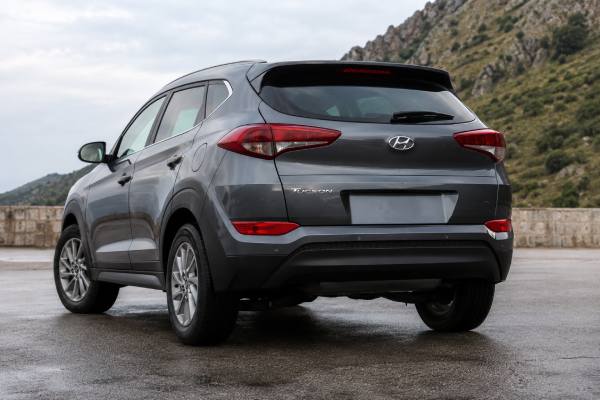
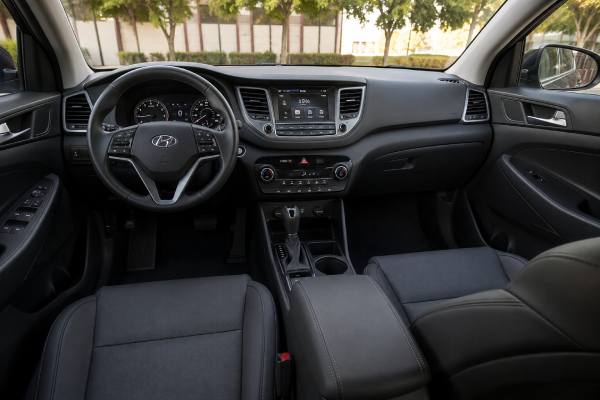
The 2015–2018 Hyundai Tucson TL with the naturally aspirated Gamma 1.6 GDi petrol engine is the simple, front-wheel-drive version of Hyundai’s third-generation family SUV. It is not the quickest Tucson of this period, and it does not have the torque of the diesels or the punch of the 1.6 T-GDi turbo, but that is part of its appeal. With a 6-speed manual gearbox, no turbocharger, no dual-clutch transmission, and conventional FWD running gear, it is one of the easier Tucson TL variants to understand and maintain.
For used buyers, the main question is whether 132 hp is enough for a compact SUV that weighs around 1.4 tonnes. The answer depends on how the car will be used. Around town, on school runs, commuting routes, and relaxed mixed driving, it can make sense. For frequent motorway overtakes, mountain roads, towing, or a fully loaded family holiday, it feels modest.
Final Verdict
The Hyundai Tucson TL 1.6 GDi FWD is a sensible used SUV for buyers who value cabin space, simple mechanical layout, good parts availability, and predictable running costs over strong acceleration. Its best role is family commuting, urban and suburban use, and relaxed motorway driving without heavy towing. The main tradeoff is performance: the naturally aspirated 132 hp engine needs revs and planning when the car is loaded. Buy one only with clear service history, completed recall checks, healthy clutch operation, clean cooling system, and no signs of direct-injection carbon buildup or timing-chain noise.
| Pros | Cons |
|---|---|
| Simple FWD manual layout avoids DCT and AWD complexity | 132 hp feels modest in a family-size SUV |
| Spacious cabin and 513-litre boot suit everyday family use | Needs frequent gear changes when fully loaded |
| Gamma 1.6 GDi is generally durable with clean oil | Direct injection can develop intake-valve carbon deposits |
| Good crash-test record in European-market form | ADAS availability depends heavily on trim and year |
| Parts supply is strong across Europe and the UK | Some recalls require VIN-specific dealer confirmation |
Table of Contents
- Tucson 1.6 GDi Overview
- Tucson 1.6 GDi Specifications
- Trims, Safety and Driver Assistance
- Reliability, Issues and Recalls
- Maintenance and Used Buying Guide
- Driving, Performance and Fuel Economy
- Tucson 1.6 GDi Rivals
Tucson 1.6 GDi Overview
The Tucson TL 1.6 GDi FWD is the entry-level petrol version of the third-generation Tucson in many European markets. It is best seen as a roomy, straightforward family SUV rather than a performance-focused crossover.
This version uses Hyundai’s Gamma 1.6-litre direct-injection petrol engine, usually identified as part of the G4FD/Gamma GDi family. It is a naturally aspirated four-cylinder engine, so it makes its power high in the rev range rather than delivering strong low-rpm shove. In the Tucson, it produces 132 PS, commonly rounded to 132 hp, and 161 Nm of torque.
The TL generation replaced the ix35 nameplate in much of Europe and moved the Tucson closer to mainstream compact SUV rivals such as the Kia Sportage, Nissan Qashqai, Volkswagen Tiguan, Mazda CX-5, Toyota RAV4, and Honda CR-V. Compared with the older ix35, the TL felt more grown-up inside, had a more polished ride, better safety technology, and a stronger family-car image.
The 1.6 GDi version sits at the practical end of the range. It was commonly paired with:
- front-wheel drive
- a 6-speed manual gearbox
- five seats
- petrol direct injection
- a timing chain
- standard stability control and anti-lock braking
- trim-dependent infotainment, navigation, driver assistance, and wheel sizes
The lack of turbocharging is important. It means there is no turbocharger to fail, no boost pipework to leak, and less heat stress than in the 1.6 T-GDi. It also avoids the possible clutch-pack and calibration concerns of Hyundai’s 7-speed dual-clutch transmission because this version is normally a manual. That simplicity is a real advantage for buyers who want a used SUV with fewer expensive driveline surprises.
The weakness is torque. Maximum torque arrives at high revs, and 161 Nm is not much for a compact SUV with passengers, luggage, air conditioning, and motorway speeds to deal with. It is fine if the driver uses the gearbox and accepts the car’s relaxed nature. It is less satisfying for drivers coming from a diesel, turbo petrol, or larger naturally aspirated engine.
In ownership terms, the Tucson 1.6 GDi appeals most to buyers who want:
- a practical family cabin without a premium-brand repair bill
- a petrol SUV for lower annual mileage
- fewer diesel emissions-system concerns
- a manual gearbox rather than an automatic or DCT
- enough towing capacity for light trailers, not heavy caravans
- a car that is easy for independent garages to service
The best examples are not necessarily the lowest-mileage ones. A higher-mileage Tucson with annual oil changes, clean coolant, quality tyres, completed recalls, and a smooth clutch can be a better buy than a low-mileage car that has done years of short trips with missed servicing.
Tucson 1.6 GDi Specifications
The 1.6 GDi Tucson TL uses a front-mounted, transverse, naturally aspirated petrol engine driving the front wheels through a 6-speed manual gearbox. The key technical point is that this is the simpler petrol Tucson: no turbocharger, no AWD hardware, and no dual-clutch automatic in the usual European FWD 132 hp specification.
| Item | Hyundai Tucson TL 1.6 GDi FWD |
|---|---|
| Engine family | Gamma 1.6 GDi petrol |
| Engine layout | Inline-four, transverse front engine |
| Displacement | 1,591 cc / 1.6 litres |
| Induction | Naturally aspirated |
| Fuel system | Gasoline direct injection |
| Valvetrain | DOHC, 16 valves |
| Bore × stroke | 77.0 × 85.4 mm |
| Compression ratio | 11.0:1 |
| Maximum power | 132 PS / 97 kW at 6,300 rpm |
| Maximum torque | 161 Nm at 4,850 rpm |
| Timing drive | Timing chain |
| Official combined economy | About 6.7–7.1 L/100 km, depending on year and trim |
| CO₂ emissions | About 156–162 g/km, depending on year and equipment |
| Item | Specification |
|---|---|
| Transmission | 6-speed manual |
| Drive type | Front-wheel drive |
| AWD hardware | Not fitted to this version |
| Clutch type | Single dry clutch |
| Differential | Conventional open front differential |
| Item | Specification |
|---|---|
| Body style | Five-door compact SUV |
| Seats | Five |
| Length | 4,475 mm |
| Width excluding mirrors | 1,850 mm |
| Width including mirrors | 2,065 mm |
| Height | 1,645–1,650 mm, depending on wheels and roof equipment |
| Wheelbase | 2,670 mm |
| Turning circle | 10.6 m |
| Front suspension | MacPherson struts with coil springs |
| Rear suspension | Multi-link |
| Fuel tank | 62 litres |
| Boot capacity | 513 litres seats up; about 1,503 litres seats folded |
| Item | Specification |
|---|---|
| 0–100 km/h | About 11.5 seconds |
| Top speed | 182 km/h / 113 mph |
| Kerb weight | About 1,414 kg in common UK 1.6 GDi manual form |
| Gross vehicle weight | About 2,030 kg |
| Payload | About 616 kg |
| Braked towing capacity | Up to 1,400 kg where rated |
| Unbraked towing capacity | Up to 650 kg where rated |
| Maximum noseweight | 100 kg |
| Maximum roof load | 100 kg |
| Item | Useful value |
|---|---|
| Common tyre sizes | 215/70 R16, 225/60 R17, 225/55 R18 |
| Front brakes | Ventilated discs, floating calipers |
| Rear brakes | Solid discs, floating calipers |
| Steering | Motor-assisted rack and pinion |
| Engine oil capacity | About 4.2 litres with filter for 1.6 GDi |
| Common oil viscosity | 0W-30 or 5W-30 where approved for market and climate |
| Timing service | Chain-driven; inspect if noisy or timing faults appear |
The 1.6 GDi’s figures show why buyer expectations matter. It has enough performance for normal daily use, but the torque-to-weight ratio is modest. The good news is that the chassis, cabin, boot, and towing rating are not stripped-down in the same way the engine is. You still get the main Tucson body, space, and usability.
Trims, Safety and Driver Assistance
Trim matters on the Tucson 1.6 GDi because the engine and driveline stay simple, while equipment can change the ownership experience a lot. A well-specified SE Nav, Premium, or later S Connect-style car can feel much more modern than a basic early S.
In the UK and many European markets, the 1.6 GDi 132 PS manual FWD was commonly found in lower and mid-range trims rather than the most powerful or AWD-oriented specifications. The naming varied by year and market, but typical UK-era grades included S, SE, SE Nav, Premium, Premium SE, and later facelifted names such as S Connect.
The mechanical differences between 1.6 GDi trims are usually limited. You are not choosing between different gearboxes, AWD systems, limited-slip differentials, or performance brakes on this engine. Instead, the main differences are equipment, wheel size, lighting, infotainment, upholstery, driver assistance, and convenience features.
Common identifiers include:
- S or base-grade cars: smaller alloy wheels, cloth trim, simpler infotainment, fewer parking and driver-assistance features.
- SE and SE Nav cars: larger wheels, reversing camera or parking sensors on many cars, dual-zone climate control, navigation on Nav versions, stronger used-market appeal.
- Premium versions: larger wheels, leather-faced trim on many markets, heated seats, upgraded lighting or convenience equipment, and more safety technology.
- Premium SE or high-grade cars: panoramic roof, ventilated front seats, larger wheels, and more complete driver-assistance equipment where available.
Quick visual clues help when viewing a used car. Check the wheel size, headlamp type, infotainment screen, steering-wheel buttons, climate-control panel, seat material, parking-camera display, roof rails, and whether the windscreen has a camera housing near the mirror. Badges alone are not enough because used cars may have wheel swaps, aftermarket stereos, or imported trim names.
Safety ratings
European-market Tucson TL models achieved a strong Euro NCAP result in 2015, with a five-star overall rating. The published category scores were 86% adult occupant protection, 85% child occupant protection, 71% pedestrian protection, and 71% safety assist.
That result is useful for European buyers, but crash ratings should always be read in context. Test methods change over time, and equipment can differ by market. A right-hand-drive car sold outside Europe, a North American model, or a later facelift may not be identical in structure, safety equipment, or rating body assessment.
The US-market 2016 Tucson also performed well in IIHS structural testing, with strong results in several crash categories. It is not a direct substitute for a European 1.6 GDi rating, but it supports the view that the TL platform was a major safety improvement over the previous generation.
Safety systems and ADAS
Core passive safety equipment normally includes front airbags, front side airbags, curtain airbags, seatbelt pretensioners, ISOFIX child-seat anchors on the outer rear seats, anti-lock brakes, electronic stability control, brake assist, hill-start assist, tyre-pressure monitoring, and trailer stability assist where towing equipment is fitted.
Driver-assistance availability depends on trim and production date. Typical systems across the TL range could include:
- autonomous emergency braking
- lane keeping assist or lane departure warning
- blind-spot detection
- rear cross-traffic alert
- speed-limit information
- driver attention alert
- high-beam assist
- reversing camera and parking sensors
Early cars often have less advanced assistance equipment than facelifted or higher-trim examples. For a buyer, the safest approach is to check the actual car, not just the brochure name. Look for the windscreen camera housing, radar covers where applicable, dashboard settings menus, steering-wheel buttons, and warning lamps at start-up.
ADAS repairs can become expensive if ignored after bodywork. A windscreen replacement, front-end repair, suspension alignment, or bumper removal can require camera or radar calibration. Poor calibration can lead to false warnings, disabled systems, or weak emergency-braking performance. On a used Tucson with ADAS faults, assume diagnosis and calibration may cost more than a basic sensor replacement.
Reliability, Issues and Recalls
The Tucson 1.6 GDi FWD is generally one of the less complicated TL variants, but it is not maintenance-free. Most expensive problems come from neglected oil changes, short-trip carbon buildup, clutch wear, cooling-system age, suspension wear, electronics faults, or outstanding recalls.
| Issue | Prevalence | Severity | Typical signs |
|---|---|---|---|
| Intake-valve carbon buildup | Occasional to common with short trips | Medium | Rough idle, hesitation, weak high-rpm pull |
| Clutch wear | Occasional | Medium | High bite point, slip under load, judder |
| Timing-chain noise | Rare to occasional | High if ignored | Cold-start rattle, timing correlation codes |
| Suspension bushes and drop links | Common with age | Low to medium | Knocking over bumps, vague steering |
| Rear camera or parking sensor faults | Occasional | Low to medium | Blank image, intermittent beeps, warning messages |
| ABS/ESC recall-related concerns | VIN-dependent | High | Recall notice, ABS/ESC warning, dealer campaign history |
Engine reliability
The naturally aspirated Gamma 1.6 GDi is less stressed than the turbocharged 1.6 T-GDi, but its direct-injection design has one important trait: fuel does not wash over the intake valves in the same way it does on older port-injected engines. Over time, oil vapour from the crankcase ventilation system can form carbon deposits on the intake valves.
Carbon buildup is more likely on cars used for short, cold trips, low annual mileage, and gentle stop-start driving. Symptoms include uneven idle, hesitation, reduced performance, misfires, and poorer fuel economy. Cleaning methods vary, but proper intake cleaning or walnut-shell blasting is often more effective than fuel-tank additives because the fuel does not directly clean the valves.
Oil condition matters. Long oil intervals, cheap oil, low oil level, and repeated cold starts can increase wear and sludge risk. The timing chain normally has no fixed replacement interval, but it should not be dismissed as a lifetime part in a neglected engine. A brief start-up noise is worth investigating if it becomes frequent, loud, or linked to fault codes.
Watch for:
- cold-start rattling from the timing-chain area
- oil level dropping between services
- misfire codes after spark plugs have been neglected
- rough idle when hot
- coolant loss or dried coolant marks near hoses and radiator seams
- oil sweating around the cam cover or front cover
The 1.6 GDi does not have a diesel particulate filter, AdBlue system, turbocharger, or EGR-heavy diesel emissions setup, which removes several expensive diesel-ageing concerns. That is one reason petrol Tucsons make sense for low-mileage buyers.
Transmission and driveline
The 6-speed manual is usually robust if the clutch is treated well. A heavy SUV, hill starts, towing, and city traffic can shorten clutch life. During a test drive, check for a clean bite point, no slip in higher gears, no crunching into second or reverse, and no vibration through the pedal.
Because this version is front-wheel drive, there is no rear differential, transfer case, prop shaft, or AWD coupling to service. That lowers long-term cost and reduces hidden driveline risks. The downside is traction: on wet hills or poor tyres, the front wheels can scrabble if the driver uses too much throttle.
Chassis, body and electronics
By age, many 2015–2018 cars are now entering the stage where suspension and brake hardware need attention. None of this is unusual, but it should be priced into a used purchase. Listen for front drop-link noise, worn anti-roll-bar bushes, tired lower-arm bushes, rear suspension knocks, and wheel-bearing hum.
Brake discs can corrode if the car has sat unused or done very light mileage. Rear brakes in particular may show surface rust, sticking caliper sliders, or uneven pad contact. A car with shiny paint and low mileage can still need brakes, tyres, a battery, and a major service.
Electrical faults are usually trim-related rather than engine-related. Check the reversing camera, parking sensors, infotainment screen, Bluetooth, navigation, steering-wheel controls, climate control, heated seats, electric seat adjustment, and panoramic roof operation where fitted.
Recalls and service actions
Two important recall themes for this generation are worth checking by VIN. Some vehicles were subject to a secondary bonnet-catch recall, where the catch could fail to retain the bonnet if the main latch was not properly closed, with a cluster warning update included in the remedy. A later ABS/ESC control-unit recall involved wiring, fuse changes, and in some specifications a software update.
These campaigns are VIN-specific. Do not assume a car is clear because another Tucson of the same year was repaired. Ask for dealer records, use the official recall checker for the country where the car is registered, and confirm completion with a Hyundai dealer before purchase.
For pre-purchase checks, request:
- full service history with dates and mileage
- recall completion proof
- oil grade and service interval evidence
- spark plug replacement history
- clutch or gearbox work invoices
- MOT or inspection history for corrosion, brakes, and suspension
- cooling-system repairs or coolant-change evidence
- diagnostic scan for engine, ABS, airbag, and ADAS modules
A clean diagnostic scan is especially valuable on higher-trim cars with lane assist, blind-spot monitoring, or autonomous braking.
Maintenance and Used Buying Guide
The best maintenance plan for the Tucson 1.6 GDi is simple: change fluids on time, do not stretch oil intervals, keep the ignition system fresh, and inspect age-related rubber and brake parts. This engine rewards regular basic care more than expensive specialist work.
| Interval | What to do |
|---|---|
| Every 10,000–15,000 km or 12 months | Engine oil and filter; inspect tyres, brakes, lights, fluids, belts, hoses |
| Every 15,000–20,000 km | Rotate tyres if wear pattern allows; check alignment if edges wear unevenly |
| Every 30,000 km or 2 years | Brake fluid; cabin filter; detailed brake inspection |
| Every 45,000 km | Engine air filter, sooner in dusty use |
| Every 60,000 km | Fuel filter where serviceable; inspect manual gearbox oil and driveline seals |
| Every 75,000 km | Spark plugs on many 1.6 GDi schedules |
| Every 100,000–120,000 km or 6–8 years | Coolant service, depending on market schedule and coolant type |
| After 120,000 km | Inspect timing-chain noise, engine mounts, clutch, suspension bushes, wheel bearings |
For severe use, shorten the oil interval. Severe use includes repeated short trips, heavy traffic, cold starts, dusty roads, high-speed motorway use in hot weather, mountain driving, and towing. Many used Tucsons fall into this category even if they have low mileage.
Fluids and service data
Use oil that matches the owner’s manual for the market and engine code. Many 1.6 GDi service references list approximately 4.2 litres with filter and approved 0W-30 or 5W-30 oils, but the correct specification depends on market, emissions standard, climate, and manual revision.
For decision-making, use these practical references:
| Item | Practical note |
|---|---|
| Engine oil | Use approved low-friction 0W-30 or 5W-30 where specified |
| Oil capacity | About 4.2 litres with filter; confirm by dipstick after refill |
| Coolant | Use Hyundai-compatible long-life coolant, not generic mixed types |
| Manual gearbox oil | Inspect for leaks; change if shifting is poor or history is unknown |
| Brake fluid | Replace every 2 years for firm pedal feel and ABS health |
| Wheel-nut torque | Typically around 107–127 Nm; verify by wheel and market data |
| 12 V battery | Test from 4 years old; replace before winter if weak |
The timing chain should be inspected, not replaced automatically by mileage alone. A healthy chain is quiet, has no correlation fault codes, and does not rattle on every cold start. If there is chain noise, diagnose oil pressure, tensioner condition, guides, and cam timing before replacing parts.
Used buying checklist
A good Tucson 1.6 GDi should start easily, idle smoothly, pull cleanly through the rev range, shift without crunching, and track straight on the road. Walk away from a car that has multiple warning lights, poor service history, clutch slip, overheating signs, or a seller who cannot prove recall status.
Check these areas carefully:
- Engine: cold start noise, idle quality, oil leaks, coolant level, exhaust smoke, misfire history.
- Clutch and gearbox: high bite point, judder, slip in fourth or fifth gear, noisy release bearing.
- Suspension: knocking over bumps, uneven tyre wear, steering vibration, wheel-bearing hum.
- Brakes: rusty rear discs, pulsing pedal, sticking calipers, old brake fluid.
- Body: tailgate edges, door bottoms, subframes, suspension mounting points, stone-chipped bonnet edge.
- Interior: damp carpets, worn seat bolsters, infotainment faults, camera image quality.
- Safety systems: ABS, ESC, TPMS, lane assist, airbag lights, and any stored fault codes.
- Paperwork: service book, invoices, MOT history, recall proof, tyre records, and spare key.
Recommended buys are mid-trim cars with sensible wheels, full history, and no modified engine or suspension parts. Huge wheels may look better but can make the ride firmer and tyres more expensive. For the 1.6 GDi, 17-inch wheels often strike the best balance between appearance, tyre price, and comfort.
Avoid cars that have been used for frequent towing unless the history is excellent. The rated towing limit is useful, but the 1.6 GDi is not the Tucson engine most buyers should choose for heavy towing. A diesel or turbo petrol is better suited to regular caravan work.
Long-term durability is promising if the car is serviced properly. The body is practical, the engine is not heavily stressed, and the FWD manual layout avoids several expensive systems. The main risk is buying a neglected example because it looks like a cheap family SUV.
Driving, Performance and Fuel Economy
The Tucson 1.6 GDi is easy to drive but not quick. It suits relaxed drivers who are happy to use the manual gearbox and build speed steadily.
At low speeds, the petrol engine is smooth and quiet enough. The clutch is light, the steering is easy, and visibility is good for an SUV of this size. Around town, it feels more pleasant than the performance figures suggest because the throttle response is predictable and there is no turbo lag.
The limitation appears when the road opens up. With only 161 Nm at 4,850 rpm, the engine needs revs to move the car briskly. For overtaking, hill climbs, or joining fast traffic, downshifting is normal. Drivers used to diesels may find it weak at low rpm, but drivers used to smaller petrol hatchbacks may find it acceptable.
The 6-speed manual gearbox helps. Ratios are spaced for economy and usability rather than sporty response, but the shift is generally straightforward. On a healthy car, the lever should feel clean and the clutch should engage smoothly. If the car hesitates or feels flat above 3,000 rpm, look for servicing issues, spark plugs, air intake problems, or carbon buildup.
Ride quality is one of the Tucson’s strengths. The TL platform feels stable and mature for a mainstream SUV. On 16- or 17-inch wheels, it rides poor roads well and keeps cabin noise under control. Larger 18- or 19-inch wheels can sharpen the look but add tyre cost and a firmer edge over potholes.
Handling is safe rather than entertaining. The steering is light, front-end grip is adequate, and the rear multi-link suspension gives the car decent composure. Push hard and the Tucson leans like a family SUV, then settles into mild understeer. It is not as sharp as a Mazda CX-5, but it is secure and easy to place.
Braking feel is usually consistent if the fluid, discs, and pads are in good condition. A soft pedal often points to old fluid or brake maintenance, not a design flaw. On older cars, rear disc corrosion can make the brakes feel less clean than they should.
Real-world fuel economy
Official figures suggest the Tucson 1.6 GDi can be economical for a petrol SUV, but real-world use depends heavily on load, speed, terrain, and driving style. Expect roughly:
| Driving type | Likely economy |
|---|---|
| Urban short trips | 8.5–10.0 L/100 km / 24–28 mpg US / 28–33 mpg UK |
| Steady highway | 6.5–7.5 L/100 km / 31–36 mpg US / 38–43 mpg UK |
| Mixed driving | 7.5–8.5 L/100 km / 28–31 mpg US / 33–38 mpg UK |
| Loaded family trip | 8.5–9.5 L/100 km / 25–28 mpg US / 30–33 mpg UK |
Cold weather, short journeys, roof boxes, under-inflated tyres, and fast motorway speeds can push consumption noticeably higher. A Tucson that struggles to beat 10 L/100 km in mixed driving may need tyre-pressure checks, brake drag inspection, spark plugs, air filter, oxygen-sensor diagnosis, or intake cleaning.
Load and towing
The 1.6 GDi is rated to tow in many markets, with braked limits up to around 1,400 kg. That does not mean it is the best engine for frequent towing. It can manage light trailers, small utility loads, or occasional towing, but the engine works hard on hills and overtakes. For regular towing, the diesel versions or stronger turbo petrol are more suitable.
With passengers and luggage, the car remains stable, but acceleration becomes noticeably slower. Planning matters. Use lower gears, avoid lugging the engine at low rpm, and keep cooling-system maintenance up to date if the car works hard in hot weather.
Tucson 1.6 GDi Rivals
The Tucson 1.6 GDi competes best on space, simplicity, value, and comfort. It is less convincing if compared only on acceleration or premium cabin feel.
| Rival | Where it beats the Tucson | Where the Tucson fights back |
|---|---|---|
| Kia Sportage 1.6 GDi | Very similar package, sometimes sharper pricing | Hyundai trim availability may be stronger locally |
| Nissan Qashqai petrol | Lighter feel, easier urban size, often better economy | Tucson feels roomier and more substantial |
| Volkswagen Tiguan 1.4 TSI | Stronger turbo torque and more premium cabin feel | Tucson can be cheaper and mechanically simpler |
| Mazda CX-5 2.0 petrol | Sharper handling and stronger naturally aspirated engine | Tucson often feels softer and easier in town |
| Toyota RAV4 2.0 petrol | Excellent durability reputation and strong resale values | Tucson may offer better value at the same age |
| Honda CR-V 2.0 petrol | More rear-seat and cargo space | Tucson feels newer and easier to park |
Against the Kia Sportage, the choice often comes down to condition, price, trim, and service history. The two are closely related, so buying the better individual car matters more than brand preference.
Against the Qashqai, the Tucson feels bigger and more solid, but not as light on its feet. The Nissan can suit city drivers better, while the Hyundai suits families who want a larger cabin and more SUV substance.
Against the Tiguan, the Hyundai is less premium and slower in 1.6 GDi form, but it can be cheaper to buy and less complex if comparing with turbocharged, DSG-equipped Volkswagens. The Tucson’s simplicity is a real advantage for cost-conscious used buyers.
Against the Mazda CX-5, the Hyundai is more comfort-biased. The Mazda is the more enjoyable driver’s car, especially with its larger naturally aspirated petrol engine, but the Tucson is easiergoing and often better value.
The RAV4 and CR-V are the rational durability rivals. They usually cost more for the same age and condition, but they are strong choices for buyers who prioritize long-term dependability. The Tucson makes sense when it is significantly cheaper, better equipped, or has a stronger service record.
The best reason to choose this exact Tucson is not that it beats every rival in one category. It is that it combines a spacious body, decent safety, comfortable ride, simple FWD manual hardware, and manageable maintenance costs in a used SUV that is widely available.
References
- Hyundai Tucson – Technical data and dimensions 2018 (Technical Data)
- Hyundai Owners manuals | Hyundai Motor UK 2026 (Owner’s Manual Index)
- Hyundai Tucson – Euro NCAP Results 2015 2015 (Safety Rating)
- 2016 Hyundai Tucson 2016 (Safety Rating)
- HYUNDAI TUCSON 2016 – Check if a vehicle, part or accessory has been recalled – GOV.UK 2026 (Recall Database)
Disclaimer
This article is for informational purposes only and is not a substitute for professional diagnosis, repair, or inspection. Specifications, torque values, service intervals, fluids, procedures, trim equipment, recalls, and safety systems can vary by VIN, market, model year, and installed equipment. Always verify critical information against the official owner’s manual, service documentation, local recall database, and Hyundai dealer records for the exact vehicle.
If you found this guide useful, please consider sharing it on Facebook, X/Twitter, or your preferred platform to support our work.