
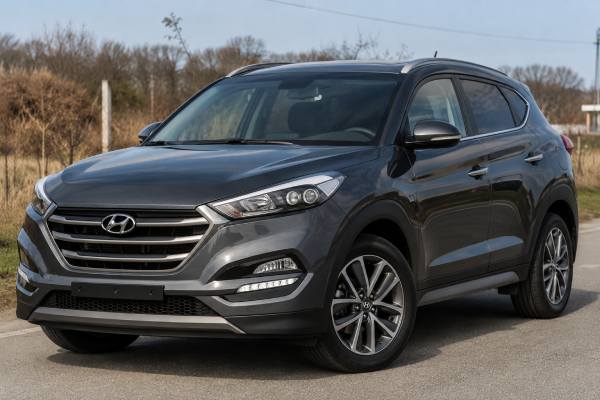
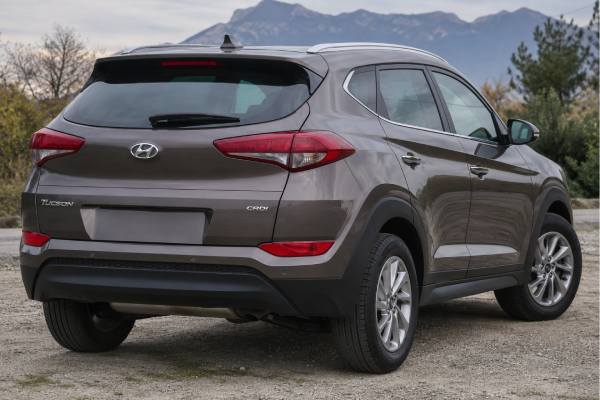
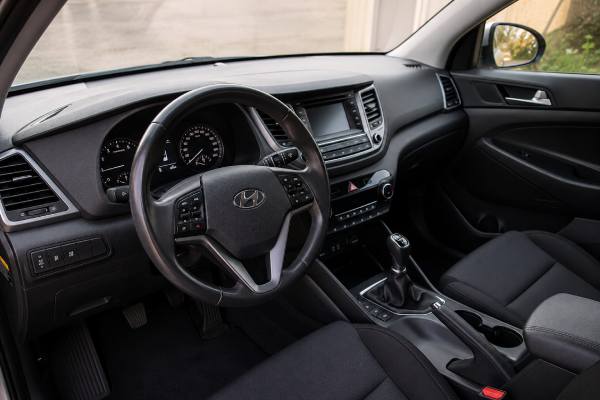
The 2015–2018 Hyundai Tucson TL with the 2.0 R-series CRDi diesel in 136 hp front-wheel-drive form is one of the more sensible versions of Hyundai’s third-generation compact SUV. It combines a strong, unstressed diesel engine, a conventional 6-speed manual gearbox, useful family space, and lower mechanical complexity than the 4WD and automatic versions.
This version suits drivers who want a practical diesel SUV for commuting, motorway use, family duties, and occasional towing. It is not the sharpest or most premium-feeling SUV in its class, but it has a good mix of space, economy, durability, and parts availability. The key is buying one with proper diesel use, clean service history, completed recall work, and no signs of DPF, clutch, or neglected-maintenance problems.
Final Verdict
The Hyundai Tucson FWD TL 2.0 R CRDi 136 hp is a good used diesel SUV for buyers who want space, torque, and simple front-wheel-drive running costs without chasing premium-brand polish. Its strongest appeal is the robust 2.0-litre diesel paired with a straightforward manual gearbox, making it better suited to regular longer journeys than short urban trips. The main tradeoff is diesel-emissions sensitivity, especially DPF and EGR issues if it has been used only for short commutes. Buy only with documented servicing, completed recall checks, clean cold starts, smooth clutch operation, and evidence that the car has regularly reached full operating temperature.
| Pros | Cons |
|---|---|
| Strong 373 Nm diesel torque suits motorway driving and towing | DPF and EGR dislike repeated short urban trips |
| FWD layout avoids 4WD coupling and rear driveline costs | Less wet-grass and winter traction than 4WD versions |
| 6-speed manual is simpler than DCT or automatic alternatives | Clutch and dual-mass flywheel wear can be expensive |
| Comfortable cabin and useful boot for family use | Interior materials feel plainer than Tiguan or CX-5 rivals |
| Good Euro NCAP result under 2015 test rules | ADAS equipment varies heavily by trim and model year |
| Wide parts availability through Hyundai and Kia shared hardware | Neglected diesel examples can need costly emissions repairs |
Table of Contents
- Tucson TL 2.0 CRDi Overview
- Specs and Technical Data
- Trims, Safety and Driver Assistance
- Reliability, Issues and Service Actions
- Maintenance and Buying Guide
- Driving, Performance and Economy
- How the Tucson Compares to Rivals
Tucson TL 2.0 CRDi Overview
The 2.0 CRDi 136 hp FWD is one of the more balanced Tucson TL variants because it keeps the stronger diesel engine but avoids the added weight and service demands of all-wheel drive. It is best understood as a practical family diesel SUV rather than an off-road vehicle or sporty crossover.
The TL-generation Tucson replaced the European ix35 naming and moved Hyundai’s compact SUV much closer to mainstream European rivals. Compared with the older ix35, it felt more settled on the road, had a cleaner cabin layout, offered stronger safety technology, and carried a more mature design. For buyers shopping used, that means the Tucson TL now sits in a useful middle ground: newer and safer than many budget SUVs, but usually cheaper than equivalent Volkswagen Tiguan, Toyota RAV4, or Mazda CX-5 diesels.
The “R 2.0 CRDi” engine is Hyundai-Kia’s 2.0-litre common-rail turbo diesel, commonly associated with the D4HA engine family. In this 136 hp tune, it is not highly stressed. The useful figure is torque: 373 Nm is available low in the rev range, which gives the Tucson enough pull for hills, passengers, motorway joining, and towing. The front-wheel-drive version was generally paired with a 6-speed manual gearbox in many European markets, including the UK Blue Drive specification.
This specific Tucson is not the quickest model in the range. The 185 hp 2.0 CRDi 4WD is stronger, and the 1.6 T-GDi petrol is livelier at higher revs. The 136 hp diesel’s appeal is different: it is relaxed, economical on longer trips, and mechanically simpler than some higher-spec alternatives. It works best for drivers covering regular A-road and motorway mileage, especially where diesel economy and pulling power matter more than refinement at idle or short-trip convenience.
As a used buy, condition matters more than badge or trim. A well-serviced 2.0 CRDi that has done regular long journeys is usually a better prospect than a low-mileage example that has spent years doing short cold starts, school runs, and interrupted DPF regenerations. The Tucson’s core mechanical package is sound, but diesel aftertreatment, clutch wear, suspension wear, and recall completion should be checked carefully.
Specs and Technical Data
This version uses a transverse 2.0-litre four-cylinder turbo diesel, a 6-speed manual transmission, and front-wheel drive. The important ownership points are its strong low-rpm torque, Euro 6 diesel emissions equipment, conventional manual driveline, and compact-SUV dimensions that give it useful cabin and boot space without making it hard to park.
| Item | Hyundai Tucson FWD 2.0 CRDi 136 hp |
|---|---|
| Generation | TL, third-generation Tucson, pre-facelift European-market years |
| Engine family | Hyundai-Kia R-series 2.0 CRDi diesel |
| Common engine code | D4HA family, market and emissions-code dependent |
| Fuel type | Diesel, low-sulphur fuel required for DPF-equipped vehicles |
| Configuration | Inline-4, DOHC, 16 valves |
| Displacement | 1,995 cc, 2.0 litres |
| Induction | Variable-geometry turbocharger with intercooler |
| Fuel system | Common-rail direct injection |
| Maximum power | 136 PS / 100 kW / 134 hp |
| Maximum torque | 373 Nm / 275 lb-ft, delivered in the low-to-mid rev range |
| Timing drive | Timing chain, inspected by condition rather than routine belt replacement |
| Official combined economy | About 4.8 L/100 km, 49 mpg US, 59 mpg UK under NEDC-type testing |
| CO2 emissions | About 127 g/km for the 2WD 136 PS Blue Drive version |
| Item | Specification |
|---|---|
| Transmission | 6-speed manual |
| Drive type | Front-wheel drive |
| Front suspension | MacPherson strut with coil spring |
| Rear suspension | Multi-link independent rear suspension |
| Steering | Motor-assisted rack-and-pinion steering |
| Front brakes | Ventilated discs |
| Rear brakes | Solid discs |
| Common tyre sizes | 225/60 R17, 225/55 R18, or 245/45 R19 depending on trim |
| Turning circle | About 10.6 m |
| Item | Value |
|---|---|
| Body style | 5-door compact SUV |
| Seating | 5 seats |
| Length | 4,475 mm |
| Width excluding mirrors | 1,850 mm |
| Width including mirrors | About 2,065 mm |
| Height | About 1,645–1,650 mm depending on wheels and roof equipment |
| Wheelbase | 2,670 mm |
| Ground clearance | About 172 mm unladen |
| Boot space | About 488–513 litres seats up, depending on spare wheel and measuring method |
| Maximum cargo volume | About 1,474–1,503 litres seats folded |
| Kerb weight | About 1,529–1,604 kg depending on trim and equipment |
| Fuel tank | 62 litres |
| Roof load | 100 kg where roof rails and accessories are rated accordingly |
| Item | Value or practical note |
|---|---|
| 0–100 km/h | About 10.6 seconds |
| Top speed | About 186–187 km/h, 115–116 mph |
| Braked towing capacity | Up to 2,200 kg on many European 2.0 CRDi FWD manual versions |
| Unbraked towing capacity | Up to 750 kg |
| Noseweight | Commonly around 100 kg, depending on market approval and towbar |
| Best use case | Long-distance family use, commuting, light towing, and motorway driving |
| Item | Typical value or guidance |
|---|---|
| Engine oil type | Low-SAPS diesel oil, commonly 5W-30 ACEA C3 depending on market |
| Engine oil capacity | Approximately 7.6 litres on many 2.0 CRDi R-series applications |
| Manual gearbox oil | GL-4 manual transmission oil; exact grade by VIN and gearbox code |
| Manual gearbox fill quantity | About 1.8–1.9 litres on common 6-speed manual applications |
| Wheel-nut torque | Typically 107–127 Nm |
| Oil drain plug torque | Commonly about 35–45 Nm, but verify by sump and plug type |
| Timing system | Chain-driven; inspect for noise, correlation faults, and tensioner wear |
Trims, Safety and Driver Assistance
Equipment varies more than the engine does, so two Tucson 2.0 CRDi 136 FWD cars can feel quite different inside. For used buyers, the best trim is usually the one with the safety, lighting, parking, and infotainment features you actually want, provided the mechanical condition is strong.
Trims and options
In UK-style trim naming, the 2.0 CRDi 136 PS 2WD Blue Drive manual was generally found higher in the range than the basic petrol or 1.7 CRDi versions. Names and standard equipment varied across Europe, but common trims included SE, SE Nav, Premium, and Premium SE in the pre-facelift period.
Useful equipment to look for includes:
- Navigation and rear camera: especially valuable because rear visibility is not as open as in a lower estate car.
- Front and rear parking sensors: helpful on higher trims and desirable for city use.
- Dual-zone climate control: common on mid-to-high trims and worth checking for correct cooling.
- Heated seats and steering wheel: often found on upper trims in colder European markets.
- LED or upgraded lighting packages: better than basic halogen units, but replacement costs are higher.
- Keyless entry and start: convenient, but check both keys and door-handle sensors.
- Panoramic sunroof: desirable for some buyers, but inspect drains, operation, seals, and interior water staining.
The FWD 136 hp diesel’s key mechanical difference is its simpler driveline. It does not have the 4WD transfer hardware, prop shaft, rear coupling, or rear differential found on HTRAC-equipped Tucson versions. That reduces weight and removes several inspection points, but it also means less traction when pulling a trailer on wet grass, snow, or steep loose surfaces.
Wheel size affects the way the Tucson feels. Seventeen-inch wheels with 225/60 tyres usually give the best ride comfort and tyre cost balance. Eighteen-inch wheels look better and remain comfortable enough. Nineteen-inch wheels sharpen the look but add road noise, firmer impacts, higher tyre cost, and more risk of rim damage.
Quick identifiers
The easiest way to identify this exact version is to check the V5C or registration data, engine label, VIN build information, and gearbox layout. The car should be listed as a 2.0 CRDi diesel with 100 kW or 136 PS and front-wheel drive. Many UK examples use “Blue Drive” badging or paperwork, which generally indicates efficiency-focused equipment such as stop-start.
Do not rely only on tailgate badges. Previous owners may remove or change badges, and some used listings confuse 136 hp and 185 hp 2.0 CRDi variants. A correct inspection should confirm engine output, drivetrain, transmission, emissions class, trim, tyre size, and recall status.
Safety ratings
The Tucson TL achieved a five-star Euro NCAP rating in 2015, with strong scores for adult and child occupant protection. The published category results were 86% adult occupant, 85% child occupant, 71% pedestrian protection, and 71% safety assist.
That is a good result for the period, but it should be read in context. Euro NCAP protocols have become stricter since 2015, especially for active safety, vulnerable-road-user detection, and driver-assistance performance. A five-star 2015 result does not mean the Tucson performs like a current five-star SUV, but it remains a solid crash-safety baseline for its age.
Safety systems and ADAS
Core safety equipment commonly included front airbags, front side airbags, curtain airbags, ABS, brake assist, electronic stability control, hill-start assist, trailer stability assist, tyre-pressure monitoring, rear ISOFIX points, and front passenger airbag deactivation. Some trims also added blind-spot monitoring, lane assistance, traffic-sign recognition, rear cross-traffic alert, smart cruise-related features, or autonomous emergency braking depending on year and market.
For buyer checks, treat ADAS as equipment-specific rather than model-wide. Confirm the system icons at start-up, test warning lights, check the windscreen for correct sensor areas, and look for evidence of calibration after windscreen replacement, front-end repair, bumper repair, or suspension alignment work. A cheap windscreen or badly repaired bumper can cause expensive driver-assistance faults.
Reliability, Issues and Service Actions
A healthy Tucson 2.0 CRDi can cover high mileage, but the cheapest-looking car can become expensive if diesel emissions equipment, clutch hardware, or recall work has been neglected. The engine itself is generally robust; most ownership problems come from use pattern, service quality, and age-related wear around it.
| Issue area | Prevalence | Cost tier | Typical pattern |
|---|---|---|---|
| DPF soot loading | Common on short-trip cars | Medium to high | City use, interrupted regeneration, warning lights |
| EGR valve or cooler fouling | Occasional | Medium | Poor running, hesitation, fault codes, soot buildup |
| Clutch and dual-mass flywheel wear | Occasional | High | Heavy traffic, towing, high-mileage manuals |
| Suspension bushes and drop links | Common with age | Low to medium | Knocking, uneven tyre wear, vague steering |
| 12 V battery and stop-start faults | Common with age | Low to medium | Weak starting, stop-start disabled, random warnings |
| Injectors, turbocharger, timing chain | Rare when maintained | High | Usually linked to neglect, poor oil, contaminated fuel |
Diesel emissions system
The DPF is the main reason to avoid a diesel Tucson that has lived on short trips. During regeneration, the exhaust must get hot enough to burn soot from the filter. Repeated cold starts, low-speed use, and switching off mid-regeneration can leave the DPF overloaded.
Symptoms include a DPF warning, increased idle speed, hot smell after stopping, fan running after shutdown, limp mode, reduced economy, or repeated exhaust-system warnings. A one-off forced regeneration may not solve the root cause if the car has a faulty temperature sensor, pressure sensor, EGR fault, boost leak, injector issue, or poor driving pattern.
EGR problems are also possible. Soot buildup can cause hesitation, roughness, poor low-rpm response, and emissions fault codes. Cleaning may help in some cases, but badly worn or failed valves usually need replacement.
Engine and timing chain
The R-series diesel is not known for fragile core internals when serviced correctly. Listen for clean cold starting, steady idle, no heavy timing-chain rattle, no injector knock, no excessive smoke, and no oil pressure warning delay.
The timing chain is not a belt with a simple routine replacement interval. It should be inspected if there is rattling on cold start, cam/crank correlation fault codes, poor running, or evidence of poor oil-change history. Long oil intervals, wrong oil, low oil level, and sludge are the enemies of chain tensioners, turbo bearings, and hydraulic components.
Clutch, manual gearbox and driveline
The 6-speed manual gearbox is generally straightforward, but the clutch and dual-mass flywheel deserve close attention. A slipping clutch under full torque in a high gear, vibration at idle, clatter when switching the engine off, judder when pulling away, or a high biting point can signal costly wear.
Because this is FWD, there is no rear differential or 4WD coupling to maintain. Still check driveshaft boots, inner CV joints, engine mounts, gearbox oil leaks, and any clunk when taking up drive.
Chassis, brakes and corrosion
By now, many 2015–2018 examples are old enough for normal wear to matter. Inspect front lower arms, anti-roll-bar links, rear suspension bushes, wheel bearings, brake calipers, and tyre wear. Uneven tyre edges often point to worn bushes, poor alignment, or previous kerb impacts.
Rust is not usually the headline Tucson problem, but it should not be ignored. Check the subframes, suspension mounting points, brake pipes, rear arches, tailgate seams, underbody edges, exhaust brackets, and areas exposed to road salt. A clean underside is worth paying more for, especially in colder markets.
Recalls and service actions
Two recall themes matter for this generation in several markets.
The first is the secondary bonnet catch recall affecting certain early TL Tucson vehicles. The concern was that the secondary catch might not hold correctly if the bonnet was not fully latched, with the risk of the bonnet lifting at speed. The repair involved replacing the catch and updating the warning logic where required.
The second is the ABS/ESC control unit short-circuit recall. The remedy involved reworking wiring and fitting amended fuses, with software updates on some specifications. Because this recall can relate to fire risk or electrical short-circuit concerns in affected vehicles, proof of completion is important.
Before buying, check the VIN with Hyundai or the official recall database in your country. A clean dashboard and a seller’s promise are not enough. Ask for dealer paperwork or a recall-status printout.
Maintenance and Buying Guide
The best maintenance strategy for this Tucson is simple: service it more like a used diesel workhorse than a low-mileage appliance. Fresh correct oil, clean filters, healthy cooling, regular brake-fluid changes, and occasional long hot runs do more for long-term reliability than cosmetic extras.
| Item | Recommended interval for used ownership | Why it matters |
|---|---|---|
| Engine oil and filter | Every 10,000–15,000 km or 12 months | Protects turbo, chain tensioner, bearings, and emissions hardware |
| Engine air filter | Every 15,000–30,000 km | Reduces turbo and airflow-sensor contamination |
| Cabin filter | Every 12 months | Improves ventilation and demisting |
| Fuel filter | Every 30,000–60,000 km, sooner with poor fuel quality | Protects high-pressure pump and injectors |
| Coolant | First major change around 100,000 km, then every 60,000–80,000 km | Protects radiator, heater, EGR cooler, and water pump |
| Brake fluid | Every 2 years | Prevents moisture-related corrosion and soft pedal feel |
| Manual gearbox oil | Inspect for leaks; change around 90,000–120,000 km in hard use | Improves shift quality and bearing life |
| Timing chain | No routine belt-style interval; inspect by symptoms | Noise, faults, or poor history can justify deeper inspection |
| Auxiliary belt and hoses | Inspect yearly; replace when cracked, noisy, swollen, or oil-soaked | Prevents cooling, charging, and steering-assist disruption |
| Brake pads and discs | Inspect every service | Rear discs can corrode on lightly used vehicles |
| Tyre rotation and alignment | Rotate every 10,000–12,000 km; align after impacts or uneven wear | Protects tyres and reveals suspension wear early |
| 12 V battery | Test yearly after year four | Weak batteries trigger stop-start and electrical complaints |
Fluid and service priorities
Use the exact oil specification listed for the vehicle’s VIN and market, especially because diesel particulate filters need low-ash oil. A generic “diesel oil” is not good enough. Wrong oil can shorten DPF life and increase deposits.
For the manual gearbox, use the correct GL-4 transmission oil rather than a random gear oil. GL-5 oils are not automatically suitable for every manual gearbox because additive chemistry can affect synchronizers in some designs.
Brake fluid should not be ignored. A Tucson that tows, sits outside, or spends winters on salted roads benefits from regular brake inspection, caliper cleaning, and fresh fluid. Rear brake corrosion is common on many SUVs that do light-duty driving.
Pre-purchase inspection checklist
Before buying, ask to start the engine from cold and drive it until fully warm. A proper test drive should include town speeds, a steady cruise, full-throttle acceleration in a higher gear, braking from road speed, parking manoeuvres, and a restart after heat soak.
Check these points carefully:
- Complete service history with correct oil specification.
- Proof of fuel-filter changes, not just oil changes.
- Completed bonnet-catch and ABS/ESC recall checks where applicable.
- No DPF warning lights, limp mode, or recent fault-code clearing.
- Smooth clutch bite with no slipping, judder, or flywheel rattle.
- No heavy smoke under acceleration once warm.
- Clean coolant with no oil contamination or unexplained loss.
- Dry engine, turbo oil feed area, intercooler hoses, and gearbox casing.
- Even tyre wear and no suspension knocking.
- Working air conditioning, parking sensors, rear camera, infotainment, and keyless functions.
- No damp carpets, blocked sunroof drains, or tailgate water ingress.
- Underside condition, especially subframes, brake pipes, mounts, and seams.
Which versions to seek or avoid
For most buyers, a well-kept SE Nav or Premium-style 2.0 CRDi FWD manual is a strong choice because it balances equipment with sensible running costs. The 17-inch wheel package is usually the sweet spot for ride comfort and tyre price.
Avoid cars with unclear diesel use, missing service records, obvious clutch wear, unresolved warning lights, or fresh MOT passes hiding long advisory lists. A cheap Tucson needing clutch, DPF, tyres, brakes, and suspension work can quickly cost more than a cleaner example.
Long-term durability is good when the car is driven and serviced properly. The engine can age well, the FWD layout is simple, and parts supply is generally healthy. The weak point is not the concept; it is buying the wrong used diesel.
Driving, Performance and Economy
The Tucson 2.0 CRDi FWD is relaxed rather than exciting, with enough torque to feel easy in normal driving. It is at its best on longer roads where the diesel engine can settle, the manual gearbox is not overworked, and the cabin feels calm.
Ride, handling and refinement
The Tucson TL rides with a comfort-first character. On 17-inch wheels it handles broken roads well and feels more settled than the older ix35. Larger 18- and 19-inch wheels bring a firmer edge, especially over potholes, sharp ridges, and urban speed bumps.
Steering is light and easy, which suits parking and daily use. It is not especially talkative through corners, and keen drivers may prefer a Mazda CX-5 or Ford Kuga. The Tucson feels safe and predictable, with stable motorway manners and modest body roll for a compact SUV.
Cabin noise is well controlled at a steady cruise, but the diesel engine is more audible when cold or under hard acceleration. Once warm, it fades into the background at motorway speeds. Wind noise and tyre noise depend heavily on tyre brand, tread depth, and wheel size.
Powertrain character
The 2.0 CRDi’s best quality is low-rpm torque. You do not need to rev it hard to make progress. It pulls cleanly from low speeds, feels comfortable in the middle gears, and has enough shove for overtaking slower traffic when planned properly.
There is some turbo lag if you ask for strong acceleration from very low revs, but it is manageable. The manual gearbox suits the engine because it lets the driver keep the diesel in its torque band. The shift is not sports-car precise, but it is generally easy to use.
For towing, the torque is helpful, and the FWD manual version’s braked towing rating is impressive for this class. The limit is traction rather than power. On dry roads it copes well with moderate trailers. On muddy campsites, wet slipways, steep gravel, or snow, the 4WD version has a clear advantage.
Real-world fuel economy
The official combined figure is very optimistic by modern real-world expectations. In normal ownership, a healthy 2.0 CRDi FWD manual usually returns:
- City use: about 7.0–8.5 L/100 km, 28–34 mpg US, 33–40 mpg UK.
- Mixed driving: about 6.0–7.0 L/100 km, 34–39 mpg US, 40–47 mpg UK.
- Steady highway driving: about 5.2–6.3 L/100 km, 37–45 mpg US, 45–54 mpg UK.
Short winter trips can push economy much worse because the engine takes time to warm up and the DPF may try to regenerate more often. Long steady journeys are the Tucson diesel’s natural environment. That is also the usage pattern that helps keep the DPF healthier.
Braking, control and towing feel
Braking performance feels secure when the system is maintained, but the pedal is set up more for smoothness than sharp bite. A spongy pedal, pulsing, sticking rear caliper, or vibration under braking should be investigated rather than dismissed as age.
When loaded, the Tucson remains composed if tyre pressures, brakes, and suspension are in good condition. With a trailer, expect economy to drop significantly. A moderate caravan or braked trailer can easily add 20–40% to fuel use depending on speed, weight, hills, wind, and roof load.
How the Tucson Compares to Rivals
The Tucson’s advantage is value, space, warranty-era reputation, and a strong diesel engine in a relatively simple FWD manual package. Its main rivals may feel sharper, plusher, or more efficient in certain versions, but few are clearly better across purchase price, practicality, towing ability, and running-cost simplicity.
| Rival | Where it may beat the Tucson | Where the Tucson has an edge |
|---|---|---|
| Kia Sportage 2.0 CRDi | Similar mechanical base, often sportier cabin styling | Tucson styling and trim value may suit more buyers |
| Nissan Qashqai 1.6 dCi | Lighter, often more economical, easy urban size | Tucson feels stronger, roomier, and better for towing |
| Volkswagen Tiguan 2.0 TDI | More premium cabin feel and sharper perceived quality | Tucson usually costs less for similar age and mileage |
| Mazda CX-5 2.2 diesel | Better steering feel and more enjoyable handling | Tucson’s 2.0 CRDi can be the safer used diesel bet |
| Toyota RAV4 diesel | Strong practicality and Toyota durability reputation | Tucson often feels newer, better equipped, and better value |
| Ford Kuga 2.0 TDCi | Sharper road manners and confident chassis tuning | Tucson has a calmer cabin and simpler ownership appeal |
The Kia Sportage is the closest comparison because it shares much of the Hyundai-Kia platform and diesel hardware. Choosing between them often comes down to styling, trim, price, and service history rather than a major mechanical difference.
The Nissan Qashqai is more car-like and easier to place in narrow streets, but the Tucson feels more substantial and stronger when loaded. The Qashqai’s smaller diesel may win on economy, while the Tucson’s 2.0 CRDi wins on torque and towing confidence.
The Volkswagen Tiguan is the more premium-feeling SUV, especially inside, but used prices and repair costs can be higher. A clean Tiguan is excellent; a neglected one can be expensive. The Tucson is less prestigious but often better value.
The Mazda CX-5 is more enjoyable to drive, with better steering and body control. However, Mazda diesels of this era need careful inspection, and buyers should be very cautious about oil dilution, DPF history, and service quality. The Tucson’s 2.0 CRDi is usually the more straightforward used choice.
For a buyer who wants comfort, space, towing ability, and reasonable diesel economy without paying a premium badge tax, the Tucson makes a strong case. The smartest purchase is not the cheapest one; it is the car with the cleanest history, healthiest emissions system, completed recalls, and no signs of clutch or suspension neglect.
References
- Hyundai Owners manuals | Hyundai Motor UK 2026 (Owner’s Manual)
- Hyundai Tucson – Technical data and dimensions 2018 (Manufacturer Technical Data)
- Hyundai Tucson – Euro NCAP Results 2015 2015 (Safety Rating)
- HYUNDAI TUCSON 2016 – Check if a vehicle, part or accessory has been recalled – GOV.UK 2021 (Recall Database)
- Check if a vehicle, part or accessory has been recalled 2018 (Recall Database)
Disclaimer
This article is for informational purposes only and is not a substitute for professional diagnosis, inspection, servicing, or repair. Specifications, torque values, service intervals, fluids, procedures, emissions equipment, towing limits, and safety equipment can vary by VIN, market, trim, production date, and installed options. Always verify against the vehicle’s official service documentation, owner’s manual, VIN data, and Hyundai dealer records before buying, servicing, towing, or repairing the vehicle.
If this guide helped you, please consider sharing it on Facebook, X/Twitter, or your preferred social platform to support our work.