

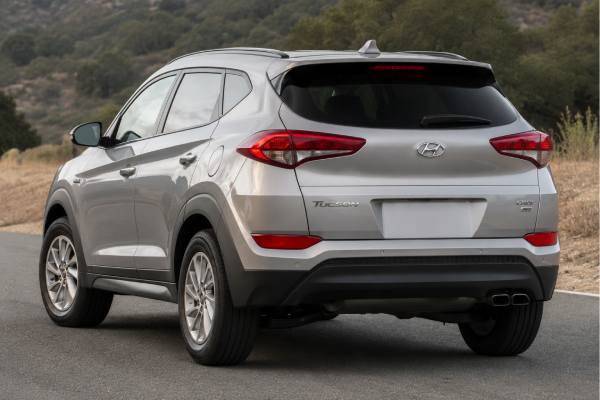
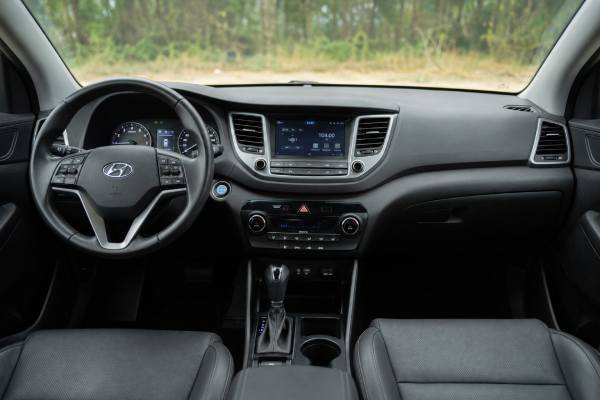
The Hyundai Tucson 4WD TL with the Gamma 1.6 T-GDi engine is one of the more interesting versions of the third-generation Tucson. It combines compact SUV practicality, a punchy turbocharged petrol engine, and on-demand 4WD traction without the running costs of the larger diesel models. For many used buyers, it sits in a useful middle ground: quicker and more refined than the base 1.6 GDi, easier to live with in low-emission areas than older diesels, and still practical enough for family use.
The key thing to understand is that this version is more maintenance-sensitive than the simpler naturally aspirated petrol Tucson. The turbocharged direct-injection engine and 7-speed dry dual-clutch transmission can work well, but they reward clean oil, correct servicing, and careful inspection before purchase.
Final Verdict
The 2015–2018 Hyundai Tucson TL 4WD 1.6 T-GDi is a good used compact SUV for drivers who want petrol refinement, useful mid-range performance, and extra wet-weather traction without moving to a larger diesel. Its strongest appeal is the balance of space, comfort, warranty-backed build quality, and a responsive 177 PS turbo engine. It suits families, commuters, and rural drivers better than heavy towing users or constant stop-start urban crawlers. The main ownership tradeoff is the dry dual-clutch transmission, which needs smooth driving and confirmed software/service history. Buy one only after checking DCT behaviour, oil-change records, recalls, and AWD driveline condition.
| Pros | Cons |
|---|---|
| Strong 265 Nm mid-range torque suits hills and overtaking | Dry 7-speed DCT dislikes creeping traffic and poor maintenance |
| On-demand 4WD adds useful traction in rain, snow, and gravel | Not a true off-road 4×4 with low range or locking diffs |
| Spacious cabin and practical 513-litre boot in many markets | Real-world fuel use is higher than official figures suggest |
| Good safety structure and broad airbag coverage for its era | ADAS availability depends heavily on trim and market |
| Petrol engine avoids diesel DPF and AdBlue concerns | Direct injection can develop intake carbon with short-trip use |
Table of Contents
- Hyundai Tucson TL 1.6 T-GDi 4WD Overview
- Specifications and Technical Data
- Trims, Safety and Driver Assistance
- Reliability, Common Issues and Service Actions
- Maintenance and Used Buying Guide
- Driving, Performance and Fuel Economy
- How the Tucson 1.6 T-GDi Compares to Rivals
Hyundai Tucson TL 1.6 T-GDi 4WD Overview
The Tucson TL 1.6 T-GDi 4WD is best understood as the quick petrol version of Hyundai’s third-generation compact SUV. It is not the cheapest Tucson to run, but it gives the model a much stronger driving character than the base petrol and avoids the diesel-specific issues that matter to many used buyers.
The TL generation replaced the ix35/Tucson LM and moved Hyundai’s compact SUV closer to the mainstream European and Japanese rivals of the period. It brought a larger body, a more mature cabin, better crash-test performance, and broader driver-assistance availability. In many markets, the 1.6 T-GDi 4WD sat near the upper part of the range, often paired with the 7-speed dual-clutch transmission and better equipment.
The engine is from Hyundai-Kia’s Gamma turbo petrol family, commonly known by the G4FJ code. It is a 1.6-litre, four-cylinder, turbocharged, direct-injection petrol engine. In this Tucson application, output is usually quoted as 177 PS, 130 kW, or around 175 mechanical horsepower, with 265 Nm of torque available across a wide mid-range. That torque spread is what makes the car feel stronger than its displacement suggests.
Hyundai’s 4WD system is an on-demand setup. In normal steady driving, the Tucson behaves mostly like a front-driven SUV, then sends torque rearward when the system detects slip or when the driver uses the lock function at low speeds. It is useful for wet roads, winter conditions, slippery rural tracks, and light towing. It is not built for hard off-road work, rock crawling, or repeated abuse on difficult trails.
The 2015–2018 period mainly covers the pre-facelift TL in many European markets, although equipment and emissions details vary by country. Some markets continued closely related specifications into later model years, and some regions received facelift equipment changes during 2018. For used buyers, the important checks are not just the registration year, but the VIN, gearbox type, engine code, emissions equipment, and service history.
This version appeals most to buyers who want:
- A petrol SUV with more useful performance than a base naturally aspirated engine.
- A family-sized cabin without moving into a large SUV.
- Better traction than a front-wheel-drive crossover.
- Avoidance of diesel particulate filter concerns in short-trip driving.
- Higher trim equipment, because the 1.6 T-GDi 4WD was often sold in better-equipped grades.
Its drawbacks are equally clear. The 1.6 T-GDi uses direct injection and a turbocharger, so oil quality and warm-up habits matter. The dry dual-clutch gearbox, where fitted, is more sensitive than a conventional torque-converter automatic in heavy traffic. Fuel economy is acceptable, not exceptional. A neglected example can quickly become more expensive than the attractive used price suggests.
Specifications and Technical Data
This Tucson uses a transverse 1.6-litre turbocharged petrol engine, front-mounted with an on-demand 4WD system. The most common automatic setup is Hyundai’s 7-speed dry dual-clutch transmission, though some markets also listed a 6-speed manual 4WD version. The practical ownership points are the broad 265 Nm torque band, 62-litre fuel tank, compact SUV dimensions, and the need to service the turbo engine and AWD driveline properly.
| Item | Hyundai Tucson TL 1.6 T-GDi 4WD |
|---|---|
| Engine family | Gamma 1.6 T-GDi, commonly G4FJ |
| Fuel type | Petrol, direct injection; regular unleaded accepted in many markets |
| Layout | Inline 4-cylinder, transverse front-mounted |
| Displacement | 1,591 cc, 1.6 litres |
| Induction | Turbocharged |
| Valvetrain | 16 valves, dual overhead camshafts |
| Fuel system | T-GDi direct petrol injection |
| Maximum power | 130 kW, 177 PS, about 175 hp at 5,500 rpm |
| Maximum torque | 265 Nm (195 lb-ft) from about 1,500–4,500 rpm |
| Bore × stroke | 77.0 mm × 85.44 mm |
| Compression ratio | 10.0:1 |
| Timing drive | Timing chain |
| Official combined fuel use | About 7.5–7.7 L/100 km (31 mpg US / 37 mpg UK), test-cycle dependent |
| Item | Specification or practical note |
|---|---|
| Common automatic gearbox | 7-speed dry dual-clutch transmission with manual mode |
| Manual availability | 6-speed manual 4WD in selected markets |
| Drive type | On-demand 4WD / AWD |
| 4WD lock function | Low-speed torque split assistance, commonly described as 50:50 lock mode |
| Front suspension | MacPherson struts |
| Rear suspension | Multi-link independent rear suspension |
| Steering | Motor-driven rack-and-pinion power steering |
| Turning circle | About 10.6–11.0 m depending on market data |
| Item | Value |
|---|---|
| Body style | 5-door compact SUV, 5 seats |
| Length | About 4,475–4,480 mm (176.2–176.4 in) |
| Width | 1,850 mm (72.8 in), excluding mirrors |
| Height | About 1,645–1,660 mm depending on rails and trim |
| Wheelbase | 2,670 mm (105.1 in) |
| Ground clearance | About 170–172 mm in markets where published |
| Kerb weight | About 1,530–1,670 kg depending on trim, gearbox and market |
| Fuel tank | 62 litres (16.4 US gal / 13.6 UK gal) |
| Cargo volume | Commonly around 488–513 litres seats up; about 1,478–1,503 litres seats folded |
| Roof load | Often listed around 100 kg where roof rails are fitted |
| Item | Value or note |
|---|---|
| 0–100 km/h | About 9.2–9.5 seconds depending on gearbox and test source |
| Top speed | About 200–203 km/h (124–126 mph) |
| Braked towing capacity | Up to about 1,600 kg in several markets |
| Unbraked towing capacity | Up to about 750 kg |
| Typical wheel sizes | 17, 18 or 19 in depending on trim |
| Common tyre sizes | 225/60 R17, 225/55 R18, or 245/45 R19 |
| Front brakes | Ventilated discs, commonly 305 mm in published data |
| Rear brakes | Solid discs, commonly 302 mm in published data |
| Item | Practical value |
|---|---|
| Engine oil quantity | About 4.5 litres for a routine oil and filter change |
| Common oil viscosity | 5W-30 or 5W-40 meeting the correct market specification |
| DCT fluid | Specific 7DCT gear oil; do not substitute ordinary ATF |
| Brake fluid | DOT 4 commonly specified |
| Timing components | Chain-driven; inspect for noise, stretch faults, and tensioner wear |
| Oil drain plug torque | Commonly around 39 Nm (29 lb-ft); confirm by VIN |
Trims, Safety and Driver Assistance
Equipment varies a lot by country, so the badge on the tailgate is not enough to judge a used Tucson. The best examples combine the 1.6 T-GDi 4WD powertrain with documented safety equipment, clear infotainment functionality, and wheel packages that have not damaged ride comfort.
In many European markets, higher trims carried names such as SE Nav, Premium, Premium SE, or local equivalents. In Australia and some other regions, the 1.6 T-GDi AWD was commonly linked to Elite and Highlander grades. The exact trim names matter less than the equipment fitted to the individual car.
Trim and option identifiers
Quick signs that a Tucson is a higher-spec 1.6 T-GDi 4WD include twin exhaust outlets on many versions, larger alloy wheels, leather or leather-appointed trim, keyless entry, an electronic parking brake, front and rear parking sensors, navigation, and advanced safety icons in the instrument cluster. The engine badge may say T-GDi, Turbo, or simply not advertise much at all, depending on market.
Important functional differences to check include:
- Gearbox type: 6-speed manual or 7-speed DCT.
- Wheel package: 17-inch wheels ride best, 18-inch wheels are a good compromise, 19-inch wheels look sharp but ride more firmly.
- Safety pack: some cars have autonomous emergency braking and lane support; others only have basic stability systems.
- Lighting: halogen, projector, xenon, or LED lighting varies by trim and year.
- Parking assistance: rear camera is common on upper trims, while front sensors and around-view systems are more trim-dependent.
- Infotainment: screen size, navigation, DAB, Apple CarPlay and Android Auto vary by year and region.
The 2018 facelift changed front-end styling, interior screen layout, equipment availability, and emissions details in some markets. It also shifted some ADAS and infotainment items. For a buyer comparing a late 2017 car with a 2018 car, inspect the actual equipment rather than assuming the model year tells the whole story.
Safety ratings
The TL-generation Tucson performed well for its era. European-market cars achieved a five-star Euro NCAP result under the 2015 protocol, with strong adult and child occupant scores. In the United States, IIHS testing for the 2016–2021 generation showed good crash-test results in several key categories, although headlight and later updated side-impact assessments depend on year, trim, and test protocol.
Do not compare its score directly with a brand-new SUV tested under newer rules. Crash-test protocols became tougher after this Tucson was designed. Still, as a used family SUV from the 2015–2018 period, the TL has a solid safety foundation.
Airbags, child seats and stability systems
Most well-specified Tucson TL models have front airbags, front side airbags, and curtain airbags covering the first and second rows. Many markets also list a rollover sensor, front seat belt pretensioners, load limiters, ISOFIX/LATCH anchors on the rear outboard seats, and top tether points.
Core active safety normally includes:
- Anti-lock braking system.
- Electronic brake-force distribution.
- Brake assist.
- Electronic stability control.
- Traction control.
- Vehicle stability management.
- Hill-start assist.
- Downhill brake control on many 4WD versions.
- Emergency stop signal in many markets.
ADAS availability is the part that needs the most care. Forward collision warning, autonomous emergency braking, lane keeping assist, blind-spot monitoring, rear cross-traffic alert, speed limit information, driver attention warning, high-beam assist, and adaptive cruise control were not always standard. Some are camera-only systems, while others use radar and camera hardware.
After windscreen replacement, bumper repair, wheel alignment, or front-end collision work, camera and radar systems may need calibration. A car with warning lights, disabled lane support, or inconsistent AEB operation should not be treated as a bargain until the system has been scanned and calibrated properly.
Reliability, Common Issues and Service Actions
A well-maintained Tucson 1.6 T-GDi 4WD can be reliable, but the expensive risks are concentrated around the DCT, turbo engine servicing, and AWD driveline neglect. Most problems are manageable if caught early; they become costly when previous owners ignored software updates, fluid services, vibration, or warning lights.
Common issue map
| System | Prevalence | Severity | Typical symptoms |
|---|---|---|---|
| 7-speed dry DCT | Common concern | Medium to high | Low-speed shudder, hesitation, delayed take-up, hot-clutch smell |
| Engine oil neglect | Occasional | High | Noisy chain, turbo wear, sludge, oil consumption |
| Direct-injection carbon | Occasional | Medium | Rough idle, misfire, poor cold running |
| Ignition coils and plugs | Occasional | Low to medium | Misfire under load, check-engine light, hesitation |
| AWD coupler and rear driveline | Occasional | Medium | Binding, rear-end noise, vibration, uneven tyre wear |
| Suspension and wheel bearings | Common with age | Low to medium | Knocks, humming, vague steering, tyre feathering |
| ABS module recall exposure | Market/VIN dependent | High | Recall record incomplete, warning lights, fuse-kit not confirmed |
DCT behaviour and software updates
The 7-speed DCT is the main inspection priority. It is a dry dual-clutch design, so it behaves differently from a torque-converter automatic. A slight mechanical feel at parking speeds is normal, but harsh shuddering, repeated hesitation, flaring revs, or a strong clutch smell are warning signs.
Symptoms → likely cause → remedy:
- Hesitation pulling away → outdated TCM/ECM calibration or clutch adaptation issue → check campaign history and update software.
- Shudder in first gear → clutch wear, heat damage, or adaptation problem → scan, perform clutch tests, update, then replace clutch parts if needed.
- “Vehicle will not move” event → known early DCT control issue on some vehicles → verify recall or campaign completion.
- Judder after long crawling traffic → overheated dry clutches → road test when hot, inspect clutch data and driving history.
- Gearbox warning or limp mode → actuator, sensor, clutch, or internal fault → diagnostic scan before purchase.
DCT longevity depends heavily on driving style. Avoid using the accelerator to hold the car on a hill, avoid creeping forward inch by inch in traffic, and do not tow heavy loads in conditions that repeatedly slip the clutches.
Gamma 1.6 T-GDi engine concerns
The 1.6 T-GDi is generally a better used bet than many older high-mileage diesels for short-trip users, but it is not maintenance-proof. It needs regular oil changes with the correct specification, careful warm-up, and attention to misfires.
Key checks include:
- Oil service history at sensible time and mileage intervals.
- Cold-start rattle from the timing chain area.
- Oil leaks around the cam cover, turbo oil lines, and sump area.
- Coolant level stability and signs of past overheating.
- Smooth idle when cold and hot.
- Boost delivery without hesitation or smoke.
- Misfire counts under load.
- Intake carbon symptoms on high-mileage, short-trip cars.
Because the engine is direct-injected, fuel does not wash the intake valves in the same way as older port-injected engines. Over time, oil vapour from the crankcase ventilation system can leave deposits on the intake valves. It is not guaranteed to be a problem, but rough cold idle, hesitation, and misfire codes should be investigated properly.
The timing chain has no routine belt-style replacement interval. That does not mean it should be ignored. Replace chain components when there is chain rattle, timing correlation fault codes, tensioner wear, guide damage, or measured stretch outside specification.
Turbo, cooling and fuel system
The turbocharger usually gives long service if oil changes are frequent and the engine is not shut down immediately after hard use. Look for whistle noises, boost leaks, oil smoke, poor acceleration, and oil wetness around pipework. Intercooler hoses and clamps should be checked on higher-mileage cars.
Thermostat and coolant-temperature faults have appeared in service campaigns in some markets. A car that runs cool, triggers P0128, or has poor heater performance may need thermostat-related work or an update depending on exact build.
Fuel-system faults are less common than gearbox complaints, but poor-quality fuel, tired plugs, failing coils, or injector problems can produce hesitation that feels like transmission trouble. Always scan both engine and transmission modules.
AWD, suspension, brakes and corrosion
The AWD system is usually durable when tyres match and fluids are not neglected. Uneven tyre sizes or badly mismatched tread depths can stress the driveline. During a test drive, listen for rumbling, binding on tight turns, clunks when shifting from drive to reverse, and vibration under acceleration.
Suspension wear is normal with age. Front anti-roll-bar links, lower control arm bushes, rear suspension bushes, wheel bearings, and alignment issues are worth checking. On cars with 19-inch wheels, pothole damage and tyre noise are more common.
Brake issues tend to be age-related: rear pads sticking, corroded discs after low-use periods, electronic parking brake faults on better-equipped trims, and brake fluid left too long. In salty climates, inspect brake lines, rear subframe areas, lower suspension arms, door seams, tailgate edges, and underbody seams.
Recalls and service actions
Recall history is VIN-specific. In the United States, some 2016 Tucson DCT vehicles were subject to a recall for transmission control module reprogramming because certain conditions could result in delayed clutch engagement. Some 2016–2021 Tucson vehicles were also affected by an ABS module recall involving corrosion and electrical short risk, with a fuse kit and software update as the remedy.
Other countries may have different campaigns, different build ranges, or different names for the same service action. Before buying, ask for:
- Official VIN recall check printout.
- Dealer service campaign completion record.
- Evidence of DCT software updates.
- Any transmission clutch or actuator replacement paperwork.
- ABS module recall completion where applicable.
- Full diagnostic scan showing no active engine, transmission, ABS, or ADAS faults.
Maintenance and Used Buying Guide
The best maintenance plan for this Tucson is more conservative than the longest advertised interval. For a used 1.6 T-GDi 4WD, fresh oil, clean filters, brake fluid, DCT care, AWD fluid attention, and regular inspections are cheaper than turbo, clutch, or driveline repair.
| Interval | Work to do |
|---|---|
| Every 10,000–15,000 km or 12 months | Engine oil and filter; inspect tyres, brakes, lights, leaks, belts and hoses |
| Every 15,000–20,000 km | Rotate tyres, check alignment wear, inspect brake pads and discs |
| Every 20,000–30,000 km | Cabin filter; inspect engine air filter and replace sooner in dusty use |
| Every 30,000–40,000 km | Brake fluid test or replacement, especially in humid climates |
| Every 45,000–60,000 km | Engine air filter, fuel-system inspection, DCT and AWD fluid condition check |
| About 60,000–75,000 km | Spark plugs on turbo petrol versions, earlier if misfiring under load |
| About 80,000–100,000 km | DCT gear oil, transfer case and rear differential/coupler fluids if applicable |
| About 100,000–120,000 km | Coolant service, serpentine belt inspection/replacement, battery check |
| Any time symptoms appear | Timing chain noise, misfires, gearbox shudder, AWD binding, or warning lights |
In severe use, shorten the oil interval. Severe use includes repeated short trips, heavy city traffic, hot climates, dusty roads, mountain driving, roof loads, towing, or long periods idling. Many used examples live exactly this kind of life, even if the service book shows only basic annual visits.
Fluids, capacities and torque values
Use VIN-based service information for final specifications, but these reference points are helpful when judging maintenance quality:
- Engine oil: about 4.5 litres during normal oil and filter service.
- Oil viscosity: commonly 5W-30 or 5W-40, depending on climate and market specification.
- DCT fluid: dedicated 7DCT gear oil, not conventional automatic transmission fluid.
- Brake fluid: DOT 4.
- Coolant: Hyundai-approved long-life ethylene-glycol coolant.
- Wheel nut torque: commonly around 107–127 Nm on many Hyundai models; confirm for the exact wheel.
- Oil drain plug torque: commonly around 39 Nm; use a new washer and confirm by VIN.
Do not treat universal oil charts as final authority. The correct oil approval can vary by emissions equipment, market, climate, and model year. A turbocharged direct-injection engine should not be run on cheap oil of unknown specification.
Pre-purchase inspection checklist
A 20-minute test drive is not enough. Start the car cold, drive it in traffic, take it on a faster road, park it repeatedly, and then check it hot.
Before purchase, inspect:
- Cold start: no extended rattle, smoke, or unstable idle.
- Engine bay: no oil leaks around turbo lines, cam cover, or sump.
- Cooling system: stable temperature, clean coolant, no unexplained loss.
- DCT: smooth take-up, no harsh shudder, no warning messages.
- AWD: no binding in tight turns, no rear-end growl, matching tyres fitted.
- Brakes: no pulsing, sticking rear calipers, or EPB warning.
- Suspension: no knocks over sharp bumps, no uneven tyre wear.
- Electronics: camera, sensors, infotainment, keyless entry and ADAS all working.
- Body: check lower doors, tailgate, wheel arches, subframes and brake lines for corrosion.
- Paperwork: recall completion, service stamps, invoices, gearbox work, and tyre history.
A good Tucson should feel composed, quiet, and predictable. Walk away from one that has a cheap recent clutch repair with no paperwork, mismatched tyres on the AWD system, old oil, gearbox hesitation, or unexplained warning lights.
Best years and trims to seek
A later 2017 or well-documented 2018 car can be attractive if it has confirmed DCT updates and strong service history. Higher trims are worthwhile because they usually add better safety and convenience equipment, but do not pay only for badges. Condition matters more than trim name.
The safest choice is often a privately owned car with annual invoices, matching tyres, no towbar abuse, no accident repairs, and a clean dealer recall record. A cheaper high-mileage example can still be good, but only if the DCT and AWD system test properly.
Long-term durability is decent when the car has been serviced on time and driven with mechanical sympathy. Neglect shows first in the gearbox, turbo ancillaries, tyres, brakes, and suspension. Budgeting for fluids, spark plugs, tyres, and brake work early in ownership is sensible.
Driving, Performance and Fuel Economy
The 1.6 T-GDi 4WD feels lively for a compact family SUV of its age, mainly because its torque arrives early and stays flat through the mid-range. It is not a performance SUV, but it has enough punch to make overtaking and motorway merging easier than in the naturally aspirated 1.6 petrol.
In normal driving, the engine is quiet once warm. There is some turbo lag if you ask for full power from very low revs, but the broad torque band means it does not need constant revving. The DCT shifts quickly when moving, especially in moderate acceleration, but it can feel less natural than a torque-converter automatic when parking or creeping in traffic.
Ride, handling and refinement
The Tucson TL was tuned more for stability and comfort than sharp handling. On 17- or 18-inch wheels, it rides acceptably well over rough roads and remains settled on motorways. On 19-inch wheels, broken surfaces are more noticeable, and tyre noise can be stronger.
Steering is light and easy rather than communicative. That suits parking and urban driving, but keen drivers may find it short on feedback. Cornering balance is predictable, with safe understeer if pushed hard. The body leans more than a low hatchback but less than older soft SUVs.
Cabin noise is generally well controlled. Wind noise is modest at motorway speeds, tyre noise depends heavily on the tyre brand and wheel size, and the engine only becomes obvious under hard acceleration. Worn tyres, bad wheel bearings, or poor alignment can make a Tucson sound much older than it is.
Braking feel is confident when the discs, pads and fluid are in good order. A soft pedal, pulsing through the pedal, or rear brake grinding usually points to age-related maintenance rather than a fundamental design flaw.
Powertrain character
The engine’s best range is the middle of the rev band. It pulls cleanly from low-to-mid rpm and does not need to be thrashed. Sport mode sharpens throttle and shift response on many DCT cars, while Eco mode can make the gearbox chase higher gears and dull initial response.
The DCT is at its best when the car is moving. It is less happy when the driver constantly feathers the throttle at walking pace. In traffic, leave a gap, let the car move cleanly, and avoid creeping forward every few seconds. On hills, use the brake or auto-hold rather than balancing the car on the accelerator.
The AWD system works quietly in the background. In rain, snow, or gravel, it helps the Tucson feel more secure when accelerating out of junctions or climbing slippery roads. The lock function can help at low speeds, but it is not for high-grip tight manoeuvring or off-road abuse.
Real-world fuel economy
Official fuel economy is usually in the mid-7 L/100 km range, but real-world use depends heavily on traffic, tyres, terrain, and driving style. For a healthy 1.6 T-GDi 4WD, realistic figures are often:
| Use case | Likely fuel use | Approximate mpg US / UK |
|---|---|---|
| Urban short trips | 9.5–11.5 L/100 km | 20–25 mpg US / 25–30 mpg UK |
| Mixed driving | 7.8–9.0 L/100 km | 26–30 mpg US / 31–36 mpg UK |
| Steady highway | 6.7–7.8 L/100 km | 30–35 mpg US / 36–42 mpg UK |
| Winter, roof load, or heavy traffic | 10–15% worse than normal | Varies by tyre, temperature and route |
The Tucson is not especially aerodynamic or light, so high-speed cruising and roof boxes hurt economy. The 4WD hardware and DCT also add weight compared with simpler front-drive versions. If fuel economy is the main priority, a smaller petrol crossover or a later hybrid will usually do better.
Towing and loaded driving
The 1.6 T-GDi has enough torque for moderate towing within the rated limit, but the DCT is the weak link in difficult conditions. Reversing a trailer uphill, crawling in traffic with a load, or launching repeatedly on steep gradients can build clutch heat. If towing is regular and heavy, a diesel Tucson with a conventional automatic, or a rival with a torque-converter gearbox, may be the safer choice.
For family trips with passengers and luggage, the Tucson feels comfortable and stable. The rear suspension copes well with load, though tyre pressures should be set correctly. With a full boot, check rear tyre wear, brake condition, and shock absorber performance.
How the Tucson 1.6 T-GDi Compares to Rivals
The Tucson’s strongest rival argument is value: it usually gives generous equipment, a roomy cabin, strong safety credentials, and a punchy petrol engine for less than some European alternatives. Its weakness is that the DCT and fuel economy are not class-leading, so condition and intended use matter more than the headline specification.
| Rival | How it compares | Best reason to choose it |
|---|---|---|
| Kia Sportage 1.6 T-GDi AWD | Very similar platform and powertrain, different styling and trim mix | Same core strengths, sometimes better used-market availability |
| Nissan Qashqai petrol | More common and economical, but usually less powerful | Lower running costs and easier urban driving |
| Volkswagen Tiguan TSI 4Motion | More polished cabin and strong road manners, often pricier | Premium feel and wider engine/gearbox choice |
| Mazda CX-5 petrol AWD | Naturally aspirated engines feel smoother but less punchy low down | Simple powertrain feel and strong handling |
| Toyota RAV4 petrol/hybrid AWD | Usually more expensive, especially as a hybrid | Long-term durability and better efficiency in hybrid form |
| Honda CR-V petrol AWD | Roomier and practical, but often less lively in older petrol form | Cabin space, family usability, and easy ownership |
Against the Kia Sportage, the Tucson is largely a matter of styling, equipment, price, and local availability. Mechanically, the 1.6 T-GDi AWD versions share many strengths and many inspection priorities. If one has better service history and smoother DCT behaviour, choose that one over chasing the badge.
Against the Qashqai, the Tucson feels more substantial and stronger in this turbo 4WD form. The Nissan is often cheaper to run and easier to find, but it does not match the Hyundai’s mid-range torque or traction when equipped with simpler petrol powertrains.
Against the Tiguan, the Tucson wins on value and warranty-era appeal. The VW may feel more refined and more premium inside, but used examples can be more expensive and need their own careful DSG and TSI inspection.
Against the Mazda CX-5, the Tucson feels more turbocharged and easier in mid-range acceleration. The Mazda counters with better steering feel and a more natural automatic in many versions. If driving enjoyment matters, try both.
Against the RAV4 hybrid, the Tucson is usually cheaper and more conventional. The Toyota is more efficient and often stronger for long-term low-drama ownership, but used prices can be much higher.
The best choice depends on use. For mixed family driving with poor weather, hills, and occasional light towing, a good Tucson 1.6 T-GDi 4WD is compelling. For heavy city use, a conventional automatic or hybrid rival may be easier. For high annual mileage, diesel or hybrid alternatives may make more financial sense.
References
- Hyundai Tucson. 2018 (Specifications Sheet)
- Hyundai Tucson – Technical data and dimensions 2018 (Technical Data)
- 2018 Hyundai Tucson 2018 (Safety Rating)
- KMA Draft ver 2016 (TSB)
- IMPORTANT SAFETY RECALL 2020 (Recall Notice)
Disclaimer
This article is for informational purposes only and is not a substitute for professional diagnosis, repair, or inspection. Specifications, torque values, service intervals, fluids, recall applicability, and repair procedures can vary by VIN, market, trim, equipment, and production date. Always verify maintenance and repair information against the official service documentation for the exact vehicle.
If you found this guide useful, please consider sharing it on Facebook, X/Twitter, or your preferred social platform to support our work.