
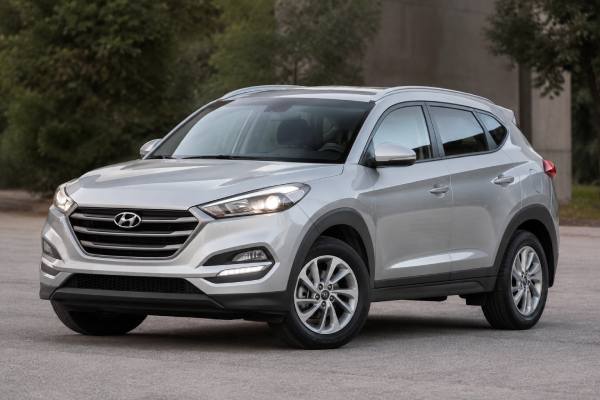
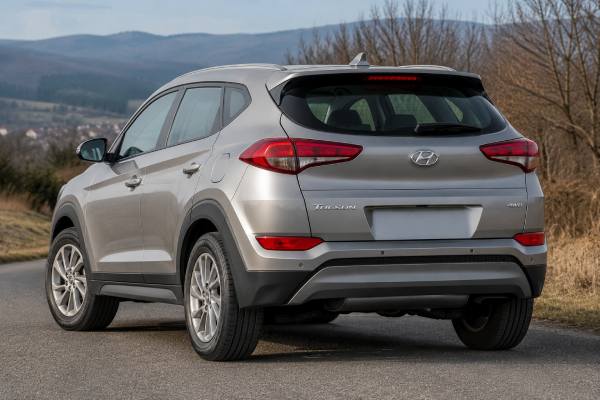
The Hyundai Tucson TL with the R-series 2.0 CRDi diesel, 185 hp output, and 4WD is one of the stronger versions of the third-generation Tucson sold from 2015 to 2018. It sits in the useful middle ground between family SUV comfort and long-distance diesel muscle, with enough torque for motorway driving, hilly roads, poor weather, and moderate towing.
For used buyers, this version is appealing because it avoids the weaker feel of the smaller diesels and gives the Tucson a more relaxed character. The main thing is condition. A well-serviced 2.0 CRDi 4WD can be a solid, practical SUV, but neglected oil changes, short-trip diesel use, missed recalls, old transmission fluid, and poor DPF care can turn a good buy into an expensive one.
Final Verdict
The 2015–2018 Hyundai Tucson TL 2.0 CRDi 185 hp 4WD is a good used SUV for drivers who want diesel torque, all-weather traction, generous cabin space, and sensible ownership costs without moving into a larger SUV. Its strongest appeal is how easily it covers long journeys, hills, and loaded family use. It suits motorway commuters, rural drivers, and buyers who tow occasionally. The main tradeoff is diesel-system sensitivity: short trips, old oil, and ignored DPF or EGR symptoms can become costly. Buy only with strong service history, completed recall proof, clean cold starts, and evidence that drivetrain fluids have not been neglected.
| Pros | Cons |
|---|---|
| Strong 400 Nm diesel torque suits hills and towing | DPF dislikes repeated short urban journeys |
| 4WD gives useful wet-road and winter traction | Rear driveline fluids are often overlooked |
| Roomy cabin and 513-litre boot fit family use | Some safety tech was trim-dependent or optional |
| Manual and automatic versions both feel relaxed | Manual clutch and flywheel wear can be costly |
| Euro 6 diesel rating helps urban compliance | Higher-mileage examples need careful emissions checks |
Table of Contents
- Hyundai Tucson TL 2.0 CRDi Overview
- Specifications and Technical Data
- Trims, Options, Safety and Assistance
- Reliability, Common Issues and Service Actions
- Maintenance and Buyer’s Guide
- Driving, Performance and Fuel Economy
- How the Tucson Compares to Rivals
Hyundai Tucson TL 2.0 CRDi Overview
The 185 hp 2.0 CRDi 4WD is the most muscular diesel Tucson TL of this period and is best understood as a practical, torque-rich family SUV rather than a sporty crossover. It gives the Tucson enough low-rev pull to feel calm at speed, especially compared with the smaller 1.7 CRDi and lower-output 2.0 CRDi versions.
This model uses Hyundai’s R-series D4HA 2.0-litre four-cylinder turbo diesel. It is mounted transversely, drives the front wheels most of the time, and sends torque to the rear axle when grip or driving conditions demand it. Some versions also provide a 4WD lock mode for low-speed slippery conditions, although this is not the same as a low-range off-road transfer case.
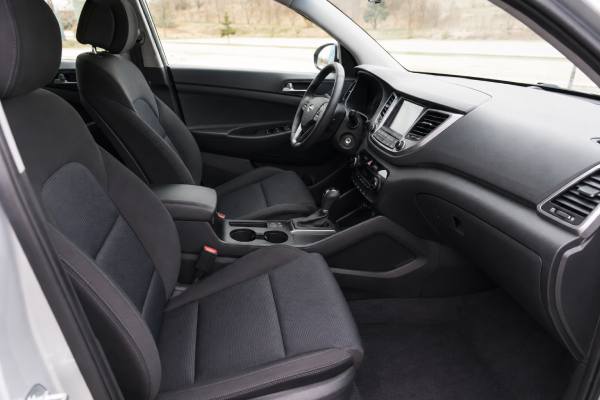
The Tucson TL was a big step up from the ix35 it replaced. It brought a more mature body, better cabin refinement, a larger boot, improved safety structure, and broader driver-assistance availability. The 2.0 CRDi 185 4WD version was aimed at buyers who wanted extra performance, towing ability, and all-weather confidence.
It is not a hard-core off-roader. Ground clearance is modest for serious trail use, the tyres are road-biased, and the 4WD system is built for traction rather than rock crawling. On wet roads, snow, gravel tracks, steep driveways, and poor rural lanes, however, it is much more reassuring than a front-wheel-drive Tucson.
The best examples are usually privately owned cars with regular servicing, matching tyres, clean MOT or inspection history, and no evidence of repeated limp-mode diesel faults. The riskiest examples are high-mileage cars used mostly for short town trips, cars with missing service records, and cars sold immediately after a dashboard warning light has been cleared.
Specifications and Technical Data
The 2.0 CRDi 185 4WD combines a chain-driven R-series diesel engine with either a 6-speed manual or a 6-speed automatic, depending on market and trim. The engine’s most important figure is torque: 400 Nm arrives from low revs, which is why this Tucson feels more relaxed than its horsepower number alone suggests.
Powertrain and efficiency
| Item | Hyundai Tucson TL 2.0 CRDi 185 4WD |
|---|---|
| Engine family/code | Hyundai R-series D4HA |
| Fuel type | Diesel |
| Layout | Inline-4, transverse front-mounted |
| Displacement | 1,995 cc / 2.0 litres |
| Valvetrain | DOHC, 16 valves |
| Induction | Turbocharger with intercooler |
| Fuel system | Common-rail direct injection |
| Maximum power | 185 hp / 136 kW at 4,000 rpm |
| Maximum torque | 400 Nm / 295 lb-ft at 1,750–2,750 rpm |
| Bore × stroke | 84.0 × 90.0 mm |
| Compression ratio | 16.0:1 |
| Emissions equipment | Euro 6 diesel with particulate filter |
Transmission and driveline
| Item | Specification |
|---|---|
| Manual gearbox | 6-speed manual |
| Automatic gearbox | 6-speed torque-converter automatic |
| Drive type | On-demand 4WD / AWD |
| Normal torque bias | Front-biased, rear axle engaged as needed |
| Lock function | Low-speed 4WD lock mode on many 4WD versions |
| Front suspension | MacPherson strut |
| Rear suspension | Independent multi-link |
| Steering | Electric power-assisted rack and pinion |
Dimensions, weight and capacities
| Item | Value |
|---|---|
| Body style | 5-door SUV, 5 seats |
| Length | 4,475 mm |
| Width | 1,850 mm |
| Height | 1,655 mm |
| Wheelbase | 2,670 mm |
| Ground clearance | About 172 mm |
| Turning circle | About 10.6 m |
| Curb weight | About 1,587–1,615 kg |
| Gross vehicle weight | About 2,250 kg |
| Boot volume | 513–1,503 litres |
| Fuel tank | 62 litres |
| Roof load | 100 kg |
Performance and capability
| Item | Manual | Automatic |
|---|---|---|
| 0–100 km/h | About 9.9 seconds | About 9.5 seconds |
| Top speed | 201 km/h | 201 km/h |
| Official combined economy | 5.9 L/100 km | 6.5 L/100 km |
| Official CO₂ | 154 g/km | 170 g/km |
| Braked towing rating | Up to 2,200 kg | Up to 1,900 kg |
| Unbraked towing rating | 750 kg | 750 kg |
Service quick reference
| Item | Useful value or note |
|---|---|
| Engine oil capacity | About 7.6 litres with filter |
| Engine oil type | Low-SAPS diesel oil, commonly ACEA C3 5W-30 or 5W-40 |
| Coolant capacity | About 8.8 litres |
| Brake fluid | DOT 4 |
| Automatic transmission fluid | Hyundai/Kia SP-IV type for 6-speed automatic applications |
| Timing drive | Chain; inspect for noise, stretch and timing-correlation faults |
| Common tyre sizes | 215/70 R16, 225/60 R17, 225/55 R18, 245/45 R19 |
| Wheel-nut torque | Common TL guidance: 88–107 Nm; verify by VIN and wheel type |
Trims, Options, Safety and Assistance
The 185 hp 2.0 CRDi 4WD was usually positioned toward the upper end of the Tucson TL range. That matters on the used market because equipment, wheels, driver assistance, headlights, and infotainment vary a lot by country and trim.
In many European markets, the 185 hp diesel 4WD was sold in better-equipped grades rather than as a basic entry model. UK cars commonly appear in higher trims such as Premium and Premium SE, while Australian-market examples used names such as Active, Active X, Elite and Highlander depending on year. Equipment names vary, so judge the actual car, not only the badge.
Useful identifiers include the CRDi badge, 4WD or AWD equipment listing, the 4WD lock button on the console, diesel emissions label, D4HA engine code in service data, and the gearbox type. A true 185 hp version should feel notably stronger than the 136 hp 2.0 CRDi and should show the correct power output on registration or build data.
The most useful options to look for are:
- Factory navigation with reversing camera.
- Heated seats and steering wheel in colder markets.
- LED or xenon-style headlamps, depending on trim.
- Blind-spot monitoring on higher grades.
- AEB or forward collision warning where fitted.
- Front and rear parking sensors.
- Panoramic roof, only if drains and operation are clean.
- 17- or 18-inch wheels for the best ride comfort.
Large 19-inch wheels look good but make the ride firmer and increase tyre cost. For long-term ownership, 17- or 18-inch wheels are usually the smarter choice.
Euro NCAP awarded the Tucson TL a five-star rating under the 2015 test protocol. The result is useful when comparing period rivals, but it should not be treated as equivalent to a modern 2026 five-star result because crash-test and driver-assistance standards have become much tougher.
The 2015 Euro NCAP category scores were strong for the class: adult occupant protection was 86%, child occupant protection 85%, pedestrian protection 71%, and safety assist 71%. Standard safety equipment generally included front airbags, front side airbags, side curtain airbags, anti-lock brakes, electronic stability control, brake assist, hill-start assist, downhill brake control, traction control, tyre-pressure monitoring, and ISOFIX points for the rear outer seats.
Driver-assistance availability depends heavily on trim and market. Some Tucson TL cars have only the core stability and braking systems. Better-equipped cars may add lane departure warning, blind-spot detection, forward collision warning, autonomous emergency braking, high-beam assist, rear cross-traffic alert, and driver attention warning. On cars with a front camera or radar, windscreen replacement, bumper repairs, suspension work, and accident damage can require calibration. A car that has had body repairs but shows ADAS warnings, poor lane detection, or inconsistent AEB behaviour needs professional diagnosis before purchase.
Reliability, Common Issues and Service Actions
A well-maintained Tucson 2.0 CRDi 185 4WD is generally durable, but its most expensive problems usually come from diesel emissions faults, neglected fluids, clutch wear, or missed recall work. The engine itself is not fragile by design, but it needs clean oil, correct diesel oil specification, good fuel filtration, and enough regular road speed for DPF regeneration.
| Issue area | Prevalence / severity | Symptoms | Likely remedy |
|---|---|---|---|
| DPF loading | Common on short-trip cars / medium to high | Warning light, limp mode, frequent fan running | Diagnose soot load, pressure sensor and regeneration history |
| EGR and intake carbon | Occasional / medium | Hesitation, rough idle, smoke, poor response | Clean or replace EGR parts and inspect intake deposits |
| Turbo control or boost sensor | Occasional / medium | Flat acceleration, overboost or underboost codes | Check actuator movement, vacuum/control system and sensors |
| Manual clutch and flywheel | Occasional / high | Slip, vibration, rattling, heavy pedal | Replace clutch kit and dual-mass flywheel if worn |
| 6-speed automatic behaviour | Occasional / medium | Harsh shifts, delayed engagement, flaring | Check software, mounts, fluid condition and service history |
| 4WD coupling and rear driveline | Occasional / medium | Binding, vibration, rear-end noise, no rear drive | Inspect tyres, coupling, transfer case and rear differential oil |
| Suspension, brakes and corrosion | Common with age / low to medium | Knocks, uneven tyre wear, seized rear brakes, rusty subframes | Replace worn bushes, links, discs, pads and treat corrosion |
Diesel engine and emissions system
The D4HA engine has plenty of torque and is usually long-lived when serviced properly. Listen for chain rattle at cold start, harsh mechanical knocking, injector imbalance, and turbo whistle. Some diesel clatter is normal, but heavy metallic noise, poor hot restarting, or visible exhaust smoke under gentle acceleration should stop the purchase until the car is diagnosed.
The diesel particulate filter is the main ownership issue for unsuitable use. A DPF collects soot and periodically burns it off during regeneration. It needs correct engine temperature, enough speed, and enough time. Cars used mostly for short errands may never complete regeneration properly. That leads to rising soot load, oil dilution, warning lights, forced regeneration, and eventually DPF cleaning or replacement.
EGR faults and intake deposits are also common on modern diesels. The symptoms can overlap with DPF problems: uneven idle, low-speed hesitation, smoke, and poor fuel economy. Do not assume a DPF fault is solved by cleaning the filter alone. A sticking EGR valve, blocked pressure pipe, faulty differential pressure sensor, boost leak, or tired thermostat can bring the fault back.
Gearbox, clutch and AWD
The 6-speed manual is straightforward but can suffer clutch and dual-mass flywheel wear, especially if the car has towed, been driven in hilly traffic, or spent time with drivers who ride the clutch. During a test drive, accelerate from low rpm in a high gear. Engine speed should rise in line with road speed. A flare in revs without matching acceleration means clutch slip.
The 6-speed automatic suits the engine well and is usually smoother in daily use. It should engage Drive and Reverse cleanly, shift without heavy thumps, and kick down without hesitation. Old fluid is not always obvious from the service book because many schedules treat automatic fluid gently under normal use. On a used diesel 4WD, especially one that tows, a preventative ATF service is sensible.
The 4WD system depends on matching tyres and healthy fluids. Four tyres should be the same size, similar brand and tread depth, with no odd wear patterns. Mismatched tyres can upset the driveline and make the coupling work harder. Check for rear differential whine, transfer-case leaks, vibration under load, and binding during tight low-speed turns.
Recalls and service actions
The main public UK recall items for 2016 Tucson examples include a secondary bonnet catch issue and an ABS/ESC control unit short-circuit risk. The bonnet remedy involved replacing the secondary catch and updating the warning function. The ABS/ESC campaign involved wiring and fuse changes, with software updates depending on specification.
Because recalls and field service actions vary by country, VIN, build date, and equipment, do not rely only on general model-year lists. Ask the seller for dealer paperwork, then check the VIN with Hyundai or the relevant national recall database. A stamped service book is useful, but a dealer printout showing completed campaigns is better.
Maintenance and Buyer’s Guide
The best maintenance plan for this Tucson is slightly more cautious than the longest official interval, especially once the car is older than seven years. Clean oil, fresh filters, brake fluid changes, and drivetrain fluid checks are cheaper than replacing a turbo, DPF, clutch, transfer case, or automatic transmission.
| Interval | Work to prioritise |
|---|---|
| Every 10,000–15,000 km or 12 months | Engine oil and filter; inspect brakes, tyres, lights, leaks and underbody |
| Every 15,000–30,000 km | Cabin filter; inspect engine air filter, belts, hoses and battery condition |
| Every 30,000–60,000 km | Fuel filter depending on market and fuel quality; inspect DPF data |
| Every 2 years | Brake fluid; clean and lubricate brake hardware where appropriate |
| Every 60,000–90,000 km | ATF on automatics used in traffic, towing or severe duty |
| Every 60,000 km in severe use | Transfer case and rear differential oil inspection or replacement |
| Around 100,000 km, then as specified | Coolant replacement using correct Hyundai-compatible coolant |
| After 120,000–150,000 km | Inspect timing chain noise, tensioner condition and diagnostic correlation faults |
| Every 4–6 years | Test 12 V battery and replace before unreliable cold starts begin |
For oil, use a low-SAPS diesel oil suitable for DPF-equipped Euro 6 engines. ACEA C3 5W-30 or 5W-40 is commonly used, but the correct viscosity can vary with climate and market. Do not use cheap oil of unknown specification. The DPF, turbocharger, timing chain and hydraulic components all depend on oil quality.
The timing chain is not a routine belt-style service item, but it is not something to ignore forever. On a higher-mileage diesel, listen for start-up rattle, check for cam/crank correlation faults, and look for evidence of poor oil-change history. If the chain, guides or tensioner are out of specification, replacement should be done before it becomes an engine-damage event.
Used buying checklist
Before buying, inspect the Tucson cold and drive it long enough to reach full temperature. A warmed-up five-minute test around the block is not enough for a diesel 4WD.
Check these items carefully:
- Cold start quality: it should start cleanly without long cranking or heavy smoke.
- Dashboard lights: glow plug, engine, DPF, ABS, ESC and AWD warnings should illuminate and go out normally.
- Service history: look for oil changes at least annually, not just mileage-based servicing.
- DPF evidence: ask about forced regenerations, DPF cleaning, pressure sensors and EGR work.
- Gearbox feel: no clutch slip, no flywheel rattle, no automatic thump into gear.
- AWD function: no vibration, binding or rear-end noise.
- Cooling system: stable temperature, no coolant loss, no oil contamination.
- Suspension: no knocking from links, bushes or ball joints.
- Brakes: no pulsing, seized calipers or heavily corroded rear discs.
- Corrosion: inspect rear subframe, suspension arms, brake pipes, sills and towbar mounts.
- Electronics: test camera, parking sensors, seat heaters, windows, infotainment and ADAS warnings.
- Tyres: all four should match closely in size, tread depth and wear.
The best version to seek is a higher-trim 2.0 CRDi 4WD with moderate mileage, mostly motorway use, annual servicing, and no repeated DPF history. For towing or mountain use, the manual’s higher braked towing rating may matter, but the automatic is easier to live with in daily traffic. Avoid cars with fresh warning-light resets, mismatched tyres, missing service proof, smoky acceleration, or unexplained engine noise.
Long term, this Tucson can age well if it is treated like a diesel SUV rather than a cheap runabout. It likes proper warm-up, regular motorway-speed driving, quality fluids, and preventative drivetrain maintenance.
Driving, Performance and Fuel Economy
The 2.0 CRDi 185 4WD is the Tucson TL engine to choose if you value relaxed torque more than the lowest purchase price. It is not fast in a hot-hatch sense, but it has enough pull to make overtaking, motorway merging, and loaded family driving feel easy.
The engine is strongest from about 1,700 rpm. Below that, there can be a short pause while the turbo wakes up, especially in a higher gear. Once on boost, the Tucson pulls cleanly and does not need constant revs. This is why it feels more refined on long trips than the smaller diesel engines.
The automatic version suits the car’s character. It is not as quick-shifting as a modern dual-clutch gearbox, but it is smoother in crawling traffic and less fussy when manoeuvring. Kickdown is steady rather than sharp. The manual gives more control and can be more efficient, but the clutch should be inspected carefully because replacement with a dual-mass flywheel is not cheap.
Ride comfort depends heavily on wheels. On 17- or 18-inch wheels, the Tucson is generally comfortable, stable and quiet enough for motorway family use. On 19-inch wheels, sharper potholes and ridges are more noticeable. The suspension is tuned for security rather than excitement. Body roll is present but controlled, and the car feels predictable rather than playful.
Steering is light and easy in town, with enough accuracy for normal driving. It does not give much road feel, so enthusiastic drivers may prefer a Mazda CX-5 or a sharper European rival. Braking feel is generally progressive, but used examples need inspection for rear brake corrosion, sticking calipers and worn discs.
Real-world fuel economy depends on journey type:
- City and short-trip use: about 7.5–9.0 L/100 km, or roughly 31–26 mpg US / 38–31 mpg UK.
- Mixed use: about 6.5–7.5 L/100 km, or roughly 36–31 mpg US / 43–38 mpg UK.
- Steady highway use: about 5.8–6.7 L/100 km, or roughly 41–35 mpg US / 49–42 mpg UK.
Cold weather, roof bars, winter tyres, towing, repeated regeneration cycles and short journeys can push consumption higher. A Tucson that constantly returns poor economy, smells hot after short drives, or runs its cooling fan unusually often may be trying to complete DPF regeneration too frequently.
The 4WD system improves confidence more than performance. On wet roads and snow, it helps the car put torque down cleanly without front-wheel scrabble. It also makes towing on slippery campsites or steep gravel drives easier. It does not turn the Tucson into a Land Cruiser, and ground clearance remains the limiting factor off road.
For towing, the diesel torque is useful, but the car still needs mechanical sympathy. Keep loads within the plated limits, use a correctly wired towbar, service the cooling system, and consider shorter ATF and driveline-fluid intervals if the car tows regularly. Expect fuel use to rise sharply under load; a moderate caravan or trailer can easily add 25–50% depending on speed, wind and terrain.
How the Tucson Compares to Rivals
The Tucson 2.0 CRDi 185 4WD is strongest against rivals when judged as a value-focused, spacious, torquey diesel SUV. It is less premium than a Volkswagen Tiguan, less engaging than a Mazda CX-5, but often easier to buy with good equipment for the money.
| Rival | How it compares | Best choice if you value |
|---|---|---|
| Kia Sportage 2.0 CRDi AWD | Closely related mechanically, with similar strengths and checks | Warranty history and similar value |
| Volkswagen Tiguan 2.0 TDI 4Motion | More polished cabin and drivetrain, usually pricier | Refinement and premium feel |
| Mazda CX-5 2.2D AWD | Sharper to drive, but diesel condition is critical | Handling and driver involvement |
| Nissan Qashqai 1.6 dCi AWD | More economical and lighter, but less powerful | Lower running costs |
| Toyota RAV4 diesel AWD | Practical and durable, but often less refined | Simple long-term dependability |
Against the Kia Sportage, the Tucson mostly comes down to price, condition and styling preference. The two share much of the same engineering, so inspection priorities are similar: diesel emissions health, drivetrain fluids, clutch or automatic behaviour, rear suspension and recalls.
The Tiguan feels more sophisticated, especially inside, and its DSG and 4Motion versions can feel quicker and more premium. The tradeoff is that purchase prices and repair costs can be higher. Buyers who want the most polished cabin may prefer the VW, but the Tucson often offers better value.
The Mazda CX-5 is the more enjoyable SUV on a twisty road. It has sharper steering and a more natural chassis feel. However, diesel CX-5 buying requires careful checks too, especially around oil, DPF history and engine condition. For drivers who simply want comfort, space and diesel torque, the Tucson is easier to recommend.
The Qashqai is lighter and cheaper to run in many versions, but it does not match the Tucson 2.0 CRDi 185 for pulling power, towing confidence or loaded motorway ease. It is a good urban family crossover; the Tucson is better for heavier-duty diesel use.
Overall, the Tucson TL 2.0 CRDi 185 4WD makes the most sense when bought as a long-distance family SUV with real torque and sensible equipment. It is not the class leader in any single emotional category, but as a used all-weather diesel, it remains a practical and well-rounded choice when the service history is strong.
References
- Hyundai Tucson. 2018 (Specifications Sheet)
- Hyundai Tucson III 2.0 CRDI (185 Hp) 4WD | Technical specs, data, fuel consumption, Dimensions 2026 (Technical Data)
- Hyundai Tucson III 2.0 CRDI (185 Hp) 4WD Automatic | Technical specs, data, fuel consumption, Dimensions 2026 (Technical Data)
- Hyundai Tucson – Euro NCAP Results 2015 2015 (Safety Rating)
- HYUNDAI TUCSON 2016 – Check if a vehicle, part or accessory has been recalled – GOV.UK 2026 (Recall Database)
Disclaimer
This article is for informational purposes only and is not a substitute for professional diagnosis, repair, inspection, or official workshop guidance. Specifications, torque values, service intervals, fluids, towing limits, software updates, recall eligibility, and repair procedures can vary by VIN, market, model year, trim, gearbox, emissions equipment, and fitted options. Always verify details against the official service documentation for the exact vehicle and consult a qualified technician before maintenance or repair work.
If this guide helped you, please consider sharing it on Facebook, X/Twitter, or your favourite car community to support our work.