
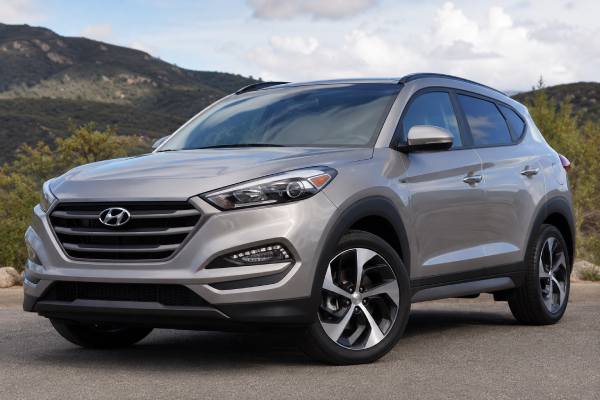
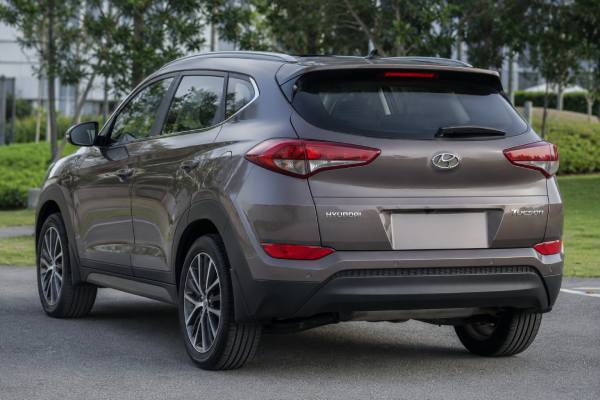
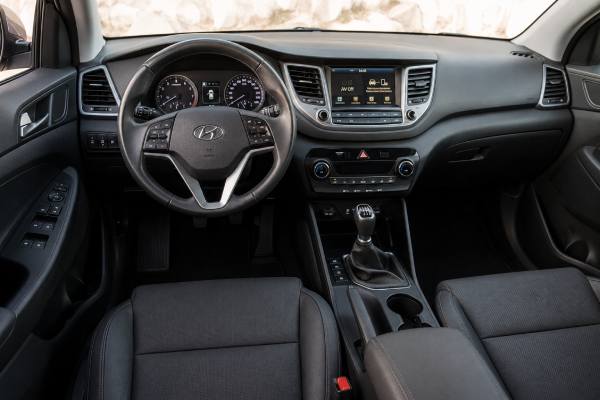
The 2016–2018 Hyundai Tucson FWD with the Gamma 1.6 T-GDi is the turbocharged petrol version of the third-generation TL Tucson. It sits in a useful middle ground: more responsive than the base 2.0-liter engine, more efficient than many older compact SUVs, and still practical enough for family use. Its main mechanical distinction is the 175 hp turbo direct-injection engine paired with Hyundai’s 7-speed EcoShift dual-clutch transmission, a setup that rewards smooth driving but needs better maintenance awareness than a simple torque-converter automatic.
Final Verdict
The 2016–2018 Hyundai Tucson FWD 1.6 T-GDi is a good used compact SUV for buyers who want practical space, strong mid-range torque, decent fuel economy, and a more premium feel than many budget crossovers of the same age. It suits commuting, small-family use, and long-distance driving better than heavy towing or constant stop-start abuse. The main ownership tradeoff is the dry dual-clutch transmission, which can shudder or hesitate if neglected or driven like a traditional automatic. Buy one only with clear service records, completed software/recall work, and a smooth low-speed test drive.
| Pros | Cons |
|---|---|
| Strong 195 lb-ft torque gives easy everyday acceleration | Dry DCT dislikes creeping traffic and poor driving habits |
| Roomy cabin and useful 31 cu ft cargo area | Rear visibility and thick pillars make parking aids valuable |
| Good safety structure and strong crash-test performance | Advanced safety tech was trim- and package-dependent |
| Efficient for a turbo petrol compact SUV | Direct injection can develop intake carbon deposits over time |
| Parts availability is generally strong in major markets | Used examples vary widely in maintenance and recall completion |
Table of Contents
- 2016–2018 Tucson 1.6T FWD Overview
- Tucson 1.6T FWD Specifications
- Trims, Options, Safety and Driver Assistance
- Reliability, Common Issues and Service Actions
- Maintenance Schedule and Buyer’s Guide
- Driving, Performance and Real-World Economy
- How the Tucson 1.6T Compares to Rivals
2016–2018 Tucson 1.6T FWD Overview
The TL-generation Hyundai Tucson 1.6T FWD is best understood as the more responsive, higher-trim alternative to the base naturally aspirated Tucson. It combines a compact turbo engine, front-wheel drive, and a dual-clutch gearbox in a five-seat crossover body that is easy to live with but sensitive to poor maintenance.
This version was sold under different trim names depending on market. In North America, the 1.6T appeared in trims such as Eco, Sport, Limited, Value, and Night depending on model year. In other markets, the same basic engine family was commonly called 1.6 T-GDi and rated around 177 PS, which is effectively the same 175 hp class.
The strongest reason to choose this Tucson over the base engine is torque. The 1.6-liter turbo produces 195 lb-ft from low rpm, so it feels much more relaxed in traffic and on hills than the 2.0 GDI. It does not need to be revved hard to keep up with faster traffic, and on the highway it has enough mid-range pull for passing when the gearbox is in the right gear.
The main reason to be cautious is the transmission. Hyundai’s 7-speed EcoShift DCT is a dry dual-clutch unit. It can feel efficient and quick once moving, but it does not behave exactly like a conventional automatic. It may creep less smoothly, hesitate briefly from rest, and dislike repeated inching forward on hills or in hot stop-start traffic. A well-updated, well-driven DCT can be acceptable; a neglected or abused one can become the biggest cost risk on the vehicle.
As a used SUV, the Tucson TL also scores well for cabin space. It is not as boxy as a Honda CR-V, but it has a comfortable rear seat, a useful cargo floor, and a cabin that still feels modern enough if equipped with the larger infotainment screen, heated seats, leather, or driver-assistance options.
For the best ownership experience, shop by condition rather than badge. A lower-mileage Limited with incomplete recall work, jerky DCT behavior, and poor oil-change history is less attractive than a simpler trim with documented servicing and smooth drivability.
Tucson 1.6T FWD Specifications
The 1.6T FWD Tucson uses Hyundai’s Gamma 1.6-liter turbocharged direct-injection petrol engine with a 7-speed dual-clutch transmission driving the front wheels. The important technical points are its broad torque band, relatively modest fuel use, and compact SUV packaging. Specs can vary slightly by country, trim, emissions rules, wheels, and model year, so VIN-level confirmation is still important before ordering parts.
Powertrain and efficiency
| Item | Specification |
|---|---|
| Engine family | Gamma 1.6 T-GDi / 1.6L Turbo-GDI |
| Engine code commonly associated | G4FJ |
| Layout | Inline-4, DOHC, 16 valves, CVVT/DCVVT |
| Displacement | 1,591 cc / 1.6 liters |
| Induction and fuel system | Turbocharged gasoline direct injection |
| Maximum power | 175 hp at 5,500 rpm, about 130 kW |
| Maximum torque | 195 lb-ft at 1,500–4,500 rpm, about 265 Nm |
| Bore × stroke | 77 × 85–85.4 mm |
| Compression ratio | 10.1:1 |
| Fuel type | Unleaded petrol; regular 87 AKI acceptable in many non-European markets |
| Fuel economy, 1.6T FWD | Commonly 25/30/27 mpg US city/highway/combined |
| Fuel economy, metric equivalent | About 9.4 / 7.8 / 8.7 L/100 km city/highway/combined |
Transmission and driveline
| Item | Specification |
|---|---|
| Transmission | 7-speed EcoShift dual-clutch transmission |
| Clutch type | Dry dual-clutch design |
| Manual control | SHIFTRONIC manual shift mode on many trims |
| Drive type covered here | Front-wheel drive |
| AWD availability in model line | Available separately in many markets, but not the focus here |
| Best use pattern | Flowing city, suburban, and highway driving |
| Use pattern to avoid | Long creeping, throttle-holding on hills, repeated clutch slip |
Dimensions, chassis and capacities
| Item | Specification |
|---|---|
| Body style | Five-door compact SUV |
| Seating | Five passengers |
| Length | 4,475 mm (176.2 in) |
| Width | 1,850 mm (72.8 in) |
| Height | About 1,645–1,650 mm (64.8–65.0 in) |
| Wheelbase | 2,670 mm (105.1 in) |
| Turning diameter | 34.9 ft curb-to-curb |
| Front suspension | MacPherson struts with stabilizer bar |
| Rear suspension | Independent multi-link with stabilizer bar |
| Common tire sizes | 225/60R17 or 245/45R19 |
| Cargo volume | 31.0 cu ft seats up; 61.9 cu ft seats folded |
| Fuel tank | 62 liters / 16.4 US gallons |
Service quick-reference data
| Item | Specification or practical note |
|---|---|
| Engine oil drain and refill | About 4.5 L (4.76 US qt) |
| Recommended oil viscosity | 5W-30 commonly recommended for Gamma 1.6 |
| Oil quality | ACEA A5 or better where specified |
| DCT fluid capacity | About 1.9–2.0 L |
| DCT fluid type | API GL-4, SAE 70W specification equivalents |
| Coolant capacity | About 7.1 L for Gamma 1.6 |
| Brake fluid | DOT-3 or DOT-4, about 0.7–0.8 L |
| Wheel lug nut torque | 88–107 Nm (65–79 lb-ft) |
| Cold tire pressure | Commonly 240 kPa / 35 psi for listed tire sizes |
Trims, Options, Safety and Driver Assistance
The 1.6T FWD Tucson was usually attached to better-equipped trims, so equipment can vary more by year than by engine. Safety ratings are strong for the structure, but the best driver-assistance systems were not standard on every 1.6T version.
Trims and equipment identifiers
In North America, 2016 and 2017 1.6T models were commonly found as Eco, Sport, Limited, Night, or similar trims depending on model year. For 2018, the 1.6T was especially associated with Value and Limited trims, while SE, SEL, and SEL Plus typically used the 2.0-liter engine.
Quick identifiers include a “1.6T” or trim badge on some markets, 7-speed DCT behavior at low speed, 19-inch wheels on sportier or higher trims, and VIN/build-sheet confirmation. Do not rely only on rear badging, because badges can be removed or changed.
Feature differences matter when buying used:
- Eco-focused trims usually bring the turbo engine and DCT without the full luxury equipment.
- Sport or Night versions often add larger wheels, sportier trim, and more visual equipment.
- Limited models are the ones most likely to include leather, navigation, premium audio, LED lighting, power seats, and higher safety packages.
- Panoramic sunroof cars feel brighter but can add weight, wind noise risk, drainage maintenance, and higher repair cost.
Wheel choice also changes the ownership feel. The 17-inch setup rides better and uses cheaper tires. The 19-inch setup looks sharper and turns in more crisply, but it is firmer over potholes and more vulnerable to tire and wheel damage.
Safety ratings
The TL Tucson performed well in major crash testing for its era. IIHS ratings for the 2016–2021 structure show strong results in the original small-overlap, moderate-overlap, roof-strength, head-restraint, and side-impact tests. The 2018 model also qualified as a strong safety pick when fitted with the right front crash prevention and headlight equipment.
In NHTSA testing, the Tucson line received a five-star overall rating in the U.S. market, with a four-star rollover component typical of many compact SUVs. Euro NCAP also rated the TL-generation Tucson highly when tested in 2015, with the caveat that European equipment and test assumptions can differ from North American cars.
Safety systems and ADAS
Core passive safety equipment includes multiple airbags, stability control, anti-lock braking, electronic brake-force distribution, traction control, and child-seat anchors. LATCH/ISOFIX access is generally usable, though as with many compact SUVs, wide child seats can limit adult space in the rear.
Driver assistance depends heavily on trim and package. Blind-spot monitoring, rear cross-traffic alert, lane-change assist, lane-departure warning, forward collision warning, automatic emergency braking, pedestrian detection, rear parking sensors, and upgraded headlights were not all standard across all years. A buyer who wants modern safety support should confirm the exact equipment on the vehicle, not just the trim name.
After windshield replacement, front-end collision repair, suspension repair, or radar/camera work, ADAS-equipped cars may need calibration. Poor calibration can cause false warnings, inactive systems, or reduced safety performance.
Reliability, Common Issues and Service Actions
The Tucson 1.6T can be reliable, but it is not a neglect-proof drivetrain. The highest-risk areas are the dry DCT, direct-injection engine deposits, age-related oil leaks or consumption, and completion of Hyundai service campaigns.
| Issue | Prevalence | Severity | Typical signs | Best response |
|---|---|---|---|---|
| DCT hesitation or delayed takeoff | Occasional to common | Medium | Pause from stop, jerky launch | Check software, clutch adaptation, recall history |
| DCT judder | Occasional | Medium to high | Vibration at low speed | TCU update, judder test, clutch replacement if needed |
| Intake carbon buildup | Occasional with mileage | Medium | Rough idle, hesitation, misfires | Diagnosis, induction cleaning, walnut blasting if severe |
| Ignition coil or plug wear | Occasional | Low to medium | Misfire under boost, check-engine light | Use correct plugs and confirm coil condition |
| Turbo or oil-line seepage | Occasional | Medium | Oil smell, smoke, residue near turbo | Inspect lines, PCV, seals, and oil-change history |
| ABS/HECU recall exposure | VIN-dependent | High | Recall notice, ABS warning, fire-risk advisory | Verify recall completion by VIN |
Dual-clutch transmission behavior
The DCT is the issue that most often separates a good Tucson 1.6T from a bad one. A healthy unit may feel slightly different from a torque-converter automatic, but it should not bang into gear, shake badly, flare repeatedly, or refuse to move.
A short delay from a stop can be normal in some situations, but a long pause, repeated shudder, or slipping smell is not something to ignore. Hyundai issued software updates and service procedures for DCT control logic and low-speed judder. On a pre-purchase inspection, ask for dealer records showing any ECM/TCM updates and DCT-related repairs.
Driving style matters. Avoid holding the vehicle on hills with the accelerator, creeping for long periods with light throttle, or repeatedly inching forward in traffic. Use the brake when stopped, allow the transmission to engage cleanly, and use steady throttle rather than nervous pedal inputs.
Gamma 1.6 T-GDi engine concerns
The Gamma 1.6T is a small turbo direct-injection engine, so oil quality and heat management matter. Long oil intervals, cheap oil, or low oil level can shorten turbocharger and timing-chain life. Check the dipstick regularly, especially on higher-mileage cars.
Direct injection means fuel does not wash the backs of the intake valves. Over time, especially with short trips and poor oil control, carbon deposits can form. Symptoms include rough idle, cold hesitation, reduced power, or misfire codes that do not disappear after plugs and coils are checked.
Spark plugs are more important on this turbo engine than on a lower-output naturally aspirated engine. Worn plugs can misfire under boost, strain coils, and make the DCT feel worse because the engine is not delivering smooth torque.
Chassis, brakes and body
The Tucson’s chassis is generally conventional and not difficult to maintain. Listen for front stabilizer links, lower control-arm bushings, wheel bearings, and rear suspension noises. Brakes can last well, but city-driven examples may show rotor corrosion, uneven pad wear, or caliper slide-pin issues.
In salted climates, inspect rear subframe areas, brake lines, suspension arms, wheel arches, tailgate seams, underbody brackets, and the fuel/brake-line routing. The Tucson is not unusually rust-prone when cared for, but neglected winter cars can become expensive.
Recalls, campaigns and service actions
The important recalls and service actions to check include DCT control logic on certain 2016 1.6T 7DCT vehicles, ABS/HECU fuse-kit or software-related campaigns on affected TL Tucson vehicles, hood-latch recalls on some early cars, and trailer-hitch wiring recalls where the accessory harness was fitted.
Do not rely on a seller saying “all recalls are done.” Use the official VIN check, then ask for dealer invoices. A completed recall entry is worth more than a verbal promise.
Maintenance Schedule and Buyer’s Guide
The best maintenance plan for a used Tucson 1.6T is stricter than the longest possible factory interval. This engine and DCT respond well to clean fluids, correct plugs, software updates, and regular inspection.
| Interval | Service items |
|---|---|
| Every 5,000–7,500 miles / 8,000–12,000 km or 6–12 months | Engine oil and filter, tire rotation, brake inspection, fluid-level check |
| Every 15,000 miles / 24,000 km | Cabin filter, engine air filter inspection, battery test, suspension check |
| Every 30,000 miles / 48,000 km | Brake fluid condition, belts and hoses, cooling-system inspection, alignment check |
| About 42,000–45,000 miles / 67,000–72,000 km | Spark plugs on many 1.6T schedules; confirm by VIN and market |
| Every 50,000–60,000 miles / 80,000–96,000 km in severe use | DCT fluid service consideration, especially heat or heavy city use |
| Every 60,000 miles / 96,000 km | Inspect intake deposits, turbo hoses, PCV system, engine mounts |
| At 100,000 miles / 160,000 km and beyond | Coolant, timing-chain noise check, water pump, thermostat, aging hoses |
The timing drive is a chain, not a routine timing belt. That does not make it maintenance-free in the real world. Listen for cold-start rattle, check for cam/crank correlation faults, and avoid long oil intervals. Chain, guide, or tensioner work is condition-based, not a normal service item.
The fuel filter is not normally treated like a frequent service part in many markets, but poor fuel quality changes the picture. Hard starting, surging, fuel-pressure faults, or loss of power should trigger proper diagnosis rather than random parts replacement.
Pre-purchase inspection checklist
Before buying, make the test drive long enough to include cold start, stop-start traffic, hill takeoff, steady cruising, full-throttle acceleration, and reverse parking. The gearbox should engage cleanly, shift without harsh banging, and avoid heavy shudder when warm.
Check these areas closely:
- Full service history with oil changes at sensible intervals.
- Completed recalls and DCT software updates.
- Smooth idle and no boost-related misfire.
- No oil residue around the turbo, valve cover, timing cover, or intercooler hoses.
- No coolant smell, low coolant, or repeated thermostat codes.
- Even tire wear and no 19-inch wheel impact damage.
- No clunks from front suspension or rear multi-link components.
- Dry spare-wheel well and tailgate area.
- All driver-assistance features working without warning lights.
- Two keys, working infotainment, and no battery-drain symptoms.
Best versions to seek
A well-maintained 2018 Value or Limited FWD is often a smart target because it benefits from later production and desirable equipment. A 2017 Sport, Night, or Limited can also be a good buy if recall records are complete. For the lowest long-term risk, choose the car with the smoothest DCT and best history rather than the one with the most options.
Avoid cars with repeated transmission complaints, unexplained misfire codes, oil starvation history, missing maintenance records, or seller resistance to an independent inspection. A cheap Tucson 1.6T with a failing DCT is usually not cheap for long.
Driving, Performance and Real-World Economy
The Tucson 1.6T FWD feels stronger than its horsepower figure suggests because the torque arrives early. It is not a sporty SUV, but it is quick enough for daily driving and more relaxed than the base engine when carrying passengers.
Around town, throttle response is good once the clutch is engaged. From a dead stop, the DCT may pause briefly as it takes up drive, especially if the driver moves quickly from brake to throttle. Smooth inputs make the car feel much better. Heavy creeping and stop-go traffic make it feel less polished.
On the highway, the 1.6T’s torque band is its best feature. Passing from 50–75 mph is easier than in the 2.0 GDI Tucson, and the engine does not sound strained unless the gearbox has to downshift aggressively. Wind and tire noise are moderate. Cars on 17-inch tires are usually quieter and more comfortable; 19-inch tires add sharper impacts and more road noise.
Ride quality is composed rather than plush. The independent rear suspension helps the Tucson feel stable over uneven roads, and the steering is light enough for city use. It is not as playful as a Mazda CX-5, but it feels secure and predictable.
Braking feel is normal for the class. The Tucson is not especially heavy, but tire quality has a major effect on stopping confidence, wet grip, and stability-control intervention. Budget tires can make the car feel far worse than it is.
Real-world economy depends heavily on traffic and driver behavior. In mixed use, many owners should expect roughly 8.5–10.0 L/100 km, or about 24–28 mpg US. On steady highways, 7.5–8.2 L/100 km is realistic if speeds are moderate. Short winter trips, old plugs, poor tires, roof racks, and constant boost can push consumption well above official figures.
Towing is not the Tucson 1.6T FWD’s natural strength. Where rated, light trailer use is possible, but the dry DCT is not ideal for repeated clutch slip on ramps, steep hills, or heavy loads. For frequent towing, an AWD model with excellent service records, a larger-engine rival, or a conventional automatic may be the better choice.
How the Tucson 1.6T Compares to Rivals
The Tucson 1.6T FWD is most attractive when compared as a value-rich, comfortable compact SUV rather than a class-leading driver’s car. It competes well on equipment and torque, but some rivals offer simpler transmissions or stronger long-term reputations.
| Rival | Where the Tucson is stronger | Where the rival may be stronger |
|---|---|---|
| Honda CR-V | Often better value and more equipment for the price | More cargo space and broader reliability reputation |
| Toyota RAV4 | Turbo torque and more premium-feeling higher trims | Simpler ownership image and strong resale value |
| Mazda CX-5 | Roomy rear seat and softer everyday character | Sharper handling and more engaging steering |
| Ford Escape 1.5/2.0 EcoBoost | Cleaner interior layout and strong safety structure | 2.0 EcoBoost has stronger outright performance |
| Kia Sportage | Similar platform with often cleaner Tucson styling | Sportage may offer different trim/value combinations |
| Nissan Rogue | More responsive turbo torque and conventional feel at speed | Rogue offers a softer ride and broad used availability |
Against the CR-V and RAV4, the Tucson’s biggest advantage is price-to-equipment ratio. A Tucson Limited can feel more luxurious than a lower-trim Toyota or Honda at the same money. The tradeoff is that buyers must inspect the Hyundai drivetrain more carefully, especially the DCT.
Against the Mazda CX-5, the Tucson is less rewarding on a winding road but more relaxed for passengers. Against the Ford Escape, it avoids some of the Escape’s cramped-feeling cabin issues, though the Ford 2.0 EcoBoost is quicker.
The closest rival is the Kia Sportage of the same era. The Kia shares broad engineering roots, so the buying decision often comes down to condition, trim, service history, and local pricing rather than a clear mechanical winner.
For most used buyers, the Tucson 1.6T FWD makes the most sense when it is priced below equivalent Honda and Toyota models, has full service documentation, and passes a detailed DCT test drive. At the right price and in the right condition, it remains a practical, comfortable, and satisfying compact SUV.
References
- 2017 HYUNDAI TUCSON SPECIFICATIONS 2017 (Specifications)
- Specifications & Consumer information 2017 (Owner’s Manual)
- 2018 Hyundai Tucson 2018 (Safety Rating)
- DCT CONTROL LOGIC UPDATE & P0128 DTC LOGIC UPDATE (RECALL 149) 2017 (Recall/TSB)
- DUAL CLUTCH TRANSMISSION JUDDER DETECTION AND TCU SOFTWARE UPDATE 2021 (TSB)
Disclaimer
This article is for informational purposes only and is not a substitute for professional diagnosis, repair, or inspection. Specifications, torque values, service intervals, fluids, procedures, recalls, and equipment can vary by VIN, market, trim, production date, and previous repairs. Always verify critical information against the official owner’s manual, service documentation, parts catalog, and dealer VIN records for the specific vehicle.
If this guide helped you, please consider sharing it on Facebook, X/Twitter, or your favorite automotive community to support our work.