

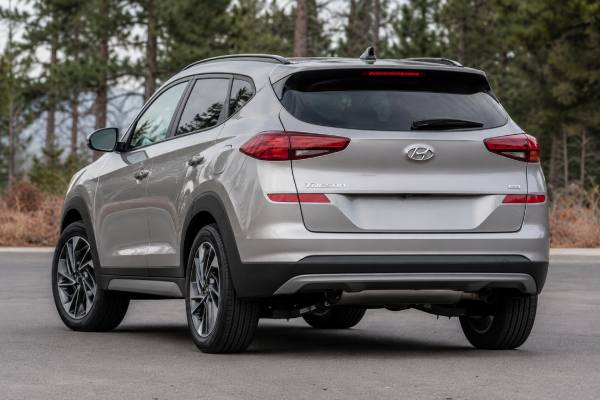

The facelifted Hyundai Tucson TL with the 1.6 CRDi 115 hp diesel is the sensible, economy-focused version of Hyundai’s third-generation compact SUV. It sits below the stronger 136 hp diesel and the 2.0 CRDi, but it gives buyers the same practical body, useful boot, comfortable cabin, and high equipment level in a lower-running-cost package.
This guide focuses on the front-wheel-drive 1.6 CRDi with the 6-speed manual gearbox, sold in many European markets around the 2018 and 2019 facelift period. It is best understood as a family SUV for commuting, motorway use, and light towing rather than a sporty or heavy-duty tow vehicle.
Final Verdict
The Hyundai Tucson TL 1.6 CRDi 115 hp FWD is a good used buy for drivers who want a roomy diesel SUV with strong fuel economy, a simple front-drive layout, and calmer long-distance manners than many smaller crossovers. It suits families, commuters, and high-mileage owners who value comfort and running costs over quick acceleration. Its main tradeoff is modest performance, especially when fully loaded, and diesel emissions hardware that dislikes repeated short trips. Buy one only with clear service history, confirmed recall/campaign status, clean AdBlue and DPF operation, and no clutch, turbo, or brake-assistance warning signs.
| Pros | Cons |
|---|---|
| Economical 1.6 CRDi suits motorway and mixed driving | 115 hp feels modest with passengers or luggage |
| Manual FWD layout avoids DCT and AWD complexity | Clutch and dual-mass flywheel need careful inspection |
| Spacious cabin and practical SUV boot for families | Ride can firm up on larger 18-inch wheels |
| Good safety equipment after the 2018 facelift | ADAS availability depends heavily on trim and market |
| Strong parts availability across Europe and the UK | AdBlue, DPF, EGR, and NOx issues can raise costs |
Table of Contents
- Hyundai Tucson 1.6 CRDi Overview
- Specifications and Technical Data
- Trims, Safety and Driver Assistance
- Reliability, Common Issues and Service Actions
- Maintenance and Buyer’s Guide
- Driving and Performance
- How the Tucson Compares to Rivals
Hyundai Tucson 1.6 CRDi Overview
The Tucson 1.6 CRDi 115 hp FWD is the economy diesel choice in the facelifted TL range. It is not the quickest Tucson, but it is one of the most rational versions if you want a comfortable used SUV with low fuel use and fewer driveline complications than AWD or automatic models.
The 2018 facelift brought revised styling, updated equipment, cleaner Euro 6d-TEMP diesel technology, and more active safety availability. In many markets, the 1.6 CRDi replaced or overlapped with the older 1.7 CRDi. The 115 hp tune was paired mainly with front-wheel drive and a 6-speed manual gearbox, while higher-output diesel versions could be found with more equipment, DCT automatic options, mild-hybrid hardware, or AWD depending on market.
For used buyers, the appeal is straightforward. The Tucson gives you a high driving position, wide-opening doors, decent rear-seat space, and a useful boot without the price premium of a premium-badge SUV. It feels mature on the motorway and is easy to live with in town, although its diesel engine is happier when regularly warmed through.
This version makes most sense for drivers doing mixed or longer journeys. Regular motorway work, rural commuting, and family use suit it well. Repeated two-mile school runs, low annual mileage, and long periods of cold running are less ideal because the diesel particulate filter, EGR system, AdBlue system, and intake tract all need the engine to reach proper operating temperature.
The 115 hp engine is adequate rather than lively. The torque figure matters more than the horsepower: 280 Nm arrives low in the rev range, so the Tucson pulls cleanly once the turbo is awake. It does not encourage fast overtakes or loaded hill climbs in a high gear, but it is relaxed when driven with realistic expectations.
Specifications and Technical Data
This Tucson uses a 1.6-litre four-cylinder CRDi diesel engine, a 6-speed manual gearbox, and front-wheel drive. The technical highlights are the 280 Nm torque output, Euro 6d-TEMP emissions equipment, 62-litre fuel tank, and practical chassis layout with MacPherson struts at the front and a multi-link rear suspension.
| Item | Hyundai Tucson 1.6 CRDi 115 hp FWD |
|---|---|
| Engine family | Smartstream / D4FE 1.6 CRDi diesel |
| Configuration | Inline-4, DOHC, 16 valves |
| Displacement | 1,598 cc |
| Bore × stroke | 77.0 × 85.8 mm |
| Compression ratio | 15.9:1 |
| Induction | Turbocharged diesel |
| Fuel system | Common-rail direct injection |
| Maximum power | 115 PS / 84.6 kW at 4,000 rpm |
| Maximum torque | 280 Nm / 206.5 lb-ft at 1,500–2,750 rpm |
| Emissions equipment | DPF, SCR/AdBlue, Euro 6d-TEMP |
| AdBlue tank | 14 litres |
| Fuel tank | 62 litres |
| Item | Specification |
|---|---|
| Transmission | 6-speed manual |
| Drive type | Front-wheel drive |
| Front suspension | MacPherson struts with coil springs |
| Rear suspension | Multi-link |
| Steering | Motor-assisted rack and pinion |
| Steering turns | 2.71 turns lock-to-lock |
| Turning circle | 10.6 m |
| Front brakes | Ventilated discs, floating calipers |
| Rear brakes | Solid discs, floating calipers |
| Item | Value |
|---|---|
| Body style | 5-door compact SUV |
| Seats | 5 |
| Length | 4,475 mm |
| Width excluding mirrors | 1,850 mm |
| Width including mirrors | 2,065 mm |
| Wheelbase | 2,670 mm |
| Typical height | 1,645–1,650 mm depending on trim and wheels |
| Kerb weight | About 1,507 kg for the 115 hp manual FWD version |
| Gross vehicle weight | 2,120 kg |
| Payload | About 613 kg |
| Boot capacity | Up to 513 litres seats up, 1,503 litres seats folded |
| Roof load | 100 kg |
| Item | Value |
|---|---|
| 0–62 mph | 11.8 seconds |
| Top speed | 109 mph / 175 km/h |
| Braked towing capacity | 1,400 kg |
| Unbraked towing capacity | 750 kg |
| Noseweight | 100 kg |
| Gross train weight | 3,520 kg |
| Item | Common value or note |
|---|---|
| Common tyre sizes | 215/70 R16, 225/60 R17, 225/55 R18 |
| Common wheel sizes | 16-, 17-, and 18-inch alloys by trim |
| Wheel nut torque | 11–13 kgf·m / 79–94 lb-ft / 107–127 Nm |
| Engine oil | Use low-SAPS diesel oil to the exact Hyundai/VIN specification |
| Manual gearbox oil | Use Hyundai-approved MTF grade by VIN and gearbox code |
| Timing drive | Check the D4FE timing-drive interval by VIN; do not assume lifetime service |
Trims, Safety and Driver Assistance
Trim availability varied by market, but the 115 hp diesel was usually positioned as the economy engine for mainstream grades. In the UK facelift range, it was available in trims such as S, SE Nav, and Premium at launch, while later 2019 UK ordering moved many diesel choices toward 48-volt mild-hybrid versions.
Trim and equipment highlights
The entry trims are worth considering if value matters more than luxury. The Tucson S typically brought alloy wheels, dual-zone climate control, cruise control availability depending on trim, a reversing camera in many facelift specifications, smartphone integration, lane-keeping support, AEB, and essential safety kit. SE Nav added a more useful infotainment setup, navigation, larger wheels, parking aids, and extra convenience features. Premium brought leather-faced seats in many markets, heated front seats, better audio, additional safety systems, and more exterior detail.
The main practical differences are not engine performance but equipment, wheels, and comfort features. A 17-inch-wheel car is often the best compromise because it rides better than an 18- or 19-inch version while still looking modern. Premium trims are nicer inside, but they may cost more to repair if fitted with extra sensors, electric seat parts, panoramic roof hardware, or more complex lighting.
Quick identifiers include the tailgate badge, engine code in service documentation, trim badges or interior equipment, tyre size on the door placard, and the VIN build sheet. The safest way to confirm whether a car is the 115 hp manual FWD version is to check the V5C/registration document, VIN decode, service invoice engine data, and emissions label rather than relying on exterior badges alone.
Safety ratings
The Hyundai Tucson TL achieved a five-star Euro NCAP rating when tested in 2015. The result applied to the TL generation before the facelift, and the facelift retained the same basic vehicle structure while adding or broadening active safety availability in many markets. The Euro NCAP category scores were strong for the period: adult occupant protection was 86%, child occupant protection 85%, pedestrian protection 71%, and safety assist 71%.
That rating should be read in context. A five-star 2015 result is not identical to a five-star result under newer Euro NCAP rules, which became progressively stricter. For a 2018–2019 used Tucson, the rating remains reassuring, but equipment level matters because active safety systems were not identical across every country and trim.
Safety systems and ADAS
Typical facelift equipment included front, front-side, and curtain airbags, ABS, electronic stability control, brake assist, hill-start assist, downhill brake control, vehicle stability management, front seatbelt pretensioners, tyre-pressure monitoring, and rear outer ISOFIX child-seat points. Many facelift cars also had autonomous emergency braking and lane keep assist, which made the Tucson feel more modern than some older diesel SUVs in the used market.
Blind spot detection and rear cross traffic alert were usually reserved for higher trims. Adaptive cruise with stop-and-go was tied to automatic or DCT versions, so the 115 hp manual FWD should not be assumed to have it. After windscreen replacement, front-end repair, suspension repair, or bumper work, camera and radar calibration should be checked where fitted. Poor calibration can cause false warnings, disabled AEB, or lane systems that feel inconsistent.
Reliability, Common Issues and Service Actions
The Tucson TL is generally a sturdy family SUV, but the 1.6 CRDi needs proper diesel-use patterns and service discipline. Most expensive problems are linked to emissions systems, neglected oil servicing, clutch wear, or ignored warning lights rather than weak basic body structure.
| Issue area | Prevalence | Severity | Typical clues |
|---|---|---|---|
| DPF loading | Occasional | Medium | Warning light, fan running, poor economy, limp mode |
| AdBlue or NOx faults | Occasional | Medium to high | Countdown message, emissions warning, stored NOx codes |
| EGR and intake soot | Occasional | Medium | Rough running, hesitation, smoke, low-speed flat spots |
| Clutch and dual-mass flywheel | Occasional | Medium to high | Rattle, judder, high biting point, vibration on take-up |
| Suspension bushes and drop links | Common with age | Low to medium | Knocks over bumps, uneven tyre wear, vague steering |
| Battery and sensor faults | Common with age | Low to medium | Start-stop errors, warning lights, weak cold starts |
The DPF is the first system to consider on any used diesel Tucson. Short trips, repeated interrupted regenerations, poor-quality oil, thermostat issues, and faulty sensors can all increase soot loading. A healthy car should not show frequent DPF warnings, heavy smoke, or repeated limp-home events. Ask for a diagnostic scan showing soot loading, regeneration history, and related temperature or pressure-sensor faults.
AdBlue and NOx sensor faults are also important because this engine uses SCR emissions control. Symptoms include an emissions warning, a no-start countdown, high AdBlue use, or codes for NOx conversion efficiency. The remedy may be a software update, sensor replacement, injector cleaning, wiring repair, or replacement of a failing AdBlue component. Do not buy a car with an emissions countdown unless the seller fixes it first.
EGR and intake deposits are normal diesel risks. They become worse on cars driven gently from cold and rarely taken on longer runs. Watch for hesitation, poor throttle response, rough idle, or excessive exhaust smell. Cleaning may help, but failed EGR valves, split hoses, boost leaks, and sensor faults need diagnosis rather than guesswork.
The 6-speed manual gearbox is usually durable, but clutch condition varies with use. A Tucson used for urban school runs, hill starts, or towing may have more clutch wear than mileage suggests. During a test drive, check for clean engagement, no slipping in higher gears, no judder when pulling away, and no rattling from the dual-mass flywheel when starting or switching off.
Suspension wear is not unusual on a medium SUV. Listen for knocking from front drop links, tired bushes, worn top mounts, and rear suspension noises. Uneven tyre wear can point to alignment neglect, worn bushes, or impact damage. The Tucson’s body generally resists corrosion well, but inspect subframes, brake pipes, rear suspension mounting points, stone-chipped sills, tailgate edges, and the area around underbody trays.
Service actions and recalls vary by country, build date, and VIN. Some Tucson TL vehicles in global markets were subject to brake/ABS-related campaigns, and diesel-specific campaigns can also depend on engine code and production date. The right approach is simple: run an official VIN recall check, ask a Hyundai dealer for campaign history, and keep proof of completed work. Do not rely only on a seller saying “no recalls showing” on an advert.
Maintenance and Buyer’s Guide
A Tucson 1.6 CRDi can be a low-cost long-term car when serviced on time with correct diesel fluids. The biggest mistake is treating it like an old simple diesel while ignoring AdBlue, DPF, software updates, and timing-drive requirements.
Practical maintenance schedule
Use the official service schedule for the exact VIN and market, especially if the car has been on long-life servicing or used in severe conditions. As a practical used-car baseline, the following intervals are sensible:
| Item | Recommended approach |
|---|---|
| Engine oil and filter | Every 10,000–12,000 miles or annually; sooner for short-trip use |
| Engine air filter | Inspect yearly; replace about every 20,000 miles or sooner in dust |
| Cabin filter | Replace yearly for good HVAC airflow and demisting |
| Fuel filter | Replace on schedule; shorten interval if fuel quality is uncertain |
| Brake fluid | Every 2 years |
| Coolant | Test at service; replace by Hyundai time and mileage schedule |
| Manual gearbox oil | Inspect for leaks; consider replacement around 60,000–80,000 miles |
| Timing drive | Confirm belt/drive interval by VIN and replace when due |
| Auxiliary belt and hoses | Inspect annually from 5 years old |
| DPF and AdBlue checks | Scan if warning lights, poor economy, or frequent regeneration occurs |
| Battery | Test yearly after 4–5 years, especially before winter |
| Tyres and alignment | Rotate where appropriate and check alignment after tyre wear appears |
Oil specification matters more than brand. Use the correct low-ash diesel oil because the DPF depends on it. Wrong oil can increase ash loading, shorten DPF life, and create warranty or goodwill problems. The same logic applies to coolant and gearbox oil: match the official Hyundai specification, not just a generic viscosity.
AdBlue should be kept clean and fresh. Do not pour contaminated fluid from an old open container into the tank. If the car has been stored for a long time, ask whether AdBlue crystallisation, pump operation, or injector blockage has been checked. AdBlue repairs can be expensive if ignored until the countdown appears.
Used-buying inspection checklist
Before buying, ask for service invoices rather than only stamped entries. A stamp proves a visit, but invoices show oil grade, filters, brake work, recall work, tyres, and whether the car has had repeated emissions faults.
Check these areas carefully:
- Cold start: should be clean, quick, and free of heavy rattles or smoke.
- Idle: should be steady with no strong diesel fumes in the cabin.
- Clutch: no slip, judder, high bite, or flywheel rattle.
- Gearbox: clean shifts into all gears, especially first, second, and reverse.
- DPF and AdBlue: no warning lights, countdown messages, or recent erased codes.
- Brakes: no pulsing, sticking rear calipers, or corroded inner disc faces.
- Suspension: no knocks from front links, top mounts, or rear arms.
- Steering: tracks straight with no heavy vibration or wandering.
- Electronics: check camera, sensors, navigation, phone pairing, windows, mirrors, and seat heaters.
- Underbody: inspect subframes, sills, brake pipes, exhaust mounts, and towbar wiring if fitted.
The best examples are one-owner or long-term-owner cars with annual oil changes, matching tyres, clean MOT history, and evidence of dealer software/campaign checks. Cars used mainly for motorway commuting are often better than low-mileage cars that have spent years doing short cold trips.
Avoid cars with persistent emissions warnings, missing service records, clutch vibration, unclear timing-drive history, or suspiciously fresh fault-code clearing. A cheap diesel SUV can quickly stop being cheap if it needs a DPF, AdBlue module, NOx sensors, clutch and flywheel, tyres, and brakes at the same time.
Long term, the Tucson TL 1.6 CRDi should age well if maintained properly. Its cabin is durable, parts supply is good, and the basic SUV package is not overly complicated in FWD manual form. The key is buying condition, not just mileage.
Driving and Performance
The Tucson 1.6 CRDi 115 hp feels relaxed, stable, and easy to drive, but not fast. Its best qualities are comfort, torque at everyday revs, and motorway economy rather than sharp handling or strong acceleration.
Around town, the engine pulls smoothly once moving, although there can be a short delay before the turbo builds boost. The manual gearbox is light enough for traffic, and the high driving position gives a good view forward. Rear visibility is more limited, so parking sensors and the reversing camera are valuable on used examples.
On the motorway, the Tucson feels more grown-up than many smaller crossovers. It tracks straight, wind noise is reasonable, and the engine settles into a steady diesel hum. It is not silent, but it is rarely tiring. The 280 Nm torque spread means you do not need to rev it hard in normal driving, though overtaking from higher speeds needs planning.
Handling is safe and predictable. The front-wheel-drive layout will push wide if you carry too much speed into a corner, but grip is fine on good tyres. Steering is light rather than communicative, which suits daily use. The multi-link rear suspension helps the Tucson feel settled over broken roads, although cars on larger wheels can feel firmer and noisier over sharp edges.
Real-world economy depends heavily on journey type. A well-maintained car doing longer mixed driving can often return about 5.5–6.5 L/100 km, equal to roughly 36–43 mpg US or 43–51 mpg UK. Gentle motorway use can do better, while cold urban use can push consumption higher. Winter driving, short trips, roof bars, underinflated tyres, and DPF regenerations all reduce economy.
For towing, the 1,400 kg braked rating is useful but not generous for a medium SUV. It can tow a small caravan, trailer, or light leisure load when matched correctly, but the 115 hp engine is not ideal for frequent heavy towing. Loaded climbs require lower gears, braking distances increase, and fuel use rises sharply. Anyone towing often should consider the stronger 136 hp diesel or 2.0 CRDi where available.
How the Tucson Compares to Rivals
The Tucson 1.6 CRDi 115 sits in a crowded used-SUV class, but it remains competitive because it balances space, equipment, warranty reputation, and running costs well. It is rarely the most exciting option, yet it is one of the easier compact diesel SUVs to recommend for sensible ownership.
| Rival | How it compares |
|---|---|
| Kia Sportage 1.6 CRDi | Very similar mechanically, often with slightly different equipment and warranty timing. |
| Nissan Qashqai 1.5 dCi | More efficient and lighter-feeling, but less roomy and less substantial inside. |
| Volkswagen Tiguan TDI | More premium and stronger to drive, but usually pricier to buy and repair. |
| Peugeot 3008 BlueHDi | Stylish cabin and strong economy, but infotainment and ergonomics divide buyers. |
| Ford Kuga TDCi/EcoBlue | Sharper steering and handling, but cabin practicality and refinement vary by trim. |
Against the Kia Sportage, the Tucson’s choice often comes down to price, service history, and equipment. The two are closely related in size and engineering, so buy the better car rather than chasing the badge. Kia’s remaining warranty may be attractive on some examples, while the Hyundai may offer a nicer trim-value mix depending on market.
The Nissan Qashqai is easier to thread through tight urban streets and can be very economical, especially with the 1.5 dCi. The Tucson feels larger, more stable, and more spacious, but it is not as nimble. Families with growing children may prefer the Tucson’s rear-seat and boot space.
The Volkswagen Tiguan feels more polished and can be stronger with a 2.0 TDI, but it usually costs more. Repairs, tyres, DSG servicing, and premium trim parts can also raise ownership cost. The Tucson is the more value-led option.
The Peugeot 3008 is more modern-looking inside and often very efficient with BlueHDi engines. It is a stronger style choice, but some drivers dislike the small steering wheel and high-set instruments. The Tucson is more conventional and easier to adapt to.
The Ford Kuga is better for drivers who value steering feel and a more car-like chassis. The Tucson counters with a calmer cabin, simpler controls, and a strong practical image. For most buyers choosing a 115 hp diesel SUV, the Hyundai’s comfort-first character is likely the better fit.
References
- Hyundai Tucson – Technical data and dimensions 2018 (Technical Data) ([Hyundai News][1])
- Hyundai Tucson press kit – December 2019 2019 (Technical Data) ([Hyundai News][2])
- Hyundai Tucson – Euro NCAP Results 2015 2015 (Safety Rating) ([Euro NCAP Newsroom][3])
- Hyundai Owners Manuals 2026 (Owner’s Manual Portal) ([Hyundai][4])
- Article development brief and formatting requirements
Disclaimer
This article is for informational purposes only and is not a substitute for professional diagnosis, repair, or inspection. Specifications, torque values, maintenance intervals, fluids, software updates, recalls, and procedures can vary by VIN, market, trim, production date, and equipment. Always verify service work against official Hyundai service documentation and use a qualified technician where appropriate.
If this guide helped you, please consider sharing it on Facebook, X/Twitter, or your preferred automotive community to support our work.