

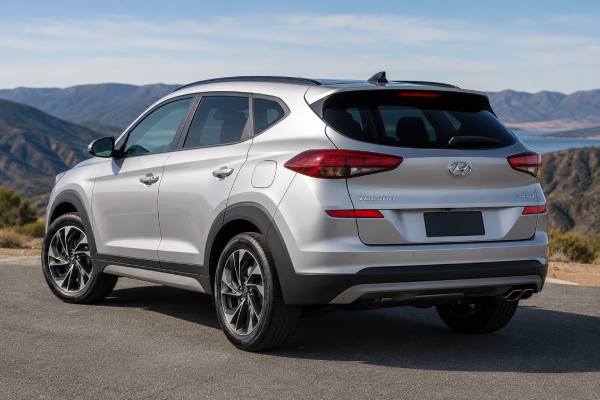

The facelifted Hyundai Tucson TL with the 2.0 CRDi diesel, HTRAC all-wheel drive and 48-volt mild-hybrid assistance sits at the stronger, more mature end of the third-generation Tucson range. It is not the lightest or cheapest Tucson to run, but it gives the compact SUV useful torque, stable all-weather traction, a comfortable cabin, and a more relaxed long-distance character than the smaller diesel and petrol versions.
For buyers looking at 2018–2019 used examples, the main questions are simple: is the 2.0 CRDi worth choosing, what should you check before buying, and how expensive is it to maintain properly? The answer depends heavily on service history, diesel-emissions health, HTRAC driveline care, and whether the car has been used for the kind of longer journeys a modern diesel prefers.
Final Verdict
The 2018–2019 Hyundai Tucson HTRAC AWD 2.0 CRDi is a strong used choice for drivers who want a practical diesel SUV with real torque, secure winter traction, and comfortable motorway manners. It suits families, commuters with regular longer trips, and owners who value towing ability more than sharp handling. The main tradeoff is diesel complexity: DPF, EGR, AdBlue/SCR hardware, 48-volt mild-hybrid parts, and AWD fluids all need proper attention. Buy one only with clear service records, completed recall checks, no warning lights, smooth 8-speed automatic shifts, and evidence that it has not spent its life doing short urban trips.
| Pros | Cons |
|---|---|
| Strong 400 Nm diesel torque suits hills, loads, and motorway use | Diesel emissions hardware dislikes repeated short, cold urban trips |
| HTRAC AWD adds useful wet-road, snow, and gravel traction | Rear driveline and transfer fluids add maintenance cost |
| 8-speed automatic gives relaxed cruising and better drivability | Neglected ATF service can lead to harsh or delayed shifts |
| 48V mild-hybrid system improves stop-start smoothness and economy | 48V battery, MHSG, and DC-DC faults are specialist repairs |
| Practical cabin, wide boot opening, and good rear-seat usability | Ride can feel firm on 19-inch wheels over broken roads |
| Good safety equipment on higher trims after the facelift | ADAS availability varies sharply by trim and market |
Table of Contents
- 2018–2019 Tucson 2.0 CRDi Overview
- Tucson HTRAC Diesel Specifications
- Trims, Options, Safety and ADAS
- Reliability, Common Issues and Recalls
- Maintenance and Used Buying Guide
- Driving, Performance and Efficiency
- Tucson 2.0 CRDi vs Rivals
2018–2019 Tucson 2.0 CRDi Overview
The 2018–2019 Tucson 2.0 CRDi HTRAC is the version to consider if you want the TL facelift with the strongest diesel engine, all-wheel drive, and proper long-distance ability. It is more complex than the smaller 1.6 CRDi, but it feels better matched to the Tucson’s weight when fully loaded.
This facelift updated the third-generation Tucson with revised styling, new lighting options, a redesigned dashboard with a floating infotainment screen, upgraded driver-assistance systems, and a revised powertrain range. In Europe and several other markets, the 2.0 CRDi became the flagship diesel choice and gained a 48-volt mild-hybrid system. That system does not make the Tucson a full hybrid. It cannot drive on electric power alone. Instead, it uses a belt-driven mild-hybrid starter-generator to assist the engine, recover energy during deceleration, and smooth out stop-start operation.
The engine itself is Hyundai’s R-series 2.0-litre common-rail turbodiesel, usually identified as D4HA. In this application it produces about 185 hp and 400 Nm of torque, depending on how the market quotes PS, hp, and kW. The torque is the important number. It gives the Tucson easy mid-range pull, especially from around 1,750 rpm, and makes the car feel less strained on climbs than the smaller diesel.
HTRAC is Hyundai’s electronically controlled AWD system. In normal driving the Tucson behaves mostly like a front-driven SUV, then sends torque rearward when the system detects slip or when the driver asks for more traction. It is not a hardcore off-road system, and it does not have a low-range transfer case, but it is useful on wet roads, loose surfaces, snow, and muddy tracks.
Most buyers will prefer the 8-speed automatic. It suits the diesel’s low-rpm torque and makes the car calmer in everyday use. Some markets also offered a 6-speed manual, but the automatic is the more common match for the higher-spec HTRAC diesel.
As a used SUV, this Tucson is best for owners who cover enough distance for the diesel particulate filter to regenerate properly. A car used mainly for short school runs, cold starts, and stop-start city traffic is a riskier buy than one with motorway miles and regular servicing.
Tucson HTRAC Diesel Specifications
The 2.0 CRDi HTRAC combines a transverse four-cylinder diesel engine, 48V mild-hybrid support, an AWD driveline, and usually an 8-speed torque-converter automatic. The useful ownership facts are engine output, towing rating, emissions equipment, fluid needs, tyre size, and whether the specific car has the automatic or manual transmission.
| Item | Specification |
|---|---|
| Engine | 2.0 CRDi R-series diesel, D4HA family |
| Displacement | 1,995 cc, four cylinders, DOHC, 16 valves |
| Induction and injection | Turbocharged and intercooled common-rail diesel |
| Maximum power | About 185 hp at 4,000 rpm |
| Maximum torque | 400 Nm from about 1,750–2,750 rpm |
| Mild-hybrid system | 48V lithium-polymer battery with mild-hybrid starter-generator |
| 48V assist output | Up to about 12 kW under acceleration |
| Emissions equipment | DPF and SCR/AdBlue on Euro 6d-TEMP-era cars |
| Fuel tank | 62 litres |
| AdBlue tank | About 14 litres on SCR-equipped versions |
| Item | Specification |
|---|---|
| Common automatic | 8-speed torque-converter automatic |
| Manual availability | 6-speed manual in selected markets |
| Drive system | HTRAC electronically controlled AWD |
| Front suspension | MacPherson struts with anti-roll bar |
| Rear suspension | Independent multi-link |
| Steering | Electric power-assisted rack and pinion |
| Brakes | Ventilated front discs, rear discs |
| Item | Specification |
|---|---|
| Body style | Five-door compact SUV, five seats |
| Length | 4,480 mm |
| Width | 1,850 mm, excluding mirrors |
| Height | About 1,655 mm, equipment dependent |
| Wheelbase | 2,670 mm |
| Ground clearance | About 172 mm |
| Turning circle | About 10.6 m |
| Cargo volume | About 459–1,449 litres |
| Kerb weight | Roughly 1,640–1,810 kg, depending on trim |
| Item | Specification |
|---|---|
| 0–100 km/h | About 9.5 seconds with the 8-speed automatic |
| Top speed | About 201 km/h |
| Official combined fuel use | About 6.9–7.0 L/100 km WLTP, specification dependent |
| Braked towing rating | Up to about 1,900 kg automatic; higher in some manual versions |
| Unbraked towing rating | 750 kg |
| Roof load | About 100 kg |
| Item | Useful value |
|---|---|
| Engine oil quantity | About 7.6 litres with filter |
| Typical oil grade | Low-SAPS diesel oil, often 5W-30 or 5W-40 by market |
| Coolant quantity | About 8.5 litres |
| Common tyres | 225/55 R18 or 245/45 R19 |
| Wheel-nut torque | 11–13 kgf·m, about 107–127 Nm |
| Timing drive | Chain; inspect for noise, stretch, and timing faults |
Trims, Options, Safety and ADAS
Trim names differ by country, but the 2.0 CRDi HTRAC was generally positioned near the top of the Tucson range. That means many cars have better lighting, infotainment, driver aids, and interior equipment than lower-output diesel versions.
In the UK and similar European markets, look for names such as Premium, Premium SE, N Line, or market-specific high-grade equivalents. In other regions, the same mechanical package may appear under GLS, Limited, Executive, Style, or Premium labels. The trim badge is useful, but the actual equipment fitted to the car matters more.
Equipment to look for
Desirable options and features include:
- LED headlights rather than basic halogen units.
- Heated front seats and, on higher trims, ventilated front seats.
- Heated steering wheel in cold-climate markets.
- 7-inch or 8-inch touchscreen with Apple CarPlay and Android Auto.
- Factory navigation, often with a larger screen.
- Reversing camera or surround-view monitor.
- Blind-spot warning and rear cross-traffic warning.
- Smart cruise control on higher-grade automatic cars.
- Power tailgate and panoramic roof on upper trims.
- 18-inch wheels for a better ride, or 19-inch wheels for sharper looks.
The easiest way to identify the 2.0 CRDi HTRAC model is to check for the diesel engine badge, AWD/HTRAC badging where fitted, an automatic selector with 8-speed automatic behaviour, and the VIN/build sheet. Some cars advertised as AWD may simply be dealer-listed incorrectly, so verify the underside, rear differential, and factory specification.
The TL Tucson received a five-star safety rating in Euro NCAP testing when this generation was assessed, and ANCAP applied a five-star rating to later-built TL variants after safety-related improvements. The important used-car detail is that crash-test ratings are tied to the test year, market equipment, and production date. A 2018–2019 facelift car with six airbags, stability control, seat-belt reminders, and the stronger ADAS package is the one to seek.
Standard passive safety equipment usually includes front airbags, front side airbags, curtain airbags, ABS, stability control, traction control, hill-start assist, and ISOFIX child-seat points. Driver-assistance availability varies. The facelift brought wider access to systems such as autonomous emergency braking, lane-keeping assist, driver-attention warning, speed-limit information, blind-spot monitoring, rear cross-traffic warning, high-beam assist, and smart cruise control, but not every market made all of these standard.
After windscreen replacement, front bumper repairs, suspension alignment work, or crash repair, ADAS calibration matters. A cheap windscreen replacement that ignores the camera system can cause lane-keeping or AEB faults. Before buying, test every assistance feature, check for warning lights, and confirm that accident repairs were completed with calibration records.
Reliability, Common Issues and Recalls
A well-maintained Tucson 2.0 CRDi can be durable, but neglected diesel emissions systems and AWD service are the main risks. The engine is not usually the weak point; poor use pattern and skipped maintenance are more often the problem.
| Issue | Prevalence | Severity | Typical signs | Best response |
|---|---|---|---|---|
| DPF soot loading | Common on short-trip cars | Medium to high | Warning light, limp mode, frequent fan running | Diagnose soot load, repair root cause, complete regeneration |
| EGR or intake contamination | Occasional | Medium | Rough running, hesitation, emissions faults | Inspect EGR, intake, sensors, and update software if required |
| AdBlue/SCR faults | Occasional | Medium to high | No-start countdown, NOx sensor faults, crystallisation | Check tank, injector, pump, NOx sensors, and correct fluid |
| 8-speed automatic shift issues | Occasional | Medium | Harsh engagement, flare, delayed downshift | Scan TCU, check mounts, consider ATF service |
| HTRAC driveline wear | Occasional | Medium | Binding, rumble, rear-end whine, vibration | Check tyres, coupling, rear diff, transfer case fluids |
| Suspension and wheel bearings | Common with mileage | Low to medium | Knocks, humming, uneven tyre wear | Inspect links, bushes, bearings, alignment |
| 48V mild-hybrid faults | Rare to occasional | High | Stop-start faults, charging warnings, belt noise | Use Hyundai-capable diagnostics before replacing parts |
Diesel and emissions systems
The D4HA diesel is at its best when it gets fully warm and spends time at steady road speeds. Repeated short trips can interrupt DPF regeneration, increase oil dilution risk, and make EGR deposits worse. Warning lights should never be dismissed as “just a sensor” without a scan. A failed temperature sensor, split boost hose, sticky EGR valve, tired thermostat, or bad glow plug can all prevent clean regeneration.
AdBlue-equipped cars need the correct fluid and clean filling practices. Crystallised AdBlue around the filler neck, warning countdowns, or repeated NOx sensor codes can become costly. A seller who has recently “cleared the light” without paperwork is a red flag.
Timing chain, turbo, and cooling
The 2.0 CRDi uses a timing chain rather than a routine replacement belt. That does not mean it is maintenance-free forever. Listen for cold-start rattles, check for timing-correlation fault codes, and avoid cars with long oil-change gaps. Chain wear is usually linked to mileage, oil quality, and neglect rather than a fixed age.
The turbocharger should build boost smoothly without siren noises, heavy smoke, or oily intercooler leaks. Some oil mist in diesel intake plumbing is not unusual, but heavy oil loss, black smoke, limp mode, or repeated boost-pressure faults need diagnosis before purchase.
Transmission, AWD, and chassis
The 8-speed automatic should shift cleanly when cold and hot. A slight diesel thrum at low speed is normal; banging into drive, delayed reverse engagement, or repeated hunting is not. Hyundai may describe some fluids as long-life in certain markets, but used buyers should value cars with preventive ATF servicing, especially if used for towing.
HTRAC adds rear driveline parts, including a rear differential, propshaft, coupling hardware, and extra seals. Mismatched tyres can stress AWD systems, so all four tyres should be the same size, similar brand, and similar tread depth.
Suspension wear is normal as mileage rises. Check front anti-roll bar links, lower arms, rear bushes, rear springs, wheel bearings, and brake corrosion. In salted climates, inspect the rear subframe area, suspension arms, brake lines, fuel lines, exhaust mounts, and underbody seams.
Recalls and service actions
The best-known TL Tucson recall topic is the ABS/HECU electrical short campaign in some markets. The official remedy involved installing a revised fuse kit and, on certain vehicles, updating ABS/ESC software. Applicability depends on VIN, market, and production range, so do not assume a car is included or excluded based only on model year.
Before buying, ask for:
- Official VIN recall check from Hyundai or the national recall database.
- Dealer proof that any ABS/ESC, emissions, infotainment, or driveline updates are complete.
- Full service invoices, not just stamped pages.
- Diagnostic scan showing no current engine, transmission, AWD, ADAS, or 48V system faults.
- Evidence of regular oil changes and correct low-SAPS diesel oil.
Maintenance and Used Buying Guide
The safest maintenance plan for this Tucson is stricter than the bare minimum. Treat it as a modern AWD diesel with emissions hardware, not as a simple old diesel SUV.
| Interval | Work to prioritise |
|---|---|
| Every 10,000–15,000 km or 12 months | Engine oil and filter, inspection, diagnostic scan, tyres, brakes |
| Severe use: 7,500 km or 6 months | Oil and filter for short trips, towing, dust, mountains, heavy traffic |
| Every 15,000 km | Rotate tyres, inspect alignment, brakes, suspension, driveline leaks |
| Every 30,000 km or 24 months | Brake fluid, cabin filter, battery test, air-filter inspection |
| Every 45,000–60,000 km | Engine air filter, fuel filter, AWD fluids by use and market |
| Every 60,000–90,000 km | ATF, transfer case, rear differential if towing or severe use |
| Every 100,000–150,000 km | Coolant service depending on market schedule and coolant type |
| At every service | DPF data, AdBlue system, MHSG belt, hoses, recalls, software updates |
Use oil that matches the owner’s manual for your VIN and market. Because this diesel uses after-treatment hardware, low-SAPS oil is important. The wrong oil can shorten DPF life. Also avoid cheap filters, especially oil and fuel filters. Modern common-rail injectors do not tolerate water or dirt in the fuel system.
For the 8-speed automatic and HTRAC hardware, preventive fluid changes are cheap compared with transmission or AWD repairs. If the car tows, runs in mountains, carries heavy loads, or spends time in hot stop-start traffic, shorten the fluid intervals.
Pre-purchase inspection checklist
Check the car cold, then drive it until fully warm. A proper inspection should include:
- Cold start: no excessive chain rattle, white smoke, or long cranking.
- Idle quality: stable idle, no diesel knock beyond normal sound.
- Boost delivery: smooth pull from low rpm without limp mode.
- Exhaust: no heavy black smoke under load.
- DPF data: soot load, regeneration history, differential pressure.
- AdBlue system: no warning countdown, no crystallised leaks.
- Transmission: smooth drive/reverse engagement and no flare.
- AWD: no binding on tight turns, no rear differential whine.
- Tyres: four matching tyres with even tread depth.
- Brakes: no pulsing, sticking calipers, or deep corrosion.
- Steering and suspension: no knocking, wandering, or uneven wear.
- Interior electronics: camera, parking sensors, infotainment, ADAS.
- Body: tailgate, roof, underbody, sills, suspension mounts, accident repair.
Best years and trims to choose
For this specific article scope, a late-2018 or 2019 example with the 8-speed automatic, 18-inch wheels, LED headlights, full safety pack, and documented dealer software updates is the sweet spot. The 19-inch wheels look good, but the 18-inch setup is usually more comfortable and less vulnerable to pothole damage.
Avoid cars with incomplete diesel-emissions repairs, missing service history, mismatched tyres, unresolved warning lights, or evidence of towing without fluid servicing. High mileage is not automatically a problem if the car has done steady road use and has proper records. Low mileage can be worse if it means years of short trips and failed DPF regenerations.
Long-term durability is good when the oil, filters, coolant, ATF, AWD fluids, brake fluid, tyres, and emissions systems are looked after. It becomes expensive when owners treat it like a basic SUV and ignore the diesel, AWD, and 48V details.
Driving, Performance and Efficiency
The Tucson 2.0 CRDi HTRAC is not a sporty SUV, but it is one of the more relaxed and capable TL Tucson versions. Its strength is mid-range torque, easy cruising, and stable traction rather than sharp steering or lively cornering.
Around town, the diesel pulls cleanly once moving, though it can feel heavier than the smaller engines. The 48V mild-hybrid system helps the stop-start system feel smoother than a conventional diesel setup. It also adds a little assistance when pulling away, but it does not transform the car into a hybrid in the Toyota sense.
The 8-speed automatic suits the engine well. It keeps revs low during steady driving and usually avoids the busy feel of smaller turbo engines. Kickdown is not instant, but the broad torque band means it rarely needs dramatic downshifts. In Sport mode the gearbox holds gears longer; in Eco it favours early shifts and softer throttle response.
Ride quality depends heavily on tyres and wheels. On 18-inch wheels, the Tucson feels comfortable enough for long trips, with good straight-line stability and moderate road noise. On 19-inch wheels, it looks sharper but can thump more over potholes and broken urban surfaces. Steering is light and predictable, not especially talkative. Body roll is present, but the car feels secure when driven normally.
HTRAC is most noticeable in bad weather. The system can move torque rearward when needed, and the driver can use AWD lock at low speeds in slippery conditions. It will not make road tyres behave like winter tyres, so tyre choice remains critical. A Tucson HTRAC on quality winter or all-season tyres is far more capable than one on worn summer tyres.
Real-world fuel economy depends on use pattern:
- Urban short trips: about 8.0–9.5 L/100 km, or 25–29 mpg US.
- Mixed driving: about 6.8–7.8 L/100 km, or 30–35 mpg US.
- Steady highway use: about 6.0–7.0 L/100 km, or 34–39 mpg US.
- Cold winter short trips: expect a clear penalty, especially before the engine warms.
Towing is one reason to choose the 2.0 CRDi HTRAC over smaller engines. With 400 Nm and AWD, it feels confident with moderate trailers, but towing increases fuel use and heat load. A buyer looking for a tow car should insist on ATF and AWD fluid servicing, good brakes, premium tyres, and no cooling-system neglect.
Braking feel is typical for the class: secure rather than sporty. Cars that have sat unused may have rusty rear discs, sticky calipers, or an electronic parking brake issue. A smooth test drive should include light braking, firm braking, low-speed manoeuvres, and a motorway-speed cruise.
Tucson 2.0 CRDi vs Rivals
The Tucson 2.0 CRDi HTRAC competes best as a value-focused, well-equipped diesel AWD SUV. It is not the most premium, the sharpest to drive, or the most economical in every situation, but it offers a strong blend of torque, space, equipment, and used-market value.
| Rival | Where it can beat the Tucson | Where the Tucson responds well |
|---|---|---|
| Kia Sportage 2.0 CRDi AWD | Very similar mechanical package, often strong warranty appeal | Tucson may feel slightly more restrained and better value used |
| Volkswagen Tiguan 2.0 TDI 4Motion | More premium cabin feel and sharper road manners | Tucson often costs less and can be better equipped |
| Mazda CX-5 Skyactiv-D AWD | Better steering feel and more driver-focused chassis | Tucson diesel issues are usually more predictable to inspect |
| Nissan X-Trail dCi AWD | More space and available seven-seat practicality | Tucson feels more compact, easier to park, and less van-like |
| Peugeot 3008 BlueHDi | More stylish interior and strong front-drive diesel economy | Tucson offers AWD traction and a simpler cabin layout |
| Toyota RAV4 Hybrid | Better city efficiency and no diesel DPF/SCR concerns | Tucson is stronger for diesel towing and often cheaper used |
Choose the Kia Sportage if you find a better-warranted example with the same powertrain and service history. Choose the Tiguan if cabin finish and handling are more important than purchase price. Choose the RAV4 Hybrid if most of your driving is urban and you want to avoid diesel-emissions concerns entirely.
The Tucson makes the most sense when you want a comfortable family SUV for mixed and longer-distance driving, with AWD security and good equipment for the money. It is less convincing if you only drive short city trips, dislike diesel maintenance, or expect premium-brand cabin polish. The best example is not necessarily the cheapest one; it is the one with the cleanest diagnostic report, complete service history, matched tyres, healthy emissions system, and proof of recall completion.
References
- Designed for electrification: Hyundai’s New Tucson 2018 (Press Release)
- New Hyundai Tucson: worldwide debut at New York International Auto Show 2018 (Press Release)
- TUCSON 2018 (Brochure)
- Hyundai Tucson | Safety Rating & Report | ANCAP 2015 (Safety Rating)
- Part 573 Safety Recall Report 20V-543 2020 (Recall Database)
Disclaimer
This article is for informational purposes only and is not a substitute for professional diagnosis, repair, or inspection. Specifications, torque values, maintenance intervals, software campaigns, recall applicability, fluids, and procedures can vary by VIN, market, production date, equipment, and service history. Always verify against the official owner’s manual, factory service documentation, dealer records, and a current VIN-specific recall check before buying, servicing, towing, or repairing a vehicle.
If this guide helped you, please consider sharing it on Facebook, X/Twitter, or another platform to support our work.