
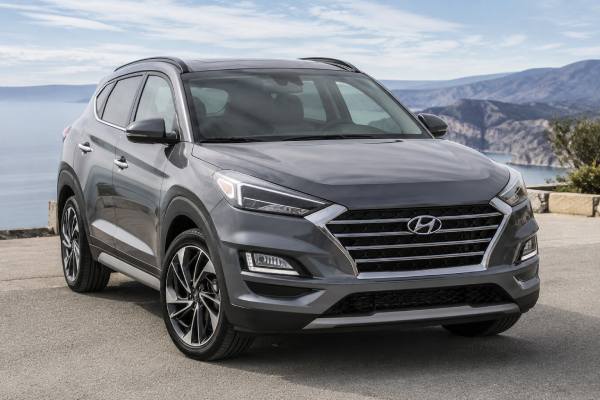


The facelifted Hyundai Tucson TL with the 2.0 CRDi 48V diesel mild-hybrid engine is one of the strongest versions of the third-generation Tucson sold in Europe and several other markets. It combines a torquey 2.0-litre diesel, an 8-speed automatic gearbox, and Hyundai’s on-demand AWD system in a practical family SUV body. It is not a full hybrid and it cannot drive on electric power alone, but the 48V system helps with smoother restarts, low-speed assistance, and energy recovery.
For used buyers, this version is attractive because it offers better pulling power than the smaller 1.6 diesels, a more relaxed automatic transmission than the 7-speed DCT petrol models, and useful all-weather traction. The main questions are diesel suitability, emissions-system health, maintenance history, and whether the added complexity of AWD and 48V hardware has been looked after properly.
Final Verdict
The Hyundai Tucson TL 2.0 CRDi 48V HTRAC AWD is a good used choice for drivers who regularly cover longer journeys, want strong diesel torque, and need a comfortable SUV with useful traction rather than sporty handling. Its strongest appeal is the relaxed 400 Nm powertrain paired with an 8-speed automatic, making it better suited to motorway work, hills, and towing than the smaller Tucson engines. The main tradeoff is complexity: DPF, AdBlue/SCR, AWD, automatic transmission, and 48V components all need proper servicing. Buy only with full maintenance history, clean diagnostics, completed recalls, and no signs of short-trip diesel neglect.
| Pros | Cons |
|---|---|
| Strong 400 Nm diesel torque suits hills, loads, and towing | Short urban trips can clog DPF and stress emissions hardware |
| 8-speed automatic is smoother than Hyundai’s dry-clutch DCTs | ATF changes are often neglected on used examples |
| HTRAC AWD gives useful wet-road and winter traction | Rear coupling, diff, and tyre matching need attention |
| 48V system improves restart smoothness and light acceleration | Mild hybrid adds battery, converter, and belt-drive complexity |
| Premium trims include good safety and comfort equipment | 19-inch Premium SE wheels raise tyre cost and firm the ride |
| Cabin space and towing ability make it a practical family SUV | Boot volume is reduced versus non-48V Tucson versions |
Table of Contents
- Tucson TL 2.0 CRDi 48V Overview
- Tucson 2.0 CRDi 48V Specifications
- Trims, Safety, and Driver Assistance
- Reliability, Common Issues, and Recalls
- Maintenance and Used Buying Guide
- Driving, Performance, and Efficiency
- How the Tucson Compares to Rivals
Tucson TL 2.0 CRDi 48V Overview
The 2.0 CRDi 48V HTRAC AWD is the most capable diesel version of the facelifted Tucson TL, aimed at buyers who wanted torque, automatic refinement, and all-weather traction. It makes the most sense for longer-distance drivers, rural users, and families who tow or regularly carry passengers and luggage.
This version sits in the 2018 facelift range, which brought revised styling, updated infotainment placement, improved driver-assistance availability, new diesel engines, and Hyundai’s first 48V diesel mild-hybrid setup. In many European markets, the 2.0 CRDi 48V was offered only with higher trims and AWD. In the UK specification, it was paired with the 8-speed automatic and 4WD on Premium and Premium SE grades.
The engine is Hyundai’s R-series 2.0 CRDi diesel, commonly identified as D4HA. In this facelifted 48V form it produces 185 PS, or about 136 kW, with 400 Nm of torque from 1,750 to 2,750 rpm. That torque band is the reason this version feels much stronger than the paper horsepower figure suggests. It does not sprint like a performance SUV, but it pulls cleanly from low revs and settles into motorway speeds with little effort.
The 48V mild-hybrid system is simple in concept but important for ownership. A small lithium-ion battery, mild-hybrid starter-generator, DC/DC converter, and inverter support the diesel engine during restart and acceleration, then recover energy during braking and overrun. It reduces load on the engine at certain times, but it does not make the Tucson an electric SUV. There is no plug, no EV-only range, and no high-voltage traction motor driving the wheels by itself.
As a used car, the appeal is practical rather than emotional. You get a roomy five-seat SUV, a sensible driving position, strong towing potential, good safety equipment on higher trims, and a drivetrain that feels better suited to heavy use than the smaller engine options. The caution is that this is the most mechanically complex Tucson TL diesel. A neglected example can bring expensive problems in the diesel aftertreatment system, AWD hardware, automatic gearbox, or 48V electrical system.
Tucson 2.0 CRDi 48V Specifications
This Tucson uses a transverse 2.0-litre four-cylinder diesel engine, an 8-speed torque-converter automatic, and an on-demand AWD system. The 48V mild-hybrid hardware is there to assist and recuperate energy, not to turn the Tucson into a full hybrid. The most important buying specs are the 400 Nm torque output, 1,900 kg braked towing rating in UK data, 62-litre fuel tank, and reduced 459-litre VDA boot volume on the 48V version.
| Item | Specification |
|---|---|
| Engine | 2.0 CRDi R-series diesel, commonly D4HA |
| Layout | Inline 4-cylinder, DOHC, 16 valves |
| Displacement | 1,995 cc |
| Bore x stroke | 84.0 x 90.0 mm |
| Compression ratio | 16.0:1 |
| Induction | Turbocharged diesel with electronic variable geometry turbo |
| Fuel system | CRDi common-rail direct injection |
| Maximum power | 185 PS / 136.1 kW at 4,000 rpm |
| Maximum torque | 400 Nm / 295 lb-ft at 1,750–2,750 rpm |
| Emissions standard | Euro 6d-TEMP in UK launch data |
| 48V battery | 0.44 kWh lithium-ion battery beneath rear luggage area |
| Mild-hybrid assist | MHSG assistance up to 12 kW depending on conditions |
| Item | Specification |
|---|---|
| Transmission | 8-speed automatic torque-converter gearbox |
| Drive system | HTRAC / active on-demand AWD, market naming varies |
| AWD lock function | Low-speed 50:50 front-rear lock mode in some markets |
| 0–62 mph | 9.5 seconds |
| Top speed | 125 mph / 201 km/h |
| Steering | Motor-assisted rack and pinion |
| Turning circle | 10.6 m in UK technical data |
| Item | Specification |
|---|---|
| Body style | 5-door SUV, 5 seats |
| Length | 4,475 mm |
| Width | 1,850 mm excluding mirrors; 2,065 mm including mirrors |
| Height | About 1,650 mm depending on trim and roof rails |
| Wheelbase | 2,670 mm |
| Kerb weight | About 1,640–1,770 kg depending on market and equipment |
| Gross vehicle weight | 2,250 kg in UK 2.0 CRDi 48V automatic 4WD data |
| Payload | 607 kg in UK 2.0 CRDi 48V automatic 4WD data |
| Boot volume | 459 litres seats up; 1,449 litres seats down |
| Fuel tank | 62 litres |
| AdBlue tank | 14 litres |
| Item | Specification |
|---|---|
| Braked towing capacity | 1,900 kg in UK 2.0 CRDi 48V automatic 4WD data |
| Unbraked towing capacity | 750 kg |
| Nose weight | 100 kg in UK data |
| Roof load | 100 kg |
| Premium tyres | 225/55 R18 |
| Premium SE tyres | 245/45 R19 |
| Official combined fuel economy | 49.6 mpg UK / 5.7 L/100 km in UK NEDC-derived data |
| Official CO2 | 151 g/km in UK launch data |
The headline figures tell a clear story. This Tucson is not light, but the 400 Nm torque output gives it useful real-world strength. The 48V battery reduces cargo space compared with non-mild-hybrid versions, so buyers who need maximum boot capacity should compare the 459-litre figure with other Tucson variants before committing.
Trims, Safety, and Driver Assistance
In UK facelift form, the 2.0 CRDi 48V automatic 4WD was positioned high in the range, mainly on Premium and Premium SE. That matters because many of the most useful driver-assistance and comfort features are trim-dependent.
Premium is usually the better-value used buy. It brings the 2.0 CRDi 48V drivetrain, leather-faced seating, heated front and rear outer seats, navigation, KRELL premium audio, front and rear parking sensors, blind-spot monitoring, rear cross-traffic alert, keyless entry, wireless phone charging, and 18-inch wheels. The 18-inch package is a sensible fit for the Tucson because it gives a more forgiving ride and cheaper tyres than the 19-inch setup.
Premium SE adds more luxury and convenience. Typical equipment includes 19-inch wheels, panoramic glass sunroof, ventilated front seats, heated steering wheel, around-view monitor, smart electric tailgate, bi-LED headlights, high beam assist, and adaptive cruise control with Stop & Go on automatic versions. It is more desirable on paper, but the sunroof, powered tailgate, 19-inch tyres, and extra electronic features add inspection points on an older used car.
Quick identifiers include the 48V or mild-hybrid badging where fitted, the 8-speed automatic selector, AWD/4WD designation, AdBlue filler, and trim-specific wheels. Premium commonly uses 18-inch alloys, while Premium SE commonly uses 19-inch alloys. The 48V model also has reduced boot-floor packaging compared with non-48V versions because the battery sits under the rear luggage area.
Safety performance is strong for its age. The third-generation Tucson received a 5-star Euro NCAP rating in 2015, with widely reported scores of 86% adult occupant protection, 85% child occupant protection, 71% pedestrian protection, and 71% safety assist. Treat that as a period rating, not a direct match to the latest Euro NCAP test protocols. Crash-test standards have moved on, so a five-star 2015 result should not be read the same way as a five-star result under newer rules.
Standard safety equipment in the UK facelift range was generous. The specification included front, front-side, and curtain airbags, passenger airbag deactivation, ABS, brake assist, electronic stability control, hill-start assist, downhill brake control, trailer stability assist, tyre pressure monitoring with individual tyre display, ISOFIX points on the outer rear seats, autonomous emergency braking, and lane keep assist. Blind-spot detection and rear cross-traffic alert were fitted to Premium and Premium SE. Adaptive cruise with Stop & Go and high beam assist were generally Premium SE features.
For buyers, the most important safety checks are practical. Make sure the windscreen has the correct camera area if it has been replaced, confirm no dashboard warning lights are present, test AEB/LKA availability through the menus, and check that parking sensors, reversing camera, blind-spot alerts, and the around-view system work cleanly. Any front-end repair can require camera or radar calibration. A car with fresh paint on the bumper, a replaced windscreen, or accident repair history should come with proof that the driver-assistance systems were recalibrated correctly.
Reliability, Common Issues, and Recalls
The Tucson TL 2.0 CRDi 48V can be durable, but it rewards the right use pattern. Long warm runs, clean oil, correct fluids, and periodic driveline servicing make a large difference; repeated short trips and delayed maintenance are the main enemies.
| System | Prevalence | Severity | Typical age or mileage | What to check |
|---|---|---|---|---|
| DPF and EGR system | Common on short-trip diesels | Medium to high | From 50,000 miles / 80,000 km | Regeneration history, soot load, warning lights |
| AdBlue/SCR faults | Occasional | Medium to high | Often age-related | Countdown warnings, NOx sensor codes, crystallisation |
| Automatic gearbox service neglect | Occasional | Medium | 60,000 miles / 100,000 km onward | Shift quality, ATF history, delayed engagement |
| AWD coupling and rear differential | Occasional | Medium | Higher mileage or mismatched tyres | Binding, vibration, fluid changes, equal tyre sizes |
| 48V battery and DC/DC system | Less common but important | Medium to high | Age and low-use related | Start-stop operation, diagnostic codes, battery health |
| Suspension bushes and links | Common wear item | Low to medium | 60,000–90,000 miles | Knocks, uneven tyre wear, MOT advisories |
Diesel aftertreatment issues
The biggest reliability split is between cars used properly as diesels and cars used like petrol city cars. A healthy 2.0 CRDi needs regular full-temperature running so the DPF can regenerate. Short journeys, low-speed urban use, poor batteries, and repeated interrupted regenerations can raise soot load and trigger warning lights.
Typical symptoms include increased idle speed, cooling fans running after shutdown, poor fuel economy, DPF warning messages, EGR flow codes, limp mode, or frequent oil dilution. The remedy depends on diagnosis. A forced regeneration may help only if the underlying cause is fixed. Faulty temperature sensors, pressure sensors, EGR problems, boost leaks, thermostat issues, or poor driving patterns can all return the same DPF symptoms.
AdBlue/SCR problems are usually more expensive than basic DPF servicing. Warning countdowns, NOx sensor faults, pump faults, injector crystallisation, or low-quality stored AdBlue can create no-start risk if ignored. On a pre-purchase inspection, scan the SCR system and confirm the AdBlue tank takes fluid normally.
Engine, timing chain, and turbo
The 2.0 CRDi R-series engine uses a timing chain rather than a routine timing belt. That does not mean it is maintenance-free forever. Listen for cold-start rattles, check for timing-correlation faults, and inspect for chain, guide, or tensioner wear if noise appears. Regular oil changes with correct low-ash diesel oil are the best protection.
Turbocharger problems are not usually the first thing to fail, but any whistle, underboost code, oil smoke, or slow boost response needs attention. Check intake hoses, intercooler pipes, vacuum control, electronic actuator operation, and exhaust backpressure before replacing expensive parts.
Automatic transmission and AWD
The 8-speed automatic is a better match for the diesel than Hyundai’s dry-clutch DCT is for stop-start urban work. It should shift smoothly and should not flare, bang into Drive, shudder under light throttle, or hunt constantly on gentle hills. Many markets described the transmission fluid as long-life under normal use, but used buyers should still prefer cars that have had ATF changed around 60,000–80,000 miles, especially if used for towing.
The HTRAC AWD system depends on tyres and fluids. All four tyres should be the same size, similar wear depth, and preferably the same model. Mismatched rolling circumference can overwork the coupling and driveline. During a test drive, check for binding on tight turns, vibration under load, rumbling from the rear, and any delay in power transfer on loose surfaces.
48V electrical system
The 48V system is simpler than a full hybrid battery pack, but it is not something to ignore. The mild-hybrid starter-generator, 48V battery, DC/DC converter, and conventional 12V battery work together. If the 12V battery is weak, start-stop behavior and system readiness may suffer. If the 48V system has stored faults, you need proper diagnostics rather than guesswork.
Warning lights, inconsistent restart operation, belt noise, charging faults, or low-voltage messages should be checked before purchase. A car that has spent long periods parked may need both 12V battery testing and a scan of the mild-hybrid system.
Recalls and service actions
Recall coverage depends heavily on country, VIN, production date, and equipment. In the U.S., Hyundai issued a notable Tucson HECU/ABS-related fire-risk recall campaign affecting certain 2019–2021 Tucson vehicles and later expanded coverage for some earlier model years. The remedy involved fuse changes and, for some vehicles, software updates. That campaign is not a direct guarantee that every European 2.0 CRDi 48V VIN is affected, but it is a reminder to check official records.
For any used Tucson TL, ask for:
- Official VIN recall check from Hyundai or the national recall database.
- Dealer service printout showing completed campaigns.
- Evidence of ECU, transmission, emissions, infotainment, and ADAS updates where applicable.
- Diagnostic scan showing no stored powertrain, SCR, AWD, or 48V faults.
- Proof that any windscreen, bumper, or crash repair included ADAS calibration.
Maintenance and Used Buying Guide
The best Tucson 2.0 CRDi 48V examples are the ones serviced more often than the minimum schedule, especially if used for towing, winter driving, or city traffic. Do not buy on mileage alone; buy on service evidence, clean diagnostics, and the way the car has been used.
| Item | Practical interval | Notes for used buyers |
|---|---|---|
| Engine oil and filter | 10,000–15,000 km or 12 months | Use correct low-ash diesel oil; shorten interval for city use |
| Engine air filter | 20,000–40,000 km | Replace sooner in dusty areas |
| Cabin filter | 12–24 months | Cheap item; affects demisting and cabin airflow |
| Diesel fuel filter | 20,000–40,000 km | Important for injector and high-pressure pump protection |
| Brake fluid | Every 2 years | Use DOT 4; check electronic parking brake operation |
| Coolant | First major change around 100,000 km, then sooner | Use correct long-life premix and bleed system correctly |
| Automatic transmission fluid | 60,000–80,000 miles under real-world use | Prefer documented changes, especially for towing |
| Rear differential and AWD coupling fluid | About 60,000 miles or 5–6 years | Shorten if towing, driving in snow, or using rough roads |
| Auxiliary belts and hoses | Inspect yearly; replace if cracked or noisy | Mild-hybrid belt condition matters |
| Timing chain | No routine belt interval | Inspect if rattling, stretched, or timing faults appear |
| 12V battery | Test yearly after year four | Weak battery can upset start-stop and diagnostics |
| 48V system | Scan during service or inspection | Check battery, DC/DC converter, MHSG, and stored faults |
| Tyres and alignment | Rotate/check every 10,000 km | AWD needs matched tyres and even wear |
| Item | Useful reference |
|---|---|
| Engine oil viscosity | Commonly 5W-30 ACEA C2/C3 or 5W-40 ACEA C3 by market |
| Engine oil capacity | About 7.6 litres with filter on D4HA applications |
| Automatic transmission fluid | Hyundai/Kia SP-IV family fluid; verify exact spec by VIN |
| Brake fluid | DOT 4 |
| Coolant | Hyundai long-life ethylene-glycol premix or approved equivalent |
| Wheel nut torque | Common Hyundai range: about 107–127 Nm; verify for wheels fitted |
| Oil drain plug torque | Common Hyundai range: about 34–44 Nm; replace washer |
For a pre-purchase inspection, start cold. A warm engine can hide chain rattle, glow-plug hesitation, battery weakness, and rough starts. The engine should fire quickly, settle smoothly, and not smoke heavily. During the drive, accelerate from low rpm to check boost response, then cruise steadily to see whether the gearbox holds gears cleanly. After the drive, look for leaks, coolant smell, fan overrun, and evidence of a recent forced DPF regeneration.
Inspect the underside carefully. Look for oil sweating around the engine, gearbox, transfer case, rear differential, and driveshaft seals. Check suspension arms, anti-roll-bar links, rear bushes, brake pipes, underbody corrosion, subframes, and rear trailing areas. The Tucson is not especially rust-prone when cared for, but winter salt and neglected underbody washing can still mark suspension and brake components.
Inside, test every electronic feature. Check both keys, keyless entry, heated and ventilated seats, panoramic sunroof, powered tailgate, parking sensors, reverse camera, around-view cameras, adaptive cruise, lane support, blind-spot alerts, Bluetooth, navigation, and wireless charging. A single small fault may be minor, but several glitches often point to battery, module, water ingress, or repair-history problems.
The best trim for most buyers is Premium with the 18-inch wheels. It gives most of the important comfort and safety equipment without the higher tyre cost and firmer ride of the 19-inch Premium SE. Premium SE is worth buying if you specifically want adaptive cruise, around-view camera, ventilated seats, panoramic roof, and the higher-end lighting package, but inspect those systems carefully.
Avoid examples with missing service history, repeated DPF warnings, AdBlue countdown messages, cheap mismatched tyres, gearbox shudder, rear driveline vibration, crash repair with no calibration records, or unexplained dashboard lights. A cheaper Tucson can quickly become expensive if the diesel emissions system or AWD hardware needs major work.
Driving, Performance, and Efficiency
The 2.0 CRDi 48V Tucson drives like a relaxed diesel family SUV, not a sporty crossover. Its best qualities are low-rev torque, motorway stability, easy overtaking, and confidence in poor weather.
Around town, the engine is smooth enough once warm, and the 48V mild-hybrid system helps restart the diesel more cleanly than a conventional stop-start setup. It still feels like a diesel at idle, especially when cold, but the big torque output means you rarely need heavy throttle. The 8-speed automatic is generally calm and well matched to the engine. It shifts earlier than an enthusiast might choose, but that suits the Tucson’s character.
The steering is light and predictable rather than communicative. It makes the car easy to place in traffic and car parks, though it does not give the front-end feel of a Mazda CX-5 or Ford Kuga. Body roll is present but controlled. The Tucson is safest and happiest when driven smoothly, with its torque doing the work.
Ride comfort depends heavily on wheels. Cars on 18-inch tyres usually feel better over broken roads, potholes, and winter-damaged surfaces. The 19-inch Premium SE setup looks sharper and gives a slightly more immediate turn-in feel, but it also increases road noise and tyre replacement cost. If comfort is a priority, drive both before choosing.
The AWD system is useful rather than off-road-focused. In normal driving, it behaves mostly like a front-biased SUV and sends torque rearward when needed. On wet roads, steep lanes, gravel tracks, snow, and muddy parking areas, it gives extra confidence. It is not a substitute for proper winter tyres, and it is not meant for serious off-roading, but it is a real advantage over front-wheel-drive versions in poor conditions.
Performance is adequate and often better than expected in daily use. The official 0–62 mph time is 9.5 seconds, but the more important number is 400 Nm. Joining motorways, climbing hills, and overtaking from 50–70 mph feel confident when the gearbox is in the right gear. With passengers and luggage, the diesel still feels composed.
Real-world fuel economy depends on journey type:
- City and short-trip use: roughly 7.0–8.5 L/100 km, or about 28–34 mpg US / 33–40 mpg UK.
- Steady highway use: roughly 5.8–6.8 L/100 km, or about 35–41 mpg US / 42–49 mpg UK.
- Mixed driving: roughly 6.3–7.4 L/100 km, or about 32–37 mpg US / 38–45 mpg UK.
- Winter use, roof boxes, 19-inch tyres, towing, and frequent regenerations can reduce economy noticeably.
Towing is one of the better reasons to choose this engine. With a 1,900 kg braked rating in UK data and strong low-end torque, it is more suitable for a caravan, trailer, or heavy family load than the smaller petrol and 1.6 diesel models. Still, towing increases fuel use sharply and makes transmission and AWD fluid servicing more important. Look for a car with a proper towbar installation, electrical function, and no signs of clutch-like shudder, rear driveline noise, or overheating history.
How the Tucson Compares to Rivals
The Tucson 2.0 CRDi 48V is strongest against rivals when judged as a practical, comfortable, well-equipped diesel AWD SUV. It is not the sharpest to drive, but it offers a strong blend of torque, equipment, warranty background, and used-market value.
| Rival | Where the Tucson is stronger | Where the rival may be stronger |
|---|---|---|
| Kia Sportage 2.0 CRDi AWD | Very similar hardware; Tucson often has calmer styling | Sportage may offer better value or longer remaining warranty |
| Volkswagen Tiguan 2.0 TDI 4Motion | Often cheaper used and well equipped for the money | Tiguan has a more premium-feeling cabin and sharper road manners |
| Ford Kuga 2.0 TDCi AWD | More relaxed cabin and often better standard equipment | Kuga is more enjoyable to steer and drive quickly |
| Mazda CX-5 diesel AWD | More straightforward infotainment and strong towing credentials | CX-5 has better steering feel and interior ambience |
| Nissan Qashqai diesel | Stronger engine, AWD availability, and better towing ability | Qashqai is easier to park and usually cheaper to run |
| Peugeot 3008 diesel | AWD traction and conventional SUV usability | 3008 has a more distinctive cabin and often better efficiency |
The closest rival is the Kia Sportage because it shares much of the platform and powertrain family. Choosing between them often comes down to price, condition, equipment, service history, and personal preference. A well-maintained Sportage is just as valid, but the Tucson’s cabin layout and trim mix may suit buyers who prefer a slightly more conservative feel.
Against the Tiguan, the Hyundai usually wins on used value and equipment. The Volkswagen feels more polished in small details and may have stronger badge appeal, but used examples can cost more and may not include comparable equipment unless specified carefully.
Against the Kuga and CX-5, the Tucson is less engaging but easier to live with if comfort, torque, and equipment matter more than handling. The Mazda is the driver’s choice among many diesel SUVs of this size, but diesel CX-5 buyers also need to be careful about emissions-system and service-history issues.
The Tucson is not the best SUV for low-mileage city drivers. For that use, a petrol, full hybrid, or newer plug-in hybrid may make more sense. It is also not ideal for buyers who want the cheapest possible maintenance, because the 2.0 CRDi 48V AWD automatic has more systems than a front-wheel-drive petrol Tucson.
Its sweet spot is clear: a family or rural owner who drives enough distance for a diesel to stay healthy, wants an automatic, values AWD, and needs torque for towing or loaded trips. In that role, a clean, well-serviced Tucson TL 2.0 CRDi 48V remains a sensible and capable used SUV.
References
- Hyundai Tucson – Technical data and dimensions 2018 (Technical Data)
- Designed for electrification: Hyundai’s New Tucson 2018 (Manufacturer Press Release)
- Hyundai 48-Volt Mild Hybrid System 2019 (Manufacturer Technical Explainer)
- Hyundai Tucson – Euro NCAP Results 2015 2015 (Safety Rating)
- Part 573 Safety Recall Report 20V-543 2020 (Recall Database)
Disclaimer
This article is for informational purposes only and is not a substitute for professional diagnosis, repair, or inspection. Specifications, torque values, service intervals, fluids, procedures, software updates, and recall applicability can vary by VIN, market, production date, trim, and equipment. Always verify against official Hyundai service documentation and dealer records before servicing or buying a vehicle.
If this guide helped you, please consider sharing it on Facebook, X/Twitter, or another platform to support our work.