
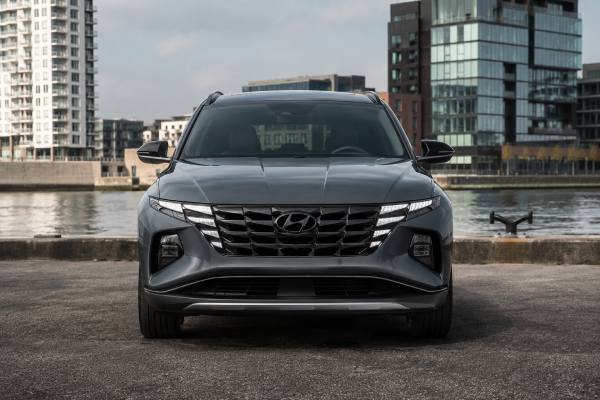
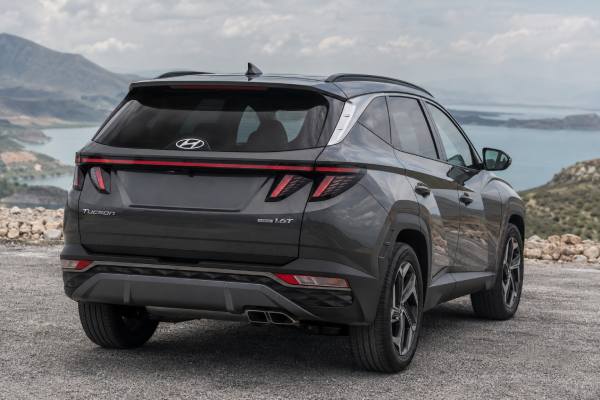

The Hyundai Tucson NX4 with the Smartstream 1.6 T-GDi 48V mild-hybrid engine is one of the more interesting versions of the fourth-generation Tucson. It sits between the basic petrol models and the more expensive full hybrid or plug-in hybrid versions. With 180 hp, HTRAC all-wheel drive, a 7-speed dual-clutch transmission, and useful family-SUV practicality, it offers strong everyday performance without the complexity of a large traction battery.
The important detail is that this is a mild hybrid, not the 230 hp full hybrid. The 48V system helps with smoother restarting, coasting, and light electrical assistance, but the petrol engine still does nearly all the driving work. That makes this Tucson appealing for buyers who want a modern turbocharged AWD SUV but do not need plug-in charging or full-hybrid fuel economy.
Final Verdict
The 2021–2024 Hyundai Tucson NX4 1.6 T-GDi 48V HTRAC is a strong choice for buyers who want a stylish, spacious compact SUV with good traction, brisk performance, and lower complexity than the full hybrid or PHEV. It suits families, commuters in mixed weather, and drivers who prefer a conventional turbo-petrol feel with mild-hybrid support. Its main tradeoff is fuel economy: the AWD 7DCT version is quick and secure, but not especially frugal in town. Buy one with full service records, completed airbag or market-specific campaigns, clean DCT operation, and evidence of regular oil changes.
| Pros | Cons |
|---|---|
| 180 hp turbo engine gives strong everyday response | Not as economical as the full hybrid Tucson |
| HTRAC AWD improves wet-road and winter traction | 7DCT needs smooth driving and proper servicing |
| 48V system improves stop-start and coasting smoothness | Mild hybrid cannot drive meaningfully on electric power |
| NX4 cabin is roomy, modern, and family friendly | Boot is smaller than non-48V petrol models |
| Five-star Euro NCAP rating applies to this variant | ADAS calibration matters after windscreen or body repairs |
Table of Contents
- Tucson NX4 48V MHEV Overview
- Specifications and Technical Data
- Trims, Safety, and Driver Assistance
- Reliability, Common Issues, and Service Actions
- Maintenance and Buyer’s Guide
- Driving, Performance, and Efficiency
- How the Tucson 48V Compares to Rivals
Tucson NX4 48V MHEV Overview
The 180 hp Tucson 1.6 T-GDi 48V HTRAC is best understood as a strong petrol AWD Tucson with mild-hybrid assistance. It is not the economy leader of the range, but it gives the NX4 a useful mix of pace, refinement, winter confidence, and family practicality.
The NX4 generation arrived with a much bolder design than the previous Tucson. The sharp body lines, hidden daytime running lights, wide cabin, and digital dashboard made it feel more upmarket than many older compact SUVs. Underneath the styling, the 1.6 T-GDi 48V model uses Hyundai’s Smartstream turbocharged petrol engine, paired here with a 48V mild-hybrid starter-generator and a 7-speed dual-clutch transmission.
The 48V system is there to support efficiency and smoothness. It can restart the engine quickly, allow smoother coasting in certain conditions, and reduce the load on the petrol engine during light assistance phases. However, it is not a full hybrid system. There is no large drive battery, no high-power traction motor, and no useful EV-only driving range. For many used buyers, that is actually part of the appeal: fewer hybrid-specific components, a more familiar petrol driving feel, and lower purchase prices than the full hybrid.
HTRAC is Hyundai’s all-wheel-drive system. In normal driving, it behaves like a front-biased AWD setup, sending torque rearward when needed. It is useful on wet roads, snow, gravel tracks, steep driveways, and muddy parking areas. It does not turn the Tucson into a serious off-roader, but it gives more confidence than a front-wheel-drive Tucson when grip is poor.
The model years need careful reading. In many European and UK markets, this 180 PS 48V version belongs to the pre-facelift NX4 period. The facelifted Tucson introduced revised equipment and different output figures in some markets, including later 160 PS mild-hybrid versions. A 2024 registration can therefore refer to either late pre-facelift stock or an updated model, depending on market and build date.
The ideal buyer is someone who wants:
- A compact SUV with strong petrol performance.
- AWD traction without choosing a diesel.
- Lower complexity than the full hybrid or plug-in hybrid.
- A roomy family cabin and useful towing capacity.
- A modern safety package and high equipment levels.
The less ideal buyer is someone doing mainly short urban trips in heavy traffic. In that use, the full hybrid Tucson is usually smoother and more economical. The 48V AWD DCT version is happiest on mixed routes where the engine can warm fully, the gearbox can shift cleanly, and the mild-hybrid coasting function can help.
Specifications and Technical Data
This Tucson uses a 1.6-litre turbocharged direct-injection petrol engine with 48V mild-hybrid assistance, a 7-speed dual-clutch transmission, and HTRAC all-wheel drive. The most important technical points are the 180 PS output, 265 Nm torque spread, compact but roomy NX4 body, and the difference between mild hybrid and full hybrid hardware.
| Item | Specification |
|---|---|
| Model generation | Hyundai Tucson NX4, fourth generation |
| Engine | Smartstream 1.6 T-GDi turbo petrol |
| Displacement | 1,598 cc |
| Hybrid type | 48V mild hybrid with starter-generator support |
| Maximum power | 180 PS / 178 hp / 132 kW |
| Maximum torque | 265 Nm / 195 lb-ft |
| Fuel system | Turbocharged gasoline direct injection |
| Timing drive | Timing chain |
| Official combined economy | About 6.9–7.1 L/100 km WLTP |
| CO₂ emissions | About 156–162 g/km WLTP |
| Item | Specification |
|---|---|
| Transmission | 7-speed dual-clutch automatic |
| Drive type | HTRAC all-wheel drive |
| AWD behavior | Front-biased, torque sent rearward as needed |
| Drive modes | Eco, Normal, Sport depending on trim |
| Terrain modes | Snow, Mud, and Sand on equipped AWD versions |
| Item | Specification |
|---|---|
| Body style | 5-door compact SUV |
| Seats | 5 |
| Length | 4,500 mm |
| Width | 1,865 mm excluding mirrors |
| Height | About 1,650–1,653 mm depending on trim |
| Wheelbase | 2,680 mm |
| Boot volume | 577 L seats up, 1,756 L seats folded |
| Fuel tank | 54 L |
| Common tyres | 235/65 R17, 235/60 R18, or 235/55 R19 |
| Item | Specification |
|---|---|
| 0–100 km/h | About 9.0 seconds for AWD DCT versions |
| Top speed | About 201 km/h |
| Kerb weight | About 1,558 kg in typical UK AWD DCT trim |
| Gross vehicle weight | About 2,170 kg in many listed AWD DCT specifications |
| Braked towing capacity | Up to 1,650 kg where specified |
| Unbraked towing capacity | 750 kg |
| Maximum roof load | 100 kg |
| Item | Specification |
|---|---|
| Engine oil capacity | 4.8 L drain and refill |
| Engine oil grade | SAE 0W-20, API SN PLUS/SP or suitable ILSAC grade |
| Coolant capacity | About 8.5 L for Smartstream G1.6 T-GDi |
| Brake fluid | DOT 4 |
| Rear differential oil | 0.4–0.5 L, API GL-5 SAE 75W-85 |
| Transfer case oil | 0.62–0.68 L |
| Wheel nut torque | 11–13 kgf·m / 79–94 lb-ft / 107–127 Nm |
Trims, Safety, and Driver Assistance
Equipment varies by country, but the 180 hp 48V HTRAC version was usually sold in better-equipped trims rather than base specification. The key buying point is not the trim name alone, but whether the car has the safety, wheel, suspension, infotainment, and comfort equipment you actually want.
In the UK, the 180 PS 48V 7DCT 4WD version appeared in higher trims such as Premium, Ultimate, and N Line/N Line S depending on model year and availability. Other European markets used their own trim names, so a German, Bulgarian, Romanian, or Italian car may not match UK naming exactly.
Useful identifiers include the HTRAC or AWD listing on the advert, the 7DCT transmission, 180 PS output, and the 48V mild-hybrid designation. Many examples also have gear-selector buttons, a digital instrument display, a large central touchscreen, and higher-grade driver-assistance features.
The main trim differences to check are:
- Wheel size: 17-, 18-, and 19-inch wheels change ride comfort and tyre cost.
- Lighting: LED headlamps and signature lighting were trim-dependent in some markets.
- Infotainment: larger navigation screen, connected services, and upgraded audio varied by grade.
- Driver aids: blind-spot camera view, surround camera, parking assist, and Highway Driving Assist were not always standard.
- Comfort: heated rear seats, ventilated front seats, powered tailgate, memory seat, and panoramic roof were market-specific.
- Suspension: some trims offered electronically controlled suspension, which improves body control but adds inspection cost.
Euro NCAP rated the Tucson five stars under the 2021 test protocol. The tested model was a Tucson 1.6 T-GDi HEV, but the rating applies across a broad range including the 1.6 T-GDi 48V MHEV 4×4 variant. Scores were strong for adult and child protection, while vulnerable road-user and safety-assist scores were more moderate.
Safety equipment on the NX4 was a major step forward from earlier Tucsons. Depending on trim and market, the package can include:
- Seven airbags, including a front centre side airbag.
- Autonomous emergency braking with car, pedestrian, and cyclist detection.
- Junction-turning support on equipped versions.
- Lane Keeping Assist and Lane Following Assist.
- Blind-Spot Collision-Avoidance Assist.
- Rear Cross-Traffic Collision-Avoidance Assist.
- Smart Cruise Control on automatic versions.
- Highway Driving Assist on higher trims.
- Surround View Monitor and Blind-Spot View Monitor on top trims.
- ISOFIX/i-Size child-seat mounting points on the outer rear seats.
ADAS calibration matters. Windscreen replacement, front bumper repairs, radar removal, steering-angle work, suspension damage, or wheel-alignment corrections can all affect camera and radar accuracy. On a used Tucson, warning lights are not the only issue. A car can appear fault-free but still need calibration if a previous repair was done cheaply.
For family buyers, the Tucson is practical. The rear bench has good legroom, the rear doors open wide, and the boot shape is easy to use. The 48V model loses some luggage space compared with the non-48V petrol because of mild-hybrid packaging, but 577 litres is still generous for the class.
Reliability, Common Issues, and Service Actions
The NX4 Tucson 1.6 T-GDi 48V is generally a solid modern SUV, but it is sensitive to oil quality, software updates, battery health, and DCT driving conditions. Most serious problems are not universal; they are more likely on cars with poor service history, many short trips, accident repairs, or ignored recalls.
| Area | Prevalence | Cost risk | What to check |
|---|---|---|---|
| Oil service neglect | Occasional | High | Short oil intervals, correct 0W-20, no turbo noise |
| 7DCT clutch wear or judder | Occasional | Medium to high | Smooth crawling, no shudder, no overheating warnings |
| 12V battery weakness | Common with short trips | Low to medium | Start-stop function, stored voltage codes, battery age |
| ADAS calibration errors | Occasional after repairs | Medium | Repair invoices, windscreen history, warning lamps |
| Brake corrosion | Common in wet climates | Low to medium | Rear disc condition, pulsing, roughness after standing |
| Curtain airbag campaign | VIN-dependent | Safety-critical | Dealer recall check and completion record |
Engine and 48V mild-hybrid system
The Smartstream 1.6 T-GDi is a small turbocharged direct-injection engine, so clean oil is essential. Turbo bearings, timing-chain tensioners, variable valve hardware, and direct-injection components all depend on correct lubricant and sensible intervals. A quiet cold start, clean idle, and smooth boost delivery are good signs.
Symptoms to watch for include rattling at start-up, hesitation under boost, rough idle, oil smell, coolant loss, and repeated engine-management lights. These can point to anything from a weak sensor to turbo plumbing leaks, ignition issues, fuel-system faults, or timing correlation problems. Do not assume every warning light is minor.
The 48V system is simpler than a full hybrid system, but it still has specific components: a mild-hybrid starter-generator, a 48V battery, related cabling, and control electronics. Problems are not widespread, but short-trip cars can suffer from weak battery state, disabled stop-start, or stored charging-system codes. A diagnostic scan should include both conventional powertrain modules and mild-hybrid modules.
7DCT gearbox and HTRAC driveline
The 7-speed dual-clutch transmission gives quick shifts and helps performance, but it dislikes repeated creeping in traffic, holding the car on the accelerator on hills, and heavy low-speed manoeuvring with a trailer. During a test drive, check for smooth take-up from rest, clean reverse engagement, no harsh clunking, and no flare between shifts.
A slight dual-clutch feel at walking speed is normal. Repeated shudder, hot smells, warnings, or aggressive engagement are not. Software updates can improve shift behavior, so dealer history matters.
The HTRAC system should work quietly. Listen for rear differential whine, transfer-case rumble, clicking from CV joints, and vibration under acceleration. If the car has towed often, inspect rear tyres, brakes, suspension bushes, and driveline fluids more closely.
Recalls, service actions, and software
Some NX4 Tucson vehicles in several markets were affected by curtain-airbag installation campaigns. The concern was that the side curtain airbag assembly could be incorrectly positioned or twisted, which could affect deployment. Completion should be verified by VIN with Hyundai or an official recall checker.
Other campaigns vary by country, production date, and equipment. A used buyer should ask for:
- A printout of completed recall and service campaign work.
- Dealer confirmation that no open actions remain.
- Evidence of infotainment, ECU, TCU, and ADAS software updates where applicable.
- Repair invoices after windscreen, bumper, suspension, or crash work.
Software is part of reliability on a modern Tucson. Updates may improve gearbox behavior, sensor logic, infotainment stability, battery-management behavior, or driver-assistance functions. A car with full dealer history is easier to verify than one maintained only with generic servicing.
Maintenance and Buyer’s Guide
The best maintenance strategy for this Tucson is simple: use the correct oil, shorten intervals for harsh use, keep the DCT and AWD hardware healthy, and verify recalls by VIN. A well-serviced example should age well, while a neglected turbo-DCT AWD car can become expensive quickly.
| Interval | Recommended work |
|---|---|
| Every 10,000–15,000 km or yearly | Engine oil and filter, tyre rotation, inspection, software/recall check |
| Every 15,000–30,000 km | Cabin filter, engine air filter inspection, brake and suspension check |
| Every 2 years | Brake fluid replacement and corrosion inspection |
| Every 45,000–60,000 km | DCT behavior check, AWD fluid inspection, spark plug condition check |
| Every 60,000–90,000 km | Spark plugs where specified, coolant condition, belts and hoses |
| Every 80,000–100,000 km | Transfer case and rear differential oil service for hard use |
| At 4–6 years | 12V battery test or replacement if weak |
Official intervals differ by country and duty cycle, so the schedule above is a practical used-car approach rather than a replacement for the service book. Short trips, dusty roads, repeated cold starts, high-speed motorway use, towing, mountain driving, or very hot/cold climates justify shorter intervals.
The timing chain has no routine belt-style replacement interval. It should be inspected when symptoms appear: cold-start rattle, cam/crank correlation faults, poor running, or abnormal mechanical noise. Replacing oil late is one of the easiest ways to shorten chain, tensioner, and turbo life.
Pre-purchase inspection checklist
Before buying, check the following carefully:
- Service history: Look for yearly oil changes and correct oil grade.
- Recall status: Confirm all VIN-specific campaigns are complete.
- Cold start: Listen for chain rattle, misfire, exhaust leaks, or turbo whine.
- DCT operation: Test creeping, hill starts, reverse, kickdown, and motorway shifts.
- AWD system: Drive tight turns slowly and accelerate gently on a straight road.
- Brakes: Check for rear disc corrosion, vibration, and uneven pad wear.
- Suspension: Listen for knocks from drop links, bushes, top mounts, or rear arms.
- Electronics: Test cameras, sensors, keyless entry, infotainment, navigation, and climate.
- ADAS: Confirm no warning lamps and ask about windscreen or bumper replacement.
- Body: Inspect panel gaps, paint edges, radiator support, sills, tailgate, and underbody.
- Tyres: Uneven wear can indicate alignment, suspension, or AWD mismatch issues.
A clean Tucson should feel tight, quiet, and smooth. The gearbox should not lurch harshly, the engine should pull from low rpm without hesitation, and the steering should track straight. Walk away from examples with missing history, multiple warning lights, unexplained battery faults, or “just needs a software update” excuses without dealer evidence.
Best years and trims to buy
There is no single bad year in the 2021–2024 run, but later pre-facelift cars may benefit from running production improvements and updated software. Earlier cars can still be excellent if they have complete records and completed campaigns.
Choose trim based on the equipment you value rather than badge prestige. N Line models look sharper and may have larger wheels, but 19-inch tyres can reduce ride comfort and cost more. Ultimate-style trims bring more comfort and camera technology, which is useful in daily family use. A modestly equipped car on 18-inch wheels can be the sweet spot for comfort and ownership cost.
For long-term durability, the best example is usually not the cheapest. It is the car with clean history, matching tyres, no accident doubts, quiet DCT operation, and proof that Hyundai campaign work has been checked.
Driving, Performance, and Efficiency
The Tucson 1.6 T-GDi 48V HTRAC feels stronger than its engine size suggests, especially in normal mixed driving. It is not a hot SUV, but the 180 hp engine and 265 Nm torque make it relaxed on motorways and confident when overtaking.
The turbo engine pulls well from low revs, and the 7DCT usually shifts quickly once moving. In Eco mode, throttle response is softer and the gearbox shifts early. Normal mode is the best everyday setting. Sport mode sharpens response and holds gears longer, which helps on country roads but can make town driving feel busy.
At low speeds, the gearbox has the familiar dual-clutch character. It can feel slightly less fluid than a torque-converter automatic when parking or creeping uphill. Smooth brake release and gentle throttle inputs help. Drivers who spend most of their time in stop-start traffic may prefer the full hybrid’s 6-speed automatic.
Ride comfort depends heavily on wheel size. On 17- or 18-inch wheels, the Tucson is comfortable and composed. On 19-inch wheels, it looks better and turns in a little more sharply, but sharp potholes and broken tarmac are more noticeable. Cabin noise is generally well controlled, with some tyre roar on coarse surfaces and more engine sound when the turbo petrol is worked hard.
Steering is light and easy in town, with enough accuracy on faster roads. The Tucson is stable at motorway speeds and feels secure in poor weather. HTRAC adds traction rather than excitement. It helps the front tyres avoid scrabble on wet junctions and gives the car a more planted feel on slippery climbs.
Real-world fuel economy depends strongly on route and temperature:
- City use: about 8.5–10.0 L/100 km, or 24–28 mpg US / 28–33 mpg UK.
- Mixed driving: about 7.3–8.3 L/100 km, or 28–32 mpg US / 34–39 mpg UK.
- Steady highway driving: about 6.8–7.8 L/100 km, or 30–35 mpg US / 36–42 mpg UK.
- Cold winter short trips: expect a clear penalty until the engine warms fully.
The mild-hybrid system helps most during coasting, restarting, and light-load driving. It cannot mask the weight, AWD drag, or turbo-petrol appetite in heavy traffic. If economy is the top priority, the full hybrid is the better Tucson. If performance, towing, AWD traction, and simpler hardware matter more, the 48V model makes sense.
Towing is a genuine strength where the car is rated for 1,650 kg braked. The engine has enough torque for moderate caravans or trailers, but the DCT deserves mechanical sympathy. Avoid repeated hill-hold using the accelerator, use proper trailer loading, keep within nose-weight limits, and service driveline fluids sooner if towing regularly.
How the Tucson 48V Compares to Rivals
The Tucson 1.6 T-GDi 48V HTRAC competes best as a high-equipment, turbocharged AWD family SUV. It is more distinctive and often better equipped than many rivals, but not always the cheapest to fuel.
| Rival | How it compares |
|---|---|
| Kia Sportage 1.6 T-GDi MHEV AWD | Closely related, similar strengths, different cabin and warranty appeal |
| Toyota RAV4 Hybrid AWD | More efficient and proven hybrid, usually pricier used |
| Nissan Qashqai e-Power | Smoother urban efficiency, less towing and AWD relevance |
| Volkswagen Tiguan 1.5 TSI DSG | More conservative design, polished cabin, often FWD in comparable trims |
| Ford Kuga 1.5 EcoBoost or hybrid | Good chassis, but Tucson has stronger interior impact |
| Mazda CX-5 petrol AWD | More traditional feel, strong reliability image, less modern cabin tech |
Against the Kia Sportage, the choice is mostly personal. The Kia shares much of the platform and powertrain thinking, but its cabin layout, suspension tuning, styling, and used-market pricing differ. Buy whichever has the better service history, warranty position, and equipment.
Against the Toyota RAV4 Hybrid, the Tucson 48V is usually less efficient but may feel more conventional and more affordable. The Toyota is the better low-consumption choice. The Hyundai is the better pick if you want a punchy turbo-DCT feel and a more dramatic interior.
Against the Tiguan, the Tucson feels more expressive and often better equipped for the money. The Tiguan may have a more understated cabin and strong motorway manners, but used examples with AWD and high equipment can be expensive.
The Tucson’s real advantage is balance. It gives you space, safety, style, AWD traction, a strong engine, and useful towing capacity in one package. Its weakness is that it does not dominate any single area. It is not the most economical, sportiest, cheapest, or most rugged SUV in the class. It is, however, a very good all-rounder when bought carefully.
References
- The all-new Hyundai Tucson 2020 (Manufacturer Press Kit)
- Hyundai TUCSON continues to top Europe’s compact SUV segment 2022 (Manufacturer WLTP Data)
- Euro NCAP | Hyundai TUCSON 2021 (Safety Rating)
- Recommended lubricants and capacities 2025 (Owner’s Manual)
- Service & Safety Campaigns | Hyundai New Zealand 2024 (Recall and Service Campaign Information)
Disclaimer
This article is for informational purposes only and is not a substitute for professional diagnosis, service, or repair. Specifications, torque values, service intervals, campaign status, and repair procedures can vary by VIN, market, production date, trim, and equipment. Always verify details against the official owner’s manual, service documentation, recall database, and a qualified Hyundai dealer or technician.
If this guide helped you, please consider sharing it on Facebook, X/Twitter, or your preferred social platform to support our work.