

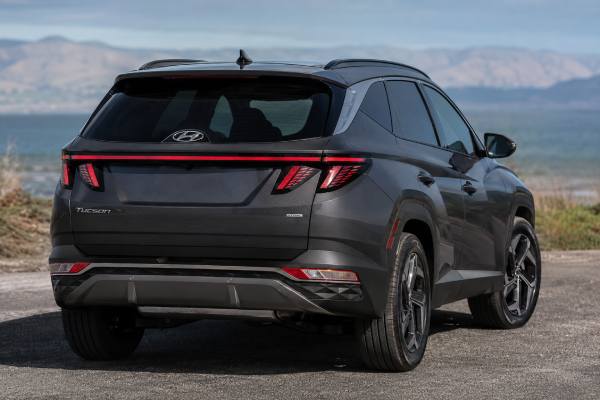

The front-wheel-drive Hyundai Tucson Hybrid NX4 with the Smartstream 1.6 T-GDi hybrid system is one of the more practical versions of Hyundai’s fourth-generation family SUV. It combines a turbocharged petrol engine, a small high-voltage battery, an electric motor, and a conventional 6-speed automatic gearbox, so it feels more like a normal automatic SUV than a droning CVT hybrid.
For 2021–2024 buyers, the appeal is clear: strong mid-range performance, good cabin space, a large boot, broad safety equipment, and better urban fuel economy than the non-hybrid petrol versions. The main thing to check is condition, service history, software campaign status, brake condition, and whether the specific car is pre-facelift or facelift-market equipment.
Final Verdict
The 2021–2024 Hyundai Tucson FWD NX4 1.6 T-GDi Hybrid is a strong used family SUV for drivers who want space, comfort, safety tech, and useful real-world performance without moving to a plug-in hybrid. Its best quality is the easy, torquey hybrid powertrain paired with a normal 6-speed automatic, which makes it smoother than many rivals in daily driving. The tradeoff is that fuel economy depends heavily on speed, weather, tyres, and driving style, and the hybrid system needs proper diagnostic checks before purchase. Buy one only with complete service records, completed software campaigns, and a clean hybrid battery and 12 V system scan.
| Pros | Cons |
|---|---|
| 230 PS hybrid system gives strong family-SUV acceleration | High-speed motorway economy is less impressive than city use |
| Conventional 6-speed automatic feels natural and refined | 19-inch wheels can make ride and tyre costs harsher |
| 616-litre boot is very practical for a hybrid SUV | FWD traction can struggle on wet roads under hard throttle |
| Euro NCAP five-star rating supports family use | ADAS features vary noticeably by trim and model year |
| Hybrid battery is small, buffered, and not plug-in dependent | Software campaign and 12 V battery history must be checked |
Table of Contents
- Tucson Hybrid NX4 Overview
- Specifications and Technical Data
- Trims, Safety, and Driver Assistance
- Reliability, Common Issues, and Service Actions
- Maintenance and Buyer’s Guide
- Driving, Performance, and Efficiency
- How the Tucson Hybrid Compares to Rivals
Tucson Hybrid NX4 Overview
The Tucson NX4 Hybrid is best understood as the balanced version of the fourth-generation Tucson range. It is quicker and smoother than the regular 1.6 petrol, simpler to use than the plug-in hybrid, and more efficient in town than a normal turbocharged petrol SUV.
This version uses Hyundai’s Smartstream 1.6 T-GDi petrol engine and a permanent-magnet electric motor. The electric motor helps at low speeds, supports the engine during acceleration, and recovers energy when braking. The high-voltage battery is small by EV standards, so this is not a car you charge from the wall. It is a self-charging hybrid, meaning the car manages the battery through regenerative braking and engine operation.
The front-wheel-drive layout is important. It saves weight, improves economy slightly, and avoids the extra complexity of AWD hardware. For most urban and suburban owners, FWD is enough. For steep winter roads, loose surfaces, frequent towing, or heavy rural use, the AWD hybrid versions sold in some markets are worth considering.
The NX4 generation also brought a major cabin and safety upgrade over the previous Tucson. The dashboard design is modern, the rear seat is adult-friendly, and the boot remains large despite the hybrid hardware. It feels like a proper family car rather than a compromised electrified version.
The 2021–2024 label needs one caution. Hyundai updated the Tucson in some markets during 2024, and the facelift brought revised styling, interior screens, trim structures, and in some regions changed hybrid output. This guide covers the 230 PS pre-facelift-style NX4 FWD Hybrid sold through much of the 2021–2024 period. When buying a 2024 car, check the exact market specification, VIN, and registration date rather than relying only on the model year.
Specifications and Technical Data
The Tucson FWD 1.6 T-GDi Hybrid uses a turbocharged four-cylinder petrol engine, one traction motor, a lithium-ion polymer battery, and a 6-speed automatic transmission. The key ownership point is that it is not a plug-in hybrid: there is no charging port, no large EV range, and no daily charging routine. Its efficiency advantage comes from energy recovery, electric assistance, and engine shut-off in low-load driving.
| Item | Hyundai Tucson FWD 1.6 T-GDi Hybrid |
|---|---|
| Engine family | Smartstream 1.6 T-GDi petrol hybrid |
| Engine layout | Inline-four, DOHC, 16 valves |
| Displacement | 1,598 cc |
| Bore × stroke | 75.6 × 89.0 mm |
| Compression ratio | 10.5:1 |
| Induction | Turbocharged petrol direct injection |
| Combined system power | 230 PS / 169 kW, commonly marketed as 230 hp |
| Combined system torque | 350 Nm / 258 lb-ft |
| Electric motor | Permanent-magnet synchronous motor |
| Electric motor output | 60 PS / 44 kW |
| Hybrid battery | 1.49 kWh lithium-ion polymer |
| Battery voltage | 270 V |
| Item | Specification |
|---|---|
| Transmission | 6-speed automatic |
| Drive type | Front-wheel drive |
| Front suspension | MacPherson struts with coil springs |
| Rear suspension | Multi-link |
| Steering | Motor-assisted rack and pinion |
| Turning circle | 10.9 m |
| Front brakes | 325 mm ventilated discs |
| Rear brakes | 300 mm solid discs |
| Item | Specification |
|---|---|
| Body style | Five-door compact SUV |
| Seats | Five |
| Length | 4,500 mm |
| Width excluding mirrors | 1,865 mm |
| Height | 1,651–1,653 mm depending trim and wheel package |
| Wheelbase | 2,680 mm |
| Kerb weight | 1,564–1,685 kg |
| Gross vehicle weight | 2,175 kg |
| Fuel tank | 52 litres |
| Boot volume, seats up | 616 litres VDA |
| Boot volume, seats down | 1,795 litres VDA |
| Item | Specification or practical note |
|---|---|
| 0–62 mph / 0–100 km/h | 8.0 seconds |
| Top speed | 120 mph / 193 km/h |
| WLTP combined economy | 5.6–5.8 L/100 km depending trim |
| WLTP combined economy | 48.7–50.4 mpg UK / about 40.6–42.0 mpg US |
| WLTP CO2 | 127–131 g/km depending trim |
| Braked towing capacity | 1,650 kg |
| Unbraked towing capacity | 750 kg |
| Nose weight | 100 kg |
| Roof load | 100 kg |
The most useful wheel and tyre split is simple. Base-style hybrid cars may use 215/65 R17 tyres, while many Premium, Ultimate, and N Line hybrid models use 235/50 R19 tyres. The 19-inch package looks better and sharpens initial response, but it can make the ride firmer and tyres more expensive.
Trims, Safety, and Driver Assistance
The Tucson Hybrid’s trim structure changes by market, but UK and European cars from this period commonly centre on SE Connect, Premium, Ultimate, and later N Line versions. The powertrain is broadly the same, so trim choice mostly affects wheels, lighting, seat comfort, driver-assistance features, parking aids, and interior finish.
Trim and equipment guide
SE Connect is the sensible entry point. It can still be well equipped, with navigation, digital displays, rear camera, dual-zone climate control, roof rails, LED daytime lighting, core driver-assistance systems, and 17-inch wheels on many launch-market hybrid cars. It is the most comfort-biased choice because of the taller tyre sidewalls.
Premium is usually the best used buy for value. It adds features many owners actually use, such as heated front seats, smart key access, front and rear parking sensors, upgraded audio in some markets, wireless phone charging, and more blind-spot and rear cross-traffic support on the hybrid.
Ultimate is the comfort-and-technology trim. Look for powered front seats, driver memory, ventilated front seats, heated outer rear seats, panoramic roof, smart tailgate, and more advanced parking or blind-spot display features where fitted. It is desirable, but inspect the panoramic roof, seat motors, cameras, and sensors carefully because there is more equipment to age.
N Line and N Line S add sportier styling, 19-inch wheels, leather/suede-style trim, darker exterior details, and model-specific interior touches. The hybrid N Line keeps the same practical hybrid character; it is not a performance model. Buy it for appearance and equipment rather than a major dynamic advantage.
Quick identifiers:
- FWD hybrid cars usually have a Hybrid badge but no AWD or HTRAC badge.
- The self-charging hybrid has no external charging flap; the plug-in hybrid does.
- 17-inch wheels usually indicate a comfort-focused lower trim or market-specific specification.
- 19-inch wheels, suede-style seats, N Line bumpers, and darker trim point to N Line variants.
- A panoramic roof, ventilated front seats, head-up display, or surround-view camera usually indicates a higher trim or option package.
Safety rating
Euro NCAP rated the Hyundai Tucson at five stars in 2021. The tested model was a Tucson 1.6 T-GDi HEV GLS, and the rating was also listed as applying to several Tucson variants, including the 1.6 T-GDi HEV 4×2. The headline scores were 86 percent for adult occupant protection, 87 percent for child occupant protection, 66 percent for vulnerable road users, and 70 percent for safety assist.
The rating is strong for family use, especially for adult and child protection. The details matter, though. Euro NCAP noted good overall side-impact protection and a centre airbag for far-side occupant interaction, but also highlighted marginal chest protection in some frontal tests and only adequate or mixed results in some pedestrian and AEB scenarios. In plain language, it is a safe modern SUV, but it is not perfect.
Safety systems and ADAS
Standard or widely available safety equipment includes front, side, curtain, and centre-front airbags, anti-lock braking, stability control, hill-start assist, tyre pressure monitoring, emergency call, lane keeping support, lane following assist, driver attention warning, speed limit assistance, forward collision avoidance with car, pedestrian, and cyclist detection, and multi-collision braking.
Higher trims and hybrid-specific packages can add blind-spot collision avoidance, rear cross-traffic collision avoidance, safe exit warning, highway drive assist, surround-view monitor, blind-spot view monitor, remote smart parking assist, and electronically controlled suspension in some markets.
ADAS inspection matters after body repair. A replaced windscreen may require camera calibration. A repaired front bumper may require radar alignment. A car that pulls toward lane markings, gives false collision alerts, or shows warning lights after a repair should not be dismissed as “just a sensor.” It needs a proper diagnostic scan and calibration check.
Reliability, Common Issues, and Service Actions
The Tucson NX4 Hybrid is generally a sound powertrain, but it is not maintenance-free. The engine is turbocharged and direct-injected, the hybrid system depends on clean software and healthy batteries, and the braking system can suffer from light-use corrosion because regenerative braking reduces friction-brake use.
| Issue area | Prevalence | Severity | Typical symptoms and remedy |
|---|---|---|---|
| 12 V / BMS warnings | Occasional | Medium | Warning light or DTC P1BB20; check campaign status and update BMS software |
| Brake disc corrosion | Common in wet climates | Low to medium | Scraping, vibration, rusty rear discs; clean, service, or replace as needed |
| Tyre wear on 19-inch wheels | Common | Low | Shoulder wear or noise; align suspension and rotate tyres regularly |
| Infotainment or ADAS glitches | Occasional | Low to medium | Warnings, camera issues, map bugs; apply software updates and calibrations |
| Turbo-DI engine neglect | Owner-dependent | Medium to high | Noisy running, oil sludging, misfires; shorten oil intervals and diagnose early |
Hybrid system and batteries
The 1.49 kWh high-voltage battery is small and heavily managed. That is good for durability because the car does not normally allow the battery to swing from completely full to completely empty. Severe degradation is not expected in normal use, but a used buyer should still request a dealer-level scan showing battery-related faults, cell-voltage balance, and hybrid control-module status.
The 12 V side deserves special attention. Some Tucson Hybrid vehicles in certain markets were covered by a service campaign for a 12 V lithium battery over-voltage warning linked to DTC P1BB20. The remedy is a Battery Management System software update. Symptoms can include a warning light, diagnostic code storage, or unusual 12 V battery messages. A car with unresolved battery warnings should be inspected before purchase, not after.
Engine and transmission
The 1.6 T-GDi is a modern turbocharged direct-injection petrol engine. It rewards clean oil and proper warm-up. Short urban trips, repeated cold starts, and extended oil intervals are harder on this engine than relaxed longer journeys.
Watch for:
- rough cold idle or misfires, which may point to spark plugs, coils, fuelling, or carbon buildup;
- oil leaks or sweating around covers and turbo oil lines;
- coolant loss, fan overrun, or temperature irregularity;
- delayed servicing or wrong oil grade;
- rattling at start-up that needs chain and tensioner diagnosis.
The 6-speed automatic is one of this hybrid’s strengths. It avoids the elastic feel of some CVT hybrids and usually shifts smoothly. During a test drive, check for flare, harsh engagement from Park to Drive, shudder under light throttle, or clunks during engine-on/engine-off transitions. Any of these deserves a scan and fluid-leak inspection.
Brakes, suspension, and body
Regenerative braking means the friction brakes often do less work. That saves pads, but it can allow discs to rust, especially rear discs in wet or salted-road climates. A short test drive may not reveal the problem. Look through the wheels and check disc faces, edges, and inner surfaces.
Suspension issues are usually ordinary family-SUV wear: drop links, bushes, wheel alignment, tyre noise, and occasional wheel-bearing rumble on higher-mileage cars. Cars on 19-inch wheels are more exposed to pothole damage and uneven tyre wear.
Body corrosion is not a major headline issue on young NX4 cars, but always check the rear subframe area, suspension arms, brake pipes, tailgate seams, underbody edges, and any towbar installation. Accident repair quality matters because cameras and radar sensors sit in areas commonly disturbed by front-end repairs.
Service actions and recall checks
For this generation, the most practical advice is to check by VIN, not by model year alone. Service campaigns and recalls differ by country, production date, drivetrain, accessory fitment, and software level.
Important checks to request before buying:
- proof that all open recalls and service campaigns are complete;
- confirmation of any BMS or hybrid-control software updates;
- ADAS calibration records after windscreen, bumper, suspension, or alignment work;
- service history showing correct oil, filters, coolant checks, brake fluid, and hybrid inspections;
- dealer scan for current and historical hybrid, engine, transmission, brake, and ADAS faults.
A Tucson Hybrid with full Hyundai dealer history and clean campaign status is far more attractive than a cheaper car with warning lights recently cleared.
Maintenance and Buyer’s Guide
The Tucson Hybrid is not expensive to maintain for its size, but it should be treated as a turbocharged hybrid, not a basic petrol SUV. The best long-term strategy is conservative servicing, regular software checks, and careful brake and tyre maintenance.
| Item | Recommended practical interval |
|---|---|
| Engine oil and filter | Every 10,000–15,000 km or 12 months; sooner for severe city use |
| Engine air filter | Inspect annually; replace around 30,000–40,000 km or sooner in dust |
| Cabin air filter | Every 12 months, especially in urban or humid climates |
| Spark plugs | Often around 80,000 km; verify by VIN and market schedule |
| Brake fluid | Every 2 years is a sensible hybrid-friendly interval |
| Coolant | Inspect each service; replace on the official market schedule |
| Automatic transmission fluid | Inspect for leaks; consider earlier replacement under towing or heat |
| Hybrid starter-generator belt | Inspect regularly; replace at the market-specific scheduled interval |
| Tyre rotation and alignment | Rotate every 10,000–12,000 km; align if wear is uneven |
| 12 V battery and hybrid scan | Test annually; scan before warranty expiry and before purchase |
Fluids, service data, and torque references
Use the exact lubricant and fluid specifications from the VIN-specific service documentation. For this powertrain, many official schedules specify SAE 0W-20 engine oil for the 1.6 T-GDi HEV. Dealer schedules commonly supply close to 5 litres for an oil-and-filter service, but the exact refill quantity should be checked during service.
Useful workshop reference values include wheel-nut torque commonly in the 107–127 Nm range, and oil-drain and spark-plug torque values that must be taken from the correct workshop data for the exact engine and plug type. Do not guess torque on aluminium cylinder-head spark plugs or hybrid-related components.
The timing drive is a chain, not a scheduled timing belt. That does not mean it can be ignored. Inspect for start-up rattle, cam/crank correlation faults, tensioner issues, guide wear, and poor oil-change history. A chain should be replaced when out of specification or symptomatic, not simply because of mileage.
Pre-purchase inspection checklist
Before buying a Tucson FWD Hybrid, ask for a cold start and a proper road test. The car should start smoothly, transition between petrol and electric drive without harsh jolts, and show no hybrid, ABS, ADAS, or engine warning messages.
Check these areas carefully:
- full service history with dates, mileage, oil grade, and dealer invoices;
- campaign and recall completion printout;
- hybrid battery and 12 V battery diagnostic report;
- engine bay for coolant staining, oil leaks, and poor previous repairs;
- automatic gearbox for smooth low-speed engagement and kickdown;
- brake discs for corrosion, scoring, and vibration;
- tyres for matching brand, correct size, and even wear;
- suspension for knocks over rough roads;
- panoramic roof operation and water leaks on higher trims;
- all cameras, parking sensors, blind-spot systems, and lane systems;
- towbar wiring quality if fitted.
Best used choices are usually well-serviced Premium or Ultimate cars that have not been abused on short-trip-only duty. SE Connect can be a smart buy if comfort and lower tyre costs matter more than equipment. N Line is worth buying when you like the styling and the ride on 19-inch tyres suits your roads.
The long-term durability outlook is good if maintenance is kept up. The powertrain is not unusually fragile, but neglected oil changes, unresolved battery warnings, corroded brakes, and poorly calibrated ADAS systems can turn a good used SUV into an expensive one.
Driving, Performance, and Efficiency
The Tucson Hybrid feels stronger than its figures suggest because the electric motor fills in torque at low speed. It is quick enough for family use, relaxed in traffic, and much more responsive than the non-hybrid 1.6 petrol when pulling away or joining faster roads.
Powertrain character
The combination of turbo petrol engine and electric assistance gives the car a broad, easy pull. In urban driving, it can move away gently on electric power, start the petrol engine smoothly, then blend both sources without much drama. Under heavier throttle, the engine becomes more audible, but the 6-speed automatic keeps the experience more conventional than many hybrid rivals.
There can be a slight pause if the car needs to wake the engine, choose a lower gear, and deliver full boost at the same time. It is not slow, but it is not a sporty hot-SUV powertrain either. Sport mode sharpens response and holds gears longer, while Eco mode encourages earlier upshifts and more electric running.
Ride, handling, and braking
Ride comfort depends strongly on wheel size. Cars on 17-inch tyres feel more supple and quieter over broken urban surfaces. Cars on 19-inch tyres look better and respond more sharply, but they pass more road texture into the cabin.
Handling is secure rather than exciting. The Tucson has good straight-line stability, predictable front-end grip, and safe understeer when pushed. The steering is light and easy in town, with enough weight at speed, but not much road feel.
Braking feel is generally good for a hybrid. The pedal blends regeneration and friction braking better than many earlier hybrids, though rough discs or corrosion can cause vibration or scraping. Periodic firm braking from safe speeds helps keep the discs clean, especially if the car spends most of its life in town.
Real-world fuel economy
Official WLTP combined economy sits around 5.6–5.8 L/100 km depending trim and wheels. In real driving, the spread is wider.
A realistic guide:
- city and suburban use: about 5.0–6.5 L/100 km, or 36–47 mpg US;
- mixed commuting: about 5.7–7.0 L/100 km, or 34–41 mpg US;
- steady highway at 100–120 km/h: about 6.2–7.5 L/100 km, or 31–38 mpg US;
- cold winter short trips: often 10–25 percent worse.
The hybrid is at its best in stop-start traffic, rolling suburbs, and moderate-speed commutes. At high motorway speeds, the petrol engine does more work and the small battery has less chance to help, so the economy gap over a regular petrol SUV shrinks.
Towing and load use
The 1,650 kg braked tow rating is strong for a compact hybrid SUV. Still, the Tucson Hybrid is better suited to light caravans, small trailers, bikes, and family holiday loads than repeated heavy towing in mountains.
When towing, expect higher fuel use, more engine noise on gradients, and more heat load on the powertrain. A towbar car should have clean wiring, no water ingress, correct trailer-light operation, and proof that any accessory-related campaign or inspection has been handled.
There is no plug-in charging performance to discuss for this model. The battery is charged by the hybrid system, and the owner’s job is simply to keep the car serviced, driven regularly, and free of unresolved battery-management faults.
How the Tucson Hybrid Compares to Rivals
The Tucson Hybrid sits in a busy class, but it has a clear personality. It is more conventional to drive than some hybrids, roomier than many compact crossovers, and usually better value used than the most in-demand Japanese alternatives.
| Rival | Where the Tucson is stronger | Where the rival may be better |
|---|---|---|
| Toyota RAV4 Hybrid | Smoother conventional gearbox feel and often better used value | Toyota has exceptional hybrid reputation and strong resale |
| Kia Sportage Hybrid | Similar hardware, but Tucson styling and cabin may appeal more | Sportage may offer different warranty and trim advantages |
| Nissan Qashqai e-Power | Larger boot, stronger towing figure, more traditional drive feel | Qashqai feels more EV-like in urban driving |
| Honda CR-V Hybrid | Often sharper value and more distinctive design | CR-V offers a more mature, comfort-biased family feel |
| Ford Kuga Hybrid | More premium-feeling cabin design in many trims | Kuga can feel more agile on a twisty road |
Against the Toyota RAV4 Hybrid, the Tucson is usually the better-value used buy and feels more like a normal automatic. The RAV4 counters with Toyota’s long hybrid track record and excellent resale strength.
Against the Kia Sportage Hybrid, the choice is largely personal. They are close relatives under the skin in many markets, so equipment, warranty, price, styling, and dealer support should decide the purchase.
Against the Nissan Qashqai e-Power, the Tucson is more versatile and better suited to towing. The Nissan’s system can feel more electric in town, but it does not have the same conventional automatic character.
Against the Honda CR-V Hybrid, the Tucson is more visually distinctive and often cheaper for similar age and equipment. The Honda feels very polished, but it can cost more to buy.
The best reason to choose the Tucson Hybrid is balance. It is spacious without being huge, efficient without requiring charging, quick without being thirsty, and modern without being overly complicated for a family SUV. The best reason not to choose it is if you do mostly long motorway journeys, need AWD traction, or want Toyota-level hybrid resale confidence above all else.
References
- All New Tucson – Pricing spec and tech – 18 Dec 2020 2020 (Technical Data) ([Hyundai News][1])
- All New Tucson – Pricing FINAL 2020 (Specifications) ([Hyundai News][2])
- TUCSON N Line Hybrid and Plug-in Hybrid – Pricing Specification and Technical information 2021 (Technical Data) ([Hyundai News][3])
- Euro NCAP | Hyundai TUCSON 2021 (Safety Rating) ([Euro NCAP][4])
- Service Campaign 9B4: Software Update for DTC P1BB20: 12V Battery Over Voltage Warning – Dealer Best Practice 2025 (Service Campaign)
Disclaimer
This article is for informational purposes only and is not a substitute for professional diagnosis, repair, or inspection. Specifications, torque values, service intervals, fluids, recalls, software campaigns, procedures, and equipment vary by VIN, market, production date, and trim. Always verify details against the official Hyundai owner’s manual, workshop information, dealer service records, and the correct VIN-based recall or campaign database before buying, servicing, or repairing a vehicle.
If this guide helped you, please share it on Facebook, X/Twitter, or your preferred social platform to support our work.