
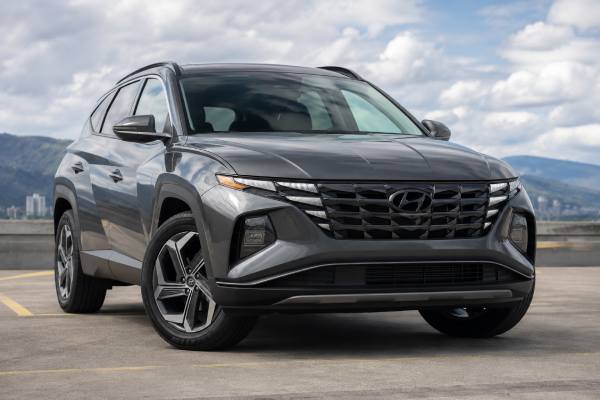
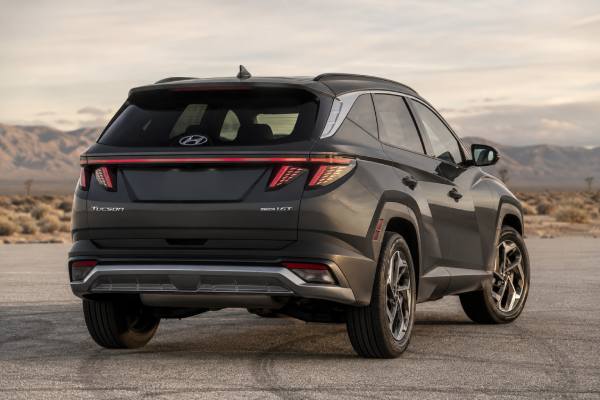
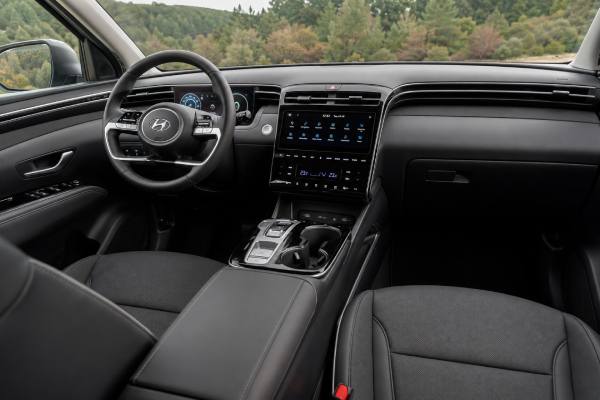
The Hyundai Tucson Plug-in Hybrid HTRAC AWD from the NX4 generation is the most powerful pre-facelift Tucson sold in many European markets between 2021 and 2024. It combines a 1.6-litre turbocharged petrol engine, a strong electric motor, a 13.8 kWh battery, a conventional 6-speed automatic gearbox, and Hyundai’s HTRAC all-wheel-drive system.
Its appeal is simple: it feels more substantial than a normal family SUV, can cover many local trips on electricity, and still works as a comfortable petrol-hybrid SUV when the battery is depleted. The important question for used buyers is not only whether it is quick or economical, but whether their driving pattern, charging setup, and service history make the plug-in version the right Tucson to own.
Final Verdict
The 2021–2024 Hyundai Tucson NX4 Plug-in Hybrid HTRAC AWD is a strong choice for drivers who want a roomy family SUV with genuine electric commuting ability, all-weather traction, and useful performance without moving to a full EV. It suits owners who can charge at home or work and mostly drive short-to-medium daily trips. Its main tradeoff is complexity: the turbo engine, hybrid battery, onboard charger, AWD system, and brake-by-wire regeneration all need proper checks. Buy only with clear service records, completed recalls or campaigns, healthy charging behaviour, and no unresolved hybrid-system warnings.
| Pros | Cons |
|---|---|
| 265 PS system output gives effortless family-SUV acceleration | Real economy depends heavily on regular charging |
| HTRAC AWD improves wet-weather and winter traction | PHEV hardware adds weight and inspection complexity |
| 13.8 kWh battery enables useful electric commuting | Boot space is lower than the self-charging hybrid |
| 6-speed automatic feels more natural than many CVT hybrids | Short petrol-engine runs can encourage oil dilution |
| Strong Euro NCAP safety result covers the PHEV 4×4 | ADAS repairs require correct sensor calibration |
| Well-equipped Premium, Ultimate, and N Line versions | Tyres, brakes, and fluids cost more than basic Tucson models |
Table of Contents
- Tucson PHEV NX4 Overview
- Specifications and Technical Data
- Trims, Safety and Driver Assistance
- Reliability, Issues and Service Actions
- Maintenance Schedule and Buying Advice
- Driving, Performance and Real-World Range
- How the Tucson PHEV Compares to Rivals
Tucson PHEV NX4 Overview
The Tucson Plug-in Hybrid is the most technically complex version of the pre-facelift NX4 Tucson, but also one of the most rounded. It offers the space and comfort of the regular Tucson, with stronger acceleration, electric-only local driving, and standard HTRAC all-wheel drive on the 265 PS version.
The NX4 generation moved the Tucson from a sensible compact SUV into a sharper, more upmarket family crossover. The PHEV version builds on that with a 1.6 T-GDi Smartstream petrol engine, a permanent-magnet electric motor, and a battery large enough to make daily electric driving realistic for many owners.
In Europe and the UK, the 265 PS Plug-in Hybrid arrived for the 2021 model year and remained part of the pre-facelift range through 2024. Some later facelifted markets quote different outputs, including 252–253 PS versions, so the exact article scope here is the earlier 265 PS AWD version.
The main ownership advantage is flexibility. On short trips, the Tucson PHEV can behave like an electric SUV. On longer journeys, it becomes a petrol hybrid with a normal fuel tank, no need for public charging, and stable motorway manners. That makes it useful for drivers who are interested in electrification but do not want full-EV route planning.
The main ownership risk is buying one that has not been used as intended. A PHEV that is never charged carries extra weight without delivering much efficiency benefit. A PHEV that is used only for tiny cold-start petrol runs can suffer from moisture and fuel dilution in the engine oil. The best examples show balanced use, regular charging, annual servicing, healthy tyres, and clean diagnostic scans.
Specifications and Technical Data
The 265 PS Tucson PHEV uses a front-mounted 1.6-litre turbocharged petrol engine and a single electric motor integrated with the automatic transmission. Power goes through a 6-speed automatic gearbox to Hyundai’s HTRAC AWD system, rather than through an eCVT-style hybrid transaxle. The 13.8 kWh lithium-ion polymer battery is large enough for useful electric driving but not intended for DC fast charging.
| Item | Hyundai Tucson PHEV HTRAC AWD 265 PS |
|---|---|
| Engine family | Smartstream 1.6 T-GDi turbo petrol |
| Displacement | 1,598 cc |
| Engine layout | Inline-4, DOHC, 16 valves |
| Bore × stroke | 75.6 × 89.0 mm |
| Compression ratio | 10.5:1 |
| Combined system output | 265 PS / 195 kW at 5,500 rpm |
| Combined system torque | 350 Nm / 258 lb-ft |
| Electric motor | Permanent-magnet synchronous motor, 91 PS / 67 kW |
| Electric motor torque | 304 Nm / 224 lb-ft |
| Battery | 13.8 kWh lithium-ion polymer, 360 V |
| Fuel tank | 42 litres |
| WLTP combined fuel figure | 1.4 L/100 km, 201.8 mpg UK |
| WLTP CO₂ | 31 g/km |
| WLTP electric range | Up to 62 km / 38 miles on some 19-inch-wheel versions |
| Item | Specification |
|---|---|
| Transmission | 6-speed automatic |
| Drive system | HTRAC all-wheel drive |
| Drive modes | Normal, Eco, Sport, plus terrain modes by market |
| Charging connector | Type 2 AC in European markets |
| Onboard charger | 7.2 kW AC |
| 7 kW wallbox charge time | About 1 hour 42 minutes to full |
| Domestic 3-pin charge time | About 6 hours 30 minutes to full |
| DC fast charging | Not fitted to this PHEV |
| Item | Specification |
|---|---|
| Body style | Five-door compact SUV, five seats |
| Length | 4,500 mm |
| Width excluding mirrors | 1,865 mm |
| Height | 1,653 mm on listed N Line PHEV versions |
| Wheelbase | 2,680 mm |
| Turning circle | 10.9 m |
| Suspension | MacPherson strut front, multi-link rear |
| Brakes | 325 mm ventilated front discs, 300 mm rear discs |
| Common tyre size | 235/50 R19 |
| Kerb weight | 1,818–1,924 kg |
| Gross vehicle weight | 2,415 kg |
| Boot capacity | 558 litres seats up, 1,737 litres seats folded |
| Towing capacity | 1,350 kg braked, 750 kg unbraked |
| Maximum roof load | 100 kg |
| Metric | Figure |
|---|---|
| 0–62 mph | 8.6 seconds |
| Top speed | 119 mph / about 191 km/h |
| Electric driving efficiency | 17.7 kWh/100 km WLTP reference |
| Maximum braked trailer weight | 1,350 kg |
Trims, Safety and Driver Assistance
The early UK and European 265 PS Tucson PHEV was positioned as a high-spec Tucson, not a budget plug-in hybrid. Premium and Ultimate were the core launch grades in the UK, while N Line and N Line S brought sportier trim, larger wheels, and different equipment mixes later in the range.
Trims and equipment identifiers
Premium models are the simplest used-buying target. They usually have the PHEV badges, 10.25-inch navigation screen, digital driver display, LED lighting, Bluelink connected services, and enough driver assistance to feel modern. Ultimate models add a more luxurious feel with leather-faced upholstery, a panoramic sunroof, smart powered tailgate, and 19-inch wheels.
N Line versions are easy to spot from their sportier bumpers, darker exterior detailing, N Line cabin trim, and 19-inch alloys. N Line S is the richer version and can overlap with Ultimate in equipment. On some versions, the optional Tech Pack is important because it adds features such as Blind View Monitor, Around View Monitor, electronically controlled suspension, Remote Smart Parking Assist, and Parking Collision-Avoidance Assist.
Quick used-car identifiers include:
- PHEV charging flap on the rear quarter.
- HTRAC or AWD badging depending on market presentation.
- Type 2 charging cable and storage bag.
- Hybrid energy-flow display in the infotainment system.
- VIN, build plate, and service records confirming the PHEV drivetrain, not the 230 PS self-charging hybrid.
Year-to-year changes are mostly equipment and trim related. The major facelift came after this early 265 PS period, bringing different styling and output figures in some markets. For a 2021–2024 used example, condition, battery use, software updates, and service history matter more than chasing one specific model year.
Safety ratings and structure
Euro NCAP awarded the Hyundai Tucson a five-star rating in 2021. The tested variant was a Tucson 1.6 T-GDi HEV, but Euro NCAP’s rating validity list includes the 1.6 T-GDi PHEV 4×4, which is the relevant coverage point for this AWD plug-in model. The result included 86% for adult occupant protection, 87% for child occupant protection, 66% for vulnerable road users, and 70% for safety assist.
The NX4 Tucson also introduced a strong passive-safety package for its class. Equipment can include seven airbags, including a front-centre airbag designed to reduce front-occupant contact in a side impact. ISOFIX child-seat mounts are fitted to the rear outer seats, and the rear bench is wide enough for family use, although three bulky child seats may still be tight.
ADAS features and calibration
Depending on trim and market, the Tucson PHEV can include forward collision avoidance, pedestrian and cyclist detection, lane keeping assistance, lane following assistance, driver attention warning, adaptive cruise control, blind-spot collision avoidance, rear cross-traffic collision avoidance, safe exit warning, highway driving assistance, and surround-view parking systems.
The buying point is simple: ADAS is valuable, but it must work correctly. After windscreen replacement, front bumper repair, wheel alignment, radar replacement, or accident repair, camera and radar calibration should be documented. Warning lights, unavailable assistance messages, or steering that does not track straight are not “just sensors”; they are reasons to scan the vehicle before purchase.
Reliability, Issues and Service Actions
The Tucson PHEV does not have the simple mechanical layout of an older petrol SUV, so reliability depends heavily on maintenance quality, software status, and correct charging use. The engine and hybrid system are generally capable, but neglect, repeated short cold starts, poor 12 V battery health, and unresolved updates can turn a good PHEV into an expensive one.
| Issue area | Prevalence | Severity | Typical symptoms |
|---|---|---|---|
| 12 V battery weakness | Occasional | Low to medium | No-start, warning messages, infotainment resets |
| Oil dilution on short petrol runs | Occasional | Medium | Rising oil level, fuel smell, rough cold running |
| Brake rotor corrosion | Common in damp climates | Low to medium | Brake pulsing, scraping, rusty rear discs |
| Charging faults | Occasional | Medium | Charge interruption, port errors, cable lock faults |
| ADAS sensor faults | Occasional after repairs | Medium | Driver-assist unavailable messages |
| Hybrid system warnings | Rare to occasional | High | Check hybrid system, reduced power, limp mode |
Engine and hybrid system
The 1.6 T-GDi Smartstream engine uses direct injection and turbocharging, so clean oil and correct service intervals are important. In PHEV use, the engine may start and stop often, sometimes running cold for short periods. That can leave moisture and fuel in the oil, especially if the owner drives mainly on EV power but the petrol engine occasionally runs for short bursts.
Symptoms to investigate include a fuel smell on the dipstick, oil level rising above the mark, rough cold idle, misfire codes, check-engine lights, or unexplained service reminders. A dealer software update may be the official remedy for some driveability or oil-dilution-related calibration issues, so a printout of completed campaigns is useful.
The high-voltage battery is liquid-cooled and should not show dramatic range loss at normal age if the car has been used and charged sensibly. A realistic used check is not just the dashboard range estimate. Ask for diagnostic battery state-of-health data, confirm the car charges fully, test both the portable charger and wallbox cable where supplied, and check that the charge port locks and releases properly.
The onboard charger, DC–DC converter, contactors, and battery management system are expensive compared with normal 12 V components. Failure is not something to assume, but warning messages, delayed charging, repeated charging stops, or a low 12 V battery that keeps returning after replacement need diagnosis.
Transmission, AWD and chassis
The 6-speed automatic is a positive point because it gives the Tucson PHEV a more familiar feel than many CVT-type hybrids. It should shift smoothly under light throttle and respond cleanly when the petrol engine joins the electric motor. Harsh engagement, flare between gears, shudder, or delayed drive selection are reasons for a road test from cold and a diagnostic scan.
HTRAC AWD adds traction but also adds rear driveline components. Listen for rear differential whine, clunks on take-up, vibration under load, or worn tyres that do not match. Mixed tyre brands or uneven tread depths can upset AWD systems over time, so a good used example should have four matching tyres with even wear.
Suspension wear is normal rather than alarming. The Tucson is heavy in PHEV form, so front tyres, anti-roll-bar links, bushes, and alignment can suffer if it has lived on poor roads. Check for shoulder wear on the 235/50 R19 tyres and for steering pull after pothole impacts.
Recalls, TSBs and updates
Recalls and service actions are market-specific, and the safest approach is to check by VIN with Hyundai or the official national recall database. U.S.-market records have included campaigns affecting certain Tucson or Tucson PHEV vehicles for items such as powertrain-related components and optional trailer-hitch wiring. Some technical service bulletins have also addressed engine or hybrid control software, including diagnostic misinterpretation and oil-dilution improvements on Tucson Hybrid and Plug-in Hybrid models.
For a used buyer, the headline matters less than the proof. Ask for:
- Dealer printout showing all open recalls and service campaigns are complete.
- Evidence of ECU, HCU, BMS, TCU, infotainment, and ADAS updates where applicable.
- No stored or pending hybrid-system, charging-system, or powertrain fault codes.
- Service invoices with correct oil, filters, coolant checks, and brake-fluid changes.
- Battery state-of-health or hybrid-system inspection report.
Maintenance Schedule and Buying Advice
The Tucson PHEV rewards owners who service it like a turbocharged petrol SUV and inspect it like an electrified vehicle. Do not stretch maintenance just because many miles were driven in EV mode; the petrol engine, coolant loops, brake system, tyres, AWD hardware, and 12 V system still age with time.
| Interval | Service items |
|---|---|
| Every 10,000–15,000 km or 12 months | Engine oil and filter, inspection, tyre rotation, brake check |
| Every 6 months in severe use | Oil condition check, brakes, tyres, 12 V battery, software status |
| Every 15,000–30,000 km | Cabin filter, engine air filter inspection or replacement |
| Every 2 years | Brake fluid replacement, corrosion check, charging-port inspection |
| Every 45,000–60,000 km | AWD driveline inspection, alignment check, brake service |
| Every 60,000–100,000 km | Spark plugs, coolant condition, transmission and reduction gear inspection |
| Annually | HV battery health check, charge test, 12 V battery load test |
Use the official schedule for the exact VIN and market. In cold climates, heavy city use, short trips, mountain driving, dusty roads, towing, or frequent stop-start petrol operation, follow the severe-use schedule rather than the longest published interval.
Fluids, service references and torque values
Engine oil should match the oil cap, owner’s manual, and market approval list. Many 1.6 T-GDi hybrid applications use 0W-20 low-friction full-synthetic oil, but some markets specify different grades or approvals. The practical fill quantity is roughly five litres with the filter, but the correct final level must be set by the dipstick or service procedure, not by pouring in a guessed amount.
Key service points include:
- Use only coolant compatible with Hyundai hybrid cooling systems.
- Do not mix inverter, engine, and battery coolant service procedures.
- Replace brake fluid at the specified time interval, even if brake pads last longer because of regeneration.
- Inspect auxiliary belts, hoses, mounts, and turbo oil/coolant lines during annual servicing.
- Treat the timing chain as an inspect-and-diagnose item, not a routine belt-style replacement.
- Investigate chain rattle, cam/crank correlation faults, or tensioner noise immediately.
- Keep wheel-nut torque in the typical Hyundai alloy-wheel range of about 108–127 Nm unless the VIN-specific manual states otherwise.
Used buyer inspection checklist
A good Tucson PHEV should start cleanly, charge without interruption, shift smoothly, and switch between EV and petrol drive without harshness. During inspection, check the vehicle from three angles: normal used SUV, turbo petrol car, and electrified vehicle.
Before purchase, confirm:
- Both charging cables are present and undamaged.
- Charging starts, stops, locks, and releases correctly.
- No “Check Hybrid System” or charging warning appears.
- The petrol engine starts smoothly from cold.
- Oil level is correct and does not smell strongly of fuel.
- Service records show annual oil changes at minimum.
- Brake discs are not heavily corroded or grooved.
- Tyres match by brand, size, and similar tread depth.
- AWD system is quiet during tight low-speed turns.
- All ADAS features work without warning messages.
- Recall and campaign completion is documented.
Avoid cars with missing service history, accident repairs around radar or camera areas, repeated 12 V battery failures, cheap mismatched tyres, unexplained engine lights, or sellers who cannot demonstrate charging. The most desirable used examples are usually one-owner or dealer-maintained cars with home-charging history, original accessories, and clear software/recall records.
Long-term durability should be good if the battery remains healthy and the engine oil has been changed on time. The Tucson PHEV is not the cheapest Tucson to run, but it can be one of the most satisfying if used as a plug-in hybrid rather than as a heavy petrol SUV.
Driving, Performance and Real-World Range
The Tucson PHEV feels stronger than its official 0–62 mph time suggests because the electric motor fills in low-speed torque. It is not a performance SUV, but it has the relaxed, easy shove that suits family driving, overtaking, and loaded motorway use.
In EV mode, response is smooth and quiet. The motor is powerful enough for town and suburban driving without constantly waking the petrol engine. When the engine does start, the transition is usually tidy, though it can be more noticeable under hard acceleration, in cold weather, or when the battery is low.
The 6-speed automatic gives the Tucson a conventional feel. It avoids the droning sensation some drivers dislike in eCVT hybrids, and it works well with the turbo engine’s mid-range torque. In Sport mode, the car feels more alert, but the extra weight is always present. It is quick for a family SUV, not sharp like a hot hatch.
Ride comfort depends on wheels and trim. On 19-inch tyres, the Tucson feels controlled and secure, but sharp urban bumps can be more obvious than on smaller wheels. The cabin is generally quiet at city speeds, and motorway noise is well contained. Wind and tyre noise increase on coarse surfaces, especially with wider tyres.
Steering is light and accurate rather than communicative. The Tucson corners neatly for a tall SUV, helped by the low battery weight, but it is tuned for stability and comfort. HTRAC AWD is most useful in rain, snow, gravel tracks, steep driveways, and poor winter conditions. It is not a serious off-road system, but it adds confidence where a front-drive PHEV can spin its tyres.
Real-world electric range depends on temperature, speed, terrain, tyres, and climate control. In mild weather, many owners can expect roughly 45–60 km of local EV driving from a full charge. In winter, with heating, wet roads, and short journeys, the useful EV range can drop meaningfully. On the motorway, the battery depletes faster than in town.
Fuel use is highly variable:
- Charged daily and driven locally: petrol use can be very low for weeks at a time.
- Mixed use with charging: around 2.0–4.0 L/100 km is realistic for many owners.
- Empty battery on long trips: expect roughly 6.5–8.0 L/100 km depending on speed and load.
- Fast motorway driving, winter tyres, roof boxes, or towing can push consumption higher.
Towing is possible, but the Tucson PHEV is better suited to light trailers, small caravans, bike carriers, and occasional load use than regular heavy towing. The 1,350 kg braked rating is useful, but trailer weight reduces EV range quickly and increases petrol consumption. Check nose weight, cooling performance, tyres, and brake condition before towing.
How the Tucson PHEV Compares to Rivals
The Tucson PHEV sits in a strong group of plug-in hybrid family SUVs. Its strongest rivals are the Kia Sportage PHEV, Toyota RAV4 Plug-in Hybrid, Ford Kuga PHEV, Peugeot 3008 Hybrid4, and Mitsubishi Eclipse Cross PHEV in some markets.
Compared with the Kia Sportage PHEV, the Tucson is mechanically very close. Both share the same broad platform and plug-in hybrid layout, so the choice often comes down to styling, interior layout, warranty terms, trim availability, and price. The Tucson’s cabin design feels more angular and distinctive, while the Sportage may offer different equipment mixes by market.
The Toyota RAV4 Plug-in Hybrid is quicker and has a strong reputation for hybrid durability. It is usually more expensive on the used market, and its hybrid system feels different because Toyota uses its own e-CVT-style power-split approach. Buyers prioritising long-term hybrid reputation may prefer the Toyota; buyers wanting value, equipment, and a more conventional automatic feel may prefer the Hyundai.
The Ford Kuga PHEV is efficient and often good value, but many versions are front-wheel drive. That makes it less attractive for buyers who specifically want AWD traction. The Ford can be a smart company-car or urban choice, while the Tucson feels more substantial and better suited to poor-weather family use.
The Peugeot 3008 plug-in hybrid has a stylish cabin and, in higher-output forms, strong performance. It is less practical in some areas and can feel more style-led than utility-led. The Tucson generally counters with better rear-seat usefulness, a calmer ownership proposition, and strong equipment.
| Model | Main strength | Main tradeoff |
|---|---|---|
| Hyundai Tucson PHEV AWD | Balanced space, equipment, AWD, and EV range | Complexity and weight require careful maintenance |
| Kia Sportage PHEV AWD | Closely related drivetrain with different styling | Used prices may overlap heavily with Tucson |
| Toyota RAV4 Plug-in Hybrid | Very strong performance and hybrid reputation | Often more expensive to buy used |
| Ford Kuga PHEV | Efficient and often good value | Many versions lack AWD traction |
| Peugeot 3008 Hybrid4 | Stylish cabin and strong high-output versions | Less straightforward as a practical family SUV |
The Tucson’s best argument is not that it wins every category. It is that it combines enough electric range, proper AWD, roomy packaging, strong safety, and a conventional driving feel at sensible used prices. For buyers with home charging, it is one of the more complete plug-in hybrid SUVs of its period.
References
- All New Hyundai TUCSON Plug-in Hybrid prices and specifications 2021 (Manufacturer Press Release)
- TUCSON N Line Hybrid and Plug-in Hybrid – Pricing Specification and Technical information 2021 (Technical Data)
- Hyundai Owners manuals | Hyundai Motor UK 2026 (Owner’s Manual Library)
- Euro NCAP | Hyundai TUCSON 2021 (Safety Rating)
- Hyundai – Recalls 2026 (Recall Database)
Disclaimer
This article is for informational purposes only and is not a substitute for professional diagnosis, repair, inspection, or official Hyundai service procedures. Specifications, torque values, service intervals, fluids, charging data, towing limits, recalls, and repair procedures can vary by VIN, market, trim, model year, software version, and equipment. Always verify the exact information against the official owner’s manual, service documentation, dealer records, and VIN-based recall checks before buying, servicing, or repairing a vehicle.
If this guide helped you, please consider sharing it on Facebook, X/Twitter, or with another Hyundai Tucson buyer to support our work.