
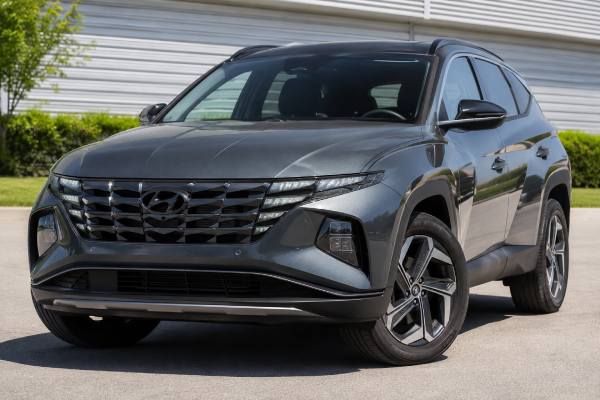
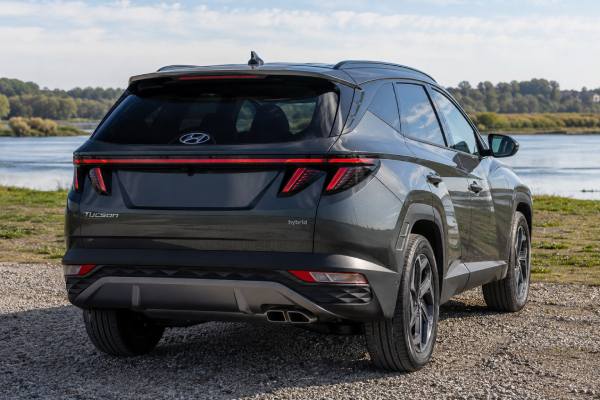
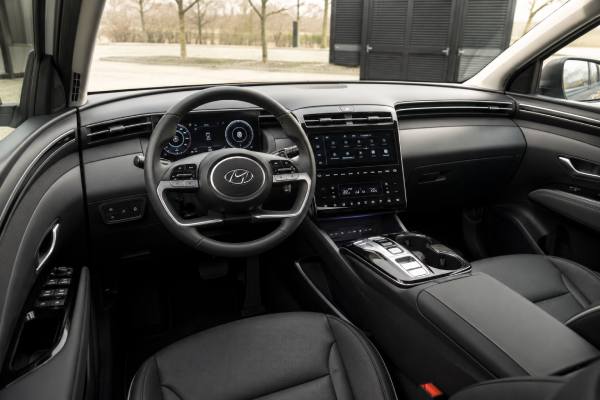
The 2022–2024 Hyundai Tucson FWD with the Smartstream 2.5 GDi/MPI engine is the mainstream gasoline version of Hyundai’s NX4-generation compact SUV. It is not the quickest Tucson, and it is not the most efficient one, but it is the simplest and most widely available choice in the North American lineup. With front-wheel drive, an 8-speed automatic transmission, a roomy cabin, and strong safety equipment, it makes the most sense for drivers who want comfort, space, and reasonable running costs without moving into a hybrid or plug-in hybrid.
Final Verdict
The Hyundai Tucson FWD 2.5 is a good used compact SUV for buyers who value cabin space, safety tech, warranty coverage, and relaxed daily driving more than strong acceleration. Its biggest appeal is how much room, equipment, and comfort it offers for the money, especially in SEL and Limited trims. The tradeoff is that the 187 hp engine feels adequate rather than lively, and real-world fuel economy is only average for the class. Buy one with complete service records, verified recall completion, clean ADAS operation, and no signs of oil neglect or tow-harness issues.
| Pros | Cons |
|---|---|
| Roomy cabin and cargo area for a compact SUV | Acceleration is modest with the 187 hp gasoline engine |
| Conventional 8-speed automatic avoids CVT driving feel | Fuel economy trails the Tucson Hybrid and top rivals |
| Dual GDI/MPI injection helps reduce carbon-buildup concern | Oil-change neglect can still harm timing-chain longevity |
| Strong standard driver-assistance equipment by 2024 | ADAS repairs require proper sensor and camera calibration |
| Good used availability across SE, SEL, XRT, and Limited | Several VIN-specific recalls must be checked before purchase |
Table of Contents
- Detailed Overview
- Specifications and Technical Data
- Trims, Safety and Driver Assistance
- Reliability, Common Issues and Service Actions
- Maintenance and Buyer’s Guide
- Driving and Performance
- Tucson FWD Compared to Rivals
Detailed Overview
The 2022–2024 Tucson FWD 2.5 is the practical gasoline version of the fourth-generation Tucson, known by the NX4 platform code. It suits commuting, family use, and highway travel better than sporty driving or heavy towing.
This version uses Hyundai’s Smartstream 2.5-liter naturally aspirated four-cylinder. The key point is simplicity: no turbocharger, no hybrid battery, no plug-in charging system, and no all-wheel-drive transfer hardware. The engine uses both gasoline direct injection and multi-point injection, a useful design because it combines precise fuel control with port injection that can help keep the intake side cleaner than a direct-injection-only engine.
For 2022, the Tucson moved into a larger, more mature body than the previous generation. Rear-seat space is one of its best qualities. Adults fit comfortably in the second row, cargo volume is generous, and the cabin feels closer to a midsize SUV than some older compact crossovers. The FWD model also has less weight and slightly better fuel economy than HTRAC AWD versions.
The driving character is calm. The 2.5 does not deliver the low-rpm shove of a turbo engine, but it is smooth enough in normal traffic. The 8-speed torque-converter automatic is generally preferable to a CVT for buyers who like familiar shift behavior, although it can hesitate when asked for sudden passing power.
The best used buys are usually SEL models with the Convenience and Premium packages, or Limited models if the price gap is reasonable. SE is functional but more basic. XRT is mainly a visual and equipment package rather than an off-road upgrade. N Line models from this period are appearance-focused in gasoline form; they do not add a more powerful engine.
Specifications and Technical Data
The Tucson FWD 2.5 uses a naturally aspirated inline-four, an 8-speed automatic transmission, and front-wheel drive. The most important ownership facts are the 187 hp output, regular-unleaded fuel requirement, 14.3-gallon fuel tank, large cargo area, and moderate 2,000 lb braked tow rating.
| Item | Hyundai Tucson FWD 2.5 |
|---|---|
| Engine family | Smartstream 2.5L GDI + MPI |
| Configuration | Inline 4-cylinder, DOHC, 16 valves |
| Displacement | 2,497 cc |
| Induction | Naturally aspirated |
| Fuel system | Gasoline direct injection plus multi-point injection |
| Power | 187 hp at 6,100 rpm |
| Torque | 241 Nm at 4,000 rpm (178 lb-ft) |
| Compression ratio | 13.0:1 |
| Recommended fuel | Regular unleaded gasoline |
| Timing drive | Timing chain |
| Item | Specification |
|---|---|
| Transmission | 8-speed torque-converter automatic with SHIFTRONIC |
| Drive type | Front-wheel drive |
| Drive modes | Center-console selectable drive modes |
| Final drive ratio | 3.648:1 |
| Idle Stop & Go | Standard on gasoline 2.5 models |
| Item | Specification |
|---|---|
| Body style | 5-door compact SUV, 5 seats |
| Length | 4,630 mm (182.3 in) |
| Width | 1,864 mm (73.4 in) |
| Wheelbase | 2,756 mm (108.5 in) |
| Ground clearance | 180 mm (7.1 in) for 2WD models |
| Turning diameter | 11.8 m (38.6 ft) |
| Front suspension | MacPherson strut with coil springs |
| Rear suspension | Multi-link |
| Fuel tank | 54.1 L (14.3 US gal) |
| Cargo volume | 38.7 cu ft seats up; 74.8 cu ft seats folded |
| Towing capacity | 907 kg braked (2,000 lb); 748 kg unbraked (1,650 lb) |
| Item | Useful value |
|---|---|
| EPA economy, 2022 FWD | 26 city / 33 highway / 29 combined mpg US |
| EPA economy, 2023–2024 FWD | 25 city / 32 highway / 28 combined mpg US |
| 0–60 mph estimate | About 8.8–9.5 seconds, depending on trim and load |
| Front brakes | 325 mm ventilated discs |
| Rear brakes | 300 mm solid discs |
| Engine oil capacity | About 5.6 L; verify by VIN and manual |
| Common oil grade | SAE 0W-20 full synthetic, API SN PLUS/SP or ILSAC GF-6 |
| Wheel-nut torque | Typically 107–127 Nm (79–94 lb-ft) |
Trims, Safety and Driver Assistance
The 2.5 FWD Tucson was offered mainly as SE, SEL, N Line, XRT, and Limited in the U.S. market, with trim differences focused on equipment rather than powertrain hardware. The engine and transmission stay essentially the same across gasoline FWD trims.
SE is the basic version but still includes the 2.5 engine, 8-speed automatic, 17-inch alloy wheels, electronic parking brake, LED lighting elements, wireless Apple CarPlay and Android Auto, and a useful driver-assist package. It is fine for budget buyers, but used SEL pricing is often close enough to justify the upgrade.
SEL adds the features many owners expect day to day: proximity key, heated front seats, power driver’s seat, rear vents, roof rails, Blue Link/Bluelink connected services depending on year, Smart Cruise Control, and added safety functions. On 2022 models, SEL could be paired with Convenience and Premium packages, bringing 19-inch wheels, digital cluster, wireless charging, Bose audio, sunroof, leather seating surfaces, and ventilated front seats.
N Line is mostly a styling trim in the gasoline Tucson. It adds N Line fascias, grille, badging, 19-inch wheels, sport-themed interior trim, black headliner, alloy pedals, and Bose audio. It does not turn the 2.5 FWD into a performance model.
XRT is the rugged-look trim. It brings dark exterior trim, side cladding, black wheels, roof cross rails, side steps, and often tow-hitch-related equipment depending on build and accessories. It is not a serious off-road trim because the FWD version lacks all-wheel drive and extra ground clearance.
Limited is the technology-heavy trim. It adds the panoramic sunroof, 10.25-inch navigation display, Surround View Monitor, Blind-Spot View Monitor, Highway Driving Assist, parking sensors, Parking Collision-Avoidance Assist in Reverse, rain-sensing wipers, heated rear seats, heated steering wheel, and Remote Smart Parking Assist on some model years.
Safety is one of the Tucson’s strong points. IIHS ratings for the NX4 generation are strong, and the 2024 Tucson earned Top Safety Pick+ status for vehicles built after March 2024 under the newer test criteria. Earlier 2022–2024 models also perform well in the core crashworthiness categories, but buyers should understand that safety awards can depend on build date, headlights, and updated test protocols.
Standard safety equipment includes front airbags, front side-impact airbags, side curtain airbags, rear side airbags on later equipment sets, stability control, traction control, anti-lock brakes, brake assist, tire-pressure monitoring, LATCH child-seat anchors, and three-point belts for all seating positions. By 2024, the gasoline Tucson also had a broad standard ADAS list: Forward Collision-Avoidance Assist, Blind-Spot Collision-Avoidance Assist, Rear Cross-Traffic Collision-Avoidance Assist, Lane Keeping Assist, Lane Following Assist, Driver Attention Warning, Intelligent Speed Limit Assist, Safe Exit Warning, and haptic steering-wheel feedback for some lane and blind-spot alerts.
ADAS repairs need care. A replaced windshield, bumper cover, grille, radar bracket, mirror camera, steering-angle sensor, or suspension component can require calibration. During a used inspection, test lane support, adaptive cruise, blind-spot warnings, rear camera, parking sensors, and all warning lamps. A car with a clean dashboard but non-working ADAS can be expensive to put right.
Reliability, Common Issues and Service Actions
The gasoline FWD Tucson 2.5 is generally a lower-complexity choice than the Hybrid and PHEV, but it is not maintenance-free. The most important used-buying step is a VIN recall check, followed by proof of regular oil changes and inspection of electronics, ADAS, trim, and transmission behavior.
| Issue or system | Prevalence | Severity | What to check |
|---|---|---|---|
| Incomplete recalls | VIN-specific | Medium to high | Run official VIN checks and request dealer records |
| Oil neglect or low oil level | Occasional | Medium | Check service history, level, leaks, noise, and exhaust smoke |
| 8-speed shift hesitation | Occasional | Low to medium | Test cold shifts, kickdown, creeping, and stop-start restarts |
| ADAS sensor faults | Occasional | Medium | Confirm camera, radar, parking, and lane systems operate correctly |
| Brake wear and rotor corrosion | Common in damp climates | Low to medium | Inspect pad thickness, rotor surfaces, and parking brake function |
| Interior and infotainment glitches | Occasional | Low | Check screens, USB ports, Bluetooth, cameras, and updates |
The Smartstream 2.5’s dual-injection layout is a positive feature. Direct-injection-only engines can suffer intake-valve deposit buildup because fuel does not wash the intake valves. By adding multi-point injection, Hyundai reduces that concern, though poor oil quality, short-trip use, and neglected PCV maintenance can still cause drivability problems over time.
Timing-chain durability depends heavily on oil quality and oil-change discipline. There is no normal timing-belt replacement interval because this engine uses a chain, but chains are not magic. Listen for extended start-up rattle, rough idle, cam/crank correlation faults, or metallic noise from the timing cover. Those signs need diagnosis rather than another quick oil change.
Known service actions and recalls vary by VIN. Important items for this generation include:
- 2022 Tucson Integrated Central Control Unit software recall, where incompatible software could affect headlamps or taillamps.
- 2022 Tucson roof molding recall on certain vehicles, where roof moldings could detach and become a road hazard.
- 2023 Tucson electric oil pump recall on certain vehicles, related to Idle Stop & Go hardware and potential heat damage or fire risk.
- 2024 Tucson Motor Driven Power Steering recall on certain vehicles, where an electric power steering power-pack issue could reduce assist.
- 2022–2024 Tucson tow-hitch wiring harness recall on certain vehicles equipped with an optional OEM trailer wiring harness, where water intrusion could affect trailer or rear lighting and create a fire risk.
For the tow-harness issue, be especially careful with XRT models and any Tucson fitted with dealer or port-installed towing accessories. Inspect the harness, module location, connector condition, trailer-light operation, and recall status. If the recall applies and the repair is not complete, follow Hyundai and NHTSA guidance before parking near structures.
The 8-speed automatic is usually smooth, but any used Tucson should be driven from cold. Harsh engagement into Drive or Reverse, repeated flare during upshifts, shudder under light throttle, or clunking during stop-start operation should be investigated. Some behavior may be software or adaptation related, but do not assume every shift issue is harmless.
Maintenance and Buyer’s Guide
A well-maintained Tucson FWD 2.5 should be a straightforward SUV to own. The safest maintenance approach is to follow the official schedule for your VIN and shorten intervals if the vehicle sees short trips, heat, winter salt, dusty roads, heavy traffic, or towing.
| Interval | Service items |
|---|---|
| Every 7,500 miles or 12 months | Engine oil and filter, tire rotation, brake and fluid inspection |
| Every 5,000 miles under severe use | Shorten oil changes for city, heat, towing, dust, or short trips |
| Every 15,000 miles | Cabin filter, brake inspection, battery test, suspension and steering checks |
| Every 30,000 miles | Engine air filter, brake-fluid test, fuel and evaporative-system inspection |
| Every 60,000 miles | Consider ATF service for severe use or long-term ownership |
| Around 97,500 miles | Replace spark plugs if specified for your VIN and engine |
| 120,000 miles or 10 years | Initial coolant replacement on many schedules; verify by manual |
| Every visit | Check oil level, coolant level, brake wear, tires, lights, and recalls |
| Item | Recommended approach |
|---|---|
| Engine oil | Use full synthetic oil meeting the manual’s API/ILSAC grade |
| Coolant | Use Hyundai-approved long-life coolant for aluminum engines |
| Transmission fluid | Use Hyundai-approved 8-speed automatic fluid only |
| Brake fluid | Use the specified DOT fluid; replace when moisture is high |
| Fuel | Regular unleaded is acceptable; Top Tier fuel is preferred |
| 12 V battery | Test yearly after year three; many last four to six years |
For buyers, service records matter more than trim shine. Ask for invoices, not just a stamped booklet. A Tucson that had oil changes every 5,000–7,500 miles is more attractive than one that relied on long intervals with mostly short-trip use. Check the dipstick before and after a test drive. Dark oil alone is not proof of neglect, but low oil, burnt smell, sludge under the filler cap, or start-up chain noise are warning signs.
Inspect these areas carefully:
- Front bumper, grille, windshield, and mirror camera area for past collision or ADAS work.
- Undercarriage, brake lines, suspension arms, exhaust hangers, and subframe edges in salt-belt states.
- Tailgate, roof rails, roof moldings, and water channels for loose trim or previous repairs.
- Tow hitch and wiring harness, especially on XRT or accessory-equipped examples.
- Tires for uneven wear that could indicate alignment, suspension, or accident history.
- Infotainment, cameras, USB ports, heated seats, power liftgate, sunroof, and parking sensors.
- Transmission behavior at low speed, on hills, during kickdown, and after stop-start activation.
The best balance is usually a 2023 or 2024 SEL FWD with desirable packages, or a clean Limited if the electronics all check out. The 2022 model can be a good value, but early-build vehicles deserve extra attention for completed recalls and trim-related issues. Avoid cars with missing service history, unresolved recall notices, warning lights, non-working safety systems, unexplained oil loss, or signs of poor body repair.
Long-term durability should be good if the owner treats the 2.5 as a modern high-compression engine rather than an old low-stress four-cylinder. Fresh oil, correct fluid, clean filters, good tires, brake maintenance, and recall compliance are the main ingredients.
Driving and Performance
The Tucson FWD 2.5 drives like a comfort-focused compact SUV, not a sporty crossover. Its strengths are space, ride comfort, predictable controls, and relaxed cruising; its weakness is passing power when heavily loaded.
Around town, throttle response is smooth but not urgent. The 2.5 engine needs revs for stronger acceleration, and the transmission sometimes has to drop more than one gear for quick passing. Normal mode is adequate for daily driving. Sport mode sharpens response but does not change the basic character of the engine.
Ride quality is one of the Tucson’s better traits. The suspension absorbs rough pavement well, especially on 17-inch wheels. Models with 19-inch wheels look better and sharpen initial response slightly, but they transmit more road texture and cost more to re-tire. Steering is light, accurate, and easy in parking lots, though it does not give much road feel.
Noise control is good for the class. The cabin is quiet at neighborhood speeds, and highway wind noise is controlled well. The engine becomes more noticeable when climbing grades or merging hard, because the four-cylinder has to rev to reach its useful power band.
Real-world fuel economy depends strongly on speed, temperature, tires, and traffic. A careful driver can see highway figures near the EPA rating, but cold weather, short trips, remote starts, roof accessories, and fast highway cruising quickly reduce economy. Expect roughly 9.8–11.8 L/100 km in city use (20–24 mpg US), 7.1–8.4 L/100 km on steady highways (28–33 mpg US), and 8.4–9.8 L/100 km in mixed use (24–28 mpg US). UK mpg equivalents are about 24–29 city, 34–40 highway, and 29–34 mixed.
Towing is possible but should stay light. The Tucson’s 2,000 lb braked rating is suitable for small utility trailers, light personal-watercraft trailers, or compact camping gear, not heavy caravans. Use the correct hitch, wiring, tongue weight, trailer brakes where required, and recall-compliant harness parts. Expect longer braking distances, more transmission downshifts, and noticeably higher fuel use when towing.
Tucson FWD Compared to Rivals
The Tucson FWD 2.5 competes best on space, safety equipment, warranty value, and everyday comfort. It is less convincing if the buyer’s top priorities are acceleration, maximum mpg, or sporty handling.
Against the Toyota RAV4 FWD, the Tucson feels more modern inside and often offers more equipment for the money. The RAV4 has a stronger long-term reputation and typically better resale value, but it can feel noisier and less refined. Buyers who keep cars for a decade may lean Toyota; buyers who want features and cabin comfort may prefer Hyundai.
Against the Honda CR-V, the Tucson offers a strong value case and a more conventional automatic feel than some CVT-equipped rivals. The CR-V is more polished in steering, packaging, and efficiency, especially in hybrid form. The Hyundai counters with a roomy rear seat, generous cargo space, and attractive used pricing.
Against the Kia Sportage, the comparison is close because the two share much of their engineering. The Sportage has a different interior layout and design personality, while the Tucson feels a little more restrained and mature. Buy based on condition, price, warranty status, trim equipment, and dealer support rather than badge alone.
Against the Nissan Rogue, the Tucson’s naturally aspirated engine and torque-converter automatic may appeal to buyers who are wary of small turbo engines and CVTs. The Rogue can be more efficient and feels lighter on its feet, but the Tucson has a more traditional powertrain character.
Against the Mazda CX-5, the Tucson wins on rear-seat and cargo space. The Mazda is more enjoyable to drive and has a richer steering feel, but it is tighter inside. If you care about handling, pick the Mazda; if you care about passenger room and family practicality, the Tucson is easier to live with.
The biggest internal rival is the Tucson Hybrid. The Hybrid is quicker and more efficient, but it adds hybrid-specific components and usually costs more used. The gasoline FWD 2.5 is the simpler choice for buyers with low annual mileage, easy access to regular service, and no need for AWD.
References
- 2024 Tucson Product Guide 2024 (Specifications) ([Hyundai News][1])
- Gas Mileage of 2024 Hyundai Tucson 2024 (Fuel Economy) ([Fuel Economy][2])
- 2024 Hyundai Tucson 2024 (Safety Rating) ([IIHS HLDI][3])
- Part 573 Safety Recall Report 25V893 2025 (Recall Database)
- Vehicle Maintenance Schedule | Service Centers | Hyundai USA 2026 (Maintenance) ([Hyundai USA][4])
Disclaimer
This article is for informational purposes only and is not a substitute for professional diagnosis, repair, or inspection. Specifications, torque values, service intervals, fluids, procedures, equipment, and recall coverage can vary by VIN, market, production date, trim, and installed accessories. Always verify details against the official owner’s manual, service information, recall records, and a qualified Hyundai technician before buying, repairing, or servicing the vehicle.
If this guide helped you, please share it on Facebook, X/Twitter, or your favorite automotive group to support our work.