
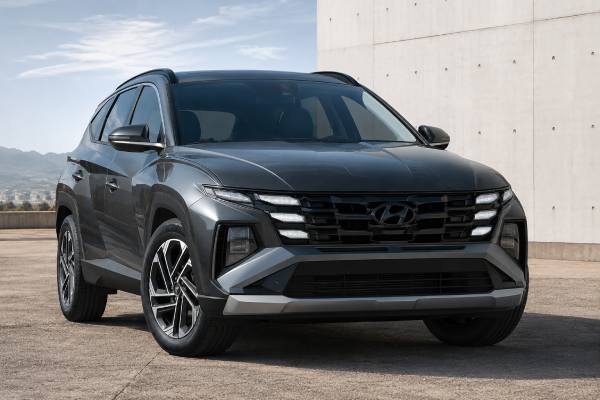
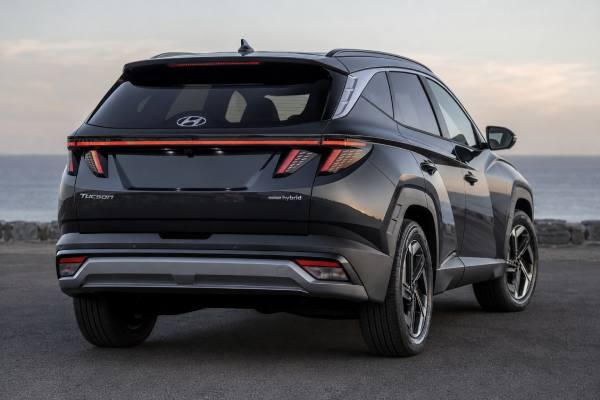
The facelifted Hyundai Tucson NX4 Plug-in Hybrid with HTRAC AWD is the practical, family-sized Tucson for drivers who can charge at home or work but still want petrol range, all-weather traction, and a conventional SUV cabin. It combines the Smartstream 1.6 T-GDi turbo petrol engine with an electric motor, a lithium-polymer traction battery, a 6-speed automatic gearbox, and Hyundai’s active on-demand HTRAC all-wheel-drive system.
This guide focuses on the facelift-era Tucson PHEV AWD sold from 2024 onward in markets where the launch specification is commonly listed around 252 PS or 252 hp. Some later or regional versions may quote different combined output figures, so always match the data to the VIN and market. As an ownership choice, the big question is simple: does the plug-in system add enough daily value to justify the extra weight, cost, and inspection needs?
Final Verdict
The facelifted Hyundai Tucson NX4 Plug-in Hybrid HTRAC AWD is a strong choice for family buyers who do regular short trips, can charge often, and want an SUV that feels quicker and smoother than a normal petrol Tucson. Its strongest appeal is the blend of electric commuting, all-wheel-drive confidence, a roomy cabin, and familiar Hyundai usability. The main tradeoff is complexity: battery health, charging hardware, cooling loops, brake corrosion, and software updates matter more than on a conventional petrol model. Buy one only with complete service records, confirmed recall completion, and a charging pattern that lets the PHEV system earn its keep.
| Pros | Cons |
|---|---|
| Strong electric-assisted acceleration for a practical compact SUV | Extra PHEV weight reduces agility and some cargo flexibility |
| Useful EV range for commuting when charged regularly | Efficiency drops sharply if used like a non-plug-in hybrid |
| HTRAC AWD improves wet-weather and winter traction | Transfer case and rear differential need inspection under hard use |
| Facelift cabin gains cleaner displays and better everyday controls | High-tech trims can mean costlier sensor and calibration work |
| Good safety structure and broad driver-assistance availability | ADAS repairs require correct calibration after body or glass work |
| 6-speed automatic feels more natural than many CVT hybrids | Short cold trips can be hard on the turbo petrol engine oil |
Table of Contents
- Tucson PHEV AWD Overview
- Specifications and Technical Data
- Trims, Safety and Driver Assistance
- Reliability, Common Issues and Service Actions
- Maintenance and Buyer’s Guide
- Driving, Performance and Efficiency
- How the Tucson PHEV Compares
Tucson PHEV AWD Overview
The Tucson PHEV AWD is best understood as an electric-first family SUV, not as a mini electric car or a normal hybrid with a bigger battery. It works best when most weekday driving is within its electric range and longer journeys use the petrol engine without range anxiety.
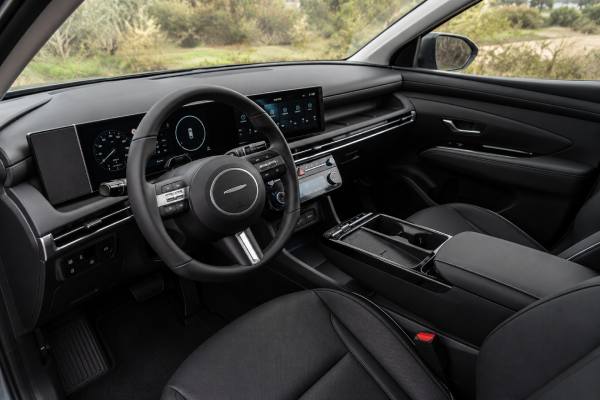
The NX4 Tucson already had one of the more distinctive designs in the compact SUV class. The 2024 facelift did not change the basic platform, but it cleaned up the front and rear styling, revised the lighting details, and made the cabin feel more modern. The big interior change is the wider, more integrated screen layout, with a digital instrument cluster and central infotainment display depending on trim. Hyundai also improved the usability of the centre console and brought back more conventional controls for frequent tasks, which matters in daily family use.
Mechanically, the PHEV uses Hyundai’s Smartstream 1.6-litre turbocharged petrol engine as the combustion part of the system. The electric motor is placed in the driveline rather than on a separate rear axle, so the car keeps a mechanical all-wheel-drive layout through the transmission and HTRAC system. This is different from some hybrid SUVs that use an electric rear axle. In normal driving, the Tucson can run quietly on electricity, blend petrol and electric power when needed, or operate like a conventional hybrid after the plug-in battery has been depleted.
The result is a vehicle with several personalities. Around town on a charged battery, it is calm, quiet, and easy to drive. On open roads, the turbo engine and electric motor give useful passing power. In bad weather, HTRAC gives extra traction without turning the Tucson into an off-road vehicle. On long motorway runs with no charge left, it behaves more like a heavy hybrid SUV, where its advantage over a normal hybrid is smaller.
The Tucson PHEV is not the right fit for every driver. If you cannot charge regularly, the extra purchase price, weight, and technical complexity are harder to justify. If you can plug in most nights and drive 20–40 miles on many days, it can deliver a satisfying balance of refinement, practicality, and lower fuel use.
Specifications and Technical Data
This Tucson version uses a 1.6-litre turbo petrol engine, a permanent-magnet synchronous electric motor, a lithium-polymer traction battery, a 6-speed automatic transmission, and HTRAC AWD. The important ownership details are not just headline power and range; they are battery capacity, charging speed, kerb weight, towing rating, cargo space, and service fluids.
Some official figures differ between Europe, the UK, North America, and later model-year updates. The tables below focus on the facelift-era 1.6 T-GDi PHEV AWD layout and use market notes only where they help the buyer understand a real difference.
| Item | Specification |
|---|---|
| Engine family | Hyundai Smartstream G1.6 T-GDi turbo petrol |
| Engine layout | Inline-4, DOHC, 16 valves |
| Displacement | 1,598 cc |
| Bore × stroke | 75.6 × 89.0 mm |
| Compression ratio | 10.5:1 |
| Induction | Turbocharged direct-injection petrol |
| Combined output | Commonly listed around 252 PS or 252 hp for the covered launch tune |
| Electric motor | Permanent-magnet synchronous motor |
| Electric motor output | Up to about 66.9 kW / 91 PS in European technical data |
| High-voltage battery | 13.8 kWh lithium-polymer pack |
| Battery power output | 88 kW where specified |
| Emissions standard | Euro 6e in UK facelift technical data |
| Item | Specification |
|---|---|
| Transmission | 6-speed automatic torque-converter gearbox |
| Drive type | HTRAC active on-demand all-wheel drive |
| Shift controls | Shift-by-wire and paddles on many HEV/PHEV trims |
| Charging type | AC charging for the plug-in hybrid battery |
| On-board charger | Up to 7.2 kW where specified |
| Typical Level 2 charging time | About 2 hours on a suitable 240 V supply |
| DC fast charging | Not a normal feature of this Tucson PHEV generation |
| Item | Specification |
|---|---|
| Body style | 5-door compact SUV, 5 seats |
| Length | 4,510–4,520 mm depending on trim styling |
| Width | 1,865 mm excluding mirrors |
| Wheelbase | 2,680 mm |
| Height | About 1,650–1,651 mm depending on wheel package |
| Kerb weight | Up to about 1,940 kg for PHEV AWD in UK data |
| Gross vehicle weight | About 2,420 kg for PHEV AWD |
| Payload | About 480 kg for PHEV AWD |
| Fuel tank | 42 litres in UK PHEV data; 11.1 US gal in US data |
| Cargo capacity | About 558–616 litres seats up, trim dependent |
| Maximum cargo | About 1,737–1,795 litres seats folded, trim dependent |
| Towing capacity | 1,210 kg braked; 750 kg unbraked in UK PHEV data |
| Item | Specification or practical note |
|---|---|
| 0–62 mph | About 8.5 seconds for PHEV AWD in UK data |
| Top speed | About 116 mph |
| Official electric range | Up to 43.5 miles in current UK PHEV data |
| Official CO₂ | About 29 g/km in UK facelift PHEV listings |
| Engine oil capacity | 4.8 litres for Smartstream G1.6 T-GDi drain and refill |
| Engine oil grade | SAE 0W-20, API SN PLUS/SP or ILSAC GF-6 |
| Brake fluid | DOT-4 LV / ISO4925 Class 6 type specification |
| Rear differential oil | API GL-5 SAE 75W/85, 4WD models |
| Transfer case oil | Inspect regularly; replace if submerged or severe-use interval applies |
Trims, Safety and Driver Assistance
The best Tucson PHEV trim is usually the one that gives you the safety, seat, charging, and camera equipment you will actually use without pushing the price too close to larger or longer-range PHEV rivals. Mechanical differences are usually modest; equipment, wheels, cameras, and driver-assistance features are the bigger separators.
In the UK-style facelift lineup, the Tucson range has included grades such as Advance, Premium, N Line, N Line S, and Ultimate, with PHEV availability varying by trim and drivetrain. The PHEV AWD versions sit above normal petrol and many hybrid variants because they add the plug-in battery, electric drive hardware, and HTRAC system. N Line models add sportier exterior and interior styling, but they should not be mistaken for performance chassis versions. The main driving difference is usually tyre and wheel choice rather than special engine tuning.
Quick identifiers are useful when shopping used. Look for the charge flap, PHEV badging, hybrid-specific energy displays, EV/HEV drive information in the cluster, and VIN/build data confirming the plug-in hybrid powertrain. HTRAC AWD cars may have drive-mode and terrain-related controls depending on market. Interior tells can include the facelift’s wide display layout, column or shift-by-wire selector arrangement on some trims, and high-trim features such as surround-view cameras, blind-spot camera view, powered tailgate, premium audio, ventilated seats, or panoramic roof.
Wheel size matters. Smaller wheels usually ride better and may improve efficiency slightly. Larger 19-inch packages sharpen the look but can add tyre cost, road noise, and harsher impacts on broken roads. On a plug-in hybrid, tyres also affect EV range, so mismatched budget tyres are a red flag.
Euro NCAP gave the NX4 Hyundai Tucson a five-star rating, and the assessment applies across several Tucson powertrain variants, including PHEV versions listed in the rating applicability data. The 2024 facelift review carried the rating forward rather than treating the car as an all-new crash structure. That is positive, but buyers should still check local safety data because rating bodies update their test protocols, and equipment can vary by country.
The safety kit is one of the Tucson’s stronger points. Depending on trim and market, it can include forward collision-avoidance assist with pedestrian, cyclist, and junction-turning detection; lane keeping assist; lane following assist; blind-spot collision warning; rear cross-traffic collision-avoidance assist; intelligent speed limit assist; safe exit warning; driver attention warning; and smart cruise control. Higher trims may add Highway Driving Assist, navigation-based cruise control, surround-view monitor, blind-spot view monitor, and parking collision-avoidance assist.
Airbag coverage is also broad on facelift-era models, with front airbags, front side airbags, side curtains, and rear side airbags in many specifications. ISOFIX/LATCH child-seat provisions and rear-seat belt reminders are important family features. For used buyers, the safety inspection should include seatbelts, pretensioner warning lights, airbag warning lights, windscreen-camera calibration records, radar alignment, and evidence that no cheap bumper or windscreen repair has disrupted ADAS performance.
Reliability, Common Issues and Service Actions
The facelift Tucson PHEV is still a relatively new version, so reliability judgment should be based on early facelift data plus the earlier NX4 hybrid and plug-in hybrid record. The core message is encouraging but conditional: the hardware is not unusually exotic, yet the car rewards owners who keep software, cooling, charging, brake, and fluid maintenance up to date.
The most important used-buying issue is not one famous failure; it is incomplete evidence. A good Tucson PHEV should have service invoices, dealer software history, recall completion proof, tyre history, brake inspections, and a charging cable or wallbox record. A neglected PHEV can look clean at a short test drive while hiding weak 12 V battery health, stale petrol, corroded brake discs, unresolved warning codes, or old software.
Common-to-occasional owner concerns include:
- Low 12 V battery warnings or no-start symptoms: Often linked to short use, long parking periods, weak auxiliary battery condition, or software/charging logic. Test the 12 V battery under load and check for updates.
- Charging interruptions: Can be caused by wallbox settings, cable damage, charge-port contamination, onboard charger faults, or software. Confirm charging from low to full before purchase where possible.
- Brake disc corrosion: PHEVs use regenerative braking, so the friction brakes can see light use. Inspect rear discs especially, and use occasional firmer braking in safe conditions to keep surfaces clean.
- Turbo petrol short-trip stress: If the engine runs only briefly in cold weather, oil dilution and moisture can become concerns. More frequent oil changes suit this use pattern.
- Coolant or thermal-management faults: The engine, inverter, and hybrid system depend on correct coolant condition. Any coolant warning, overheating message, or repeated low-coolant report deserves prompt diagnosis.
- Infotainment and connectivity glitches: Usually low severity, often software-related, but check navigation, cameras, phone projection, connected services, and OTA update status.
- ADAS warnings after repair: Camera, radar, and parking sensor faults after windscreen, bumper, or body repairs often point to missed calibration.
For the high-voltage battery, severe degradation is not expected on a young vehicle that has been used normally, but condition still matters. Ask a dealer or qualified hybrid specialist for battery state-of-health data if the car is out of warranty, has high mileage, has lived in a very hot climate, or shows reduced EV range beyond normal weather effects. EV range falls in winter, with heavy heating use, motorway speeds, roof loads, and aggressive driving, so judge battery health from diagnostic data rather than range alone.
The 6-speed automatic is generally preferable for drivers who dislike CVT-style engine flare. It can still develop complaints if fluid is overheated, the car is towed heavily, or software is outdated. Watch for delayed engagement, harsh shifts, flare between gears, or vibration under load. HTRAC hardware should be quiet, with no clunks, binding on tight turns, or rear-end rumble. Severe use, towing, salt roads, or water exposure make transfer case and rear differential fluid checks more important.
Recalls and service campaigns vary by market, VIN, build date, and equipment. Tucson-family campaigns can involve software, electrical systems, trailer wiring, airbags, sensors, or display functions depending on model year and region. Do not rely on a seller saying “there are no recalls.” Check the VIN through the official Hyundai recall system for the country and, where relevant, the NHTSA or national safety database. Dealer records should show both open safety recalls and non-safety service campaigns, because software updates can affect charging behavior, warning messages, infotainment reliability, and driver-assistance operation.
Maintenance and Buyer’s Guide
The Tucson PHEV should be maintained like a turbo petrol car and a hybrid system at the same time. That means oil quality, coolant condition, brake health, tyre condition, software updates, and battery checks all matter.
For Europe-style normal service use, Hyundai’s maintenance schedule lists the Smartstream G1.6 T-GDi engine oil and filter at every 15,000 km or 12 months. In harder use, shorter intervals are sensible. Severe use includes repeated short trips, freezing-weather short journeys, heavy traffic, mountain driving, towing, dusty roads, salt exposure, commercial use, frequent rapid acceleration, and stop-start operation. Many PHEV owners fall into severe use because the petrol engine may run cold for short periods.
A practical ownership schedule is:
| Interval | Work to prioritise |
|---|---|
| Monthly | Check tyre pressures, oil level, coolant level, charge-port condition, lights, and wipers |
| 10,000–15,000 km / yearly | Engine oil and filter, brake inspection, tyre rotation, cabin filter, diagnostic scan |
| 30,000 km / 24 months | Brake fluid replacement, cooling-system inspection, air cleaner check or replacement |
| 60,000 km | Inspect drive belts, suspension joints, steering boots, HTRAC driveline, charging hardware |
| 75,000 km / 60 months | Replace Smartstream G1.6 T-GDi spark plugs in Europe schedule |
| 90,000 km | First major drive-belt inspection in Europe schedule; inspect turbo and intercooler hoses |
| 120,000 km | Severe-use automatic transmission, transfer case, and rear differential fluid attention |
| 180,000 km / 10 years | First engine coolant replacement in Europe schedule, then shorter coolant intervals |
The 1.6 T-GDi uses a timing chain, not a routine timing belt in the same sense as many older engines. A chain should still be treated as a wear system. Listen for cold-start rattles, check for cam/crank correlation fault codes, and investigate rough running, oil-pressure problems, or metallic noise. Chain, guide, or tensioner work is condition-based, not a normal short-interval replacement.
For fluids, the key decision-making values are straightforward. The Smartstream G1.6 T-GDi oil fill is 4.8 litres with SAE 0W-20 meeting API SN PLUS/SP or ILSAC GF-6. Brake fluid should meet the low-viscosity DOT-4 specification listed for the vehicle. HTRAC AWD cars use rear differential oil and transfer case oil that should be inspected at the prescribed intervals, replaced after water exposure, and serviced more proactively if the vehicle tows or runs in salted winter conditions.
The buyer’s checklist should be direct:
- Confirm the VIN, exact powertrain, AWD status, and market specification.
- Check all recalls and service campaigns before purchase.
- Ask for oil-change records, not just stamped “inspection” entries.
- Confirm the high-voltage battery warranty start date and remaining coverage.
- Test AC charging with the supplied cable or wallbox.
- Scan all modules, not only the engine ECU.
- Check EV range after a full charge, but judge battery health with diagnostics.
- Inspect brake discs for corrosion, scoring, or vibration.
- Look underneath for accident repairs, damaged undertrays, coolant leaks, and driveline seepage.
- Road-test in EV mode, hybrid mode, motorway acceleration, tight turns, and reverse parking.
The best used examples are privately or dealer-owned cars with home charging, annual oil service, matching premium tyres, clean ADAS operation, and a calm charging history. Be cautious with cars used mainly as short-trip urban runabouts but serviced only at long intervals. Also be cautious with heavily accessorised cars used for towing, roof boxes, or winter mountain travel unless HTRAC and cooling-system records are strong.
Long-term durability should be good if maintenance is disciplined. The petrol engine is small but boosted, the battery is not huge by modern PHEV standards, and the AWD hardware adds cost if neglected. A Tucson PHEV that is charged regularly, warmed properly on petrol use, and serviced by someone familiar with Hyundai hybrid systems should age better than one treated like a normal petrol SUV.
Driving, Performance and Efficiency
The Tucson PHEV AWD feels strongest in mixed daily use, where electric torque covers low-speed driving and the turbo petrol engine joins smoothly for faster acceleration. It is not a sporty SUV, but it is quick enough to feel relaxed with passengers and luggage.
In EV mode, step-off is smooth and quiet. The Tucson pulls away cleanly, with no clutch hesitation and little mechanical noise. This makes it easy in traffic, school runs, car parks, and suburban driving. When the petrol engine starts, the transition is usually well managed, although cold starts are more noticeable in winter. The 6-speed automatic helps the car feel more familiar than many hybrid CVTs because engine speed and road speed remain more naturally connected.
The steering is light to medium in effort and suits the Tucson’s family role. There is not much detailed road feedback, but straight-line stability is good. The AWD system adds confidence on wet roads, snow, gravel driveways, and steep slippery junctions. It is not built for serious off-road use, but it is useful for bad-weather traction and towing stability within the rated limits.
Ride quality depends heavily on wheels. On smaller wheels, the Tucson is composed and comfortable. On 19-inch wheels, it can feel firmer over sharp edges, especially with the extra mass of the PHEV battery and AWD system. Cabin noise is low around town in electric mode, but tyre roar becomes more noticeable on coarse motorway surfaces. Wind noise is generally controlled.
Braking feel is typical for a well-calibrated hybrid. There is a blend between regenerative braking and friction braking, so the pedal may feel slightly different from a normal petrol SUV. The system is easy to trust once you are used to it. Still, used buyers should test for judder, pulsing, rear disc corrosion, and uneven braking after long periods of gentle EV driving.
Official acceleration for the PHEV AWD is about 8.5 seconds from 0–62 mph in UK data. That is quick enough for confident merging and overtaking, but the Tucson’s weight is clear when changing direction or braking hard. The car prefers smooth inputs. Sport mode sharpens response and can make the powertrain feel more awake, but it does not turn the Tucson into a hot SUV.
Efficiency depends almost entirely on charging. With a full battery and moderate speeds, many owners can cover daily trips without using much petrol. Current UK data lists up to 43.5 miles of electric driving range, while cold weather, motorway speed, rain, hills, and heater use can reduce that meaningfully. A realistic mixed-use expectation is often lower than the official figure, especially in winter.
Once the battery is depleted, the Tucson behaves like a heavy hybrid. In charge-sustaining mode, it can still be economical in town because it recovers braking energy, but long high-speed motorway running is less flattering. Drivers who rarely charge should consider the regular Tucson Hybrid instead. Drivers who charge nightly and commute within EV range will see the biggest benefit.
For towing, the official UK braked rating of 1,210 kg is useful for small trailers rather than heavy caravans. The electric motor helps low-speed pull-away, and AWD helps traction on wet grass or ramps. The limits are weight, cooling, braking load, and fuel consumption. Tow buyers should check the exact towing pack, wiring recall status, service history, and transmission/driveline condition.
How the Tucson PHEV Compares
The Tucson PHEV competes best as a sensible, well-equipped, easy-to-live-with plug-in SUV rather than the longest-range or fastest PHEV in the class. Its balance of cabin space, AWD traction, conventional automatic feel, and Hyundai warranty support is the main appeal.
Against the Kia Sportage PHEV, the Tucson is mechanically very close in many markets. The Kia often has a bolder interior presentation and different trim strategy, while the Hyundai may appeal to buyers who prefer its dashboard layout, exterior styling, or dealer offer. The decision often comes down to price, warranty terms, equipment, ride comfort, and which cabin feels more natural.
Against the Toyota RAV4 Plug-in Hybrid, the Tucson traditionally gives strong value and a refined cabin, while the Toyota is often stronger on power, resale confidence, and long-term hybrid reputation. A used RAV4 PHEV can cost more, but it may hold value better. The Tucson is the better deal when it is priced clearly below the Toyota and comes with stronger equipment.
Against the Ford Kuga Plug-in Hybrid, the Tucson has the advantage of available AWD in the covered HTRAC version. The Ford can be efficient and pleasant, but many Kuga PHEV versions are front-wheel drive. If winter traction, towing ramps, or rural roads matter, the Hyundai’s AWD system is a major reason to consider it.
Against newer European plug-in SUVs such as the Volkswagen Tiguan eHybrid, the Tucson may no longer have the longest electric range. Newer-generation PHEVs are moving toward larger batteries and longer EV capability. The Tucson still counters with familiar Hyundai ownership, good packaging, a straightforward 6-speed automatic feel, and a well-rounded equipment list.
Choose the Tucson PHEV AWD if you want a compact family SUV that can do electric commuting, winter driving, and occasional long trips without drama. Choose a normal Tucson Hybrid if you cannot charge. Choose a RAV4 PHEV or newer long-range PHEV rival if maximum EV range or performance is your top priority. Choose the Tucson when the price, service history, warranty position, and charging routine all line up.
References
- Hyundai TUCSON | Technical, Specifications and Pricing | Model year 2025 | May 2024 2024 (Technical Specification) ([Hyundai News][1])
- Hyundai TUCSON Plug-in Hybrid | Hyundai Motor UK 2026 (Manufacturer Specification) ([Hyundai][2])
- Recommended lubricants and capacities | 2025 Hyundai Tucson 2025 (Owner’s Manual) ([Hyundai Owners Manual][3])
- Euro NCAP | Hyundai TUCSON 2021/2024 (Safety Rating) ([Euro NCAP][4])
- Check for Recalls: Vehicle, Car Seat, Tire, Equipment 2026 (Recall Database) ([NHTSA][5])
Disclaimer
This article is for informational purposes only and is not a substitute for professional diagnosis, repair, or inspection. Specifications, torque values, service intervals, software actions, and procedures can vary by VIN, market, model year, trim, and equipment. Always verify repair work and maintenance decisions against the official Hyundai service documentation for the exact vehicle.
If this guide helped you, please share it on Facebook, X/Twitter, or your preferred social platform to support our work.