
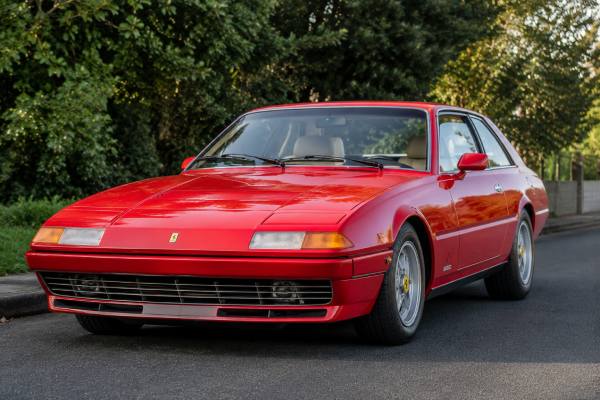
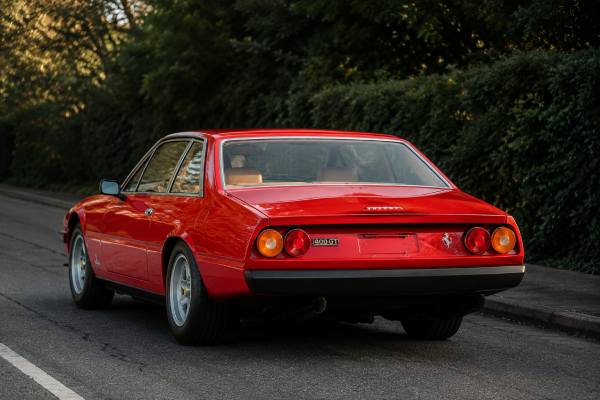
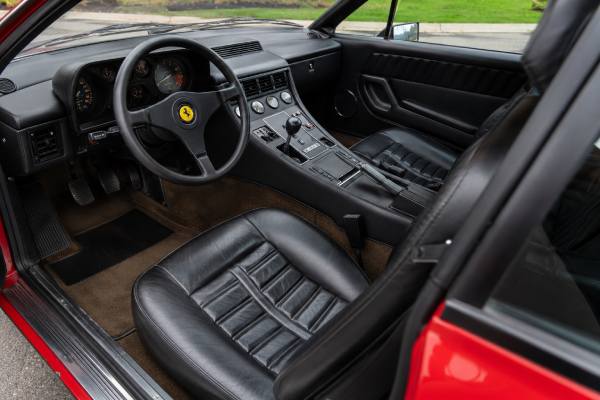
The Ferrari 400 GTi with the F 101 DL 110 chassis reference and F 101 D 010 engine is the five-speed manual, fuel-injected version of Ferrari’s large V12 2+2 grand tourer. In late 1982, the 400 GTi received a useful round of mechanical and cosmetic updates, including revised camshaft profiles, new exhaust manifolds, detail styling changes, metric wheels, and a modest power increase to about 315 hp. It remained in production until 1985, when the larger-engined 412 took over.
This is not the wedge-shaped Ferrari that usually appears on posters, nor is it the loudest member of the marque’s 1980s catalog. Its appeal is more subtle. The 400 GTi combines a front-mounted Colombo-derived V12, Pininfarina’s crisp three-box body, four-seat practicality, and the rarity of a gated manual gearbox in a grand touring Ferrari. It sits in the long 365 GT4 2+2, 400, and 412 family, a line that bridged the Daytona-era front-engined cars and the later 456 GT.
People still search for the 400 GTi because it occupies a strange and interesting place in the collector market. It is a real V12 Ferrari with proper long-distance character, but for years it was undervalued because of its formal styling, complex maintenance needs, and the shadow cast by more glamorous mid-engined Ferraris. Today, good manual cars are being looked at more seriously, especially when they have factory documentation, correct mechanical specification, and no hidden rust or deferred V12 repair bills.
Quick Take
The late Ferrari 400 GTi is strongest as a refined, manual, front-engined V12 grand tourer rather than as a sharp sports car. Its identity rests on the F 101 D 010 injected V12, five-speed gearbox, Pininfarina 2+2 body, and 1982-on updates that made the car more usable and slightly stronger than the earlier injected version. The main caution is ownership cost: rust, tired suspension, old fuel-injection parts, electrical faults, and neglected engine work can quickly outrun the purchase price. The best buys are original, well-documented manual cars with matching numbers, known history, correct late details, and recent specialist maintenance.
Table of Contents
- History and Collector Significance
- Engine, Chassis and Key Specifications
- Production, Variants and Factory Details
- Design, Engineering and Special Features
- Road Feel, Performance and Usability
- Reliability, Maintenance and Restoration Risk
- Market Value and Buying Advice
History and Collector Significance
The Ferrari 400 GTi matters because it is one of the last old-school front-engined V12 Ferraris before the modern 456 GT reset the formula in the 1990s. In late manual form, it is also one of the rarer versions of Ferrari’s long-running four-seat grand tourer family.
The basic line began with the 365 GT4 2+2, introduced in the early 1970s as a more formal and spacious successor to the 365 GTC/4. Ferrari then evolved the car into the 400 GT and 400 Automatic in 1976, increasing displacement to 4.8 liters and, for the first time on a production Ferrari, offering an automatic transmission. The injected 400i arrived in 1979, replacing the six Weber carburetors with Bosch K-Jetronic mechanical fuel injection.
The 400 GTi name refers to the manual, injected car. In Ferrari usage, “GT” identified the five-speed manual version, while “i” marked the move to injection. The F 101 DL 110 chassis reference is associated with the manual injected 400i/400 GTi, while the F 101 D 010 engine code identifies the manual version of the 4.8-liter injected V12.
The late-1982 update is important because it separates the later cars from the first injected examples. Ferrari adjusted the engine with revised camshaft profiles and exhaust manifolds, recovering a small amount of power lost when the model moved from carburetors to injection. Styling and trim were also modernized. The narrower front grille exposed the rectangular driving lamps, the bonnet louver treatment changed, the rear panel became body colored, and later cars gained revised mirrors with small Ferrari shields.
The 400 GTi’s reputation has changed with time. For many years, it was considered the “affordable” V12 Ferrari, and that label did it few favors. Low values encouraged deferred maintenance, and the car’s restrained styling did not attract the same attention as the Berlinetta Boxer, 308, Testarossa, or later 512 TR. Collectors now view it with more nuance. A good 400 GTi offers the qualities that have become scarce in modern exotic cars: a naturally aspirated front V12, a manual gearbox, thin pillars, a calm cabin, mechanical steering feel, and genuine long-distance usability.
Its significance is not based on motorsport success. The 400 GTi was not a competition car and was never intended to be one. Its importance lies in Ferrari’s grand touring tradition: fast, expensive, elegant, and designed to carry adults and luggage at high speed across Europe. It also represents Ferrari’s response to emissions pressure and changing customer tastes at the end of the 1970s, when the brand had to make its V12 GT smoother, cleaner, and easier to live with without losing its character.
The 400 GTi also occupies a useful collector niche. It is less obvious than a Daytona, less theatrical than a Testarossa, and less modern than a 456. For the buyer who understands what it is, that can be the point. The best examples feel like a private, mature kind of Ferrari ownership rather than a public display of speed.
Engine, Chassis and Key Specifications
The late Ferrari 400 GTi uses a 4,823.16 cc, 60-degree V12 mounted longitudinally at the front and driving the rear wheels through a five-speed manual gearbox. The 1982-on F 101 D 010 version is commonly quoted at about 315 hp after Ferrari’s camshaft and exhaust updates.
The engine belongs to Ferrari’s long-running Colombo V12 family, though by this period it had grown far beyond the early postwar displacement. It uses an aluminum block and heads, dual overhead camshafts per bank, two valves per cylinder, wet-sump lubrication, Bosch K-Jetronic mechanical fuel injection, and electronic ignition. Its character is smooth and torquey rather than peaky in the way some smaller Ferrari V12s can feel.
| Item | Specification |
|---|---|
| Engine code | F 101 D 010 |
| Configuration | Front longitudinal 60-degree V12 |
| Displacement | 4,823.16 cc |
| Bore x stroke | 81 mm x 78 mm |
| Valvetrain | Dual overhead camshafts per bank, two valves per cylinder |
| Fuel system | Bosch K-Jetronic mechanical fuel injection |
| Compression ratio | 8.8:1 |
| Output | About 315 hp for late 1982–1985 updated cars |
| Lubrication | Wet sump |
| Transmission | Five-speed manual with reverse |
| Drivetrain | Rear-wheel drive with limited-slip differential |
The chassis is a tubular steel frame wearing Pininfarina-built bodywork. The car’s wheelbase is 2,700 mm, long by Ferrari standards of the period, and that extra length is what makes the rear seats usable compared with many nominal 2+2 coupes. Suspension is independent at both ends with unequal-length wishbones, coil springs, telescopic dampers, and anti-roll bars. The rear used a self-leveling system, revised on late cars as part of the 1982 update.
| Area | Specification |
|---|---|
| Chassis reference | F 101 DL 110 |
| Body style | Two-door 2+2 coupe |
| Body design | Pininfarina |
| Length | 4,810 mm |
| Width | 1,798 mm |
| Height | 1,314 mm |
| Wheelbase | 2,700 mm |
| Front track | 1,470 mm |
| Rear track | 1,500 mm |
| Dry weight | About 1,830 kg |
| Steering | Power-assisted recirculating ball |
| Brakes | Four-wheel disc brakes |
| Fuel capacity | About 120 liters |
Performance figures vary by source, test conditions, tires, gearbox condition, and whether the car is an earlier or later injected example. A realistic period view is that the 400 GTi is a fast GT rather than a supercar. Top speed is usually quoted around 240–245 km/h, with standing-start performance closer to a powerful luxury coupe than to a light mid-engined Ferrari. The car’s real strength is sustained high-speed cruising, not short sprint numbers.
Production, Variants and Factory Details
The manual Ferrari 400 GTi is the rarer injected 400i variant, with about 422 manual cars built within total 400i production of roughly 1,305 examples. The automatic was more common, making transmission type one of the most important identification and value factors.
The 400i family is often discussed as one model, but buyers should separate it into meaningful groups:
| Version | Transmission | Typical engine reference | Approximate production | Collector note |
|---|---|---|---|---|
| 400 GTi | Five-speed manual | F 101 D 010 | About 422 | Rarer and generally more desirable |
| 400 Automatic i | Three-speed automatic | F 101 D 070 | About 883 | More common and usually lower valued |
The production split matters because the manual car feels more connected and because collectors place a premium on gated Ferrari gearboxes. The automatic version suits the model’s relaxed GT role, but the manual better matches today’s enthusiast demand. A genuine manual car should be verified by chassis, engine, build documentation, gearbox installation, pedal box, interior trim, and service history. Conversions are not generally valued like factory manual cars.
The late-1982 changes are also important. On later cars, look for the narrower grille with exposed rectangular lamps, revised mirrors, body-color bonnet louver treatment, body-color rear panel, rear fog lights in the bumper, revised cabin trim, updated door panels, and metric wheel and tire equipment. Because many 400-series cars have been restored, repaired, repainted, or modified over four decades, a buyer should not rely on one visual feature alone.
Factory documentation carries real weight. The ideal file includes original books, service stamps, old invoices, registration records, import paperwork where relevant, ownership history, and a Ferrari heritage or marque-specialist report confirming the chassis, engine, gearbox, colors, and build specification. A car with a clean story and modest cosmetic wear can be more desirable than a shiny example with missing records and unclear mechanical history.
Color and trim also affect desirability. Traditional Ferrari red is not always the strongest color on the 400 GTi because the body’s formal Pininfarina lines often suit darker metallics, blues, silvers, grays, greens, and elegant period interiors. Unusual but factory-correct combinations can be valuable if the condition and documentation support them. Heavy retrims in non-original materials, modern audio installations, aftermarket wheels, and incorrect badging can hurt collector confidence.
Some cars were modified by outside coachbuilders or converted into convertibles, shooting brakes, or other special bodies. These can be interesting, but they are a separate buying category. For a standard 400 GTi, originality is usually the safer value path. A coachbuilt or converted car needs deeper documentation, specialist inspection, and a clear understanding of who performed the work and when.
Design, Engineering and Special Features
The 400 GTi is distinctive because it combines a formal Pininfarina body with serious Ferrari V12 hardware underneath. It looks restrained, but its proportions, pop-up headlights, long bonnet, low beltline, and crisp side crease give it a quiet authority that has aged better than many expected.
Leonardo Fioravanti’s Pininfarina design was a deliberate break from the softer, fastback style of earlier Ferrari 2+2s. The 400 GTi has a clear three-box profile: bonnet, cabin, and boot are visually separate. That shape gave the car a more executive character and made it suitable for owners who wanted a Ferrari they could drive to business meetings, hotels, airports, and long-distance weekends without the drama of a mid-engined two-seater.
The most recognizable body feature is the strong horizontal line running along the side. It visually lowers the car and connects the front and rear masses. The pop-up headlights keep the nose clean when closed, while the rectangular grille and exposed driving lamps on late cars give the front a sharper 1980s appearance. At the rear, the four round taillights link the car back to Ferrari tradition, even though the rest of the design is more restrained than many earlier models.
The engineering is traditional but serious. Ferrari did not use a transaxle layout here; the gearbox is mounted conventionally behind the engine, with a driveshaft sending power to the rear differential. This gives the car a different balance from later or smaller sporting Ferraris. It feels like a front-engined GT with a large engine ahead of the cabin, not like a lightweight road racer.
The cabin is a major part of the car’s identity. The driving position is low but not cramped, the glass area is generous, and the interior is more spacious than most classic Ferraris. Leather, air conditioning, electric windows, full instrumentation, and a proper rear seat all support the car’s long-distance purpose. The late-1982 cabin revisions improved the center console and trim layout, making the final 400 GTi feel more modern than the earliest injected cars.
The Bosch K-Jetronic system is also central to the car’s character. Compared with carbureted 400 GTs, the injected GTi usually starts and runs more cleanly when properly set up. It also loses some of the intake drama associated with six side-draft Webers. That tradeoff defines the car. The 400 GTi is less raw than the carbureted 400 GT, but smoother, more emissions-conscious, and easier to use regularly.
The sound is refined rather than savage. At low revs, the V12 is smooth and cultured, with mechanical texture from the valvetrain and intake. As revs build, it develops the layered Ferrari V12 note that reminds the driver there is serious machinery under the long bonnet. A tired exhaust, incorrect silencers, or poorly tuned injection can dull the experience, so sound quality is also a clue to condition.
Road Feel, Performance and Usability
A good late 400 GTi drives like a fast, heavy, mature V12 grand tourer with a manual gearbox, not like a nervous sports car. Its best rhythm is covering distance smoothly, using the V12’s torque and the long-legged chassis rather than chasing every corner apex.
The engine’s power delivery is broad. Bosch K-Jetronic injection gives clean fueling when in tune, and the 4.8-liter V12 does not need constant high-rpm work to feel special. It pulls with authority from moderate engine speeds, making the car well suited to open roads and motorways. The late 315 hp tune adds a little more breathing room at the top end, but the difference from earlier injected cars is subtle rather than transformative.
The five-speed gearbox is a major part of the manual GTi’s appeal. It gives the driver direct involvement and makes the car feel more like a traditional Ferrari. Shift quality depends heavily on condition, correct adjustment, oil temperature, and linkage health. Like many older Ferraris, the gearbox may feel reluctant when cold. Once warm, a sorted car should shift cleanly with a deliberate mechanical action.
Steering is power-assisted and uses a recirculating-ball system, so it does not feel like a small mid-engined Ferrari rack. It is stable, measured, and appropriate for a large GT. The front end responds best to smooth inputs. Rush the car and its weight becomes obvious; guide it properly and it feels composed.
Ride quality is one of the car’s strengths when the suspension is healthy. The long wheelbase, independent suspension, and GT tuning allow it to cover poor roads better than many more aggressive Ferraris. However, worn dampers, tired bushings, incorrect tires, sagging rear self-leveling components, or poor alignment can make the car feel loose and expensive. Many disappointing drives in 400-series cars are really maintenance stories.
Brakes are four-wheel discs and adequate for the car’s intended use, but they should be judged by period standards. Pedal feel, straight stopping, and resistance to vibration matter more than expecting modern carbon-ceramic performance. A car that pulls under braking, pulses through the pedal, or needs excessive pressure may need caliper, hose, rotor, pad, or master-cylinder work.
The driving position is comfortable for long journeys. Visibility is good by exotic-car standards because the pillars are slim and the body edges are easier to judge than in many later supercars. The cabin can carry adults more realistically than many 2+2s, although rear-seat comfort still depends on front-seat position and passenger size. The boot is useful, reinforcing the car’s role as a real GT.
In city use, the 400 GTi feels large, warm, and mechanically old. The clutch, steering, cooling system, and fuel injection all need to be in good order for relaxed traffic driving. On a mountain road, it rewards flow rather than aggression. On the highway, it makes the most sense: stable, quiet enough, powerful, and able to cruise at speeds that explain why Ferrari built it.
Reliability, Maintenance and Restoration Risk
The Ferrari 400 GTi can be reliable when maintained by specialists, but neglected cars are high-risk purchases. The biggest threats are rust, deferred V12 servicing, tired fuel injection, worn suspension, aging electrical systems, and expensive trim or body restoration.
The engine itself is strong in principle, but it is not cheap to put right. A pre-purchase inspection should include compression and leak-down testing, oil-pressure checks, cooling-system inspection, timing-chain and valve-train assessment, exhaust condition, ignition health, and a close look for leaks. A smooth idle is useful, but it is not enough. These engines can hide expensive needs behind a polished exterior.
Bosch K-Jetronic fuel injection is durable but sensitive to age, contamination, vacuum leaks, fuel pressure problems, and poor adjustment. Cars that sit for long periods can develop issues in tanks, pumps, filters, injectors, warm-up regulators, fuel distributors, and rubber lines. Hard starting, uneven idle, hesitation, fuel smell, or hot-restart trouble should be treated as inspection items, not dismissed as “old Ferrari behavior.”
Cooling matters. A 4.8-liter V12 in a tightly packaged classic GT produces a lot of heat. Radiator condition, fans, thermostats, hoses, header tank, water pump, and correct bleeding all matter. Overheating can become very expensive if ignored. Any car that runs hot in traffic needs diagnosis before purchase.
Corrosion is one of the defining risks. The 400 GTi’s value can be ruined by hidden structural rust, and cosmetic paint can hide serious trouble. Common inspection areas include:
- sills and lower body seams
- floor sections and footwells
- wheel arches and inner arch lips
- door bottoms and lower front wings
- boot floor and fuel-tank surroundings
- front and rear chassis tubes
- suspension mounting points
- areas around screens and weather seals
Accident damage is another concern. These cars were expensive when new but later became cheap enough that some were repaired poorly. Uneven panel gaps, overspray, cracked filler, misaligned bumpers, strange tire wear, or missing underbody details deserve attention. A proper inspection on a lift is essential.
Suspension work can be costly. The rear self-leveling system is a known area to check, especially on cars with sagging ride height, uneven stance, harsh ride, or evidence of improvised repairs. Bushings, dampers, ball joints, wheel bearings, and steering components also affect how the car feels. A sorted 400 GTi feels planted; a worn one can feel vague and heavy.
Electrical faults are common in aging exotic GTs. Check every switch, gauge, window, lamp, fan, relay, wiper, heater control, air-conditioning function, and warning light. Interior electrical issues may look minor, but diagnosis can take time, and original parts may be difficult to source.
Interior restoration is more expensive than many buyers expect. Leather, carpets, headlining, switches, console trim, instruments, and correct late-pattern upholstery all matter. A retrim can improve usability but may reduce originality if the materials, stitching, and colors are wrong.
The best maintenance approach is preventive. Cars that are driven regularly, serviced by knowledgeable Ferrari specialists, and kept in dry storage are usually better than ultra-low-mileage cars that have sat unused. A thick invoice file is not automatically good; the quality, recency, and relevance of the work matter. A recent major service, fuel-system renewal, cooling-system work, brake overhaul, suspension refresh, and tire replacement are all meaningful if performed correctly.
Market Value and Buying Advice
The Ferrari 400 GTi remains one of the more attainable classic V12 Ferraris, but the market now rewards excellent manual cars far more than tired examples. The purchase price is only part of the decision; condition, originality, documentation, and immediate maintenance needs decide whether the car is sensible or expensive.
Current market interest has improved because collectors are rethinking 1970s and 1980s grand tourers. The 400-series cars offer a front V12, Pininfarina design, and real usability at values still below the most famous Ferrari two-seaters. Recent market commentary has also shown rising values for strong examples, especially those with attractive colors, manual gearboxes, and good history.
A practical value view is this: rough or incomplete cars can look tempting but may be the most expensive to own. Good automatic cars remain the more accessible route into the model. Manual GTi cars, especially late updated examples with correct specification, are harder to find and should command a premium. Exceptional cars with rare colors, low ownership, original interiors, full books, and recent specialist work can sit well above average guide values.
| Value factor | Why it matters |
|---|---|
| Factory manual gearbox | The 400 GTi manual is much rarer than the automatic and more desirable to many collectors. |
| Matching numbers | Correct chassis, engine, and gearbox support authenticity and long-term value. |
| Rust-free structure | Structural corrosion can make a seemingly affordable car financially unrealistic. |
| Service history | Recent specialist work reduces immediate risk and shows responsible ownership. |
| Original colors and trim | Factory-correct specification is usually safer for collector value. |
| Late 1982-on details | Correct updated trim, lights, wheels, and mechanical specification help verify the car. |
| Driving quality | A sorted car should feel stable, smooth, and strong; a poor drive often signals expensive needs. |
A serious buyer should inspect the car in stages. Start with identity: chassis number, engine number, gearbox type, market specification, and documents. Then check structure: corrosion, accident repairs, paint depth, underside condition, and panel fit. Only after that should cosmetic presentation matter.
The mechanical inspection should be performed by someone who knows Ferrari V12 GTs, not just classic cars in general. The inspection should include a cold start, hot restart, road test, lift inspection, compression or leak-down testing where possible, fuel-pressure assessment if running issues exist, and a review of recent invoices. A seller who refuses a specialist inspection is a warning sign.
Cars to seek include:
- factory manual 400 GTi examples with clear F 101 DL 110 and F 101 D 010 identity
- late updated cars with correct 1982–1985 details
- dry-climate or carefully stored examples with strong corrosion evidence
- cars with original books, tools, records, and known ownership history
- examples that drive properly before restoration cosmetics are considered
Cars to avoid include:
- freshly painted cars with no underside photos or restoration records
- cheap cars needing “minor recommissioning” after long storage
- manual-converted cars represented as factory GTi manuals
- cars with hot-running problems, poor idle, fuel smell, or vague service history
- examples missing expensive interior, trim, lighting, or model-specific parts
Safety expectations should remain period-correct. The 400 GTi predates modern airbags, stability control, advanced crash structures, and driver-assistance systems. Its safety comes from visibility, brakes in good condition, tires, maintenance, and the driver’s judgment, not modern electronic protection.
Long-term collectability looks positive for the right cars. The 400 GTi has the ingredients collectors increasingly value: a naturally aspirated Ferrari V12, front-engine layout, manual gearbox, low production, Pininfarina design, and real-world usability. It is unlikely to become as universally sought after as the most famous Ferrari sports cars, but the best manual examples should continue to separate themselves from average cars.
The smartest buyer does not chase the cheapest 400 GTi. The smartest buyer pays for the best body, the clearest paperwork, the most correct specification, and the strongest recent mechanical record. With this model, buying well usually costs less than restoring badly.
References
- Ferrari 400 GTi (1979) – Ferrari.com 1979 (Manufacturer Specifications)
- Ferrari 400 GTi: Ferrari History 1979 (Manufacturer History)
- Ferrari 400 Automatic i (1979) – Ferrari.com 1979 (Manufacturer Specifications)
- Classic Car, Truck and Motorcycle Values | Hagerty Valuation Tool® 2026 (Valuation Tool)
- The Valuation Verdict: Ferrari 400 | Hagerty UK 2026 (Market Analysis)
Disclaimer
This article is for informational purposes only and is not a substitute for professional diagnosis, repair, valuation, or restoration advice. Specifications, torque values, service intervals, procedures, and correct parts can vary by VIN, market, production date, and equipment. Always verify details against official Ferrari service documentation and consult a qualified Ferrari specialist before buying, repairing, or restoring a 400 GTi.
Please share this guide on Facebook, X/Twitter, or your favorite enthusiast community if it helped you. Sharing supports our work and helps other owners and buyers make better-informed decisions.