
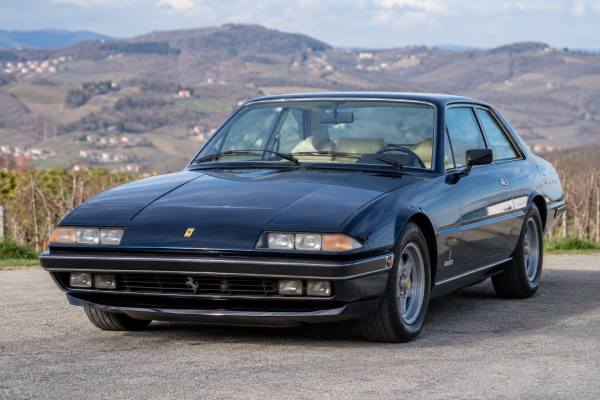
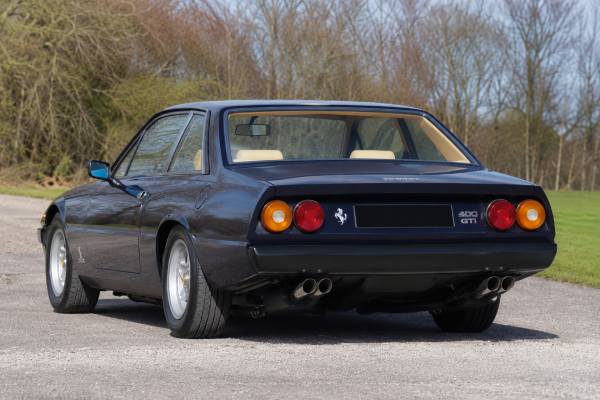
The Ferrari 400 GTi, chassis type F 101 DL 110 with the F 101 D 010 4.8-liter V12, is the fuel-injected manual version of Ferrari’s long-running front-engine 2+2 grand tourer. Built from late 1979 through the early 1980s in its original 310 hp form, it sits between the carbureted 400 GT and the later revised 400i/412 cars. It kept the formal Pininfarina body, full four-seat cabin, five-speed manual gearbox, and traditional front-mounted Ferrari V12 layout, but replaced six Weber carburetors with Bosch K-Jetronic mechanical injection.
That change is why the 400 GTi still attracts a very specific kind of buyer. It is not the most aggressive Ferrari of its era, and it has never carried the same easy glamour as a Berlinetta Boxer, Daytona, or 308 GTB. Its appeal is different: a discreet, hand-built V12 Ferrari with room for four, long-distance comfort, a manual gearbox, and a design that has aged into understated elegance. For collectors, the important questions are originality, corrosion, service history, correct mechanical injection setup, and whether the car is a genuine manual GTi rather than an automatic or converted example.
Quick Take
The Ferrari 400 GTi is strongest as a refined V12 grand tourer with rare manual-transmission appeal, formal Pininfarina styling, and a traditional tubular-steel Ferrari chassis. Its Bosch-injected 4.8-liter V12 is smoother and more emissions-conscious than the earlier carbureted unit, but it also gives away some sharpness and power compared with the 400 GT. The main caution is ownership cost: neglected examples can be expensive to revive, especially around fuel injection, cooling, suspension, brakes, corrosion, interior trim, and documentation. The best buys are original, well-maintained, matching-number cars with clear provenance, correct body details, and evidence of specialist care.
Table of Contents
- History and Significance
- Engine, Chassis, and Specifications
- Production, Variants, and Options
- Design, Engineering, and Special Features
- Driving Experience and Performance
- Reliability, Maintenance, and Restoration
- Market Value and Buying Guide
History and Significance
The 400 GTi matters because it represents Ferrari’s mature front-engine V12 grand touring tradition at a time when the brand’s image was increasingly shaped by mid-engine sports cars. It was a luxury 2+2 built for distance, speed, and discretion rather than visual drama.
The model line began with the 365 GT4 2+2 of 1972, a sharply creased Pininfarina coupe that replaced the softer 365 GT 2+2. Ferrari then developed the idea into the 400 GT and 400 Automatic in 1976. The 400 brought a larger 4.8-liter version of the Colombo-derived V12 and, in automatic form, became the first Ferrari available with an automatic transmission. The manual car remained the more traditional enthusiast’s choice.
By late 1979, Ferrari updated the 400 with Bosch K-Jetronic fuel injection. The manual car became the 400 GTi, while the automatic became the 400 Automatic i. The fuel-injected cars were cleaner and easier to set up for emissions demands, but the factory output dropped to 310 hp from the 340 hp of the carbureted 400 GT. The trade was typical of the period: cleaner running and broader usability, at the cost of some peak power and the richer induction character of six sidedraft Webers.
The 400 GTi also sits in an interesting historical gap. It followed the Daytona-era front-engine V12 cars but arrived before the later 456 GT revived Ferrari’s idea of the modern front-engine V12 2+2 in the 1990s. In between, the 400i and 412 carried the flag for buyers who wanted a Ferrari for business trips, continental touring, and family use rather than track days or weekend posing.
Collectors now view the early 310 hp 400 GTi with more respect than it often received when it was merely an aging used Ferrari. Its three-box shape has become cleaner with time, the manual gearbox is genuinely desirable, and the car offers a rare combination of V12 sound, four-seat practicality, hand-built construction, and relatively low production volume.
Its significance is not based on racing success. The 400 GTi was not a homologation special, and it has little direct motorsport relevance. Its importance lies in Ferrari road-car history: it was one of the last old-school, hand-built, front-engine V12 grand tourers before electronics, modern safety expectations, and higher-volume processes changed the character of luxury performance cars.
Today, the 400 GTi appeals to two overlapping groups. Enthusiasts appreciate its long bonnet, manual transmission, and mechanical feel. Collectors look for rare, correct examples with factory colors, original trim, matching drivetrain components, and full records. Both groups need to understand that buying one is less about chasing a bargain Ferrari and more about choosing the right car before the wrong car becomes ruinously expensive.
Engine, Chassis, and Specifications
The 400 GTi uses a front-mounted 4.8-liter naturally aspirated V12, a five-speed manual gearbox, rear-wheel drive, and a tubular steel chassis. Its specification is classic Ferrari grand touring hardware, but the Bosch K-Jetronic injection gives it a different character from the earlier carbureted 400 GT.
| Item | Specification |
|---|---|
| Engine code | F 101 D 010 |
| Layout | Front longitudinal 60-degree V12 |
| Displacement | 4,823.16 cc |
| Bore x stroke | 81 mm x 78 mm |
| Compression ratio | 8.8:1 |
| Valve gear | Twin overhead camshafts per bank, two valves per cylinder |
| Fuel system | Bosch K-Jetronic mechanical fuel injection |
| Lubrication | Wet sump |
| Factory output | 310 hp at 6,500 rpm |
The engine is part of Ferrari’s long line of road-going V12s descended from earlier Colombo architecture, though enlarged and adapted over decades. In the 400 GTi, the engine is less highly strung than a two-seat Ferrari sports car engine. It was meant to pull a large luxury coupe at high cruising speeds with smoothness and authority.
The key mechanical change from the earlier 400 GT is the move from carburetors to fuel injection. Bosch K-Jetronic is a continuous mechanical injection system. It does not work like modern electronic injection, and it does not tune itself. When clean, sealed, and correctly adjusted, it can be reliable and smooth. When old fuel, air leaks, tired injectors, worn fuel distributors, or poor setup enter the picture, it can cause hard starting, uneven idle, flat spots, and poor hot running.
| Area | Specification |
|---|---|
| Chassis type | F 101 DL 110 |
| Structure | Tubular steel chassis with steel bodywork |
| Body style | Two-door 2+2 coupe |
| Transmission | Five-speed manual plus reverse |
| Drive | Rear-wheel drive |
| Front suspension | Independent unequal-length wishbones, coil springs, telescopic dampers, anti-roll bar |
| Rear suspension | Independent unequal-length wishbones with self-levelling system, coil springs, telescopic dampers, anti-roll bar |
| Steering | Power-assisted recirculating ball |
| Brakes | Four-wheel disc brakes |
| Fuel capacity | 120 liters |
The suspension layout is more sophisticated than a casual glance at the formal body might suggest. Independent suspension at all four corners gives the 400 GTi real grand-touring ability, while the self-levelling rear setup helps the car handle passengers and luggage. That system is also an ownership consideration because old hydraulic components, dampers, accumulators, and conversions need careful inspection.
| Item | Figure |
|---|---|
| Length | 4,810 mm |
| Width | 1,798 mm |
| Height | 1,314 mm |
| Wheelbase | 2,700 mm |
| Front track | 1,470 mm |
| Rear track | 1,500 mm |
| Dry weight | About 1,830 kg |
| Top speed | About 245 km/h |
| Standing 400 m | About 15.8 seconds |
| Standing 1,000 m | About 27.9 seconds |
The numbers show the car’s purpose clearly. A 400 GTi is not light, and it does not have the explosive feel of a mid-engine Ferrari. It is a fast, relaxed, high-speed coupe. Its long gearing, V12 smoothness, and weight make more sense on open roads than in tight city traffic.
Production, Variants, and Options
The manual 400 GTi is the rarer version of the fuel-injected 400i family. Across 400i production, the automatic was built in much higher numbers, while the manual GTi accounted for roughly one-third of total output.
The 400i range included two main versions:
- 400 GTi: five-speed manual, chassis type F 101 DL 110, engine type F 101 D 010.
- 400 Automatic i: three-speed automatic, chassis type F 101 DL 170, engine type F 101 D 070.
The manual gearbox is a major value factor today. During the car’s new-car life, the automatic suited the luxury GT mission and appealed to many buyers. In the modern collector market, the five-speed manual is usually more desirable because it gives the driver a more direct connection to the V12 and is more consistent with Ferrari’s traditional enthusiast identity.
The 400 GTi also needs to be understood in relation to its surrounding models. The 365 GT4 2+2 introduced the basic body shape and chassis concept. The 400 GT increased displacement to 4.8 liters and offered manual or automatic transmission. The 400 GTi added injection. The later 400i updates of late 1982 brought revised engine details, modestly increased power, interior updates, exterior changes, and metric wheels. The 412 then arrived in 1985 with a larger 4.9-liter engine and further refinements.
For the specific 1979–1982 310 hp GTi covered here, the important identifiers are the injected V12, the manual gearbox, the “i” badging, and the early exterior appearance that remains close to the carbureted 400. Early cars did not yet have the later exposed rectangular front fog lamps, body-color rear panel, revised interior switchgear, or metric TRX wheel package associated with later 400i updates.
Identification details that matter
A buyer should confirm identity through chassis number, engine number, factory records, and physical inspection rather than relying only on badging. Important checks include:
- correct F 101 DL 110 chassis-type identity for a manual GTi
- correct F 101 D 010 engine type
- original five-speed manual layout
- evidence that the car is not an automatic converted to manual
- correct early 400i trim details for the build period
- matching body, engine, gearbox, and documentation where records allow
- consistency between factory colors, interior trim, and current presentation
Ferrari documentation can make a large difference. A car with original books, service records, warranty documentation, tool roll, jack, spare wheel, period registration documents, and specialist invoices will usually be easier to value and easier to sell. Ferrari Classiche certification may also matter for top-tier examples, especially if the car is unusually original or has a desirable color combination.
Colors, interiors, and special-order appeal
The 400 GTi was a luxury Ferrari, so many cars were ordered in restrained colors rather than bright racing shades. Dark blue, silver, grey, black, brown, and deep metallic tones suit the design particularly well. Red cars exist, but the shape often looks more natural in formal GT colors.
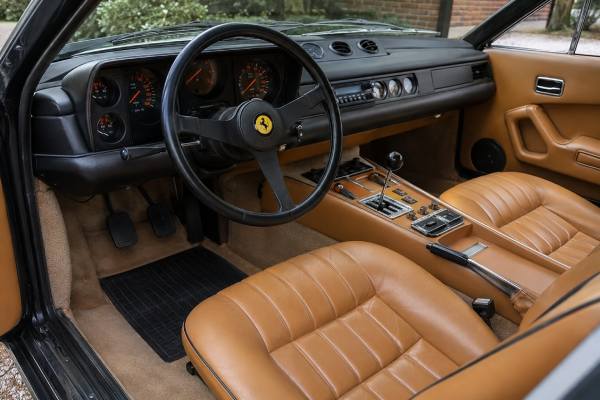
Interiors were typically leather, with wood trim and a comfort-focused layout. Condition is crucial because retrimming a 400 GTi properly is not the same as tidying a normal used car. Correct leather grain, stitching pattern, carpets, switchgear, veneers, and seat shape all matter. A beautiful new interior in the wrong materials can reduce collector appeal, while a lightly worn original cabin can be highly attractive if it has aged evenly.
Factory options and special requests can add interest, but originality remains more important than novelty. Unusual colors, right-hand drive specification, early delivery history, or celebrity ownership can help, but only if supported by documentation.
Design, Engineering, and Special Features
The 400 GTi is distinctive because it hides serious Ferrari V12 engineering under one of Pininfarina’s most restrained bodies. It is a sharp-edged luxury coupe, not a wedge supercar, and that restraint is central to its identity.
The design was developed from the 365 GT4 2+2 shape created by Leonardo Fioravanti at Pininfarina. Its long bonnet, upright glasshouse, clean flanks, and defined shoulder line give it a formal, almost architectural look. Compared with curvier earlier Ferraris, it looks modernist and reserved. Compared with the mid-engine cars of the same era, it looks mature and discreet.
The body is a classic three-box coupe. The bonnet is long because the V12 sits ahead of the cabin. The passenger compartment is set back, and the rear deck is broad enough to support usable luggage space. The car’s proportions communicate distance travel rather than track aggression.
One of the most appealing details is the balance between simplicity and richness. The 400 GTi does not rely on scoops, wings, or dramatic vents. Its interest comes from proportion, panel definition, slim pillars, quad headlamps, a low front intake, and the way the shoulder line divides the body visually. The early injected cars remain especially clean because they retain much of the carbureted 400’s exterior treatment.
Engineering choices also reflect the car’s mission. The engine is mounted at the front, the gearbox is attached in the conventional position, and power goes to the rear wheels. This is not a transaxle Ferrari. The layout gives the car a familiar grand-touring feel, with predictable responses and good stability.
The cabin is a large part of the experience. A 400 GTi is a real 2+2 by Ferrari standards, not just a two-seater with token rear cushions. Adults will not mistake the rear seats for limousine accommodation, but the car is far more usable than most exotic coupes. The dashboard, leather, wood, air conditioning, power windows, and broad seats underline that this was an expensive, civilized Ferrari when new.
Why the fuel injection changed the character
The switch to Bosch K-Jetronic gave the 400 GTi a smoother, more controlled personality. The earlier carbureted 400 GT has more mechanical romance and a stronger factory power figure, but the injected car suits repeated use better when properly maintained.
K-Jetronic does not erase the V12 character. The car still has a complex exhaust note, a long sweep through the rev range, and the refined pulse that makes a twelve-cylinder Ferrari special. What changes is the edge. The injected car feels more polished and less flamboyant, which fits the 400 GTi’s discreet character.
Coachbuilt variations and conversions
Several outside coachbuilders created conversions based on the 400 series, including soft-top and special-body interpretations. These cars can be fascinating, but they should be treated separately from a standard 400 GTi coupe. A conversion may have novelty value, but it also raises questions about structural quality, weather sealing, documentation, and market depth.
For most collectors, the standard Pininfarina coupe is the safer and more authentic choice. It represents the factory design intent and is easier to judge against known specifications.
Driving Experience and Performance
A healthy 400 GTi drives like a fast, heavy, refined V12 grand tourer with a surprisingly involving manual gearbox. It is at its best on open roads where the engine can stretch, the chassis can settle, and the long-legged character makes sense.
The first impression is size. This is a long, wide car by classic Ferrari standards, and its weight is always present. The steering is assisted, the seating position is more upright than in a mid-engine Ferrari, and visibility is generally better than the low exotic silhouette might suggest. It feels like a high-end touring coupe rather than a small sports car.
The V12 is the main event. It is smooth from low revs, pulls cleanly when set up correctly, and becomes more urgent as the revs rise. Because the car weighs around 1,830 kg dry, it does not leap forward like a lighter Berlinetta. Instead, it gathers speed with a deep, continuous push. That makes it deceptively quick at road speeds.
The five-speed manual gearbox changes the whole personality. In an automatic 400i, the car leans heavily into luxury. In the GTi, the driver has more control over the engine’s rhythm. The gearshift should feel mechanical and deliberate rather than light or modern. Clutch weight, linkage condition, engine mounts, and gearbox health all affect the driving impression, so a poor example may feel far less special than a properly sorted car.
Steering is not razor-sharp, but it should be stable and confidence-inspiring. The car was designed for fast cross-country work, not tight hairpins. In corners, it rewards smooth inputs. Push too hard and the mass becomes obvious, but drive it with flow and it feels composed.
Ride quality is one of the model’s strengths when the suspension is correct. The long wheelbase, independent suspension, and GT tuning allow it to cover rougher roads with more comfort than a low two-seat Ferrari. However, old dampers, tired bushings, incorrect tires, or a poorly converted rear self-levelling system can make the car feel loose, floaty, or harsh.
The brakes are four-wheel discs and were suitable for the period, but expectations must be realistic. They do not feel like modern carbon-ceramic brakes, and repeated hard use in a heavy classic GT will expose age, pad choice, fluid condition, and cooling limitations. A buyer should expect firm, straight, progressive braking, not modern emergency-stop behavior.
City, highway, and mountain-road use
In town, the 400 GTi can feel large and warm. The engine bay is crowded, the clutch may be heavy in traffic, and older cooling systems need to be in excellent condition. Air conditioning performance also depends heavily on system health and upgrades.
On the highway, the car comes alive. The V12 is smooth, the gearing suits sustained speed, and the cabin feels more relaxed than many classic exotics. This is the environment Ferrari built it for.
On mountain roads, the GTi can be enjoyable if the driver respects its size. It is not a point-and-shoot sports car. The best approach is to brake early, settle the front end, use the torque, and let the V12 pull cleanly between bends.
Reliability, Maintenance, and Restoration
The 400 GTi can be dependable when used regularly and maintained by specialists, but neglected cars can become expensive very quickly. The biggest risks are age, deferred maintenance, corrosion, fuel-system problems, cooling issues, suspension wear, and poor previous repairs.
This model is often misunderstood because purchase prices have historically been lower than those of more famous V12 Ferraris. Maintenance costs did not fall with the market value. A 400 GTi is still a hand-built twelve-cylinder Ferrari with complex systems, expensive parts, and labor-intensive access.
Mechanical issues to inspect
The V12 itself is strong when serviced properly, but a pre-purchase inspection should look beyond whether it starts and idles. Important areas include:
- compression and leak-down test results
- timing-chain noise or evidence of poor valve-train maintenance
- oil leaks from cam covers, front covers, sump, and seals
- coolant leaks, overheating, radiator condition, and fan operation
- condition of hoses, belts, ignition components, and engine mounts
- exhaust manifold cracks or leaks
- fuel smell, old fuel hoses, and tank condition
- hot-start behavior and cold-start enrichment
The Bosch K-Jetronic system deserves special attention. Problems can come from vacuum leaks, tired injectors, contaminated fuel distributors, weak pumps, bad accumulators, incorrect control pressure, and poor adjustment. A car that has been sitting for years may need extensive fuel-system work before it runs correctly.
The manual gearbox is desirable but should not be assumed healthy. Listen for bearing noise, worn synchros, clutch slip, driveline vibration, and differential noise. A proper road test from cold and hot is essential.
Suspension, brakes, and steering
The 400 GTi’s suspension has many wear points. Bushings, ball joints, dampers, springs, wheel bearings, and alignment all affect how the car feels. The rear self-levelling system is a particular inspection item. Some cars have been converted away from the original setup, which may be acceptable for a driver if done well, but it affects originality and should be reflected in the valuation.
Brake inspection should include calipers, flexible hoses, hard lines, master cylinder, servo, discs, pads, and fluid history. Old brake hoses can swell internally. Calipers can stick. A heavy classic Ferrari needs a braking system that is better than merely functional.
Steering should be checked for leaks, play, tired joints, and steering-box condition. Excess looseness can make the car feel much older than it should.
Body corrosion and restoration quality
Corrosion is one of the largest financial risks. The 400 GTi uses a steel body over a tubular chassis, and repairs can be costly if rust has spread beyond cosmetic panels. Inspect carefully around:
- sills and jacking points
- wheel arches and lower wings
- door bottoms and lower door skins
- floor sections
- boot floor and spare-wheel area
- windscreen and rear-window surrounds
- front valance and lower nose
- suspension mounting areas
- chassis tubes and outriggers
Paint quality also needs careful reading. Thick paint, uneven panel gaps, bubbling, overspray, mismatched trim, or poor shut lines may point to corrosion repair or accident damage. A shiny repaint is not automatically a good sign. On a collector Ferrari, the quality and documentation of the work matter as much as the result.
Interior and electrical systems
The interior can be expensive to restore correctly. Leather, carpets, wood trim, switches, instruments, air-conditioning controls, and seat mechanisms all need inspection. Replacement parts may be available through specialists, but correct original pieces can be costly.
Electrical issues are common in aging Italian GTs. Window lifts, lighting, fans, relays, gauges, ignition components, and added aftermarket accessories should all be checked. Poorly installed alarms, stereos, battery cutoffs, and later wiring repairs can create frustrating faults.
The best ownership approach is preventive. Use the car, keep the fluids fresh, maintain the fuel and cooling systems, and fix small faults before they cascade into larger problems.
Market Value and Buying Guide
The manual Ferrari 400 GTi has moved from overlooked oddity to respected collector GT, but it remains condition-sensitive. The right car can be a deeply satisfying V12 Ferrari; the wrong one can cost more to rescue than it is worth.
The current market usually values manual 400i cars above automatics, with originality, documentation, mileage, color, and condition creating wide spreads. Excellent manual cars can reach low-six-figure territory, while tired or poorly documented examples may look tempting at lower prices. That gap often disappears once mechanical and bodywork needs are priced honestly.
A buyer should avoid thinking of the 400 GTi as an inexpensive way into Ferrari ownership. It is better understood as a lower-profile V12 Ferrari with high-end maintenance demands. The entry price may be below more famous models, but engine, injection, gearbox, interior, and corrosion work can quickly exceed the savings.
What drives value
The most valuable 400 GTi examples usually have several of these qualities:
- genuine five-speed manual identity
- matching engine and chassis documentation
- original color combination or documented factory repaint
- complete books, tools, jack, and service records
- long-term specialist maintenance
- clean body with no hidden corrosion
- original interior in good condition
- correct early 400i details for the build year
- low ownership count or strong provenance
- rare but tasteful color specification
Mileage matters, but condition matters more. A very low-mileage car that has sat for decades may need fuel, brake, cooling, suspension, tire, and electrical work. A higher-mileage car with excellent records and regular use may be the better driver.
Inspection checklist for serious buyers
A proper pre-purchase inspection should be performed by a Ferrari specialist familiar with the 365 GT4 2+2, 400, 400i, and 412 family. The inspection should include:
| Area | What to verify |
|---|---|
| Identity | Chassis type, engine type, gearbox, factory records, and registration history |
| Engine | Compression, leak-down, leaks, cooling, ignition, valve-train noise, and service records |
| Fuel injection | Cold start, hot start, idle quality, fuel pressures, injectors, pumps, and hoses |
| Transmission | Synchros, clutch, driveline vibration, differential noise, and evidence of conversion |
| Body | Rust, accident damage, panel gaps, paint depth, glass surrounds, and lower structure |
| Suspension | Bushings, dampers, self-levelling system, alignment, steering play, and tire age |
| Brakes | Calipers, hoses, discs, master cylinder, servo, fluid condition, and straight stopping |
| Interior | Leather, wood, instruments, switches, air conditioning, windows, and originality |
| Documentation | Books, tools, service invoices, ownership trail, import records, and certification |
Cars to seek and cars to avoid
The best 400 GTi to buy is not always the cheapest or the most cosmetically perfect. A good target is a structurally sound, regularly used, documented car with correct mechanical identity and no major hidden rust. Light patina is acceptable, especially if original. A car that drives properly and has had fuel, cooling, brake, and suspension work done by a known specialist is often worth paying more for.
Be cautious with cars that have been stored for long periods, imported with unclear paperwork, repainted without photos, converted from automatic to manual, fitted with incorrect interiors, or advertised with vague claims such as “just needs tuning.” On a Bosch-injected V12 Ferrari, “just needs tuning” can mean a major fuel-system rehabilitation.
Also be careful with restored cars that lack invoices or photographic evidence. A restoration can add value only if it was done correctly. Poor body repairs, incorrect trim, non-original colors, and improvised mechanical fixes can reduce both enjoyment and resale strength.
Long-term collectability
The 400 GTi is unlikely to become a mainstream poster-car Ferrari, and that is part of its charm. Its long-term collectability is tied to scarcity, V12 appeal, manual transmission demand, and growing appreciation for understated 1970s and early 1980s grand tourers.
The strongest future examples will be authentic, documented, and usable. Collectors are becoming more careful about originality, and restoration costs continue to rise. That favors cars that have survived well and have not been heavily modified.
For the right owner, the 400 GTi offers something rare: a manual V12 Ferrari that can carry passengers, luggage, and speed with quiet confidence. It asks for informed buying and committed maintenance, but it rewards with a character that feels increasingly distinct in a world of louder, sharper, and more obvious performance cars.
References
- Ferrari 400 GTi (1979) – Ferrari.com 1979 (Manufacturer Specifications)
- Ferrari 400 GTi: Ferrari History 1979 (Manufacturer History)
- Ferrari 400 GTi Specifications 2025 (Specialist Specifications)
- Ferrari 400 GTi 1979 Parts & Schematics 2026 (Parts and Schematics)
- Ferrari 400i – Manual Market – CLASSIC.COM 2026 (Market Data)
Disclaimer
This article is for informational purposes only and is not a substitute for professional diagnosis, repair, valuation, or inspection. Specifications, torque values, service intervals, procedures, and correct parts can vary by VIN, market, production date, and equipment, so owners and buyers should verify all details against official Ferrari service documentation and a qualified marque specialist.
If you found this guide useful, please consider sharing it on Facebook, X/Twitter, or your preferred car community to support our work.