
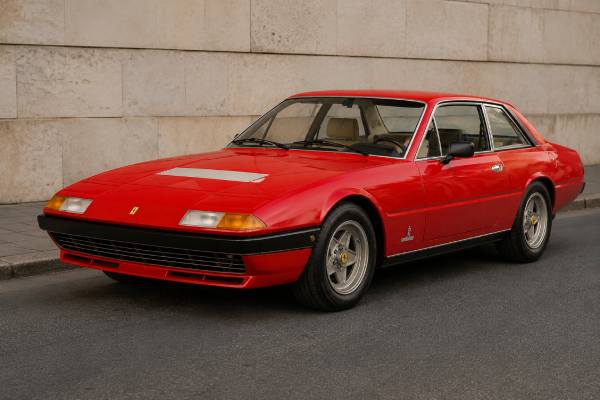
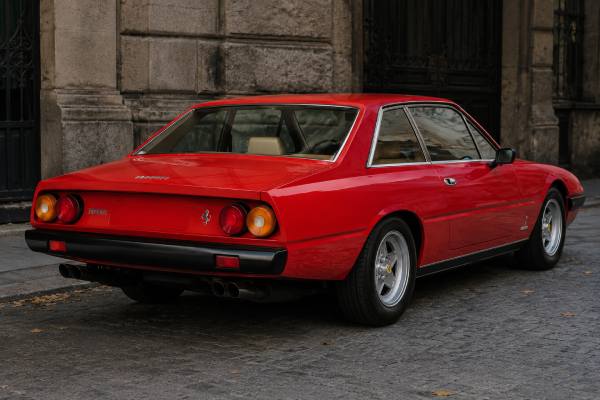
The Ferrari 400 Automatic i covered here is the late fuel-injected 4.8-litre V12 grand tourer, built in its updated 1982–1985 form with the F 101 D 070 engine and a factory three-speed automatic transmission. It sits in the long-running Ferrari 365 GT4 2+2, 400, and 412 family, a line of front-engined 2+2 coupés designed for high-speed distance work rather than track-day theatre.
Its appeal is different from a mid-engined Ferrari of the same period. The 400i Automatic is formal, low, long, and understated, with a Pininfarina body, a full leather cabin, a large V12 up front, and enough real cabin space to work as a proper grand tourer. The late 315 hp version is especially interesting because it combines the cleaner fuel-injected character of the 400i with the revised interior, exterior updates, and TRX-wheel-era specification that marked the final development before the Ferrari 412.
Quick Take
The late Ferrari 400 Automatic i is a refined V12 collector GT with quiet confidence, real four-seat usability, and a distinctive place as one of Ferrari’s earliest automatic grand tourers. Its strongest appeal is the combination of Pininfarina restraint, front-engine V12 character, and long-distance comfort, while its main caution is ownership cost: corrosion, ageing hydraulics, fuel-injection issues, neglected suspension, and incomplete documentation can turn an apparently affordable Ferrari into an expensive restoration. The best cars are original, well-documented, correctly specified, regularly serviced by specialists, and bought for condition rather than bargain price.
Table of Contents
- Late 400i Context and Significance
- V12 Specifications and Chassis Details
- Production, Variants and Factory Identity
- Pininfarina Design and Engineering Character
- Road Feel, Performance and Usability
- Maintenance, Restoration and Common Risks
- Market Values and Buyer Checks
Late 400i Context and Significance
The late 400 Automatic i matters because it shows Ferrari building a serious luxury GT at a time when most people remember the brand for sharp-edged mid-engined cars. It was not intended to replace a 308, Boxer, or later Testarossa; it was the discreet Ferrari for buyers who wanted V12 refinement, speed, and everyday usability in one formal coupé.
The family began with the 365 GT4 2+2 in the early 1970s. Ferrari then enlarged the engine to create the 400 series, offered both as a five-speed manual and as an automatic. That automatic option was historically important. It made the 400 the first series-production Ferrari available with an automatic transmission, aimed at customers who wanted a relaxed high-speed grand tourer rather than a harder-edged sports car.
The “i” in 400 Automatic i stands for injection. In 1979, Ferrari replaced the earlier Weber carburettors with Bosch K-Jetronic fuel injection. This change helped drivability and emissions compliance, though early injected cars gave up some peak output compared with the carburetted 400. The late update, usually associated with the 1982 model revision, brought output back up to the 315 PS range through engine and exhaust changes, along with visible interior and exterior refinements.
The car’s market position was unusual. It was expensive, large, and elegant, but it did not shout. In period, that worked for owners who wanted a Ferrari that could cross Europe without attracting the same attention as a bright red two-seat berlinetta. Today, that same character makes it appealing to collectors who like offbeat V12 Ferraris, restrained Pininfarina design, and usable classics.
It also has a complicated reputation. For years, the 400i Automatic sat near the lower end of the Ferrari value ladder. Some buyers saw the automatic gearbox and 2+2 layout as less desirable. Others recognized that it delivered a front-engine V12 Ferrari experience for much less than a Daytona, 365 GTC/4, or later manual 456. Values have improved, but condition still matters far more than headline rarity. A tired 400i can absorb restoration money quickly, while a properly preserved car has a quiet, grown-up appeal that feels more appreciated now than it did twenty years ago.
The late automatic version is especially relevant because it captures the most developed form of the 400i before the 412 arrived. It keeps the 4.8-litre engine, the long 2,700 mm wheelbase, the low glassy body, and the classic cockpit feel, but adds the updated trim and later running changes buyers often prefer.
V12 Specifications and Chassis Details
The core of the 400 Automatic i is a front-mounted 4,823 cc Ferrari V12 paired with a three-speed torque-converter automatic and rear-wheel drive. It is not a light car, but its specification is serious: independent suspension, four-wheel disc brakes, power steering, a limited-slip rear axle, and grand-touring fuel capacity.
| Item | Specification |
|---|---|
| Model | Ferrari 400 Automatic i |
| Covered years | Late 1982–1985 specification |
| Type reference | F 101 DL 170 |
| Engine code | F 101 D 070 |
| Engine layout | Front longitudinal 60-degree V12 |
| Displacement | 4,823.16 cc |
| Bore x stroke | 81 mm x 78 mm |
| Valvetrain | Four overhead camshafts, two valves per cylinder |
| Fuel system | Bosch K-Jetronic mechanical fuel injection |
| Peak output | 315 PS, commonly rounded as 315 hp |
| Transmission | Three-speed automatic with torque converter |
| Drivetrain | Rear-wheel drive with limited-slip differential |
| Body style | Two-door 2+2 coupé |
| Wheelbase | 2,700 mm |
| Length | 4,810 mm |
| Width | 1,798 mm |
| Height | 1,314 mm |
| Fuel capacity | 120 litres |
| Top speed | About 240 km/h |
The engine belongs to Ferrari’s long line of Colombo-derived V12s, but in this application it is tuned for torque, smoothness, and long-distance flexibility rather than racing sharpness. The 4.8-litre displacement came from the 400 series’ longer stroke compared with the earlier 365 GT4 2+2. The automatic version’s F 101 D 070 engine identity is important for buyers because it helps confirm that the car still has the correct type of engine for its transmission.
Bosch K-Jetronic is a continuous mechanical injection system. It is simpler than later electronic injection in some ways, but it is not crude. Correct fuel pressure, clean injectors, sound warm-up components, and proper vacuum sealing are essential. A 400i that starts cleanly cold, idles evenly, restarts hot without drama, and pulls smoothly through the rev range is usually a much better sign than one that merely looks shiny.
The chassis follows the classic Ferrari grand-touring formula: a tubular steel structure, front engine, rear drive, independent suspension, and a long wheelbase. The body is steel, with Pininfarina construction and Ferrari final assembly. Suspension is by wishbones, coil springs, dampers, and anti-roll bars, with self-levelling rear hardware on many cars. The brakes are discs all round, and the steering is power assisted, which suits the car’s size and intended use.
Late cars may be found with metric Michelin TRX wheels and tyres, commonly 240/55 VR 415, while earlier 400i examples used 15-inch wheel and tyre specifications. This matters because TRX tyres are specialist items and cost more than ordinary modern tyres. They also affect the way the car rides and steers, so wheel changes should be examined carefully for originality, fitment, and clearance.
Production, Variants and Factory Identity
The 400i was built in both manual and automatic forms, but the automatic was the more common version. For a buyer, the key task is not simply knowing the production number; it is confirming that the car’s chassis, engine, gearbox, body details, trim, and documents all make sense together.
Production figures vary slightly between sources because of how late cars, market registrations, prototypes, and factory records are counted. A practical working view is that Ferrari built roughly 1,300 400i cars in total, with the automatic accounting for about two-thirds of production. The automatic total is often quoted in the high 870s to low 880s, while the manual total is usually quoted a little above 420.
| Area | What to check | Why it matters |
|---|---|---|
| Model identity | 400 Automatic i, not earlier carburetted 400 Automatic | Confirms fuel-injected specification |
| Engine type | F 101 D 070 for automatic cars | Supports correct drivetrain identity |
| Late update features | Revised interior, trim, mirrors, lighting, wheel specification | Helps separate late cars from earlier 400i examples |
| Transmission | Factory three-speed automatic installation | Conversions or incorrect parts can hurt value |
| Documentation | Books, service records, import papers, ownership history | Critical for provenance and resale |
| Market history | Original delivery market and later import or federalization work | Affects compliance, parts, and value |
The late 1982 revision is the most important version change within the injected 400i line. It brought updated engine tuning, improved output, revised interior treatment, new switchgear details, exterior changes around the grille and lighting, and wheel/tyre changes on later examples. Because many 400i cars were maintained, repainted, re-trimmed, or modified over decades, a buyer should compare the car against factory-period details rather than assuming every visible feature is original.
Factory options and special-order choices were part of the car’s appeal. Paint and leather combinations could be restrained or quite bold. Many cars were ordered in sober metallics, dark blues, silvers, greys, blacks, and elegant interior tones rather than the red-over-tan combination people associate with other Ferraris. Air conditioning, electric windows, leather trim, and power steering fit the luxury-GT role.
Documentation is especially valuable. Ideal paperwork includes the original books, warranty or service booklet, stamped maintenance history, old invoices, ownership-chain records, registration documents, tool kit records, and any Ferrari Classiche or marque-specialist inspection material. Matching-numbers status matters, but the quality of evidence matters too. A verbal claim is not the same as records, plate data, engine stamping, gearbox details, and expert inspection lining up.
Market-specific history also matters. The 400i was not officially sold in the United States when new, but many cars arrived later as grey imports. Some were federalized with side markers, lighting changes, emissions work, or other alterations. These changes do not automatically make a car bad, but poor federalization work, missing documentation, or later reversal of compliance equipment should be reviewed carefully.
Pininfarina Design and Engineering Character
The 400i’s character comes from its combination of sharp Pininfarina restraint and traditional Ferrari V12 engineering. It is visually simple at first glance, but its proportions, low beltline, slim pillars, and long bonnet give it a presence that grows with time.
The design came from the same broad design era that moved Ferrari away from soft 1960s curves and toward cleaner, more architectural forms. The body is a crisp three-box coupé, not a fastback. The bonnet is long, the cabin sits rearward, and the glass area is generous. Pop-up headlights keep the nose low, while the side profile is calm and almost formal. It does not rely on wings, ducts, or exaggerated sculpture.
That restraint is the point. A 400i looks more like a high-speed Italian executive express than a poster supercar. The long body gives space for real rear seats, a usable boot, and a relaxed cabin. The low waistline and slim glasshouse also help visibility, which is one reason these cars can feel less intimidating than their size suggests once on the move.
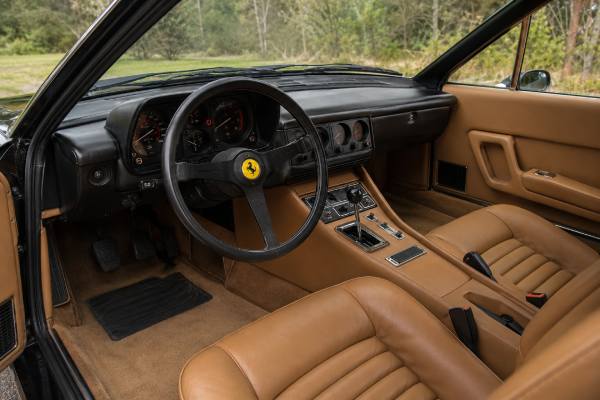
Inside, the 400i is very much a luxury Ferrari of its period. The cabin uses leather, large seats, clear instruments, and a broad dashboard. Late cars gained revised interior details, including updated trim and switchgear. The automatic selector reinforces the car’s intended role: this is a Ferrari for covering distance quickly and comfortably, not for chasing lap times.
The engineering is equally revealing. The V12 sits ahead of the cabin, the automatic transmission takes the edge off low-speed driving, and the chassis is tuned for stability. The 120-litre fuel capacity suits long-distance travel. The suspension is independent, and the rear self-levelling system was intended to keep the car composed when loaded with passengers and luggage.
There are unusual ownership consequences to this engineering. The self-levelling rear suspension is a valuable original feature, but it can be expensive to restore properly. The TRX wheel and tyre package is period-correct on many late cars, but tyre choice is limited. The fuel-injection system can be very reliable when fresh, but neglected cars often suffer from hard starting, stale fuel deposits, incorrect pressures, and vacuum leaks. In other words, the details that make the 400i sophisticated are often the same details that punish cheap maintenance.
The exhaust and induction sound are also part of the car’s appeal. A healthy 400i is smoother and more muted than a carburetted Ferrari V12 at low speed, but it still has a layered mechanical sound as revs rise. The automatic means the soundtrack builds differently than in a gated manual car. It is more turbine-like, less interactive, and very much in keeping with the car’s luxury-GT mission.
Road Feel, Performance and Usability
A late 400 Automatic i feels like a fast, heavy, refined V12 grand tourer, not like a sports car wearing a large body. Its best driving moments come on open roads, where the engine, long wheelbase, and stable chassis can settle into the kind of speed and smoothness the car was built to deliver.
Acceleration is strong rather than explosive. The 315 PS V12 has enough power to move the car with authority, but the three-speed automatic softens the initial response. Compared with a manual Ferrari, there is less sense of mechanical involvement. Compared with many luxury coupés of its day, the engine feels special, smooth, and cultured. A well-sorted car pulls cleanly, shifts without harshness, and cruises at high speed with a relaxed confidence that explains its original buyer profile.
The throttle response depends heavily on tune. Bosch K-Jetronic does not hide poor setup. A healthy car starts properly, settles to a stable idle, and responds cleanly without flat spots. A tired one can feel lazy, smell rich, hesitate, or suffer from awkward hot starts. This is why a test drive from cold is so important.
The steering is assisted and relatively calm. It is not fingertip-light in the modern sense, but it does not have the rawness of a smaller older Ferrari. Feedback is best judged through smooth road placement rather than sharp turn-in. The long wheelbase gives stability, and the car prefers flowing inputs. On narrow roads, it feels wide and valuable. On a fast A-road, autostrada, or open highway, it makes much more sense.
Ride quality is one of the car’s strengths when the suspension is correct. The 400i has enough mass and wheelbase to absorb distance well, but old dampers, tired bushings, sagging rear levelling hardware, incorrect tyres, or poor alignment can ruin the feel. Cars on original-style TRX tyres may ride and steer differently from cars converted to more conventional wheels, so buyers should consider both originality and driving feel.
Braking performance is adequate for the car’s period and purpose, but expectations must be realistic. It has four-wheel discs, yet it does not have modern ABS, stability control, or contemporary brake modulation. Old hoses, sticky calipers, aged fluid, and worn discs can make a 400i feel far worse than it should. A proper brake overhaul is not glamorous, but it is central to safe ownership.
Usability is better than many classic Ferraris. The cabin is spacious for the era, visibility is good, the boot is useful, and the automatic transmission makes town driving less demanding. The tradeoff is heat, fuel use, size, and the need to keep all comfort systems working. Air conditioning, window motors, lighting, fans, and switches should be checked carefully because a 400i with half its luxury equipment inoperative loses much of its purpose.
Maintenance, Restoration and Common Risks
The 400 Automatic i is not unreliable when properly maintained, but it is very sensitive to neglect. The cars that become frighteningly expensive are usually the ones bought because they seemed cheap, then found to need corrosion repair, hydraulic work, fuel-system rebuilding, suspension overhaul, trim restoration, and electrical sorting at the same time.
The engine is robust in basic architecture, but age matters. Watch for oil leaks, coolant leaks, smoke, overheating, uneven idle, timing-chain noise, poor compression, tired ignition components, and fuel-injection faults. A specialist should check cold start, warm idle, hot restart, charging voltage, coolant temperature control, exhaust condition, and evidence of long-term storage.
Fuel-system condition is a major issue. Old tanks, degraded hoses, dirty filters, weak pumps, sticking metering components, and varnished injectors can make the car run poorly. Because K-Jetronic depends on correct pressure and clean flow, random parts replacement is not the answer. Proper diagnosis is.
The automatic gearbox is generally durable, but it still needs inspection. Shift quality, fluid condition, leaks, kickdown operation, cooling lines, mounts, and driveline vibration all matter. The torque converter should take up drive smoothly. Any harsh engagement, slipping, delayed drive selection, or contaminated fluid needs investigation before purchase.
The cooling system deserves special attention. A large V12 in a tightly packaged nose needs clean radiators, working fans, sound hoses, good thermostat operation, and correct coolant. Overheating can become expensive quickly. Cars that sit unused often need more cooling attention than cars driven regularly.
Corrosion is one of the biggest buying risks. The 400i is a steel-bodied coachbuilt car, and rust repair can exceed the value difference between a poor car and a good one. Inspect:
- Sills and jacking points
- Floor edges and footwells
- Wheel arches and lower wings
- Door bottoms and boot floor
- Windscreen and rear-window surrounds
- Front valance and lower nose
- Suspension mounting areas
- Battery area and inner structure
Paint condition is not enough. A shiny 400i can hide old filler, poor metalwork, and trapped corrosion. Panel gaps should be consistent, pop-up headlights should sit correctly, and doors should close cleanly. Evidence of accident repair around the nose, chassis rails, and suspension pickup points should be treated seriously.
Suspension and steering work can also be costly. The rear self-levelling system, dampers, bushings, ball joints, wheel bearings, steering rack, and alignment should all be checked. Some cars have been modified to remove or bypass original self-levelling parts. That may make maintenance easier, but it affects originality and should be reflected in value.
Interior restoration is another hidden cost. Leather, dashboard trim, switchgear, carpets, headlining, instruments, seat mechanisms, and air-conditioning controls can be expensive to make right. A complete original interior with honest patina is usually preferable to a poorly retrimmed cabin. Missing tool kits, books, jack, and correct small items also affect collector appeal.
Market Values and Buyer Checks
The 400 Automatic i remains one of the more attainable ways into a classic front-engine Ferrari V12, but it should never be treated as a cheap Ferrari. The purchase price is only one part of the decision; condition, documentation, originality, and immediate maintenance needs decide whether the car is a pleasure or a financial trap.
As of the current collector market, automatic 400i values generally sit below equivalent manual cars. Good automatic examples often occupy the lower-to-mid five-figure range in major currencies, with excellent, low-mileage, well-documented cars above that and needy projects below it. The spread is wide because the cost of putting a poor car right is so high.
The main value drivers are:
- Original engine and correct automatic specification
- Strong service history from known Ferrari or classic specialists
- Solid body with no hidden structural corrosion
- Correct late 400i trim, lighting, mirrors, wheels, and interior details
- Desirable original colour combination
- Complete books, tools, jack, and records
- Evidence of recent fuel, cooling, brake, tyre, and suspension work
- Clean import and registration history
- High-quality paintwork with photographic restoration proof if restored
- No poorly executed conversions or cosmetic shortcuts
Buy the best car you can justify, not the cheapest car you can find. A low-priced 400i with weak paint, tired interior, poor starting, unknown fuel-system condition, old tyres, and no records may need more money than a well-bought example that costs significantly more up front.
Pre-purchase inspection priorities
A serious inspection should include more than a short drive and a look underneath. Ask a Ferrari specialist familiar with the 365/400/412 family to check the car on a lift, from cold, and with enough time to inspect records.
| Priority | Inspection area | Warning sign |
|---|---|---|
| High | Body structure | Rust bubbles, thick filler, weak jacking points, poor repairs |
| High | Engine health | Smoke, overheating, uneven compression, oil/coolant mixing |
| High | Fuel injection | Hard starting, rough idle, rich smell, hesitation |
| High | Cooling system | Temperature creep, fan faults, old hoses, blocked radiator |
| Medium | Automatic transmission | Delayed engagement, slipping, leaks, harsh shifts |
| Medium | Rear suspension | Sagging stance, disabled self-levelling, leaking hydraulic parts |
| Medium | Interior and electrics | Dead switches, weak windows, non-working air conditioning |
| Medium | Wheels and tyres | Incorrect fitment, aged TRX tyres, mismatched wheel conversions |
| High | Documentation | No service records, unclear import papers, missing books |
The best examples are not necessarily concours cars. A lightly patinated, mechanically excellent 400i with original paint, records, working equipment, and known history can be more appealing than a freshly painted car with unknown metalwork. Conversely, a restored car can be excellent if the restoration is documented, correct, and performed by people who understand the model.
Avoid cars with vague ownership stories, missing engine-number evidence, long storage without recommissioning, cheap repaint work, non-working air conditioning, ignored fuel smells, and “minor” rust that has not been opened up. On a coachbuilt Ferrari, minor rust rarely remains minor once the trim comes off.
Long-term collectability looks positive but selective. The 400i Automatic is still more niche than a two-seat Ferrari, and manual cars will likely remain more valuable. Yet the automatic has its own identity: it is the version that best expresses the model’s luxury-GT purpose. Well-kept late cars with correct specification, elegant colours, and strong paperwork should continue to find buyers who value understated V12 Ferraris.
References
- Ferrari 400 Automatic i (1979) – Ferrari.com 1979 (Manufacturer Specifications)
- Ferrari 400 GTi (1979) – Ferrari.com 1979 (Manufacturer Model Archive)
- Ferrari 412 (1985) – Ferrari.com 1985 (Manufacturer Model Archive)
- Production neu.xlsx 2025 (Production Register)
- Ferrari 400i – Automatic Market 2026 (Market Data)
Disclaimer
This article is for informational purposes only and is not a substitute for professional diagnosis, repair, restoration, valuation, or inspection. Specifications, torque values, service intervals, procedures, and equipment can vary by VIN, market, production date, and individual vehicle history. Always verify details against official Ferrari service documentation and have any purchase or repair assessed by a qualified specialist.
Please share this article on Facebook, X/Twitter, or your preferred enthusiast community if it helped your research and you want to support our work.