
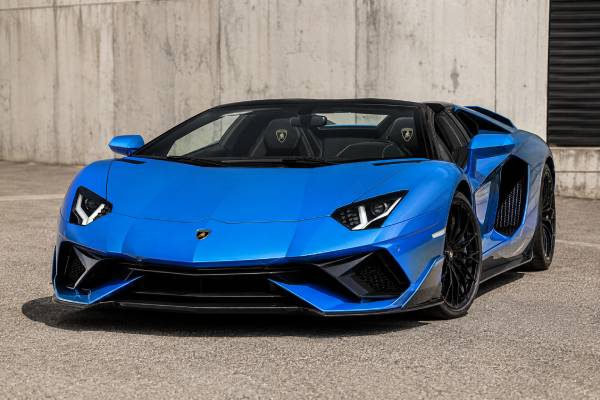
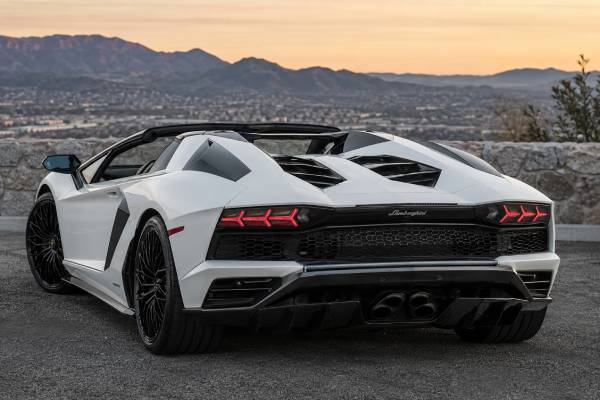
The Lamborghini Aventador LP 780-4 Ultimae Roadster is the final open-top Aventador and one of the clearest end-points of Lamborghini’s non-hybrid V12 flagship era. Built for 2021–2022 in a numbered run of 250 roadsters, it combines the Aventador S’s more refined road manners with the SVJ’s more powerful 6.5-liter L539 V12 tune. The result is a 780 CV, all-wheel-drive, carbon-monocoque roadster with scissor doors, removable roof panels, rear-wheel steering, magnetic dampers, carbon-ceramic brakes, and the dramatic single-clutch ISR gearbox that defines the Aventador driving character.
Collectors care because it is rare, naturally aspirated, visually extreme, and historically important. Owners care because condition, documentation, options, tire age, clutch health, carbon damage, and dealer service history can change the ownership experience and the car’s value by a large margin.
Table of Contents
- Why the Ultimae Roadster Matters
- L539 V12 Specs and Chassis Data
- Production Numbers, Versions, and Options
- Carbon Design, Aero, and Special Features
- How the Ultimae Roadster Drives
- Maintenance, Reliability, and Ownership Risks
- Market Values and Buying Checks
Why the Ultimae Roadster Matters
The Aventador Ultimae Roadster matters because it is the final production roadster version of Lamborghini’s long-running Aventador line and the last open Aventador built around the naturally aspirated L539 V12 without hybrid assistance. It sits at the end of a direct line that runs through the Miura, Countach, Diablo, Murciélago, and Aventador.
Lamborghini introduced the Aventador in 2011 as the Murciélago’s replacement. It was not just a restyle. It brought a carbon-fiber monocoque to Lamborghini’s regular V12 flagship, a new 6.5-liter V12 engine, a compact ISR automated manual gearbox, and a far sharper design language than the softer, heavier Murciélago. Over the next decade, the Aventador range expanded through the LP 700-4, Roadster, SuperVeloce, S, SVJ, and several limited derivatives.
The LP 780-4 Ultimae arrived in 2021 as the closing chapter. Lamborghini positioned it as a blend of two late Aventador personalities: the performance focus of the SVJ and the cleaner, more mature design and usability of the Aventador S. The Roadster added another layer of appeal because it kept the removable roof, the exposed-sky V12 soundtrack, and the visual theater that many buyers want from a Lamborghini flagship.
The name tells much of the story. “LP” means Longitudinale Posteriore, referring to the longitudinal rear-mid-mounted engine layout. “780” identifies output in metric horsepower, or CV. “4” means all-wheel drive. “Ultimae” signals the final version.
Its historical importance is stronger than normal limited-edition collectability. The model came just before Lamborghini moved into its hybrid V12 era with the Revuelto. That makes the Ultimae Roadster attractive to buyers who want the last expression of the Aventador formula: no electric torque-fill, no dual-clutch smoothness, and no softening of the car’s naturally aspirated character.
It is not the most track-focused Aventador. That title belongs more naturally to the SVJ, with its aggressive aero package and Nürburgring-focused identity. The Ultimae Roadster is better understood as the final road-going celebration version: fast enough to sit at the top of the Aventador line, rare enough to matter, and usable enough to cover real road miles without feeling like a track special wearing plates.
For collectors, the key appeal is a mix of scarcity and timing. Only 250 Roadsters were planned, and each carries the status of a numbered final-series model. For enthusiasts, the appeal is simpler: it gives the full Aventador experience in one of its most powerful and polished forms, with the roof removed and the V12 right behind the cabin.
L539 V12 Specs and Chassis Data
The Ultimae Roadster’s technical identity is built around the 6,498 cc L539 V12, a carbon-fiber monocoque, all-wheel drive, and the seven-speed ISR gearbox. The figures are extreme, but the layout matters just as much because this car is more mechanical and more theatrical than later hybrid Lamborghini flagships.
| Item | Lamborghini Aventador LP 780-4 Ultimae Roadster |
|---|---|
| Engine code | L539 |
| Engine layout | Rear-mid-mounted, longitudinal 60-degree V12 |
| Displacement | 6,498 cc |
| Induction | Naturally aspirated |
| Fuel system | Multi-point electronic injection |
| Maximum power | 780 CV / 574 kW at 8,500 rpm |
| Maximum torque | 720 Nm / 531 lb-ft at 6,750 rpm |
| Gearbox | 7-speed ISR automated single-clutch manual |
| Drive system | Electronically controlled all-wheel drive with Haldex coupling and rear mechanical self-locking differential |
The V12 is dry-sumped, which helps oil control during hard cornering and allows the engine to sit lower in the chassis than a conventional wet-sump design would allow. In Ultimae tune, the engine uses titanium intake valves and reaches its peak power high in the rev range. This is not a low-revving grand-touring V12. It asks to be revved, and the final part of the tachometer is where the car feels most alive.
| Item | Specification |
|---|---|
| Structure | Carbon-fiber monocoque with aluminum front and rear frames |
| Suspension | Pushrod suspension with magnetorheological dampers |
| Steering | Lamborghini Dynamic Steering with rear-wheel steering |
| Brakes | Carbon-ceramic discs with fixed multi-piston calipers |
| Front tires | 255/30 ZR20 |
| Rear tires | 355/25 ZR21 |
| Typical tire fitment | Pirelli P Zero Corsa or comparable Lamborghini-approved fitment |
The rear-wheel steering system is important because the Aventador is physically wide, low, and powerful. At lower speeds, the rear wheels steer opposite the fronts to help the car rotate and reduce the feeling of length. At higher speeds, they steer with the fronts to improve stability. That system, combined with adaptive damping and all-wheel drive, makes the Ultimae easier to place than early Aventadors.
| Item | Figure |
|---|---|
| 0–100 km/h | 2.9 seconds |
| Top speed | 355 km/h / 221 mph |
| Dry weight | About 1,600 kg / 3,527 lb |
| Wheelbase | 2,700 mm / 106.3 in |
| Length | 4,868 mm / 191.7 in |
| Width | 2,098 mm / 82.6 in |
| Height | 1,136 mm / 44.7 in |
| Fuel capacity | 85 liters / 22.5 US gallons |
| EPA fuel economy | 11 mpg combined, 9 city, 16 highway |
The numbers tell only part of the story. The Roadster is a heavier and more open car than the coupé, but the difference does not weaken its purpose. This is a 221 mph open V12 Lamborghini with a carbon tub and a removable roof. It is not a lightweight analog sports car; it is a big, complex, dramatic flagship built to deliver speed, sound, and presence at a level few open cars can match.
Production Numbers, Versions, and Options
The Ultimae was produced as a limited final series: 350 coupés and 250 roadsters. The Roadster is therefore the rarer body style, and that matters for collectors because open V12 Lamborghinis have a long history of commanding extra attention when mileage, color, and provenance are strong.
The Ultimae was not a single fixed specification. Lamborghini buyers could use Ad Personam customization to choose paint, upholstery, stitching, carbon-fiber trim, wheel finishes, brake-caliper colors, and other details. That makes two cars with the same model name very different in the market.
Coupe versus Roadster
The coupé is the lighter and slightly quicker version, with a quoted 0–100 km/h time of 2.8 seconds. The Roadster is slower by only a tenth on paper, but it brings the open-air experience and removable roof panels. For most collectors, the choice is not simply performance. It is about use and rarity.
The Roadster has removable hardtop panels rather than a folding roof. They must be removed and stored manually, which is less convenient than a power roof but better for weight, stiffness, and packaging. It also gives the car a more mechanical, old-school supercar feel. Buyers should make sure the roof panels, storage bags, seals, latches, and finish are all present and undamaged.
Factory colors and Ad Personam choices
Lamborghini offered a set of standard exterior colors and hundreds more through Ad Personam. Launch imagery showed dramatic two-tone themes, including blue tones on the Roadster and visible carbon-fiber roof elements. Many cars were ordered with expensive paint, contrast accents, black exterior packs, and carbon-fiber components.
Value usually rises when the specification is both rare and tasteful. A bold Lamborghini color can help, especially if it suits the model’s character. A dull resale-safe color can be easier to sell but may not create the same collector pull. Extremely personal combinations can be valuable to the right buyer but narrow the audience.
Important option and specification areas include:
- Exterior paint, especially Ad Personam colors and historically desirable Lamborghini shades.
- Gloss or exposed carbon-fiber roof panels and exterior carbon trim.
- Wheel design and finish, including 20-inch front and 21-inch rear forged wheels.
- Brake caliper color and carbon-ceramic brake condition.
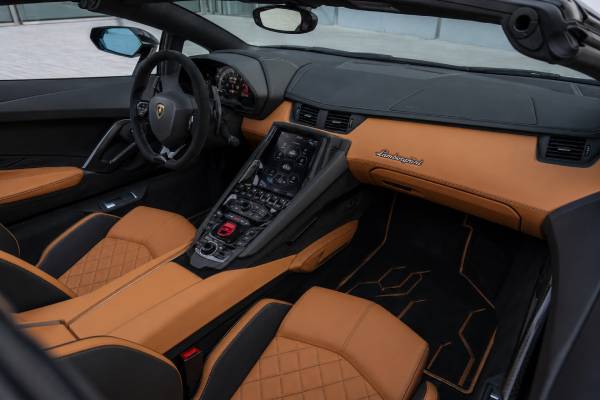
- Interior upholstery, contrast stitching, seat type, and Alcantara or leather choices.
- Carbon-fiber interior trim, door panels, and console details.
- Sensonum premium audio, front lift, parking cameras, and convenience equipment.
- Full documentation showing the original factory build.
Authenticity and documentation
Because many Ultimae Roadsters are low-mileage collector cars, paperwork carries unusual importance. A complete file should include the window sticker or original build sheet, books, service records, warranty documents, battery-maintainer equipment, roof-panel accessories, keys, car cover, and proof of regular annual maintenance.
A car with 300 miles but no service history is not automatically better than a car with 3,000 miles and careful records. These cars still need fluids, batteries, tires, inspections, and software updates. Long static storage can create its own problems, especially with tires, seals, batteries, lift systems, and electronic modules.
The safest collector-grade car is not merely the lowest-mileage one. It is the car with the right specification, clean history, complete accessories, dealer records, no paintwork surprises, no carbon damage, no overdue maintenance, and a clear chain of ownership.
Carbon Design, Aero, and Special Features
The Ultimae Roadster looks like an Aventador because it should: low, wide, angular, and theatrical. The important difference is that its design refines the Aventador S shape with final-series details and performance-focused cooling rather than turning it into a full SVJ-style track weapon.
The body sits over a carbon-fiber monocoque, which is the Aventador’s main engineering signature. The tub is strong, light for its size, and expensive to repair. Aluminum frames attach at the front and rear to carry suspension and crash structures. This layout gives the car its exotic construction, but it also means accident history deserves close attention. Poor repairs around carbon structures, suspension pickup areas, or underbody panels can affect both safety and value.
The Roadster’s removable roof uses carbon construction and high-pressure RTM molding technology. With the panels in place, the car has the hard-edged profile expected of an Aventador. With them removed, the cockpit becomes more exposed and the V12 dominates the experience. The roof system is a key part of the Roadster’s identity, so missing bags, scratched panels, damaged seals, or poor latch alignment are not minor details.
Aero without the SVJ’s full track attitude
The Ultimae uses specific front-end and cooling changes, including a front splitter, open venting, and revised air channels. The aim is better front aerodynamic load and cooling efficiency while keeping the cleaner final-edition look. It does not have the same track-first personality as the SVJ, and that is part of its appeal.
The SVJ is more aggressive and more focused. The Ultimae Roadster is more balanced as a final-road model. It keeps the power, drama, and carbon structure but avoids feeling like a single-purpose lap-time machine. That makes it attractive to buyers who want the ultimate open Aventador for road use, weekend events, and long-term collection rather than a car defined mainly by track records.
Cockpit and sensory character
The cockpit is snug, angular, and more dramatic than practical. The digital instrument cluster, fighter-jet-style start button cover, tall center console, and low seating position all reinforce the Aventador’s sense of occasion. Visibility is acceptable forward but limited to the rear and rear quarters. Parking cameras and front lift are more than conveniences; they are valuable tools for protecting bodywork.
The sound is the defining feature. The L539 V12 has a hard metallic edge at low revs, a deep mid-range pull, and a fierce top-end shriek as it approaches peak power. Removing the roof changes the car completely. Induction noise, exhaust reflection, gearbox shifts, and the mechanical sound of the engine become part of the cabin experience.
The special features are not just show items. Four-wheel steering helps the car feel smaller. Magnetorheological dampers help control body motion. All-wheel drive gives real traction on cold or imperfect roads. The single-clutch gearbox gives the car a sense of violence that a smoother dual-clutch car would not deliver. These systems make the Ultimae Roadster easier to drive than early Aventadors while keeping the rawness that owners expect.
How the Ultimae Roadster Drives
The Ultimae Roadster drives like a polished late Aventador, not like a modern dual-clutch hybrid supercar. It is brutally fast, deeply theatrical, and more manageable than its size suggests, but it still demands respect because it is wide, low, loud, and expensive to get wrong.
The V12 is the main event. Throttle response is sharp because there is no turbocharger and no electric motor masking the engine’s behavior. At low revs, it feels tractable rather than explosive. From the mid-range upward, it builds with a clean, hard pull, then becomes genuinely ferocious near the top of the tachometer. The car rewards revs in a way turbocharged supercars often do not.
The ISR gearbox shapes the whole personality. In Strada, it can feel clunky at low speeds, especially in traffic or while maneuvering. In Sport and Corsa, it becomes quicker and more aggressive, with the kind of shift shock that many Aventador owners love. It is not as smooth as a dual-clutch transmission. That is not a flaw if the buyer understands the car. It is part of why the Aventador feels raw, mechanical, and eventful.
Drive modes change the car’s character noticeably:
- Strada is best for normal roads, city use, wet conditions, and smoother throttle response.
- Sport adds drama, more aggressive shifts, and a more playful feel.
- Corsa is the sharpest mode, best suited to fast roads or track use where smooth inputs matter.
- Ego lets the driver mix settings for engine, transmission, steering, suspension, and stability control.
The steering is quicker and smarter than early Aventador steering because the rear-wheel steering system changes how the car rotates. At low speed, the Roadster is still wide and intimidating, but it is not as awkward as its dimensions suggest. On open roads, it settles into a stable, confidence-inspiring rhythm as long as the driver remembers how much width the car occupies.
Ride quality is firm but not unbearable. The adaptive dampers help, and the car can cover distance better than its looks suggest. Still, this is not a luxury convertible. The cabin is noisy, the tires are wide, the roof-off experience adds wind and engine sound, and rough pavement can make the car feel busy.
The brakes are extremely powerful, but condition matters. Carbon-ceramic brakes can last a long time when used properly on the road, but they are very expensive if damaged, overheated, cracked, or worn beyond limits. A buyer should not judge them only by pedal feel on a short test drive. Disc condition, pad life, caliper appearance, and service records all matter.
The Roadster is best used in the environment it was built for: early morning roads, mountain passes, open highways, special events, and carefully chosen track sessions. In traffic, it is hot, wide, and attention-heavy. On the right road, it delivers the kind of V12 theater that explains why collectors chase final-series naturally aspirated Lamborghinis.
Maintenance, Reliability, and Ownership Risks
The Ultimae Roadster is not a fragile car when maintained correctly, but it is an exotic V12 Lamborghini with expensive consumables, complex systems, and very little tolerance for neglected service. The biggest ownership risks are not only engine failure; they are deferred maintenance, worn tires, old batteries, damaged carbon, clutch wear, roof issues, and poorly documented history.
Routine servicing should be treated as calendar-based as well as mileage-based. Many cars cover very few miles, but engine oil, brake fluid, coolant, tires, seals, and batteries still age. A collector car that sits for long periods should be inspected and serviced on schedule, not only when the odometer moves.
Common ownership areas to inspect
Key inspection points include:
- Battery health: Low-use Lamborghinis can drain batteries, and weak batteries can trigger confusing electronic faults.
- ISR clutch wear: The single-clutch gearbox is durable when used properly, but clutch wear depends heavily on driving style, traffic use, hill starts, and low-speed maneuvering.
- Gearbox calibration: Harsh or inconsistent engagement can point to adjustment, clutch, actuator, or software issues.
- Carbon-ceramic brakes: Check disc surface, chips, cracks, pad life, and service documentation.
- Tires: Age matters as much as tread depth. Old P Zero Corsa tires can harden and lose grip.
- Front lift system: Confirm smooth operation, no leaks, and no warning messages.
- Magnetic dampers and suspension arms: Look for leaks, knocks, bushing wear, and alignment issues.
- Rear-wheel steering system: Warning lights or odd rear-axle behavior require specialist diagnosis.
- Cooling system: Inspect radiators, hoses, coolant condition, fan operation, and signs of leaks.
- Underbody and splitter damage: Low noses and carbon parts are vulnerable to steep driveways and transport damage.
- Roof panels and seals: Check fit, wind noise, water sealing, latch function, bags, and panel finish.
- Infotainment and control modules: Confirm all displays, cameras, sensors, audio, and switches work correctly.
The engine itself is highly specialized but not known as a disposable unit. Problems become expensive because access is difficult, parts are costly, and labor must be performed by technicians who know the platform. Dry-sump oil service, cooling work, exhaust work, and engine-bay heat management should not be handled like ordinary sports-car maintenance.
Originality versus upgrades
Many Aventadors receive aftermarket exhausts, lowering springs, wheel changes, carbon add-ons, paint protection film, or ECU work. Some upgrades are reversible and may improve sound or appearance. Others can hurt value.
For an Ultimae Roadster, originality carries extra weight because it is a final-series collector model. A tasteful exhaust may appeal to some buyers, but the safest long-term collector car will usually keep its factory exhaust, factory wheels, factory suspension settings, and complete original parts. ECU tuning should be treated carefully, especially if it affects emissions compliance, warranty eligibility, drivability, or future resale.
Paint protection film can be a plus if properly installed and documented. Poor film can trap dirt, lift edges, discolor paint, or hide prior repairs. A professional paint-meter reading and close inspection around panel edges, carbon weave, front splitter, rocker panels, and rear diffuser are essential.
Warranty, recalls, and dealer support
Lamborghini’s new-car warranty terms and available extensions vary by market, age, mileage, and eligibility. Buyers should confirm remaining coverage directly with an authorized Lamborghini dealer using the VIN. The same applies to recalls and service campaigns. A recall affecting one Aventador year or version may not apply to a specific Ultimae Roadster, so VIN lookup is the only safe answer.
Dealer service history is especially important because Lamborghini’s factory diagnostic systems, software updates, campaign records, and warranty approvals are tied to the official network. A specialist independent shop can be excellent, but for a collector-grade Ultimae, the strongest file usually includes authorized dealer stamps or invoices plus any expert specialist work clearly documented.
Market Values and Buying Checks
The Ultimae Roadster sits near the top of the Aventador market because it combines rarity, final-series status, open-roof appeal, and the 780 CV V12. As of the current collector market, strong Roadsters commonly trade or ask well above original MSRP, with mileage, color, options, documentation, and region creating large price differences.
In the United States, public sale and listing data for low-mileage Ultimae Roadsters commonly points to the mid-$700,000 to mid-$800,000 range, with exceptional specifications or delivery-mile cars capable of asking more. In Europe, advertised Roadsters often sit around the high-€700,000 to €900,000 area, depending on mileage, taxes, country, color, and VAT status. These are market guideposts, not fixed values. A single sale does not set the market for all cars.
The original U.S. MSRP for the Roadster was already above the coupé before options, and many cars were heavily personalized. A high window sticker can support value, but only if the options are desirable and the car’s condition matches the asking price.
What drives value
The strongest cars usually have:
- Very low but not maintenance-neglected mileage.
- Desirable Ad Personam paint or a classic Lamborghini color.
- Complete factory documentation and accessories.
- Clean history with no accident, paint, or title concerns.
- Lamborghini dealer service records.
- No unresolved warning lights or electronic faults.
- Excellent tire and brake condition.
- Undamaged carbon-fiber exterior and underbody parts.
- Original exhaust, wheels, suspension, and ECU.
- Complete roof panels, bags, keys, cover, and manuals.
Mileage affects value, but the relationship is not always simple. A 200-mile car may be worth more as a static collectible, but it may also need tires, fluids, a battery, and careful recommissioning. A 3,000-mile car with annual dealer service, fresh tires, and perfect cosmetics may be easier and safer to enjoy. Buyers should decide whether they want a display-grade asset or a car they can drive without worrying about every additional mile.
Pre-purchase inspection checklist
A proper inspection should be done by an authorized Lamborghini dealer or a specialist with Aventador diagnostic access. The checklist should include:
| Area | What to verify |
|---|---|
| Identity | VIN, build sheet, numbered plaque, market specification, and title status |
| Service history | Annual services, fluids, software updates, campaigns, and warranty records |
| Drivetrain | Clutch wear reading, gearbox behavior, leaks, engine faults, and diagnostic codes |
| Brakes and tires | Carbon-ceramic disc condition, pad life, tire age, tire type, and wheel damage |
| Body and carbon | Paint meter readings, front splitter, diffuser, underbody, roof panels, and carbon trim |
| Electronics | Lift system, cameras, infotainment, sensors, TFT cluster, lights, and stored faults |
| Accessories | Books, keys, roof bags, charger, car cover, tools, window sticker, and spare original parts |
Avoid cars with unclear ownership history, missing roof accessories, unexplained paintwork, overdue service, old tires, clutch warnings, modified software, unresolved electronic faults, or bargain pricing without a clear reason. On a limited V12 Lamborghini, a cheap car can become the most expensive one after transport, taxes, service, tires, brakes, carbon repairs, and diagnostic work.
The best buying approach is simple: buy the specification you love, but pay for the condition and paperwork, not only the color and mileage. An Ultimae Roadster is collectible because it marks an ending. To preserve that value, it needs to remain complete, original, carefully serviced, and easy to verify.
Long term, the model has several strong fundamentals: final Aventador status, open body style, limited production, naturally aspirated V12 power, and a dramatic driving experience that newer hybrid supercars do not duplicate. Values can still move with the wider exotic-car market, interest rates, global liquidity, and collector taste. But as a landmark Lamborghini V12 roadster, the LP 780-4 Ultimae Roadster has a clearer collectability case than many ordinary limited trims.
References
- Aventador LP 780-4 Ultimae Roadster | Lamborghini.com 2021 (Manufacturer specifications)
- Aventador LP 780-4 Ultimae: it takes time to become timeless 2021 (Manufacturer release)
- Gas Mileage of 2022 Lamborghini Aventador 2022 (EPA fuel economy)
- Warranty Extension | Lamborghini.com 2026 (Warranty information)
- Lamborghini Aventador LP780-4 Ultimae Roadster Market – CLASSIC.COM 2026 (Market data)
Disclaimer
This article is for informational purposes only and is not a substitute for professional diagnosis, repair, valuation, or inspection. Specifications, torque values, service intervals, procedures, warranty terms, recall status, and equipment can vary by VIN, market, model year, and factory options. Always verify details against official Lamborghini service documentation and have any purchase or repair decision reviewed by a qualified Lamborghini specialist.
If this guide helped you, please consider sharing it on Facebook, X/Twitter, or your favorite enthusiast community to support our work.