
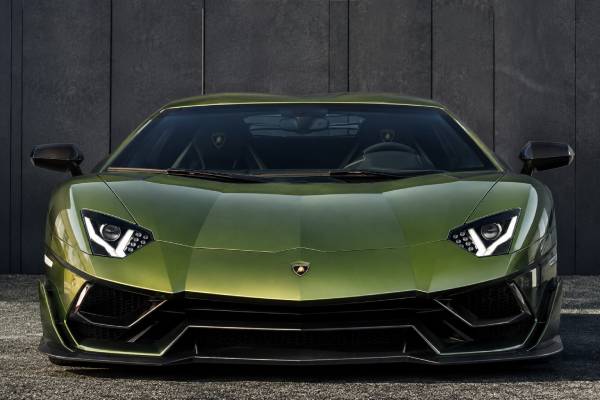
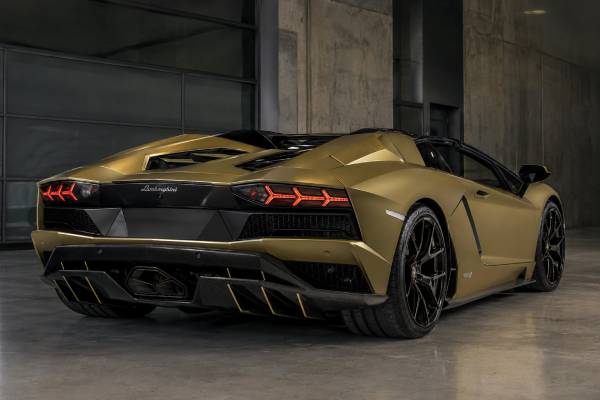
The Lamborghini Aventador LP 780-4 Ultimae is the final and most complete factory version of the Aventador line. Built for 2021 and 2022, it combines the sharper chassis technology of the Aventador S with the high-output spirit of the SVJ, while keeping the dramatic naturally aspirated L539 6.5-liter V12 at the center of the experience. It matters because it closed Lamborghini’s last non-hybrid V12 flagship era before the Revuelto arrived with electrification.
For buyers and collectors, the Ultimae is more than a late-production Aventador. It is a numbered, limited-production send-off with 780 CV, all-wheel drive, rear-wheel steering, carbon-fiber structure, and strong long-term collector logic. For enthusiasts, it is one of the clearest modern expressions of the old Lamborghini formula: a huge mid-mounted V12, scissor doors, violent sound, and theater built into every drive.
Table of Contents
- Ultimae Place in Aventador History
- L539 V12 and Factory Specifications
- Coupe, Roadster, Numbering, and Options
- Carbon, Aero, and Signature Engineering
- Road and Track Driving Character
- Maintenance, Reliability, and Ownership Risks
- Market Values, Inspection, and Buying Advice
Ultimae Place in Aventador History
The Aventador LP 780-4 Ultimae is the final production chapter of Lamborghini’s Aventador family and the last pure naturally aspirated V12 Lamborghini flagship before hybridization. Its value comes from that position as much as from its speed.
The Aventador line began in 2011 as the replacement for the Murciélago. It introduced a new carbon-fiber monocoque, a new 6.5-liter V12 engine, an automated ISR gearbox, and the hard-edged design language that defined Lamborghini’s flagship cars through the 2010s. The Ultimae arrived ten years later as the farewell model, built to distill the best parts of the Aventador S and Aventador SVJ without turning into a full track special.
“LP 780-4” explains the car’s layout in Lamborghini language. “LP” means Longitudinale Posteriore, or longitudinal rear engine placement. “780” refers to metric horsepower, and “4” refers to all-wheel drive. The name “Ultimae” means final, and here it is not just marketing. It marks the end of Lamborghini’s pure, non-electrified V12 flagship line.
The car sits in a special space because it is not simply the most aggressive Aventador. The SVJ remains the sharper, more aero-focused track variant, with its fixed rear wing and ALA active-aerodynamics system. The Ultimae is more rounded. It uses the most powerful standard-production Aventador V12, a lighter and cleaner exterior treatment, rear-wheel steering, magnetorheological dampers, carbon-ceramic brakes, and a more refined final-edition cabin.
For collectors, the historical case is clear:
- It is the final Aventador.
- It is the final non-hybrid Lamborghini V12 flagship.
- It was produced in limited, numbered form.
- It uses the ultimate factory tune of the L539 naturally aspirated V12.
- It bridges the analog drama of older V12 Lamborghinis with modern chassis electronics.
The Ultimae also arrived at a turning point for Lamborghini. After it, the flagship V12 did not disappear, but it changed. The Revuelto kept the V12 idea alive with a plug-in hybrid system, electric assistance, a new architecture, and a dual-clutch transmission. That makes the Aventador Ultimae especially important to buyers who want the last version of Lamborghini’s older flagship recipe: engine first, electricity nowhere, drama everywhere.
L539 V12 and Factory Specifications
The Ultimae’s main technical story is its 6,498 cc L539 V12, tuned to 780 CV at 8,500 rpm and 720 Nm at 6,750 rpm. It is naturally aspirated, rear-mid-mounted, dry-sump lubricated, and paired with Lamborghini’s seven-speed ISR automated manual transmission.
| Item | Factory Detail |
|---|---|
| Model years | 2021–2022 |
| Engine code | L539 |
| Engine layout | Rear-mid-mounted 60-degree V12 |
| Displacement | 6,498 cc / 6.5 liters |
| Induction | Naturally aspirated |
| Fuel system | Multi-point fuel injection |
| Power | 780 CV / 574 kW / about 769 hp at 8,500 rpm |
| Torque | 720 Nm / 531 lb-ft at 6,750 rpm |
| Transmission | 7-speed ISR automated manual |
| Drivetrain | Electronically controlled all-wheel drive with rear mechanical self-locking differential |
| Body structure | Carbon-fiber monocoque with aluminum front and rear frames |
The L539 engine is not a gentle grand-touring V12. It is a high-revving, dry-sump unit designed for sharp oil control, low engine placement, and sustained high-load use. Its character is defined by response rather than boost. There are no turbochargers to mute the intake and exhaust, and no electric motor to fill torque gaps. The engine builds force in a clean, rising line, with its hardest emotional hit near the top of the tachometer.
The ISR gearbox is one of the Aventador’s most debated features. It is not a modern dual-clutch unit. Instead, it is a single-clutch automated manual with independent shifting rods. Lamborghini used it because it was compact, relatively light, and theatrical. In the fastest modes, it changes gear with a physical hit that suits the car’s personality. In traffic, it can feel abrupt unless the driver treats it like a manual and eases the throttle at low speed.
| Category | Coupe | Roadster |
|---|---|---|
| 0–100 km/h | 2.8 seconds | 2.9 seconds |
| 0–200 km/h | 8.7 seconds | About 8.8 seconds |
| Top speed | 355 km/h / 221 mph | 355 km/h / 221 mph |
| Dry weight | About 1,550 kg | About 1,600 kg |
| Length | 4,868 mm | 4,868 mm |
| Width excluding mirrors | 2,098 mm | 2,098 mm |
| Height | 1,136 mm | 1,136 mm |
| Wheelbase | 2,700 mm | 2,700 mm |
| Fuel capacity | About 85 liters / 22.5 gallons | About 85 liters / 22.5 gallons |
The chassis layout follows the Aventador formula: pushrod suspension, adaptive magnetorheological dampers, carbon-ceramic brakes, staggered wheels, wide rear tires, and four-wheel steering. The standard wheel setup uses 20-inch front and 21-inch rear wheels, usually with Pirelli P Zero rubber. Carbon-ceramic brake discs are part of the car’s high-speed ability, but they are also one of the most important inspection items because replacement costs are high.
Coupe, Roadster, Numbering, and Options
Lamborghini built the Ultimae as a limited numbered series: 350 coupes and 250 roadsters. The coupe is the sharper and slightly lighter version, while the roadster adds open-air V12 drama and generally brings extra collector interest because of its lower production number.
The two versions share the same engine, drivetrain, suspension concept, brakes, four-wheel steering, and design theme. The biggest difference is the roof structure. The coupe has the cleaner fixed-roof body and the lowest quoted acceleration time. The roadster uses removable hardtop roof panels that store in the front compartment, trading some practicality and weight for the full open-air V12 experience.
| Version | Production | Main Appeal | Buyer Note |
|---|---|---|---|
| LP 780-4 Ultimae Coupe | 350 units | Lightest, cleanest, most focused final Aventador | Best choice for drivers who value chassis feel and purity |
| LP 780-4 Ultimae Roadster | 250 units | Open-top V12 sound and lower production number | Often especially desirable when mileage, color, and options are right |
A numbered plaque in the cabin is one of the key identifiers. Buyers should confirm that the plaque, VIN, build documentation, specification sheet, and service records all match the car being inspected. On a limited Lamborghini, paperwork is not a small detail. It is part of the car’s value.
The Ultimae was also heavily tied to Lamborghini’s Ad Personam personalization program. Lamborghini offered a standard range of colors and a much wider selection through special order, with more than 300 possible paint choices available through Ad Personam. That means two Ultimae examples can differ sharply in market appeal even when mileage is similar.
Important factory and personalization areas include:
- Exterior paint, including standard, metallic, matte, pearl, and Ad Personam colors
- Contrast roof, black exterior details, and livery combinations
- Forged wheel designs and finishes
- Brake caliper color
- Carbon-fiber exterior packages
- Alcantara or leather cabin trim
- Contrast stitching and seat embroidery
- Carbon interior details
- Branding package and special trim plates
- Audio and infotainment options
- Front lifting system, where fitted
Originality matters. A high-quality paint protection film installation is usually acceptable and often desirable. Poor aftermarket carbon parts, non-factory wheels, lowered suspension, tinted lights, exhaust changes without documentation, or ECU tuning can reduce collector confidence. Some buyers enjoy upgrades, but the strongest long-term collector cars are usually complete, original, and documented.
Market-specific equipment also matters. U.S., European, Middle Eastern, and other-market cars can differ in lighting, emissions compliance, speedometer display, documentation, and warranty transfer history. Imported cars are not automatically worse, but buyers should understand registration, compliance, and service-system visibility before paying a top-market price.
Carbon, Aero, and Signature Engineering
The Ultimae’s design works because it keeps the Aventador’s extreme shape but removes some of the SVJ’s track-focused aggression. It looks cleaner, lower, and more mature while still carrying the scissor-door, wedge-profile, mid-engine Lamborghini drama.
The Aventador’s carbon-fiber monocoque is central to the car. It gives the chassis its strength and allows the suspension, engine, and body systems to attach to a stiff central cell. This construction is one reason the Aventador felt so different from older V12 Lamborghinis. It was not simply a big engine in a wild body; it was a modern carbon-structure flagship.
The Ultimae’s exterior blends cues from the Aventador S and SVJ. The front bumper and splitter improve cooling and front-end stability. The side intakes feed the V12 and cooling system. The rear treatment is cleaner than the SVJ, without the large fixed wing, but still uses aggressive venting and a diffuser-like lower section. The result is a car that looks special without shouting “track edition” from every angle.
Aerodynamics and cooling
Cooling is a serious part of the Ultimae’s design. The naturally aspirated V12 generates enormous heat, especially in city traffic, mountain driving, or repeated high-load runs. Large front and side ducts move air through radiators and into the engine bay. The front splitter, open vents, side intakes, and rear outlets are not decorative details. They help the car manage airflow, temperature, and high-speed stability.
The Ultimae does not use the SVJ’s ALA active-aero system, and that is part of its character. It is less of a lap-time tool and more of a final roadgoing V12 statement. Buyers who want maximum track aero usually look at the SVJ. Buyers who want the final, cleanest Aventador shape often prefer the Ultimae.
Cockpit and sensory design
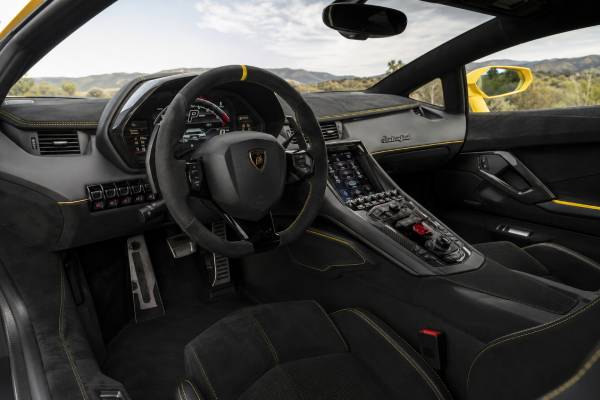
Inside, the Ultimae is still very much an Aventador. The driving position is low, the windshield is shallow, the starter cover feels theatrical, and the cabin wraps around the driver with a fighter-jet influence. It is not as ergonomic as newer supercars, and its infotainment now feels old, but that is not the main reason people buy one.
The details that matter are the materials, the plaque, the stitching, the carbon trim, and the condition of touch points. Alcantara can show wear on bolsters and steering wheels. Light leather can show dye transfer. Gloss carbon can scratch. A low-mileage car should look crisp, not merely clean.
Four-wheel steering and active suspension
The Ultimae uses Lamborghini Dynamic Steering and rear-wheel steering. At lower speeds, the rear wheels can turn opposite the fronts to improve agility. At higher speeds, they can turn with the fronts to improve stability. This helps make a very wide, heavy-feeling V12 supercar feel more alert than its size suggests.
The magnetorheological dampers also play a major role. They change damping behavior based on conditions and drive mode. In Strada, the car is still firm but less punishing. In Sport and Corsa, body control tightens and the gearbox, throttle, steering, and stability systems become more aggressive.
Road and Track Driving Character
The Ultimae feels fast, loud, wide, and physical in a way that newer hybrid supercars often do not. Its numbers are impressive, but the real experience comes from the V12’s response, the ISR gearbox’s shift shock, and the sense that the whole car is built around mechanical theater.
At low speeds, the Aventador reminds the driver that it is a large V12 flagship. Visibility is limited, the nose is low, the rear is wide, and the gearbox needs smooth throttle inputs in traffic. The front lift system is valuable on steep driveways and urban roads, but it does not turn the car into a normal commuter. It is usable, not effortless.
Once moving, the engine dominates the experience. The L539 V12 pulls cleanly from low rpm, but it becomes much more urgent as it climbs. The final third of the rev range is where the car feels alive. The sound hardens, the intake and exhaust combine, and each upshift lands with the kind of drama a dual-clutch gearbox would smooth away.
The four-wheel-drive system gives strong traction, especially in lower gears, but the Ultimae is not numb. Lamborghini tuned the system to work with rear-wheel steering and stability control, so the car can feel rear-biased under hard driving while still giving the security expected from an all-wheel-drive flagship. Tire condition and temperature make a major difference. Cold or old tires can make the car feel nervous, while fresh, correct-spec tires bring back the balance the chassis was designed around.
The steering is quick rather than delicate. It gives the driver enough information to place the car, but it does not feel like a small lightweight sports car. The Aventador’s width always matters. On a fast mountain road, the driver has to manage lane position, braking points, and surface changes carefully. On a track, the car rewards smoothness and commitment, but it is heavy on consumables.
Braking performance is very strong when the carbon-ceramic system is healthy and warm. Pedal feel can vary with temperature and use, and lightly used carbon-ceramic brakes may show surface behavior that worries inexperienced buyers. A specialist inspection should measure disc condition properly rather than relying only on appearance.
Drive modes change the car’s personality:
- Strada is the most relaxed setting for normal roads and low-speed driving.
- Sport makes the car more emotional, with sharper throttle response and more dramatic shift behavior.
- Corsa gives the firmest, most direct setting for fast driving and track use.
- EGO lets the driver mix settings for engine, gearbox, steering, suspension, and stability behavior.
The roadster adds another layer. With the roof removed, the sound becomes more direct and the car feels more special at ordinary speeds. The tradeoff is extra weight, less structural purity, roof-panel storage inconvenience, and more wind noise. For many owners, that is a fair exchange because the open-air V12 experience is the point.
Maintenance, Reliability, and Ownership Risks
The Ultimae is not fragile when maintained correctly, but it is an exotic V12 Lamborghini with expensive parts, specialist labor, and high inspection stakes. The safest ownership path is documented annual servicing, factory diagnostics, careful storage, and no deferred maintenance.
The basic service rhythm is typically time-based as much as mileage-based. Low mileage does not mean a car can skip care. Fluids age, batteries weaken, tires harden, seals dry, and electronic modules dislike weak voltage. A 500-mile garage queen can still need meaningful recommissioning if it has sat unused.
Important maintenance areas include:
- Engine oil and filter service at the correct time or mileage interval
- Brake fluid replacement and brake-system inspection
- Coolant condition and radiator inspection
- Gearbox, differential, and drivetrain fluid history
- Spark plugs and ignition-system service by schedule
- Tire age, tire specification, and tread condition
- Battery health and battery tender use
- Front lift function and hydraulic system condition
- Suspension damper behavior and warning lights
- Factory diagnostic scan for stored faults
The L539 V12 itself is generally respected when serviced properly, but it is not cheap to access or repair. Oil leaks, coolant seepage, heat-related aging, ignition faults, exhaust hardware issues, and sensor faults should be taken seriously. A small issue can become expensive if ignored because access is labor-intensive.
The ISR gearbox is one of the biggest ownership discussion points. Clutch wear depends heavily on driving style. Repeated low-speed maneuvering, hill starts, stop-start traffic, and careless throttle use can shorten clutch life. A pre-purchase inspection should check clutch wear values through proper diagnostic equipment, not just judge the car by how it feels during a short test drive.
Carbon-ceramic brakes are another major cost driver. Buyers should check disc condition, pad life, damage, cracking, edge wear, and service records. Replacement can be very expensive, so a car with worn brakes should be priced accordingly.
Tires deserve more attention than many buyers give them. The Ultimae needs the correct size, load rating, speed rating, and tire type. Old tires with plenty of tread are still a problem on a 355 km/h car. Tire date codes matter, and mismatched tires can upset the all-wheel-drive and stability-control systems.
Common inspection concerns include:
- Front bumper, splitter, and underside scraping
- Stone chips on the nose, sills, and rear intakes
- Heat damage around exhaust and engine-bay trim
- Front lift leaks or slow operation
- Weak battery or low-voltage fault history
- Sticky switches or worn interior buttons
- Leather and Alcantara wear on bolsters and steering wheel
- Wheel damage from curbs or poor tire mounting
- Evidence of aftermarket exhaust, tune, or lowered suspension
- Paintwork that suggests accident repair rather than cosmetic correction
Accident history is especially important because the Aventador uses a carbon monocoque. Cosmetic panel replacement is one thing; structural carbon damage is another. Buyers should insist on paint-depth readings, underbody inspection, alignment checks, and review of any repair invoices. A properly repaired minor cosmetic issue may be acceptable. A poorly documented structural event should be avoided.
Recalls and service campaigns should be checked by VIN through Lamborghini or the relevant national safety database. Model-year summaries are useful, but they are not enough for a car this expensive. The exact VIN determines what applies.
Market Values, Inspection, and Buying Advice
The Ultimae sits above ordinary Aventador models in the market because it is limited, late-production, historically important, and tied to the end of Lamborghini’s pure V12 era. As of mid-2026, many coupe asking prices sit roughly in the $600,000–$850,000 range, while the best roadsters and very low-mileage special specifications can ask more.
Actual value depends heavily on the individual car. Mileage matters, but it is only one factor. A slightly higher-mileage car with perfect history, original paint, fresh service, correct tires, and strong specification can be a better buy than a delivery-mile car that has sat poorly or carries unclear paperwork.
The strongest cars usually have:
- Original paint or clearly documented minor cosmetic work
- Complete Lamborghini service history
- Factory build sheet or specification record
- Numbered-series plaque and matching documentation
- Low but believable mileage
- Desirable Ad Personam color and interior combination
- No accident history
- No questionable modifications
- Healthy clutch data
- Good carbon-ceramic brake condition
- Fresh, correct tires
- All books, keys, charger, tools, roof panels for roadsters, and accessories
Cars to approach carefully include examples with missing records, unexplained paintwork, worn brakes, old tires, modified exhausts, ECU tunes, suspension changes, repeated battery faults, or inconsistent import history. None of those issues automatically kills a deal, but each should change the price and the risk calculation.
A proper pre-purchase inspection should be done by a Lamborghini dealer or a specialist who regularly works on Aventadors. The inspection should include:
| Area | What to Confirm |
|---|---|
| Identity | VIN, numbered plaque, build sheet, title, market specification, and factory options |
| Service history | Annual servicing, fluids, brake service, tires, recalls, and dealer or specialist invoices |
| Engine | Cold start behavior, leaks, misfires, heat damage, fault codes, and emissions readiness |
| Gearbox | Clutch wear data, shift quality, launch-control history where visible, and hydraulic operation |
| Brakes | Carbon-ceramic disc condition, pad life, sensors, cracks, chips, and replacement history |
| Suspension | Dampers, lift system, steering actuators, alignment, tires, and wheel condition |
| Body | Paint depth, carbon structure, underbody scraping, panel gaps, and accident evidence |
| Interior | Bolsters, Alcantara, switchgear, infotainment, plaque, climate control, and warning lights |
The coupe is usually the better driver’s car because it is lighter, simpler, and structurally cleaner. The roadster is often the more emotional ownership choice because the open roof transforms the sound and sense of occasion. From a collector standpoint, both are strong, but the roadster’s lower production number and theater can make the best examples especially desirable.
The long-term collectability case is strong but not risk-free. The Ultimae has the right ingredients: final edition, limited build, naturally aspirated V12, numbered production, brand significance, and dramatic design. Its main market risks are mileage sensitivity, high running costs, changing collector taste, and the possibility that some buyers may prefer the more extreme SVJ or the newer Revuelto.
For most serious buyers, the best strategy is simple: buy the best-documented, most original car in the strongest specification you can afford. Do not overpay for mileage alone. Do not ignore clutch, brake, tire, or service needs. And do not assume every Ultimae is equal just because production was limited. The right example is a landmark Lamborghini. The wrong one can become a very expensive lesson.
References
- Aventador LP 780-4 Ultimae | Lamborghini.com 2021 (Manufacturer Specifications)
- Aventador LP 780-4 Ultimae Roadster | Lamborghini.com 2021 (Manufacturer Specifications)
- Aventador LP 780-4 Ultimae: it takes time to become timeless 2021 (Manufacturer News)
- Recall Campaign 2026 (Recall Database)
- Lamborghini Aventador LP780-4 Ultimae (2021 to 2022) 2026 (Market Data)
Disclaimer
This article is for informational purposes only and is not a substitute for professional diagnosis, repair, valuation, or inspection. Specifications, torque values, service intervals, procedures, equipment, and recall eligibility can vary by VIN, market, model year, and factory configuration. Always verify details against official Lamborghini service documentation and have any purchase inspected by a qualified Lamborghini dealer or specialist.
If this guide helped you, please share it on Facebook, X/Twitter, or your preferred automotive community to support our work.