


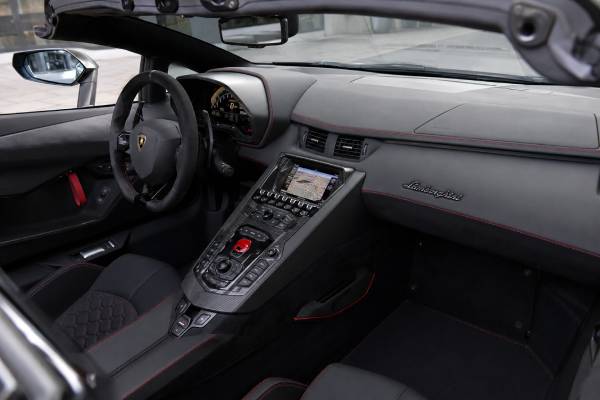
The Lamborghini Aventador S Roadster Korean Special Series is a two-car factory special based on the open-top Aventador S LP 740-4. Built in 2021 for Korean collectors with Lamborghini Seoul and Centro Stile, it combines the LB835 Roadster body, the L539 6.5-liter naturally aspirated V12, all-wheel drive, four-wheel steering, and removable carbon-fiber roof panels. Its importance is not just speed, although 0–100 km/h in 3.0 seconds and a 350 km/h top speed remain serious figures. The real draw is its place near the end of Lamborghini’s non-hybrid V12 era. With only two examples, Korean cultural detailing, and full Aventador S mechanical hardware, it sits between a usable modern flagship and a true collector-spec commission. Buyers care about provenance, factory documentation, paint and trim originality, specialist maintenance, and the condition of expensive carbon, brake, tire, roof, and drivetrain components.
Table of Contents
- Why This Two-Car Korean Roadster Matters
- V12 Specs, Chassis, and Performance Data
- Production, Authenticity, and Ad Personam Details
- Design, Engineering, and Korean Special Features
- How the Aventador S Roadster Drives
- Maintenance Risks and Specialist Care
- Market Value and Buyer Inspection Guide
Why This Two-Car Korean Roadster Matters
The Korean Special Series matters because it is not a normal color-and-trim package. It is a factory-backed, two-unit Aventador S Roadster created for a specific market, with design elements tied directly to Korean identity.
The Aventador line arrived as Lamborghini’s replacement for the Murciélago and became the brand’s defining V12 flagship through the 2010s and early 2020s. It introduced a carbon-fiber monocoque structure, the new L539 V12, ISR automated manual transmission, dramatic scissor doors, and the low, wide proportions that made the car instantly recognizable. The Aventador S improved that formula with more power, revised aerodynamics, four-wheel steering, updated suspension control, and a more rounded driving character than the original LP 700-4.
The Roadster version adds the emotional part: open-air V12 sound. The Aventador S Roadster is not a soft luxury convertible. It is a removable-roof supercar with two carbon-fiber roof panels, mid-mounted V12 packaging, heavy-duty cooling, all-wheel drive, and the same aggressive basic architecture as the coupé. That makes the Korean Special Series especially appealing because it pairs the most theatrical body style with one of the rarest factory identities.
The special edition was developed for Korean collectors, not as a high-volume limited trim. Lamborghini’s design team used colors, motifs, and interior choices connected to Korea, while leaving the powertrain and performance hardware essentially aligned with the Aventador S Roadster. That is important for ownership: the car is mechanically recognizable to a Lamborghini specialist, but visually and historically far rarer than a normal S Roadster.
Its timing also helps its collectability. By 2021, Lamborghini’s pure naturally aspirated V12 era was closing. The Aventador Ultimae would mark the final production chapter of the non-electrified Aventador family, and the Revuelto would move Lamborghini’s flagship into plug-in hybrid territory. That does not make the Korean Special Series the most extreme Aventador, but it does make it a culturally specific, ultra-low-production version from the final years of the traditional V12 flagship.
For collectors, the key appeal is a mix of rarity, factory provenance, market-specific story, and end-of-era V12 character. For enthusiasts, the appeal is simpler: it is an open Aventador S with 740 CV, a screaming V12, scissor doors, and design details that no ordinary showroom Aventador has.
V12 Specs, Chassis, and Performance Data
The Korean Special Series uses the Aventador S Roadster’s core mechanical package: a mid-mounted 6,498 cc naturally aspirated L539 V12, 7-speed ISR gearbox, all-wheel drive, rear-wheel steering, active suspension, and carbon-ceramic brakes. The special-series identity changes the specification story, not the basic performance formula.
Lamborghini quotes the engine at 740 CV, or 544 kW, at 8,400 rpm. English-language sources often describe that as 740 hp, but technically 740 CV equals about 730 mechanical horsepower. The torque figure is 690 Nm at 5,500 rpm, and the car’s character is defined by revs rather than low-rpm turbo boost.
| Item | Specification |
|---|---|
| Model basis | Aventador S Roadster LP 740-4 |
| Body/platform code | LB835 Roadster |
| Engine code | L539 |
| Engine layout | Mid-mounted 60-degree V12 |
| Displacement | 6,498 cc |
| Induction | Naturally aspirated |
| Maximum output | 740 CV / 544 kW at 8,400 rpm |
| Maximum torque | 690 Nm at 5,500 rpm |
| Transmission | 7-speed ISR automated single-clutch gearbox |
| Drivetrain | Permanent all-wheel drive |
The ISR gearbox is a major part of the Aventador personality. It is not a modern dual-clutch transmission. It is a robotized single-clutch transmission designed for lightness, compact packaging, and dramatic shift feel. In Strada mode it can feel deliberate at low speeds; in Sport and Corsa it shifts with far more urgency and a noticeable mechanical punch.
| Metric | Factory figure |
|---|---|
| 0–100 km/h | 3.0 seconds |
| 0–200 km/h | 9.0 seconds |
| Top speed | 350 km/h |
| 100–0 km/h braking | 31 meters |
| Power-to-weight ratio | 2.2 kg/CV |
The chassis is built around a carbon-fiber monocoque with aluminum front and rear frames. This structure gives the Aventador its stiffness and helps offset the complexity of the big V12, all-wheel-drive system, roof reinforcements, active dampers, and cooling hardware. The Roadster is heavier than the coupé because it needs additional structural support and removable roof hardware, but it keeps the same essential supercar proportions.
| Area | Specification |
|---|---|
| Body structure | Carbon-fiber monocoque with aluminum subframes |
| Suspension | Pushrod suspension with magneto-rheological dampers |
| Steering | Lamborghini Dynamic Steering with rear-wheel steering |
| Drive modes | Strada, Sport, Corsa, Ego |
| Front brakes | Carbon-ceramic discs, 400 mm class |
| Rear brakes | Carbon-ceramic discs, 380 mm class |
| Front tires | 255/30 ZR20 |
| Rear tires | 355/25 ZR21 |
| Length | 4,797 mm |
| Width, excluding mirrors | 2,030 mm |
| Height | 1,136 mm |
| Wheelbase | 2,700 mm |
| Fuel tank | 85 liters |
Fuel use is not a buying reason, but it matters for realistic ownership. A U.S.-rated 2021 Aventador Roadster with the 6.5-liter V12 sits in the gas-guzzler category and returns very low economy in city driving. In real use, short trips, cold starts, aggressive driving, and traffic make consumption much worse than the already-low official figures.
Production, Authenticity, and Ad Personam Details
The Korean Special Series was limited to two cars, so authenticity is the central buying issue. A normal Aventador S Roadster in similar colors is not the same thing; the value depends on factory proof that the car is one of the two Korean Special Series examples.
The cars were presented in 2021 by Lamborghini Seoul and developed by Automobili Lamborghini’s Centro Stile for Korean collectors. That gives the model a much stronger paper trail than a later wrap, dealer repaint, or aftermarket interior retrim. The special edition was not a global allocation car with hundreds of numbered units. It was a market-specific commission-style release.
How it differs from a normal Aventador S Roadster
The mechanical base is the Aventador S Roadster, but the special-series elements are cultural and visual:
- Two-unit production for Korea-focused collectors.
- Factory-developed design by Centro Stile in collaboration with Lamborghini Seoul.
- Exterior colors linked to Korean symbolism: Green Ocno and Blue Emera.
- Bianco Leda interior chosen to reflect Korea’s historical association with white clothing.
- Korean traditional window patterns applied to the front hood, door panels, and rear fender areas.
- Engine-compartment detailing with the Geon and Gam trigrams from the Korean flag.
Those details are the car. Without them, it is simply an Aventador S Roadster. With them, supported by factory documentation, it becomes one of the rarest Aventador S Roadster specifications.
Documents that matter
For a car this rare, the documents are not just nice to have. They protect the car’s identity and value. A serious buyer should expect a complete provenance file, ideally including:
- Original sales invoice or delivery record from the authorized Lamborghini channel.
- Factory build specification showing paint, trim, and special-series details.
- Any Lamborghini or dealer correspondence confirming Korean Special Series status.
- Service history from authorized Lamborghini dealers or recognized V12 specialists.
- Photographic records from new, delivery, servicing, and any transport or storage periods.
- Original roof bags, tools, charging equipment, manuals, keys, and accessories.
Because there are only two examples, the car should be easy to describe but not automatically easy to verify. The safest route is to confirm the VIN and build specification with an authorized Lamborghini dealer before agreeing on price.
Related Aventador variants
The Korean Special Series should be understood within the broader Aventador family. The original LP 700-4 created the platform. The Aventador S added four-wheel steering, more power, and revised dynamics. The SVJ moved toward track-focused aerodynamics and greater power. The Ultimae closed the Aventador production story with the most powerful standard-production non-hybrid V12 version.
That matters because buyers often compare a rare S Roadster against an SVJ Roadster or Ultimae Roadster. The SVJ is more aggressive and track-focused. The Ultimae has stronger end-of-line status. The Korean Special Series is different: it is about rarity, cultural design, open-air V12 character, and factory special identity rather than Nürburgring-style performance hardware.
Design, Engineering, and Korean Special Features
The Korean Special Series stands out because the design details are integrated into the Aventador’s existing wedge shape rather than added as random decoration. The car uses familiar Aventador drama but gives it a Korean-specific visual language.
The Aventador’s base design is all hard lines, deep intakes, scissor doors, and low proportions. The S update sharpened the front end, revised the rear diffuser area, and gave the car a more technical look. In Roadster form, the removable roof panels change the side profile and expose the cockpit to more sound, heat, and air movement. It feels more event-like than the coupé even when driven slowly.
The special-series exterior uses Green Ocno and Blue Emera as the primary colors. Green Ocno is described as symbolizing warm Korean sentiment, while Blue Emera represents intelligence and wisdom. These are not ordinary catalog-color choices in this context; they form part of the car’s story. The Bianco Leda interior creates a strong contrast and connects to Korea’s traditional white-clothing symbolism.
The traditional window pattern is a clever choice because it works with the Aventador’s geometry. The crisscross pattern on the hood, doors, and rear fender areas sits naturally on a car already defined by angular surfaces. The Geon and Gam trigrams in the engine compartment add meaning without overwhelming the exterior. Geon is associated with heaven, while Gam is associated with water; both are part of the Korean flag’s symbolic system.
Open-roof packaging
The Aventador S Roadster uses two removable roof panels made from carbon fiber. They are manually removed and stored in the front luggage compartment. This is not as convenient as a powered folding roof, but it keeps the car lighter and more structurally focused than a complex convertible mechanism.
For owners, the roof design creates several practical checks:
- The panels must fit tightly and sit flush.
- The latches should operate cleanly without force.
- Seals should be soft, intact, and free from compression damage.
- The roof bags should be present and undamaged.
- The front storage area should show no scratches from careless roof storage.
Active chassis systems
The Aventador S is much more sophisticated than the early LP 700-4. Lamborghini Dynamic Steering changes steering response based on speed and mode, while rear-wheel steering improves low-speed agility and high-speed stability. Magneto-rheological dampers adjust damping quickly, and the all-wheel-drive system works with the selected drive mode.
The result is a car that feels smaller than its size at low speed and calmer at high speed than the original Aventador. It still has the width, visibility limits, and mechanical drama of a V12 Lamborghini, but it is not crude. The S hardware makes the car more usable without removing the edge that buyers expect.
Sound and sensory character
The most important feature is still the engine. The L539 V12 does not rely on turbochargers, electric boost, or artificial sound enhancement to create its character. It builds revs, changes tone as it climbs, and delivers the open-roof experience that collectors increasingly value as new flagship Lamborghinis move into hybrid systems.
The Roadster amplifies intake and exhaust sound. With the roof removed, the driver hears more mechanical noise from behind the cockpit and more exhaust reflection from nearby walls, tunnels, and city streets. That sound is a major reason the car remains desirable even when newer supercars are quicker.
How the Aventador S Roadster Drives
The Aventador S Roadster feels fast, loud, wide, and physical, but the S chassis systems make it more manageable than the original Aventador. Its defining trait is not silent precision; it is the combination of V12 response, single-clutch drama, open-air noise, and surprising stability.
At low speed, the car feels large. The nose is low, the rear is wide, the doors are dramatic but not especially useful in tight spaces, and the roof panels take planning if weather changes. The gearbox can feel clunky in traffic because it is a single-clutch automated manual. Smooth inputs help, and Strada mode is the best choice for city driving.
Once moving, the Aventador S Roadster becomes more natural. The V12 has strong torque, but it rewards revs. The throttle response is immediate because there are no turbochargers softening the connection between pedal and engine. The power delivery grows more intense as the revs rise, and the last part of the tachometer is where the car feels most special.
Sport mode brings more attitude. The all-wheel-drive system allows a more playful rear bias, the shifts become sharper, and the exhaust character is more aggressive. Corsa is the serious setting, with the most direct shift strategy and stability calibration for fast driving. Ego mode lets the driver mix preferred settings, which is useful if the owner wants a firmer powertrain response without the harshest suspension behavior.
The steering is quicker than older V12 Lamborghinis, helped by the rear-steer system. At parking speeds, the rear wheels turn opposite the fronts to reduce the car’s effective length. At higher speeds, they work with the front wheels to improve stability. This is one of the main reasons the Aventador S feels more modern and less stubborn than the first Aventador.
The ride is firm, but not unusable for this type of car. Tire condition matters a lot. Old tires can make the car nervous, noisy, and less trustworthy under braking. Fresh, correct-spec tires transform the car’s confidence, especially because the Aventador relies on huge rear tires and all-wheel-drive traction to manage its power.
Braking is strong when the carbon-ceramic system is healthy and warm enough, but brake feel can vary with temperature and pad condition. For road use, the system is more than capable. For track use, the weight, speed, tire load, and replacement cost mean owners should treat repeated hard laps with respect. This is not a cheap car to use as a casual track toy.
Visibility is acceptable forward but limited around the rear quarters. The driving position is low, the windshield is steeply raked, and the cabin is snug. Heat and noise are part of the experience. With the roof off, the car becomes more immersive, but long highway drives bring wind, tire noise, and the need to plan luggage carefully.
The best roads for the Korean Special Series are open, smooth, and wide enough to enjoy the chassis without fighting its size. Mountain roads can be thrilling, but tight lanes make the width hard to ignore. On a fast road with clear sight lines, the car delivers exactly what buyers expect: a naturally aspirated V12 rising toward 8,400 rpm behind your shoulders, dramatic shifts, immense traction, and the sense that every drive is an event.
Maintenance Risks and Specialist Care
The Korean Special Series should be maintained like a rare V12 Lamborghini, not like an ordinary used exotic. Low mileage does not remove risk; it often shifts the risk toward aged fluids, flat-spotted tires, weak batteries, sticky seals, and missed time-based servicing.
The L539 V12 is a serious, robust engine when serviced correctly, but access is expensive and labor-intensive. The car’s value also depends on keeping factory systems intact. Modifications may sound appealing, especially exhaust changes, but they can hurt collectability on a two-unit special series unless fully reversible and carefully documented.
| Area | What to check | Why it matters |
|---|---|---|
| Service records | Annual and mileage-based services, dealer stamps, invoices | Gaps weaken value and increase mechanical risk |
| ISR clutch | Clutch wear reading, shift behavior, launch history | Replacement is expensive and usage-sensitive |
| Carbon-ceramic brakes | Disc condition, pad life, edge damage, heat marks | Replacement costs are very high |
| Tires | Date codes, correct sizes, matching set, flat spotting | Old tires reduce safety and ride quality |
| Roof panels | Fit, seals, latch operation, storage bags | Roadster-specific parts affect usability and originality |
| Suspension lift | Hydraulic function, leaks, warning lights | Lift failure can be costly and limits real-world use |
| Cooling system | Radiators, hoses, fans, coolant leaks | Heat management is critical in a mid-engine V12 |
| Battery and modules | Battery health, tender use, fault codes | Low voltage can trigger confusing electronic issues |
Clutch and transmission risk
The ISR transmission is one of the first items to inspect. Clutch wear depends heavily on driving style, traffic use, hill starts, reversing, and launch-control use. A car with low mileage but lots of city creeping may have more clutch wear than a higher-mileage car used mainly on open roads.
A proper inspection should include a diagnostic scan and clutch wear measurement. The gearbox should engage cleanly, shift consistently, and avoid harsh or delayed behavior beyond the normal ISR character. Any warning lights, slipping feel, repeated neutral selection, or inconsistent reverse engagement needs specialist attention before purchase.
Brake, tire, and wheel costs
Carbon-ceramic brakes are durable in normal road use but expensive when damaged or worn. Inspect the discs for chips, cracks, abnormal surface texture, and signs of heavy track use. Wheel removal by careless shops can damage carbon discs, calipers, or wheel finishes. On a rare special edition, even cosmetic wheel damage matters.
Tires age out before they wear out on many collector Aventadors. Date codes are important. A car on old original tires may look authentic, but it should not be driven hard until the tires are replaced. Keep the old tires only if they matter for static originality; use fresh correct-size tires for driving.
Roadster-specific care
The roof panels, seals, storage bags, latches, and front compartment trim deserve close attention. Missing roof bags or scratched storage areas are common signs of careless handling. Water leaks, wind noise, or uneven panel gaps can point to seal issues, accident repair, or poor adjustment.
The Roadster also exposes the interior to more sun and temperature change. Check leather, stitching, white interior surfaces, carbon trim, switches, and seat bolsters carefully. Bianco Leda trim can show dye transfer, stains, and wear faster than darker interiors, so cleaning history matters.
Electronics and recalls
Modern Lamborghinis rely on many control modules. Weak batteries, jump-starts, poor storage, and aftermarket electronics can create fault codes that are hard to diagnose without factory-level equipment. A battery tender is not optional for a stored Aventador; it is basic care.
Before buying, check the VIN with Lamborghini and relevant recall databases. Do not assume every Aventador has the same campaign history. Some Aventador-family safety actions and service campaigns have been extremely VIN-specific, so confirmation by chassis number is the only reliable method.
Market Value and Buyer Inspection Guide
A Korean Special Series example should be valued individually because only two exist. Normal Aventador S Roadster prices provide a baseline, but factory special-series provenance, Korean-market story, condition, mileage, documentation, and originality can create a significant premium.
Standard Aventador S Roadsters generally sit above early LP 700-4 cars and below comparable SVJ Roadsters and Ultimae Roadsters. In recent public listings, ordinary S Roadsters often occupy the high-six-figure exotic market, with prices affected heavily by mileage, region, color, options, carbon packs, service history, and condition. The Korean Special Series should not be judged only against those listings. Its scarcity makes it closer to a collector appraisal case than a normal used-car purchase.
The main value drivers are:
- Confirmed factory Korean Special Series identity.
- Complete Lamborghini documentation and dealer history.
- Original Green Ocno or Blue Emera exterior finish and Bianco Leda interior.
- Correct Korean window-pattern detailing and engine-bay trigram elements.
- Low but usable mileage, with evidence the car has not sat neglected.
- No accident history, repaint ambiguity, or unexplained panel work.
- Original accessories, roof bags, keys, manuals, and special documentation.
- Unmodified exhaust, software, suspension, wheels, and interior trim.
Buyer inspection checklist
A serious inspection should be done by a Lamborghini dealer or a proven Aventador specialist with diagnostic access. A generic exotic-car inspection is not enough.
- Confirm the VIN and special-series status with Lamborghini or an authorized dealer.
- Review the factory build sheet, paint codes, trim details, and original delivery documents.
- Inspect the body for paint thickness consistency, carbon damage, panel alignment, and underbody scraping.
- Verify that the Korean-specific graphics, patterns, and engine-bay details are original and undamaged.
- Run a full diagnostic scan, including powertrain, transmission, suspension, lift, brake, and body-control systems.
- Measure clutch wear and review any stored gearbox faults.
- Check carbon-ceramic brake discs, pads, tires, wheels, and suspension components.
- Test roof-panel fit, seals, latches, storage bags, and front-trunk storage condition.
- Review service invoices for time-based maintenance, fluids, battery care, and any warranty or campaign work.
- Confirm that all original equipment, books, keys, chargers, accessories, and special documents are included.
Examples to seek and avoid
Seek the car with the cleanest story, not just the lowest mileage. A lightly used example with annual servicing, warm storage, fresh tires, no warning lights, complete records, and original accessories is usually better than a delivery-mile car with old fluids, an aged battery, neglected tires, and unclear documentation.
Avoid any car with unclear special-edition proof, visible repaint in the patterned areas, missing roof accessories, aftermarket exhaust modifications that cannot be reversed, incomplete service history, or unresolved electronic faults. On a normal Aventador, those issues may simply reduce price. On a two-unit special series, they can permanently narrow the buyer pool.
Long-term collectability
The long-term appeal is strong because the car combines several collector traits in one package: ultra-low production, factory V12 power, open-top bodywork, market-specific design, and end-of-era timing. It is not the most powerful Aventador and not the most track-focused, but it is much rarer than most Aventador variants.
Its best future is as a preserved, properly exercised collector car. Owners should keep it original, store it correctly, service it on time, and document every action. Driving it occasionally is healthy; neglecting it to preserve delivery mileage can create mechanical and cosmetic problems. For the right collector, the Korean Special Series is not just an Aventador S Roadster with special paint. It is a cultural commission from the final phase of Lamborghini’s naturally aspirated V12 flagship era.
References
- Aventador S Roadster Korean Special Series Unveiled 2021 (Manufacturer Page)
- Lamborghini Aventador S Roadster | Lamborghini.com 2017 (Manufacturer Model Page)
- 2021 Fuel Economy Guide 2021 (EPA/DOE Guide)
- Part 573 Safety Recall Report 21V-927 2021 (Recall Database)
- Lamborghini Aventador Market 2026 (Market Data)
Disclaimer
This article is for informational purposes only and is not a substitute for professional diagnosis, repair, appraisal, or pre-purchase inspection. Specifications, torque values, service intervals, procedures, campaign status, and equipment can vary by VIN, market, production date, and factory configuration. Always verify details against official Lamborghini service documentation and have any Aventador inspected by a qualified Lamborghini specialist.
If this guide helped you, please share it on Facebook, X/Twitter, or your preferred car community to support our work.