
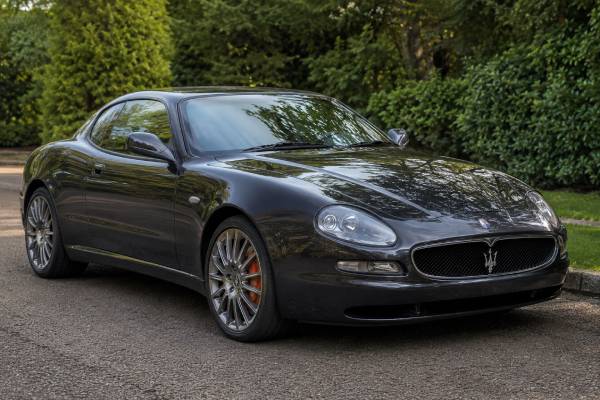
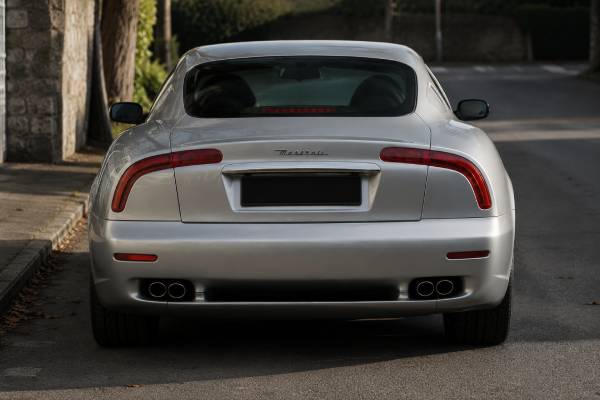
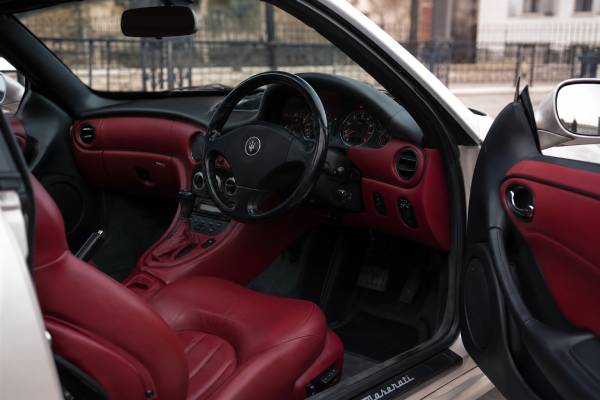
The Maserati 3200 GTA Assetto Corsa is the rare automatic version of the most focused factory-developed 3200 GT. Built near the end of 3200 production, it combines Maserati’s 3.2-litre twin-turbo AM 585 V8 with a four-speed BTR automatic transmission and a chassis package created to sharpen steering, body control, braking, and grip. It remained a leather-lined four-seat grand tourer rather than becoming a stripped track special, which is central to its appeal.
Today, the GTA Assetto Corsa occupies a distinctive place in Maserati history. It carries Giorgetto Giugiaro’s elegant original body, the celebrated boomerang LED rear lamps, and the final evolution of Maserati’s own twin-turbo V8 line before the Ferrari-derived 4.2-litre era. Its rarity attracts collectors, but ownership quality depends far more on maintenance than mileage. A sound example feels fast, dramatic, and surprisingly usable. A neglected one can demand costly work across the throttle system, cooling circuit, suspension, brakes, transmission, trim, and electronics.
Table of Contents
- The Final Twin-Turbo Maserati GT
- AM 585 V8, Chassis, and Performance Data
- Production, Identity, and Factory Specification
- Giugiaro Style with Assetto Corsa Engineering
- Road Manners, Boost, and Automatic Character
- Maintenance Risks and Ownership Realities
- How to Buy the Right Example
The Final Twin-Turbo Maserati GT
The GTA Assetto Corsa is the most focused automatic 3200 GT, not a higher-powered engine variant. Maserati retained the standard 370 PS output and concentrated on the parts that shape response: steering, springs, anti-roll control, tyres, brake cooling, and chassis calibration.
The 3200 GT arrived in 1998 during a crucial rebuilding period for Maserati. The company needed a modern grand tourer that could move beyond the mixed reputation of the Biturbo family while preserving a recognisably Italian character. The result was a front-engined, rear-wheel-drive 2+2 coupé aimed at buyers considering cars such as the Porsche 911, Jaguar XKR, and Aston Martin DB7.
Its importance extends beyond sales. The 3200 was developed as Ferrari’s influence over Maserati increased, but it still used a powertrain rooted in Maserati’s own twin-turbo engineering. The later Coupé looked related yet changed the car’s personality with a naturally aspirated Ferrari-derived V8 and conventional rear lamps.
The six-speed manual 3200 GT was joined by the automatic GTA in 1999. Its torque converter and four forward ratios seem modest today, but the engine’s broad torque suited relaxed high-speed touring. The automatic also softened the abruptness that could make early manual cars demanding in traffic or on wet roads.
For the 2001 model year, Maserati introduced more manageable engine calibration and less nervous steering. The Assetto Corsa package pushed that late chassis further without removing the rear seats, leather trim, climate control, or grand-touring role.
Enthusiasts value the model because it combines several qualities that did not continue together:
- Maserati’s own twin-turbo V8 character.
- Giugiaro’s original 3200 body and boomerang LED lamps.
- Four usable seats and genuine touring ability.
- A rare factory handling package.
- The smoother automatic drivetrain.
Its flaws are equally important. Heat, age, limited parts supply, and complex electronics can turn deferred maintenance into a major bill. A good car feels mechanical, dramatic, and distinctive; a poor one can consume its purchase-price advantage quickly.
AM 585 V8, Chassis, and Performance Data
The core specification is a 3,217 cc, all-aluminium, twin-turbocharged V8 driving the rear wheels through a four-speed BTR automatic and limited-slip differential. The Assetto Corsa package does not increase engine power; it improves the car’s ability to deploy that power with greater control.
| Item | Specification |
|---|---|
| Engine code | AM 585 |
| Engine layout | Front-mounted 90-degree V8 |
| Construction | Aluminium block and cylinder heads |
| Displacement | 3,217 cc |
| Bore × stroke | 80.0 × 80.0 mm |
| Valve gear | Double overhead camshafts, four valves per cylinder |
| Induction | Twin turbochargers with twin intercoolers |
| Fuel and throttle control | Electronic fuel injection and drive-by-wire throttle |
| Maximum output | 370 PS at 6,250 rpm |
| Maximum torque | 491 Nm at 4,500 rpm |
| Transmission | BTR M72LE four-speed torque-converter automatic |
| Drivetrain | Rear-wheel drive with limited-slip differential |
The AM 585 uses a square 80 mm bore and stroke, giving equal cylinder dimensions. Its two turbochargers and intercoolers help produce a high specific output for a late-1990s road engine. The resulting delivery is not completely linear. At lower engine speed, the GTA can feel calm and flexible; once boost rises, acceleration becomes much stronger and more urgent.
The BTR automatic adds about 30 kg compared with the manual arrangement. It was calibrated for the engine rather than simply installed as an afterthought. The torque converter improves low-speed smoothness, while kickdown lets the V8 reach the boost range quickly. The disadvantage is wider spacing between ratios and slower shift logic than a modern transmission.
| Item | Specification |
|---|---|
| Body style | Steel two-door 2+2 coupé |
| Structure | Steel unitary body with front and rear subframes |
| Front suspension | Independent double wishbones with aluminium components |
| Rear suspension | Independent double wishbones with aluminium components |
| Assetto Corsa changes | Lower ride height, firmer springs, larger front anti-roll bar, revised damping |
| Steering | Hydraulically assisted rack and pinion with quicker response |
| Brakes | Brembo four-piston calipers with ventilated, cross-drilled discs |
| Wheels | 18-inch 15-spoke BBS alloy wheels |
| Original tyre specification | 235/40 ZR18 front and 265/35 ZR18 rear |
| Wheelbase | 2,660 mm |
| Length | 4,510 mm |
| Width | 1,822 mm |
| Height | Approximately 1,290 mm |
| Kerb weight | Approximately 1,620 kg |
| Fuel capacity | 90 litres |
| 0–100 km/h | Approximately 5.7 seconds |
| Top speed | Approximately 270 km/h |
Period acceleration figures differ because testing methods, road surfaces, weather, fuel, tyre condition, and launch technique were not consistent. The automatic is slower from rest than the manual, but standing-start numbers understate its real-world strength. Its most convincing performance appears during overtaking, motorway joining, and fast corner exits, where the transmission can select a lower ratio and the engine delivers a sustained wave of torque.
The braking hardware was serious for its time. Four-piston Brembo calipers and ventilated, cross-drilled discs provide strong stopping performance, while dedicated Assetto Corsa cooling measures support repeated use. Condition matters, however. Old fluid, corroded discs, seized calipers, or inappropriate pads can make an apparently impressive system feel inconsistent.
Production, Identity, and Factory Specification
A genuine automatic Assetto Corsa should be verified through its VIN, factory build information, documentation, and complete equipment—not through wheels or badges alone. Cosmetic imitation is possible, while authentic cars may have lost original components during repairs.
The widely documented total is 259 Assetto Corsa cars, split into 163 manuals and 96 automatics. Some references give different totals or market allocations, possibly because they count announced production, completed cars, standard specifications, or special orders differently. For a purchase, the individual factory record matters more than the headline total.
The edition was introduced in 2001 during the final phase of 3200 production. Registration dates can be later than build dates, so separate model year, manufacture date, first registration, and delivery market. The familiar standard colours were Grigio Touring, Nero Carbonio, and Rosso Mondiale, though documented special orders may exist.
| Area | Expected factory feature | Inspection focus |
|---|---|---|
| Transmission | Four-speed BTR automatic on the GTA | Correct unit, smooth engagement, service evidence |
| Wheels | 18-inch 15-spoke BBS design | Part numbers, finish, cracks, buckling |
| Brakes | Red calipers, uprated pads, cooling ducts | Correct ducts, disc wear, caliper function |
| Suspension | Lower and firmer Assetto Corsa setup | Springs, dampers, anti-roll bar, ride height |
| Interior | Perforated Connolly leather and special sill trim | Original pattern, stitching, repairs |
| Documentation | Factory and dealer records identifying the edition | VIN, service book, invoices, ownership history |
A strong authentication process compares the VIN record with the transmission, colour, trim, wheels, brakes, suspension, and early paperwork. Numbered plaques support the case but are not proof by themselves.
Originality should be judged intelligently. Rebuilt throttle electronics, restored dampers, modern tyres, improved hoses, or repaired LED lamps may make the car safer and more dependable. The important questions are whether the work is technically sound, documented, and reversible. Poorly engineered modifications reduce both confidence and value.
Giugiaro Style with Assetto Corsa Engineering
The 3200 GTA Assetto Corsa is distinctive because its restrained grand-touring body hides aggressive turbocharged engineering. Giugiaro’s design avoids oversized wings and scoops, yet the low nose, hood vents, broad rear shoulders, and compact tail communicate speed without visual excess.
The exterior was created by Italdesign under Giorgetto Giugiaro, while the cabin is associated with Enrico Fumia’s work. Its proportions follow the classic front-engined GT pattern: long hood, cabin set rearward, flowing roof, and short rear deck. Unlike many 2+2 coupés, the 3200 provides rear seats that adults can use for shorter trips.
The most famous detail is the boomerang-shaped LED rear lighting. Curved light blades create an unmistakable night signature and were technically advanced when introduced. They are also an ownership concern. Cracks, moisture, failed LED sections, and poor repairs can be expensive to correct, so every lighting function should be checked carefully.
Under the steel unitary body, subframes support the powertrain, rear suspension, and differential. Double wishbones at all four corners use aluminium components to reduce unsprung mass. The Assetto Corsa package strengthens this foundation through a coordinated set of changes:
- Firmer springs and lower ride height reduce pitch and roll.
- A larger front anti-roll bar sharpens transient response.
- Revised damping better controls body movement.
- Quicker steering reduces the input needed in bends.
- Pirelli P Zero Corsa tyres increase dry response.
- Brake ducts and performance pads support repeated stopping.
These parts must work as a system. Soft touring tyres may improve comfort but blur steering response. Very aggressive track tyres can transmit higher loads into old bushes, bearings, dampers, and mounts. Correct sizes, matched tyres, accurate geometry, and healthy joints usually produce the best road balance.
The compact V8, turbos, intercoolers, and cooling hardware create a dense engine bay that retains heat. They also produce the car’s distinctive sound: mechanical V8 texture, induction rush, turbo whistle, and a deep exhaust note under load.
Inside, leather covers much of the dashboard, console, doors, and seats. The cabin feels warm and special rather than minimal, though ageing leather may shrink around vents or lift at edges. The Assetto Corsa’s character comes from this contrast: luxury surroundings combined with a chassis and powertrain designed for very high speed.
Road Manners, Boost, and Automatic Character
The automatic Assetto Corsa drives like a fast grand tourer with a sharp chassis and an old-school turbocharged power curve. It is less polished than a modern performance coupé, but it delivers more mechanical drama and demands greater respect when grip is limited.
At low engine speed, the GTA moves smoothly and quietly. The torque converter cushions initial acceleration, and the engine does not demand constant revs. Press harder and the gearbox drops a ratio, the turbos build pressure, and acceleration arrives as a strong surge.
That delay-and-surge pattern shapes safe driving. A large throttle input while the steering is still unwinding can produce peak torque after the rear tyres are already loaded. Wet roads, cold rubber, uneven surfaces, and old tyres increase the risk. Traction control provides useful protection, although its intervention is more obvious than in a modern car.
Later engine management makes the throttle easier to meter than on early 3200s. A healthy car should still respond predictably. Hesitation, limp mode, warning lights, unstable idle, or inconsistent boost can indicate throttle, pedal-sensor, wiring, voltage, ignition, or boost-control faults.
The four-speed automatic suits town and long-distance use. It should engage Drive and Reverse promptly, creep cleanly, and shift without flare or impact. Kickdown is not instant by current standards, but it should be decisive and repeatable. Behaviour that worsens when hot requires specialist investigation.
The Assetto Corsa chassis feels more disciplined than a normal GTA. Steering response is quicker, roll is reduced, and the body settles faster after direction changes. It still carries substantial mass, so smooth inputs work better than abrupt ones.
Correct geometry and tight suspension joints produce alert, connected steering. Worn bushes, ball joints, bent wheels, mismatched tyres, or poor alignment can cause tramlining and nervousness. The ride is firm but should remain controlled; crashing, bouncing, clunks, or uneven stance point toward worn or incorrect components.
The Brembo brakes should deliver strong, repeatable deceleration. Vibration, pulling, excessive travel, or changing pedal feel needs attention. Forward visibility and the driving position suit touring, but the long doors, low nose, and limited rear view make parking more difficult.
The car is strongest on fast open roads, where the automatic keeps the V8 within its broad torque range and the chassis settles into a stable rhythm. Track use is possible, but fresh fluids, healthy cooling, correct tyres, and close brake monitoring are essential. Preserving a rare road car should take priority over chasing lap times.
Maintenance Risks and Ownership Realities
A comprehensive specialist history is more valuable than unusually low mileage. Storage does not stop belts, seals, hoses, tyres, electrical contacts, leather, dampers, or cooling components from ageing, and a dormant car may need extensive recommissioning.
Engine, Belts, and Turbo System
The AM 585 can cover substantial mileage when serviced correctly, warmed carefully, and supplied with clean oil and stable cooling. Check for oil leaks, coolant loss, smoke after idling or under boost, unstable idle, weak acceleration, abnormal noise, and evidence of overheating.
Timing-belt history must be documented by date, mileage, parts, and workshop. A visual inspection cannot prove remaining life. When evidence is incomplete, treat the service as due and include tensioners, seals, auxiliary belts, and related wear items as advised by a specialist.
Inspect turbo and intercooler plumbing for split hoses, loose clamps, hardened vacuum lines, and oil-soaked connections. These can cause poor boost or misleading fault symptoms. Turbo wear may show as smoke, oil consumption, noise, or reduced output, but crankcase ventilation and engine condition must also be considered.
Throttle, Voltage, and Electronics
The drive-by-wire throttle is a well-known concern. Faults may involve the throttle body, accelerator-pedal sensor, wiring, connectors, or control electronics. Symptoms include limp mode, unstable idle, delayed response, warning lights, and intermittent power loss.
Professionally rebuilt or updated components can be sensible if the work is documented. Test the car through cold starting, full warm-up, repeated throttle use, heat soak, and a hot restart.
Low battery voltage, weak grounds, or charging problems can trigger apparently unrelated faults. Diagnosis should begin with power-supply checks and stored codes rather than random module replacement.
Transmission, Cooling, Suspension, and Brakes
Judge the BTR automatic only when fully warm. Check engagement, gentle acceleration, kickdown, manual ratio selection, manoeuvring, and restart behaviour. Slipping, flare, harsh impacts, delayed selection, burnt fluid, or inconsistent shifts may indicate hydraulic, control, cooling, or internal wear. Ask for evidence of correct fluid and filter servicing.
Heat management is critical. Inspect the radiator, fans, relays, hoses, expansion tank, thermostat behaviour, water-pump area, and coolant condition. Temperature should remain stable in traffic, after boost, and during hot restarts.
Check Assetto Corsa dampers for leaks or inconsistent operation, springs for corrosion, and bushes, ball joints, top mounts, and links for play. Uneven ride height may indicate wrong parts, tired components, or accident damage.
Brake inspection should cover discs, pads, calipers, hoses, fluid, ABS, and cooling ducts. Tyres must match in size and rating, with safe date codes. Old original-style tyres are unsuitable for fast use.
Body, Cabin, and Parts Supply
Inspect wheelarches, sills, jacking points, floor edges, subframe mounts, window surrounds, trunk seals, and drains. The low nose is vulnerable to damage, so use paint-depth readings and an underside inspection.
Test every lamp, window, lock, motor, gauge, display, climate function, and switch. Check boomerang lamps in daylight and darkness. Inspect leather around vents, seat bolsters, the headlining, sill plates, and sticky trim.
Routine mechanical parts are often easier to find than unique lights, body panels, interior pieces, and electronic modules. Specialist networks can rebuild some items, but supply changes. A complete car is usually much cheaper to preserve than an incomplete one is to restore.
How to Buy the Right Example
The right GTA Assetto Corsa has verified identity, coherent maintenance, correct major components, and no unresolved hot-running faults. Mileage affects value, but it should never outrank condition and evidence.
Obtain the VIN before travelling and compare it with recognised factory or marque information. Check that the automatic transmission, colour, trim, wheels, brakes, suspension, and delivery market match the record. Request photographs of identification plates, sill trim, wheel markings, brake ducts, engine bay, trunk, stance, and underside.
Build a maintenance timeline rather than counting stamps. Look for dated evidence of timing-belt work, fluids, cooling repairs, throttle-system diagnosis, transmission servicing, suspension repairs, brakes, tyres, battery and charging work, climate control, and LED-lamp repairs. A large recent invoice is useful but does not erase years of neglect.
Inspect the car from cold and confirm it has not been started before arrival. Watch the warning-light self-test, listen for unusual noise, check exhaust smoke, and observe idle quality. Let it reach operating temperature, verify fan operation, use the climate control, sit in traffic, and restart after heat soak.
The road test should include light throttle, steady cruising, kickdown, manual ratio selection, braking from different speeds, tight turns, rough surfaces, and parking. Temperature must stay stable, boost should build cleanly, and the transmission should remain consistent.
| Finding | Likely meaning | Recommended response |
|---|---|---|
| Verified identity and continuous specialist history | Strong basis for ownership | Proceed to independent inspection |
| Low mileage with long storage gaps | Age-related deterioration may be hidden | Budget for recommissioning |
| Throttle fault or warning light | Possible voltage, wiring, sensor, or throttle problem | Require a diagnostic report |
| Delayed or harsh automatic engagement | Possible hydraulic, cooling, or internal wear | Obtain gearbox-specialist assessment |
| Incorrect wheels, suspension, or missing ducts | Lost originality or incomplete repair | Price correct replacement parts |
| Fresh paint without repair records | Possible hidden accident damage | Measure paint and inspect structure |
Commission a pre-purchase inspection from a workshop familiar with the 3200 GT. A general prestige-car inspection may miss edition-specific parts, known throttle faults, or important signs of overheating.
Keep a meaningful first-year reserve. Even a strong example may need fluids, tyres, air-conditioning work, minor electrical repairs, suspension correction, trim restoration, or replacement hoses. This reserve prevents small faults from becoming deferred maintenance.
The GTA Assetto Corsa suits an owner who values rarity, design, usable rear seats, and dramatic turbocharged performance without a clutch pedal. It does not suit someone expecting modern fuel economy, instant parts supply, or maintenance-free storage.
Bought carefully, it offers a combination later Maseratis do not reproduce: Giugiaro’s original body, boomerang lamps, Maserati’s twin-turbo V8 character, the automatic drivetrain, and the sharpest factory 3200 chassis package.
References
- Maserati 3200 GT (Official Classic Model Page)
- Maserati 3200GT (1998 – 2002) used car review 2006
- Maserati, la 3200 GT è anche automatica 1999
- Le Maserati in kimono 2001
Disclaimer
This article is for informational purposes and is not a substitute for professional diagnosis, repair, or a model-specific pre-purchase inspection. Specifications, torque values, service intervals, procedures, and component details can vary by VIN, market, production date, and equipment. Verify all work against the official service documentation for the individual vehicle.
Please share this article on Facebook, X/Twitter, or your preferred enthusiast community if it was helpful. Sharing supports the continued creation of detailed vehicle guides.