
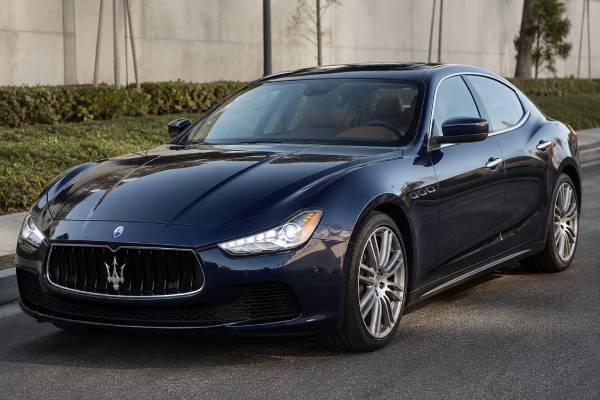
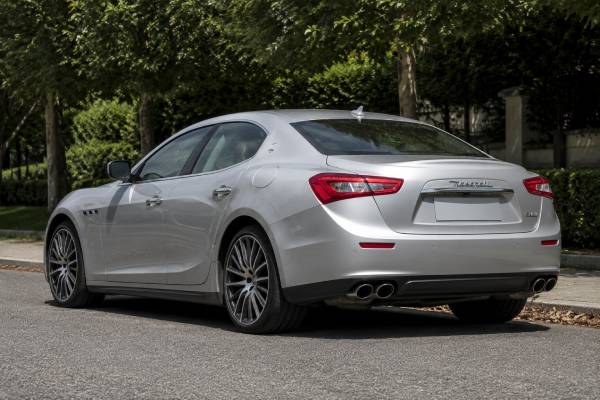
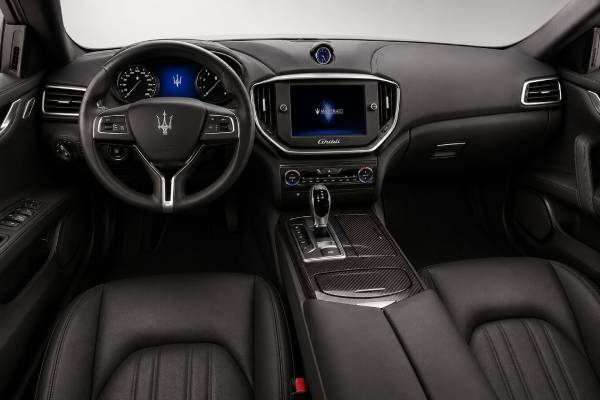
The 330 hp Maserati Ghibli is the clearest expression of what the M157 project was meant to achieve: make a modern Maserati usable as an everyday executive sedan without stripping away the brand’s sound, styling, and rear-wheel-drive character. Sold from 2013 through 2016 in selected markets, this base petrol model used the F160 3.0-liter twin-turbo V6, an eight-speed ZF automatic, and a chassis shared in concept with the larger Quattroporte. It was slower than the 410 hp Ghibli S, yet it was not a cosmetic entry model. Its 500 Nm torque output, hydraulic steering, double-wishbone front suspension, and low driving position gave it a distinct personality among six-cylinder luxury sedans. Today, the 330 hp car can be one of the more rational early Ghiblis to own, but only when its service history, battery health, cooling system, suspension, tires, and electronic modules have been treated seriously. This guide explains the exact version, its technical makeup, how it feels, what commonly ages, and how to separate an appealing example from an expensive recovery project.
Table of Contents
- Why This Ghibli Changed Maserati
- F160 V6 and Chassis Specifications
- Launch Years, Trims, and Factory Choices
- Italian Form with Practical Four-Door Packaging
- How the 330 hp Ghibli Drives
- Age-Related Faults and Service Priorities
- How to Buy the Right Early Ghibli
Why This Ghibli Changed Maserati
The 330 hp Ghibli mattered because it gave Maserati a credible entry below the Quattroporte without turning the Trident into a simple appearance package. It was a real rear-drive Maserati with a bespoke body, a twin-turbo V6, and the dynamic layout expected of a sporting sedan.
Maserati revived the Ghibli name for the M157 in 2013, but the new car had little mechanical connection to the two-door Ghiblis of 1967 and 1992. The mission had changed. Instead of building a low-volume grand tourer, Maserati aimed at the busy premium-sedan class occupied by the BMW 5 Series, Mercedes-Benz E-Class, Audi A6, and Jaguar XF. The company needed more global volume, better everyday usability, and a lower price point while preserving enough theater to justify the badge.
The 330 hp version sat at the petrol range’s entry point in markets where the more powerful Ghibli S and S Q4 were also available. Its role was easy to misunderstand. It did not use a naturally aspirated engine, a simplified chassis, or a cheaper transmission. It retained the F160 twin-turbo V6 architecture, the same core eight-speed automatic, four-wheel independent suspension, large brakes, and the same dramatic body. Maserati reduced peak output through calibration, leaving a broad 500 Nm torque plateau that suited normal road use.
That calibration is central to the car’s appeal today. A healthy 330 hp Ghibli feels fast enough for modern traffic without creating the rear-tire demands or higher heat load of the 410 hp S. It also keeps the launch-era hydraulic steering that many enthusiasts prefer to the electric system fitted after the major 2018 update. The steering alone does not make every early car better, because worn front control-arm bushes, poor alignment, mismatched tires, or bent wheels can erase its advantage. When sorted, however, the wheel loads naturally through a bend and gives the driver more texture than many newer luxury sedans.
F160 V6 and Chassis Specifications
The 330 hp Ghibli combines a 2,979 cc twin-turbocharged V6 with rear-wheel drive and an eight-speed torque-converter automatic. Its strongest number is not the headline horsepower figure but the 500 Nm available from low engine speed, which gives the car relaxed overtaking ability.
| Platform code | M157 |
|---|---|
| Engine code | F160 |
| Engine | 60-degree 3.0-liter twin-turbo V6 |
| Displacement | 2,979 cc |
| Fuel system | Direct petrol injection |
| Maximum output | 330 CV, approximately 243 kW |
| Maximum torque | 500 Nm at approximately 1,750–4,500 rpm |
| Transmission | ZF eight-speed automatic |
| Drivetrain | Rear-wheel drive with limited-slip differential |
| 0–100 km/h | Approximately 5.6 seconds |
| Top speed | Approximately 263 km/h |
| Fuel capacity | 80 liters |
The F160 uses two turbochargers, double overhead camshafts, four valves per cylinder, and direct injection. Maserati developed the engine family for a different response and sound profile from an ordinary high-volume V6. The 330 hp tune emphasizes low- and middle-range torque, so the car does not need to chase the redline to make progress. Peak power arrives around 5,000 rpm, while the useful torque band begins below 2,000 rpm.
The eight-speed automatic is a major part of the package. In normal mode it seeks taller gears early and keeps the engine quiet. Sport mode holds ratios longer, sharpens throttle response, changes exhaust-valve behavior, and makes downshifts more assertive. The large fixed aluminum paddles remain on the steering column rather than rotating with the wheel. Some drivers need time to adapt, but the arrangement becomes intuitive during quick steering inputs because the shift controls never move.
The rear differential helps the car deploy torque without needing all-wheel drive. The layout gives the Ghibli a traditional front-engine, rear-drive balance, although it remains a large sedan rather than a lightweight sports car. The engine sits behind the front axle line as far as practical, and the battery is located toward the rear. Maserati targeted near-even static weight distribution, which contributes to the car’s settled high-speed behavior.
| Body style | Four-door, five-seat executive sedan |
|---|---|
| Length | Approximately 4,971 mm |
| Width excluding mirrors | Approximately 1,945 mm |
| Height | Approximately 1,461 mm |
| Wheelbase | 2,998 mm |
| Trunk capacity | Approximately 500 liters |
| Representative curb weight | Roughly 1,810–1,875 kg, depending on market and equipment |
| Front suspension | Double wishbones with coil springs |
| Rear suspension | Five-link independent layout |
| Steering | Hydraulic power assistance |
| Brakes | Ventilated discs with Brembo hardware |
Wheel size changes the experience more than many option lists suggest. Eighteen-inch wheels provide the best ride compliance and generally reduce the cost of correct, high-speed-rated tires. Nineteen-inch wheels add sharper response without making the car excessively brittle. Twenty-inch packages look dramatic but expose the rims and sidewalls to pothole damage, increase tramlining, and can make an otherwise healthy chassis feel nervous on poor surfaces.
Skyhook adaptive damping was optional in many specifications. It uses electronically controlled dampers to vary body control. A working system gives the car a wider range between comfort and firm settings, but replacement costs are higher than for passive dampers. Buyers should identify which suspension is fitted rather than assuming every Ghibli has the same hardware.
Launch Years, Trims, and Factory Choices
The 330 hp Ghibli was sold in several markets from 2013 through 2016, but its equipment was never fully universal. The VIN and original build sheet are more reliable than a badge, advertisement, or registration description.
Early production cars established the original M157 appearance: a deep oval grille, swept headlamps, three side vents, frameless-looking door glass, and four exhaust outlets. Cabin architecture centered on an 8.4-inch touch screen, a prominent analog clock, and a wide center console. The first electronic gear selector drew criticism because its spring-loaded movement could make it easy to pass the desired position. Later software and user familiarity helped, but buyers should confirm that the selector moves cleanly and that the displayed gear always matches the command.
Common factory choices included several leather colors, open-pore or gloss wood, carbon-fiber trim, Alcantara headlining, heated and ventilated seats, a sunroof, premium audio, soft-close doors, adaptive lighting, parking cameras, blind-spot monitoring, Skyhook suspension, colored brake calipers, and a broad wheel catalog. A heavily optioned car is not automatically the better purchase. Every additional powered or networked feature creates another item that must work correctly.
How to identify the exact car
- Confirm the F160 engine designation and 330 hp output in the factory record.
- Check that the drivetrain is rear-wheel drive rather than Q4.
- Compare wheel design, brake color, interior trim, and suspension equipment with the build sheet.
- Note the original sales market because lighting, emissions parts, radio functions, and campaign coverage can differ.
- Verify that the engine-control software has not been altered by an undocumented tune.
- Inspect badges closely; Ghibli S, Q4, GranSport, and later-model parts are easy to retrofit.
The base car’s understated specification can be desirable. An 18- or 19-inch example with passive suspension, a conventional interior, and full records may be cheaper to maintain than a visually dramatic car loaded with rare electronics. Conversely, a well-kept Skyhook car with premium leather and a complete build sheet may command more because it shows the breadth of the original Maserati proposition.
Italian Form with Practical Four-Door Packaging
The early Ghibli succeeds visually because its shape communicates Maserati identity without copying an older model. The grille, Trident, three fender vents, long hood, and tightly drawn rear quarters give a business sedan the stance of a grand tourer.
Maserati Centro Stile gave the M157 a low roof and a rising shoulder line. The proportions make the car look smaller than its nearly five-meter length, yet the dimensions become obvious in a narrow garage or crowded city. The width requires care around curbs and columns. Rear visibility is limited by the sloping roof and thick rear structure, so functioning parking sensors and cameras are more than luxury extras.
The suspension geometry is more ambitious than the entry-model label suggests. Double wishbones at the front help control camber as the wheel moves, while the five-link rear layout separates several wheel-control functions. The result is stable geometry under braking and cornering when bushes, ball joints, dampers, and alignment are correct. Worn components can make the same car follow road grooves, knock over sharp edges, or eat the inner shoulders of expensive tires.
Inside, the low front seats and visible hood create a convincing cockpit. The fixed metal paddles, analog clock, stitched dashboard, and available wood or carbon trim supply the special details buyers expect. Some switchgear was shared within the broader group, and certain lower plastics are ordinary. That contrast is part of the M157 story: impressive leather and shape sit next to components chosen to make larger-scale production possible.
The 8.4-inch touch screen controls audio, climate, navigation, phone functions, and settings. It was competitive at launch but now feels dated. Slow response, screen delamination, failed Bluetooth, dead pixels, amplifier faults, or rebooting can be costly to resolve. Reversible aftermarket integration may improve phone use, but poorly installed systems can create battery drain, audio noise, lost settings, or network faults.
Exterior and cabin inspection points
- Examine the lower bumper, grille slats, parking sensors, and undertrays for impact damage.
- Look for condensation in lamps and water traces around the trunk, sunroof drains, and door seals.
- Test every seat movement, lumbar function, memory position, window, lock, mirror, and climate outlet.
- Check dashboard leather for shrinkage and trim for lifting, cracking, or mismatched replacement pieces.
- Inspect the rear seat and headliner for signs of blocked drains or previous glass work.
- Verify both keys, the wheel-lock key, compressor kit, manuals, and any original accessories.
How the 330 hp Ghibli Drives
A sorted 330 hp Ghibli feels quick, substantial, and more communicative than its output ranking implies. It delivers its best experience on a flowing road or motorway, where the V6 torque, hydraulic steering, and long wheelbase work together.
Throttle response is progressive in the normal setting. The first part of pedal travel is calm enough for traffic, and boost builds without the abrupt hit associated with some early turbo engines. Sport mode makes the car feel lighter by sharpening the accelerator, holding gears, and opening the exhaust path. The engine remains strongest through the midrange; it will rev, but the car’s natural rhythm is to use torque and shift before the final part of the tachometer.
The ZF automatic suits that approach. At low speed it should engage Drive and Reverse without a heavy thump, long delay, or flare. Cold shifts may be firmer, but repeated hesitation after rolling stops or hunting between ratios deserves diagnosis. Battery voltage, adaptation values, software, fluid condition, and engine faults can all influence shift quality, so a replacement transmission should not be assumed from one symptom.
Hydraulic steering gives the early car a clear identity. Effort builds with cornering load, and the rim transmits information about front-tire grip and road texture. The system is not delicate or supercar-light. At parking speed the wheel can feel heavy, and the turning circle reminds the driver of the car’s size. On the move, that weight helps the Ghibli settle into long bends.
Rear-wheel drive makes throttle balance easy to understand. In dry conditions with correct tires, the 500 Nm output is manageable and the limited-slip differential helps the car accelerate cleanly. Stability control intervenes progressively when grip falls. Disabling it on public roads adds risk without improving the basic experience, especially in cold or wet weather.
Ride quality depends heavily on wheels and dampers. Eighteen-inch tires give the suspension room to work and make the Ghibli surprisingly comfortable. Nineteen-inch wheels often provide the best compromise between appearance and compliance. Twenty-inch tires increase impact harshness and noise, and a bent inner rim can create vibration that balancing alone will not fix. Skyhook broadens the range, but worn adaptive dampers can feel both floaty and abrupt.
Brakes should feel firm and linear. The car’s weight and speed demand quality pads, true discs, fresh fluid, and matched tires. Steering shake under braking can come from disc variation, hub corrosion, suspension wear, or wheel damage. A pedal that lengthens after repeated stops points to heat or fluid problems and should not be dismissed as normal Italian-car behavior.
The 330 hp output is not a consolation prize. Its slightly softer delivery can make the chassis easier to enjoy at legal speeds, and the rear tires are less overwhelmed than on a tuned or higher-output car. Buyers should expect smooth urgency rather than violent acceleration. If an example feels flat, surges, smokes, misfires, or cannot hold a steady boost response, the car needs inspection rather than excuses about the “base” tune.
Age-Related Faults and Service Priorities
The main ownership risk is accumulated neglect, not one universal catastrophic defect. By now, every 2013–2016 Ghibli should be evaluated as an aging performance sedan with complex electronics, heat-cycled hoses, expensive suspension parts, and a strong need for correct battery voltage.
Battery condition comes first because low voltage can trigger warning messages across systems that are not actually defective. A weak battery, incorrect battery type, poor terminal connection, or car left unused can produce starting issues, lost settings, parking-brake warnings, transmission messages, and communication faults. Test the battery under load, verify charging voltage, and use an appropriate maintainer for a stored car.
Cooling-system inspection is equally important. Look for dried coolant traces, low reservoir level, odor after a drive, slow warm-up, overheating, fan faults, and staining around hose connections. Plastic fittings and seals age, and minor leaks can become serious if the car is driven low on coolant. Cooling repairs should use the correct bleeding procedure because trapped air can create misleading temperature behavior.
The F160 should start cleanly from cold, settle to a stable idle, and pull without hesitation. Oil seepage, ignition-coil faults, worn plugs, intake leaks, boost-control problems, injector issues, or sensor failures can produce misfires and reduced performance. A diagnostic scan should include stored and pending faults, misfire data, fuel trims, readiness monitors, and evidence that codes were recently cleared.
Chassis and driveline items that deserve attention
- Front control-arm bushes and ball joints can cause knocks, vague steering, or uneven tire wear.
- Dampers may leak or lose control; Skyhook units add electronic diagnosis to the mechanical check.
- Bent wheels and aged tires often masquerade as suspension or driveline vibration.
- Engine and transmission mounts can soften, increasing vibration during engagement or idle.
- Differential seals, driveshaft joints, and wheel bearings should be checked on a lift.
- Brake discs can be expensive, especially when wear is combined with seized hardware or damaged calipers.
Electronic faults require methodical diagnosis. Infotainment, cameras, seat modules, blind-spot sensors, parking sensors, keyless entry, window regulators, and climate actuators can fail independently. Replacing modules without checking power, grounds, wiring, water entry, and software configuration wastes money. Some control units need coding or proxy alignment after installation.
Recall completion must be verified by VIN. Early M157 campaigns included work involving rear suspension tie rods and front-seat wiring on certain populations, while other campaigns varied by market and production date. A seller’s statement that “all recalls were done” is not enough; obtain documentation or check the official campaign record for the exact chassis.
Service history should show more than oil changes. Brake fluid, coolant condition, spark plugs, filters, accessory drive components, alignment, tires, air conditioning, and inspection of belts and hoses all matter with age. Short urban trips can be harder on the battery, oil, and exhaust than regular long-distance driving. Very low mileage is not automatically protective if the car sat on old fluids and tires.
How to Buy the Right Early Ghibli
The best 330 hp Ghibli is the car with the clearest identity, cold-start access, specialist inspection, complete invoices, and enough purchase-price margin to correct immediate needs. Mileage matters less than maintenance quality and present condition.
Begin with the VIN. Obtain the factory build information, confirm the 330 hp rear-drive specification, identify the original market, and compare the equipment list with the car. Imported vehicles can be excellent, but lighting, navigation, emissions parts, radio functions, warranty history, and campaign eligibility may differ from local-market cars.
Ask for dated invoices rather than a stamped book alone. Useful records show oil grade, filter part numbers, spark-plug replacement, brake work, tire dates, battery replacement, alignment, coolant repairs, software updates, and diagnostic findings. A long list of small repairs can be reassuring because it demonstrates active ownership. A vague claim of “fully serviced” without details is not.
Inspection order for a serious purchase
- View the car in daylight and inspect paint depth, panel gaps, glass markings, undertrays, wheel condition, and lower-body impact points.
- Start the engine completely cold. Watch for smoke, prolonged cranking, rattles, unstable idle, warning lamps, and coolant or fuel odor.
- Run a full Maserati-capable diagnostic scan before anyone clears faults. Save the report.
- Test every switch and powered feature, including both keys, seats, windows, mirrors, cameras, parking sensors, lighting, climate zones, audio, and navigation.
- Drive on several surfaces. Include parking maneuvers, steady cruise, moderate acceleration, gentle and firm braking, and a section of uneven road.
- Recheck the car hot for leaks, fan behavior, odors, unequal wheel temperature, and newly stored faults.
- Inspect the underside on a lift with enough covers removed to see the engine, gearbox, differential, cooling connections, brake lines, and suspension joints.
Correct tires are a major value factor. Four quality tires of the right size, speed rating, load rating, and similar age can transform the car. Mixed brands, severely different tread depths, or budget tires suggest cost-cutting. Uneven inner-edge wear often points to alignment or worn suspension, not simply an aggressive factory setup.
Accident history needs physical verification. Database reports can miss repairs, and a recorded incident does not automatically make a car unacceptable. The important questions are whether the structure is straight, aluminum panels were repaired correctly, safety systems were restored, paint quality is consistent, and alignment can be set without extreme adjustment.
Estimate the first-year baseline before agreeing on price. Include any overdue fluids, filters, plugs, tires, brakes, battery, alignment, damaged wheels, leaking dampers, missing keys, and non-working options. A cheap car needing several of these items can exceed the cost of a better example before the owner reaches routine maintenance.
A final decision should answer four questions. Is the specification verified? Is the structure honest? Does a specialist agree that the engine, electronics, chassis, and gearbox are healthy? Is there financial room for immediate maintenance? A yes to all four makes the early 330 hp Ghibli a compelling and unusually flavorful executive sedan. Uncertainty in any one area is a reason to negotiate carefully or continue searching.
References
- All-new Maserati Ghibli premiering in Shanghai 2013 (Manufacturer Press Release)
- Maserati at the Geneva Motor Show 2015 (Manufacturer News)
- Defect Information Report 2016 (Recall Database)
- Part 573 Safety Recall Report 17V-046 2017 (Recall Database)
Disclaimer
This article is for informational purposes and does not replace professional diagnosis, repair, or a vehicle-specific inspection. Specifications, torque values, service intervals, fluids, software procedures, and repair methods can vary by VIN, market, production date, and equipment. Verify all work against the official service and parts documentation for the exact car.
Please share this guide on Facebook, X/Twitter, or another enthusiast community if it was useful. Sharing supports the creation of more detailed vehicle resources.