
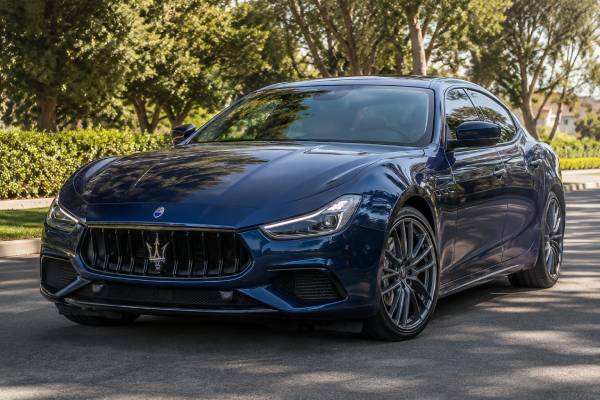
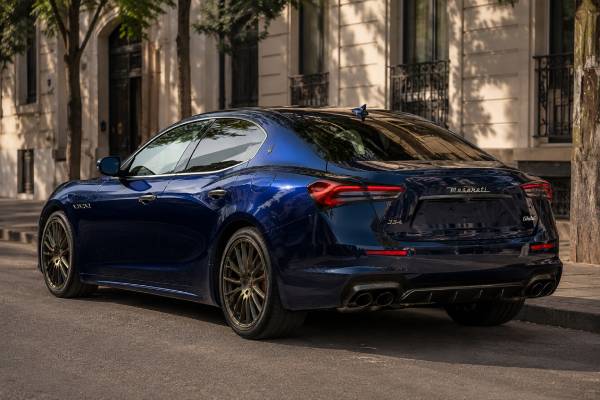
The Maserati Ghibli 334 Ultima is the final and fastest factory V8 version of the M157 sedan, built as a 103-car limited edition to close Maserati’s road-going eight-cylinder era. Its name refers to the claimed 334 km/h top speed, an eight-kilometer-per-hour increase over the Ghibli Trofeo from which it was developed. Maserati achieved more than a badge change: special-compound performance tires, weight attention, 21-inch Orione wheels, and a carbon-fiber rear spoiler helped reduce the 0–100 km/h time from 4.3 to 3.9 seconds and support the higher maximum speed. The 3.8-liter F154 twin-turbo V8 remains rated at 580 hp and 730 Nm, driving the rear wheels through an eight-speed automatic. Every car also carries a distinctive visual specification centered on Scià di Persia or Persia Blu paint, Rubino accents, a full carbon exterior package, Pale Terracotta and black upholstery, and numbered “una di 103” identification. Because value rests on both mechanical condition and edition integrity, buying one demands more than a normal Trofeo inspection. Original paint, wheels, tires, carbon pieces, badges, interior materials, documents, software, and provenance all matter alongside cooling, brakes, suspension, battery health, and the V8 itself.
Table of Contents
- The Last and Fastest V8 Ghibli
- 334 Ultima Specifications and Aerodynamics
- Limited Production and Collector Details
- Persia Blu, Carbon Fiber, and Final-V8 Identity
- How the 334 Differs from Trofeo
- Preserving a 103-Car Limited Edition
- Buying and Valuing a 334 Ultima
The Last and Fastest V8 Ghibli
The 334 Ultima is a factory farewell to the V8, not a conventional appearance package. Maserati built 103 examples as a final high-speed development of the Ghibli Trofeo and as a historical marker before the brand’s transition toward electrification.
Maserati’s road-car V8 story extends back to the 5000 GT created at the end of the 1950s. The modern Ghibli joined that line only late in the M157 program, when the Trofeo arrived for 2020 with the 3.8-liter twin-turbo F154. The 334 Ultima takes that sedan to its terminal form: the same nominal power, but revised tires, aerodynamics, weight, and calibration aimed at both acceleration and maximum speed.
The number is literal. Maserati claimed 334 km/h, calling the car the fastest combustion-engined sedan of its moment. That figure should be understood as a manufacturer performance claim achieved under controlled conditions, not a target for public-road verification. Tire condition, temperature, altitude, fuel, surface, wind, and vehicle load all influence results at extreme speed.
The edition was presented alongside the Levante V8 Ultima, but the production counts differ in structure. Ghibli 334 Ultima totals 103 cars. The Levante farewell was offered in two colors with 103 examples of each. A seller who casually describes the Ghibli as “one of 206” is confusing the programs.
The 334 designation also distinguishes this car from an ordinary Trofeo with special paint. The factory package includes a specific exterior and cabin story, edition markings, wheels, tires, spoiler, and carbon content. These elements are central to authenticity and future collectability. Replacement after accident damage may be possible, but provenance and correct part identification become important.
Its historical relevance is stronger than its production age suggests. The car is both the final V8 Ghibli and the final development of a sedan architecture launched a decade earlier. It combines the old M157’s analog-style gauges, physical controls, and fixed paddles with late infotainment, driver aids, and software.
That dual nature shapes ownership. It can be driven as a usable four-door grand tourer, yet its rarity and finish encourage preservation. The best owners will avoid both extremes: storing it until seals, tires, battery, and fluids deteriorate, or treating it like a disposable high-mile performance sedan. Regular exercise, complete service, and careful documentation protect the mechanical and collector value together.
334 Ultima Specifications and Aerodynamics
The 334 Ultima retains the Trofeo’s 580 hp and 730 Nm F154 V8 but uses tire, weight, wheel, and aerodynamic development to improve launch and top speed. Its headline figures are 3.9 seconds to 100 km/h and 334 km/h maximum speed.
| Item | Specification |
|---|---|
| Engine | F154 90-degree twin-turbocharged V8 |
| Displacement | 3,799 cc |
| Maximum output | 427 kW / 580 CV / approximately 572 SAE hp |
| Maximum torque | 730 Nm from approximately 2,250 to 5,250 rpm |
| Transmission | Eight-speed automatic |
| Drivetrain | Rear-wheel drive with limited-slip differential |
| 0–100 km/h | Approximately 3.9 seconds |
| Top speed | 334 km/h |
| 100–0 km/h stopping distance | Approximately 34 meters in manufacturer data |
| Wheels | 21-inch Orione design in matte dark graphite |
| Wheelbase | 2,998 mm |
| Length | 4,971 mm |
| Fuel capacity | 80 liters |
The F154 is an aluminum twin-turbo V8 installed longitudinally behind the front axle line as far as the platform permits. Its broad torque band gives the sedan force at nearly any road speed, while the eight-speed automatic provides a low first gear and two tall cruising ratios. Corsa mode and launch control coordinate engine, transmission, traction, and chassis for maximum acceleration.
Maserati did not raise the advertised power for the 334. Instead, development focused on using the available output more effectively. A special tire compound improves launch grip. The 21-inch Orione wheel design supports the tire package and contributes to the edition’s aerodynamic work. A carbon-fiber rear spoiler helps manage airflow at the claimed top speed.
The press material also describes weight optimization, though buyers should avoid unsupported claims about an exact reduction unless the specific homologation document is available. Options, fluids, market equipment, and measurement standards affect curb weight. The meaningful result is the improved 3.9-second acceleration claim compared with Trofeo’s 4.3 seconds.
Aerodynamic changes at 334 km/h are not cosmetic. Small changes in lift, drag, underbody flow, wheel turbulence, and rear stability become significant. The rear spoiler, ride height, correct undertrays, factory wheel geometry, and approved tires should remain as engineered. Damage or nonstandard replacements can alter behavior beyond ordinary road speeds.
The brakes are large, ventilated, and designed for high-energy stops, but the 34-meter manufacturer figure depends heavily on tire and surface conditions. Collector mileage does not guarantee healthy discs or fluid. Corrosion, pad glazing, aged hoses, and old tires can reduce braking even on a car that appears untouched.
The chassis retains front double wishbones, a five-link rear suspension, electric steering, and Skyhook adaptive dampers. The sedan remains substantial and long-wheelbase. Its performance is achieved by power, traction, and stability rather than low mass, so tires, dampers, alignment, and bushings are essential to confidence.
Limited Production and Collector Details
Each 334 Ultima belongs to a 103-car production run, and the edition-specific records and components are part of the asset. A collector should be able to trace the VIN, numbered identity, original sale, service, and ownership history without relying on verbal claims.
The central tunnel carries the “una di 103” signature, and 334 logos appear in the cabin and on the exterior. These are useful markers, but they are not sufficient alone. Factory build data, original invoice, certificate or delivery material where supplied, and dealer records should tie the specific VIN to the edition.
Maserati’s announcement presents a tightly defined color and material scheme. The body is finished in a Persia-inspired blue, described in official material as Scià di Persia or custom Persia Blu depending on source and market wording. Rubino red accents appear in the 334 fender graphics, wheel details, and related trim.
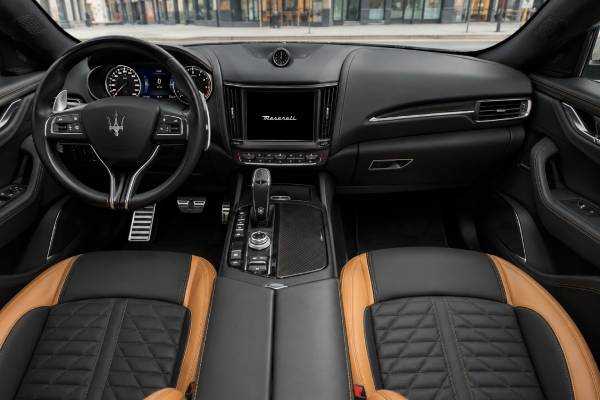
Inside, Pale Terracotta leather frames black vertically channeled Alcantara seat centers. The trident and 334 logos are stitched into the front headrests. A dedicated center-console badge reinforces the numbered identity. These materials should be inspected for dye transfer, compression, stretching, UV damage, and cleaning residue.
The edition includes extensive carbon-fiber exterior content. Maserati specifically identified front-bumper inserts, door handles, mirror caps, and B- and C-pillar trim, along with the rear spoiler. Carbon weave, gloss, edge fit, and part markings should be consistent. Clouding, yellowing, cracks, or mismatched weave can reveal damage or replacement.
Collector file essentials
- Original purchase invoice and factory build data.
- Numbered edition documentation and delivery accessories.
- Service invoices with dates, mileage, fluids, parts, and software actions.
- Paint-protection-film and detailing records, including what was removed or repainted.
- Original wheel, tire, brake, glass, key, manual, and tool information.
- Photographs from delivery and before any repair or cosmetic work.
A car does not become less authentic because consumable tires or batteries are replaced. Safety takes priority, and the original special-compound tires will age out. Preserve removed date-coded parts only when safe and practical, document the replacement, and fit the closest approved current specification available through Maserati or the tire manufacturer.
Mileage affects value, but condition and documentation can matter more within such a small run. A carefully used car with annual service may be mechanically safer than a delivery-mile example on old fluids and tires. Buyers should distinguish preservation from neglect.
Market specification also matters. Lighting, emissions equipment, radio, navigation, warranty, and connected services differ. An imported 334 can still be authentic, but conversion work, taxes, title history, and local service support should be clear before assigning a collector premium.
Persia Blu, Carbon Fiber, and Final-V8 Identity
The 334 Ultima’s design tells a specific final-V8 story through color, material, and subtle aerodynamic changes. Restoring those details accurately is more important than adding further customization.
The blue body color references the Shah of Persia and the 5000 GT origin story used in Maserati’s V8 farewell campaign. Under direct light it should show depth and metallic variation. Paint matching after repair may be difficult, so inspect in sun, shade, and artificial light. Measure film thickness while recognizing that hand-finished or corrected areas may differ from mass-production norms.
Rubino accents provide contrast without turning the car into a graphic special. The painted 334 logo above the side vents, wheel-center trident detail, and coordinated elements should have consistent tone and placement. Replacement decals or improvised paint can look convincing in photographs but reveal edge, gloss, or color differences up close.
The matte dark graphite Orione wheels are both visual and functional. Check each barrel for bends, cracks, welding, overspray, and incorrect refinishing. A cosmetic refurbishment can change spoke edges or the matte level. Confirm part numbers and offsets, and retain photographs before any work.
The carbon rear spoiler is an aerodynamic component as well as an edition cue. Its mounting, clearcoat, alignment, and underlying boot surface should be intact. A repaired boot lid or removed spoiler warrants careful inspection because incorrect refitting can allow water entry or stress the carbon.
The full exterior carbon kit creates many small authenticity points. Mirror caps and handles are vulnerable to parking damage and careless polishing. Pillar pieces can cloud or lift. Front bumper parts are exposed to stones and curb contact. Paint-protection film can preserve them, but edges, trapped moisture, and adhesive condition should be checked.
Inside, the Pale Terracotta and black palette deliberately differs from ordinary Trofeo cabins. Alcantara should be cleaned with correct methods to avoid matting or water rings. Leather bolsters should retain texture, and stitching must remain bright and even. Aggressive dye or ceramic treatment can alter the original finish.
The rest of the cabin remains recognizably late M157: a 10.1-inch MIA screen, fixed shift paddles, analog-style instruments, physical mode controls, and the dashboard clock. That familiarity is part of the appeal. The edition is a highly developed version of an existing sedan, not a new-generation architecture.
Sound completes the identity. The V8 has a deep idle, a broad midrange note, and a harder edge as revs rise. Corsa and Sport alter exhaust and transmission behavior. A permanently open exhaust, aftermarket downpipes, or software-induced theatrics can make the car louder while reducing originality, emissions compliance, and long-distance quality.
How the 334 Differs from Trofeo
The 334 Ultima is not more powerful than Trofeo, but it is quicker in the official sprint and faster at the top end because Maserati changed tires, weight, wheels, and aerodynamics. It also carries a fixed 103-car collector specification.
A standard Trofeo produces the same quoted 580 CV and 730 Nm and uses rear-wheel drive, the eight-speed automatic, Corsa mode, and launch control. Its official 0–100 km/h time is about 4.3 seconds and top speed about 326 km/h. The 334 improves those claims to 3.9 seconds and 334 km/h.
The difference at launch begins with grip. Special-compound tires help convert torque into acceleration. Weight attention reduces the work required, while calibration can make the launch sequence more effective. The driver should not repeatedly demonstrate this on a used car; a single launch does not prove health and adds significant load.
At very high speed, the rear spoiler and wheel/aero package support stability. Eight km/h may look small on paper, but aerodynamic drag increases sharply with speed. The development required to move beyond 326 km/h is more meaningful than the number alone suggests.
On ordinary roads, the gap is subtle. Both cars have immense torque, a fast automatic, firm body control, and powerful brakes. Tire age and temperature can have a larger effect than the edition hardware at legal speeds. A fresh, aligned Trofeo may feel better than a 334 on old tires or damaged wheels.
The 334’s cabin and exterior create the largest daily distinction. Persia blue, Rubino accents, special upholstery, logos, carbon kit, Orione wheels, and the numbered plaque make every drive feel tied to the final edition. A Trofeo offered broader color and option freedom but lacks the same fixed narrative.
Collector behavior also changes use. Trofeo buyers can modify or accumulate mileage with less concern for a tiny production run. A 334 owner should document every change and preserve original parts. That does not mean avoiding use; it means making reversible, informed decisions.
Maintenance fundamentals remain the same. The F154, cooling package, automatic, Skyhook, brakes, electronics, and battery require specialist care. Edition status does not protect the car from leaks, low voltage, aged tires, overheated fluids, or software faults.
A buyer should choose 334 over Trofeo for provenance, final-V8 meaning, fixed specification, and the ultimate factory performance claim. A buyer interested only in V8 speed may find a well-kept Trofeo better value. Paying the premium makes sense only when the 334-specific identity is complete.
Preserving a 103-Car Limited Edition
Preservation means maintaining full function and documented originality, not merely minimizing mileage. The engine, tires, seals, battery, fluids, air conditioning, brakes, and electronics all suffer when a car sits indefinitely.
Service the V8 by time as well as distance. Use the approved oil and filter, check level correctly, and inspect turbo oil and coolant lines, covers, seals, and undertrays. Any smoke, burning smell, or unexplained consumption should be diagnosed before the car is exercised hard.
Cooling capacity is critical in a 580 hp sedan. Inspect radiators, condensers, charge coolers, reservoirs, pumps, hoses, fans, and debris between cores. Keep the front airflow path and underbody panels complete. A small leak or weak fan can become a serious thermal event during traffic or spirited use.
The 12-volt battery should be load-tested and maintained with a suitable charger during storage. Low voltage can create errors in the engine, transmission, parking brake, steering, dampers, lighting, MIA, cameras, radar, and seats. Repeated boosting is not a preservation strategy.
Tire age is a safety limit regardless of tread. The 334’s extreme-speed claim makes correct rating and condition especially important. Record date codes and replacement invoices. Store the car away from ozone, heat, and sunlight, maintain pressure, and move it enough to avoid long-term flat spotting.
Edition-preservation priorities
- Protect original paint and carbon without aggressive correction or irreversible coatings.
- Photograph and document every wheel repair, tire change, brake replacement, and body adjustment.
- Retain removed original parts when safe, legal, and practical.
- Use correct lifting points and prevent damage to undertrays, side skirts, and carbon trim.
- Exercise climate, seats, windows, locks, cameras, driver aids, and infotainment regularly.
- Keep software, recall, and service-campaign records with the physical history file.
Brake discs and pads should be measured, not judged by low mileage. Storage can corrode inner faces and seize parking-brake components. Replace fluid by time because it absorbs moisture. After washing or storage, a gentle drive can dry the brakes before the car is parked again.
The automatic and differential should operate smoothly cold and hot. Harsh engagement, flare, or driveline clunk needs diagnosis of mounts, software, adaptations, fluid, joints, and internal wear. Corsa mode and launch control should not be used to mask or provoke symptoms.
Skyhook dampers, control arms, rear links, bearings, and alignment support both ride and tire preservation. A small geometry error can wear a rare tire set rapidly. Scan all modules during annual service even when no warning is displayed, and compare stored data over time.
Choose a workshop that understands both modern Maserati diagnostics and collector documentation. Work orders should identify part numbers, software versions, measurements, photographs, and retained components. A complete record increases confidence when the car eventually changes hands.
Buying and Valuing a 334 Ultima
A 334 Ultima should be valued as a specific 103-car object, then adjusted for mechanical, cosmetic, and documentary condition. An ordinary Trofeo comparison is useful, but it cannot replace edition authentication.
Request the VIN, build sheet, original invoice, numbered documentation, service file, ownership history, title records, both keys, manuals, accessories, and detailed photographs before traveling. Confirm that every official identifier agrees with the 334 program and that the car has not been rebuilt from a damaged Trofeo.
Inspect paint in multiple lighting conditions and measure it. Study the Persia blue match, Rubino graphics, carbon weave, spoiler, mirror caps, handles, pillars, bumper inserts, wheel finish, center caps, brake calipers, glass dates, and fasteners. A repair is not automatically disqualifying, but it must be disclosed, structurally sound, and accurately restored.
Specialist purchase sequence
- Authenticate VIN, production identity, “una di 103” details, original market, and factory specification.
- Scan every module before codes are cleared; record mileage data, software, faults, readiness, and configuration.
- Start fully cold and assess cranking, smoke, idle, turbo and belt noise, exhaust valves, charging voltage, and initial shifts.
- Inspect on a lift for structure, cooling, leaks, mounts, suspension, brakes, differential, exhaust, undertrays, wheels, and tires.
- Test MIA, audio, cameras, radar, lighting, seats, climate, locks, Skyhook, drive modes, parking brake, and both keys.
- Drive progressively without repeated launch control, then recheck temperatures, wheel heat, leaks, odors, and stored faults.
- Commission independent paint, carbon, wheel, and upholstery estimates for any edition-specific defect.
A compression or leak-down test may be justified when the history, cold start, smoke, or scan data raises concern. Oil analysis can add context, but one sample is not a guarantee. The priority is a coherent pattern across records, physical inspection, live data, and road behavior.
Verify tire identity and age. The original special compound may no longer be safe simply because it is authentic. Ask Maserati and the tire maker for the current approved replacement. Nonstandard sizes or generic tires undermine both performance and value.
Review use history honestly. Track events, repeated launch control, top-speed attempts, tuning, downpipes, or accident repair increase risk. Very low mileage creates different concerns: old fluids, weak battery, flat-spotted tires, dry seals, corrosion, and unexercised modules.
Market value will depend on region, taxes, mileage, ownership, and public sales evidence. Avoid relying on an asking price or rarity alone. Compare documented transactions where available, then subtract the full cost and uncertainty of missing parts, paint repair, incorrect wheels, old tires, or incomplete provenance.
The best car is not necessarily the one with the fewest kilometers. It is the example whose identity is unquestioned, paint and carbon are honest, numbered materials are complete, mechanical systems are current, and history explains every change. In that condition, the 334 Ultima earns its premium as the most developed M157, the fastest factory Ghibli, and a tangible closing chapter in Maserati’s V8 story.
References
- Maserati Ghibli 334 Ultima 2023 (Manufacturer Press Release)
- 334 Ultima and V8 Ultima- The last Maserati V8 engine (Manufacturer Story)
- V8 ULTIMA. Roaring Elegance. 2023 (Manufacturer Brochure)
- Launch of Trofeo: the most powerful Maserati collection 2020 (Manufacturer News)
Disclaimer
This article is for informational purposes and does not replace professional authentication, appraisal, diagnosis, repair, coding, calibration, or a vehicle-specific inspection. Specifications, equipment, tires, fluids, intervals, software, provenance documents, and warranty terms vary by VIN and market. Verify all details with official records and qualified specialists for the exact car.
Please share this guide on Facebook, X/Twitter, or an enthusiast community if it was helpful. Sharing supports more detailed model-specific resources.