
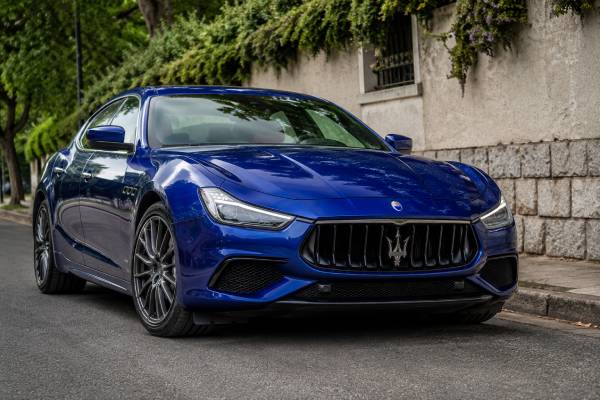
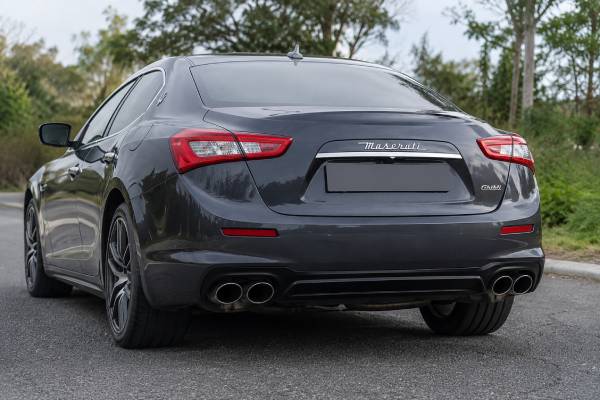
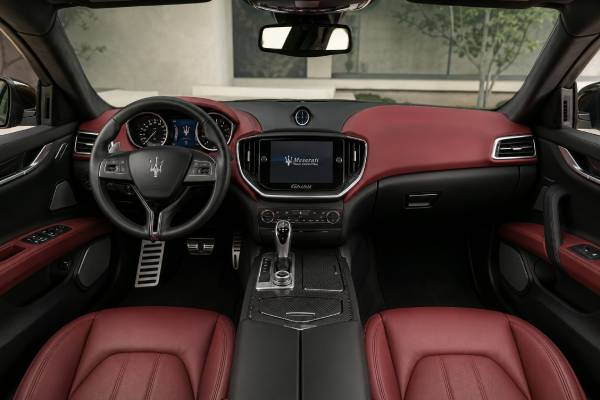
The 350 hp Maserati Ghibli is the balanced petrol version of the middle M157 years. Introduced after the original 330 hp tune, it keeps the F160 3.0-liter twin-turbo V6, rear-wheel drive, and ZF eight-speed automatic while adding enough output to feel clearly stronger without moving into the higher running demands of the 430 hp S models. Its official figures—500 Nm, roughly 5.5 seconds from 0–100 km/h, and about 267 km/h—place it comfortably in performance-sedan territory. The 2017–2021 range is especially important because it crosses two major updates. Early cars retain the launch-era hydraulic steering, while 2018-on examples use electric assistance, revised styling, GranLusso or GranSport themes, and broader driver-assistance capability. The 2021 refresh adds newer infotainment and boomerang-inspired rear lights. That variety gives buyers useful choices, but it also makes VIN-based identification essential. A 350 hp Ghibli can be an appealing daily grand tourer when its cooling, battery, suspension, tires, software, and service history are in order. This guide explains the exact specification, the changes across the period, how the car drives, and how to find a strong example rather than a deferred-maintenance bargain.
Table of Contents
- The 350 hp Sweet Spot
- Updated V6, Chassis, and Performance Data
- Facelifts, GranLusso, and GranSport
- How the Mid-Cycle Ghibli Matured
- Balanced Performance Without the S Badge
- Common Problems Across the Updated Years
- Finding the Best 350 hp Car
The 350 hp Sweet Spot
The 350 hp Ghibli is the version for buyers who want a petrol V6 and rear-drive balance without paying for the S badge or managing 580 Nm at the rear tires. It feels meaningfully quicker than the earlier 330 hp car while retaining a calm everyday character.
Maserati raised the base petrol output during the M157’s middle years as rivals became faster and emissions calibration evolved. The change did not turn the car into a different platform. It refined the original formula: longitudinal F160 V6, eight-speed automatic, limited-slip rear differential, double-wishbone front suspension, and five-link rear axle.
Its place in the range is easy to understand. The Diesel served high-mileage economy, the Hybrid later offered 48-volt electrification, the S and S Q4 delivered 430 hp, and the Trofeo eventually brought V8 power. The 350 occupied the broad middle. It could be ordered as a luxury-focused GranLusso or a sportier GranSport, depending on model year and market, without changing its core output.
The car remains relevant because it combines enough performance for modern roads with lower heat and tire stress than the strongest versions. The 500 Nm torque plateau begins around 1,750 rpm, so ordinary acceleration feels effortless. The engine still rewards a run toward 5,500 rpm, but it does not need repeated full-throttle use to feel alive.
The 2017–2021 period also lets buyers choose steering character. A 2017 car may retain hydraulic assistance and the earlier interior details. From the 2018 update, electric power steering enables lane-support systems and reduces low-speed effort. Neither system is universally better. Enthusiasts may prefer the hydraulic texture, while daily drivers may value the lighter action and newer safety equipment.
Depreciation makes the 350 appear inexpensive, but maintenance cost remains tied to a premium performance sedan. Tires, large brakes, adaptive dampers, cooling parts, electronic modules, and specialist labor do not become cheap because the vehicle’s resale value has fallen. The best ownership experience starts with a car that has not been maintained to its auction value.
Updated V6, Chassis, and Performance Data
The 350 hp Ghibli uses the 2,979 cc F160 twin-turbo V6 with 500 Nm, rear-wheel drive, and an eight-speed ZF automatic. It reaches 100 km/h in about 5.5 seconds and has an official maximum speed near 267 km/h.
| Chassis code | M157 |
|---|---|
| Engine code | F160 |
| Configuration | 60-degree 3.0-liter twin-turbo V6 |
| Displacement | 2,979 cc |
| Fuel delivery | Direct petrol injection |
| Maximum output | 350 CV, approximately 257 kW at 5,500 rpm |
| Maximum torque | 500 Nm at approximately 1,750–4,500 rpm |
| Transmission | ZF eight-speed automatic |
| Drivetrain | Rear-wheel drive with limited-slip differential |
| 0–100 km/h | Approximately 5.5 seconds |
| Top speed | Approximately 267 km/h |
| Fuel capacity | 80 liters |
The engine’s twin turbochargers build a broad, flat response. In normal mode, the gearbox uses that torque to select higher ratios early. Sport mode sharpens the accelerator, keeps the engine in the stronger part of the rev range, and opens the exhaust valves. The car feels faster without becoming abrupt, which is one reason the 350 works well as a daily driver.
The rear differential supports traction through corners, but tire quality remains decisive. A worn or cheap rear pair can make the car unstable under boost, particularly in rain. The factory stability system is well calibrated for road use and should not be disabled to compensate for poor rubber.
| Body style | Four-door, five-seat sports sedan |
|---|---|
| Length | Approximately 4,971 mm |
| Width | Approximately 1,945 mm excluding mirrors |
| Height | Approximately 1,461 mm |
| Wheelbase | 2,998 mm |
| Trunk capacity | Approximately 500 liters |
| Representative curb weight | About 1,850–1,950 kg, depending on equipment and market |
| Front suspension | Double wishbones |
| Rear suspension | Five-link independent layout |
| Steering | Hydraulic on early cars; electric after the major update |
Brakes use ventilated discs with Brembo hardware, although exact caliper and disc specification varies by market and wheel package. Buyers should measure the components and identify part numbers rather than rely on caliper color. Replacement of large discs and quality pads can be a significant first-year cost.
Wheel diameter changes the car’s personality. Eighteen-inch wheels favor comfort, 19-inch packages offer a strong compromise, and 20- or 21-inch choices increase response and visual impact at the expense of ride and damage risk. Correct load and speed ratings matter more than brand prestige alone.
Optional Skyhook dampers adjust firmness electronically. They can make the Ghibli calm on a motorway and better controlled on a fast road, but worn adaptive units may leak or lose authority. Passive suspension is simpler, not automatically inferior.
Facelifts, GranLusso, and GranSport
The 2018 model-year update is the key breakpoint for the 350 hp Ghibli. It changed steering, styling, assistance technology, and trim organization while leaving the core engine output intact.
A 2017 car generally presents the original M157 design and control layout. It can appeal to drivers who want hydraulic steering and fewer driver-assistance systems. The early 8.4-inch touch screen supports basic navigation, audio, climate, and phone functions but feels slow by current standards.
For 2018, Maserati revised the front and rear bumpers, introduced full-LED adaptive lighting in many specifications, and added electric power steering. The new steering system enabled active lane assistance and related functions. It also changed the feel around center, making the wheel lighter and less textured than the hydraulic setup.
GranLusso and GranSport gave buyers two visual directions. GranLusso emphasized refined trim, elegant wheels, premium leather, wood, and a formal appearance. GranSport used larger intakes, darker details, sport seats, more aggressive wheels, and available carbon elements. The line names describe equipment, not a different 350 hp engine.
The 2021 refresh modernized the rear lamps with a boomerang-style graphic and introduced a larger 10.1-inch Maserati Intelligent Assistant screen in many markets. Connected functions and software improved, though availability depends on region and subscription support.
How to establish the real specification
- Use the VIN and factory build sheet, not the trunk badge.
- Confirm the 350 CV calibration and rear-drive layout.
- Record production date, first market, and emissions standard.
- Identify hydraulic or electric steering and the fitted driver-assistance sensors.
- Verify GranLusso, GranSport, or other market trim.
- Match wheels, brakes, suspension, seats, lighting, and multimedia to the build record.
Retrofitted facelift bumpers, lamps, wheels, and badges can make an older car look newer. Such changes are not necessarily bad, but they should be disclosed and correctly installed. Radar, parking sensors, and lamp modules may require calibration or coding.
A simpler specification can be an advantage. Cars without a sunroof, soft-close doors, premium audio, or every assistance package have fewer systems to fail. Conversely, a fully equipped example with complete functionality and documentation can be especially satisfying. Condition decides which is better.
How the Mid-Cycle Ghibli Matured
By the 350 hp period, the M157 had become more polished without losing its distinctive proportions. The car still looks lower and more dramatic than many executive sedans, but later details make it easier to use every day.
Maserati Centro Stile’s basic shape remained unchanged: long hood, deep grille, Trident, three side vents, falling roof, and muscular rear quarters. The design disguises the nearly five-meter length, although the 1.9-meter-plus width is obvious in tight parking spaces.
The body combines a steel-intensive structure with aluminum doors, hood, and selected suspension parts. Collision repairs need correct methods for mixed materials. Inconsistent panel gaps, disturbed fasteners, overspray, or alignment that cannot be set within range may reveal poor work.
Aerodynamic and cooling details evolved with bumper revisions, but the 350 does not require the hood vents of the V8 Trofeo. Front grilles and lower openings still need inspection for blocked debris, cracked slats, damaged radar covers, and compromised cooling airflow.
Inside, the car’s strongest feature is the driving position. The seat sits low, the hood remains visible, and the large fixed paddles have a mechanical feel. Leather-covered surfaces, an analog clock, wood, carbon fiber, and Alcantara can make the cabin special. Lower trim and some shared switches are less exotic, reflecting the model’s higher production volume.
Later electric-steering cars integrate more assistance controls into the cockpit. Cameras, blind-spot sensors, lane systems, adaptive cruise, and traffic-sign functions depend on clean lenses, calibrated sensors, proper wheel alignment, and stable software. A warning may arise from a damaged bumper or replacement windscreen as readily as from a failed module.
Condition details that reveal care
- Clear lamps with no moisture and correctly operating adaptive functions.
- Intact lower grilles, undertrays, radar surfaces, and parking sensors.
- Dry trunk, battery area, front carpets, and headliner edges.
- Smooth seat motors, memory, ventilation, and lumbar functions.
- Leather without severe shrinkage and carbon trim without lifting clearcoat.
- A screen that boots quickly, retains settings, and works with cameras and audio.
The exhaust valves add much of the petrol car’s emotion. Sport mode should change the tone cleanly. Rattles, one-sided sound, or a permanently loud system may indicate failed valves, loose shields, or aftermarket work. Inspect the entire exhaust rather than judging it from the tailpipes.
Balanced Performance Without the S Badge
The 350 hp car feels quick enough for almost every road while remaining easier to meter than the 430 hp S. Its broad torque and progressive throttle make it more about flowing pace than dramatic launches.
In normal mode, the transmission moves quickly toward the taller ratios and the exhaust stays subdued. The engine responds cleanly from low rpm, so urban driving does not require constant downshifts. Sport mode makes a substantial difference: the pedal becomes more immediate, shifts hold longer, and the V6 note grows stronger.
The rear-drive chassis communicates power clearly. On dry, warm tires, the 500 Nm output is easy to deploy. In cold rain, the rear can reach its limit sooner, but stability control intervenes progressively. Four-season usability depends on fitting tires appropriate to the climate rather than relying on electronics.
Steering is the major year-dependent distinction. Hydraulic cars have more natural weight and surface feedback. Electric cars are lighter, less communicative near center, and better suited to assistance systems. A buyer should drive both if possible. Worn front arms, poor alignment, or bent wheels can make either system feel worse than it should.
The Ghibli is most convincing on a fast open road. Its long wheelbase creates stability, the front suspension keeps the tire well controlled, and the gearbox can select the right ratio without fuss. Tight switchbacks reveal the car’s mass, but the body remains composed when dampers and bushes are healthy.
Ride quality is excellent on moderate wheels. An 18- or 19-inch car can absorb broken surfaces with real luxury-sedan calm. Twenty- and 21-inch tires add sharper impacts and more road noise. Low-profile wheels also make vibration from a bent inner rim more likely.
Brakes should be strong and repeatable, with a short, even pedal. Steering shake can involve discs, hubs, suspension joints, or wheels. A dragging caliper may reveal itself through heat or odor after a normal drive. Brake fluid age matters because the car is heavy and capable of high speed.
At motorway pace, the eighth gear lowers revs and the 80-liter tank provides useful range. Wind noise should be controlled; excessive tire roar may point to aggressive tread, poor alignment, or worn wheel bearings. The 350’s main virtue is that it can travel quickly without always feeling tense.
Common Problems Across the Updated Years
The 350 hp Ghibli’s main risk is the interaction of age, electronics, heat, and deferred wear. No single checklist replaces a cold start, module scan, lift inspection, and service-file review.
Battery condition is the first diagnostic step. Weak voltage can trigger transmission, steering, parking-brake, suspension, assistance, keyless, and infotainment faults. Load-test the battery, confirm the correct type, inspect grounds, and verify charging. Cars stored for long periods benefit from a suitable maintainer.
The F160 should start without prolonged noise, settle to an even idle, and pull consistently. Coils, spark plugs, injectors, sensors, intake leaks, boost control, and fuel-pressure issues can cause misfires or reduced power. Scan stored and pending codes, misfire counters, fuel trims, and readiness monitors before accepting a clean dashboard as proof of health.
Cooling leaks need prompt attention. Inspect reservoirs, hose connections, radiators, pumps, fans, and dried residue. A pressure test can reveal small leaks that appear only hot. Overheating risks expensive engine and turbo damage, so a seller’s explanation that coolant “just evaporates” is not acceptable.
Chassis and electronic cost drivers
- Front control arms, rear links, ball joints, and alignment hardware.
- Passive or Skyhook dampers, springs, top mounts, and sensors.
- Large brake discs, calipers, hoses, and parking-brake components.
- Bent wheels, aged tires, and wheel bearings.
- Infotainment screens, amplifiers, cameras, radar, and blind-spot units.
- Seat wiring, window regulators, soft-close doors, and climate actuators.
The transmission usually responds well when the engine and voltage are healthy. Delayed engagement, flare, or repeated harsh shifts require diagnosis of adaptation, mounts, software, fluid condition, and internal operation. Any service must use the correct specification and fill process.
Later cars add calibration concerns. A replaced windscreen, bumper, radar unit, camera, or steering component may require alignment and software setup. Warning lights that disappear after a restart still deserve investigation.
Recall completion varies by VIN and market. Campaigns during this period included fuel-system and seat-belt-related actions among others. Obtain official confirmation. Imported cars may have work recorded in another region.
A thorough maintenance record includes fluids, filters, plugs, brakes, tires, batteries, cooling repairs, alignment, and software work. Low mileage is not automatically desirable if the car sat on old tires and repeatedly discharged its battery.
Finding the Best 350 hp Car
The best 350 hp Ghibli is the one whose year, trim, steering, options, and condition match your priorities. Pay for evidence of care rather than for a badge, wheel size, or unusually low odometer reading.
Start with the VIN and build record. Confirm output, drivetrain, original market, production date, trim line, suspension, brakes, wheels, lighting, and assistance systems. Compare that information with the actual car. Cosmetic updates should be documented, not used to blur identity.
Request invoices and ask why major work was performed. Repeated battery replacements may indicate storage or drain. Several alignments without suspension repair may point to worn components. Multiple coolant top-ups suggest an unresolved leak. Detailed records help separate normal maintenance from recurring symptoms.
Seven practical buying checks
- Inspect paint, panel gaps, aluminum panels, glass, lower body, wheel barrels, and undertrays in good light.
- Start the engine cold and observe smoke, noise, idle, warning lamps, charging voltage, and coolant behavior.
- Scan every control unit before codes are cleared and save the report.
- Test seats, windows, locks, mirrors, cameras, sensors, lights, climate, audio, navigation, and assistance features.
- Drive on rough and smooth roads, at parking speed, steady cruise, moderate boost, and during controlled braking.
- Recheck the hot car for fluid odor, fresh leaks, fan operation, uneven wheel heat, and newly stored faults.
- Inspect the underside on a lift, including cooling connections, mounts, suspension, brakes, driveline seals, and exhaust.
A Maserati specialist should turn findings into a priced list. Include overdue service, tires, brakes, damaged wheels, leaking dampers, control arms, battery, keys, software, and non-working options. The total first-year cost is more useful than the asking price alone.
Modifications should be judged by documentation and reversibility. A quality phone-integration upgrade can improve use. Unknown engine tunes, lowered suspension, wheel spacers, nonstandard tire sizes, exhaust changes, or added electronics can reduce reliability and resale. Higher boost increases heat even when the engine feels strong on a short drive.
Choose a 2017 car for hydraulic steering and the earlier feel, or a later model for electric steering, assistance, refreshed styling, and newer multimedia. Neither choice excuses poor maintenance. A structurally honest, correctly specified car with clean diagnostics and a realistic reserve is the right answer. When records are vague or the seller resists inspection, continue searching.
References
- EN_Maserati-MY19-MiniBook-Ghibli.pdf 2019 (Model Brochure)
- Maserati_Ghibli_Digital_Catalogue_EN.pdf 2021 (Model Brochure)
- Management Summary of Maserati Safety Recall Campaign 378 2018 (Recall Database)
- Part 573 Safety Recall Report 21V-703 2021 (Recall Database)
Disclaimer
This article is for informational use and does not replace professional diagnosis, repair, calibration, or a vehicle-specific inspection. Specifications, torque values, fluids, intervals, software procedures, and repair methods vary by VIN, market, production date, and equipment. Verify every technical decision against the official documents for the exact car.
Please share this guide on Facebook, X/Twitter, or another enthusiast community if it helped. Sharing supports the creation of further detailed ownership resources.