
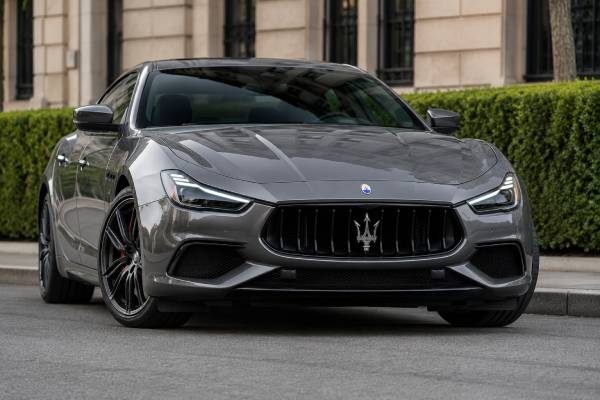
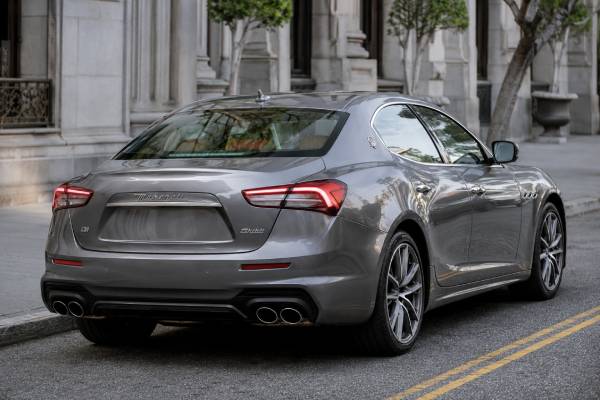
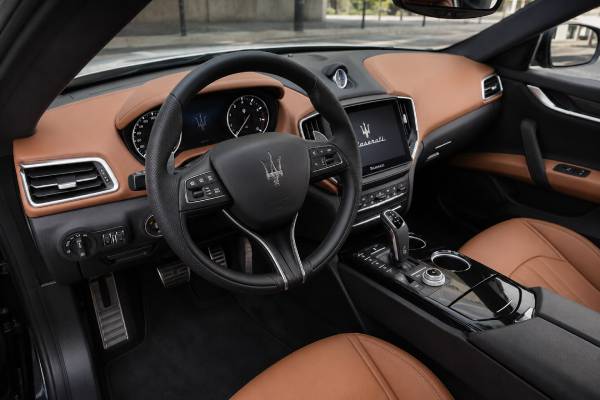
The 350 hp Maserati Ghibli Modena is the late M157 for buyers who wanted V6 character and sportier presentation without moving to the 430 hp S-level engine. Sold in selected international markets during the 2021–2023 trim reorganization, it combines the F160 3.0-liter twin-turbo V6, rear-wheel drive, and ZF eight-speed automatic with Modena’s darker exterior details and more assertive cabin theme. That description needs a market qualifier: Maserati used the Modena name differently across regions. A North American Ghibli Modena generally carried the stronger 424 SAE-hp V6, while brochures in other countries listed a 350 CV rear-drive Modena and reserved 430 CV for Modena S. Used listings often collapse those versions into one. The correct car must therefore be identified by VIN, build sheet, engine rating, drivetrain, and original market. When verified, the 350 hp Modena is a compelling middle ground. It has the petrol V6’s sound and smoothness, the lighter rear-drive layout, and the updated infotainment of the final production phase. Its value depends less on the badge than on service quality, electrical health, tires, brakes, suspension, and evidence that the advertised 350 hp specification is genuine.
Table of Contents
- The International Modena Middle Ground
- 350 hp Modena Technical Overview
- Global Trim Hierarchy and Options
- Sporting Design Without S Output
- How Modena Balances Pace and Comfort
- Maintenance Priorities for the 350 hp Modena
- Choosing the Right Modena Specification
The International Modena Middle Ground
The 350 hp Modena sits between the comfort-led GT and the high-output Modena S in markets that offered all three. It is not merely a base Ghibli with black trim; it represents Maserati’s late attempt to make the range easier to understand while preserving meaningful powertrain differences.
Maserati introduced the M157 Ghibli in 2013, then repeatedly updated its power, steering, driver aids, infotainment, and styling. By 2021, the sedan was mature but its old naming system—base, S, S Q4, GranLusso, and GranSport—had become complicated. The GT, Modena, and Trofeo structure replaced much of that language. GT emphasized grand touring, Modena emphasized sport, and Trofeo identified the V8 flagship.
In the international specification relevant here, Modena used the 350 hp version of the F160 V6. Modena S raised output to 430 hp, while Modena S Q4 added all-wheel drive. This hierarchy differs from the United States, where the Ghibli GT had a 345 SAE-hp V6 and Modena was the 424 SAE-hp step. Because 350 metric horsepower is close to 345 SAE horsepower, database conversions can make an incorrect listing look plausible.
The exact market matters for more than output. Emissions equipment, lighting, radio frequencies, navigation data, driver-assistance content, warranty terms, and even tire certification can vary. An imported Modena may be perfectly usable, but a buyer should know what was changed for registration and whether local dealers can support its software and parts configuration.
The 350 hp version remains significant because it preserves the core petrol Ghibli experience with fewer traction-system components than a Q4. Rear-wheel drive leaves the front wheels responsible only for steering and braking. The car is not as explosively quick as the 430 hp version, yet its 500 Nm torque output is strong enough for fast touring and gives the eight-speed automatic a broad working range.
Today, the model can be undervalued when sellers and buyers focus only on the number. Condition has a larger effect than the 80 hp gap between this car and Modena S. A clean 350 hp Modena with current service, correct tires, healthy dampers, and complete electronics can be a better purchase than a neglected 430 hp car with deferred brakes and unknown software.
350 hp Modena Technical Overview
The 350 hp Modena uses Maserati’s twin-turbocharged 3.0-liter V6, an eight-speed automatic, and rear-wheel drive. Its technical package is familiar from the 2017-onward base petrol Ghibli, but it is paired with late-model electronics and Modena trim.
| Item | Specification |
|---|---|
| Engine | F160 60-degree twin-turbocharged V6 |
| Displacement | 2,979 cc |
| Fuel system | Direct petrol injection |
| Maximum output | 350 hp at approximately 5,500 rpm |
| Maximum torque | 500 Nm from approximately 1,750 rpm |
| Transmission | ZF eight-speed automatic |
| Drivetrain | Rear-wheel drive with limited-slip differential |
| 0–100 km/h | Approximately 5.5 seconds |
| Top speed | Approximately 267 km/h |
| Front suspension | Double wishbones |
| Rear suspension | Five-link independent layout |
| Steering | Electric power assistance |
| Wheelbase | 2,998 mm |
| Fuel capacity | Approximately 80 liters |
The F160 was developed for the Ghibli and related Maserati models, with aluminum construction, twin turbochargers, direct injection, variable valve timing, and a cross-bank combustion character that gives the car its distinctive exhaust note. It should not be described simply as a Ferrari engine. Ferrari was involved in manufacturing and development during this era, but the engine family and installation are Maserati-specific.
A broad torque plateau is more important than the peak horsepower number in ordinary driving. The engine produces strong thrust from low revs, allowing the transmission to shift early in normal mode. Sport mode changes throttle mapping, gear strategy, exhaust valves, and—where fitted—the adaptive damper response.
The ZF automatic sends power to the rear differential. Gear selection can be left to the transmission, controlled with the selector, or managed by steering-column paddles. The paddles remain fixed relative to the column, which makes them easy to locate while cornering. A healthy gearbox should engage promptly, shift cleanly at light throttle, and execute firm but controlled changes in Sport.
The chassis combines steel and aluminum structures with aluminum-intensive suspension components. Double wishbones at the front help maintain tire contact during cornering, while the five-link rear arrangement balances ride and traction. Skyhook adaptive damping was common or standard in many specifications, but equipment should be confirmed by build data.
Brake hardware varies with wheel and market package. Large ventilated discs and multi-piston front calipers provide ample road performance. Exact disc diameter, caliper finish, and tire size should be checked on the car because optional wheels and sport packages changed the combination.
Performance figures are manufacturer values under controlled conditions. Tire condition, fuel quality, temperature, road gradient, and vehicle load affect acceleration. The useful conclusion is that the 350 hp Modena is comfortably quick, not that every example will reproduce 5.5 seconds after years of use.
Global Trim Hierarchy and Options
A correct 350 hp Modena is identified by its regional specification and factory configuration, not by a boot badge alone. The Modena name covered different engine outputs, so documents must establish where the car was originally sold.
The most useful items are the full VIN, original invoice, build sheet, registration certificate, and market brochure. These should show a 2,979 cc petrol V6, rear-wheel drive, and the lower-output calibration. A diagnostic scan can confirm the vehicle configuration and expose coding changes, but it should support—not replace—factory paperwork.
Typical Modena cues included black exterior details, sport bumpers, darker grille treatment, sport seats, black piano or carbon-effect trim depending on order, and larger wheels than the most comfort-focused GT. Red or other colored brake calipers were common visual features, yet none proves engine output. Owners frequently retrofit grilles, wheels, badges, and carbon pieces.
The 10.1-inch Maserati Intelligent Assistant touchscreen is one of the late car’s most useful updates. It is faster and clearer than the earlier system and integrates navigation, smartphone functions, audio, vehicle settings, and connected features. Equipment may include Harman Kardon or Bowers & Wilkins audio, surround cameras, adaptive cruise, lane keeping, traffic-sign recognition, blind-spot monitoring, heated rear seats, ventilation, a heated steering wheel, and a powered boot lid.
Options that change ownership value
- Skyhook adaptive dampers, especially when they work without leaks or faults.
- Driver Assistance Package hardware with documented calibration after glass or bumper work.
- Premium audio that operates cleanly through every speaker and input.
- Factory 20- or 21-inch wheels in undamaged, correctly sized sets.
- Full leather, Alcantara headlining, carbon trim, or unusual color combinations in good condition.
- Two keys, manuals, compressor kit, wheel-lock key, and original charging or diagnostic accessories where supplied.
Model-year changes were evolutionary. Software, connected services, paint choices, wheel designs, trim packages, and standard equipment could shift without changing the advertised engine. A 2023 registration does not guarantee a particular build specification; inspect the production date and compare option codes.
Imported examples deserve additional checks. Confirm headlamp type, speedometer display, emissions approval, navigation region, connected-service support, radio function, and parts availability. A correctly converted car can be a sensible purchase, but undocumented coding or improvised lighting work may create repeated faults.
Authenticity is not about preserving every replaceable tire or battery. It means the car’s identity, powertrain, structure, software configuration, and major factory options agree with the records. Reversible upgrades can be acceptable when the original components are included and the work is documented.
Sporting Design Without S Output
The 350 hp Modena’s design makes the Ghibli look and feel more aggressive without claiming the mechanical status of Modena S. Its appeal comes from the combination of late body details, a low seating position, and the V6’s sensory character.
The basic shape is one of the M157’s enduring strengths. A long bonnet, set-back cabin, frameless doors, and short rear deck create rear-drive proportions that are less common among modern executive sedans. The three side vents, concave grille, and trident badges establish the Maserati identity without needing oversized aerodynamic devices.
Late cars use the revised grille and boomerang-shaped rear lights inspired by earlier Maserati designs. Modena typically replaces bright GT details with black or dark finishes. The effect depends heavily on body color and wheel choice. A restrained silver car can look formal, while dark paint with black trim and 21-inch wheels appears much more overtly sporting.
The engineering beneath the style is practical. The front structure must feed air to the engine cooling, charge-air system, brakes, and air conditioning. After an accident, the bumper may look aligned while ducts, shutters, shields, or sensor brackets remain damaged. Missing undertrays can increase noise and disturb cooling airflow.
Inside, the dashboard architecture dates to the Ghibli’s launch, but the large MIA screen and later driver display make it feel newer. Physical controls remain for climate, drive modes, and many cabin functions. The low driving position, long center console, and large fixed paddles create a more sporting atmosphere than the car’s four-door practicality suggests.
Material quality is mixed by price-class standards. Leather and stitched surfaces can be attractive, while some switches and lower panels are shared with wider corporate parts families. Condition and specification matter more than online arguments about component origin. A clean, unusual interior with working electronics feels special; scratched black trim, stretched leather, and a sagging headliner quickly undermine it.
The exhaust is central to the design experience. Valves keep the car subdued during a cruise and release more sound in Sport. A one-sided note, rattle, metallic buzz, or permanently open system can point to failed actuators, loose heat shields, or modification. The 350 hp calibration still delivers the characteristic V6 timbre even though it lacks the stronger model’s output.
Practicality is genuine but not class-leading. Rear headroom is limited by the roofline, and the center rear seat is best for shorter trips. The boot is useful, while the wide body and long nose require care in older city parking structures. Surround cameras are especially valuable on large-wheel cars because curb damage is costly.
How Modena Balances Pace and Comfort
The 350 hp Modena is at its best as a fast touring sedan. It has enough torque to feel effortless, yet its rear-drive layout and lower output make the performance easy to use without the constant intensity of Trofeo.
In normal mode, the throttle is progressive and the gearbox seeks higher ratios. The engine should pull cleanly from low revs without surging or misfire. A healthy car can move quietly through traffic, then accelerate decisively without a dramatic downshift. Rough creep or delayed engagement deserves investigation rather than being dismissed as an Italian trait.
Sport mode reveals more personality. The accelerator becomes more immediate, the exhaust valves open, and the transmission holds gears. The 500 Nm torque peak arrives early, so strong midrange acceleration matters more than running to the limiter. Paddles allow the driver to keep the engine in its most responsive range on a mountain road.
The 350 hp car is slower than Modena S, but public-road opportunities rarely expose the full difference. The lower-output version can deploy power more easily on damp surfaces and may encourage smoother driving. Its rear tires still require respect; cheap, old, or mismatched rubber can trigger stability control and lengthen braking distances.
Electric steering is accurate and integrates with the late driver-assistance systems. It does not communicate as much road texture as the hydraulic steering in early Ghiblis, but it should feel consistent around center and load naturally in a bend. Tramlining, steering-wheel offset, or poor self-centering usually indicates tire, wheel, alignment, or suspension problems.
Ride quality changes markedly with wheels. Nineteen-inch tires provide the most sidewall and often suit rough roads best. Twenties can balance appearance and compliance. Twenty-ones sharpen impact response and expose wheels to damage. Skyhook should control body movement without crashing over small edges; leaking or electronically faulty dampers can make the car feel both harsh and loose.
The chassis prefers flowing roads. The long wheelbase gives stability, while the double-wishbone front suspension provides clean turn-in. At the limit, the car’s size and weight remain apparent. It is a sports sedan rather than a lightweight sports car, and smooth inputs produce better results than abrupt steering or throttle.
Brakes should be strong and progressive. Repeated hard road use can build heat, especially with worn fluid or inexpensive pads. A vibration through the wheel or pedal may come from disc condition, wheel mounting, or suspension wear. Measure components before assuming that a visual lip defines remaining life.
Motorway refinement is a major strength. Eighth gear lowers engine speed, the 80-liter tank supports long stages, and the seats provide good support when properly adjusted. Wind roar, vibration at a narrow speed band, or droning exhaust often indicates a repair, wheel issue, tire problem, or modification.
The 350 hp Modena makes sense for drivers who value sound, rear-drive balance, and late-model technology over headline acceleration. Its performance is accessible enough to enjoy regularly, and its running costs can be lower than those of the 430 hp or V8 cars when wheel and brake choices remain sensible.
Maintenance Priorities for the 350 hp Modena
The F160 V6 can provide strong service when maintained correctly, but deferred work becomes expensive because engine, cooling, electrical, and chassis faults often interact. Service history should show more than annual stamps; it should identify fluids, plugs, filters, brake work, software actions, and diagnosed repairs.
Oil level and condition are basic checks. Use the exact approved specification and correct filling procedure. Inspect for seepage around the engine, turbo oil lines, covers, and undertray. Blue smoke, a strong oil smell, or repeated top-ups require investigation. Low annual mileage does not prevent moisture and fuel dilution from short trips.
A cold start should be prompt and even. Listen for extended cranking, chain or accessory noise, ticking that does not settle, or a misfire. Spark plugs and coils are common service items, while injectors, fuel-pressure control, intake leaks, oxygen sensors, and turbo actuators can also create hesitation or warning lights. Read misfire counts and fuel trims instead of relying on a five-minute test drive.
Cooling deserves a pressure test when records are incomplete. Check reservoirs, hoses, pumps, radiator faces, charge coolers, fans, and dried residue. A sweet smell after shutdown or unexplained coolant loss is not normal. Damaged front ducts from a minor collision can raise operating temperatures without producing an immediate dashboard warning.
The 12-volt battery is a central maintenance item on late cars. Low voltage can set unrelated warnings in the gearbox, steering, parking brake, cameras, radar, seats, lighting, and infotainment. Load-test the battery, verify charging, inspect grounds, and scan all modules. Replacing a battery without correct registration or reset procedures may leave faults unresolved.
The ZF transmission should be checked cold and hot. Delayed Drive or Reverse engagement, flared shifts, repeated thumps, or limp mode need diagnosis of software, adaptations, mounts, fluid condition, engine torque delivery, and internal wear. Fluid service must follow the correct temperature and level process.
Chassis and electronic cost centers
- Front control arms, rear links, wheel bearings, and accurate four-wheel alignment.
- Skyhook dampers and their wiring, sensors, and mounting hardware.
- Large brake discs, caliper service, parking-brake components, and quality pads.
- Bent 20- or 21-inch wheels and high-speed tires with uneven inner wear.
- MIA display, amplifier, cameras, radar, LED lamps, and coded modules.
- Windscreen replacement followed by required camera calibration.
VIN-specific recalls and service campaigns must be checked with a dealer or official database. Completion stickers or verbal assurances are not enough; obtain documentation. A car can also have manufacturer software updates that are not safety recalls.
Parts supply is generally reasonable for routine mechanical service, but trim, lamps, electronic modules, and market-specific equipment can be costly. A Maserati specialist with current diagnostic access is preferable to a shop learning on the car. The lowest hourly rate is poor value when diagnosis becomes guesswork.
Choosing the Right Modena Specification
The buying decision begins with proving that the car is the 350 hp rear-drive Modena described here. Once identity is established, condition and future service needs matter more than mileage alone.
Request the complete VIN, production label, build sheet, original invoice, registration, and service history before viewing. Compare output units carefully: 350 CV is not the same commercial position as a North American 424 SAE-hp Modena, even though both may be called “Modena.” Confirm rear-wheel drive and the absence of Q4 hardware.
Inspect the car completely cold. A warm engine can hide starting noise, misfire, smoke, weak battery behavior, or rough initial shifts. Watch every warning lamp during the self-test, then scan all modules before anyone clears codes. Readiness monitors that are not complete may reveal a recent reset.
Professional inspection sequence
- Verify VIN identity, engine rating, market equipment, keys, and service documentation.
- Measure paint depth and inspect structure, glass dates, bumper sensors, cooling ducts, wheels, and underbody.
- Check engine oil, coolant, leaks, cold-start behavior, boost, fuel trims, misfires, and charging voltage.
- Test gearbox engagement, manual shifts, Sport mode, exhaust valves, Skyhook, steering, brakes, and parking brake.
- Operate the MIA screen, cameras, radar, lights, climate, seats, audio, locks, and every driver aid.
- Measure brake discs and tire tread across the full width; inspect wheel barrels for bends or cracks.
- Re-scan after the road test and compare newly stored faults, temperatures, and adaptation data.
A road test should include parking maneuvers, broken surfaces, steady motorway speed, moderate boost, coast-down, and controlled braking. The car should track straight and remain free of vibration. Listen with the audio off. Suspension knocks, wind noise, exhaust drone, and wheel-bearing hum are easier to detect when the cabin is quiet.
Review modifications with caution. A documented, reversible smartphone update or paint-protection film may add value. Unknown engine software, lowering springs, spacers, nonstandard wheel sizes, exhaust changes, or added electrical devices can affect emissions, torque control, geometry, module communication, and resale. Original parts should accompany the car.
Budget for immediate baseline work even on a good example. Fluids, plugs, filters, a battery, tires, brakes, alignment, keys, and software calibration can turn a modest purchase discount into a large first-year bill. Obtain written estimates before agreeing on price.
Choose the 350 hp Modena over the Hybrid when V6 sound and traditional petrol response matter more than official economy. Choose it over Modena S when the lower-output rear-drive package is sufficient and the specific car is materially better maintained. Choose Q4 only when all-weather traction justifies the additional front driveline.
The best example will have an identity that makes sense in its original market, consistent service invoices, clean module data, even tire wear, smooth cold and hot operation, and no unexplained accident or software history. That combination makes the 350 hp Modena one of the most balanced late Ghiblis: visually sporting, mechanically familiar, quick enough for real roads, and less complicated than its badge hierarchy first suggests.
References
- Maserati 2022 new trims: GT, Modena and Trofeo 2021 (Manufacturer News)
- Ghibli | 1966 2022 (Model Brochure)
- Maserati_Ghibli_Digital_Catalogue_EN.pdf (Manufacturer Brochure)
- Part 573 Safety Recall Report 21V-703 2021 (Recall Database)
Disclaimer
This article is for informational purposes and does not replace professional diagnosis, repair, coding, calibration, or a vehicle-specific inspection. Specifications, horsepower standards, equipment, fluids, intervals, software, and warranty terms vary by VIN, market, and production date. Verify all important details with official documentation for the exact vehicle.
Please share this guide on Facebook, X/Twitter, or an enthusiast community if it was helpful. Sharing supports more detailed model-specific resources.