
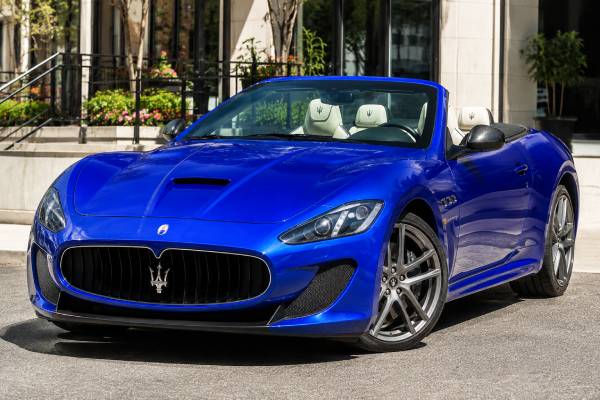
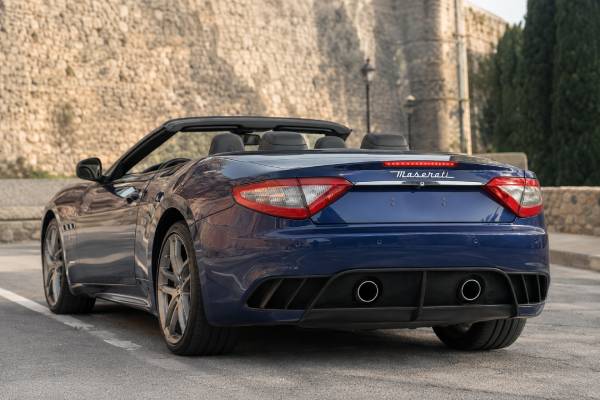
The 2014 Maserati GranCabrio MC Centennial Edition combines the most aggressive M145 convertible package with special colors and trim created for Maserati’s 100th anniversary. It uses the 460 hp, 520 Nm naturally aspirated V8 and six-speed MC Auto Shift automatic of the GranCabrio MC, then adds centenary wheel centers, dedicated badges, three-layer paint choices, carbon-fiber details, and coordinated red, white, and blue interior themes.
Its appeal is split evenly between engineering and provenance. The MC body is longer and more aerodynamically developed than the standard GranCabrio, while fixed-rate suspension, large Dual Cast brakes, and faster transmission programming make it the sharpest factory convertible in the original line. At the same time, Centennial-specific components are essential to collector value. A buyer must therefore authenticate the edition, inspect the car as a high-performance M145, and assess whether rare trim has been repaired correctly. This guide covers the exact 2014 version, its factory distinctions, road behavior, ownership risks, and the checks needed before paying a premium.
Table of Contents
- Maserati’s Centenary in Open-Top Form
- 460 hp MC Hardware and Specifications
- Centennial Production, Colors, and Identification
- Aerodynamics, Carbon, and Anniversary Details
- The Centennial Edition on the Road
- Maintenance Costs and Model-Specific Risks
- Collector-Focused Buying Checklist
Maserati’s Centenary in Open-Top Form
The GranCabrio MC Centennial Edition was created to mark 100 years since Maserati’s founding in 1914. It arrived alongside a GranTurismo MC Stradale Centennial Edition and used the existing MC performance package as the basis for a visually distinctive anniversary model.
That foundation matters. Maserati did not place Centennial badges on the softer base convertible. The edition uses the GranCabrio MC, which had already adopted a longer, more aggressive front end inspired by the MC Stradale, improved aerodynamic lift characteristics, fixed-rate dampers, a 460 hp V8, and faster MC Auto Shift programming. The anniversary treatment therefore celebrates the company through one of the most focused road cars in its range.
The model’s identity reflects Maserati’s origins in Bologna and later history in Modena. Special three-layer colors included Rosso Magma and Blu Inchiostro, modern interpretations of red and blue linked to the traditional Maserati shield and Bologna. Other finishes, including Grigio Pietra, could be paired with dedicated interior combinations. Wheel centers carried the centenary medal design, and anniversary branding appeared on sills and cabin trim.
The edition was offered alongside the regular range, with sales scheduled from July 2014. Production totals can be described differently across markets and documentation, so buyers should avoid repeating unsupported claims about exact global numbers unless a factory record confirms them. What can be verified is whether an individual car was built as a Centennial Edition and whether its specific color and trim remain intact.
The car sits at an interesting point in Maserati history. It belongs to the final era of the naturally aspirated V8 grand tourers, yet it was built just as the company expanded into turbocharged sedans and SUVs. That contrast gives the Centennial a double meaning: it commemorates the past while representing one of the last open four-seat Maseratis powered by the long-serving 4.7-liter V8.
Collectors care because the model combines three layers of appeal. It has the Pininfarina-developed GranCabrio silhouette, the technical upgrades of the MC, and factory anniversary details unavailable on a standard car. Removing any one layer reduces the package. A regular MC painted red is not a Centennial, and a genuine Centennial with missing wheels, plaques, or trim should be valued accordingly.
The car remains usable rather than purely ceremonial. It can carry four people, tour with the roof raised in reasonable refinement, and deliver serious performance on an open road. Preserving that usability through regular service is preferable to treating the car as an inert display object.
460 hp MC Hardware and Specifications
The Centennial Edition uses the GranCabrio MC’s 4,691 cc naturally aspirated V8, producing 460 hp at 7,000 rpm and 520 Nm at 4,750 rpm. Power reaches the rear wheels through a six-speed ZF automatic with MC Auto Shift software.
| Item | Specification |
|---|---|
| Engine | 90-degree naturally aspirated V8 |
| Displacement | 4,691 cc |
| Bore and stroke | 94.0 mm × 84.5 mm |
| Compression ratio | Approximately 11.25:1 |
| Maximum power | 460 hp at 7,000 rpm |
| Maximum torque | 520 Nm at 4,750 rpm |
| Transmission | Six-speed ZF MC Auto Shift automatic |
| Drivetrain | Rear-wheel drive with limited-slip differential |
| Suspension | Double wishbones with MC-specific fixed-rate dampers |
| Front brakes | 360 × 32 mm Dual Cast ventilated discs |
| Rear brakes | 330 × 28 mm ventilated discs |
| Steering | Hydraulic rack and pinion |
| Wheels | 20-inch MC or Trofeo-design alloys with Centennial centers |
| Typical tires | 245/35 ZR20 front; 285/35 ZR20 rear |
| Wheelbase | 2,942 mm |
| Length | Approximately 4,920 mm |
| Width | 1,915 mm excluding mirrors |
| Height | Approximately 1,380 mm |
| Fuel tank | 75 liters |
| Boot capacity | Approximately 173 liters |
| 0–100 km/h | 4.9 seconds |
| Maximum speed | Approximately 289–291 km/h, depending on published market data |
| 100–0 km/h braking | Approximately 35 meters under factory test conditions |
The engine’s reinforced aluminum pistons, aluminum block, high-strength steel crankshaft, chain-driven timing, and variable valve timing support sustained high-rpm operation. Its character remains linear: 520 Nm is useful, but the full performance arrives only when the transmission allows the engine to climb toward 7,000 rpm.
MC Auto Shift offers automatic and manual normal, automatic and manual Sport, and Ice modes. Manual Sport can hold a selected gear to the limiter rather than automatically upshifting. Automatic throttle blipping improves downshift smoothness and sound. The MC Start Strategy launch function operates under specific conditions with the stability system disengaged, but repeated use places substantial load on tires, mounts, driveline components, and brakes.
Unlike a GranCabrio Sport with adaptive Skyhook damping, the original MC specification uses single-rate dampers chosen for consistent control. That gives the car a firmer baseline and a more direct response. Some later market specifications and options require VIN-level confirmation, so the actual suspension hardware should be inspected rather than assumed from a badge.
Dual Cast front discs combine an aluminum bell with a cast-iron braking surface to reduce unsprung mass and manage heat. They are conventional steel-friction brakes rather than the carbon-ceramic system used on some GranTurismo MC Stradale versions. Replacement remains expensive because disc size, calipers, and the car’s performance require quality components.
The MC is 48 mm longer than the standard GranCabrio and Sport because of its front and rear aerodynamic treatment. The structure remains a reinforced steel monocoque with aluminum and composite materials used in selected panels and trim. Weight is significant, but the front-mid-engine layout and rear-biased distribution help the car feel balanced when the chassis is healthy.
Centennial Production, Colors, and Identification
A real Centennial Edition should be verified through factory build information and then checked for the complete anniversary specification. Exterior color alone is not sufficient, because regular MC cars can share some paint options or be repainted.
The anniversary palette was built around special three-layer finishes and coordinated wheel treatments. Rosso Magma and Blu Inchiostro are the most strongly associated colors, while Grigio Pietra and other documented finishes may appear depending on market. Wheels were offered in special finishes, with a medal-shaped centenary logo at their centers in Smoke or Charcoal tones.
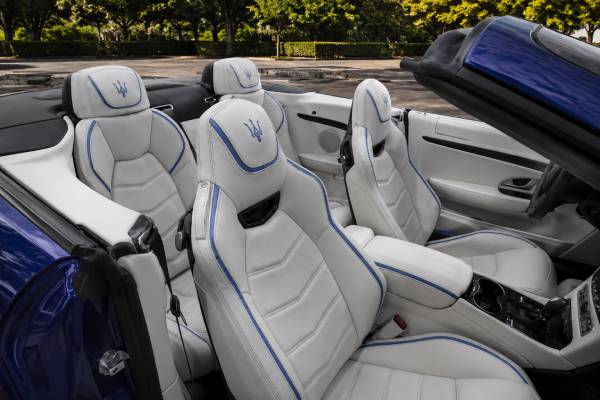
Interior color arrangements echo the exterior and Maserati’s traditional red, white, and blue identity. Black leather commonly serves as the base, with full-length seat profiles and stitching in contrasting anniversary colors. Carbon-fiber inserts appear on the dashboard and seat surrounds, and the door sill carries the Centennial logo. The steering wheel can repeat the same color coordination.
A proper authenticity file should include:
- VIN-linked factory build data naming the Centennial Edition.
- Original sales invoice or order specification.
- Paint and interior codes that match the vehicle.
- Photographs showing the car close to delivery.
- Correct wheel design, finish, and centenary center medallions.
- Centennial sill plates and cabin branding.
- Matching carbon-fiber and leather color treatment.
- Service history that preserves model designation and mileage progression.
Missing anniversary parts should not be dismissed as minor. Wheel centers, sill plates, badges, and color-specific trim may be unavailable or costly. Reproductions can improve appearance but may not satisfy a collector who expects original components. A seller should disclose which parts are factory and which have been recreated.
Paint inspection requires multiple lighting conditions. Three-layer finishes are difficult to match because base color, translucent layers, metallic orientation, and clear coat all influence the final appearance. Check panel edges, bumper corners, door shuts, and adjacent curves. A quality repaint is not necessarily disqualifying, but structural damage or visibly inconsistent color reduces value.
Carbon-fiber trim should show a consistent weave and clear-coat condition. Clouding, cracks, lifting edges, or mismatched weave can indicate heat damage or replacement. Cabin leather should retain the correct grain, piping, and stitching. A small, accurate repair may preserve originality better than a complete generic retrim.
Registration year can cause confusion. A car built in 2014 may be titled later in some markets. The defining evidence is production and factory specification, not the date on a current advertisement. Likewise, sellers may call a normal MC a “Centennial style” car; only documentation should support the full name.
Aerodynamics, Carbon, and Anniversary Details
The MC body is not merely decorative. Maserati developed the longer nose, splitter, vents, rear bumper, and integrated spoiler to reduce lift and manage airflow more effectively than on the regular GranCabrio.
At 140 km/h, factory development data described front lift as 10 percent lower and rear lift as 25 percent lower than on the GranCabrio and GranCabrio Sport. These figures do not turn the heavy convertible into a race car, but they explain why the MC feels planted at high speed. The front splitter guides air around and beneath the car, while hood outlets release heat and pressure from the engine bay.
Additional outlets near the front fenders support brake cooling. The rear design uses a centrally positioned exhaust and shaped bumper to improve airflow and create a distinct MC identity. An integrated spoiler contains the third brake light and contributes to rear stability. Damage to these parts should be inspected carefully because correct fit affects both appearance and aerodynamic function.
Carbon fiber is used where it can visually and functionally connect the road car to Maserati Corse themes. Exterior mirror shells, door handles, aero details, cabin trim, and seat surrounds may carry carbon depending on specification. The Centennial package adds its own color and logo treatment rather than changing the underlying aerodynamic concept.
The roof remains a multilayer fabric system over a metal frame. It opens the cabin without destroying the body’s proportions and stores beneath a hard cover. Roof movement should be synchronized and quiet. The front latch, windows, storage lid, and position switches must all complete their sequence. Misalignment can damage rare trim as well as create leaks.
Seats in the MC were redesigned with integrated head restraints and stronger lateral support. They hold occupants better during fast driving while retaining enough padding for touring. Rear seats follow the same theme and remain usable. This combination differentiates the GranCabrio MC from two-seat open supercars that sacrifice passengers for performance.
The flattened steering wheel and long Trofeo-design paddles make manual shifting easier. Aluminum pedals add grip, and the anniversary colors make the cockpit visually more elaborate than a regular MC. Physical controls and analog instruments keep the driver’s attention on the road, though the navigation and media interface now feels dated.
Sound is part of the engineering. The centrally placed exhaust gives the MC a sharper, more focused tone than the standard GranCabrio. Sport modes alter valve behavior and downshift blipping. An aftermarket exhaust should be judged against this carefully calibrated original system; more volume is not always more character, and drone can undermine long-distance use.
The Centennial Edition on the Road
The Centennial drives like a well-sorted GranCabrio MC: immediate, vocal, firm, and stable, yet still capable of carrying four people across long distances. Its anniversary trim changes the sense of occasion rather than the fundamental dynamics.
At low speed, the MC feels wide and tightly suspended. The hydraulic steering is heavier than in many modern luxury cars, and the long nose requires judgment. Parking sensors should function correctly. Damage to the splitter and lower bumper is common when cars encounter steep ramps or curbs, so approach angles require care.
The V8 remains tractable in traffic, but the car becomes most expressive above 4,000 rpm. Throttle response is direct and the power builds without the sudden step of turbo boost. At 7,000 rpm, the combination of intake, engine, and central exhaust sound is the defining reward. The automatic transmission makes this performance accessible without the clutch wear associated with an automated manual.
MC Auto Shift is at its best in Manual Sport. The driver can choose the gear, receive automatic blips on downshifts, and hold the ratio until the limiter. Shift speed is quick for a torque-converter automatic of its era, though not comparable with a current dual-clutch unit. The gearbox should respond consistently when hot; delayed shifts or flaring need investigation.
The fixed-rate suspension gives the MC a more disciplined body than the standard car. Turn-in is clearer, roll is reduced, and the chassis settles quickly after direction changes. The cost is a firmer ride over broken pavement. A healthy car feels controlled, not brittle. Bent wheels, old tires, tired dampers, or worn bushings can make it unpleasant and should not be mistaken for factory tuning.
Hydraulic steering communicates front-tire load and allows accurate placement. The car prefers smooth entries and progressive throttle because its mass is always present. Braking early and releasing pressure before turn-in produces better balance than carrying excessive brake into a corner. The rear differential then helps apply power on exit.
The large brakes deliver strong stopping force and a consistent pedal when maintained. Repeated high-energy stops can still generate heat in a near-two-ton convertible. Owners who drive in mountains should monitor pad thickness, disc condition, fluid age, and tire pressure. A 35-meter factory stopping figure assumes favorable conditions and fresh components.
High-speed stability is a notable strength. The long wheelbase and MC aero make the car feel secure on fast roads. Wind noise with the roof raised should remain reasonable for a fabric-top car. Excess noise may come from roof adjustment, seals, window indexing, or previous body repair.
Roof down, the central exhaust and anniversary cabin become more prominent. The wind stop improves comfort for two occupants, while four-seat use creates more airflow but remains practical. The car’s unusual achievement is to deliver this open-air drama without forcing passengers into unusable rear seats.
Maintenance Costs and Model-Specific Risks
The Centennial Edition carries all normal M145 maintenance risks plus the cost of preserving MC and anniversary-specific components. The engine is generally robust, but deferred care around it can become expensive.
Inspect the V8 for cam-cover and front-cover oil leaks, seal seepage, belt condition, and evidence of overheated oil. A cold start should be clean and stable. Persistent rattle, smoke, low-pressure warnings, or metallic noise needs expert diagnosis before purchase.
Cooling-system inspection should include radiator and condenser cleanliness, fan operation, expansion tank condition, hoses, thermostat behavior, and water-pump area. The gauge should remain stable in traffic with the air conditioning operating. Dried coolant or a sweet smell after a drive is not normal.
The six-speed ZF transmission benefits from correct fluid and filter service even where early marketing suggested long fill life. Check the pan and cooler lines for leaks. Engagement should be prompt, and shifts should remain smooth in every mode. Driveline clunks can originate in mounts, differential bushings, prop-shaft joints, or excessive play.
MC suspension parts and brakes create major cost exposure. Fixed-rate dampers still wear, and front control arms, bushings, ball joints, tie rods, rear links, and wheel bearings can all deteriorate. Dual Cast discs should be measured rather than judged only by appearance. Cracked or repeatedly refinished wheels should be replaced or professionally assessed.
Roof reliability depends on clean drains, correct alignment, healthy switches, functioning windows, and sound hydraulic or electric components. Test multiple cycles from cold and after a drive. Inspect the trunk and rear cabin for water. A roof fault can be simple, but rare trim around the mechanism raises the consequences of careless repair.
Electrical issues often begin with voltage. Fit the correct battery, verify charging output, and use a maintainer during storage. A weak battery may trigger transmission, suspension, stability, airbag, parking, or roof messages. Do not accept repeated code clearing as a repair.
Anniversary-specific risks include damaged three-layer paint, unavailable wheel medallions, cracked carbon, faded colored leather, missing sill plates, and incorrect retrimming. Insurance should account for specialist materials and agreed value. A standard repair estimate may not restore the car to collector condition.
Regular service should address engine oil, filters, brake fluid, coolant age, belts, spark plugs, transmission fluid, differential oil, air conditioning, roof lubrication, tire age, and alignment. Exact intervals vary by VIN and market. Invoices should name the fluids and parts used rather than simply state “full service.”
Storage should be dry, ventilated, and protected from prolonged heat and sunlight. The car should still be exercised. Bringing the engine fully to temperature, operating the roof, using the air conditioning, and moving suspension components helps prevent deterioration that occurs when a low-mileage car sits for months.
Collector-Focused Buying Checklist
Buy only after confirming factory identity, anniversary completeness, mechanical health, and repair quality. A normal MC in similar condition may be the better driver value, but a genuine Centennial deserves a premium when its specific features survive intact.
Request the VIN and build sheet first. Verify that the car was produced as a GranCabrio MC Centennial Edition. Match paint, trim, wheel finish, centenary medallions, sill plates, and interior color treatment to the factory record. Ask for photographs from early ownership and invoices for any body or trim work.
A specialist inspection should cover:
- Cold-start engine behavior and oil-leak mapping.
- Cooling-system pressure, fan operation, and radiator condition.
- Transmission adaptation, fluid history, and driveline mounts.
- Full suspension-joint and damper inspection.
- Brake-disc measurement, pad life, caliper condition, and fluid age.
- Wheel runout, tire age, matching tire type, and alignment.
- Roof cycles, seals, drains, windows, latches, and moisture checks.
- Complete electronic scan of every control module.
- Paint-depth readings and underside accident inspection.
- Centennial trim inventory and originality assessment.
Drive the car long enough to heat the engine, transmission, brakes, and cabin electronics. Test all modes, including manual shifts and firm braking. Listen for suspension knocks with the roof both up and down. Recheck the roof after the drive. Heat-related faults often remain hidden during a short showroom demonstration.
Look closely beneath the front splitter and along the rear bumper. The MC’s extended bodywork can contact ramps, and poor repairs may distort mounting points. Door gaps, hood alignment, windshield frame, and roof seals should be even. Structural damage is far more serious than a correctly documented cosmetic repaint.
Low mileage is attractive only when the car has been maintained by time. Tires can be unsafe with full tread, brake fluid absorbs moisture, coolant loses protection, batteries fail, and roof seals harden. A modestly used car with annual records may be mechanically superior.
Budget for immediate baseline work and maintain a separate reserve. Even a strong example may need tires, fluid services, alignment, a battery, and small electrical repairs. Centennial trim restoration can add substantial expense beyond normal running costs.
Originality should be evaluated intelligently. Reversible upgrades such as discreet phone integration may improve use. Permanent wiring changes, nonfactory carbon, aggressive suspension lowering, removed exhaust components, or incorrect retrimming reduce collector appeal. Ask for every removed original part.
The best Centennial Edition is a complete, documented car that has been exercised and maintained, not simply stored. Its strongest value proposition is the full combination of MC engineering, anniversary design, and open four-seat usability. When those elements remain intact, the car represents one of the most distinctive V8 Maserati convertibles of its era.
References
- Maserati GranTurismo MC Stradale and GranCabrio MC Centennial Special Editions 2014
- Maserati GranCabrio MC international debut at the Paris International Motor Show 2012 2012
- Centenary celebrations ensure biggest ever presence for Maserati at Goodwood Festival of Speed 2014
- Maserati Guides & Documentation for your vehicle 2026 (Owner Documentation)
Disclaimer
This article is for informational purposes and does not replace professional authentication, diagnosis, inspection, or repair. Specifications, torque values, service intervals, and procedures can vary by VIN, market, production date, and equipment; verify all details against official build and service documentation for the individual car.
Please share this article on Facebook, X/Twitter, or a Maserati enthusiast community if it helped your research and you would like to support our work.