
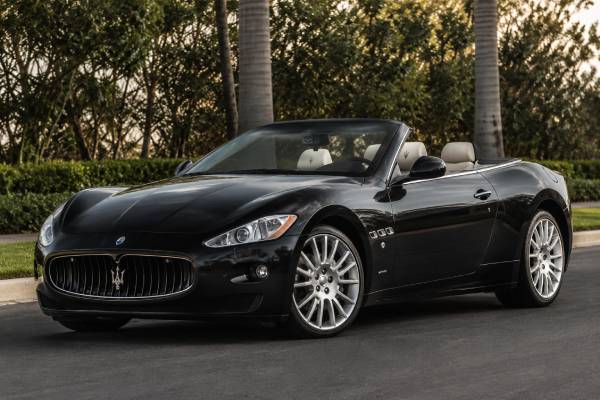
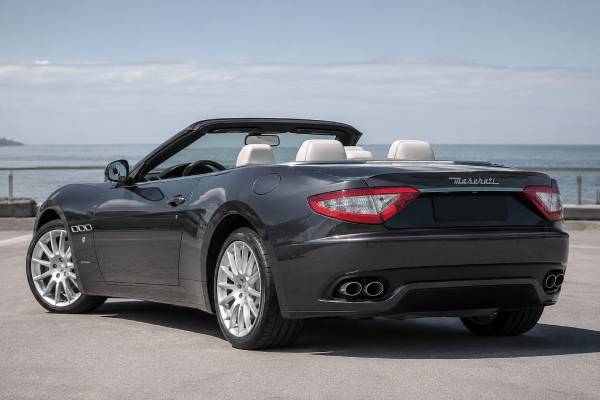
The 450 hp Maserati GranCabrio is the comfort-focused version of the M145 convertible, combining a naturally aspirated Ferrari-built V8 with four usable seats, a fabric roof, and a conventional six-speed automatic. It sits between the original 440 hp car and the sharper 460 hp GranCabrio Sport and MC derivatives. That distinction matters: this model was designed first as an open grand tourer, not as a track-inspired convertible wearing softer clothes. Its appeal comes from the way it blends a long-wheelbase chassis, a richly finished cabin, and one of the era’s most expressive V8 engines.
Cars registered across 2011–2017 can differ by market, model year, equipment, and how local distributors named the trim, so badges and advertisements alone are not enough. A serious buyer should verify the VIN, factory build data, engine output, suspension type, and original option list. This guide explains the exact 4.7-liter, 450 hp specification, how it differs from related M145 versions, what it feels like to drive, which age-related problems matter most, and how to inspect one without confusing cosmetic condition with mechanical health.
Table of Contents
- The Comfort-Led V8 GranCabrio
- M145S Technical Specifications
- Model Years, Options, and Identity
- Pininfarina Shape and Open-Roof Engineering
- How the 450 hp Car Drives
- Maintenance Risks and Ownership Costs
- Inspection and Buying Strategy
The Comfort-Led V8 GranCabrio
The 450 hp GranCabrio is best understood as Maserati’s luxurious four-seat convertible with added engine output, not as a de-contented GranCabrio Sport. It preserves the M145’s relaxed grand-touring character while giving the 4.7-liter V8 more urgency and a broader sense of occasion.
The M145 GranCabrio grew from the Pininfarina-designed GranTurismo coupe and entered a small class of genuine four-adult performance convertibles. Its 2,942 mm wheelbase was unusually long for a two-door cabriolet, allowing rear passengers to sit in real seats rather than token cushions. Maserati reinforced the open body and engineered a multilayer fabric roof instead of using a folding metal top. The result was not light, but it retained the low, elegant proportions that made the coupe successful.
The 450 hp version uses the later tune of Maserati’s 4,691 cc naturally aspirated V8. Output rose over the earliest 440 hp GranCabrio, while torque reached 510 N·m. The engine still sends power through a front-mounted ZF six-speed automatic to the rear wheels. That layout differs from the automated manual transaxle fitted to some GranTurismo coupes and makes the convertible smoother in traffic, easier to maneuver, and less intimidating for routine touring.
Its historical importance is partly emotional. The M145 belongs to the last generation of Maserati road cars powered by a naturally aspirated V8 with a high-revving response and a distinctive cross-plane exhaust note. Later Maseratis became quicker and more efficient with turbocharged V6 engines or electric power, but they do not deliver the same gradual rise in induction sound, mechanical texture, and exhaust volume.
Today, the standard 450 hp car is often overshadowed by Sport, MC, Centennial, and other limited versions. That can make it a strong ownership proposition. A well-kept example offers nearly all the sound and visual drama with a more forgiving ride, less aggressive bodywork, and frequently a lower purchase price. Its value depends more on history, condition, specification, and color harmony than on a rare badge.
The biggest misunderstanding is assuming every late GranCabrio is mechanically identical. The standard car, Sport, and MC can differ in suspension calibration, brakes, exterior panels, seats, exhaust strategy, performance figures, and standard equipment. A buyer should identify the exact version before comparing prices or ordering parts.
M145S Technical Specifications
The core specification is a 4.7-liter naturally aspirated V8 producing 450 hp and 510 N·m, paired with a six-speed automatic and rear-wheel drive. Performance is strong rather than supercar-sharp, because the GranCabrio prioritizes four-seat comfort and structural strength over minimum mass.
| Item | Specification |
|---|---|
| Engine | 90-degree naturally aspirated V8 |
| Displacement | 4,691 cc |
| Construction | Aluminum block and cylinder heads |
| Fuel system | Electronic multipoint injection |
| Maximum output | 450 hp at 7,000 rpm |
| Maximum torque | 510 N·m at 4,750 rpm |
| Transmission | ZF six-speed torque-converter automatic |
| Drivetrain | Rear-wheel drive with limited-slip differential |
| 0–100 km/h | About 5.2 seconds |
| Top speed | About 285 km/h |
The V8 sits behind the front axle line as far as practical, helping the large convertible achieve balanced responses despite its front-engine layout. A double-wishbone front suspension and multi-link rear suspension manage the car’s mass. Many examples use Skyhook electronically controlled dampers, although equipment varies by year and market. The system adjusts damping continuously and offers a useful split between a composed normal setting and firmer behavior when Sport mode is selected.
| Item | Specification |
|---|---|
| Body | Steel unitary four-seat convertible |
| Front suspension | Independent double wishbones |
| Rear suspension | Independent multi-link |
| Steering | Hydraulic power-assisted rack and pinion |
| Front tires | Typically 245/35 ZR20 |
| Rear tires | Typically 285/35 ZR20 |
| Wheelbase | 2,942 mm |
| Length | About 4,881 mm, depending on model-year trim |
| Width | 1,915 mm excluding mirrors |
| Height | About 1,380 mm |
| Fuel capacity | 75 liters |
| Luggage capacity | About 173 liters |
Large ventilated Brembo brakes provide the stopping power. Exact disc dimensions and caliper finishes can vary with production date and optional equipment, so replacement parts should be ordered from the VIN rather than from a generic model description. The same caution applies to dampers, springs, wheel offsets, tire-pressure sensors, and electronic modules.
The quoted acceleration and top-speed figures describe a healthy car on appropriate tires and in favorable conditions. Roof position, ambient temperature, fuel load, road surface, and measurement method affect results. More important in normal use is the engine’s smooth climb beyond 4,000 rpm, where the 450 hp calibration feels clearly more energetic than the earliest 440 hp tune.
Model Years, Options, and Identity
Correct identification starts with the VIN and factory build record, because registration year, sales description, and rear badge may not reveal the true configuration. The 2011–2017 span crosses several updates and overlaps with more powerful Sport and MC models.
Maserati’s naming also varied by region. In North America, the body was commonly sold as the GranTurismo Convertible, while GranCabrio was used in many other markets. A car may therefore have equivalent mechanical content but different original literature, labels, emissions equipment, lighting, and speedometer units. Imports deserve extra scrutiny because software, navigation, radios, lamps, and compliance labels may not match the country where the car is now registered.
The standard 450 hp version can be recognized by combining several clues:
- Factory documentation identifying the base GranCabrio rather than Sport or MC.
- A 4,691 cc V8 with the 450 hp calibration and 510 N·m rating.
- Six-speed automatic transmission and rear-wheel drive.
- Less aggressive front and rear styling than the MC, without the MC’s extended aerodynamic treatment.
- Comfort-oriented suspension and seating specification, subject to optional equipment.
- Wheel, brake-caliper, trim, and exhaust details consistent with the build sheet.
Factory personalization was a major part of the model’s appeal. Buyers could choose numerous exterior colors, leather shades, contrast stitching, piping, dashboard and door trim, carpet colors, brake-caliper finishes, and wheel designs. Bose audio, parking sensors, navigation, heated seats, wind deflectors, and different interior materials appear frequently. Later cars may have updated infotainment details or regional equipment packages, but the system remains dated by modern standards.
Production-year claims should be checked carefully. A vehicle built late in one calendar year may be titled as the following model year, and some cars remained in dealer stock before first registration. The assignment’s broad 2011–2017 window therefore describes the market presence of this 450 hp configuration, not a guarantee that every country offered an identical specification in every year.
Originality matters most when it protects function and traceability. Period-correct wheels, exhaust parts, trim, books, tools, keys, and invoices strengthen a car’s history. Reversible improvements such as modern infotainment interfaces or carefully selected tires may improve usability, but crude wiring, generic suspension parts, loud aftermarket exhausts, and copied MC body pieces can reduce confidence and complicate future repairs.
Pininfarina Shape and Open-Roof Engineering
The GranCabrio’s defining achievement is that it looks elegant with the roof raised or lowered while still seating four adults. Pininfarina preserved the GranTurismo’s long hood, low shoulder line, and rearward cabin without allowing the roof mechanism to dominate the profile.
Removing a fixed roof weakens a body shell, so Maserati reinforced the floor, sills, bulkheads, and other structural paths. The extra material contributed to the car’s substantial weight, yet it helped control scuttle shake and maintained predictable suspension geometry. Some movement over broken pavement is normal for a large convertible of this period; pronounced shudder, uneven panel gaps, or unusual roof-frame movement calls for investigation of accident repair or structural damage.
The multilayer fabric top balances packaging, insulation, and appearance. It folds into a compartment behind the rear seats rather than occupying the entire trunk. Operation takes roughly 20 seconds for the roof itself, with the complete window sequence extending the cycle. A healthy mechanism should move evenly, latch cleanly, and finish without warning messages. The headliner should remain taut, and seals should sit flat around the windshield header, side glass, and rear deck.
The long wheelbase gives the body its calm proportions and provides genuine rear legroom, but it also creates practical compromises. The car is wide, the hood is difficult to judge in tight spaces, and the turning circle feels large. Parking sensors are valuable, and a cleanly integrated reversing camera upgrade can improve daily use if it does not damage original wiring.
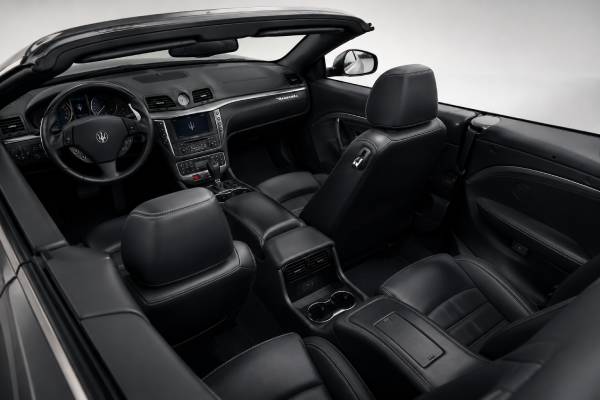
Inside, the cabin mixes hand-finished leather, a central analog clock, deep front seats, and a high center console. The driving position is more grand tourer than sports car: occupants sit relatively high, the dashboard feels substantial, and rear passengers are part of the design brief. The trunk is small at about 173 liters, so touring works best with soft bags rather than rigid luggage.
The V8 provides the strongest sensory feature. Its intake note becomes harder as revs rise, while exhaust valves and Sport mode can add volume and sharper responses. The standard car is generally less theatrical than the MC, but it still delivers a layered sound that changes with load instead of relying on constant artificial enhancement.
Engineering details reveal the model’s priorities. Hydraulic steering provides natural weight and a direct connection that many later electric systems filter out. The torque-converter automatic can creep smoothly, absorb low-speed driveline shock, and shift unobtrusively during relaxed travel. Skyhook damping, where fitted, broadens the usable range without turning the car into a lightweight sports machine. These choices make the GranCabrio satisfying on a long road even when the driver is not chasing maximum speed.
How the 450 hp Car Drives
The 450 hp GranCabrio feels fastest when the driver lets the V8 rev and carries speed smoothly, not when demanding instant turbocharged thrust. Its character is progressive, stable, and unusually musical, with enough performance to feel special without making every journey tense.
At low engine speed, the V8 is flexible but not explosive. The automatic selects high gears for quiet cruising, and the car can feel almost restrained in normal mode. Pressing Sport changes the relationship: throttle response sharpens, the transmission holds ratios longer, downshifts become more decisive, and the exhaust gains presence. The strongest acceleration arrives as the tachometer sweeps toward 7,000 rpm.
The ZF automatic suits the standard model. It does not deliver the abrupt, event-like shifts of an automated manual, but it is easier in city traffic and more polished during a long trip. Manual paddle inputs are useful on a mountain road, although the gearbox still protects itself and may not respond with the immediacy of a modern dual-clutch unit. Harsh engagement, flaring between gears, or delayed selection from reverse to drive is not normal and needs diagnosis.
Steering is one of the car’s better dynamic qualities. The hydraulic rack builds weight naturally and gives enough information to place the wide front end. Initial turn-in is deliberate rather than razor sharp, after which the chassis settles into a balanced arc. The long wheelbase and rear-wheel drive create reassuring stability, while the limited-slip differential helps the car leave tighter bends cleanly.
Mass is always present. Quick direction changes expose the convertible’s weight, and repeated hard braking can consume tires and pads quickly. The car rewards early braking, one clean steering input, and progressive throttle. It is more convincing on a flowing road than on a narrow, bumpy lane where its width and limited visibility demand caution.
Ride quality depends heavily on tires, wheel condition, damper health, and alignment. On correct 20-inch tires, a sound standard car should absorb ordinary road texture with more grace than an MC. Worn Skyhook dampers, bent wheels, hardened old tires, or incorrect tire pressures can make it crashy and nervous. Mixed tire brands can also upset the intended balance.
Roof-down driving is the central pleasure. The windshield and seating position keep airflow manageable at normal speeds, while an optional wind blocker can reduce cabin turbulence for two occupants. Rear passengers experience more wind, and conversation becomes difficult at motorway speed. With the roof up, insulation is respectable for a fabric convertible, but wind whistles suggest seal, glass-alignment, or roof-latching issues.
The car works well as an occasional touring vehicle if the route suits its size. It can cover distance quietly, carry four people for shorter trips, and then transform when the road opens. It is not ideal for frequent dense-city use, winter salt, or tight parking structures. Owners who understand that mission tend to enjoy it more than those expecting compact-sports-car agility.
Maintenance Risks and Ownership Costs
The most expensive GranCabrio is often a cheap car with deferred maintenance. The engine is generally robust when serviced properly, but age, heat, complex electronics, roof hardware, and expensive model-specific parts create a long list of inspection priorities.
Engine, cooling, and fluids
Look for oil leaks around cam covers, front covers, hoses, and seals, then inspect the underside rather than accepting a freshly cleaned engine bay. Check coolant level only when cold and look for staining around the expansion tank, radiator, hose joints, and water-pump area. Cooling fans should operate correctly, and temperature should remain stable in traffic. A history of overheating can lead to far more serious damage than the visible failed part.
The V8 should start promptly from cold, settle without heavy knocking, and pull cleanly through the rev range. Brief mechanical noise at startup requires expert judgment; persistent chain, variator, bearing, or valvetrain sounds should never be dismissed as normal character. Misfires may come from coils, plugs, injectors, air leaks, or more serious causes. Diagnostic fault memory and live data are essential.
Service records should show regular engine-oil and filter changes based on time as well as mileage. Low annual use does not preserve old oil, brake fluid, coolant, or aged rubber. Confirm the correct lubricant specification and verify accessory-belt, spark-plug, filter, and fluid work against official documentation for the VIN.
Transmission, differential, and driveline
The six-speed automatic is durable when healthy, but “sealed for life” should not be interpreted as maintenance-free forever. Fluid condition, leaks, software adaptation, mounts, and cooling all affect shift quality. A specialist should assess any thump, flare, shudder, or delayed engagement. Differential noise on overrun, vibration under load, and worn driveshaft couplings can add substantial cost.
Suspension, brakes, wheels, and tires
Heavy convertibles wear suspension joints, bushings, dampers, brakes, and tires. Listen for knocks over small bumps and inspect every control-arm joint and rubber bushing. Skyhook damper replacement is costly, and warning-free operation does not prove that all four units still control the body properly. Uneven tire wear can indicate poor alignment, worn components, bent wheels, or previous impact damage.
Brake rotors should be measured, not judged by appearance alone. Check pad life, caliper condition, flexible hoses, parking-brake operation, and brake-fluid age. Cracked wheel barrels, poor refinishing, missing tire-pressure sensors, and old tires are common negotiation points. Tire date codes matter even when tread looks deep.
Roof, electrical system, and cabin
Operate the roof several times from the proper conditions. Watch both sides, check the front latch, test every window drop and rise, and inspect the trunk partition and sensors. Slow operation may reflect a weak battery, hydraulic or mechanical resistance, calibration problems, or failing switches. Water in the cabin or trunk can damage modules and create recurring electrical faults.
The car is sensitive to battery voltage. A correct battery, secure connections, and an appropriate maintainer are basic ownership tools. Test seat motors, heaters, climate control, audio, navigation, parking sensors, lights, mirrors, key functions, and steering-wheel controls. Sticky buttons and lifting leather are cosmetic until replacement trim becomes difficult to source.
Parts availability is mixed. Routine service pieces are obtainable, while model-specific trim, roof components, electronic modules, dampers, and body panels can require long waits or high prices. A Maserati specialist with the right diagnostic equipment is more valuable than a general workshop learning on the car.
Inspection and Buying Strategy
Buy the best documented, correctly identified car you can afford, then keep a repair reserve. Low mileage is useful only when supported by regular servicing, careful storage, and evidence that the car has been exercised enough to keep seals, systems, and fluids healthy.
Start with paperwork. The VIN, registration, engine specification, factory options, service invoices, recall or campaign completion, ownership history, and mileage records should tell one consistent story. Ask for both keys, manuals, code cards where applicable, tool kit, tire inflator, wind blocker, and original accessories. Gaps are not automatic rejection points, but they should lower the price and increase the depth of inspection.
A proper pre-purchase inspection should include:
- A true cold start before anyone has run the engine.
- Full diagnostic scanning of engine, transmission, suspension, roof, restraint, body, and infotainment modules.
- Paint-depth readings and examination of chassis, floors, sills, undertrays, and mounting points.
- Cooling-system pressure assessment and inspection for oil or coolant leakage.
- Roof operation, water drains, seals, side-glass alignment, and trunk moisture checks.
- Brake measurements, tire dates, wheel runout, alignment evidence, and suspension inspection.
- A long road test covering traffic, rough roads, highway speed, manual shifts, braking, and hot restart.
Avoid judging a car mainly by polished paint and a loud exhaust. A neglected example can be detailed beautifully while hiding old tires, exhausted dampers, leaking seals, weak batteries, stored faults, and overdue fluids. Conversely, a few stone chips or light seat creasing may be acceptable on a mechanically excellent touring car.
Choose the standard 450 hp GranCabrio when comfort, elegance, rear-seat usefulness, and a naturally aspirated V8 matter more than the most aggressive styling. Choose a 460 hp Sport when firmer responses and later appearance are priorities, or an MC when the motorsport-inspired body and sharper setup justify the added cost. Do not pay MC money for a base car fitted with replica bumpers and badges.
Budget beyond the purchase. Immediate baseline work may include all fluids, filters, plugs, belts, tires, brakes, battery, alignment, sticky-control refinishing, leather repair, and roof adjustment. The right amount varies enormously, so price the actual inspection findings rather than relying on a generic annual estimate. Insurance, secure storage, specialist labor, and fuel consumption are also part of the ownership equation.
The best example is not necessarily the newest or least driven. It is the car with a coherent identity, a dry and healthy drivetrain, correctly operating roof and electronics, straight structure, quality tires, and owners who approved necessary work before failure. In that condition, the 450 hp GranCabrio remains a rare combination: a usable four-seat convertible with old-school Italian V8 character and genuine long-distance ability.
References
- Worldwide preview at the Geneva Auto Show for the Maserati GranCabrio Sport 2011
- Maserati at The Geneva Motor Show 2015
- Maserati Guides & Documentation for your vehicle 2026
Disclaimer
This article is for informational purposes and is not a substitute for professional diagnosis, repair, or inspection. Specifications, torque values, service intervals, equipment, and procedures can vary by VIN, market, and production date. Verify all work against the official service documentation for the specific vehicle. Please share this guide on Facebook, X/Twitter, or another enthusiast community if it helped you; sharing supports our work.