
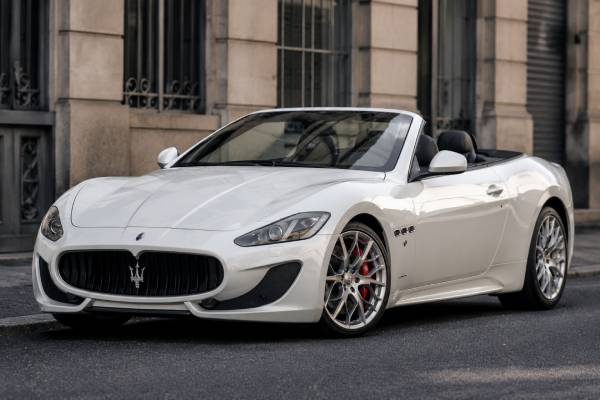
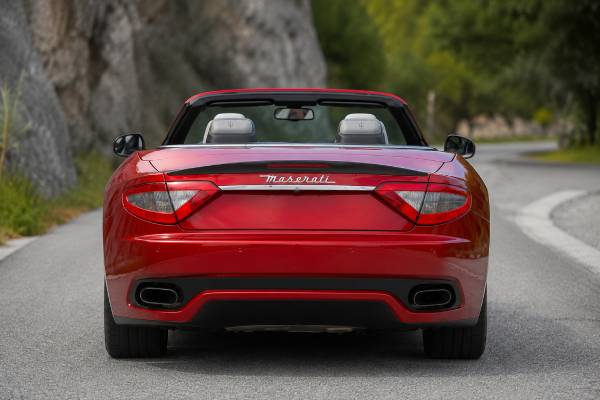
The 2017 Maserati GranCabrio Sport Special Edition is a late-production M145 created to celebrate 60 years since the 3500 GT established Maserati’s postwar grand-touring identity. It combines the 460 hp version of the naturally aspirated 4.7-liter V8 with the four-seat GranCabrio Sport chassis, then adds a tightly defined group of colors, carbon-fiber details, wheels, upholstery choices, and a numbered commemorative plaque. Maserati limited the combined GranTurismo and GranCabrio Special Edition production to 400 cars, making correct identification more important than the badge alone.
This is not an MC in different trim. The Special Edition is based on the Sport, so it keeps the more road-friendly body, adaptive-damping character, and grand-touring mission while borrowing selected visual cues from the MC family. It is also not automatically valuable merely because it has a plaque. Condition, originality, specification, service history, and proof that the special-edition parts belong to the car determine whether an example deserves a premium. The sections below explain the model’s technical specification, unique factory content, road behavior, ownership risks, and a practical process for separating a genuine collector-quality car from a modified or neglected one.
Table of Contents
- An Anniversary Model with a Sport Chassis
- 460 hp V8 and Chassis Data
- The 400-Car Special Edition Program
- Heritage Details and Modernized Cabin
- Grand-Touring Pace with Extra Edge
- Late-M145 Service Priorities
- Authenticity Checks Before Purchase
An Anniversary Model with a Sport Chassis
The Special Edition is a commemorative GranCabrio Sport, not a separate high-performance mechanical derivative. Its importance comes from pairing the mature 460 hp M145 package with factory-recognized heritage details during the final chapter of Maserati’s naturally aspirated V8 era.
Maserati unveiled the edition at the 2017 Geneva International Motor Show. The historical reference was the 3500 GT, introduced in 1957 as the company’s first successful series-production grand tourer. Sixty years later, the GranTurismo and GranCabrio remained direct descendants of that idea: elegant long-distance cars with substantial performance, room for passengers, and a stronger sense of theater than a conventional luxury coupe or convertible.
The production limit of 400 units covered both the GranTurismo Sport Special Edition and GranCabrio Sport Special Edition together. Maserati did not present 400 convertibles plus 400 coupes. That shared total matters when assessing rarity, but it also means buyers should be cautious with claims about exact body-style or market allocations unless supported by factory records.
Mechanically, the car uses the later M145B 4.7-liter V8 tune rated at 460 hp and 520 N·m. The six-speed MC Auto Shift transmission remains a conventional torque-converter automatic mounted at the front, driving the rear wheels. The chassis is the GranCabrio Sport’s, including its road-oriented adaptive damping rather than the MC convertible’s more focused fixed-rate setup and longer aero body.
The edition arrived near the end of M145 production, after years of incremental development. That gives it several advantages: the most powerful regular-production V8 calibration, the familiar and well-developed transmission software, later interior and infotainment presentation, and a specification designed to feel complete from the factory. It also carries the liabilities of any aging low-volume Italian grand tourer, including expensive trim, complex roof hardware, electronic dependence on good battery voltage, and high consumable costs.
Its collector position is nuanced. A rare factory color, plaque, and complete special-edition trim can justify a premium over a normal Sport. Yet an ordinary Sport with exceptional history may still be the better car than a Special Edition with damaged carbon, missing wheels, accident repair, or long service gaps. The name increases the need for evidence; it does not replace it.
460 hp V8 and Chassis Data
The Special Edition’s performance comes from the final 460 hp evolution of Maserati’s naturally aspirated 4.7-liter V8. It combines high-rev power with the usability of a six-speed automatic, hydraulic steering, adaptive dampers, and large Brembo brakes.
| Item | Specification |
|---|---|
| Engine | 90-degree naturally aspirated V8 |
| Displacement | 4,691 cc |
| Maximum output | 460 hp at 7,000 rpm |
| Maximum torque | 520 N·m at 4,750 rpm |
| Transmission | Six-speed MC Auto Shift automatic |
| Drivetrain | Rear-wheel drive with limited-slip differential |
| 0–100 km/h | About 5.0 seconds |
| Top speed | About 285–288 km/h, depending on market data |
The V8 uses aluminum construction, dual overhead camshafts, four valves per cylinder, and electronic fuel injection. It is naturally aspirated, so throttle response builds directly with pedal input and engine speed. Peak torque arrives well above typical cruising revs, and peak power comes at 7,000 rpm. The figures explain the car’s character: it feels smooth and capable at low speed, then becomes much more urgent and vocal in the upper half of the tachometer.
| Item | Specification |
|---|---|
| Body | Steel unitary four-seat convertible |
| Front suspension | Independent double wishbones |
| Rear suspension | Independent multi-link |
| Damping | Electronically controlled Sport Skyhook |
| Steering | Hydraulic power-assisted rack and pinion |
| Brakes | Ventilated Brembo discs with multi-piston calipers |
| Wheels | 20-inch MC-design alloys in Glossy Black |
| Typical tires | 245/35 ZR20 front; 285/35 ZR20 rear |
| Wheelbase | 2,942 mm |
| Length | About 4,910 mm |
| Width | 1,915 mm excluding mirrors |
| Height | About 1,380 mm |
| Fuel capacity | 75 liters |
| Luggage capacity | About 173 liters |
Maserati quoted different performance numbers in different markets, particularly where horsepower standards, test procedures, or model naming differed. The useful constants are 460 hp, 520 N·m, rear-wheel drive, and the six-speed automatic. A healthy Sport should reach 100 km/h in roughly five seconds, but tire condition, road surface, temperature, and launch method strongly affect the result.
The car’s mass is close to two tonnes in European running-order terms. That weight supports refinement and body stiffness but places heavy demands on brakes, tires, bushings, and dampers. Brake disc thickness, pad life, and tire age matter more to a buyer than a theoretical tenth of a second in acceleration.
The 400-Car Special Edition Program
A genuine car should combine the Sport mechanical package with the factory Special Edition appearance and identification features. The safest proof is a matching VIN-specific build record supported by the numbered plaque, original trim, invoices, and consistent production details.
The signature exterior color was Rosso Italiano, a three-layer red inspired by the Maserati 250F associated with Juan Manuel Fangio’s 1957 Formula One championship. The edition was also offered in other selected colors, depending on market and order. Paint alone therefore cannot authenticate the car, and a red GranCabrio Sport is not necessarily a Special Edition.
Factory-specific features included:
- 20-inch MC-design alloy wheels finished in Glossy Black.
- Special Edition logos on the wheel-center caps.
- Carbon-fiber front splitter, door handles, mirror caps, and rear lip spoiler.
- Carbon-fiber door sills carrying the Special Edition identity.
- A dedicated numbered plaque on the center tunnel in a carbon-fiber holder.
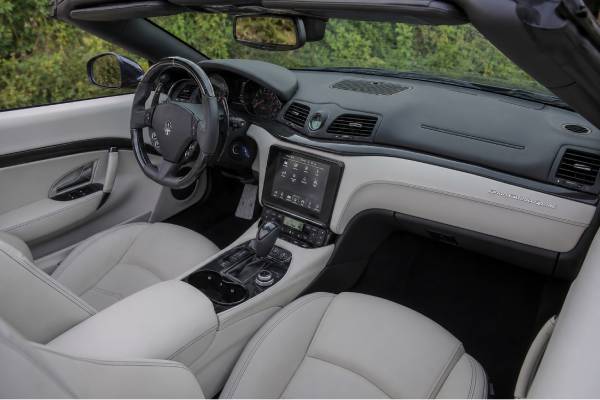
- Poltrona Frau leather or a leather-and-Alcantara cabin.
- Four special interior stitching combinations.
- Carbon-fiber finishes on the paddle shifters, dashboard, and door panels.
The plaque is important but should not be treated as standalone proof. Plaques can be moved, copied, or paired with a car that has been retrimmed. Check its fit, typeface, finish, and number against known original examples, then confirm that the VIN and build sheet identify the edition. The same applies to wheel-center caps and carbon parts, which can be purchased separately or reproduced.
Original wheels deserve close examination. Gloss-black refinishing can hide curb damage, cracks, welding, or an incorrect wheel design. Look for correct dimensions, part numbers, offsets, center caps, and tire-pressure hardware. A car supplied on aftermarket wheels should include the originals; replacing a complete special-edition set can be difficult and costly.
Interior combinations can help establish authenticity. The seat material, stitching colors, carbon weave, sill plates, and tunnel plaque should form a coherent factory specification. Compare both sides of the cabin because accident repairs, water damage, and isolated trim replacement sometimes produce subtle differences in leather grain, stitching, lacquer, or weave direction.
Market variations complicate identification. North American cars used the GranTurismo Convertible name and market-specific lighting, emissions, and equipment. Imported cars may have been rebadged. The correct approach is to establish what the car was when it left the factory, then document any changes rather than forcing every example to match one market’s brochure.
Heritage Details and Modernized Cabin
The Special Edition succeeds because its anniversary content enhances the established Pininfarina form instead of replacing it. The carbon pieces and black wheels sharpen the car, while the long hood, low beltline, and fabric roof preserve the elegance that defines the M145.
Pininfarina’s original GranTurismo design translated well into a convertible because the proportions were established around a long wheelbase and a rearward cabin. Maserati retained four real seats and used a compact folding fabric roof rather than a bulky retractable hardtop. With the roof lowered, the shoulder line runs cleanly from the front fenders to the rear deck. With it raised, the soft top forms a relatively low arc instead of creating a tall, formal profile.
The Special Edition’s carbon-fiber splitter, mirror caps, handles, and rear spoiler add contrast without turning the car into an MC replica. The MC has different bumper shapes, aero treatment, and overall body length. A genuine Special Edition should still read as a GranCabrio Sport. Aftermarket MC-style bumpers may appeal visually, but they weaken originality and can hide repair work or poor fit.
The roof is a multilayer fabric assembly designed for thermal and acoustic insulation. It folds behind the rear seats and leaves a modest trunk. Correct side-window indexing is essential: the glass drops slightly when a door opens and seals again after closing. Misaligned glass creates wind noise, water entry, and stress on the roof seals. The entire cycle should be observed from outside, including the front latch and both sides of the frame.
Inside, the anniversary treatment is more obvious. Carbon door sills greet occupants, the tunnel plaque announces the production series, and carbon trim links the cabin to Maserati’s motorsport image. Poltrona Frau leather provides a softer grand-touring feel, while leather and Alcantara emphasizes the Sport identity. Neither is inherently superior; preservation and color harmony matter more.
The basic architecture shows its age. The central screen is small by current standards, the menu structure is slow, and some switches come from Maserati’s wider period parts inventory. Those weaknesses are balanced by tactile controls, an analog clock, rich leather coverage, and a cabin that feels designed around occupants rather than a single display.
Late M145 cars can be upgraded with phone integration or a reversing camera, but installation quality is critical. A reversible interface that retains factory screens and wiring is preferable to a cut dashboard, improvised microphone, or overloaded electrical circuit. Keep every removed original component.
The V8 and exhaust remain the defining engineering feature. In normal driving, the car can be subdued. Sport mode changes throttle, shift, damper, and exhaust behavior, allowing the exhaust valves to reveal a harder tone. The sound is not merely volume; it develops from a low burble into a metallic upper-register howl as the engine approaches peak power.
Grand-Touring Pace with Extra Edge
The Special Edition drives like a mature GranCabrio Sport: fast, stable, expressive, and more controlled than the standard car, but still built for open-road travel rather than repeated circuit laps. The best experience comes from smooth inputs and using the V8’s rev range.
In normal mode, the automatic shifts early and the dampers allow enough movement to keep the car comfortable. The engine has adequate low-speed torque, but it does not deliver the immediate surge of a modern turbocharged unit. That makes the car easy to place in traffic and gives the driver room to explore the throttle without instantly reaching extreme speeds.
Sport mode brings the personality forward. The throttle becomes more responsive, the gearbox holds lower ratios, paddle requests feel more decisive, and the exhaust opens under the right conditions. The transmission remains a torque-converter automatic, so shifts are not as instantaneous as a dual-clutch gearbox. Its strength is breadth: it can creep smoothly, cruise quietly, and still provide useful manual control on a winding road.
The hydraulic steering is slower and heavier than many modern systems but communicates load well. The front tires need a clear input, after which the long chassis settles into the corner. The car feels secure in fast sweepers, where wheelbase and mass create calm responses. In tight bends, the driver notices width and weight, especially if the road surface is uneven.
Sport Skyhook damping helps contain body motion without eliminating the GranCabrio’s touring character. A healthy system should produce a noticeable but not brutal change between settings. If the ride is harsh in every mode, suspect old tires, bent wheels, worn bushings, weak dampers, or an alignment problem before assuming that all Sport models ride that way.
Brakes are powerful for road use, yet repeated hard stops generate substantial heat because of vehicle mass. A firm, consistent pedal is expected. Pulsation, steering shake, long travel, or vibration under braking can point to disc wear, deposits, wheel issues, or suspension play. Buyers should measure the hardware rather than relying on a dashboard warning.
With the roof down, the engine and exhaust dominate the experience. Front-seat airflow is manageable at touring speeds, especially with a wind blocker installed for two-person travel. Rear passengers receive more turbulence, but the seats are genuinely usable. Roof-up refinement is good for the period; persistent whistle or drumming suggests adjustment or seal problems.
The car is too heavy and valuable to treat as a casual track toy, and its brakes and tires are expensive consumables. Its natural environment is a fast, flowing route followed by a long highway leg. There, the Special Edition combines visual rarity with the same qualities that made the original 3500 GT idea enduring: speed, comfort, luggage compromises that can be managed, and a memorable engine.
Late-M145 Service Priorities
A late build date does not make the Special Edition maintenance-free. By 2026, every example is old enough for time-related deterioration in fluids, rubber, roof seals, batteries, dampers, and electronics, even when the odometer is low.
V8 and cooling system
The engine should be assessed completely cold. Listen for persistent rattles or knocks, watch the exhaust for abnormal smoke, and confirm a stable idle. Oil leakage can develop at covers, seals, and hose connections. Inspect the underside and undertrays because a clean upper engine may hide seepage. Misfire faults require diagnosis of plugs, coils, injectors, intake leaks, wiring, and mechanical condition.
Cooling-system health is critical. Check for dried coolant residue, weak expansion tanks, hose deterioration, fan operation, radiator condition, and stable temperature in traffic. A car that has overheated deserves deeper testing. Service history should show regular oil changes and periodic renewal of brake fluid, coolant, filters, plugs, and belts according to time and mileage requirements for the VIN.
Automatic transmission and differential
The six-speed should engage drive and reverse promptly and shift cleanly when cold and hot. Harshness, flare, shudder, or delayed engagement may involve fluid condition, valve-body wear, adaptations, mounts, cooling, or internal wear. A specialist can inspect leaks, read fault history, and judge whether fluid service is appropriate. Listen for differential whine and driveline vibration under load and overrun.
Dampers, brakes, and tires
Sport Skyhook dampers are expensive, and a warning light is not required for them to be tired. Inspect for leakage, compare damping response at all corners, and listen for control-arm or anti-roll-bar noises. Uneven tire wear may reveal poor alignment, worn joints, or previous impact damage. Special Edition wheels should be checked for cracks, bends, incorrect repairs, and loss of original center caps.
Brake discs, pads, hoses, and calipers need physical inspection and measurement. Old low-mileage tires are a safety concern regardless of tread depth. Use matching high-performance tires with the correct size, load, and speed ratings; mixing models can change the balance and confuse stability-control behavior.
Roof, water control, and electrical systems
Run the roof through repeated cycles and inspect the fabric, headliner, frame, latches, hydraulic or mechanical drive components, sensors, windows, seals, and drains. Search the trunk, rear footwells, and module areas for moisture. Water intrusion can create faults that return long after the leak seems minor.
Battery condition affects nearly every system. Use the correct battery type and a quality maintainer during storage. Scan all modules, not only the engine controller. Test climate control, seat functions, audio, navigation, parking sensors, lights, mirrors, keys, tire-pressure monitoring, and steering-wheel switches.
Special-edition trim creates additional cost risk. Damaged carbon lacquer, missing plaques, incorrect wheel caps, and worn upholstery can be harder to restore than ordinary mechanical items. Repair carbon properly rather than covering cracks with dark lacquer, and preserve original parts whenever an upgrade is installed.
Authenticity Checks Before Purchase
The right car is a fully documented Special Edition with straight structure, intact unique trim, current maintenance, and no hidden roof or electrical problems. Do not pay a rarity premium until identity and condition have been independently proven.
Begin with the VIN and request a factory build specification or authoritative dealer record. It should align with the plaque, exterior color, upholstery, stitching, wheels, carbon package, market equipment, and production date. Compare service invoices, registration history, mileage entries, and ownership records. Both keys, books, tools, tire inflator, wind blocker, and original sales material add confidence.
Inspect authenticity in layers:
- Confirm the VIN describes a GranCabrio or GranTurismo Convertible Sport Special Edition.
- Record the plaque number and compare its appearance and mounting with original cars.
- Verify wheel design, dimensions, finish, center caps, and part markings.
- Check every carbon piece for correct shape, weave, finish, and age consistency.
- Match upholstery material, stitching combination, sills, dashboard trim, and paddles to the build data.
- Look for signs that the car began as a normal Sport and received later parts.
Then inspect it as a complex used car. Arrange a cold start, a full diagnostic scan, paint-depth readings, underbody examination, cooling-system assessment, roof and drain testing, brake measurements, suspension inspection, and a long road test. Check operation both immediately after startup and after the drivetrain is fully hot.
Accident repair is especially important on an open car. Uneven gaps, disturbed fasteners, overspray, nonfactory seam sealer, mismatched paint texture, damaged undertrays, or inconsistent carbon pieces require explanation. High-quality documented repair is not always a reason to reject a car, but structural work should be evaluated by a specialist and reflected in value.
Price the car against normal GranCabrio Sport examples and then assign a premium only for verified special-edition content, desirable colors, completeness, and condition. A missing plaque or replaced wheel can matter more here than on a standard car because the limited-series identity is part of the product. At the same time, originality should not excuse overdue mechanical work.
Set aside funds for immediate baseline service. Even an attractive low-mileage car may need fluids, plugs, belts, tires, brakes, battery, alignment, roof adjustment, sticky-switch refinishing, leather attention, or damper work. Obtain real quotations using the VIN before purchase; low-volume trim and imported parts can make generic cost guides misleading.
Buy this model for its combination of rarity and usability. It offers the final 460 hp naturally aspirated V8, four seats, a more compliant Sport chassis than the MC, and a clear connection to Maserati’s grand-touring heritage. A genuine, complete, carefully maintained example can be more satisfying than a louder modified car because every detail—from the Rosso Italiano paint to the numbered tunnel plaque—belongs to one coherent factory story.
References
- Maserati GranTurismo Special Edition and Levante Ermenegildo Zegna Show Car debuts at Geneva International Motor Show 2017
- Maserati GranTurismo “Special Edition” and Levante Ermenegildo Zegna Show Car debuts at Geneva International Motor Show. Massimo Bottura: Maserati’s guest star 2017
- MY18 GranTurismo & GranTurismo Convertible star at Goodwood Festival of Speed 2017
- Maserati Guides & Documentation for your vehicle 2026
Disclaimer
This article is for informational purposes and is not a substitute for professional diagnosis, repair, authentication, or valuation. Specifications, torque values, service intervals, equipment, and procedures vary by VIN, market, and production date. Verify all details against official service documentation and factory records for the specific vehicle. Please share this article on Facebook, X/Twitter, or another enthusiast community if it was useful; sharing supports our work.